Chapter 6:The Functions of the Skeletal System
• Bone, or osseous tissue: hard, dense connective tissue that forms
most of the adult skeleton - the support structure of the body.
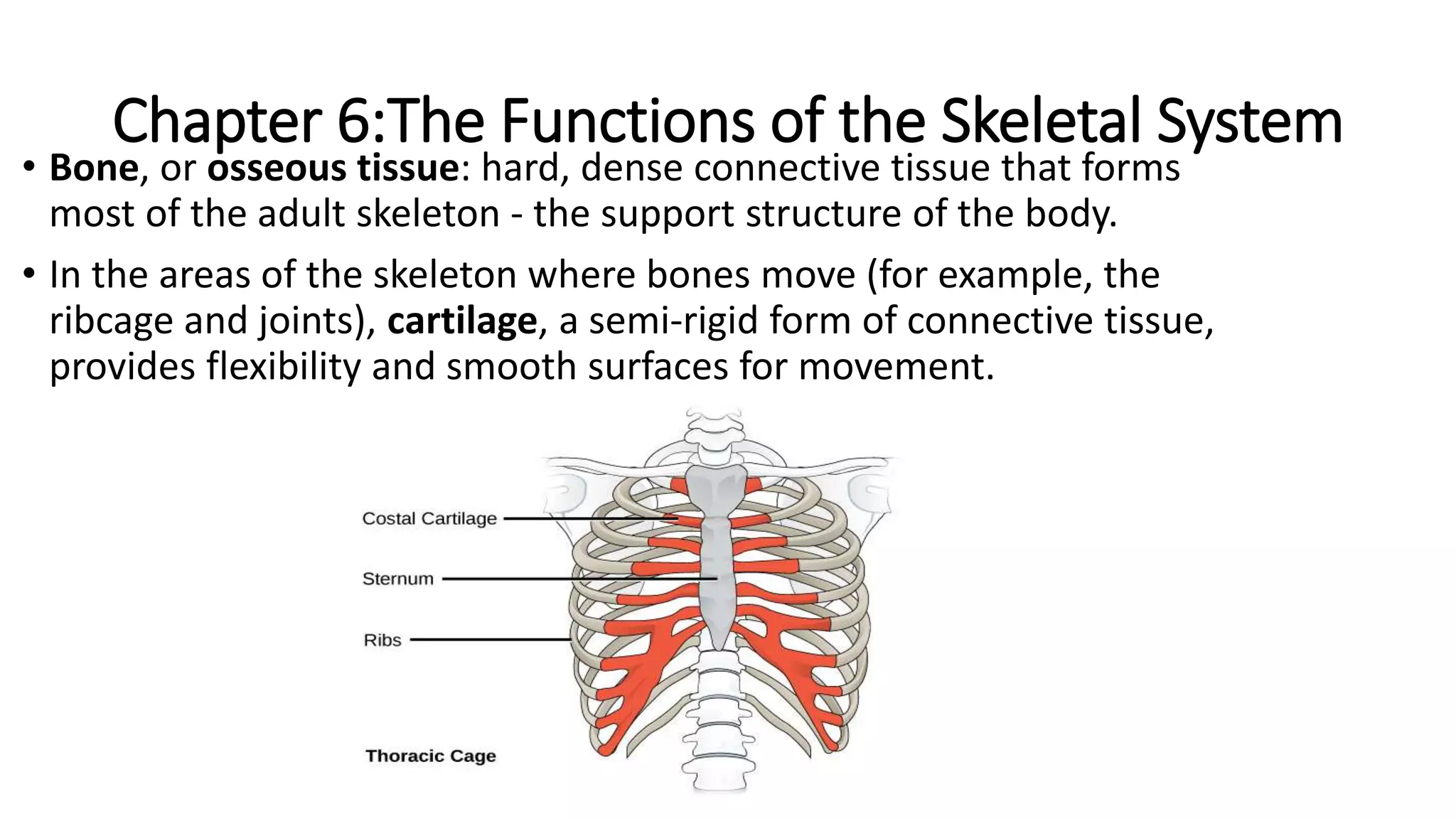
• In the areas of the skeleton where bones move (for example, the
ribcage and joints), cartilage, a semi-rigid form of connective tissue,
provides flexibility and smooth surfaces for movement.
Functions of the Skeletal System 2
• The skeletal system performs the following critical functions for the
human body:
• supports the body
• facilitates movement
• protects internal organs
• produces blood cells
• stores and releases minerals and fat
Support, Movement, and Protection 3
• The most apparent functions of the skeletal system are the gross
functions—those visible by observation. Simply by looking at a
person, you can see how the bones support, facilitate movement, and
protect the human body.
• Just as the steel beams of a building provide a scaffold to support its
weight, the bones and cartilage of your skeletal system compose the
scaffold that supports the rest of your body. Without the skeletal
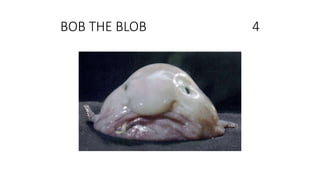
system, you would be a limp mass of organs, muscle, and skin. (Meet
Bob the Blob)
BOB THE BLOB 4
Support, Movement, and Protection 5
• Bones: facilitate movement by serving as points of attachment for
your muscles.
• Some bones only serve as a support for the muscles
• Others also transmit the forces produced when your muscles
contract.
• From a mechanical point of view, bones act as levers and joints serve
as fulcrums Unless a muscle spans a joint and contracts, a bone is not
going to move.
Support, Movement, and Protection 6
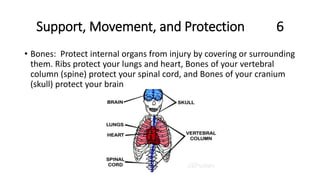
• Bones: Protect internal organs from injury by covering or surrounding
them. Ribs protect your lungs and heart, Bones of your vertebral
column (spine) protect your spinal cord, and Bones of your cranium
(skull) protect your brain
Mineral Storage, Energy Storage, and
Hematopoiesis 7
• Metabolic level: The bone matrix acts as a reservoir for a number of
minerals important to the functioning of the body, especially calcium,
and potassium. These minerals, incorporated into bone tissue, can be
released back into the bloodstream to maintain levels needed to
support physiological processes. Calcium ions, for example, are
essential for muscle contractions and controlling the flow of other
ions involved in the transmission of nerve impulses.
Mineral Storage, Energy Storage, and
Hematopoiesis 8
• Bone also serves as a site for fat storage and blood cell production.
• The softer connective tissue that fills the interior of most bone is referred to as
bone marrow.
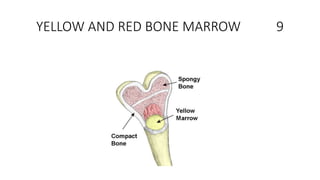
• Two types of bone marrow: yellow marrow and red marrow.
Yellow marrow contains adipose tissue; the triglycerides stored in the adipocytes
of the tissue can serve as a source of energy.
Red marrow is where hematopoiesis—the production of blood cells—takes
place.
Red blood cells, white blood cells, and platelets are all produced in the red
marrow. source of energy.
Red marrow is where hematopoiesis—the production of blood cells—takes
place. Red blood cells, white blood cells, and platelets are all produced in the red
marrow.
YELLOW AND RED BONE MARROW 9
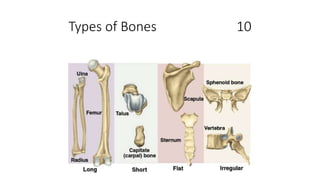
Types of Bones 10
Bone Classification 11
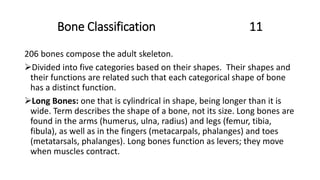
206 bones compose the adult skeleton.
Divided into five categories based on their shapes. Their shapes and
their functions are related such that each categorical shape of bone
has a distinct function.
Long Bones: one that is cylindrical in shape, being longer than it is
wide. Term describes the shape of a bone, not its size. Long bones are
found in the arms (humerus, ulna, radius) and legs (femur, tibia,
fibula), as well as in the fingers (metacarpals, phalanges) and toes
(metatarsals, phalanges). Long bones function as levers; they move
when muscles contract.
Short Bones and Flat Bones 12
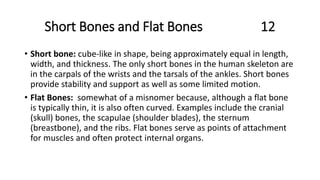
• Short bone: cube-like in shape, being approximately equal in length,
width, and thickness. The only short bones in the human skeleton are
in the carpals of the wrists and the tarsals of the ankles. Short bones
provide stability and support as well as some limited motion.
• Flat Bones: somewhat of a misnomer because, although a flat bone
is typically thin, it is also often curved. Examples include the cranial
(skull) bones, the scapulae (shoulder blades), the sternum
(breastbone), and the ribs. Flat bones serve as points of attachment
for muscles and often protect internal organs.
Irregular Bones 13
• Irregular bone: one that does not have any easily characterized shape and
therefore does not fit any other classification. These bones tend to have
more complex shapes, like the vertebrae that support the spinal cord and
protect it from compressive forces. Many facial bones, particularly the ones
containing sinuses, are classified as irregular bones.
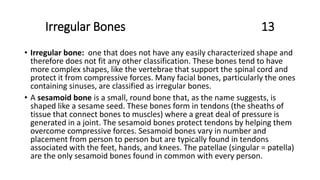
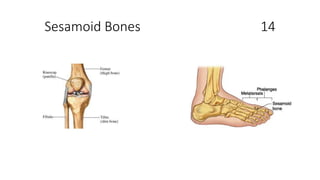
• A sesamoid bone is a small, round bone that, as the name suggests, is
shaped like a sesame seed. These bones form in tendons (the sheaths of
tissue that connect bones to muscles) where a great deal of pressure is
generated in a joint. The sesamoid bones protect tendons by helping them
overcome compressive forces. Sesamoid bones vary in number and
placement from person to person but are typically found in tendons
associated with the feet, hands, and knees. The patellae (singular = patella)
are the only sesamoid bones found in common with every person.
Sesamoid Bones 14
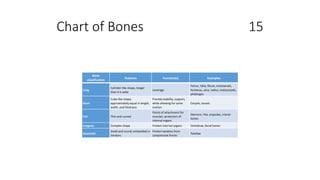
Chart of Bones 15
Bone
classification
Features Function(s) Examples
Long
Cylinder-like shape, longer
than it is wide
Leverage
Femur, tibia, fibula, metatarsals,
humerus, ulna, radius, metacarpals,
phalanges
Short
Cube-like shape,
approximately equal in length,
width, and thickness
Provide stability, support,
while allowing for some
motion
Carpals, tarsals
Flat Thin and curved
Points of attachment for
muscles; protectors of
internal organs
Sternum, ribs, scapulae, cranial
bones
Irregular Complex shape Protect internal organs Vertebrae, facial bones
Sesamoid
Small and round; embedded in
tendons
Protect tendons from
compressive forces
Patellae
Bone Structure 16
Gross Anatomy of Bone 17
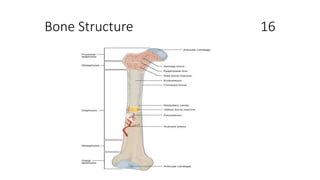
• Structure of a long bone.
• A long bone has two parts: the diaphysis and the epiphysis.
• Diaphysis: tubular shaft that runs between the proximal and distal ends of
the bone. Hollow region in the diaphysis is called the medullary cavity,
filled with yellow marrow. Walls of the diaphysis are composed of dense
and hard compact bone.
• Wider section at each end of the bone is called the epiphysis, filled with
spongy bone. Red marrow fills the spaces in the spongy bone.
• Each epiphysis meets the diaphysis at the metaphysis, the narrow area that
contains the epiphyseal plate (growth plate), a layer of hyaline
(transparent) cartilage in a growing bone. When the bone stops growing in
early adulthood (approximately 18–21 years), the cartilage is replaced by
osseous tissue and the epiphyseal plate becomes an epiphyseal line.
Periosteum and Endosteum 18
Gross Anatomy of Bone 19
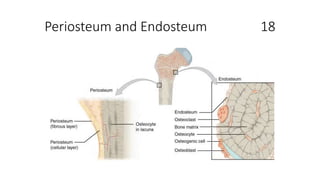
• The medullary cavity has a delicate membranous lining called the
endosteum, where bone growth, repair, and remodeling occur.
• The outer surface of the bone is covered with a fibrous membrane
called the periosteum. Periosteum contains blood vessels, nerves,
and lymphatic vessels that nourish compact bone. Tendons and
ligaments also attach to bones at the periosteum. The periosteum
covers the entire outer surface except where the epiphyses meet
other bones to form joints. In this region, the epiphyses are covered
with articular cartilage, a thin layer of cartilage that reduces friction
and acts as a shock absorber.
FLAT BONE 20
Flat Bone 21
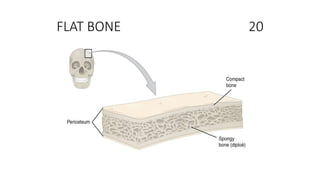
• Flat bones, like those of the cranium, consist of a layer of diploë
(spongy bone), lined on either side by a layer of compact bone The
two layers of compact bone and the interior spongy bone work
together to protect the internal organs.
• If the outer layer of a cranial bone fractures, the brain is still
protected by the intact inner layer.
Compact and Spongy Bone 22
• The differences between compact and spongy bone are best explored
via their histology.
• Most bones contain compact and spongy osseous tissue, but their
distribution and concentration vary based on the bone’s overall
function.
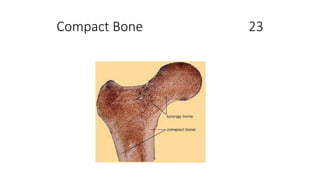
• Compact bone: dense so that it can withstand compressive forces
• Spongy (cancellous) bone: open spaces and supports shifts in weight
distribution.
Compact Bone 23
Compact Bone 24
• Compact bone is the denser, stronger. It can be found under the
periosteum and in the diaphyses of long bones, where it provides
support and protection.
• The microscopic structural unit of compact bone is called an osteon,
or Haversian system. Each osteon is composed of concentric rings of
calcified matrix called lamellae. Running down the center of each
osteon is the central canal, or Haversian canal, which contains blood
vessels, nerves, and lymphatic vessels. These vessels and nerves
branch off at right angles through a perforating canal, also known as
Volkmann’s canals, to extend to the periosteum and endosteum
Compact Bone 25
• The osteocytes are located inside spaces called lacunae found at the
borders of adjacent lamellae. As described earlier, canaliculi connect
with the canaliculi of other lacunae and eventually with the central
canal. This system allows nutrients to be transported to the
osteocytes and wastes to be removed from them.
Spongy Bone 26
Spongy (Cancellous) Bone 27
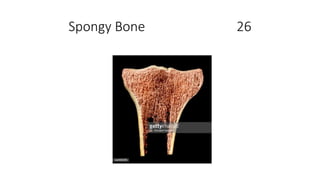
• Like compact bone, spongy bone, also known as cancellous bone,
contains osteocytes housed in lacunae
• They are not arranged in concentric circles. Instead, the lacunae and
osteocytes are found in a lattice-like network of matrix spikes called
trabeculae. The trabeculae may appear to be a random network, but
each trabecula forms along lines of stress to provide strength to the
bone. The spaces of the trabeculated network provide balance to the
dense and heavy compact bone by making bones lighter so that
muscles can move them more easily. In addition, the spaces in some
spongy bones contain red marrow, protected by the trabeculae,
where hematopoiesis occurs.
Paget’s Disease 28
Paget’s Disease 29
• Paget’s disease usually occurs in adults over age 40.
• disorder of the bone remodeling process that begins with overactive
osteoclasts. This means more bone is resorbed than is laid down. The
osteoblasts try to compensate but the new bone they lay down is
weak and brittle and therefore prone to fracture.
• While some people with Paget’s disease have no symptoms, others
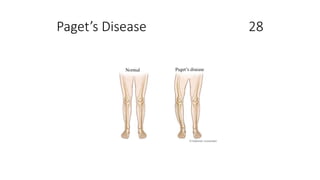
experience pain, bone fractures, and bone deformities. Bones of the
pelvis, skull, spine, and legs are the most commonly affected. When
occurring in the skull, Paget’s disease can cause headaches and
hearing loss.
Paget’s Disease 30
• What causes the osteoclasts to become overactive? The answer is still
unknown, but hereditary factors seem to play a role. Some scientists
believe Paget’s disease is due to an as-yet-unidentified virus.
• Paget’s disease is diagnosed via imaging studies and lab tests. X-rays
may show bone deformities or areas of bone resorption. Bone scans
are also useful. In these studies, a dye containing a radioactive ion is
injected into the body. Areas of bone resorption have an affinity for
the ion, so they will light up on the scan if the ions are absorbed. In
addition, blood levels of an enzyme called alkaline phosphatase are
typically elevated in people with Paget’s disease
Paget’s Disease 31
• Bisphosphonates, drugs that decrease the activity of osteoclasts, are
often used in the treatment of Paget’s disease. However, in a small
percentage of cases, bisphosphonates themselves have been linked to
an increased risk of fractures because the old bone that is left after
bisphosphonates are administered becomes worn out and brittle.
Still, most doctors feel that the benefits of bisphosphonates more
than outweigh the risk; the medical professional has to weigh the
benefits and risks on a case-by-case basis. Bisphosphonate treatment
can reduce the overall risk of deformities or fractures, which in turn
reduces the risk of surgical repair and its associated risks and
complications
Blood and Nerve Supply 32
• The spongy bone and medullary cavity receive nourishment from
arteries that pass through the compact bone.
• In addition to the blood vessels, nerves follow the same paths into
the bone where they tend to concentrate in the more metabolically
active regions of the bone. The nerves sense pain, and it appears the
nerves also play roles in regulating blood supplies and in bone
growth, hence their concentrations in metabolically active sites of the
bone.
Fractures: Bone Repair 33
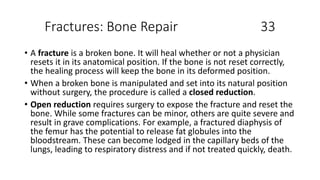
• A fracture is a broken bone. It will heal whether or not a physician
resets it in its anatomical position. If the bone is not reset correctly,
the healing process will keep the bone in its deformed position.
• When a broken bone is manipulated and set into its natural position
without surgery, the procedure is called a closed reduction.
• Open reduction requires surgery to expose the fracture and reset the
bone. While some fractures can be minor, others are quite severe and
result in grave complications. For example, a fractured diaphysis of
the femur has the potential to release fat globules into the
bloodstream. These can become lodged in the capillary beds of the
lungs, leading to respiratory distress and if not treated quickly, death.
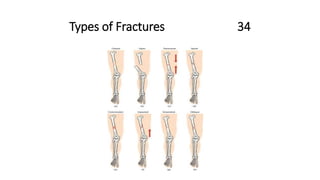
Types of Fractures 34
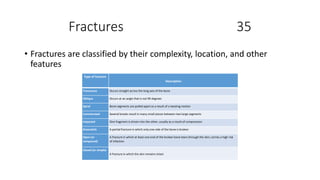
Fractures 35
• Fractures are classified by their complexity, location, and other
features
Type of fracture
Description
Transverse Occurs straight across the long axis of the bone
Oblique Occurs at an angle that is not 90 degrees
Spiral Bone segments are pulled apart as a result of a twisting motion
Comminuted Several breaks result in many small pieces between two large segments
Impacted One fragment is driven into the other, usually as a result of compression
Greenstick A partial fracture in which only one side of the bone is broken
Open (or
compound)
A fracture in which at least one end of the broken bone tears through the skin; carries a high risk
of infection
Closed (or simple)
A fracture in which the skin remains intact
Bone Repair 36
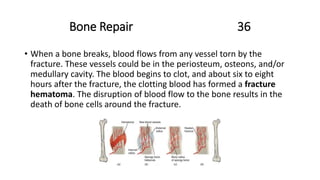
• When a bone breaks, blood flows from any vessel torn by the
fracture. These vessels could be in the periosteum, osteons, and/or
medullary cavity. The blood begins to clot, and about six to eight
hours after the fracture, the clotting blood has formed a fracture
hematoma. The disruption of blood flow to the bone results in the
death of bone cells around the fracture.
Bone Repair 37
• Within about 48 hours after the fracture, chondrocytes from the
endosteum have created an internal callus by secreting a
fibrocartilaginous matrix between the two ends of the broken bone,
while the periosteal chondrocytes and osteoblasts create an external
callus of hyaline cartilage and bone, respectively, around the outside
of the break. This stabilizes the fracture.
• Over the next several weeks, osteoclasts resorb the dead bone;
osteogenic cells become active, divide, and differentiate into
osteoblasts. The cartilage in the calli is replaced by trabecular bone
via endochondral ossification.
Bone Repair 38
• Eventually, the internal and external calli unite, compact bone
replaces spongy bone at the outer margins of the fracture, and
healing is complete. A slight swelling may remain on the outer surface
of the bone, but quite often, that region undergoes remodeling and
no external evidence of the fracture remains.
Exercise and Bone Tissue 39
• During long space missions, astronauts can lose approximately 1 to 2 percent of their
bone mass per month. This loss of bone mass is thought to be caused by the lack of
mechanical stress on astronauts’ bones due to the low gravitational forces in space.
• Lack of mechanical stress causes bones to lose mineral salts and collagen fibers, and thus
strength. Similarly, mechanical stress stimulates the deposition of mineral salts and
collagen fibers.
• The internal and external structure of a bone will change as stress increases or decreases
so that the bone is an ideal size and weight for the amount of activity it endures.
• That is why people who exercise regularly have thicker bones than people who are more
sedentary.
• It is also why a broken bone in a cast atrophies while its contralateral mate maintains its
concentration of mineral salts and collagen fibers. The bones undergo remodeling as a
result of forces (or lack of forces) placed on them.
Exercise and Bone Tissue 40
• Numerous, controlled studies have demonstrated that people who
exercise regularly have greater bone density than those who are more
sedentary.
• Any type of exercise will stimulate the deposition of more bone
tissue, but resistance training has a greater effect than cardiovascular
activities.
• Resistance training is especially important to slow down the eventual
bone loss due to aging and for preventing osteoporosis
Nutrition and Bone Tissue 41
• Calcium and Vitamin D
• You already know that calcium is a critical component of bone, especially in
the form of calcium phosphate and calcium carbonate. Since the body
cannot make calcium, it must be obtained from the diet. However, calcium
cannot be absorbed from the small intestine without vitamin D. Therefore,
intake of vitamin D is also critical to bone health. In addition to vitamin D’s
role in calcium absorption, it also plays a role, though not as clearly
understood, in bone remodeling.
• Milk and other dairy foods are not the only sources of calcium. This
important nutrient is also found in green leafy vegetables, broccoli, and
intact salmon and canned sardines with their soft bones. Nuts, beans,
seeds, and shellfish provide calcium in smaller quantities.
Calcium and Vitamin D 42
• Except for fatty fish like salmon and tuna, or fortified milk or cereal,
vitamin D is not found naturally in many foods.
• The action of sunlight on the skin triggers the body to produce its
own vitamin D, but many people, especially those of darker
complexion and those living in northern latitudes where the sun’s rays
are not as strong, are deficient in vitamin D. In cases of deficiency, a
doctor can prescribe a vitamin D supplement.
Other Nutrients 43
• Vitamin K also supports bone mineralization and may have a synergistic role with
vitamin D in the regulation of bone growth. Green leafy vegetables are a good
source of vitamin K.
• The minerals magnesium and fluoride may also play a role in supporting bone
health. While magnesium is only found in trace amounts in the human body,
more than 60 percent of it is in the skeleton, suggesting it plays a role in the
structure of bone. Fluoride can displace the hydroxyl group in bone’s
hydroxyapatite crystals and form fluorapatite. Similar to its effect on dental
enamel, fluorapatite helps stabilize and strengthen bone mineral. Fluoride can
also enter spaces within hydroxyapatite crystals, thus increasing their density.
• Omega-3 fatty acids have long been known to reduce inflammation in various
parts of the body. Inflammation can interfere with the function of osteoblasts, so
consuming omega-3 fatty acids, in the diet or in supplements, may also help
enhance production of new osseous tissue.
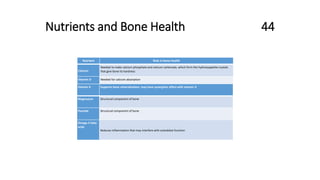
Nutrients and Bone Health 44
Nutrient Role in bone health
Calcium
Needed to make calcium phosphate and calcium carbonate, which form the hydroxyapatite crystals
that give bone its hardness
Vitamin D Needed for calcium absorption
Vitamin K Supports bone mineralization; may have synergistic effect with vitamin D
Magnesium Structural component of bone
Fluoride Structural component of bone
Omega-3 fatty
acids
Reduces inflammation that may interfere with osteoblast function
Skeletal System 45
• Osteoporosis is a disease characterized by a decrease in bone mass that
occurs when the rate of bone resorption exceeds the rate of bone
formation, a common occurrence as the body ages.
• While osteoporosis can involve any bone, it most commonly affects the
proximal ends of the femur, vertebrae, and wrist.
• As a result of the loss of bone density, the osseous tissue may not provide
adequate support for everyday functions, and something as simple as a
sneeze can cause a vertebral fracture.
• When an elderly person falls and breaks a hip (really, the femur), it is very
likely the femur that broke first, which resulted in the fall.
• Histologically, osteoporosis is characterized by a reduction in the thickness
of compact bone and the number and size of trabeculae in cancellous
bone.
Osteoporosis 46
• For many elderly people, a hip fracture can be life threatening. The fracture
itself may not be serious, but the immobility that comes during the healing
process can lead to the formation of blood clots that can lodge in the
capillaries of the lungs, resulting in respiratory failure; pneumonia due to
the lack of poor air exchange that accompanies immobility; pressure sores
(bed sores) that allow pathogens to enter the body and cause infections;
and urinary tract infections from catheterization.
• Current treatments for managing osteoporosis include bisphosphonates
(the same medications often used in Paget’s disease), calcitonin, and
estrogen (for women only). Minimizing the risk of falls, for example, by
removing tripping hazards, is also an important step in managing the
potential outcomes from the disease.

Basic ap chapter 6 powerpoint 2017

  • 1.
    Chapter 6:The Functionsof the Skeletal System • Bone, or osseous tissue: hard, dense connective tissue that forms most of the adult skeleton - the support structure of the body. • In the areas of the skeleton where bones move (for example, the ribcage and joints), cartilage, a semi-rigid form of connective tissue, provides flexibility and smooth surfaces for movement.
  • 2.
    Functions of theSkeletal System 2 • The skeletal system performs the following critical functions for the human body: • supports the body • facilitates movement • protects internal organs • produces blood cells • stores and releases minerals and fat
  • 3.
    Support, Movement, andProtection 3 • The most apparent functions of the skeletal system are the gross functions—those visible by observation. Simply by looking at a person, you can see how the bones support, facilitate movement, and protect the human body. • Just as the steel beams of a building provide a scaffold to support its weight, the bones and cartilage of your skeletal system compose the scaffold that supports the rest of your body. Without the skeletal system, you would be a limp mass of organs, muscle, and skin. (Meet Bob the Blob)
  • 4.
  • 5.
    Support, Movement, andProtection 5 • Bones: facilitate movement by serving as points of attachment for your muscles. • Some bones only serve as a support for the muscles • Others also transmit the forces produced when your muscles contract. • From a mechanical point of view, bones act as levers and joints serve as fulcrums Unless a muscle spans a joint and contracts, a bone is not going to move.
  • 6.
    Support, Movement, andProtection 6 • Bones: Protect internal organs from injury by covering or surrounding them. Ribs protect your lungs and heart, Bones of your vertebral column (spine) protect your spinal cord, and Bones of your cranium (skull) protect your brain
  • 7.
    Mineral Storage, EnergyStorage, and Hematopoiesis 7 • Metabolic level: The bone matrix acts as a reservoir for a number of minerals important to the functioning of the body, especially calcium, and potassium. These minerals, incorporated into bone tissue, can be released back into the bloodstream to maintain levels needed to support physiological processes. Calcium ions, for example, are essential for muscle contractions and controlling the flow of other ions involved in the transmission of nerve impulses.
  • 8.
    Mineral Storage, EnergyStorage, and Hematopoiesis 8 • Bone also serves as a site for fat storage and blood cell production. • The softer connective tissue that fills the interior of most bone is referred to as bone marrow. • Two types of bone marrow: yellow marrow and red marrow. Yellow marrow contains adipose tissue; the triglycerides stored in the adipocytes of the tissue can serve as a source of energy. Red marrow is where hematopoiesis—the production of blood cells—takes place. Red blood cells, white blood cells, and platelets are all produced in the red marrow. source of energy. Red marrow is where hematopoiesis—the production of blood cells—takes place. Red blood cells, white blood cells, and platelets are all produced in the red marrow.
  • 9.
    YELLOW AND REDBONE MARROW 9
  • 10.
  • 11.
    Bone Classification 11 206bones compose the adult skeleton. Divided into five categories based on their shapes. Their shapes and their functions are related such that each categorical shape of bone has a distinct function. Long Bones: one that is cylindrical in shape, being longer than it is wide. Term describes the shape of a bone, not its size. Long bones are found in the arms (humerus, ulna, radius) and legs (femur, tibia, fibula), as well as in the fingers (metacarpals, phalanges) and toes (metatarsals, phalanges). Long bones function as levers; they move when muscles contract.
  • 12.
    Short Bones andFlat Bones 12 • Short bone: cube-like in shape, being approximately equal in length, width, and thickness. The only short bones in the human skeleton are in the carpals of the wrists and the tarsals of the ankles. Short bones provide stability and support as well as some limited motion. • Flat Bones: somewhat of a misnomer because, although a flat bone is typically thin, it is also often curved. Examples include the cranial (skull) bones, the scapulae (shoulder blades), the sternum (breastbone), and the ribs. Flat bones serve as points of attachment for muscles and often protect internal organs.
  • 13.
    Irregular Bones 13 •Irregular bone: one that does not have any easily characterized shape and therefore does not fit any other classification. These bones tend to have more complex shapes, like the vertebrae that support the spinal cord and protect it from compressive forces. Many facial bones, particularly the ones containing sinuses, are classified as irregular bones. • A sesamoid bone is a small, round bone that, as the name suggests, is shaped like a sesame seed. These bones form in tendons (the sheaths of tissue that connect bones to muscles) where a great deal of pressure is generated in a joint. The sesamoid bones protect tendons by helping them overcome compressive forces. Sesamoid bones vary in number and placement from person to person but are typically found in tendons associated with the feet, hands, and knees. The patellae (singular = patella) are the only sesamoid bones found in common with every person.
  • 14.
  • 15.
    Chart of Bones15 Bone classification Features Function(s) Examples Long Cylinder-like shape, longer than it is wide Leverage Femur, tibia, fibula, metatarsals, humerus, ulna, radius, metacarpals, phalanges Short Cube-like shape, approximately equal in length, width, and thickness Provide stability, support, while allowing for some motion Carpals, tarsals Flat Thin and curved Points of attachment for muscles; protectors of internal organs Sternum, ribs, scapulae, cranial bones Irregular Complex shape Protect internal organs Vertebrae, facial bones Sesamoid Small and round; embedded in tendons Protect tendons from compressive forces Patellae
  • 16.
  • 17.
    Gross Anatomy ofBone 17 • Structure of a long bone. • A long bone has two parts: the diaphysis and the epiphysis. • Diaphysis: tubular shaft that runs between the proximal and distal ends of the bone. Hollow region in the diaphysis is called the medullary cavity, filled with yellow marrow. Walls of the diaphysis are composed of dense and hard compact bone. • Wider section at each end of the bone is called the epiphysis, filled with spongy bone. Red marrow fills the spaces in the spongy bone. • Each epiphysis meets the diaphysis at the metaphysis, the narrow area that contains the epiphyseal plate (growth plate), a layer of hyaline (transparent) cartilage in a growing bone. When the bone stops growing in early adulthood (approximately 18–21 years), the cartilage is replaced by osseous tissue and the epiphyseal plate becomes an epiphyseal line.
  • 18.
  • 19.
    Gross Anatomy ofBone 19 • The medullary cavity has a delicate membranous lining called the endosteum, where bone growth, repair, and remodeling occur. • The outer surface of the bone is covered with a fibrous membrane called the periosteum. Periosteum contains blood vessels, nerves, and lymphatic vessels that nourish compact bone. Tendons and ligaments also attach to bones at the periosteum. The periosteum covers the entire outer surface except where the epiphyses meet other bones to form joints. In this region, the epiphyses are covered with articular cartilage, a thin layer of cartilage that reduces friction and acts as a shock absorber.
  • 20.
  • 21.
    Flat Bone 21 •Flat bones, like those of the cranium, consist of a layer of diploë (spongy bone), lined on either side by a layer of compact bone The two layers of compact bone and the interior spongy bone work together to protect the internal organs. • If the outer layer of a cranial bone fractures, the brain is still protected by the intact inner layer.
  • 22.
    Compact and SpongyBone 22 • The differences between compact and spongy bone are best explored via their histology. • Most bones contain compact and spongy osseous tissue, but their distribution and concentration vary based on the bone’s overall function. • Compact bone: dense so that it can withstand compressive forces • Spongy (cancellous) bone: open spaces and supports shifts in weight distribution.
  • 23.
  • 24.
    Compact Bone 24 •Compact bone is the denser, stronger. It can be found under the periosteum and in the diaphyses of long bones, where it provides support and protection. • The microscopic structural unit of compact bone is called an osteon, or Haversian system. Each osteon is composed of concentric rings of calcified matrix called lamellae. Running down the center of each osteon is the central canal, or Haversian canal, which contains blood vessels, nerves, and lymphatic vessels. These vessels and nerves branch off at right angles through a perforating canal, also known as Volkmann’s canals, to extend to the periosteum and endosteum
  • 25.
    Compact Bone 25 •The osteocytes are located inside spaces called lacunae found at the borders of adjacent lamellae. As described earlier, canaliculi connect with the canaliculi of other lacunae and eventually with the central canal. This system allows nutrients to be transported to the osteocytes and wastes to be removed from them.
  • 26.
  • 27.
    Spongy (Cancellous) Bone27 • Like compact bone, spongy bone, also known as cancellous bone, contains osteocytes housed in lacunae • They are not arranged in concentric circles. Instead, the lacunae and osteocytes are found in a lattice-like network of matrix spikes called trabeculae. The trabeculae may appear to be a random network, but each trabecula forms along lines of stress to provide strength to the bone. The spaces of the trabeculated network provide balance to the dense and heavy compact bone by making bones lighter so that muscles can move them more easily. In addition, the spaces in some spongy bones contain red marrow, protected by the trabeculae, where hematopoiesis occurs.
  • 28.
  • 29.
    Paget’s Disease 29 •Paget’s disease usually occurs in adults over age 40. • disorder of the bone remodeling process that begins with overactive osteoclasts. This means more bone is resorbed than is laid down. The osteoblasts try to compensate but the new bone they lay down is weak and brittle and therefore prone to fracture. • While some people with Paget’s disease have no symptoms, others experience pain, bone fractures, and bone deformities. Bones of the pelvis, skull, spine, and legs are the most commonly affected. When occurring in the skull, Paget’s disease can cause headaches and hearing loss.
  • 30.
    Paget’s Disease 30 •What causes the osteoclasts to become overactive? The answer is still unknown, but hereditary factors seem to play a role. Some scientists believe Paget’s disease is due to an as-yet-unidentified virus. • Paget’s disease is diagnosed via imaging studies and lab tests. X-rays may show bone deformities or areas of bone resorption. Bone scans are also useful. In these studies, a dye containing a radioactive ion is injected into the body. Areas of bone resorption have an affinity for the ion, so they will light up on the scan if the ions are absorbed. In addition, blood levels of an enzyme called alkaline phosphatase are typically elevated in people with Paget’s disease
  • 31.
    Paget’s Disease 31 •Bisphosphonates, drugs that decrease the activity of osteoclasts, are often used in the treatment of Paget’s disease. However, in a small percentage of cases, bisphosphonates themselves have been linked to an increased risk of fractures because the old bone that is left after bisphosphonates are administered becomes worn out and brittle. Still, most doctors feel that the benefits of bisphosphonates more than outweigh the risk; the medical professional has to weigh the benefits and risks on a case-by-case basis. Bisphosphonate treatment can reduce the overall risk of deformities or fractures, which in turn reduces the risk of surgical repair and its associated risks and complications
  • 32.
    Blood and NerveSupply 32 • The spongy bone and medullary cavity receive nourishment from arteries that pass through the compact bone. • In addition to the blood vessels, nerves follow the same paths into the bone where they tend to concentrate in the more metabolically active regions of the bone. The nerves sense pain, and it appears the nerves also play roles in regulating blood supplies and in bone growth, hence their concentrations in metabolically active sites of the bone.
  • 33.
    Fractures: Bone Repair33 • A fracture is a broken bone. It will heal whether or not a physician resets it in its anatomical position. If the bone is not reset correctly, the healing process will keep the bone in its deformed position. • When a broken bone is manipulated and set into its natural position without surgery, the procedure is called a closed reduction. • Open reduction requires surgery to expose the fracture and reset the bone. While some fractures can be minor, others are quite severe and result in grave complications. For example, a fractured diaphysis of the femur has the potential to release fat globules into the bloodstream. These can become lodged in the capillary beds of the lungs, leading to respiratory distress and if not treated quickly, death.
  • 34.
  • 35.
    Fractures 35 • Fracturesare classified by their complexity, location, and other features Type of fracture Description Transverse Occurs straight across the long axis of the bone Oblique Occurs at an angle that is not 90 degrees Spiral Bone segments are pulled apart as a result of a twisting motion Comminuted Several breaks result in many small pieces between two large segments Impacted One fragment is driven into the other, usually as a result of compression Greenstick A partial fracture in which only one side of the bone is broken Open (or compound) A fracture in which at least one end of the broken bone tears through the skin; carries a high risk of infection Closed (or simple) A fracture in which the skin remains intact
  • 36.
    Bone Repair 36 •When a bone breaks, blood flows from any vessel torn by the fracture. These vessels could be in the periosteum, osteons, and/or medullary cavity. The blood begins to clot, and about six to eight hours after the fracture, the clotting blood has formed a fracture hematoma. The disruption of blood flow to the bone results in the death of bone cells around the fracture.
  • 37.
    Bone Repair 37 •Within about 48 hours after the fracture, chondrocytes from the endosteum have created an internal callus by secreting a fibrocartilaginous matrix between the two ends of the broken bone, while the periosteal chondrocytes and osteoblasts create an external callus of hyaline cartilage and bone, respectively, around the outside of the break. This stabilizes the fracture. • Over the next several weeks, osteoclasts resorb the dead bone; osteogenic cells become active, divide, and differentiate into osteoblasts. The cartilage in the calli is replaced by trabecular bone via endochondral ossification.
  • 38.
    Bone Repair 38 •Eventually, the internal and external calli unite, compact bone replaces spongy bone at the outer margins of the fracture, and healing is complete. A slight swelling may remain on the outer surface of the bone, but quite often, that region undergoes remodeling and no external evidence of the fracture remains.
  • 39.
    Exercise and BoneTissue 39 • During long space missions, astronauts can lose approximately 1 to 2 percent of their bone mass per month. This loss of bone mass is thought to be caused by the lack of mechanical stress on astronauts’ bones due to the low gravitational forces in space. • Lack of mechanical stress causes bones to lose mineral salts and collagen fibers, and thus strength. Similarly, mechanical stress stimulates the deposition of mineral salts and collagen fibers. • The internal and external structure of a bone will change as stress increases or decreases so that the bone is an ideal size and weight for the amount of activity it endures. • That is why people who exercise regularly have thicker bones than people who are more sedentary. • It is also why a broken bone in a cast atrophies while its contralateral mate maintains its concentration of mineral salts and collagen fibers. The bones undergo remodeling as a result of forces (or lack of forces) placed on them.
  • 40.
    Exercise and BoneTissue 40 • Numerous, controlled studies have demonstrated that people who exercise regularly have greater bone density than those who are more sedentary. • Any type of exercise will stimulate the deposition of more bone tissue, but resistance training has a greater effect than cardiovascular activities. • Resistance training is especially important to slow down the eventual bone loss due to aging and for preventing osteoporosis
  • 41.
    Nutrition and BoneTissue 41 • Calcium and Vitamin D • You already know that calcium is a critical component of bone, especially in the form of calcium phosphate and calcium carbonate. Since the body cannot make calcium, it must be obtained from the diet. However, calcium cannot be absorbed from the small intestine without vitamin D. Therefore, intake of vitamin D is also critical to bone health. In addition to vitamin D’s role in calcium absorption, it also plays a role, though not as clearly understood, in bone remodeling. • Milk and other dairy foods are not the only sources of calcium. This important nutrient is also found in green leafy vegetables, broccoli, and intact salmon and canned sardines with their soft bones. Nuts, beans, seeds, and shellfish provide calcium in smaller quantities.
  • 42.
    Calcium and VitaminD 42 • Except for fatty fish like salmon and tuna, or fortified milk or cereal, vitamin D is not found naturally in many foods. • The action of sunlight on the skin triggers the body to produce its own vitamin D, but many people, especially those of darker complexion and those living in northern latitudes where the sun’s rays are not as strong, are deficient in vitamin D. In cases of deficiency, a doctor can prescribe a vitamin D supplement.
  • 43.
    Other Nutrients 43 •Vitamin K also supports bone mineralization and may have a synergistic role with vitamin D in the regulation of bone growth. Green leafy vegetables are a good source of vitamin K. • The minerals magnesium and fluoride may also play a role in supporting bone health. While magnesium is only found in trace amounts in the human body, more than 60 percent of it is in the skeleton, suggesting it plays a role in the structure of bone. Fluoride can displace the hydroxyl group in bone’s hydroxyapatite crystals and form fluorapatite. Similar to its effect on dental enamel, fluorapatite helps stabilize and strengthen bone mineral. Fluoride can also enter spaces within hydroxyapatite crystals, thus increasing their density. • Omega-3 fatty acids have long been known to reduce inflammation in various parts of the body. Inflammation can interfere with the function of osteoblasts, so consuming omega-3 fatty acids, in the diet or in supplements, may also help enhance production of new osseous tissue.
  • 44.
    Nutrients and BoneHealth 44 Nutrient Role in bone health Calcium Needed to make calcium phosphate and calcium carbonate, which form the hydroxyapatite crystals that give bone its hardness Vitamin D Needed for calcium absorption Vitamin K Supports bone mineralization; may have synergistic effect with vitamin D Magnesium Structural component of bone Fluoride Structural component of bone Omega-3 fatty acids Reduces inflammation that may interfere with osteoblast function
  • 45.
    Skeletal System 45 •Osteoporosis is a disease characterized by a decrease in bone mass that occurs when the rate of bone resorption exceeds the rate of bone formation, a common occurrence as the body ages. • While osteoporosis can involve any bone, it most commonly affects the proximal ends of the femur, vertebrae, and wrist. • As a result of the loss of bone density, the osseous tissue may not provide adequate support for everyday functions, and something as simple as a sneeze can cause a vertebral fracture. • When an elderly person falls and breaks a hip (really, the femur), it is very likely the femur that broke first, which resulted in the fall. • Histologically, osteoporosis is characterized by a reduction in the thickness of compact bone and the number and size of trabeculae in cancellous bone.
  • 46.
    Osteoporosis 46 • Formany elderly people, a hip fracture can be life threatening. The fracture itself may not be serious, but the immobility that comes during the healing process can lead to the formation of blood clots that can lodge in the capillaries of the lungs, resulting in respiratory failure; pneumonia due to the lack of poor air exchange that accompanies immobility; pressure sores (bed sores) that allow pathogens to enter the body and cause infections; and urinary tract infections from catheterization. • Current treatments for managing osteoporosis include bisphosphonates (the same medications often used in Paget’s disease), calcitonin, and estrogen (for women only). Minimizing the risk of falls, for example, by removing tripping hazards, is also an important step in managing the potential outcomes from the disease.