‫بسم ا الرحمن الرحيم‬
BACTERIAL
PATHOGENESIS
Prof. Khalifa Sifaw Ghenghesh
Dept. of Medical Microbiology,
Faculty of Medicine, Tripoli University,
Tripoli-Libya
The Pathogen:

• A Disease Producing Microorganism.

Pathogenicity:

• Capacity to Initiate Disease.

Virulence:

• Capacity to Harm the Host.
• Refer to Degree of Pathogenicity.

Opportunistic Pathogens:

• Common or Non Pathogenic Microbes. e.g.
Normal Flora of the Body.
Infection:
• The Lodgement and Multiplication of a
Parasite in or on the Tissues of a Host.

Disease:
• A Rare Consequence of Infection.

Measurement of Virulence:
• The Median Lethal Dose (LD50) is Used.
• Number of Microorganisms or Micrograms of
Toxin Required to Kill 50% of Infected Animals.
Koch's Postulates
Isolated
• diseased not healthy people

Growth
• pure culture

Induce disease
• susceptible animals

Re-isolated
• susceptible animals
PATHOGENICITY
Virulence factors (Determinants of pathogenicity)
Number of initial organisms
Immune status
VIRULENCE FACTORS
Virulence factors help bacteria to:
• Invade the host,
• Cause disease, and
• Evade host defenses.
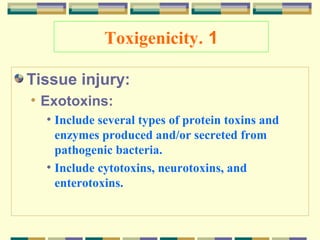
Toxigenicity. 1
Tissue injury:
• Exotoxins:
• Include several types of protein toxins and
enzymes produced and/or secreted from
pathogenic bacteria.
• Include cytotoxins, neurotoxins, and
enterotoxins.
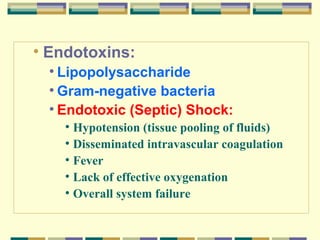
• Endotoxins:
• Lipopolysaccharide
• Gram-negative bacteria
• Endotoxic (Septic) Shock:
• Hypotension (tissue pooling of fluids)
• Disseminated intravascular coagulation
• Fever
• Lack of effective oxygenation
• Overall system failure
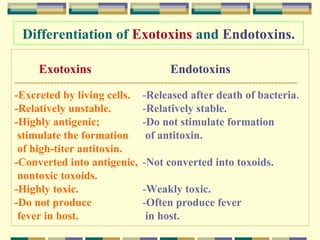
Differentiation of Exotoxins and Endotoxins.
Exotoxins

Endotoxins

---------------------------------------------------------------------------------------

-Excreted by living cells.
-Relatively unstable.
-Highly antigenic;
stimulate the formation
of high-titer antitoxin.
-Converted into antigenic,
nontoxic toxoids.
-Highly toxic.
-Do not produce
fever in host.

-Released after death of bacteria.
-Relatively stable.
-Do not stimulate formation
of antitoxin.
-Not converted into toxoids.
-Weakly toxic.
-Often produce fever
in host.
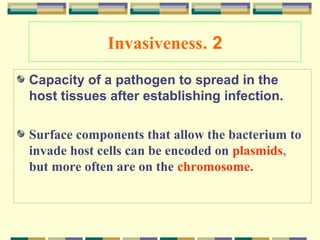
Invasiveness. 2
Capacity of a pathogen to spread in the
host tissues after establishing infection.
Surface components that allow the bacterium to
invade host cells can be encoded on plasmids,
but more often are on the chromosome.
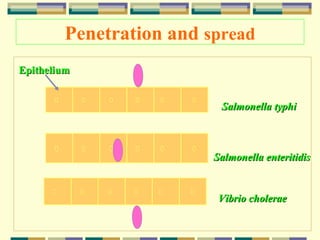
Penetration and spread
Epithelium
Salmonella typhi

Salmonella enteritidis

Vibrio cholerae
3. Capsules
Antiphagocytic structures
Polysacchride
Adhesion. 4
The Relatively Stable, Irreversible
Attachment of Bacteria to a Surface.
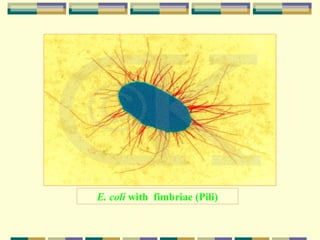
• Fimbrial Adhesins
• Nonfimbrial Proteinaceous Adhesins.
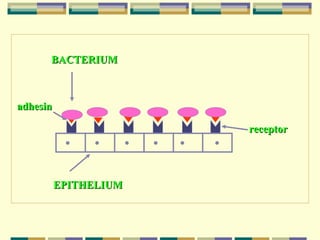
BACTERIUM

adhesin
receptor

EPITHELIUM
E. coli with fimbriae (Pili)
5. Siderophores
Iron-binding factors that allow some
bacteria to compete with the host for
iron, which is bound to hemoglobin,
transferrin, and lactoferrin.
6. Other Aggressions
Mainly Enzymes:
•
•
•
•
•

Hyaluronidase >> Spreading Factor.
Coagualse >> Thrombin - Like Enzyme.
Fibrinolysin >> Streptokinase.
Proteases >> Hydrolyse Immunoglobulins.
Others

Bacterial pathogenesis

  • 1.
    ‫بسم ا الرحمنالرحيم‬ BACTERIAL PATHOGENESIS Prof. Khalifa Sifaw Ghenghesh Dept. of Medical Microbiology, Faculty of Medicine, Tripoli University, Tripoli-Libya
  • 2.
    The Pathogen: • ADisease Producing Microorganism. Pathogenicity: • Capacity to Initiate Disease. Virulence: • Capacity to Harm the Host. • Refer to Degree of Pathogenicity. Opportunistic Pathogens: • Common or Non Pathogenic Microbes. e.g. Normal Flora of the Body.
  • 3.
    Infection: • The Lodgementand Multiplication of a Parasite in or on the Tissues of a Host. Disease: • A Rare Consequence of Infection. Measurement of Virulence: • The Median Lethal Dose (LD50) is Used. • Number of Microorganisms or Micrograms of Toxin Required to Kill 50% of Infected Animals.
  • 4.
    Koch's Postulates Isolated • diseasednot healthy people Growth • pure culture Induce disease • susceptible animals Re-isolated • susceptible animals
  • 5.
    PATHOGENICITY Virulence factors (Determinantsof pathogenicity) Number of initial organisms Immune status
  • 6.
  • 7.
    Virulence factors helpbacteria to: • Invade the host, • Cause disease, and • Evade host defenses.
  • 8.
    Toxigenicity. 1 Tissue injury: •Exotoxins: • Include several types of protein toxins and enzymes produced and/or secreted from pathogenic bacteria. • Include cytotoxins, neurotoxins, and enterotoxins.
  • 9.
    • Endotoxins: • Lipopolysaccharide •Gram-negative bacteria • Endotoxic (Septic) Shock: • Hypotension (tissue pooling of fluids) • Disseminated intravascular coagulation • Fever • Lack of effective oxygenation • Overall system failure
  • 10.
    Differentiation of Exotoxinsand Endotoxins. Exotoxins Endotoxins --------------------------------------------------------------------------------------- -Excreted by living cells. -Relatively unstable. -Highly antigenic; stimulate the formation of high-titer antitoxin. -Converted into antigenic, nontoxic toxoids. -Highly toxic. -Do not produce fever in host. -Released after death of bacteria. -Relatively stable. -Do not stimulate formation of antitoxin. -Not converted into toxoids. -Weakly toxic. -Often produce fever in host.
  • 11.
    Invasiveness. 2 Capacity ofa pathogen to spread in the host tissues after establishing infection. Surface components that allow the bacterium to invade host cells can be encoded on plasmids, but more often are on the chromosome.
  • 12.
    Penetration and spread Epithelium Salmonellatyphi Salmonella enteritidis Vibrio cholerae
  • 13.
  • 14.
    Adhesion. 4 The RelativelyStable, Irreversible Attachment of Bacteria to a Surface. • Fimbrial Adhesins • Nonfimbrial Proteinaceous Adhesins.
  • 15.
  • 16.
    E. coli withfimbriae (Pili)
  • 17.
    5. Siderophores Iron-binding factorsthat allow some bacteria to compete with the host for iron, which is bound to hemoglobin, transferrin, and lactoferrin.
  • 18.
    6. Other Aggressions MainlyEnzymes: • • • • • Hyaluronidase >> Spreading Factor. Coagualse >> Thrombin - Like Enzyme. Fibrinolysin >> Streptokinase. Proteases >> Hydrolyse Immunoglobulins. Others