PATHOGENICITY OF BACTERIA
INVASIVENESS AND TOXIGENICITY
BY
NAME-NIYAT DIPANKAR PANDA GUIDED BY;
M.Sc Zoology, 1st Year Dr. Sunita Satapathy
SCHOOL OF APPLIED SCIENCES
REGD NO.-220705180016
CONTENTS-
INTRODUCTION
HOST-PATHOGEN INTERACTION
MECHANISM OF BACTERIAL PATHOGENESIS
INVASIVENESS
TOXIGENICITY
REFERENCES
ACKNOWLEDGEMENT
INTRODUCTION-
 A microbe that is capable of causing disease is referred to as a pathogen and the organism
being infected is called a host.
 The ability to cause disease is referred to as pathogenicity, with pathogens varying in their
ability.
 The measurement of pathogenicity is called virulence, with highly virulent pathogens being
more likely to cause disease in a host.
 Determinants of virulence of a pathogen are any of its genetic or biochemical or structural
features that enable it to produce disease in host.
 Characteristics of bacteria that are pathogens include transmissibility, adherence to host cells,
persistence, invasion to host cells and tissues, toxigenicity, and the ability to evade or survive
the hosts immune system.
HOST-PATHOGEN INTERACTION-
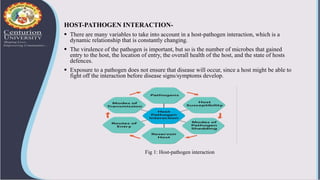
 There are many variables to take into account in a host-pathogen interaction, which is a
dynamic relationship that is constantly changing.
 The virulence of the pathogen is important, but so is the number of microbes that gained
entry to the host, the location of entry, the overall health of the host, and the state of hosts
defences.
 Exposure to a pathogen does not ensure that disease will occur, since a host might be able to
fight off the interaction before disease signs/symptoms develop.
Fig 1: Host-pathogen interaction
Two broad qualities of pathogenic bacteria
underline the means by which they cause
disease; they are-
i. Invasiveness
ii. Toxigenicity
Invasiveness-
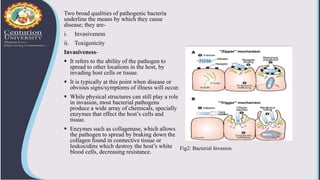
 It refers to the ability of the pathogen to
spread to other locations in the host, by
invading host cells or tissue.
 It is typically at this point when disease or
obvious signs/symptoms of illness will occur.
 While physical structures can still play a role
in invasion, most bacterial pathogens
produce a wide array of chemicals, specially
enzymes that effect the host’s cells and
tissue.
 Enzymes such as collagenase, which allows
the pathogen to spread by braking down the
collagen found in connective tissue or
leukocidins which destroy the host’s white
blood cells, decreasing resistance.
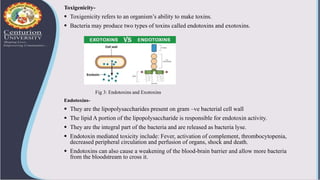
Fig2: Bacterial Invasion
Toxigenicity-
 Toxigenicity refers to an organism’s ability to make toxins.
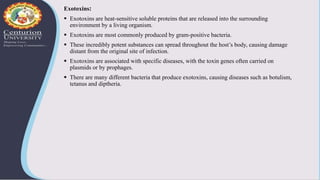
 Bacteria may produce two types of toxins called endotoxins and exotoxins.
Fig 3: Endotoxins and Exotoxins
Endotoxins-
 They are the lipopolysaccharides present on gram –ve bacterial cell wall
 The lipid A portion of the lipopolysaccharide is responsible for endotoxin activity.
 They are the integral part of the bacteria and are released as bacteria lyse.
 Endotoxin mediated toxicity include: Fever, activation of complement, thrombocytopenia,
decreased peripheral circulation and perfusion of organs, shock and death.
 Endotoxins can also cause a weakening of the blood-brain barrier and allow more bacteria
from the bloodstream to cross it.
Exotoxins:
 Exotoxins are heat-sensitive soluble proteins that are released into the surrounding
environment by a living organism.
 Exotoxins are most commonly produced by gram-positive bacteria.
 These incredibly potent substances can spread throughout the host’s body, causing damage
distant from the original site of infection.
 Exotoxins are associated with specific diseases, with the toxin genes often carried on
plasmids or by prophages.
 There are many different bacteria that produce exotoxins, causing diseases such as botulism,
tetanus and diptheria.
REFERENCES-
Eisenstein, T.K., Actor, P. and Friedman, H.(1993) Host Defences to Intracellular Pathogens,
Plenum Publishing Co:115-123
Finlay, B.B. and Falkow, S(1989) Common themes in microbial pathogenicity, Microbial
Rev:210
ACKNOWLEDGEMENTS-
• My subject teacher: Dr. Sunita Satapathy
• Dr. Yashaswi Nayak, HoD and Dean SoAS
• All the faculty members of Department of Zoology, School of Applied Science,
CUTM
• Family and Friends
220705180016-HOST PATHOGEN AND INTERACTION-1.pptx

220705180016-HOST PATHOGEN AND INTERACTION-1.pptx

  • 1.
    PATHOGENICITY OF BACTERIA INVASIVENESSAND TOXIGENICITY BY NAME-NIYAT DIPANKAR PANDA GUIDED BY; M.Sc Zoology, 1st Year Dr. Sunita Satapathy SCHOOL OF APPLIED SCIENCES REGD NO.-220705180016
  • 2.
    CONTENTS- INTRODUCTION HOST-PATHOGEN INTERACTION MECHANISM OFBACTERIAL PATHOGENESIS INVASIVENESS TOXIGENICITY REFERENCES ACKNOWLEDGEMENT
  • 3.
    INTRODUCTION-  A microbethat is capable of causing disease is referred to as a pathogen and the organism being infected is called a host.  The ability to cause disease is referred to as pathogenicity, with pathogens varying in their ability.  The measurement of pathogenicity is called virulence, with highly virulent pathogens being more likely to cause disease in a host.  Determinants of virulence of a pathogen are any of its genetic or biochemical or structural features that enable it to produce disease in host.  Characteristics of bacteria that are pathogens include transmissibility, adherence to host cells, persistence, invasion to host cells and tissues, toxigenicity, and the ability to evade or survive the hosts immune system.
  • 4.
    HOST-PATHOGEN INTERACTION-  Thereare many variables to take into account in a host-pathogen interaction, which is a dynamic relationship that is constantly changing.  The virulence of the pathogen is important, but so is the number of microbes that gained entry to the host, the location of entry, the overall health of the host, and the state of hosts defences.  Exposure to a pathogen does not ensure that disease will occur, since a host might be able to fight off the interaction before disease signs/symptoms develop. Fig 1: Host-pathogen interaction
  • 5.
    Two broad qualitiesof pathogenic bacteria underline the means by which they cause disease; they are- i. Invasiveness ii. Toxigenicity Invasiveness-  It refers to the ability of the pathogen to spread to other locations in the host, by invading host cells or tissue.  It is typically at this point when disease or obvious signs/symptoms of illness will occur.  While physical structures can still play a role in invasion, most bacterial pathogens produce a wide array of chemicals, specially enzymes that effect the host’s cells and tissue.  Enzymes such as collagenase, which allows the pathogen to spread by braking down the collagen found in connective tissue or leukocidins which destroy the host’s white blood cells, decreasing resistance. Fig2: Bacterial Invasion
  • 6.
    Toxigenicity-  Toxigenicity refersto an organism’s ability to make toxins.  Bacteria may produce two types of toxins called endotoxins and exotoxins. Fig 3: Endotoxins and Exotoxins Endotoxins-  They are the lipopolysaccharides present on gram –ve bacterial cell wall  The lipid A portion of the lipopolysaccharide is responsible for endotoxin activity.  They are the integral part of the bacteria and are released as bacteria lyse.  Endotoxin mediated toxicity include: Fever, activation of complement, thrombocytopenia, decreased peripheral circulation and perfusion of organs, shock and death.  Endotoxins can also cause a weakening of the blood-brain barrier and allow more bacteria from the bloodstream to cross it.
  • 7.
    Exotoxins:  Exotoxins areheat-sensitive soluble proteins that are released into the surrounding environment by a living organism.  Exotoxins are most commonly produced by gram-positive bacteria.  These incredibly potent substances can spread throughout the host’s body, causing damage distant from the original site of infection.  Exotoxins are associated with specific diseases, with the toxin genes often carried on plasmids or by prophages.  There are many different bacteria that produce exotoxins, causing diseases such as botulism, tetanus and diptheria.
  • 8.
    REFERENCES- Eisenstein, T.K., Actor,P. and Friedman, H.(1993) Host Defences to Intracellular Pathogens, Plenum Publishing Co:115-123 Finlay, B.B. and Falkow, S(1989) Common themes in microbial pathogenicity, Microbial Rev:210
  • 9.
    ACKNOWLEDGEMENTS- • My subjectteacher: Dr. Sunita Satapathy • Dr. Yashaswi Nayak, HoD and Dean SoAS • All the faculty members of Department of Zoology, School of Applied Science, CUTM • Family and Friends