Taxonomy
D. Binomial nomenclature
1. System of scientific naming
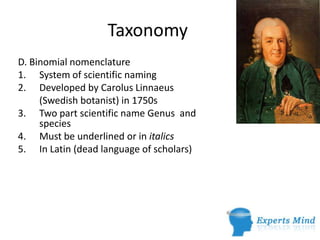
2. Developed by Carolus Linnaeus
     (Swedish botanist) in 1750s
3. Two part scientific name Genus and
     species
4. Must be underlined or in italics
5. In Latin (dead language of scholars)
Taxonomy
 E. Example :

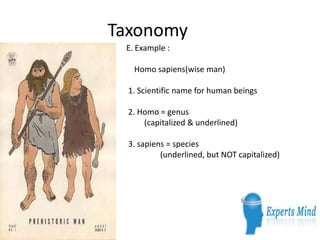
   Homo sapiens(wise man)

  1. Scientific name for human beings

  2. Homo = genus
      (capitalized & underlined)

  3. sapiens = species
           (underlined, but NOT capitalized)
Taxonomy
J. An example:
Kingdom        Animalia
Phylum         Chordata
Class          Mammalia
Order          Primates
Family         Hominidae
Genus          Homo
Species        sapiens
Taxonomy
F. Definition of species =

      1. breed successfully  viable, fertile
    offspring
      2. unique features similar to others of same
    species
      3. have similar DNA to other species
    members
Taxonomy
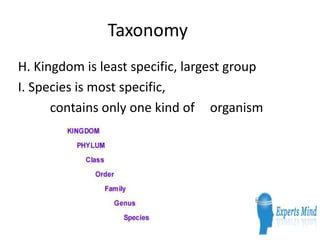
H. Kingdom is least specific, largest group
I. Species is most specific,
      contains only one kind of organism
Classification Systems:
             a short history


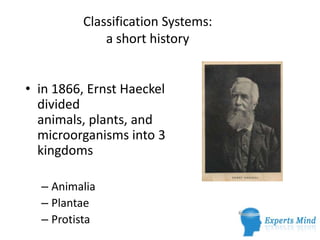
• in 1866, Ernst Haeckel
  divided
  animals, plants, and
  microorganisms into 3
  kingdoms

  – Animalia
  – Plantae
  – Protista
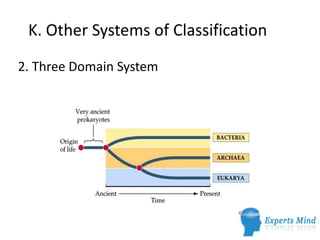
K. Other Systems of Classification
2. Three Domain System

Taxonomy

  • 1.
    Taxonomy D. Binomial nomenclature 1.System of scientific naming 2. Developed by Carolus Linnaeus (Swedish botanist) in 1750s 3. Two part scientific name Genus and species 4. Must be underlined or in italics 5. In Latin (dead language of scholars)
  • 2.
    Taxonomy E. Example: Homo sapiens(wise man) 1. Scientific name for human beings 2. Homo = genus (capitalized & underlined) 3. sapiens = species (underlined, but NOT capitalized)
  • 3.
    Taxonomy J. An example: Kingdom Animalia Phylum Chordata Class Mammalia Order Primates Family Hominidae Genus Homo Species sapiens
  • 4.
    Taxonomy F. Definition ofspecies = 1. breed successfully  viable, fertile offspring 2. unique features similar to others of same species 3. have similar DNA to other species members
  • 5.
    Taxonomy H. Kingdom isleast specific, largest group I. Species is most specific, contains only one kind of organism
  • 6.
    Classification Systems: a short history • in 1866, Ernst Haeckel divided animals, plants, and microorganisms into 3 kingdoms – Animalia – Plantae – Protista
  • 7.
    K. Other Systemsof Classification 2. Three Domain System