CELL WALL
CELL WALL
 A cell wall is an outer layer surrounding certain cells that
is outside of the cell membrane.
 All cells have cell membranes, but generally only plants,
fungi, algae, most bacteria, and archaea have cells with
cell walls.
 The cell wall provides strength and structural support to
the cell, and can control to some extent what types and
concentrations of molecules enter and leave the cell.
 The materials that make up the cell wall differ
depending on the type of organism.
PROPERTIES
 Cell walls serve similar purposes in those organisms that
possess them.
 They may give cells rigidity and strength, offering
protection against mechanical stress.
 In multicellular organisms, they permit the organism to
build and hold a definite shape (morphogenesis). Cell
walls also limit the entry of large molecules that may be
toxic to the cell.
 They further permit the creation of
stable osmotic environments by preventing osmotic
lysis and helping to retain water. Their composition,
properties, and form may change during the cell
cycle and depend on growth conditions.
RIGIDITY OF CELL WALL
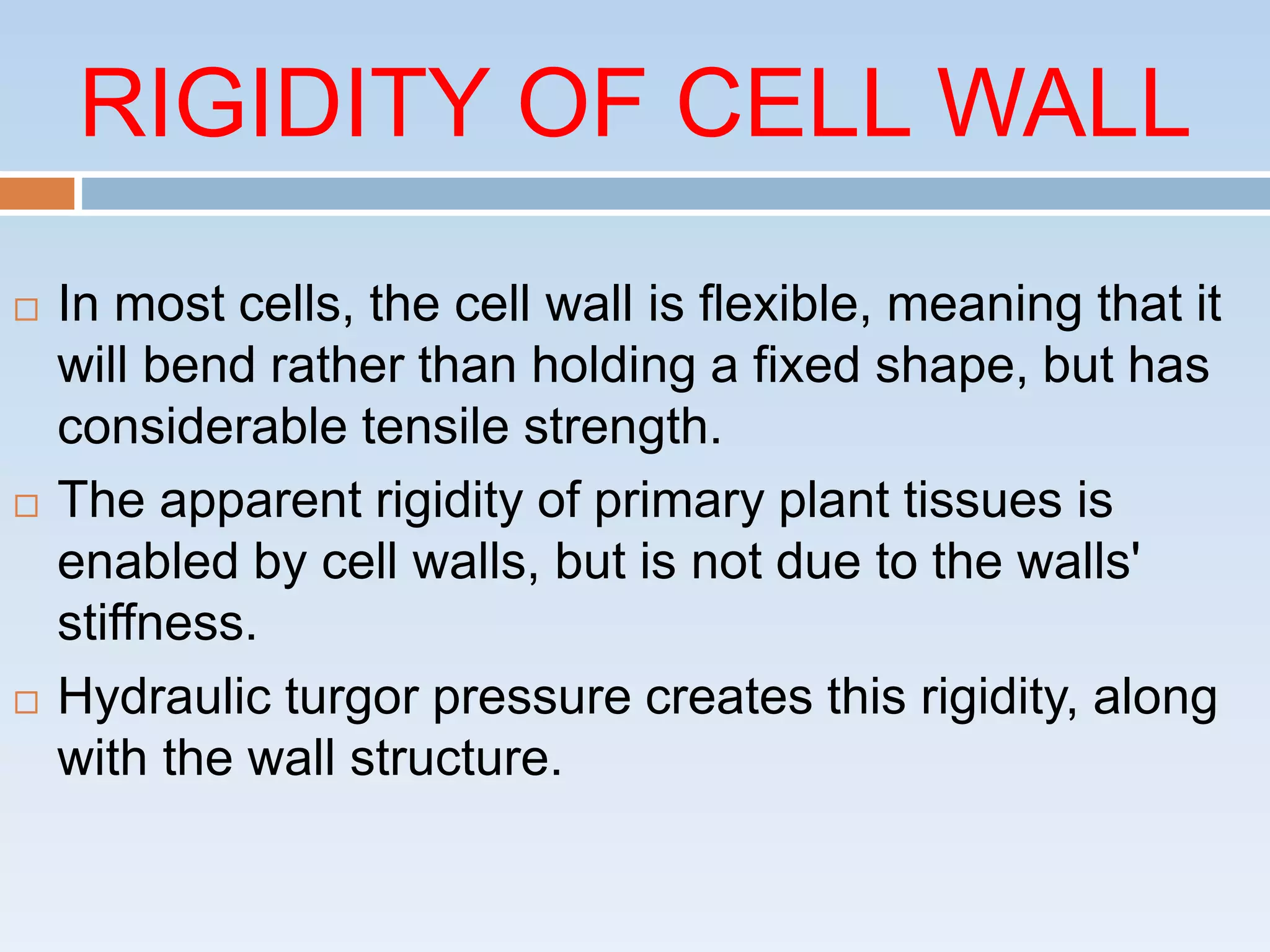
 In most cells, the cell wall is flexible, meaning that it
will bend rather than holding a fixed shape, but has
considerable tensile strength.
 The apparent rigidity of primary plant tissues is
enabled by cell walls, but is not due to the walls'
stiffness.
 Hydraulic turgor pressure creates this rigidity, along
with the wall structure.
RIGIDITY OF CELL WALL
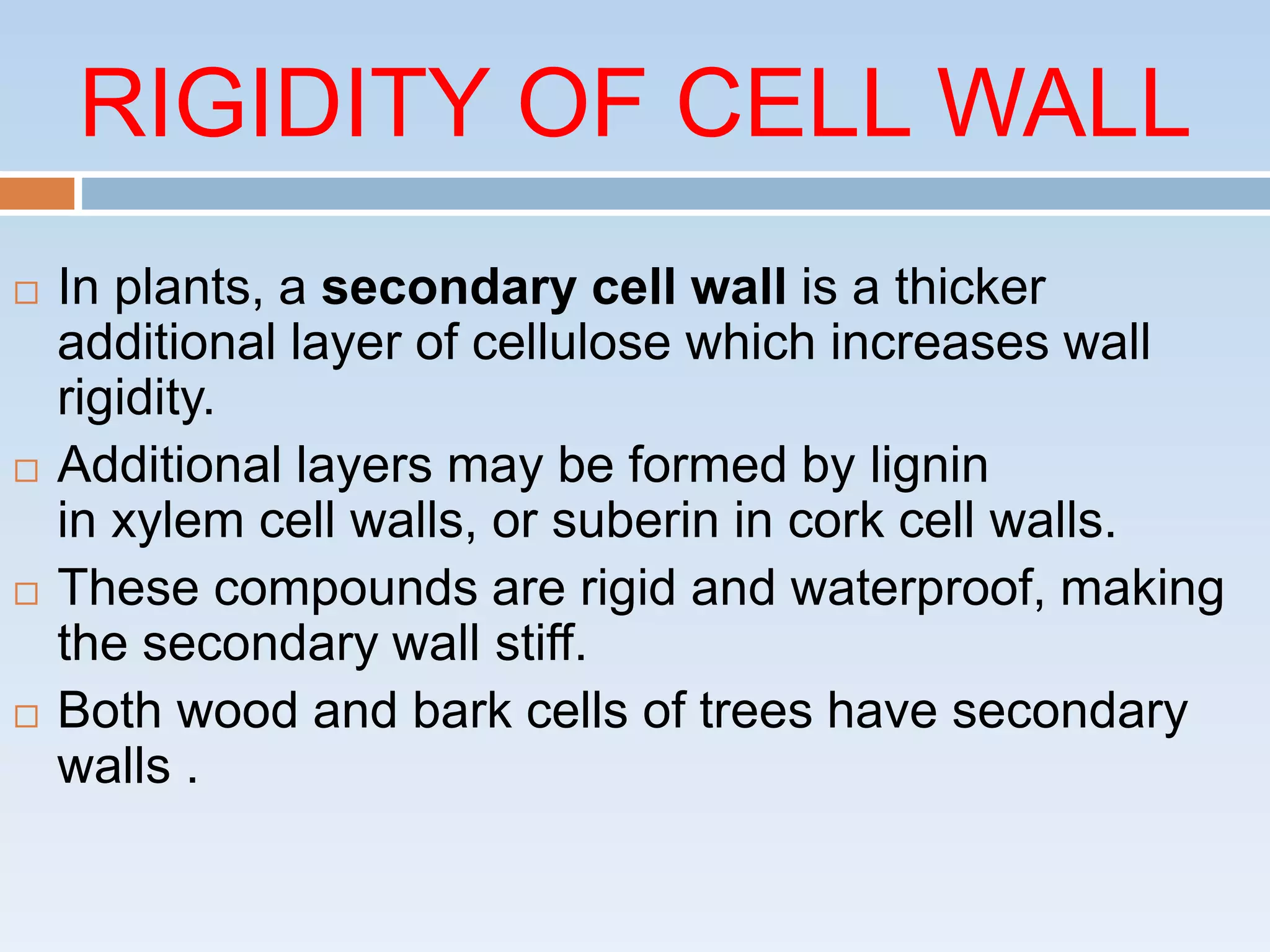
 In plants, a secondary cell wall is a thicker
additional layer of cellulose which increases wall
rigidity.
 Additional layers may be formed by lignin
in xylem cell walls, or suberin in cork cell walls.
 These compounds are rigid and waterproof, making
the secondary wall stiff.
 Both wood and bark cells of trees have secondary
walls .
PERMEABILITY
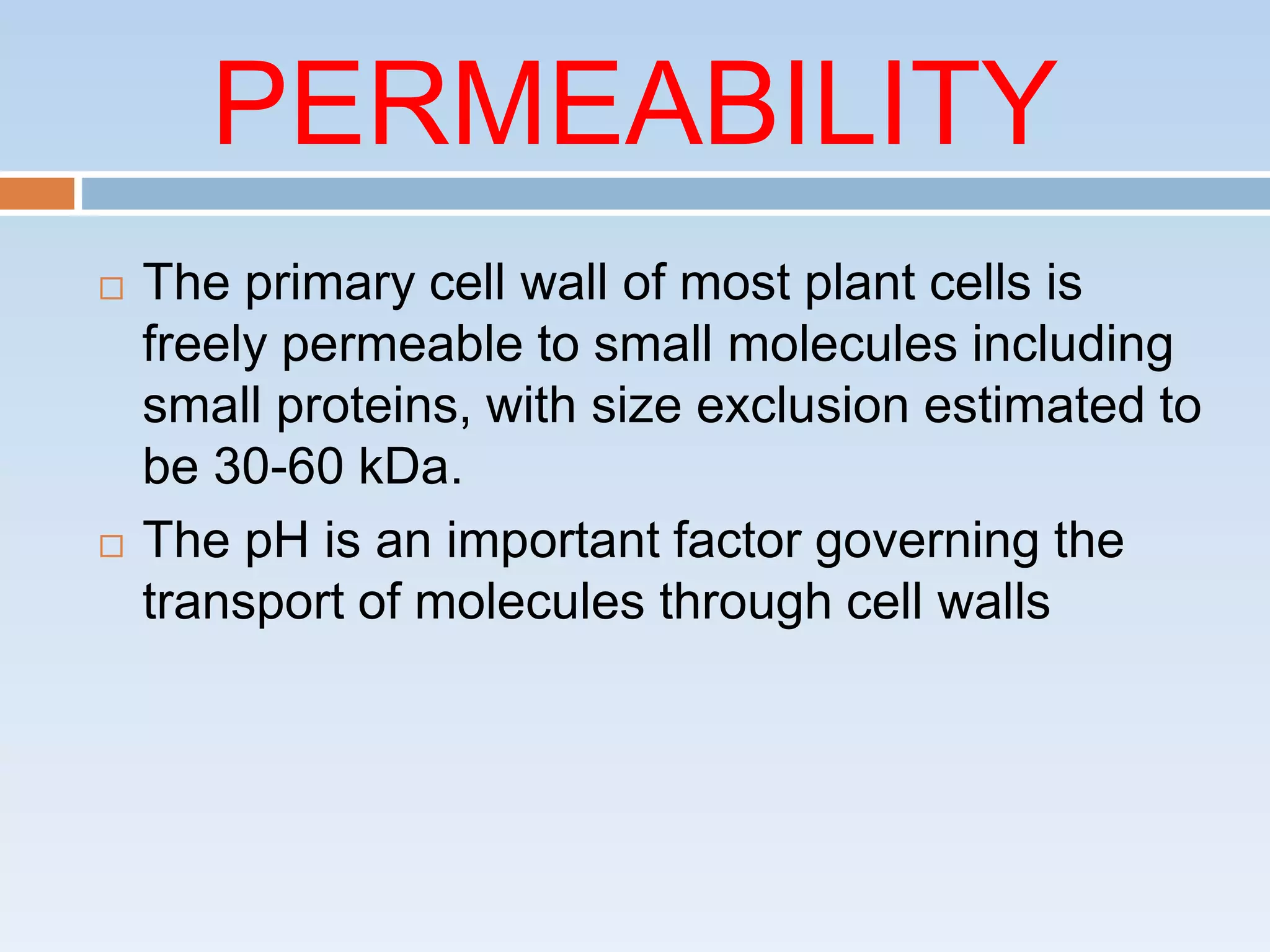
 The primary cell wall of most plant cells is
freely permeable to small molecules including
small proteins, with size exclusion estimated to
be 30-60 kDa.
 The pH is an important factor governing the
transport of molecules through cell walls
Cell Wall is present in :
Fungi,
Algae,
Most bacteria, and
Archaea,
Plants, etc.
FUNGAL CELL WALL
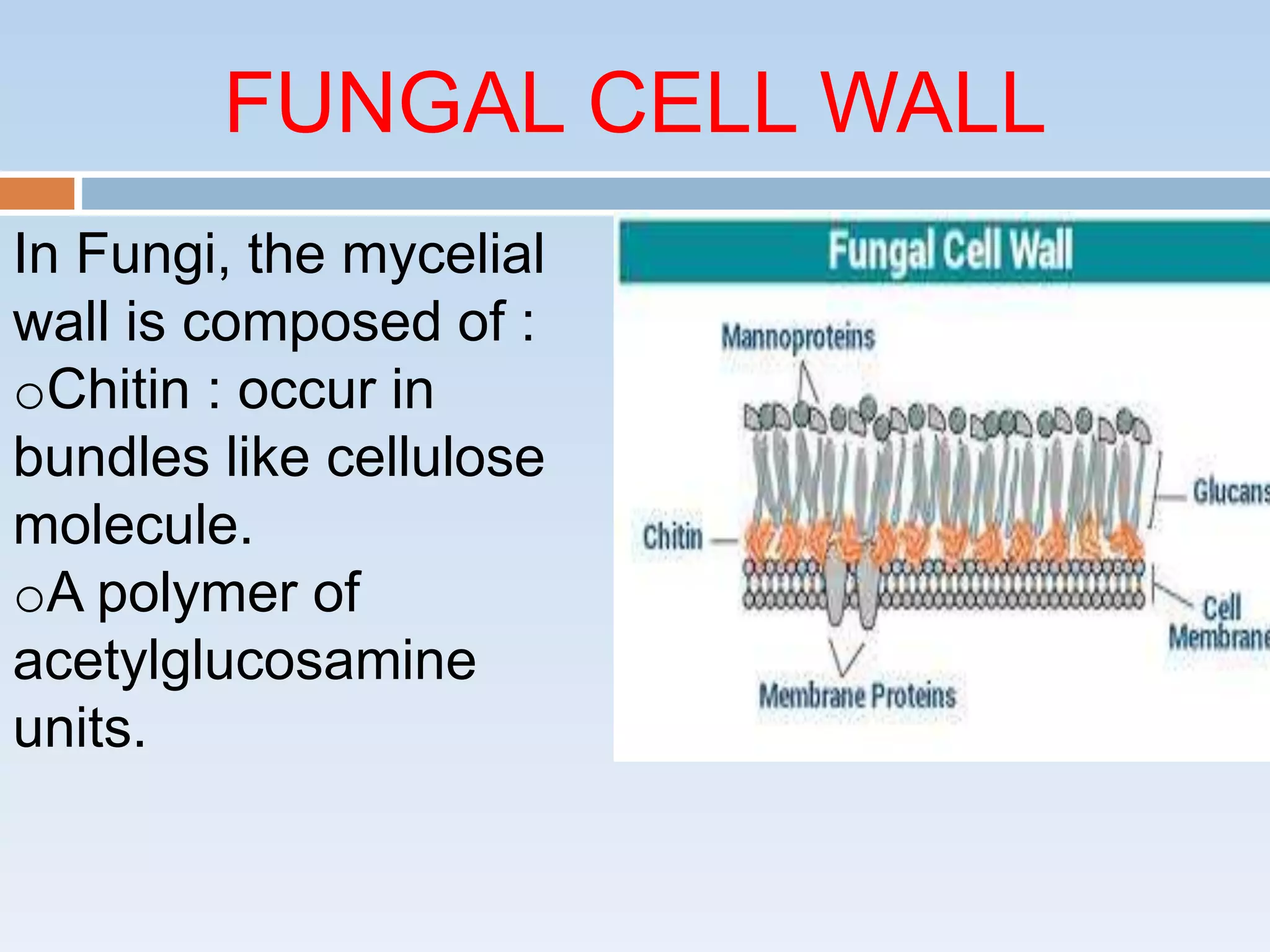
In Fungi, the mycelial
wall is composed of :
oChitin : occur in
bundles like cellulose
molecule.
oA polymer of
acetylglucosamine
units.
ARCHAEA CELL WALL
Like other living organisms,
archaea have a semi-rigid cell
wall that protects them from the
environment.
oThe cell wall of archaea is
composed of S-layers and
olack peptidoglycan molecules
with the exception of
methanobacteria who have
pseudopeptidoglycan in their
cell wall.
BACTERIAL CELL WALL
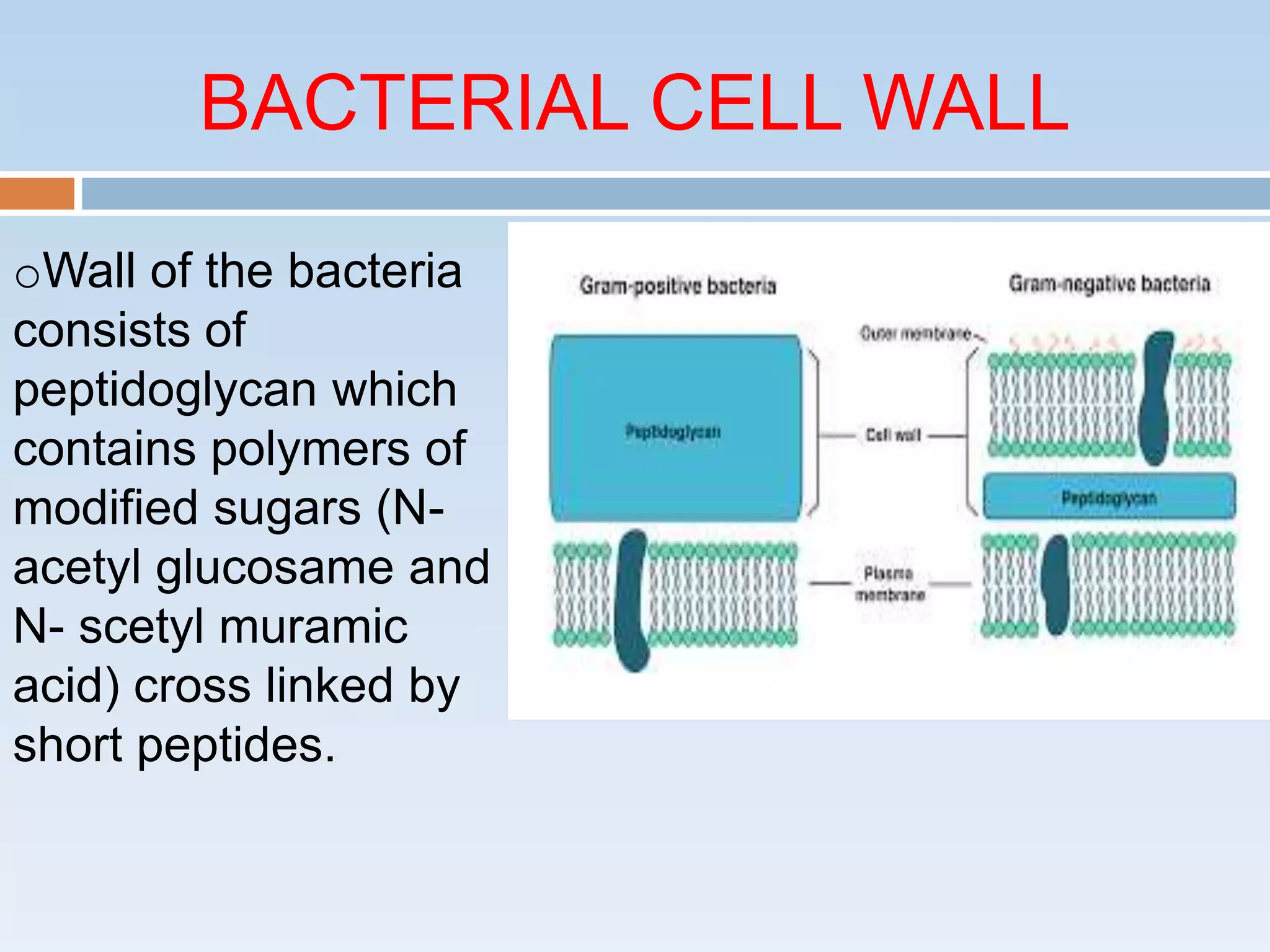
oWall of the bacteria
consists of
peptidoglycan which
contains polymers of
modified sugars (N-
acetyl glucosame and
N- scetyl muramic
acid) cross linked by
short peptides.
PLANT CELL WALL
 Plant cells are eukaryotic cells that differ in several
key aspects from the cells of other eukaryotic
organisms. Their distinctive features include:
 A large central vacuole, a water-filled volume
enclosed by a membrane known as
the tonoplast that maintains the cell's turgor,
controls movement of molecules between
the cytosol and sap, stores useful material and
digests waste proteins and organelles.
PLANT CELL WALL STRUCTURE
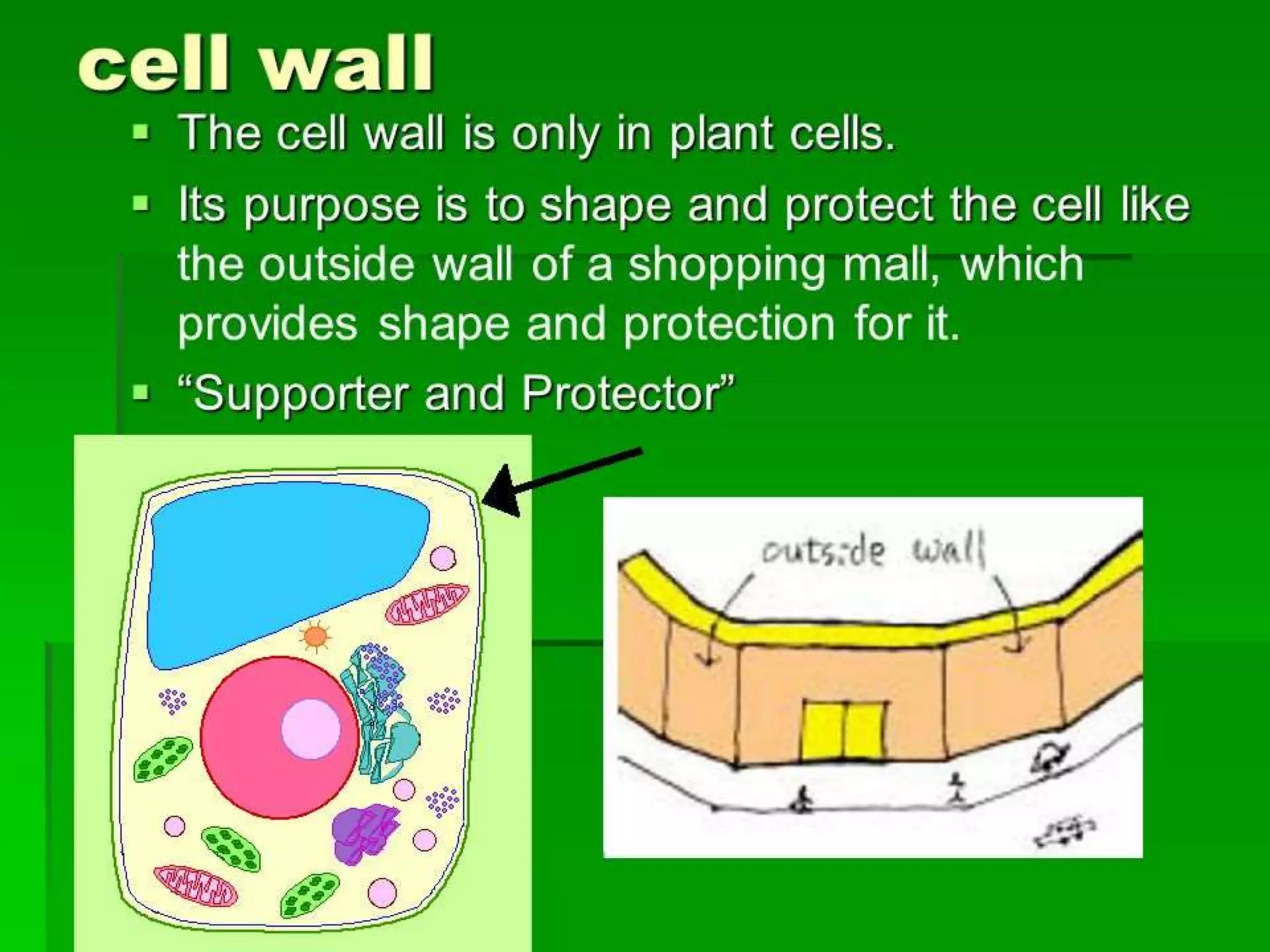
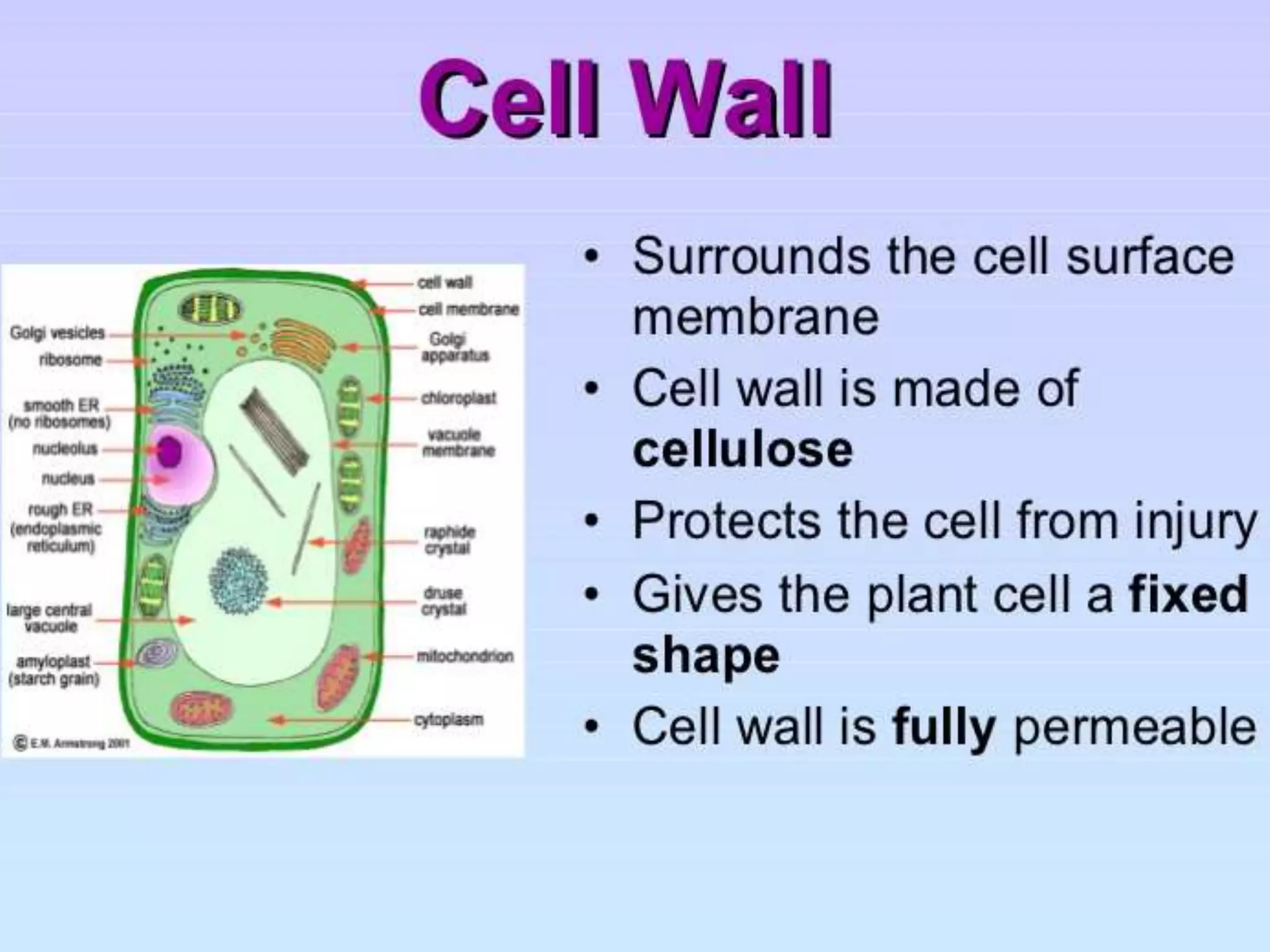
 The cell wall is the rigid, semi-permeable protective layer
in some cell types.
 This outer covering is positioned next to the cell
membrane (plasma membrane) in most Plant
cell, bacteria, algae.
 Animal cells , do not have a cell wall.
 The cell wall conducts many important functions in a cell
including protection, structure, and support.
 Cell wall composition varies depending on the organism.
In plants, the cell wall is composed mainly of strong
fibers of the carbohydrate polymer cellulose.
 Cellulose is the major component of cotton fiber and
wood and is used in paper production.
STRUCTURE
The plant cell wall is multi-layered and
consists of up to three sections. From the
outermost layer of the cell wall, these layers
are identified as the middle lamella, primary
cell wall, and secondary cell wall. While all
plant cells have a middle lamella and
primary cell wall, not all have a secondary
cell wall.
STRUCTURE
Middle lamella - outer cell wall layer that contains
polysaccharides called pectins. Pectins aid in cell
adhesion by helping the cell walls of adjacent cells to
bind to one another.​
Primary cell wall - layer formed between the middle
lamella and plasma membrane in growing plant cells. It
is primarily composed of cellulose microfibrils contained
within a gel-like matrix of hemicellulose fibers and pectin
polysaccharides. The primary cell wall provides the
strength and flexibility needed to allow for cell growth.​
STRUCTURE
Secondary cell wall - layer formed between
the primary cell wall and plasma membrane in
some plant cells. Once the primary cell wall has
stopped dividing and growing, it may thicken to
form a secondary cell wall. This rigid layer
strengthens and supports the cell. In addition to
cellulose and hemicellulose, some secondary cell
walls contain lignin. Lignin strengthens the cell
wall and aids in water conductivity in plant
vascular tissue cells.
STRUCTURE
PLANT CELL WALL FUNCTIONS
A major role of the cell wall is to form a framework for
the cell to prevent over expansion.
Cellulose fibers, structural proteins, and other
polysaccharides help to maintain the shape and form of
the cell.
Additional functions of the cell wall include:
Support - the cell wall provides mechanical strength
and support. It also controls the direction of cell growth.​
Regulate growth - sends signals for the cell to enter
the cell cycle in order to divide and grow
Withstand turgor pressure - turgor pressure is the
force exerted against the cell wall as the contents of the
cell push the plasma membrane against the cell wall.
This pressure helps a plant to remain rigid and erect, but
can also cause a cell to rupture.​
Regulate diffusion - the cell wall is porous allowing
some substances, including proteins, to pass into the
cell while keeping other substances out.​
Storage - stores carbohydrates for use in plant growth,
especially in seeds.
PLANT CELL WALL FUNCTIONS
Communication - cells communicate with one
another via plasmodesmata (pores or channels
between plant cell walls that allow molecules
and communication signals to pass between
individual plant cells).​
Protection - provides a barrier to protect
against plant viruses and other pathogens. It
also helps to prevent water loss.​
PLANT CELL WALL FUNCTIONS
Cell Wall

Cell Wall

  • 1.
  • 2.
    CELL WALL  Acell wall is an outer layer surrounding certain cells that is outside of the cell membrane.  All cells have cell membranes, but generally only plants, fungi, algae, most bacteria, and archaea have cells with cell walls.  The cell wall provides strength and structural support to the cell, and can control to some extent what types and concentrations of molecules enter and leave the cell.  The materials that make up the cell wall differ depending on the type of organism.
  • 5.
    PROPERTIES  Cell wallsserve similar purposes in those organisms that possess them.  They may give cells rigidity and strength, offering protection against mechanical stress.  In multicellular organisms, they permit the organism to build and hold a definite shape (morphogenesis). Cell walls also limit the entry of large molecules that may be toxic to the cell.  They further permit the creation of stable osmotic environments by preventing osmotic lysis and helping to retain water. Their composition, properties, and form may change during the cell cycle and depend on growth conditions.
  • 6.
    RIGIDITY OF CELLWALL  In most cells, the cell wall is flexible, meaning that it will bend rather than holding a fixed shape, but has considerable tensile strength.  The apparent rigidity of primary plant tissues is enabled by cell walls, but is not due to the walls' stiffness.  Hydraulic turgor pressure creates this rigidity, along with the wall structure.
  • 7.
    RIGIDITY OF CELLWALL  In plants, a secondary cell wall is a thicker additional layer of cellulose which increases wall rigidity.  Additional layers may be formed by lignin in xylem cell walls, or suberin in cork cell walls.  These compounds are rigid and waterproof, making the secondary wall stiff.  Both wood and bark cells of trees have secondary walls .
  • 8.
    PERMEABILITY  The primarycell wall of most plant cells is freely permeable to small molecules including small proteins, with size exclusion estimated to be 30-60 kDa.  The pH is an important factor governing the transport of molecules through cell walls
  • 9.
    Cell Wall ispresent in : Fungi, Algae, Most bacteria, and Archaea, Plants, etc.
  • 10.
    FUNGAL CELL WALL InFungi, the mycelial wall is composed of : oChitin : occur in bundles like cellulose molecule. oA polymer of acetylglucosamine units.
  • 11.
    ARCHAEA CELL WALL Likeother living organisms, archaea have a semi-rigid cell wall that protects them from the environment. oThe cell wall of archaea is composed of S-layers and olack peptidoglycan molecules with the exception of methanobacteria who have pseudopeptidoglycan in their cell wall.
  • 12.
    BACTERIAL CELL WALL oWallof the bacteria consists of peptidoglycan which contains polymers of modified sugars (N- acetyl glucosame and N- scetyl muramic acid) cross linked by short peptides.
  • 13.
    PLANT CELL WALL Plant cells are eukaryotic cells that differ in several key aspects from the cells of other eukaryotic organisms. Their distinctive features include:  A large central vacuole, a water-filled volume enclosed by a membrane known as the tonoplast that maintains the cell's turgor, controls movement of molecules between the cytosol and sap, stores useful material and digests waste proteins and organelles.
  • 14.
    PLANT CELL WALLSTRUCTURE  The cell wall is the rigid, semi-permeable protective layer in some cell types.  This outer covering is positioned next to the cell membrane (plasma membrane) in most Plant cell, bacteria, algae.  Animal cells , do not have a cell wall.  The cell wall conducts many important functions in a cell including protection, structure, and support.  Cell wall composition varies depending on the organism. In plants, the cell wall is composed mainly of strong fibers of the carbohydrate polymer cellulose.  Cellulose is the major component of cotton fiber and wood and is used in paper production.
  • 15.
  • 16.
    The plant cellwall is multi-layered and consists of up to three sections. From the outermost layer of the cell wall, these layers are identified as the middle lamella, primary cell wall, and secondary cell wall. While all plant cells have a middle lamella and primary cell wall, not all have a secondary cell wall. STRUCTURE
  • 17.
    Middle lamella -outer cell wall layer that contains polysaccharides called pectins. Pectins aid in cell adhesion by helping the cell walls of adjacent cells to bind to one another.​ Primary cell wall - layer formed between the middle lamella and plasma membrane in growing plant cells. It is primarily composed of cellulose microfibrils contained within a gel-like matrix of hemicellulose fibers and pectin polysaccharides. The primary cell wall provides the strength and flexibility needed to allow for cell growth.​ STRUCTURE
  • 18.
    Secondary cell wall- layer formed between the primary cell wall and plasma membrane in some plant cells. Once the primary cell wall has stopped dividing and growing, it may thicken to form a secondary cell wall. This rigid layer strengthens and supports the cell. In addition to cellulose and hemicellulose, some secondary cell walls contain lignin. Lignin strengthens the cell wall and aids in water conductivity in plant vascular tissue cells. STRUCTURE
  • 19.
    PLANT CELL WALLFUNCTIONS A major role of the cell wall is to form a framework for the cell to prevent over expansion. Cellulose fibers, structural proteins, and other polysaccharides help to maintain the shape and form of the cell. Additional functions of the cell wall include: Support - the cell wall provides mechanical strength and support. It also controls the direction of cell growth.​ Regulate growth - sends signals for the cell to enter the cell cycle in order to divide and grow
  • 20.
    Withstand turgor pressure- turgor pressure is the force exerted against the cell wall as the contents of the cell push the plasma membrane against the cell wall. This pressure helps a plant to remain rigid and erect, but can also cause a cell to rupture.​ Regulate diffusion - the cell wall is porous allowing some substances, including proteins, to pass into the cell while keeping other substances out.​ Storage - stores carbohydrates for use in plant growth, especially in seeds. PLANT CELL WALL FUNCTIONS
  • 21.
    Communication - cellscommunicate with one another via plasmodesmata (pores or channels between plant cell walls that allow molecules and communication signals to pass between individual plant cells).​ Protection - provides a barrier to protect against plant viruses and other pathogens. It also helps to prevent water loss.​ PLANT CELL WALL FUNCTIONS