1
BACTERIA
2
3
4
5
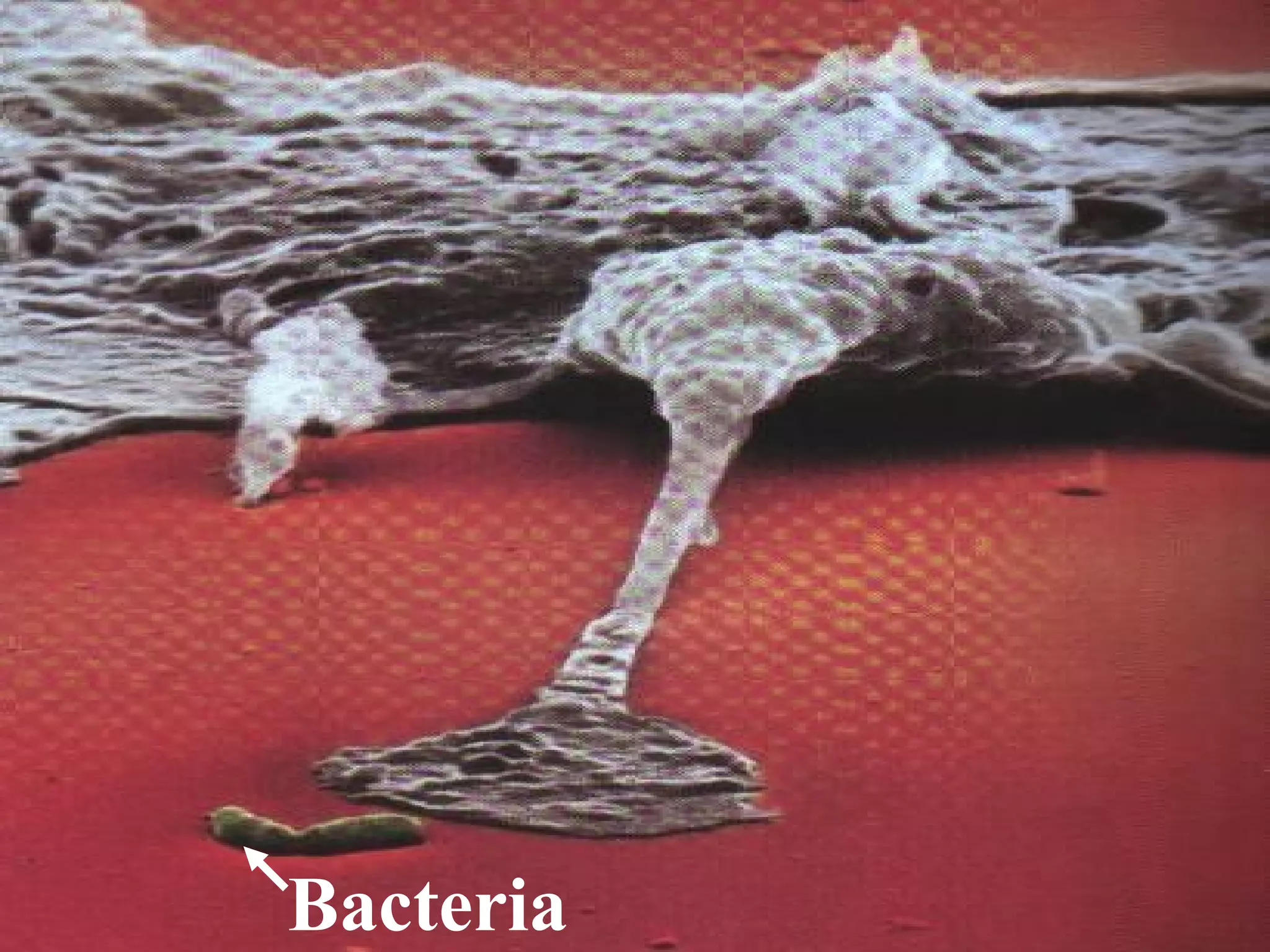
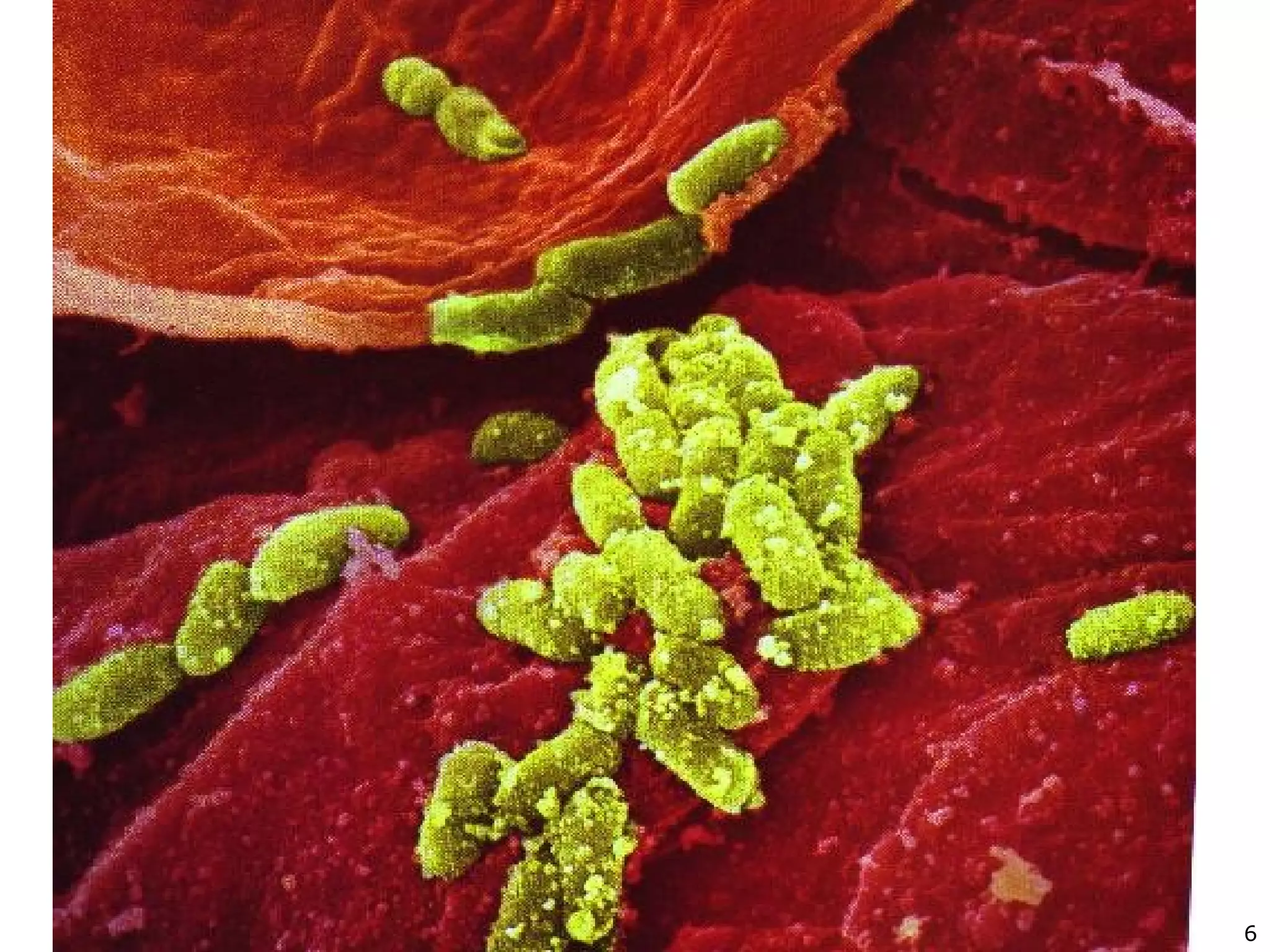
Bacteria
6
7
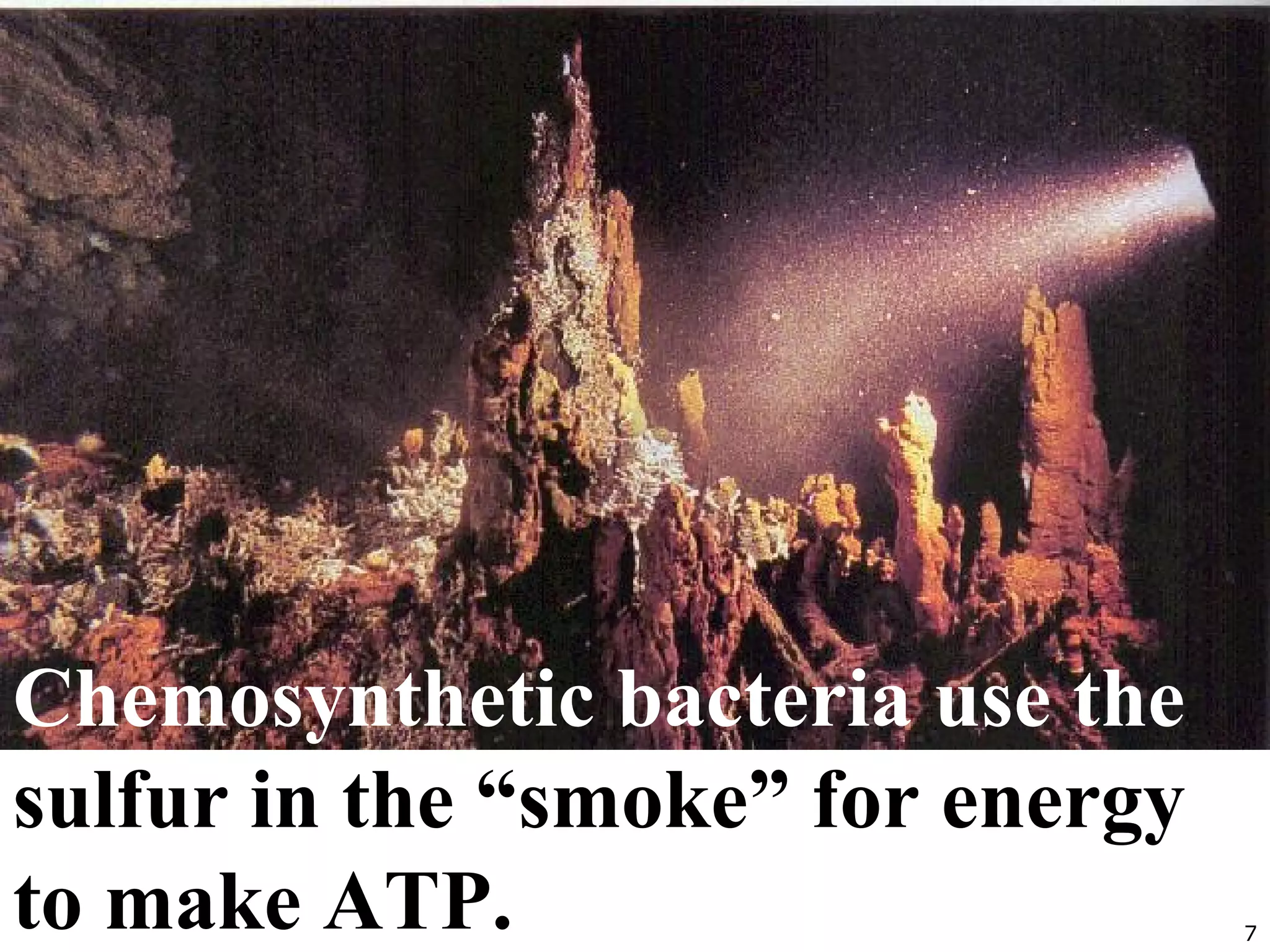
Chemosynthetic bacteria use the
sulfur in the “smoke” for energy
to make ATP.
8
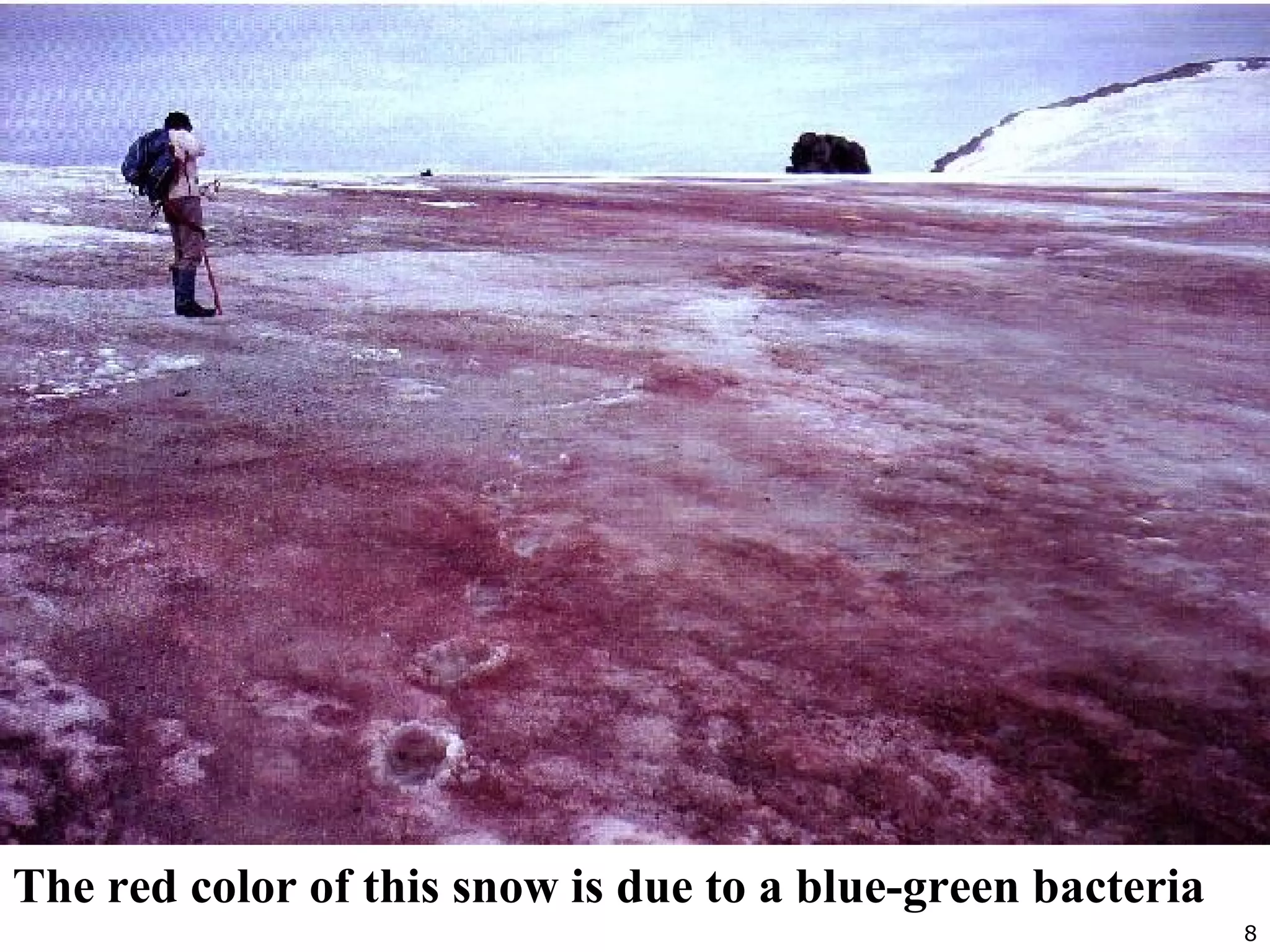
The red color of this snow is due to a blue-green bacteria
9
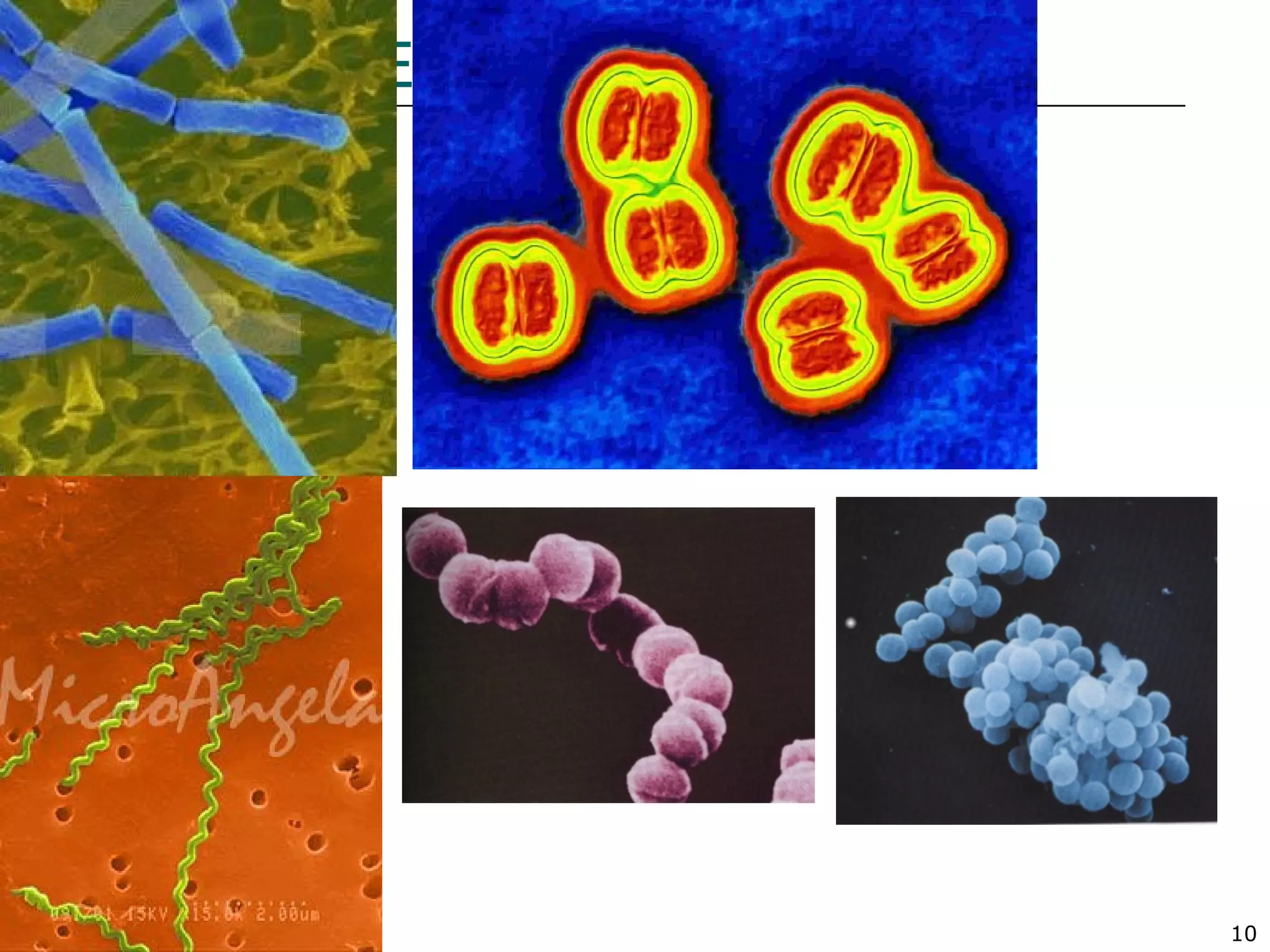
Kingdom Eubacteria
 Can have one of three basic shapes
1.Bacilli – rod-shaped
2.Spirilla – spiral-shaped
3.Cocci – sphere-shaped
Streptococci – in chains
Staphylococci – grape-like
clusters
10
BACTERIA PICS
11
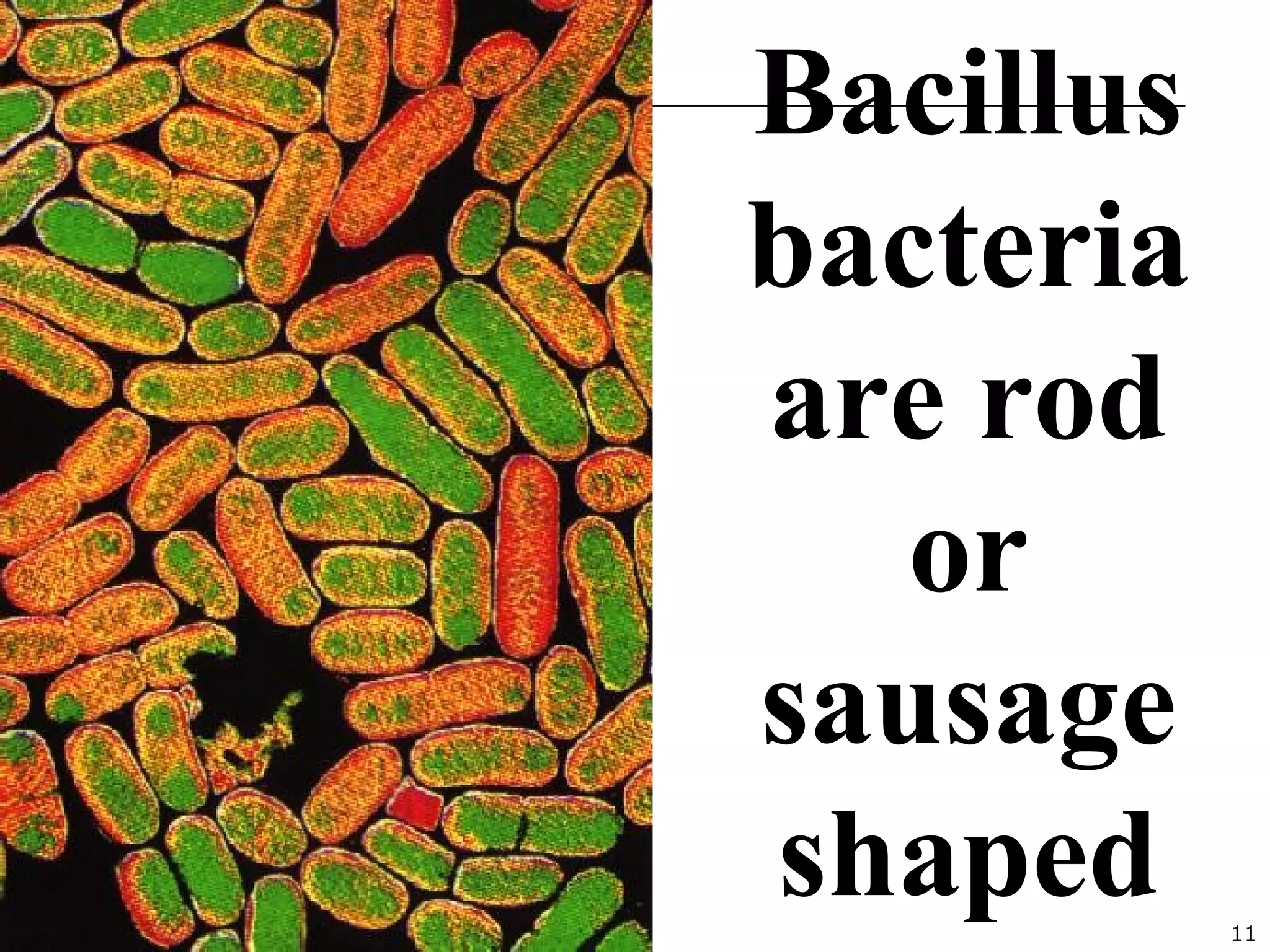
Bacillus
bacteria
are rod
or
sausage
shaped
12
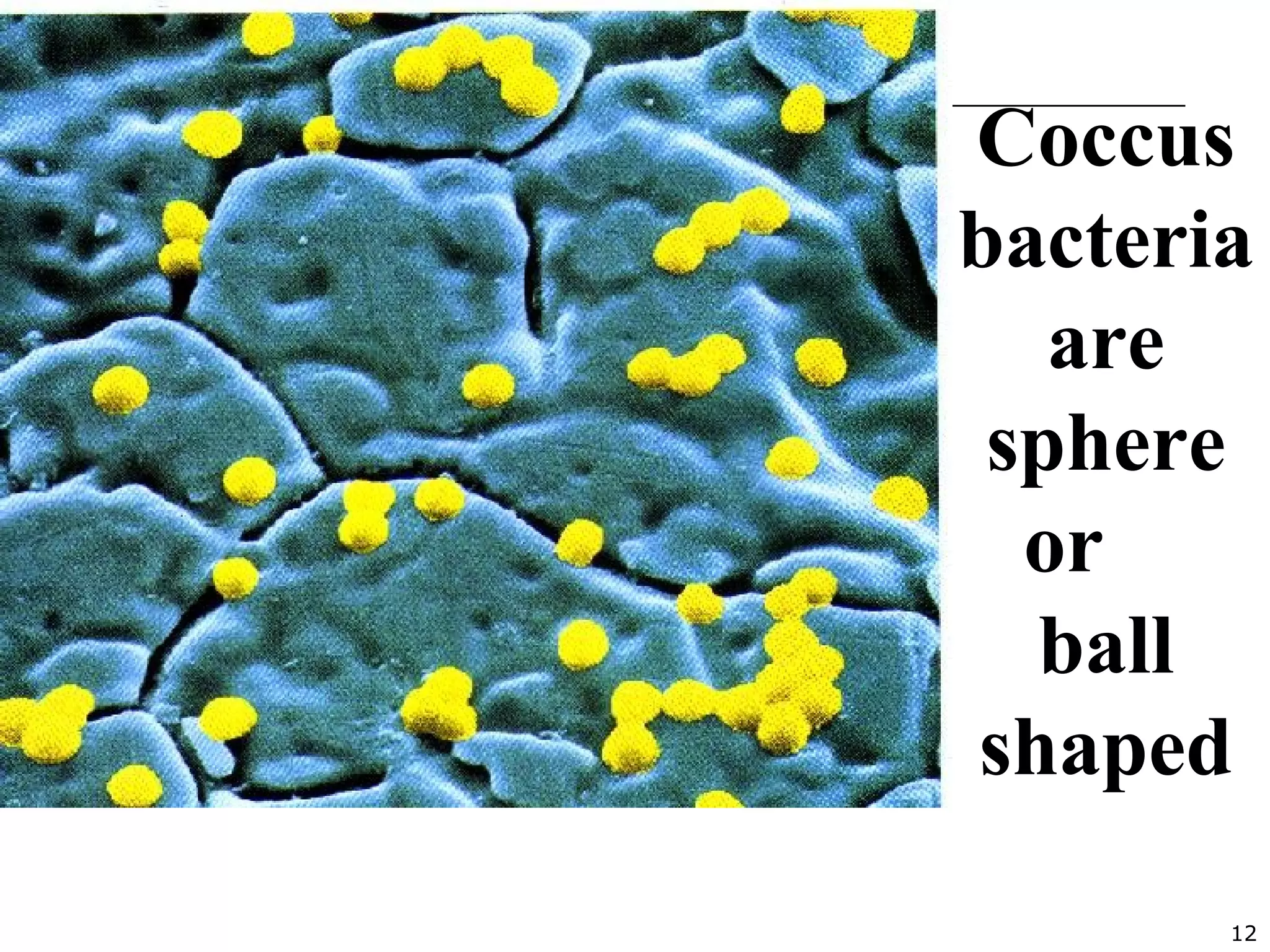
Coccus
bacteria
are
sphere
or
ball
shaped
13
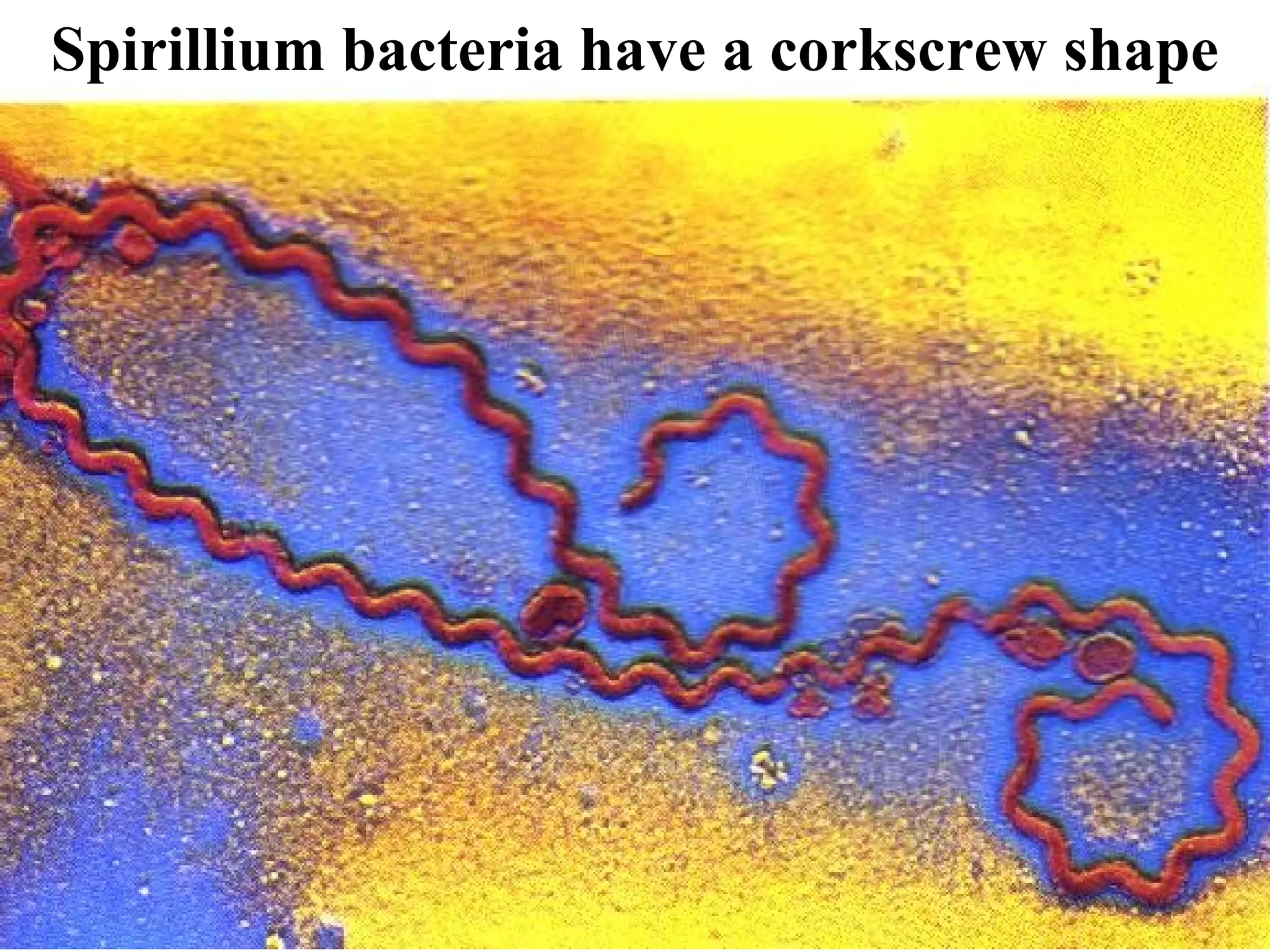
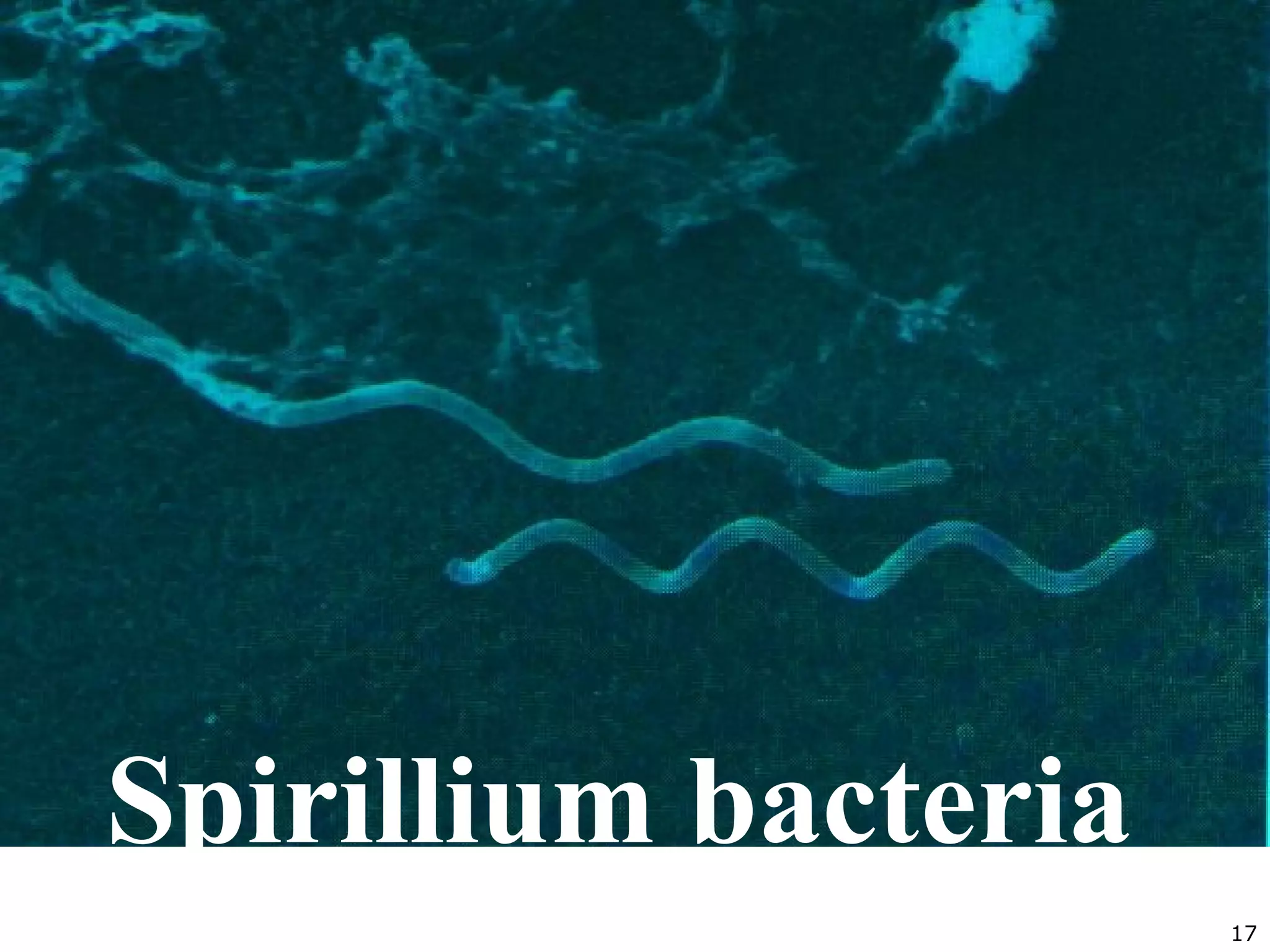
Spirillium bacteria have a corkscrew shape
14
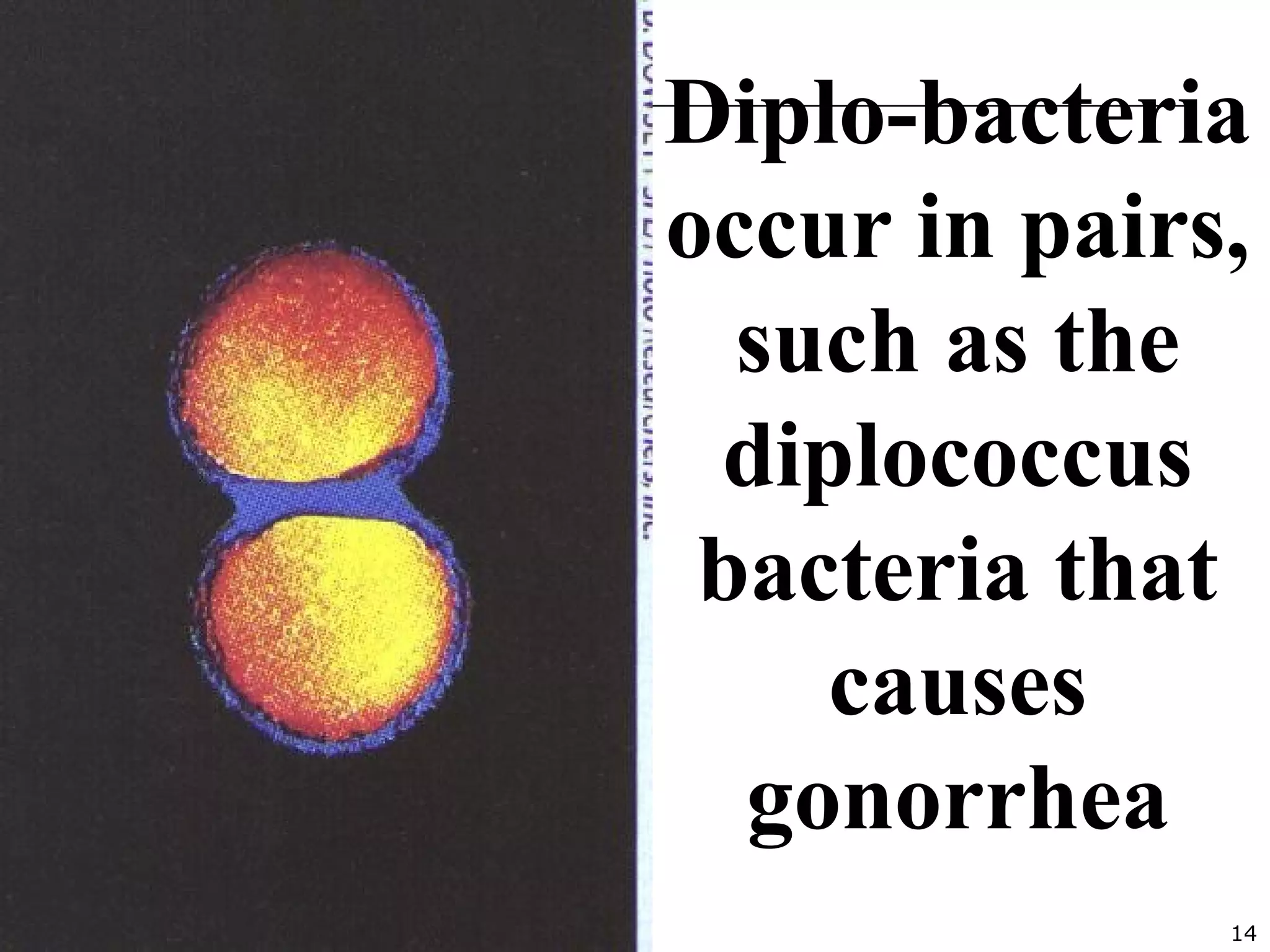
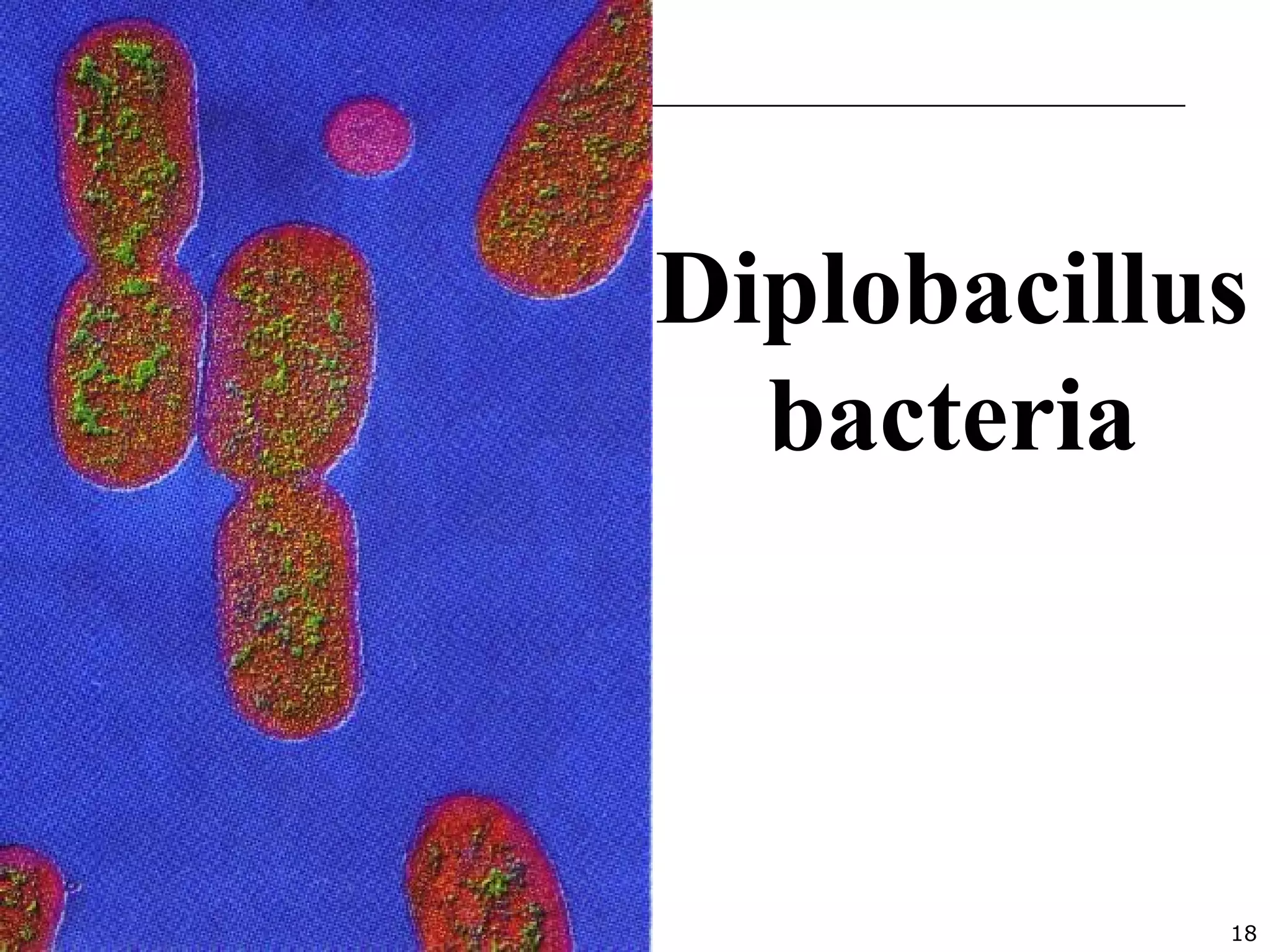
Diplo-bacteria
occur in pairs,
such as the
diplococcus
bacteria that
causes
gonorrhea
15
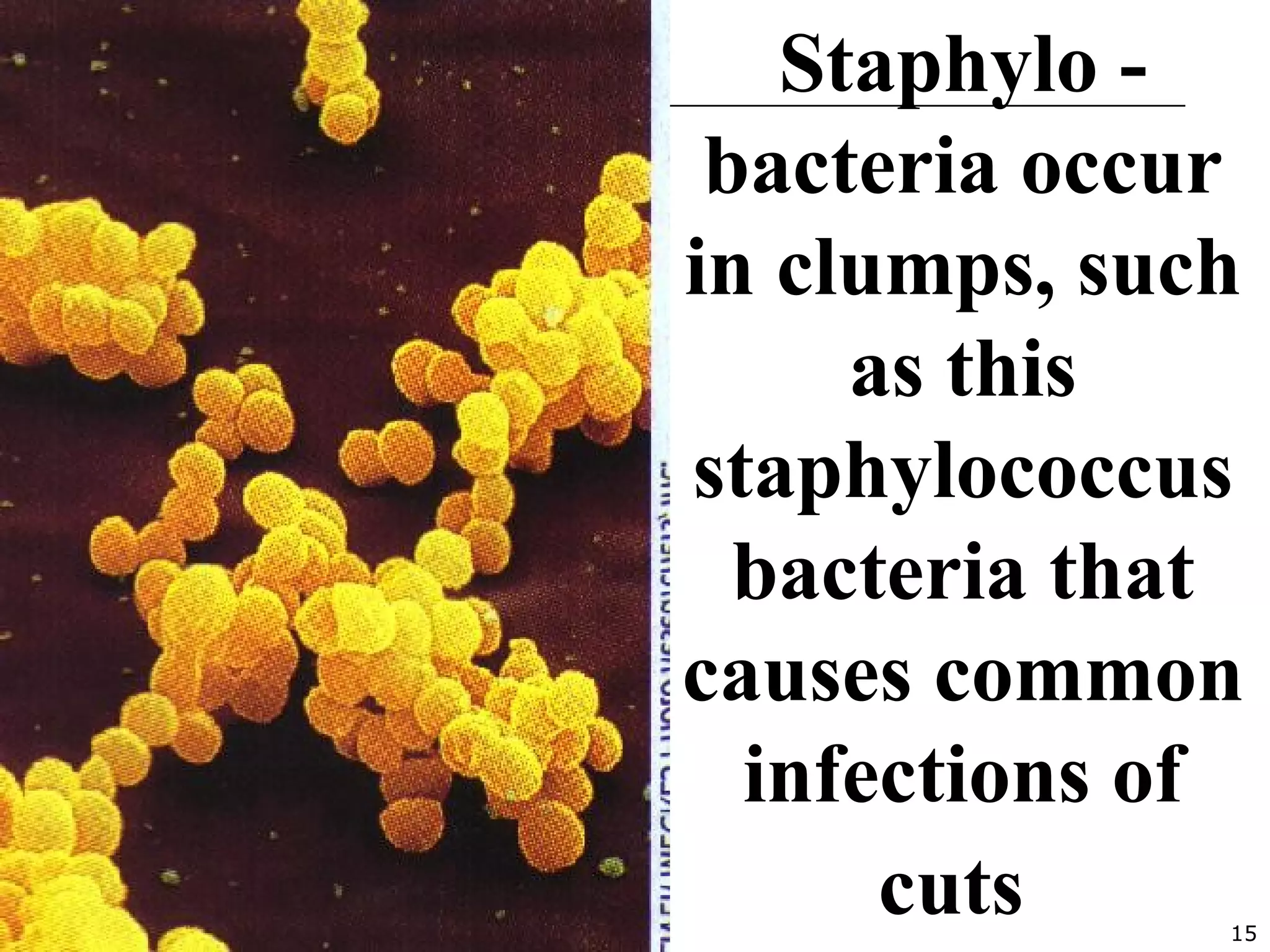
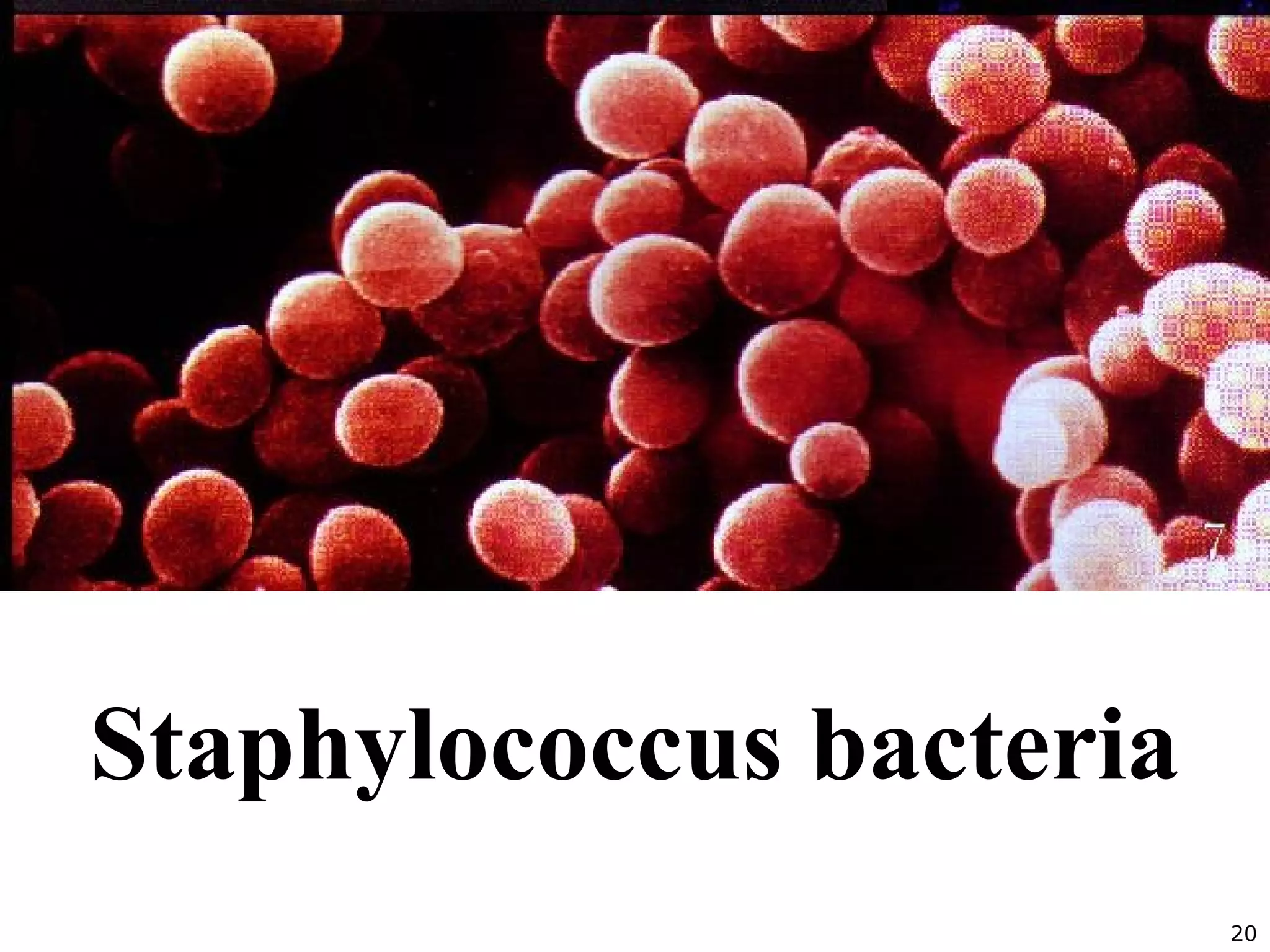
Staphylo -
bacteria occur
in clumps, such
as this
staphylococcus
bacteria that
causes common
infections of
cuts
16
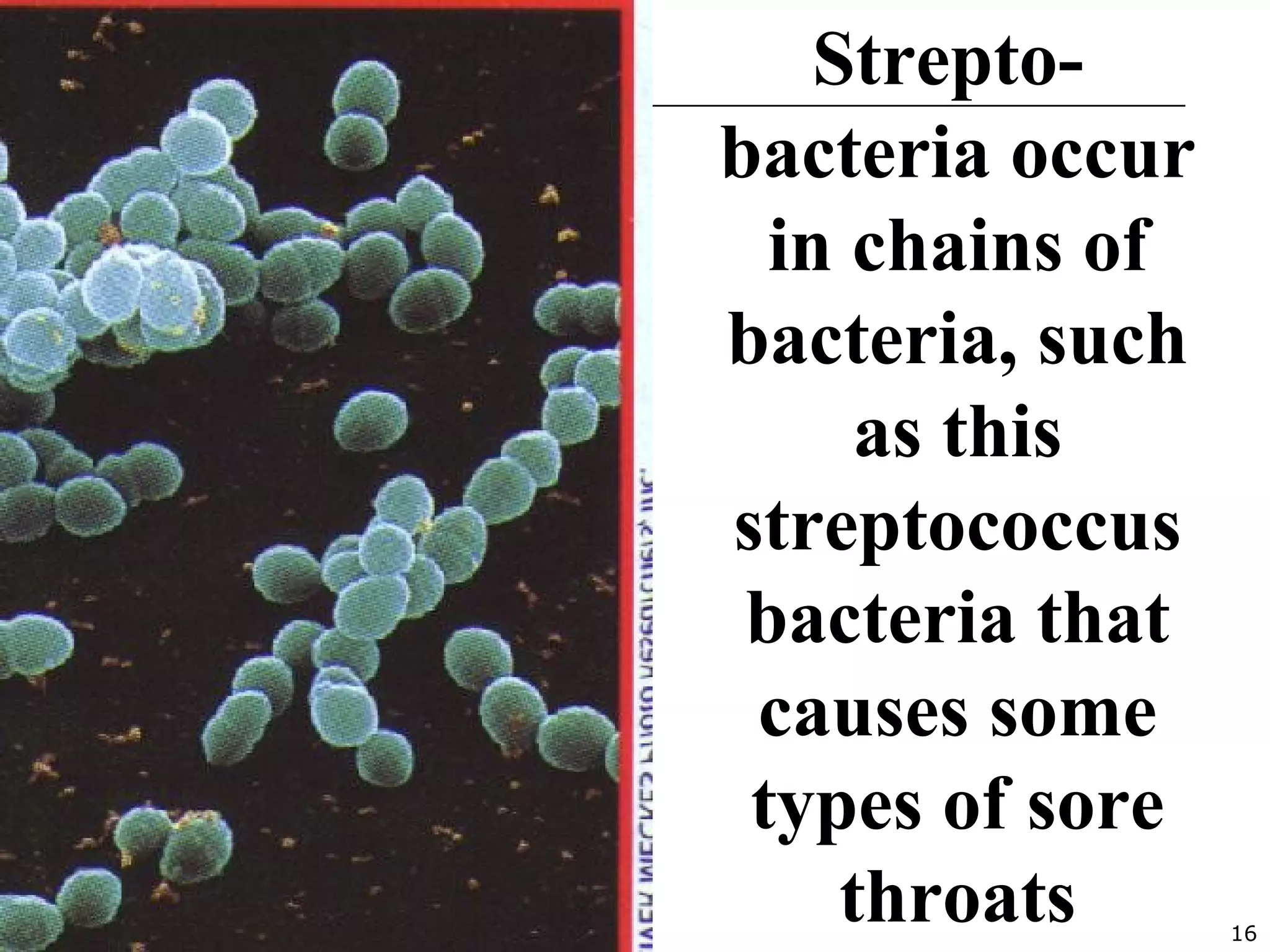
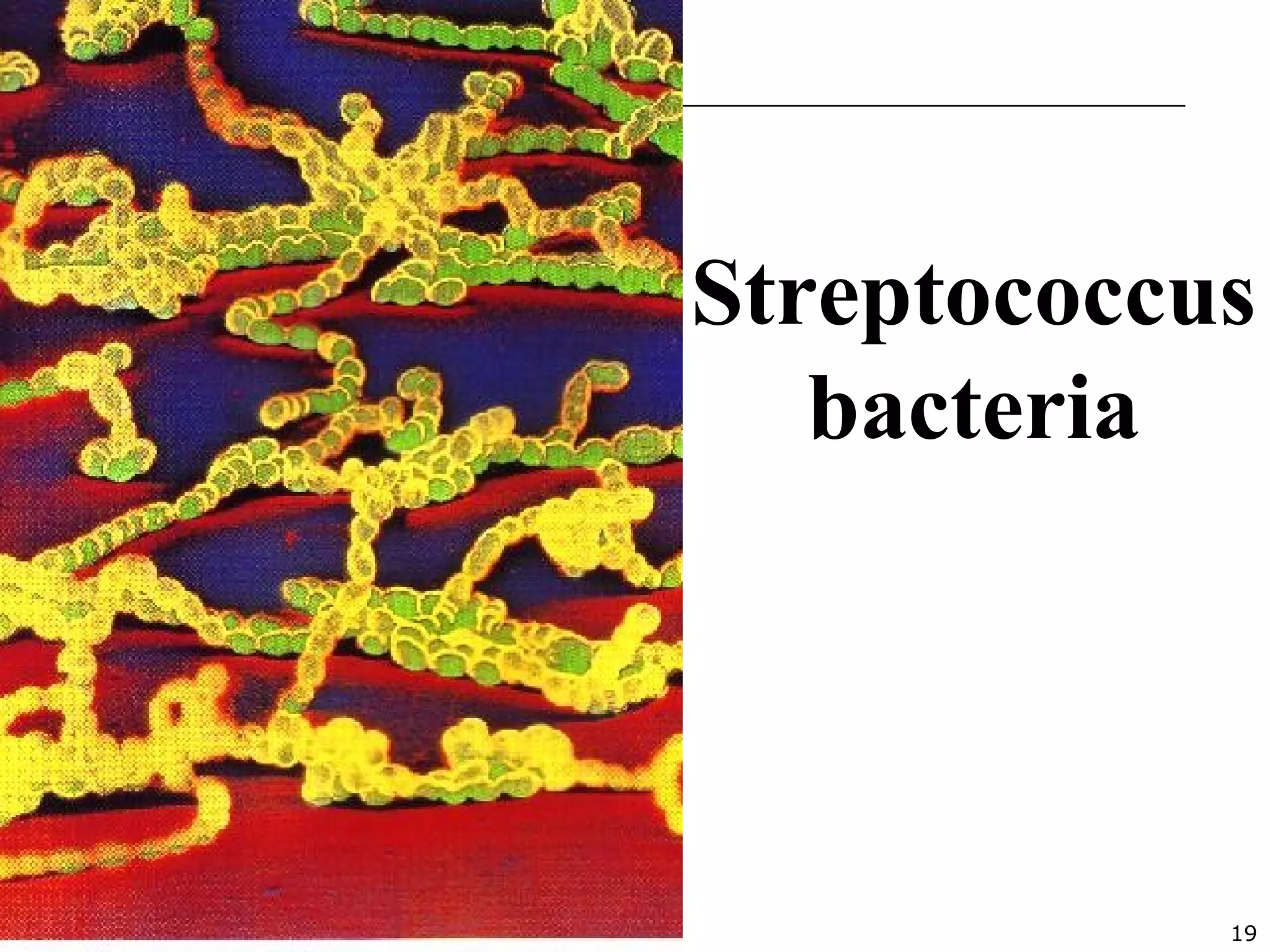
Strepto-
bacteria occur
in chains of
bacteria, such
as this
streptococcus
bacteria that
causes some
types of sore
throats
17
Spirillium bacteria
18
Diplobacillus
bacteria
19
Streptococcus
bacteria
20
Staphylococcus bacteria
21
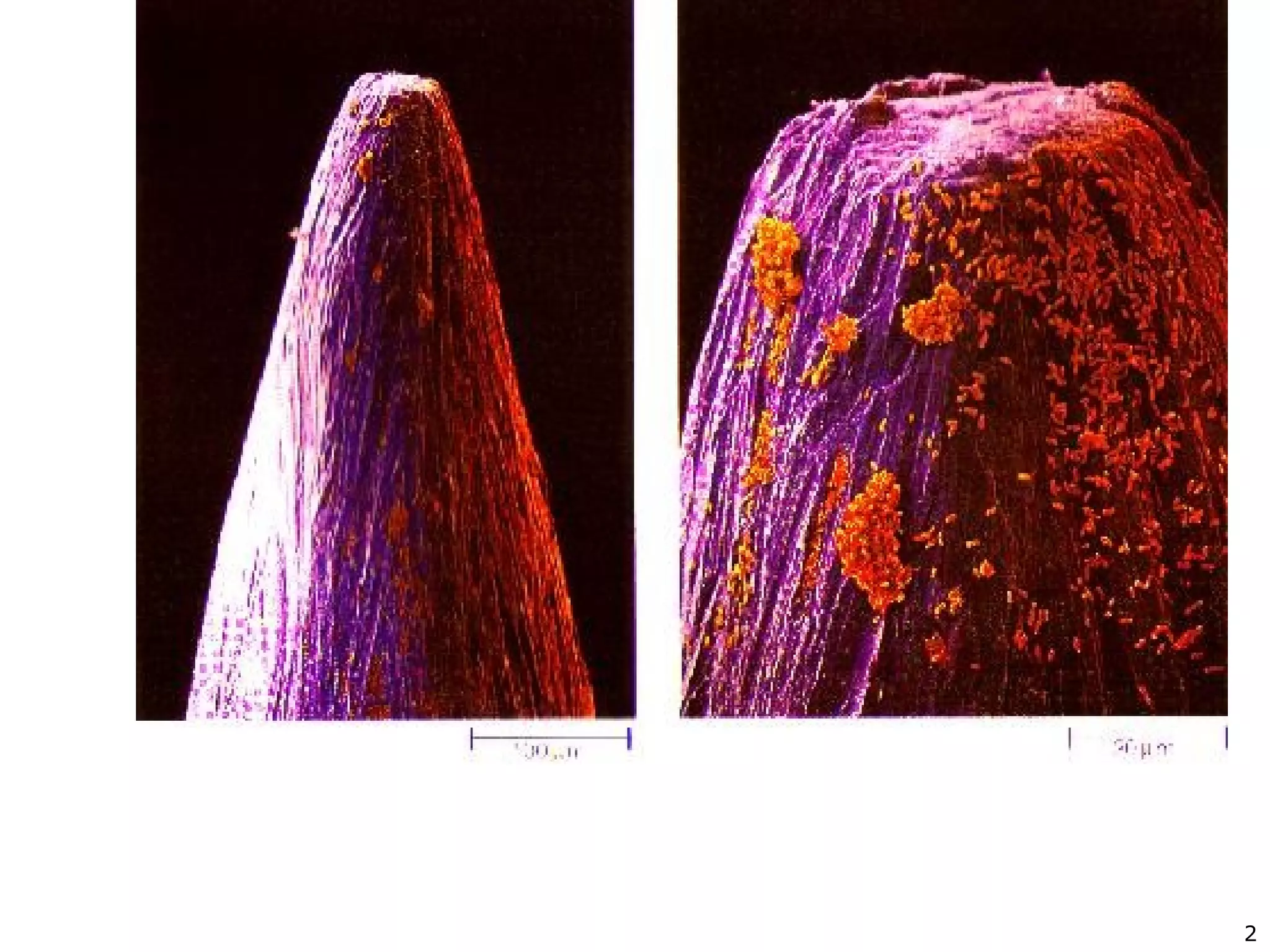
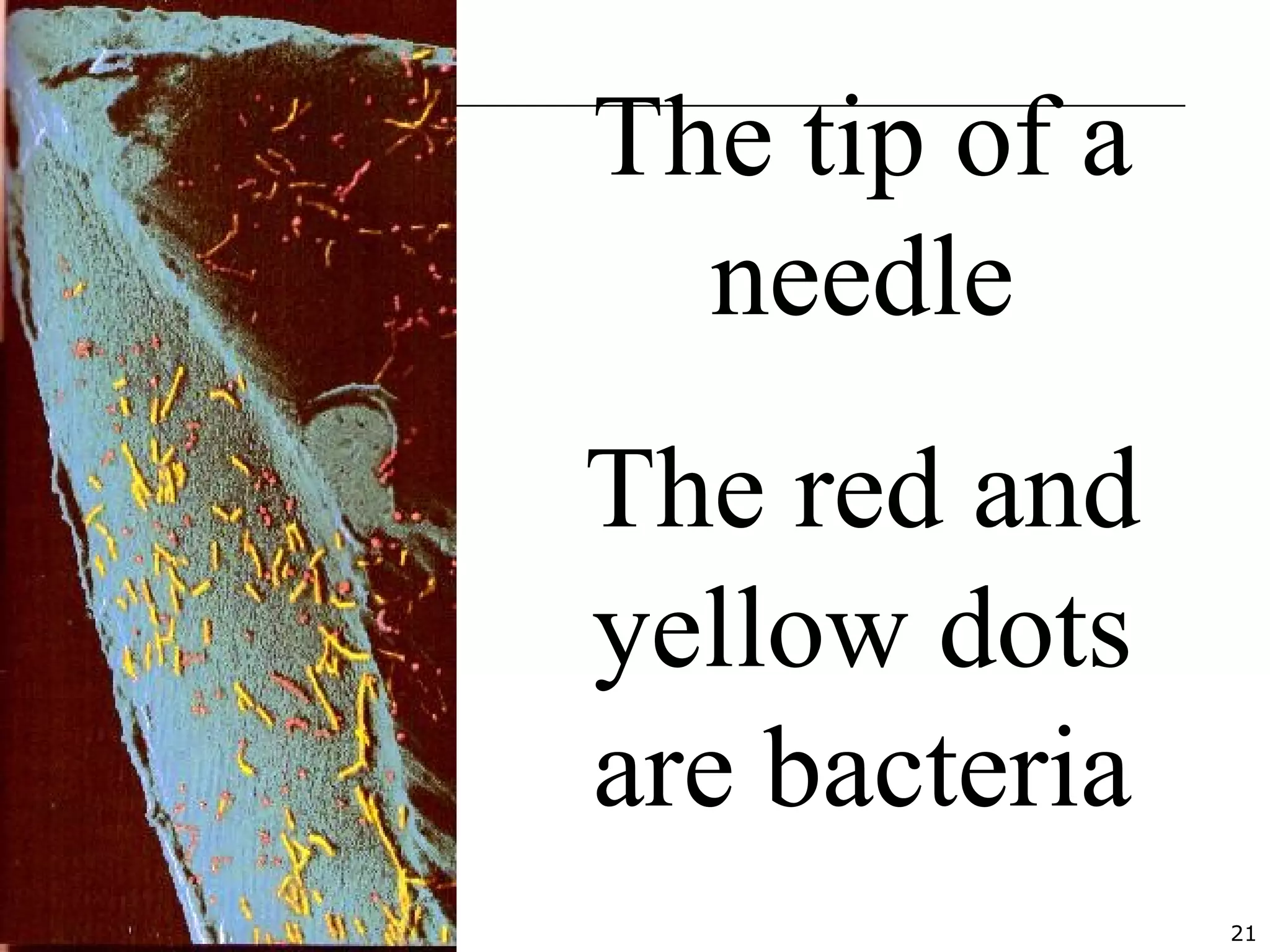
The tip of a
needle
The red and
yellow dots
are bacteria
22
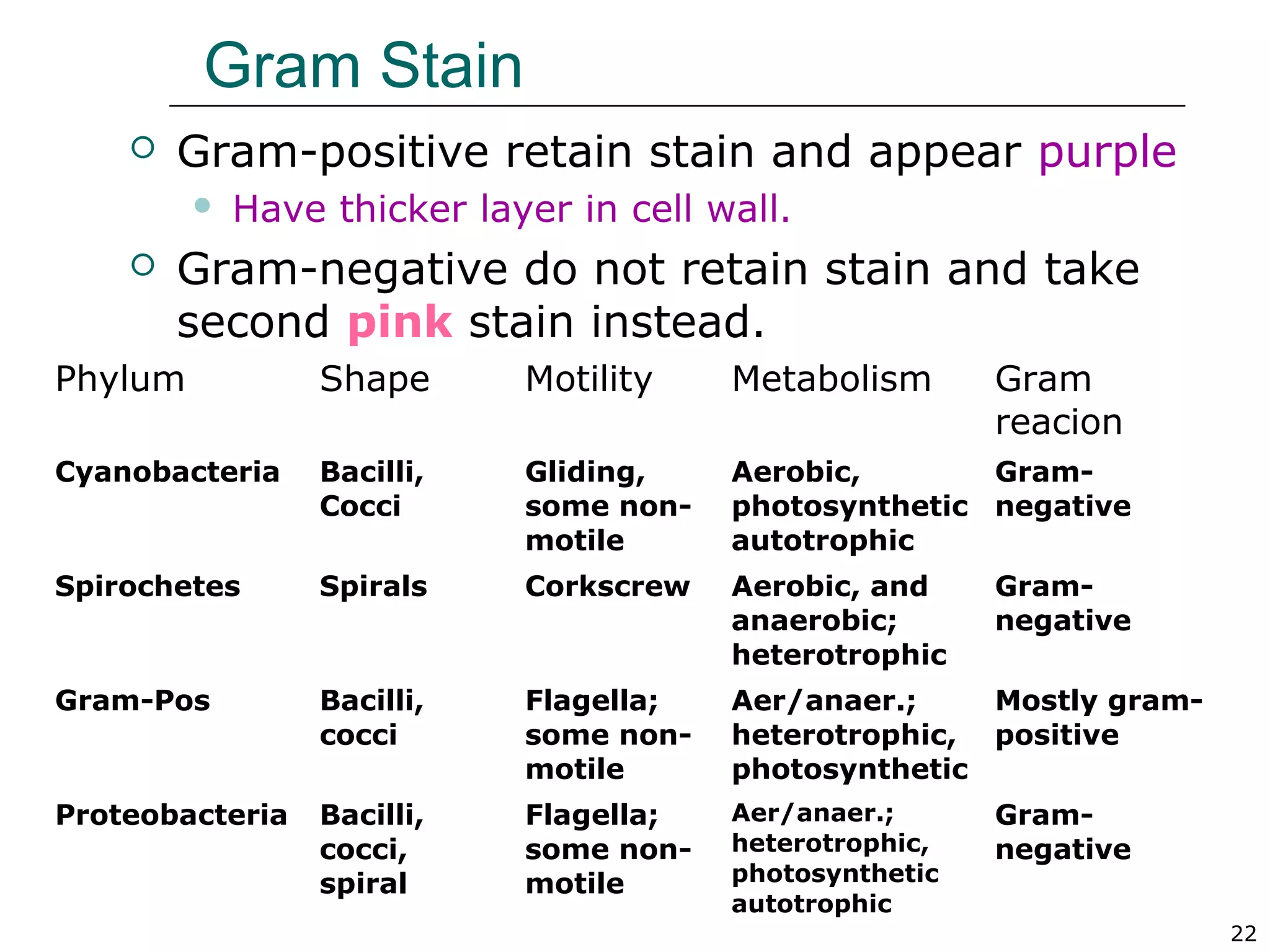
Gram Stain
 Gram-positive retain stain and appear purple
 Have thicker layer in cell wall.
 Gram-negative do not retain stain and take
second pink stain instead.
Phylum Shape Motility Metabolism Gram
reacion
Cyanobacteria Bacilli,
Cocci
Gliding,
some non-
motile
Aerobic,
photosynthetic
autotrophic
Gram-
negative
Spirochetes Spirals Corkscrew Aerobic, and
anaerobic;
heterotrophic
Gram-
negative
Gram-Pos Bacilli,
cocci
Flagella;
some non-
motile
Aer/anaer.;
heterotrophic,
photosynthetic
Mostly gram-
positive
Proteobacteria Bacilli,
cocci,
spiral
Flagella;
some non-
motile
Aer/anaer.;
heterotrophic,
photosynthetic
autotrophic
Gram-
negative
23
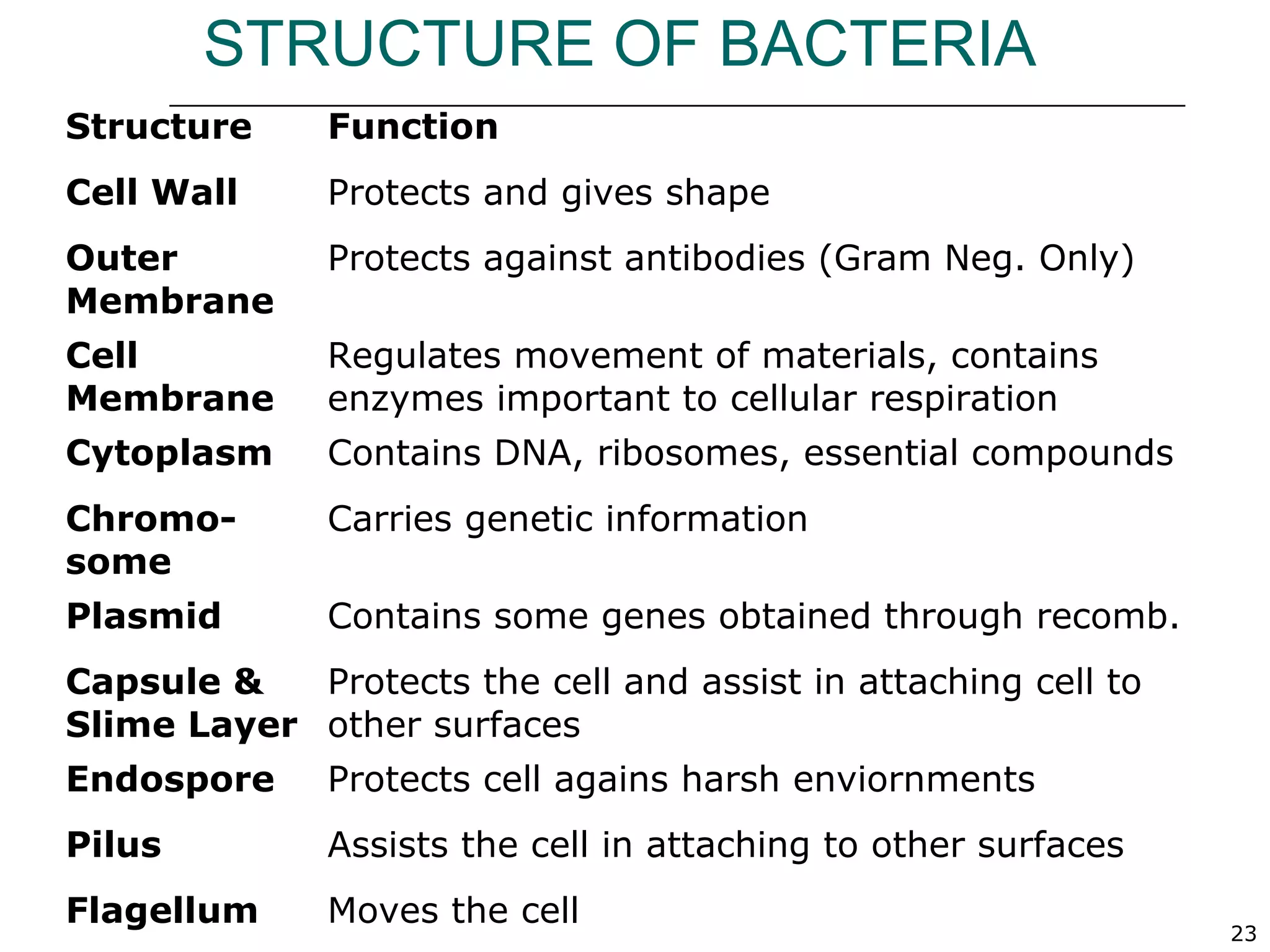
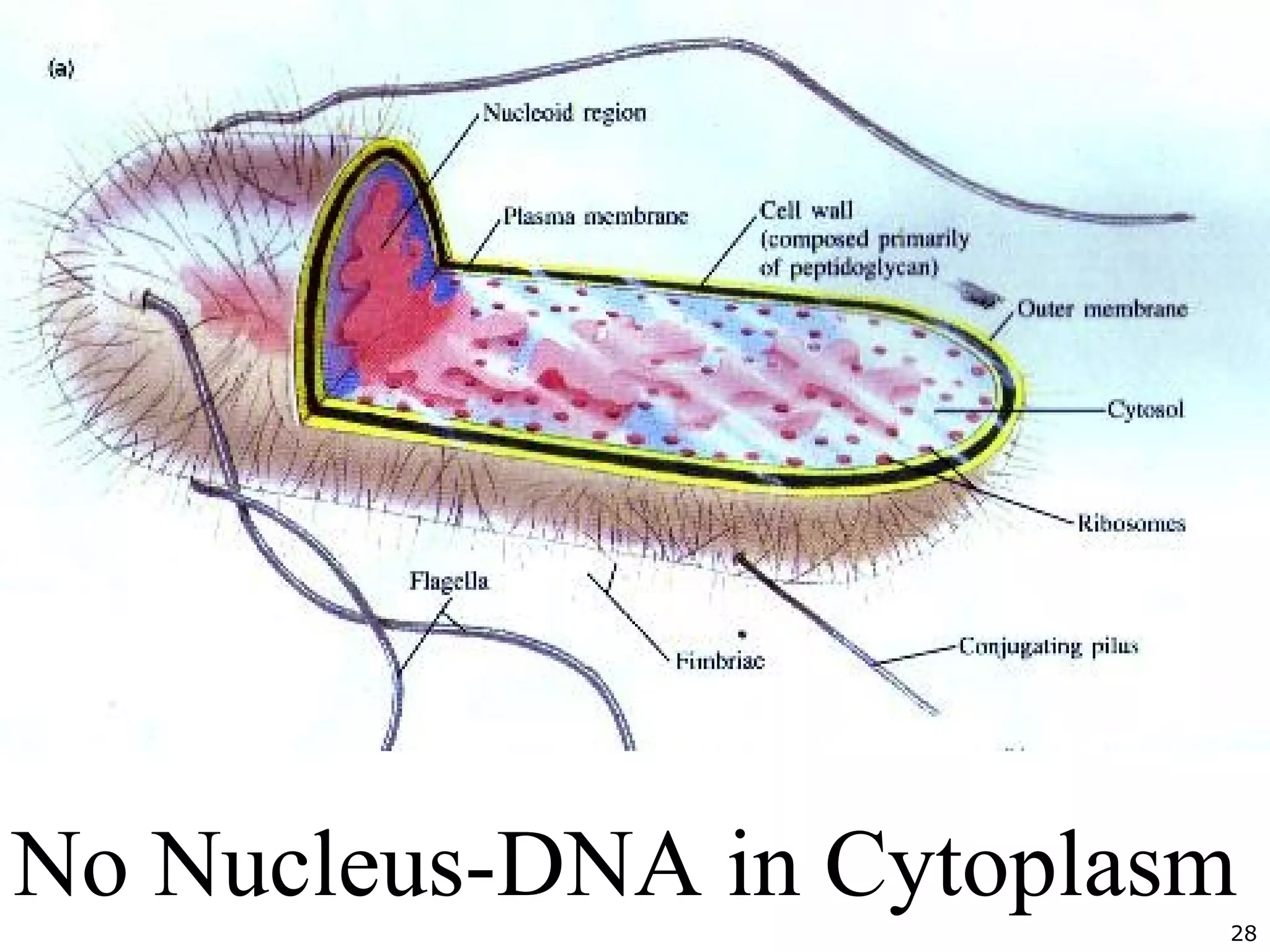
STRUCTURE OF BACTERIA
Structure Function
Cell Wall Protects and gives shape
Outer
Membrane
Protects against antibodies (Gram Neg. Only)
Cell
Membrane
Regulates movement of materials, contains
enzymes important to cellular respiration
Cytoplasm Contains DNA, ribosomes, essential compounds
Chromo-
some
Carries genetic information
Plasmid Contains some genes obtained through recomb.
Capsule &
Slime Layer
Protects the cell and assist in attaching cell to
other surfaces
Endospore Protects cell agains harsh enviornments
Pilus Assists the cell in attaching to other surfaces
Flagellum Moves the cell
24
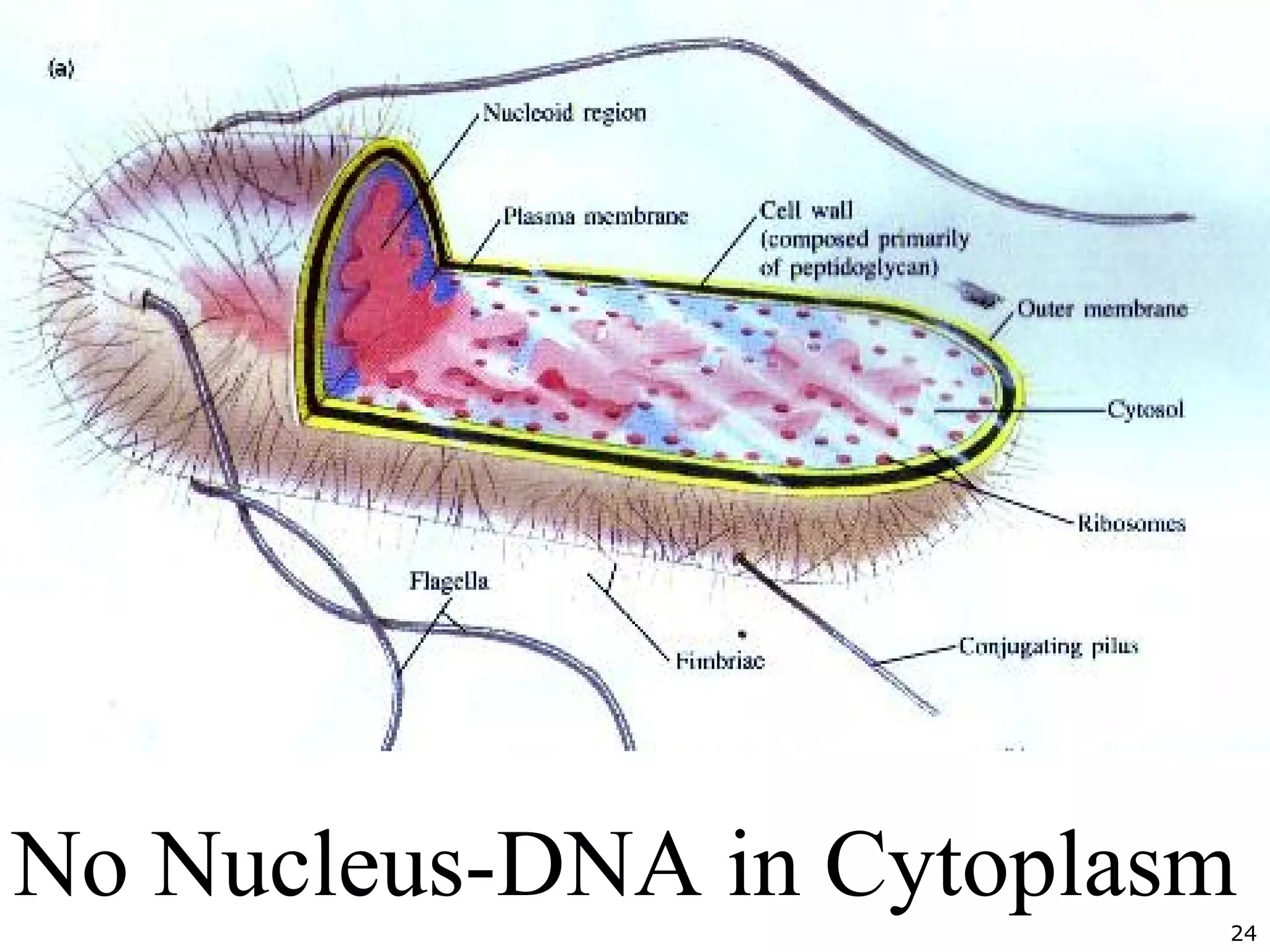
No Nucleus-DNA in Cytoplasm
25
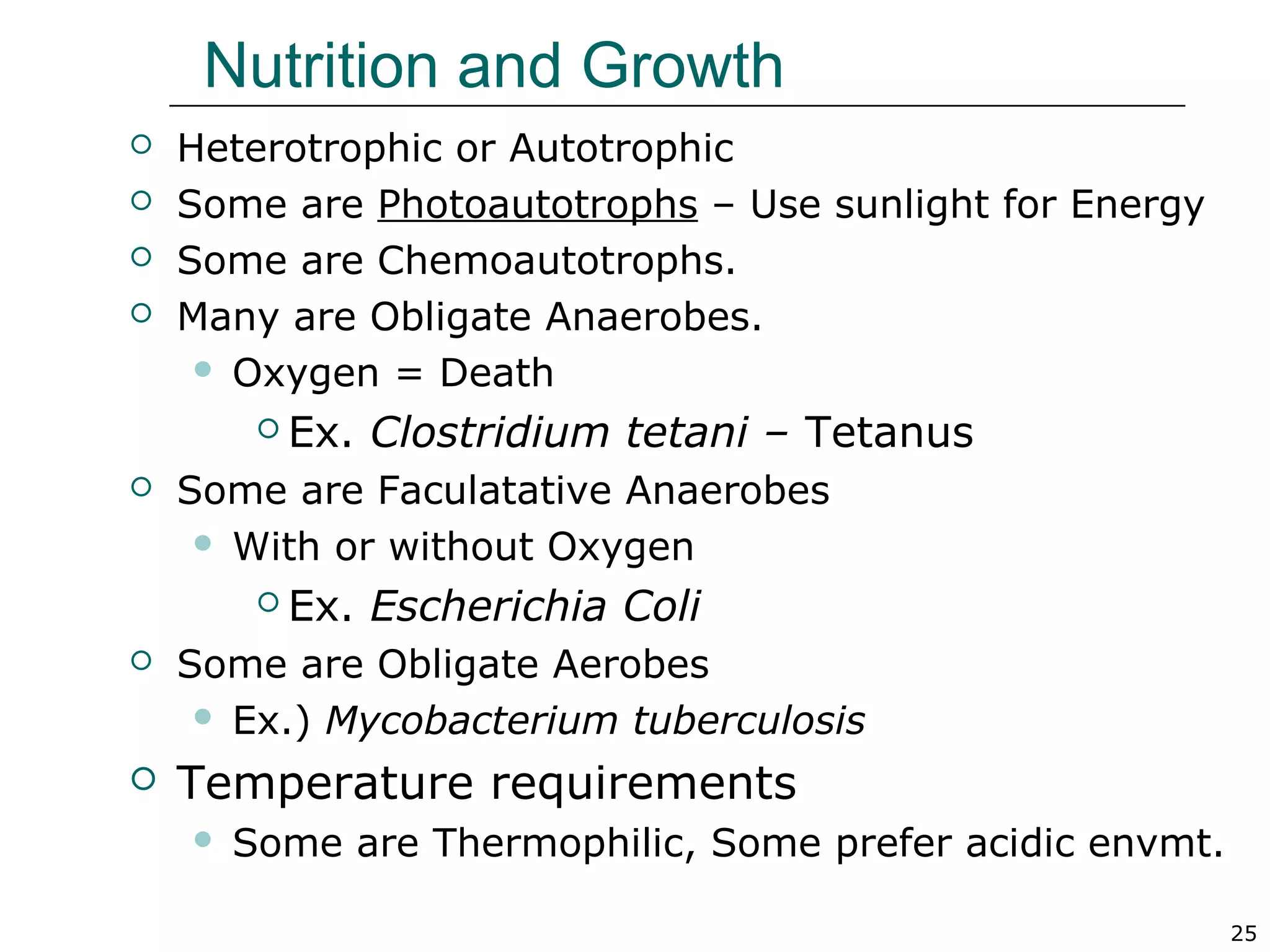
Nutrition and Growth
 Heterotrophic or Autotrophic
 Some are Photoautotrophs – Use sunlight for Energy
 Some are Chemoautotrophs.
 Many are Obligate Anaerobes.
 Oxygen = Death
 Ex. Clostridium tetani – Tetanus
 Some are Faculatative Anaerobes
 With or without Oxygen
 Ex. Escherichia Coli
 Some are Obligate Aerobes
 Ex.) Mycobacterium tuberculosis
 Temperature requirements
 Some are Thermophilic, Some prefer acidic envmt.
26
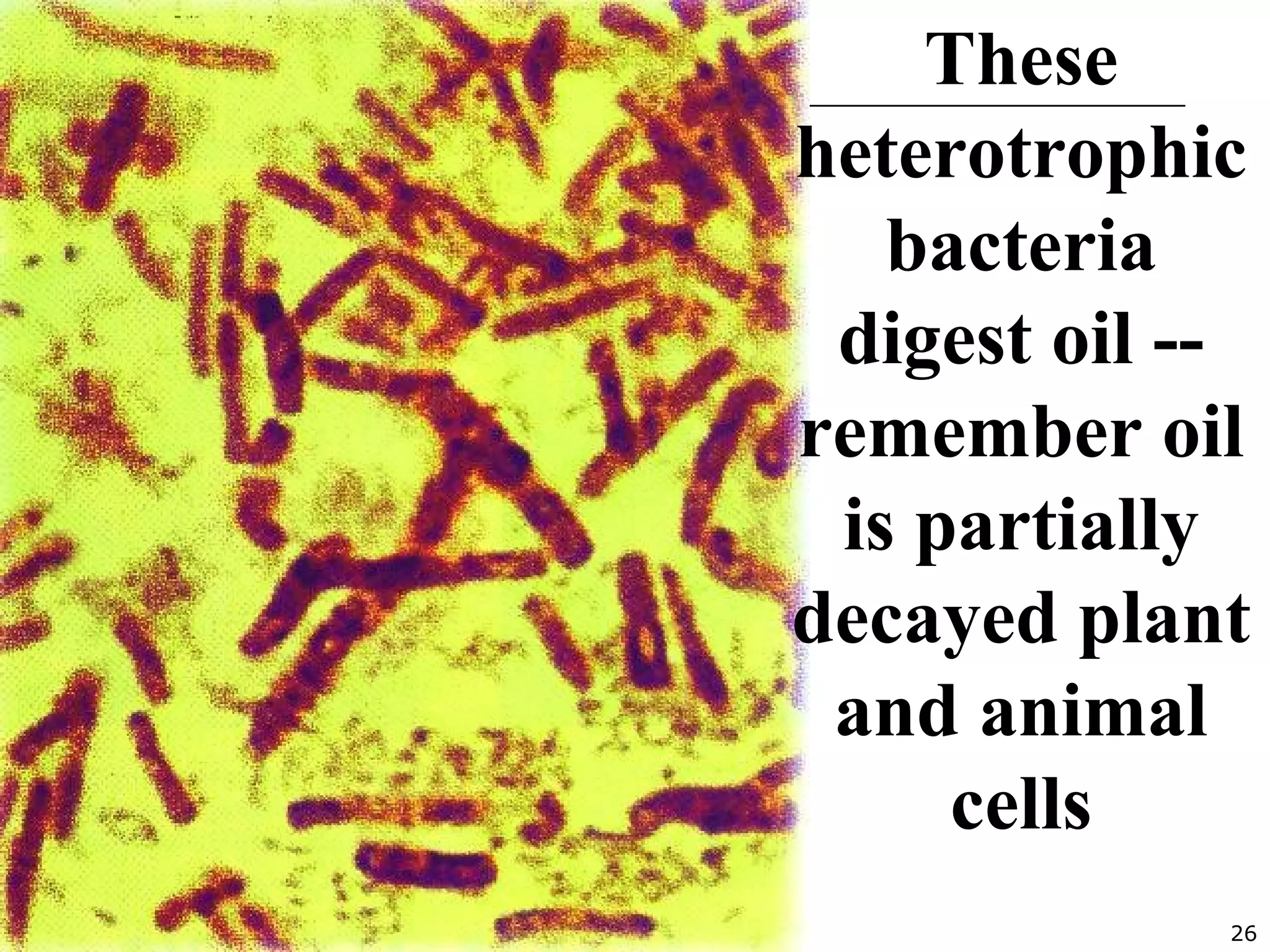
These
heterotrophic
bacteria
digest oil --
remember oil
is partially
decayed plant
and animal
cells
27
REPRODUCTION
IN
BACTERIA
28
No Nucleus-DNA in Cytoplasm
29
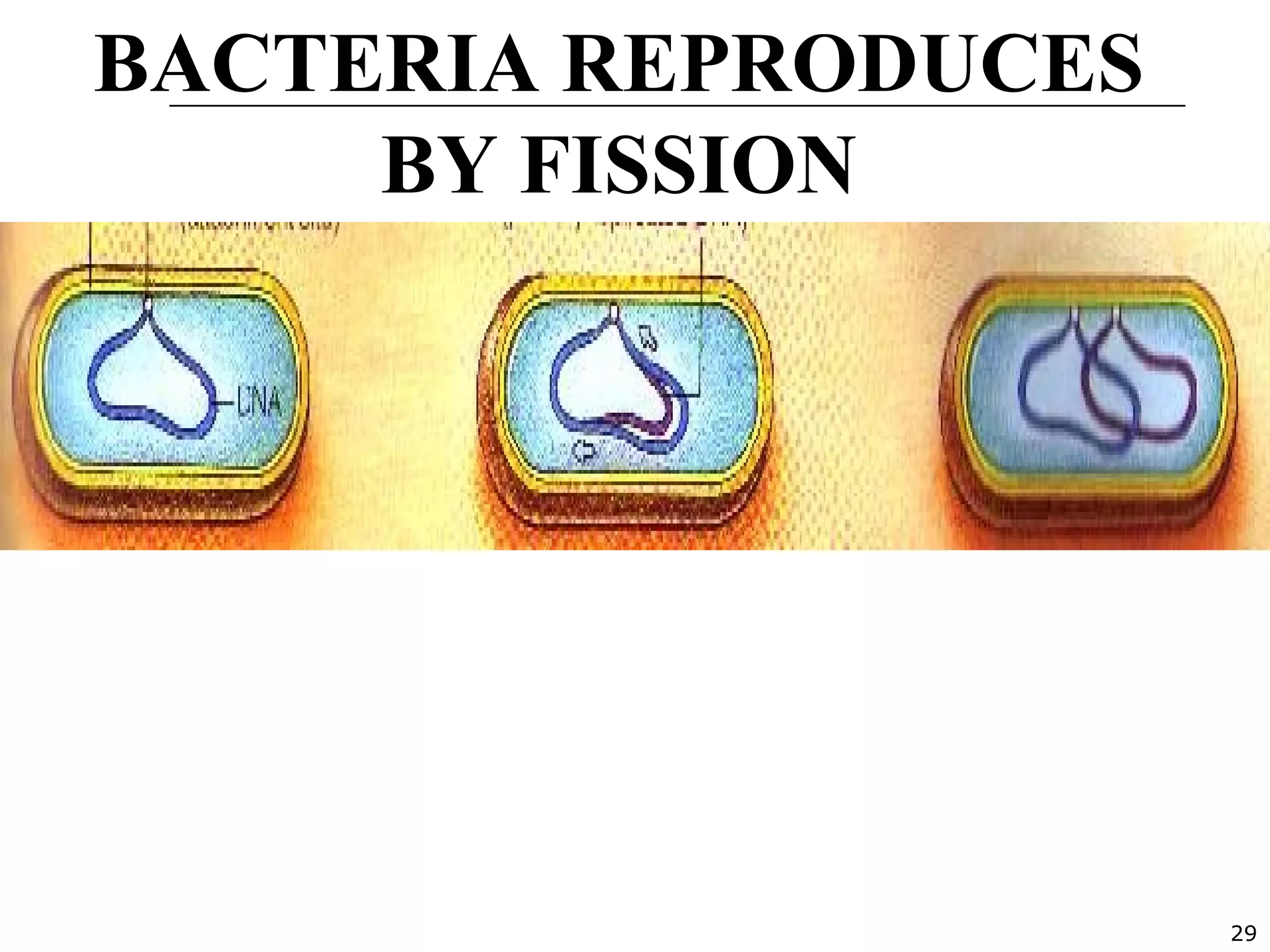
BACTERIA REPRODUCES
BY FISSION
First the chromosomal DNA
makes a copy
The DNA replicates
30
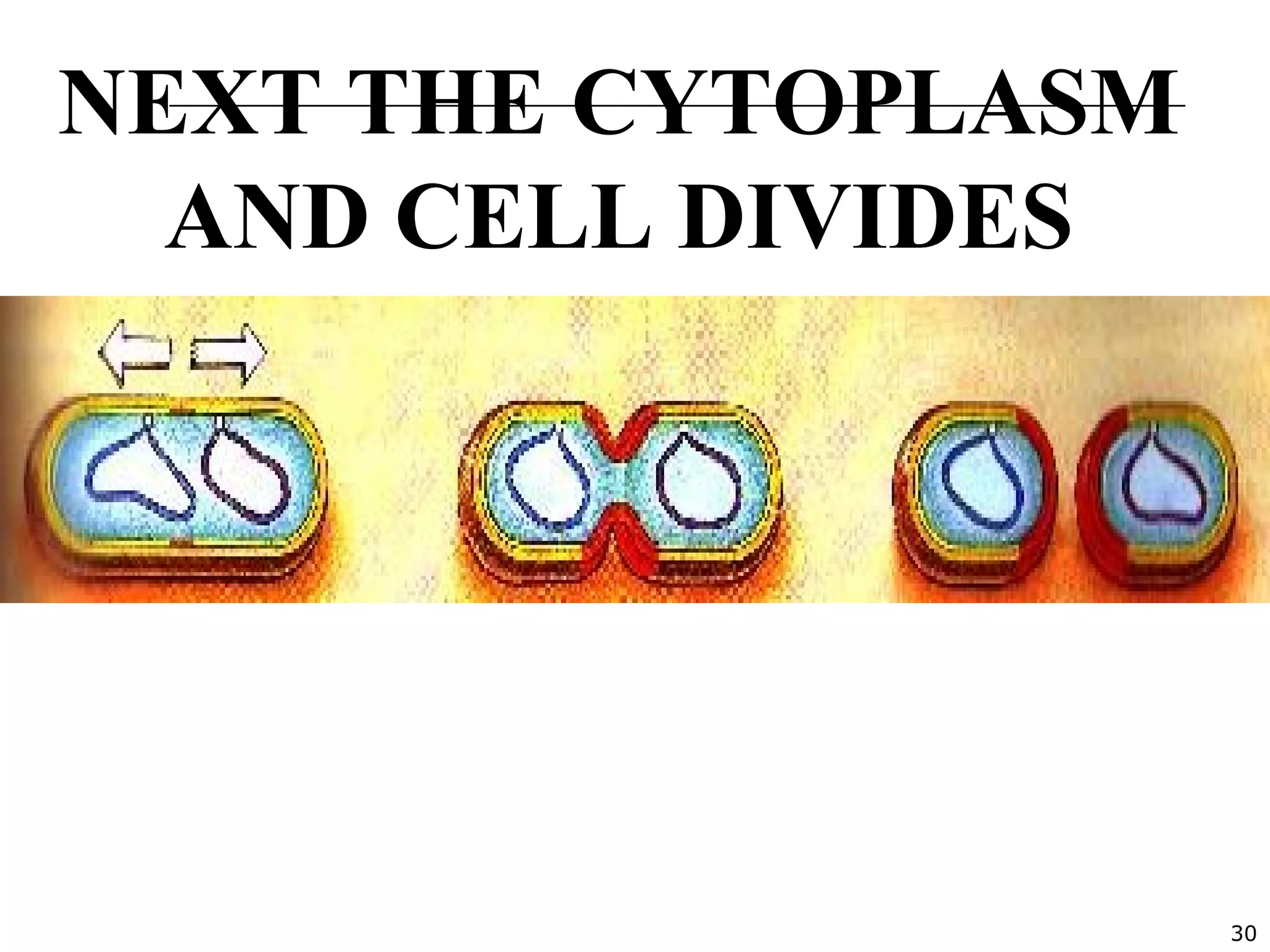
NEXT THE CYTOPLASM
AND CELL DIVIDES
The two resulting cells are
exactly the same
31
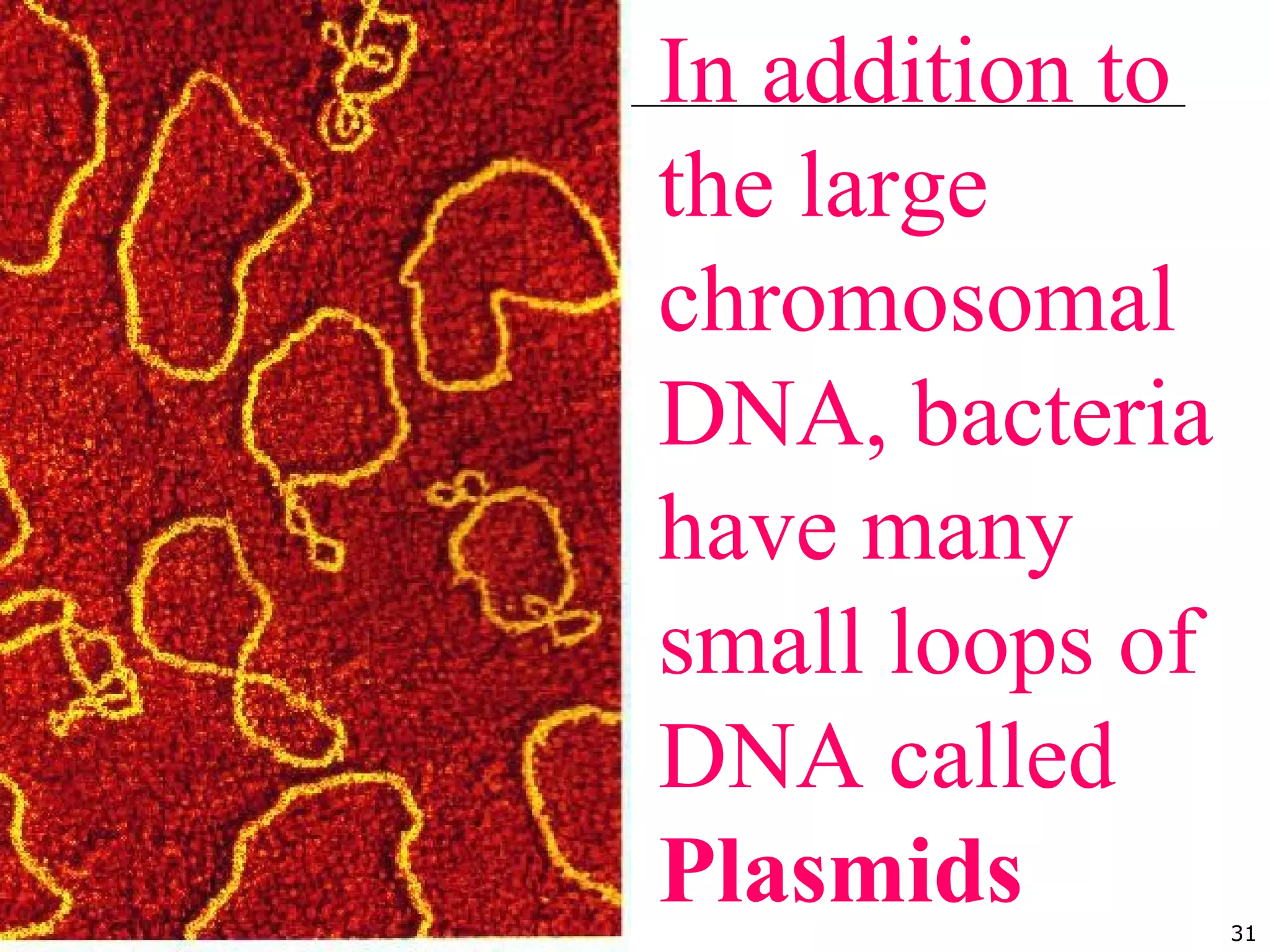
In addition to
the large
chromosomal
DNA, bacteria
have many
small loops of
DNA called
Plasmids
32
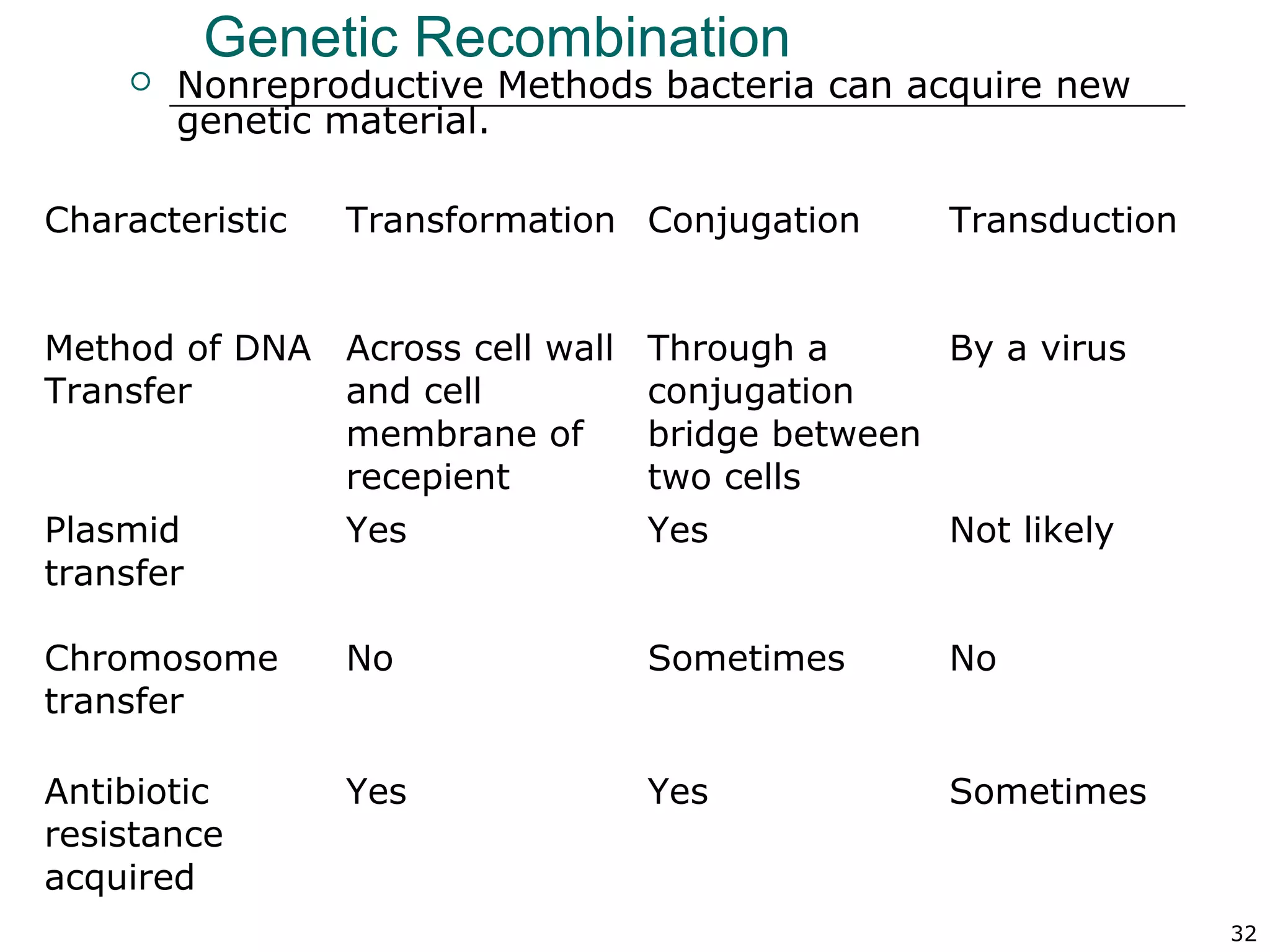
Genetic Recombination
 Nonreproductive Methods bacteria can acquire new
genetic material.
Characteristic Transformation Conjugation Transduction
Method of DNA
Transfer
Across cell wall
and cell
membrane of
recepient
Through a
conjugation
bridge between
two cells
By a virus
Plasmid
transfer
Yes Yes Not likely
Chromosome
transfer
No Sometimes No
Antibiotic
resistance
acquired
Yes Yes Sometimes
33
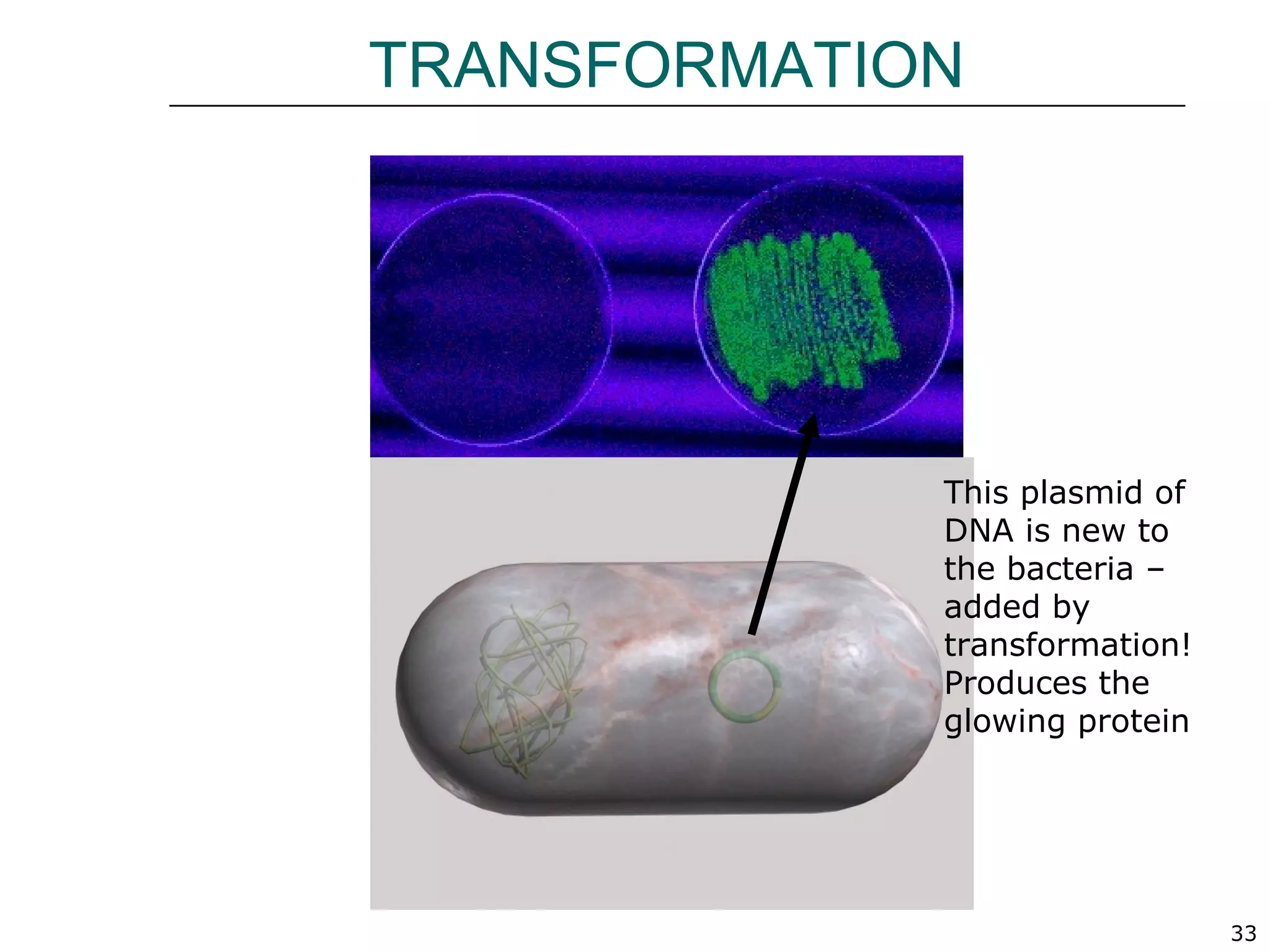
TRANSFORMATION
This plasmid of
DNA is new to
the bacteria –
added by
transformation!
Produces the
glowing protein
34
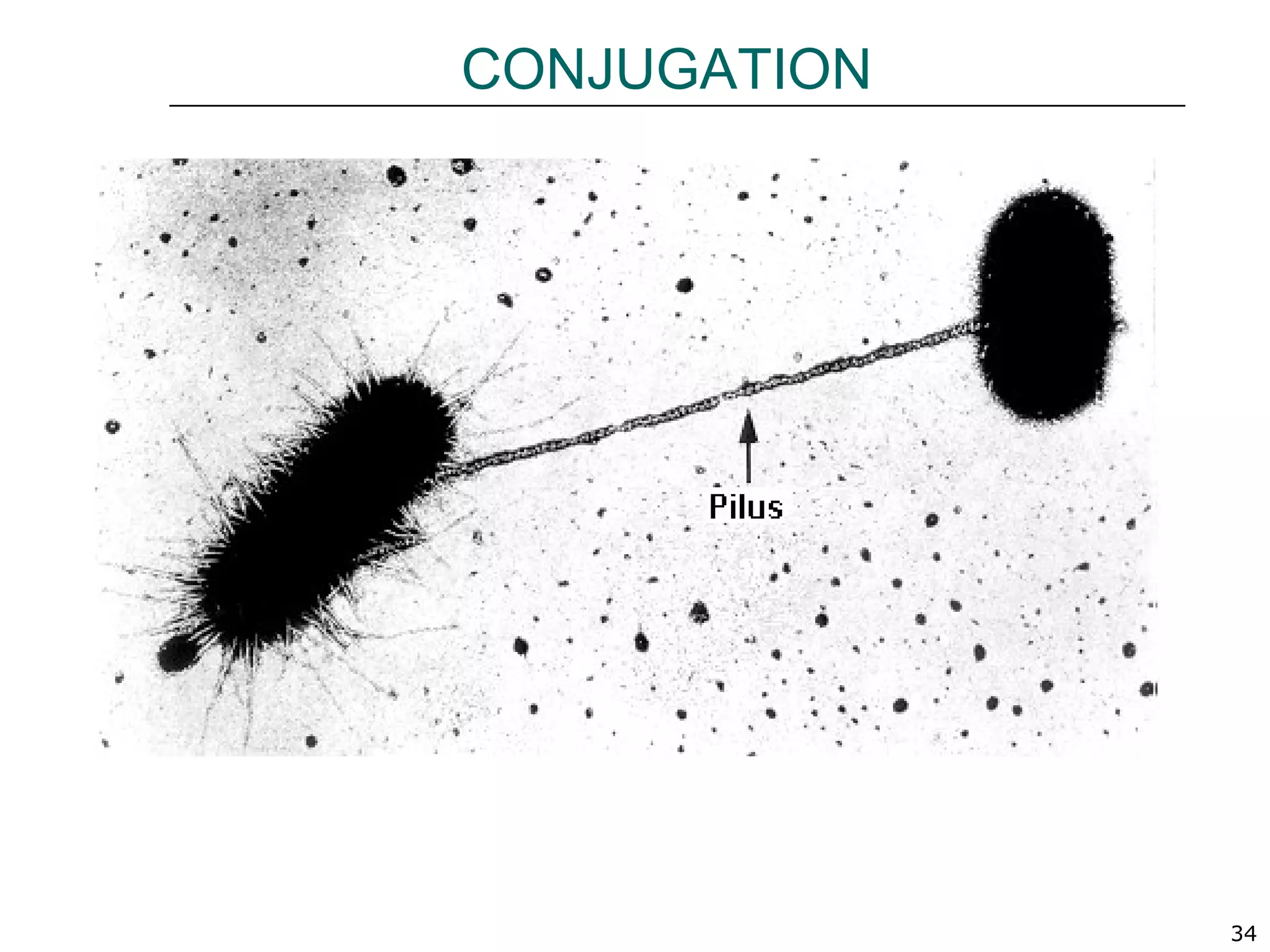
CONJUGATION
35
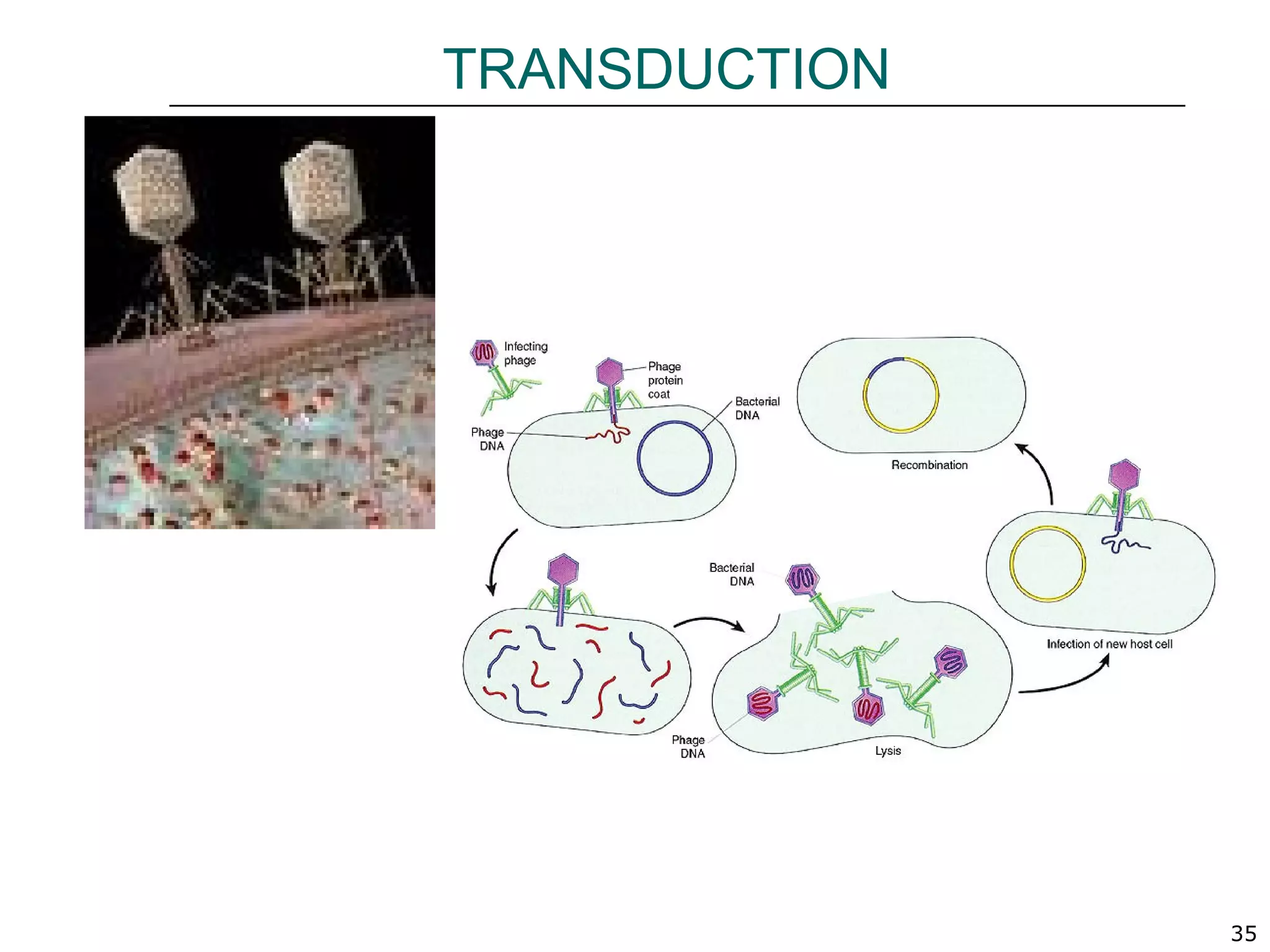
TRANSDUCTION
36
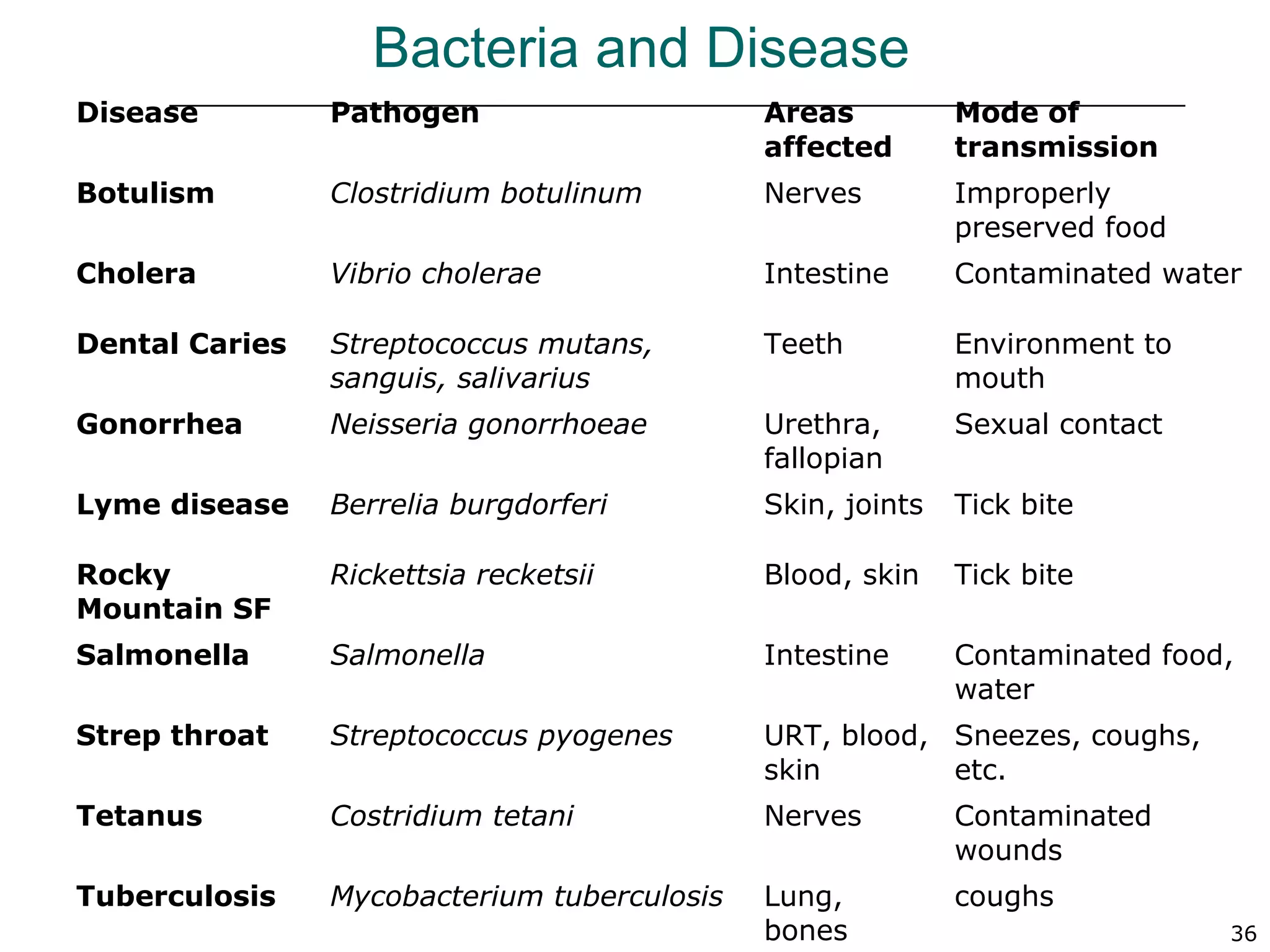
Bacteria and Disease
Disease Pathogen Areas
affected
Mode of
transmission
Botulism Clostridium botulinum Nerves Improperly
preserved food
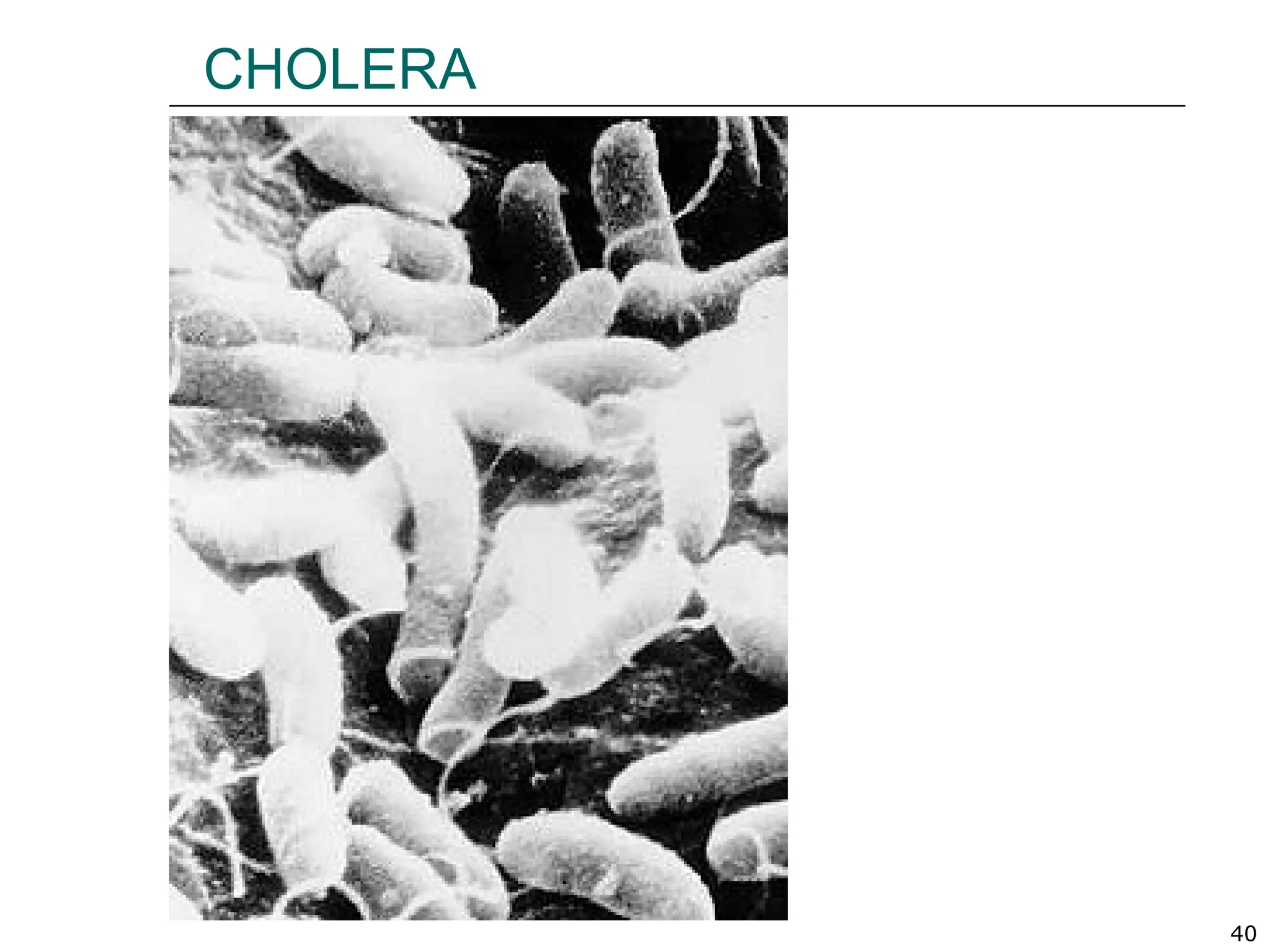
Cholera Vibrio cholerae Intestine Contaminated water
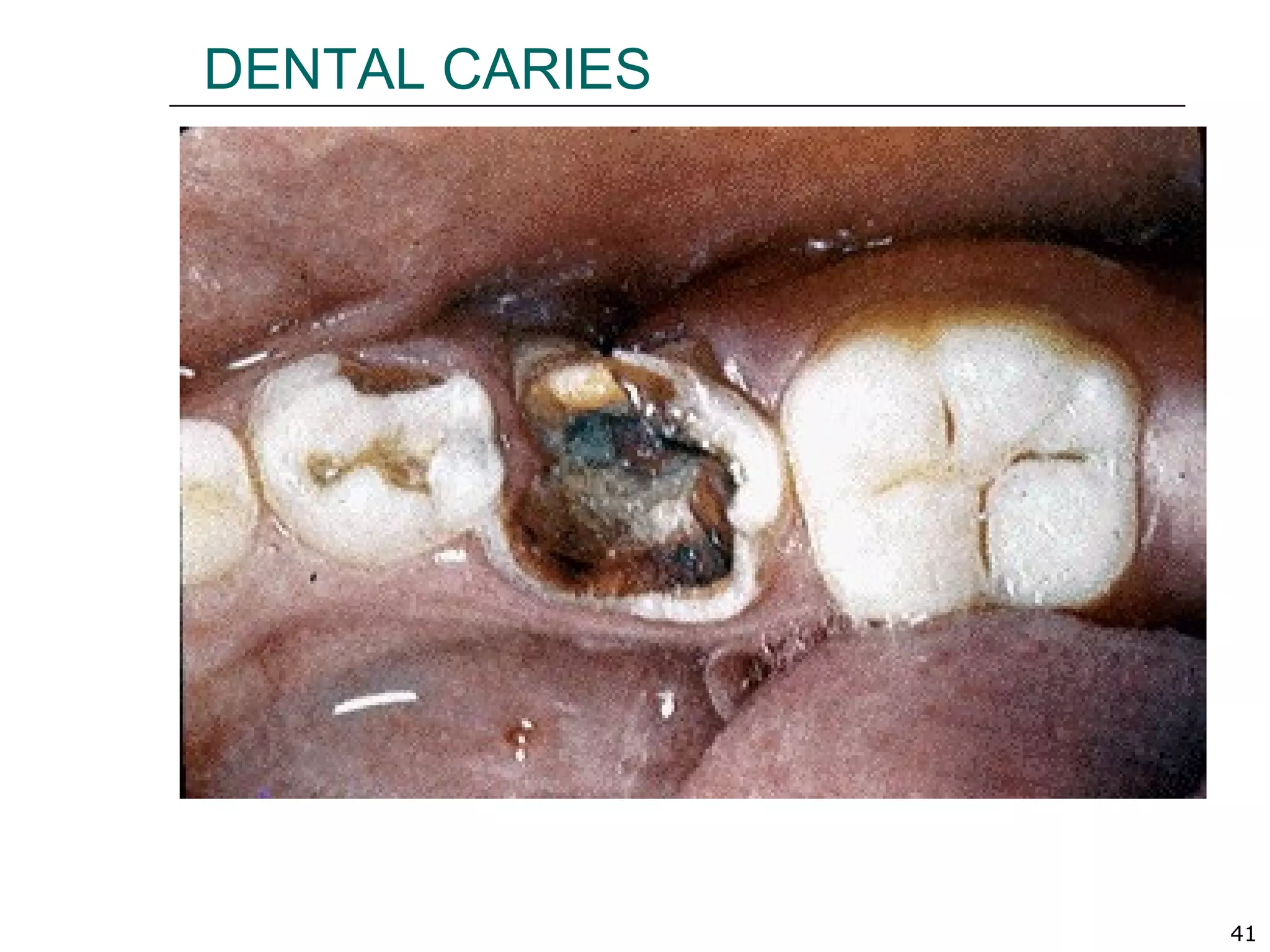
Dental Caries Streptococcus mutans,
sanguis, salivarius
Teeth Environment to
mouth
Gonorrhea Neisseria gonorrhoeae Urethra,
fallopian
Sexual contact
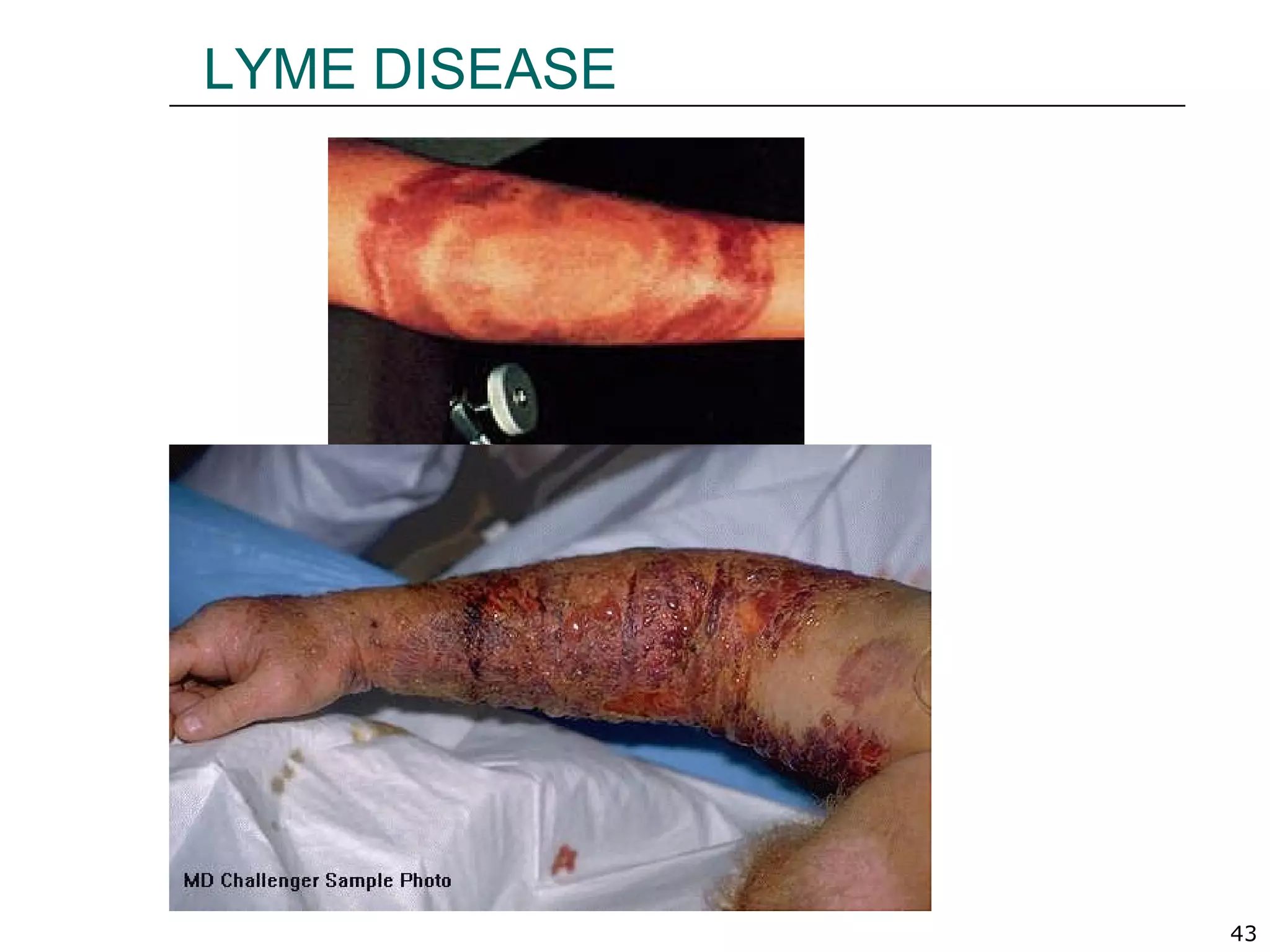
Lyme disease Berrelia burgdorferi Skin, joints Tick bite
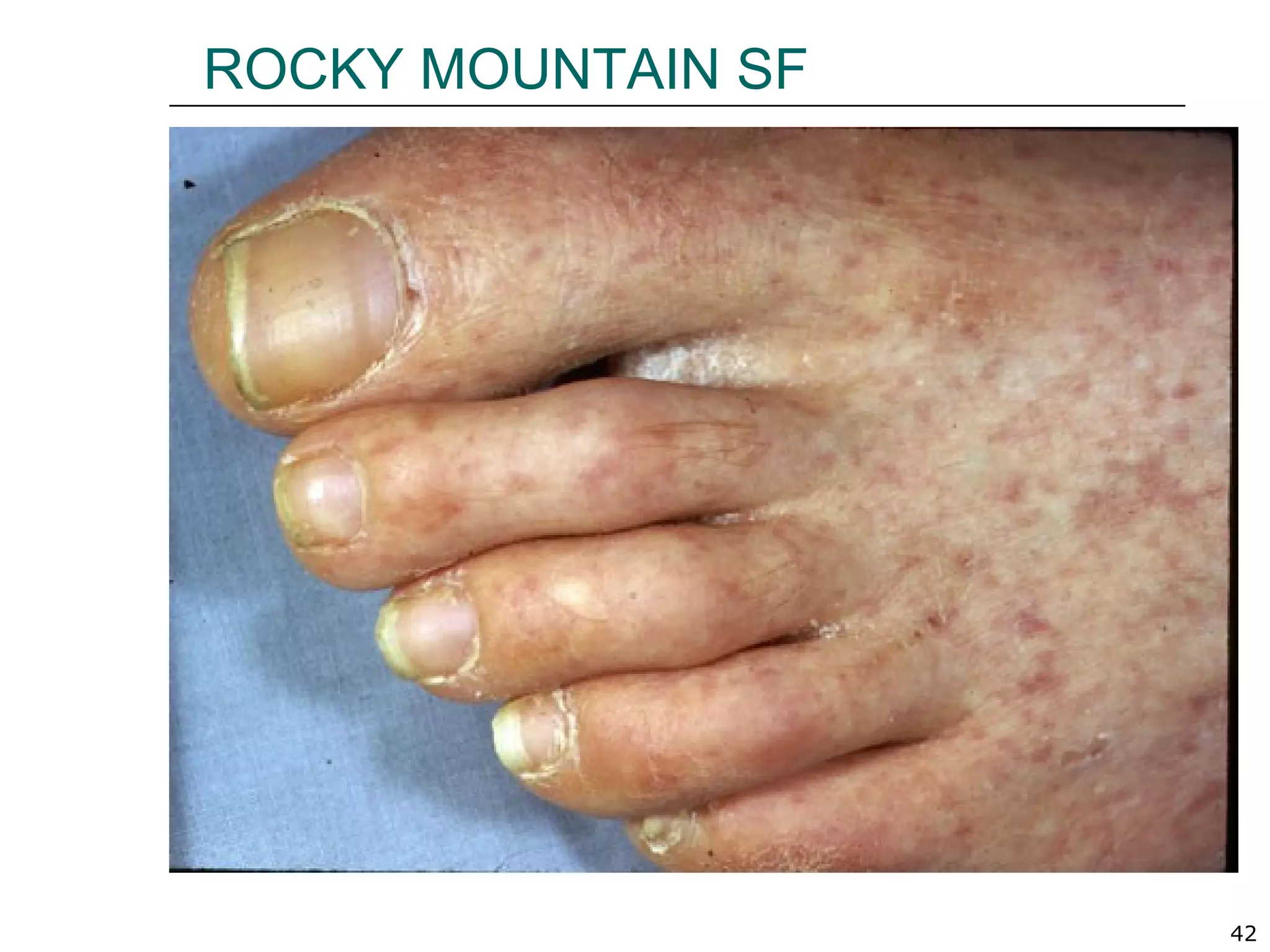
Rocky
Mountain SF
Rickettsia recketsii Blood, skin Tick bite
Salmonella Salmonella Intestine Contaminated food,
water
Strep throat Streptococcus pyogenes URT, blood,
skin
Sneezes, coughs,
etc.
Tetanus Costridium tetani Nerves Contaminated
wounds
Tuberculosis Mycobacterium tuberculosis Lung,
bones
coughs
37
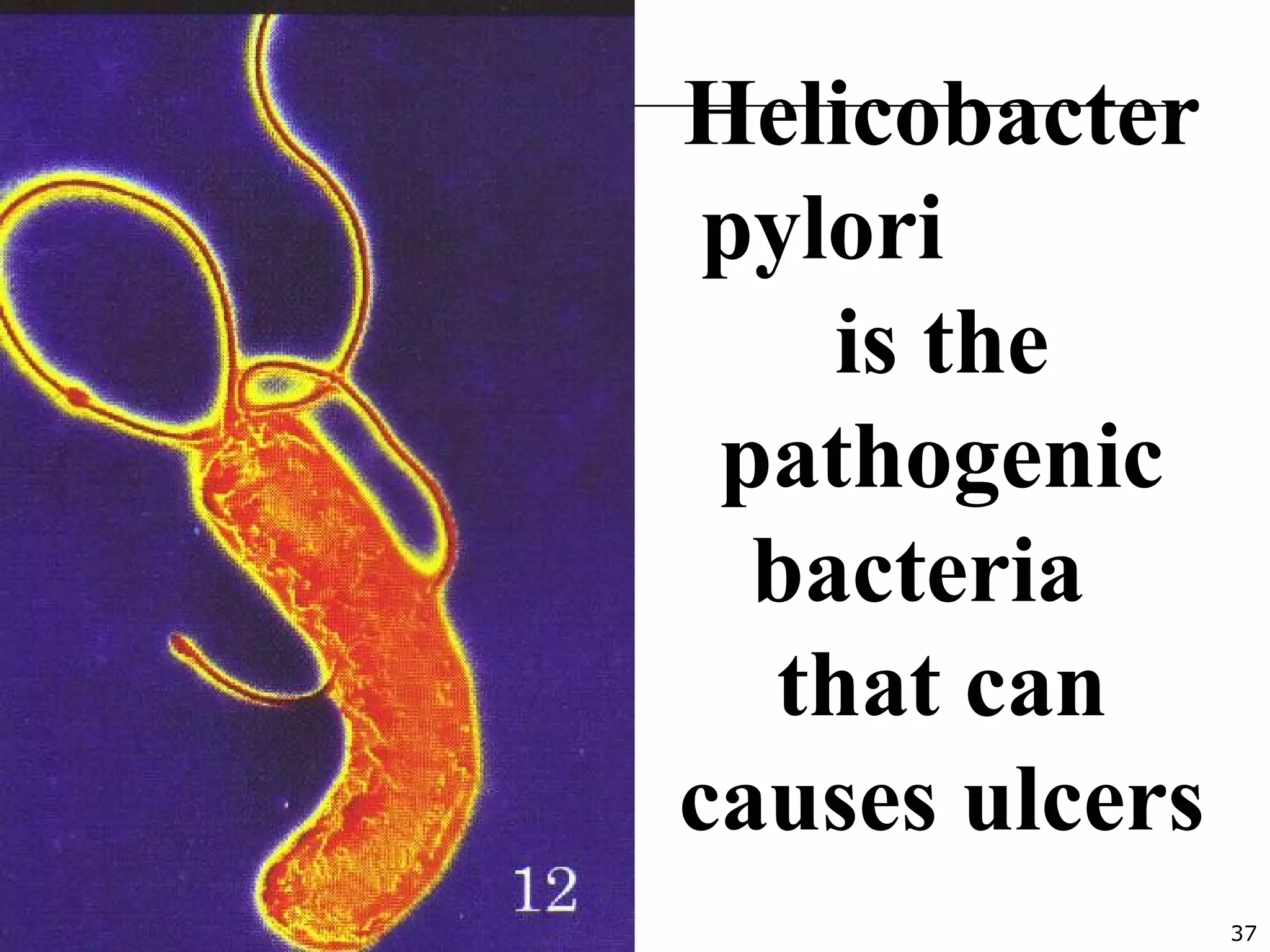
Helicobacter
pylori
is the
pathogenic
bacteria
that can
causes ulcers
38
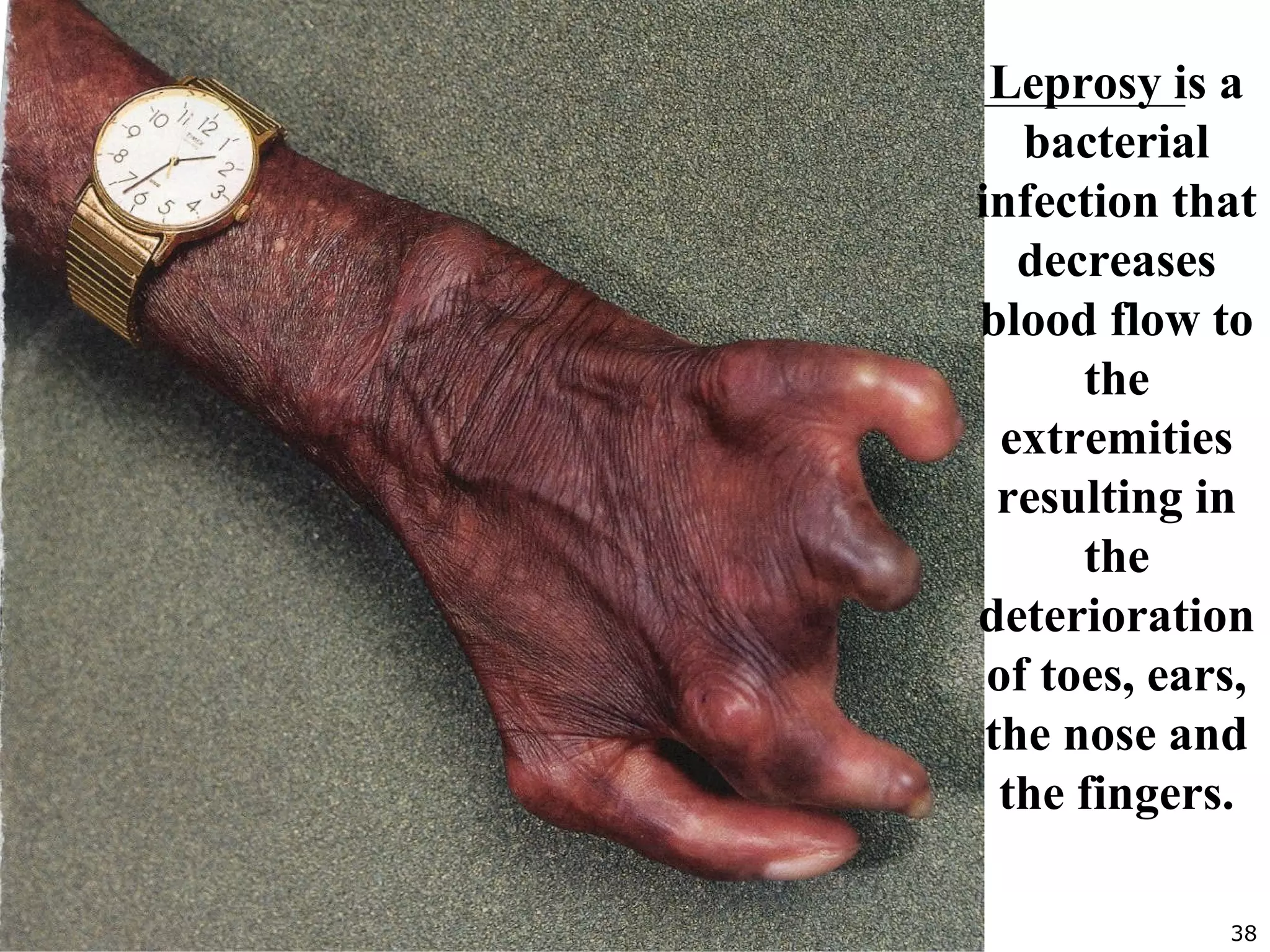
Leprosy is a
bacterial
infection that
decreases
blood flow to
the
extremities
resulting in
the
deterioration
of toes, ears,
the nose and
the fingers.
39
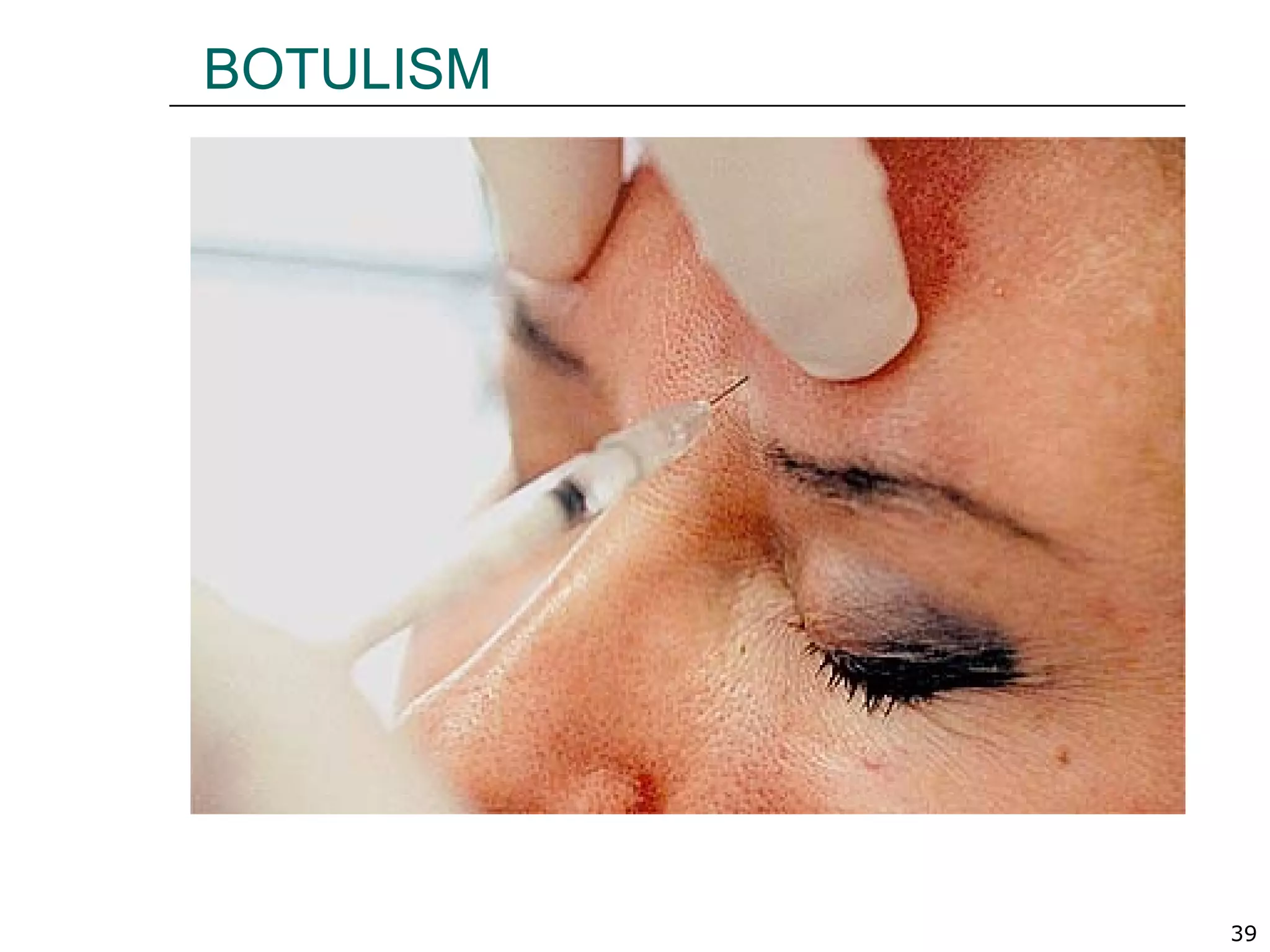
BOTULISM
40
CHOLERA
41
DENTAL CARIES
42
ROCKY MOUNTAIN SF
43
LYME DISEASE
44
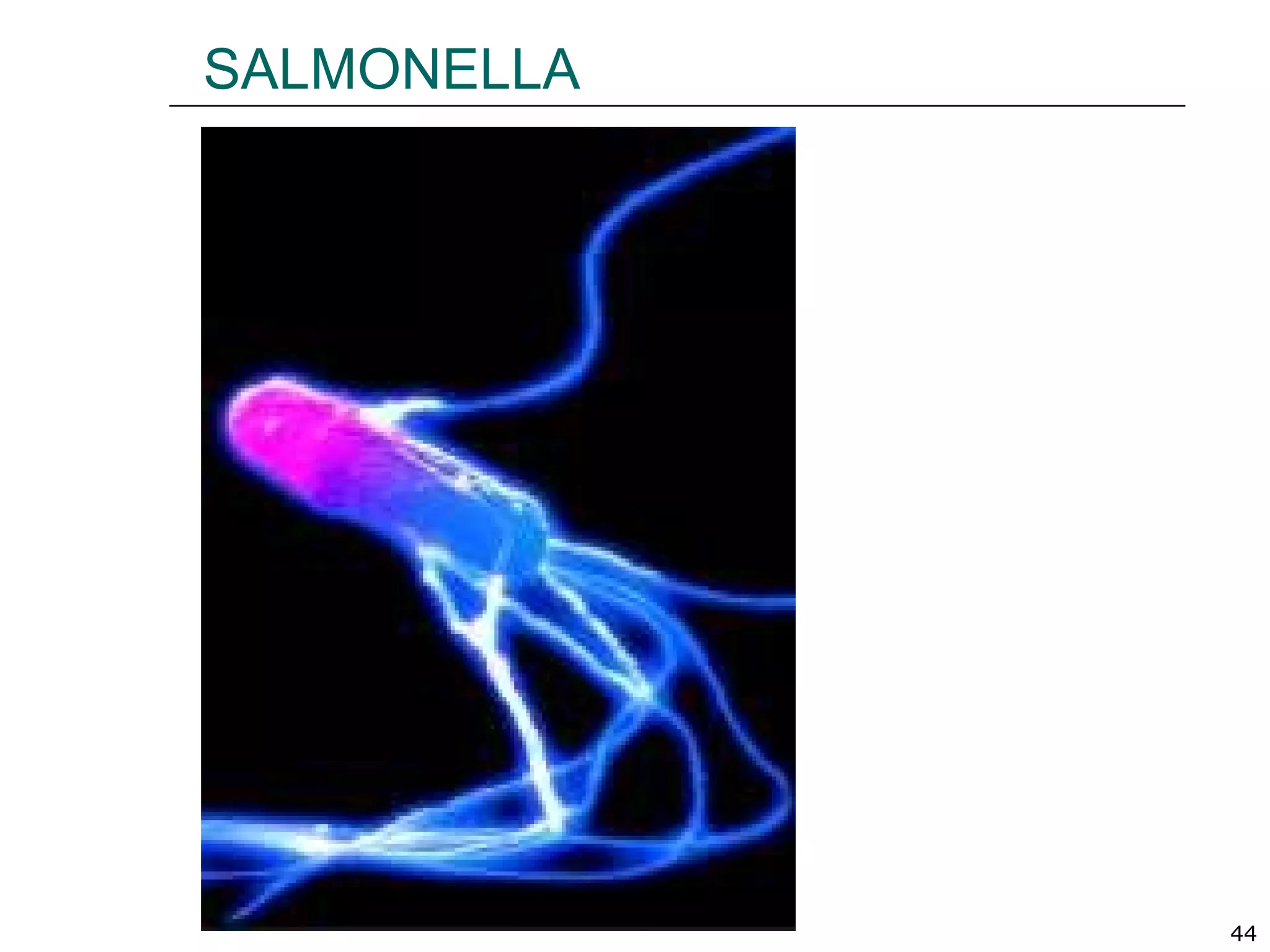
SALMONELLA
45
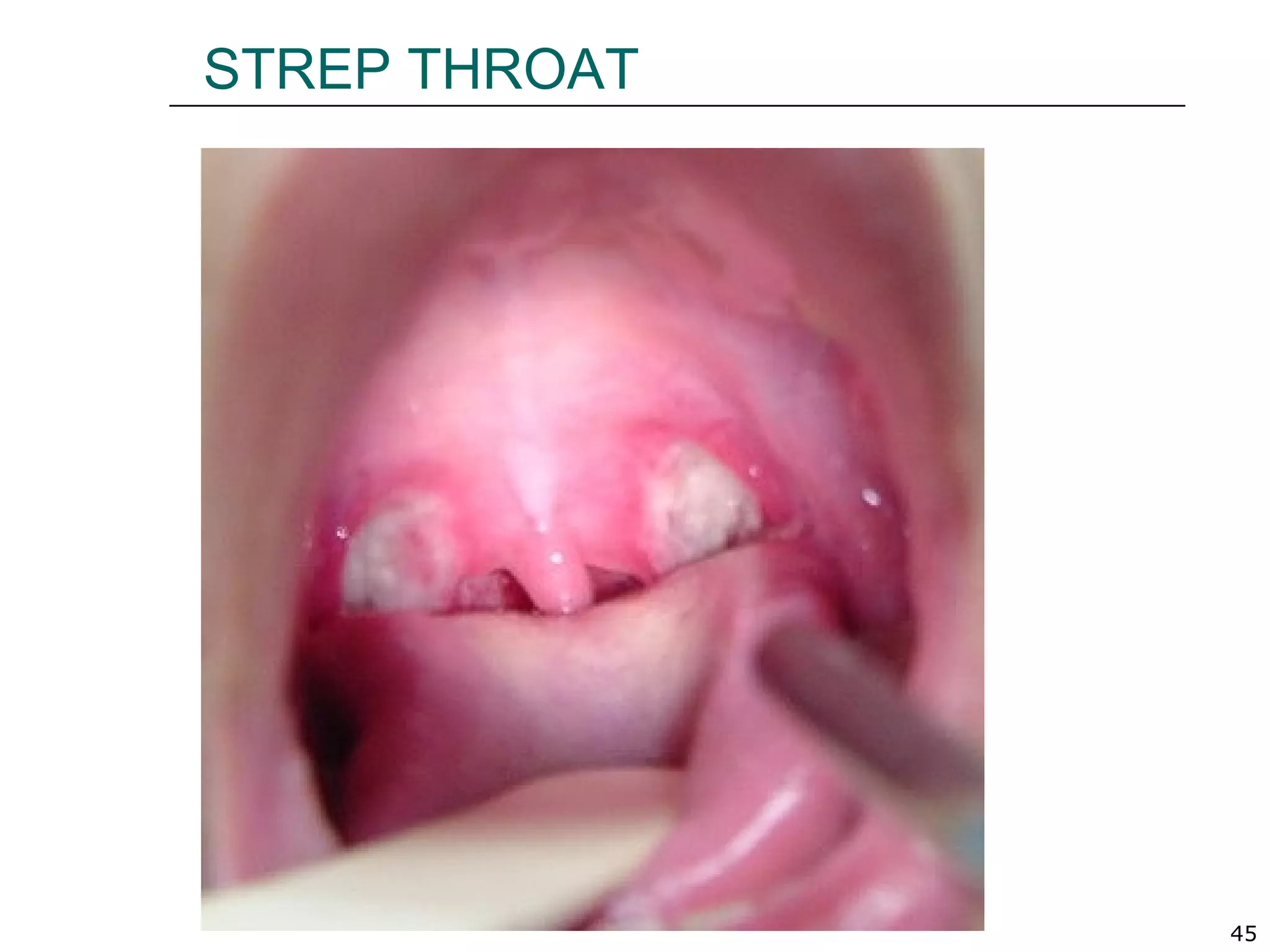
STREP THROAT
46
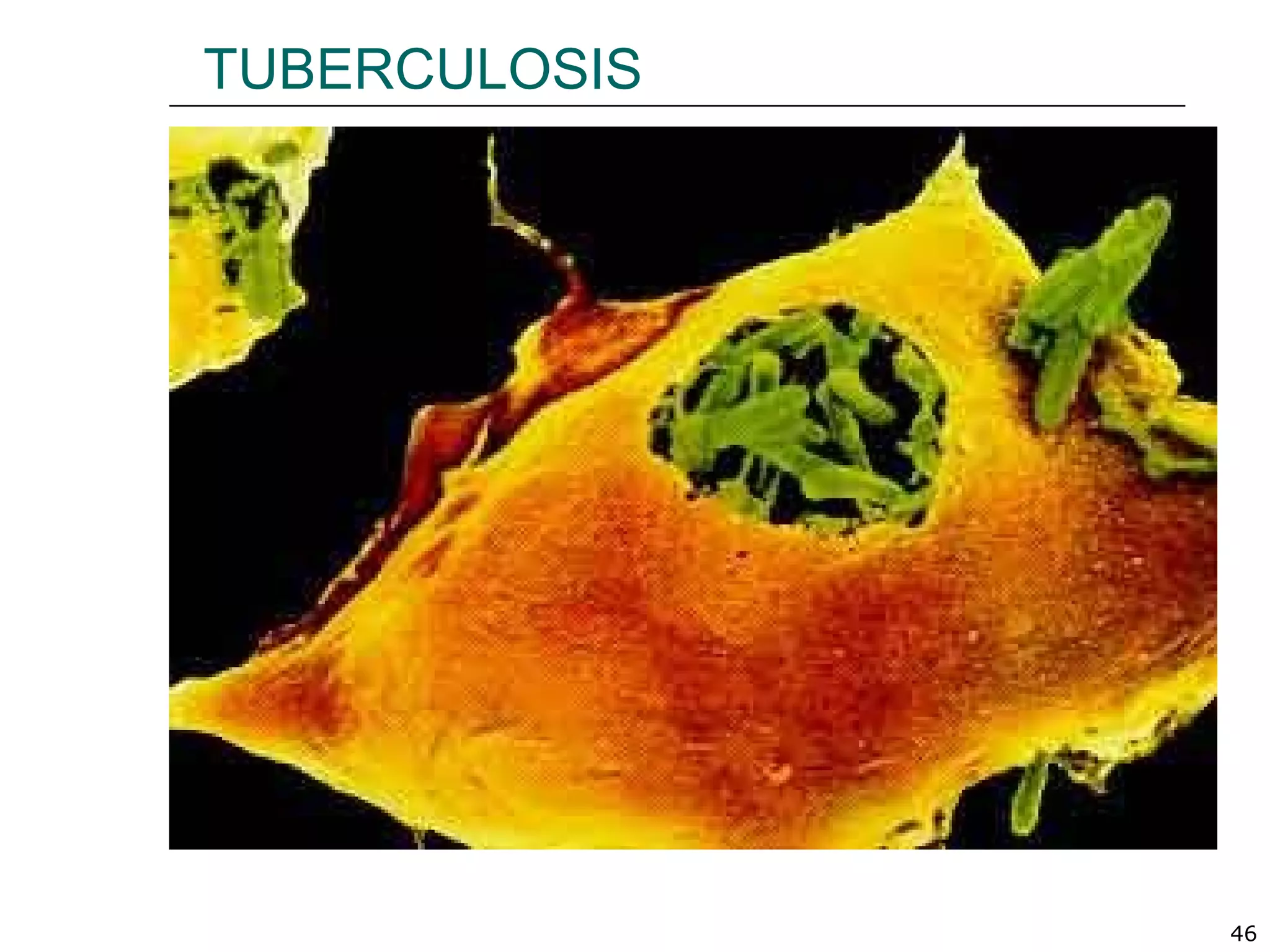
TUBERCULOSIS
47
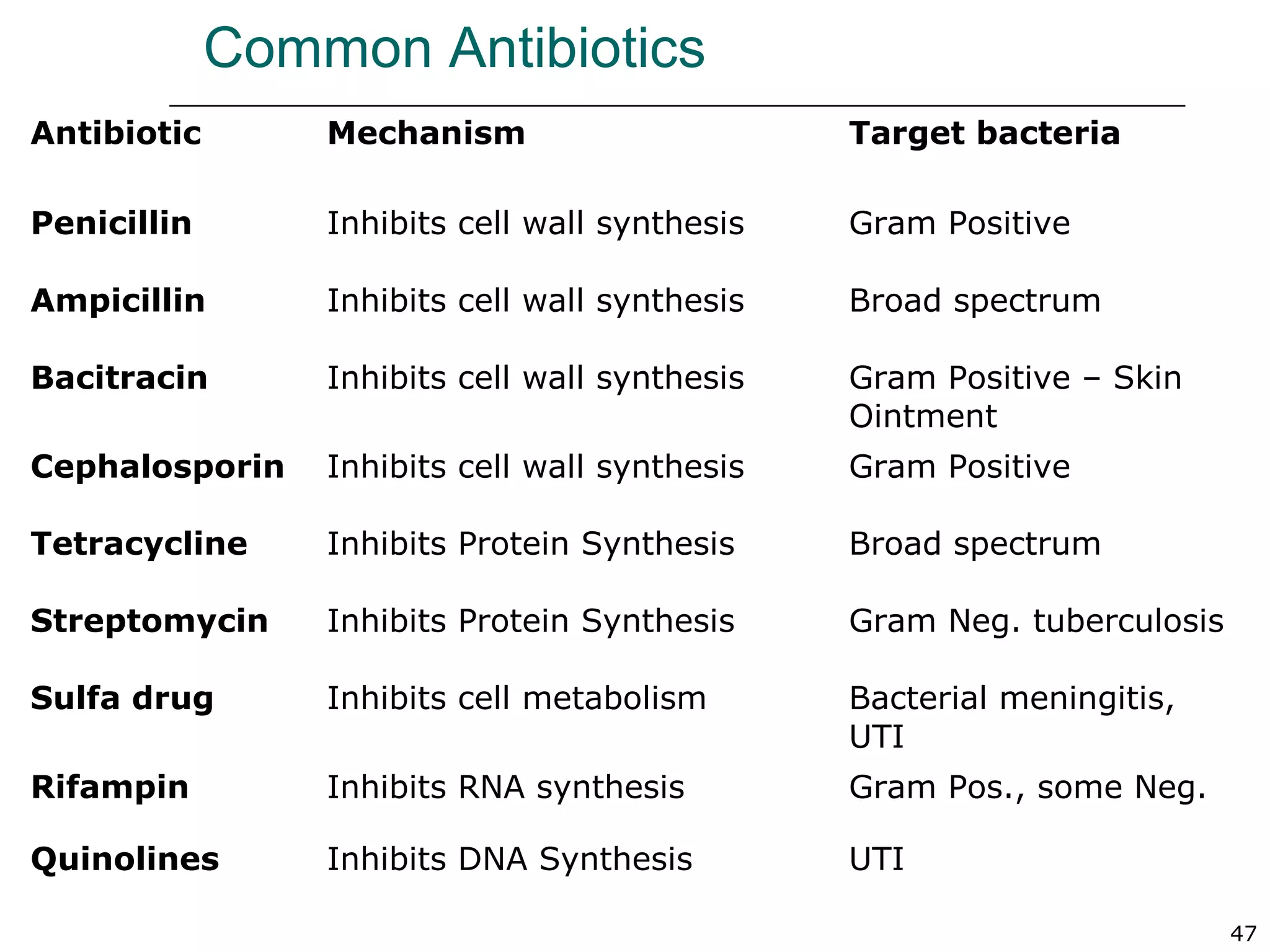
Common Antibiotics
Antibiotic Mechanism Target bacteria
Penicillin Inhibits cell wall synthesis Gram Positive
Ampicillin Inhibits cell wall synthesis Broad spectrum
Bacitracin Inhibits cell wall synthesis Gram Positive – Skin
Ointment
Cephalosporin Inhibits cell wall synthesis Gram Positive
Tetracycline Inhibits Protein Synthesis Broad spectrum
Streptomycin Inhibits Protein Synthesis Gram Neg. tuberculosis
Sulfa drug Inhibits cell metabolism Bacterial meningitis,
UTI
Rifampin Inhibits RNA synthesis Gram Pos., some Neg.
Quinolines Inhibits DNA Synthesis UTI
48
Some Final Information
 Because antibiotics have been overused,
many diseases that were once easy to
treat are becoming more difficult to
treat.
 Some Bacteria are Useful
 Ex.) Producing and Processing food
 Breaking down dead organic material
 Make unripened cheese like ricotta and
cottage by breaking down the protein in
milk.
49
VIRUSES
Non-living but depends on the living!
50
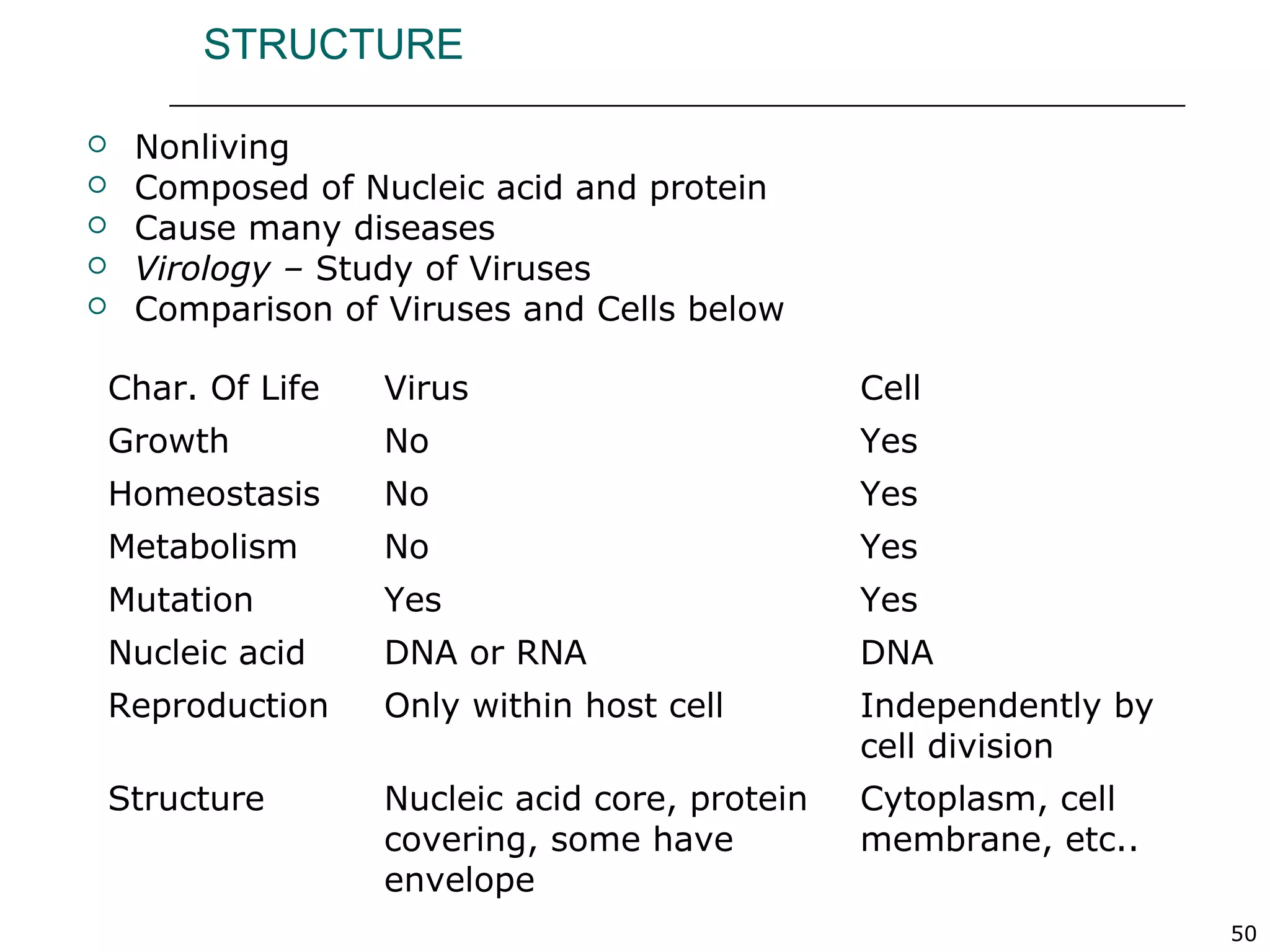
STRUCTURE
 Nonliving
 Composed of Nucleic acid and protein
 Cause many diseases
 Virology – Study of Viruses
 Comparison of Viruses and Cells below
Char. Of Life Virus Cell
Growth No Yes
Homeostasis No Yes
Metabolism No Yes
Mutation Yes Yes
Nucleic acid DNA or RNA DNA
Reproduction Only within host cell Independently by
cell division
Structure Nucleic acid core, protein
covering, some have
envelope
Cytoplasm, cell
membrane, etc..
51
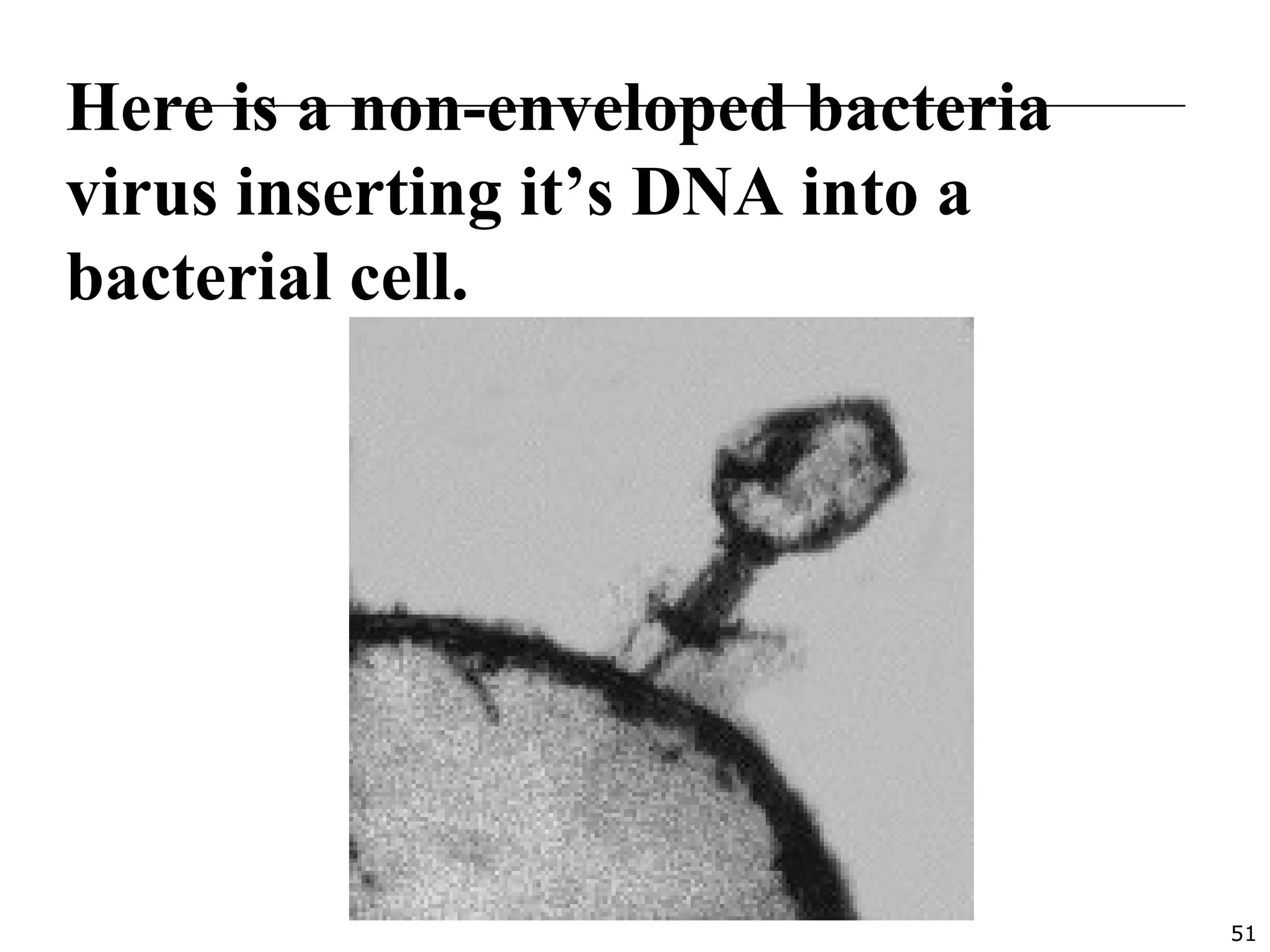
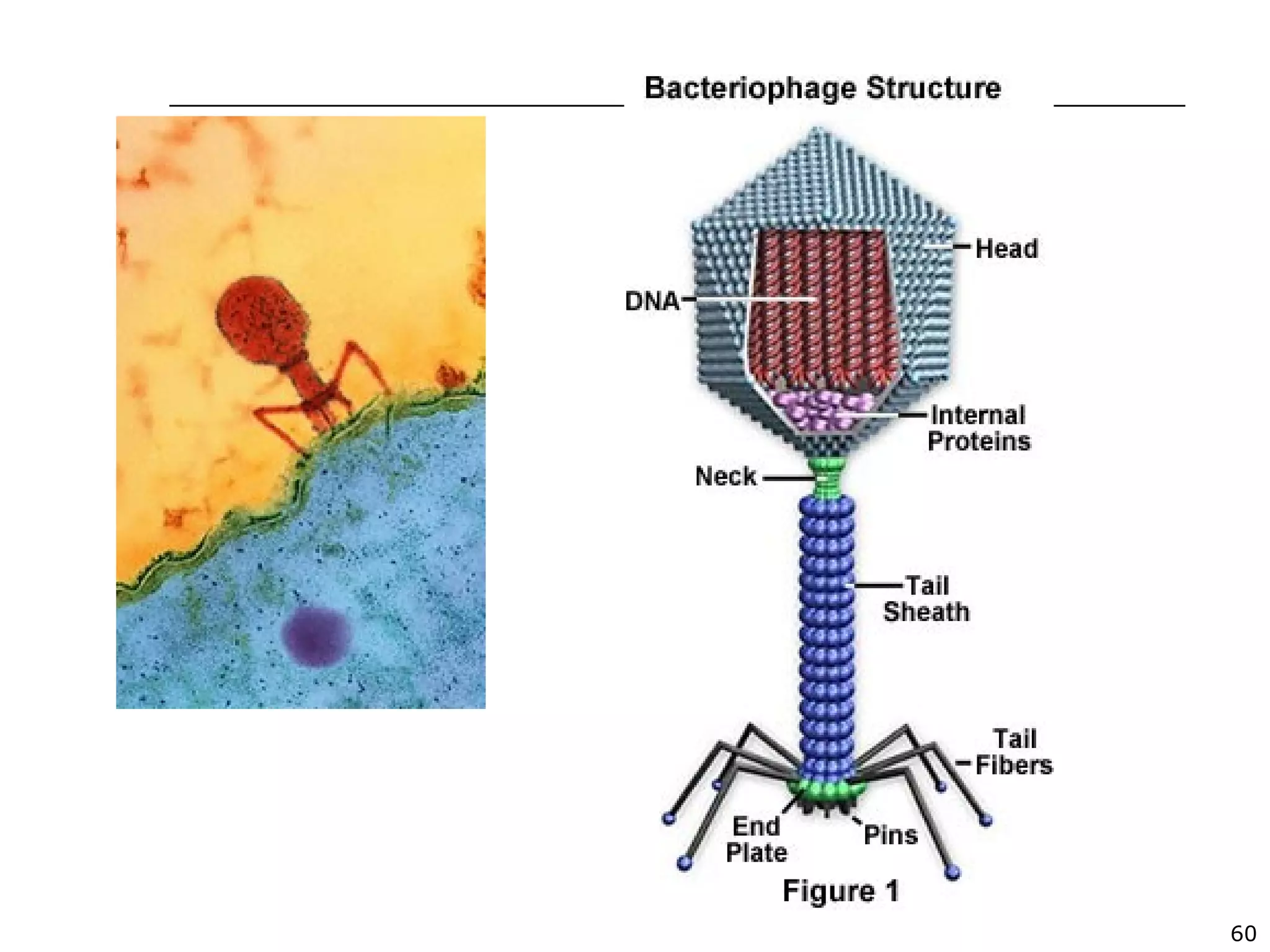
Here is a non-enveloped bacteria
virus inserting it’s DNA into a
bacterial cell.
52
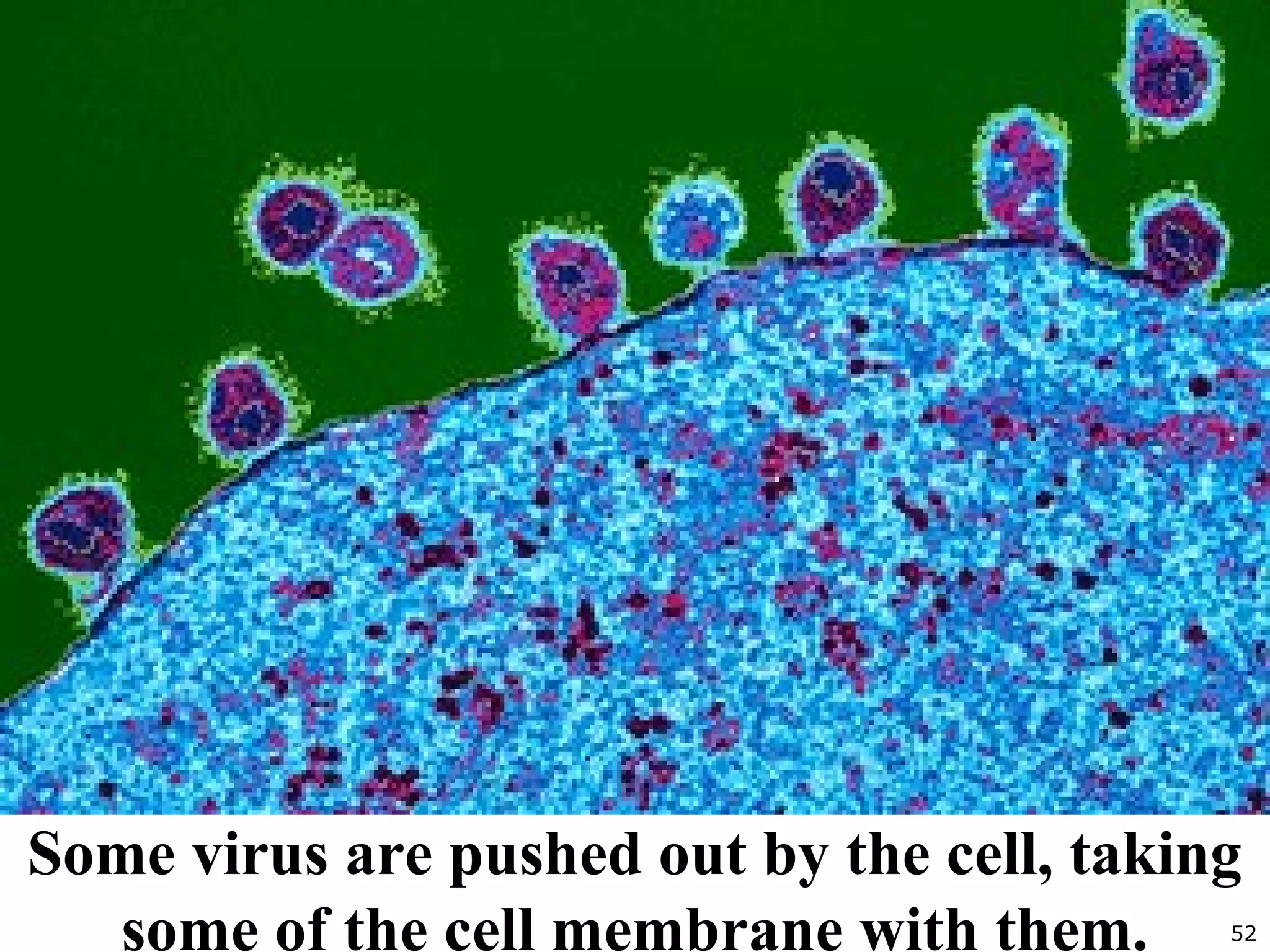
Some virus are pushed out by the cell, taking
some of the cell membrane with them.
53
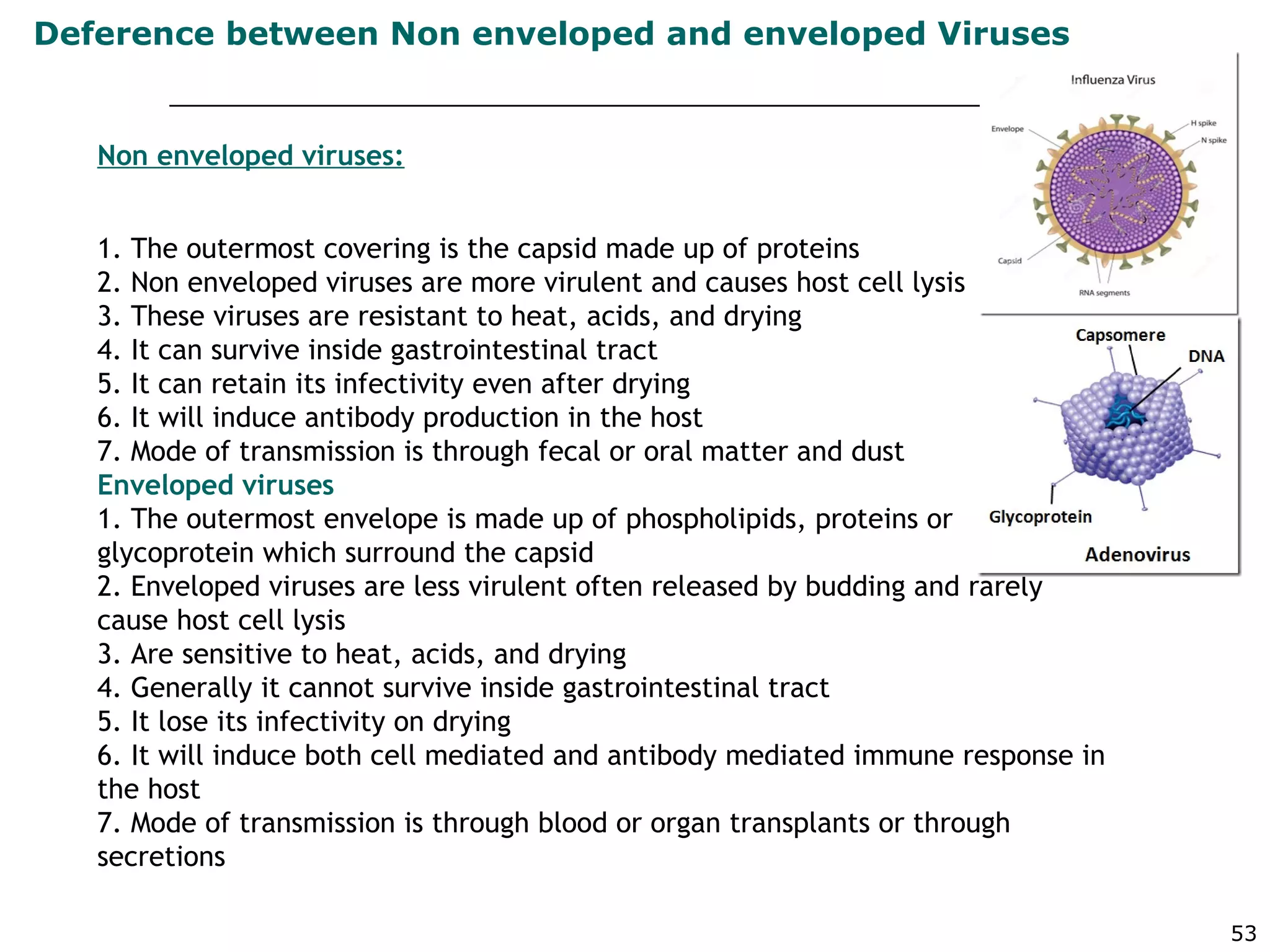
Non enveloped viruses:
1. The outermost covering is the capsid made up of proteins
2. Non enveloped viruses are more virulent and causes host cell lysis
3. These viruses are resistant to heat, acids, and drying
4. It can survive inside gastrointestinal tract
5. It can retain its infectivity even after drying
6. It will induce antibody production in the host
7. Mode of transmission is through fecal or oral matter and dust
Enveloped viruses
1. The outermost envelope is made up of phospholipids, proteins or
glycoprotein which surround the capsid
2. Enveloped viruses are less virulent often released by budding and rarely
cause host cell lysis
3. Are sensitive to heat, acids, and drying
4. Generally it cannot survive inside gastrointestinal tract
5. It lose its infectivity on drying
6. It will induce both cell mediated and antibody mediated immune response in
the host
7. Mode of transmission is through blood or organ transplants or through
secretions
Deference between Non enveloped and enveloped Viruses
54
Characteristics of Viruses
 1. Nucleic Acid
 May be DNA or RNA
 Helical, closed loop, or long strand
 2. Protein Coat – called CAPSID
 Some have ENVELOPE
 Ex. Influenza, chickepox, herpes simplex, HIV
 VIRAL SHAPE
 Icosahedron – 20 triangular faces
 Ex.) herpes, chickenpox, polio
 Helix – Coiled spring
 EX.)Rabies, measles, tobacco mosaic
55
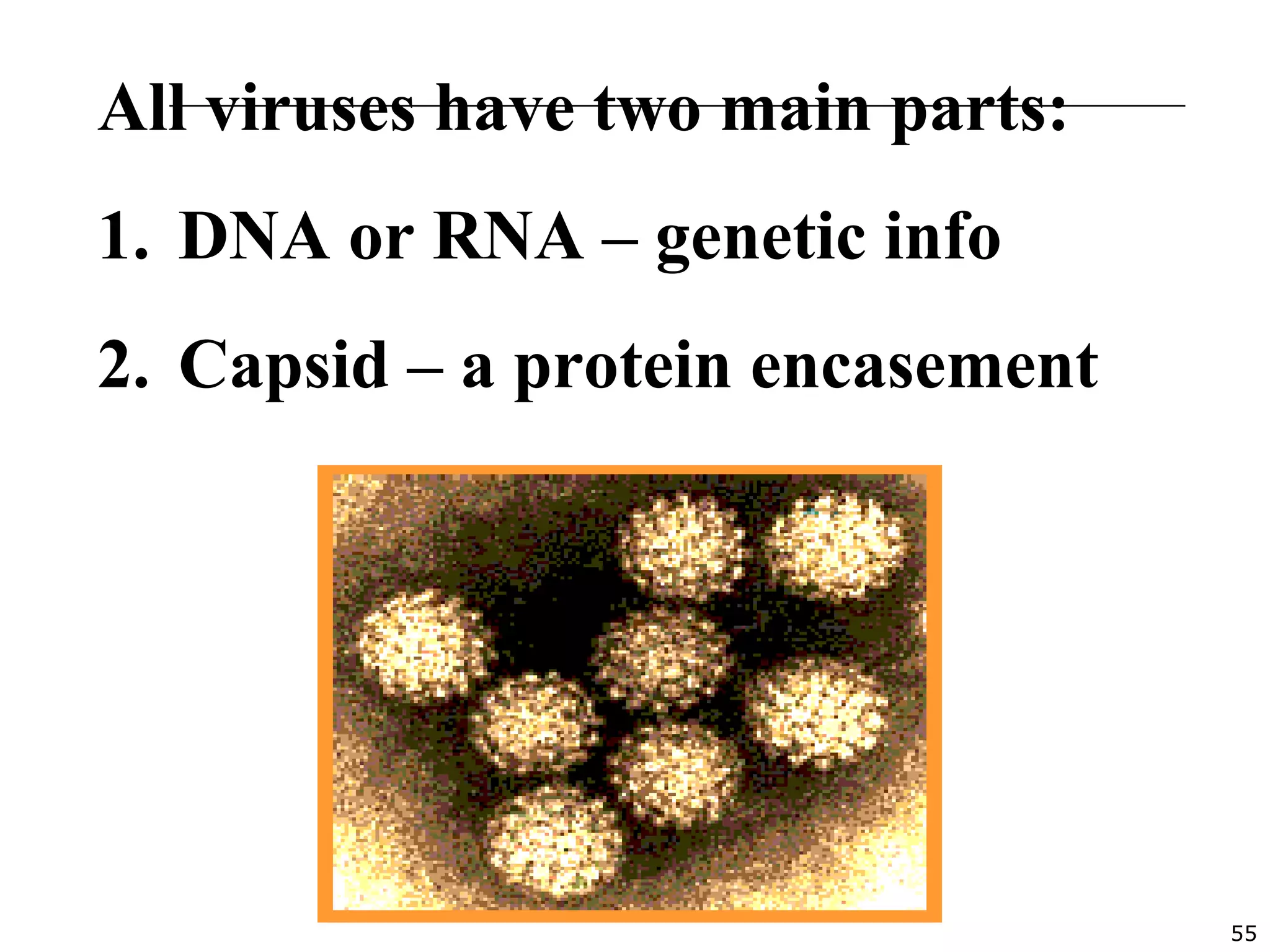
All viruses have two main parts:
1. DNA or RNA – genetic info
2. Capsid – a protein encasement
56
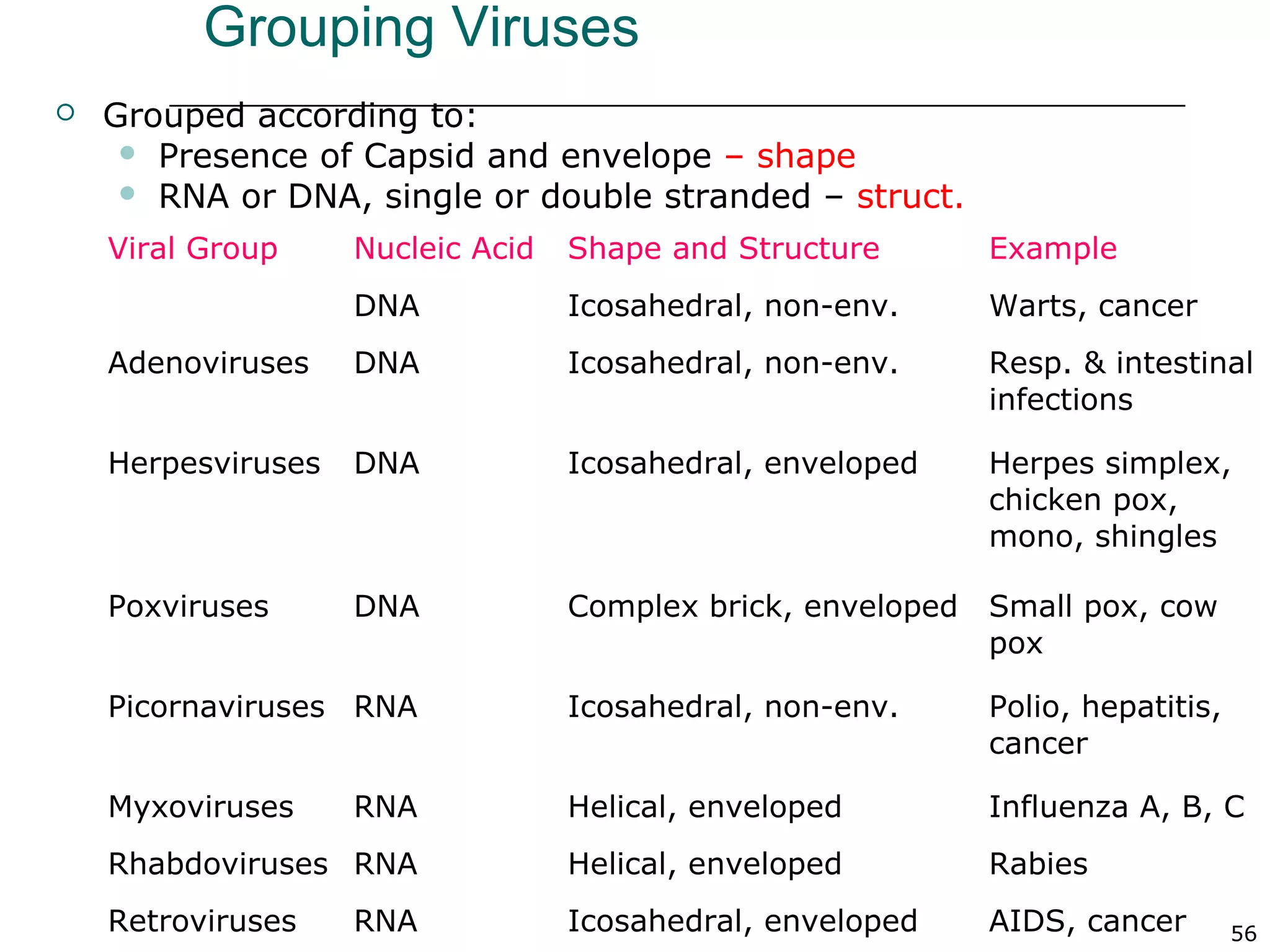
Grouping Viruses
 Grouped according to:
 Presence of Capsid and envelope – shape
 RNA or DNA, single or double stranded – struct.
Viral Group Nucleic Acid Shape and Structure Example
Papovaviruses DNA Icosahedral, non-env. Warts, cancer
Adenoviruses DNA Icosahedral, non-env. Resp. & intestinal
infections
Herpesviruses DNA Icosahedral, enveloped Herpes simplex,
chicken pox,
mono, shingles
Poxviruses DNA Complex brick, enveloped Small pox, cow
pox
Picornaviruses RNA Icosahedral, non-env. Polio, hepatitis,
cancer
Myxoviruses RNA Helical, enveloped Influenza A, B, C
Rhabdoviruses RNA Helical, enveloped Rabies
Retroviruses RNA Icosahedral, enveloped AIDS, cancer
57
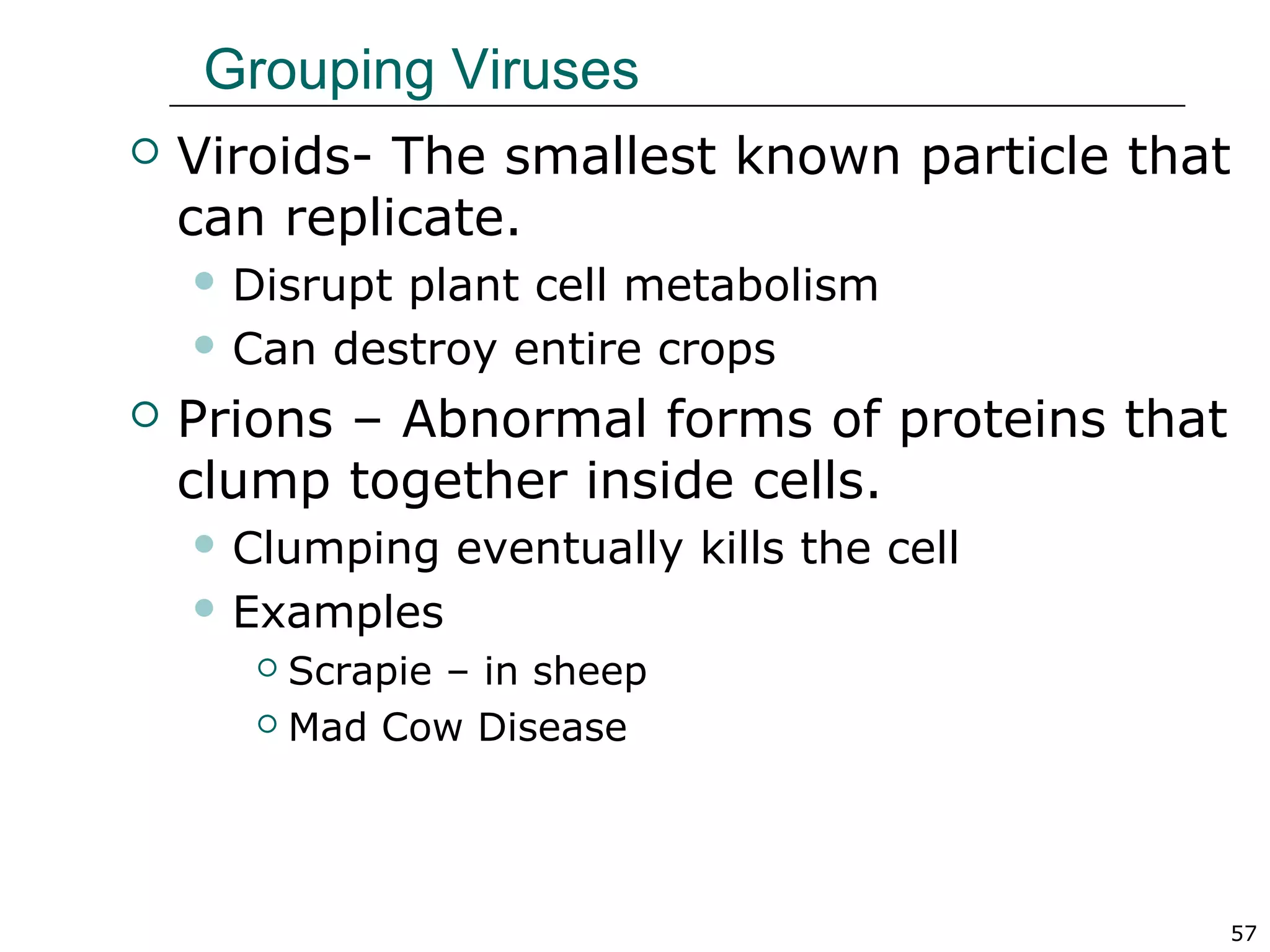
Grouping Viruses
 Viroids- The smallest known particle that
can replicate.
 Disrupt plant cell metabolism
 Can destroy entire crops
 Prions – Abnormal forms of proteins that
clump together inside cells.
 Clumping eventually kills the cell
 Examples
 Scrapie – in sheep
 Mad Cow Disease
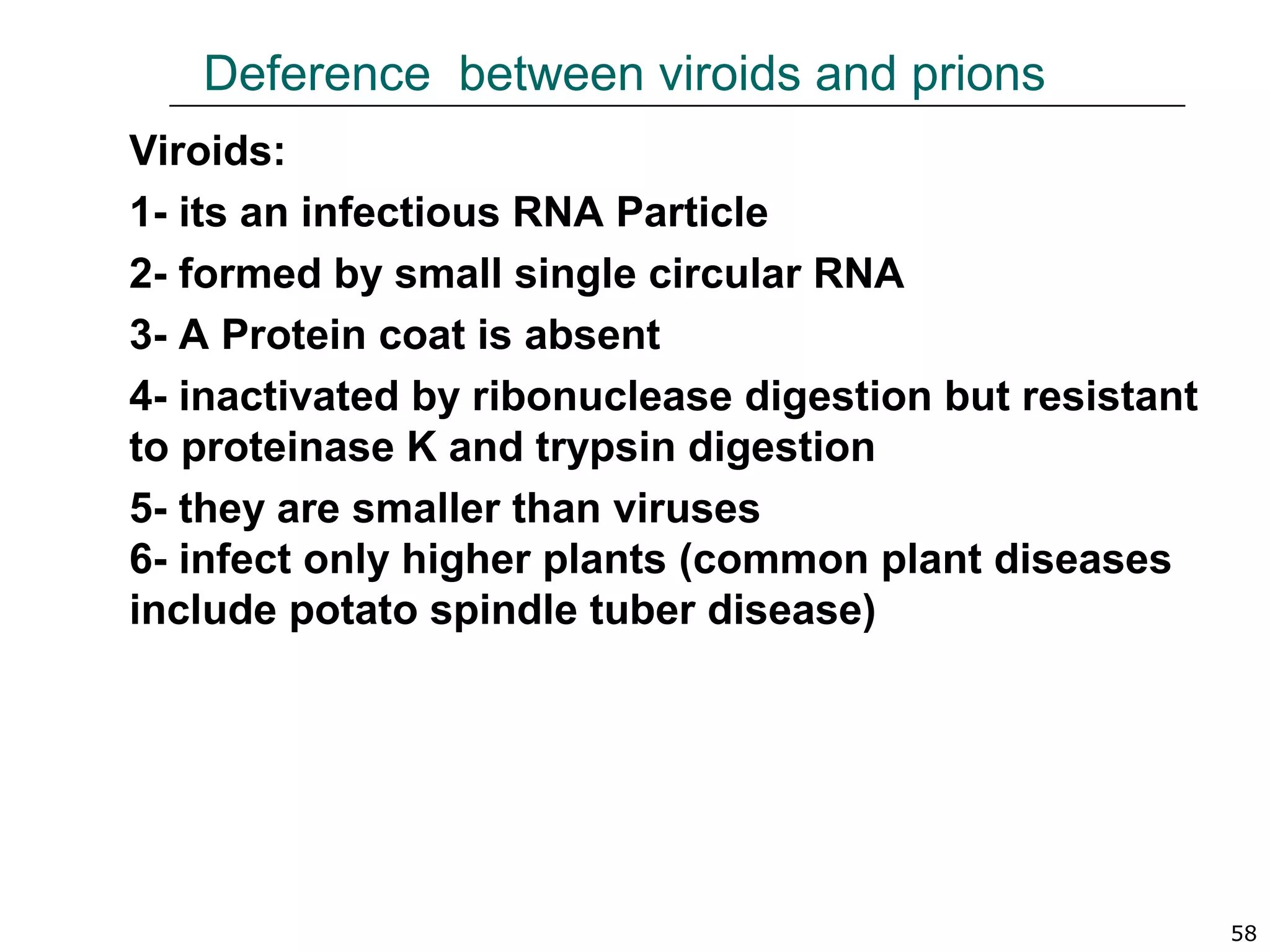
Deference between viroids and prions
Viroids:
1- its an infectious RNA Particle
2- formed by small single circular RNA
3- A Protein coat is absent
4- inactivated by ribonuclease digestion but resistant
to proteinase K and trypsin digestion
5- they are smaller than viruses
6- infect only higher plants (common plant diseases
include potato spindle tuber disease)
58
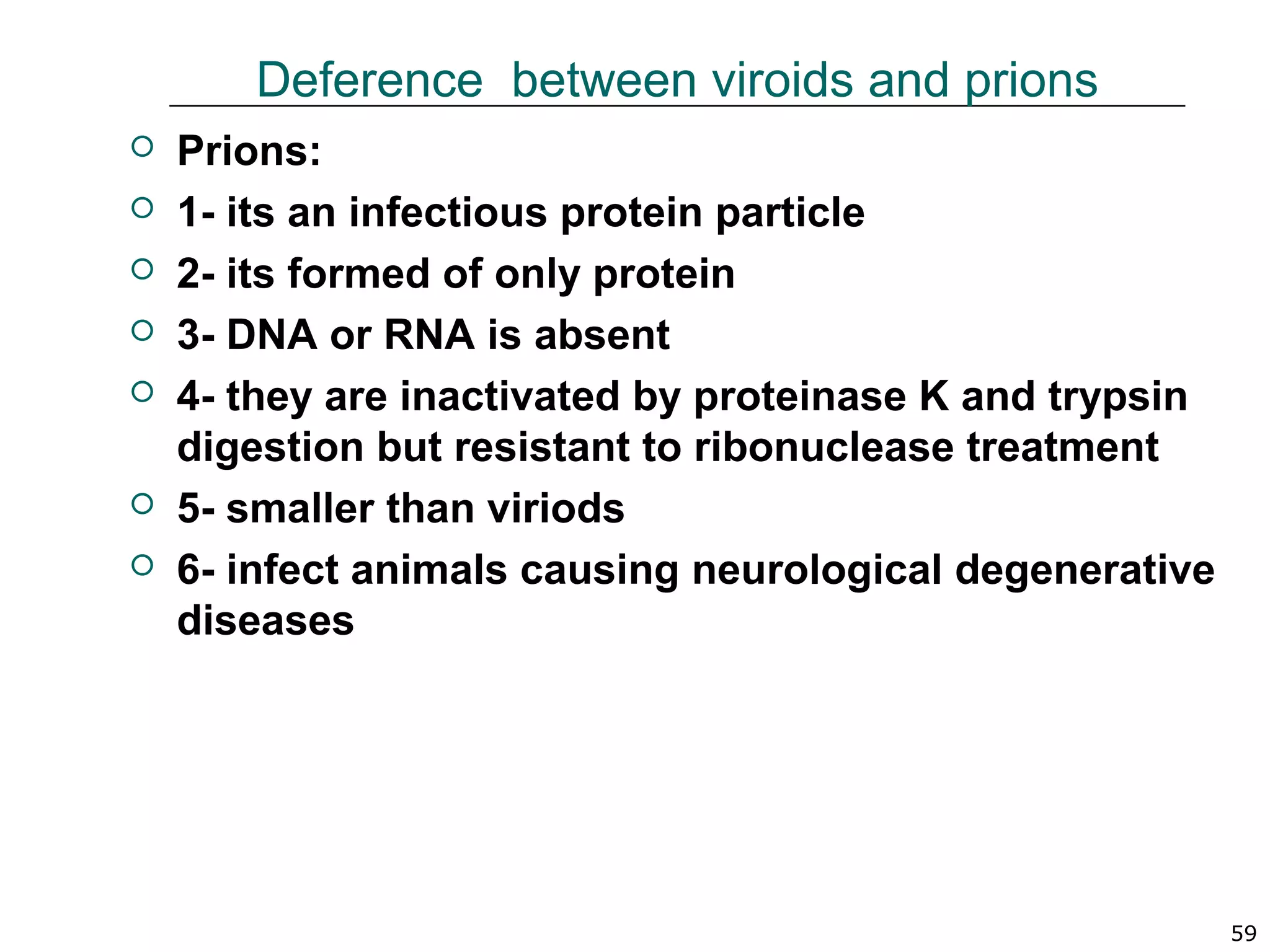
 Prions:
 1- its an infectious protein particle
 2- its formed of only protein
 3- DNA or RNA is absent
 4- they are inactivated by proteinase K and trypsin
digestion but resistant to ribonuclease treatment
 5- smaller than viriods
 6- infect animals causing neurological degenerative
diseases
59
Deference between viroids and prions
60
61
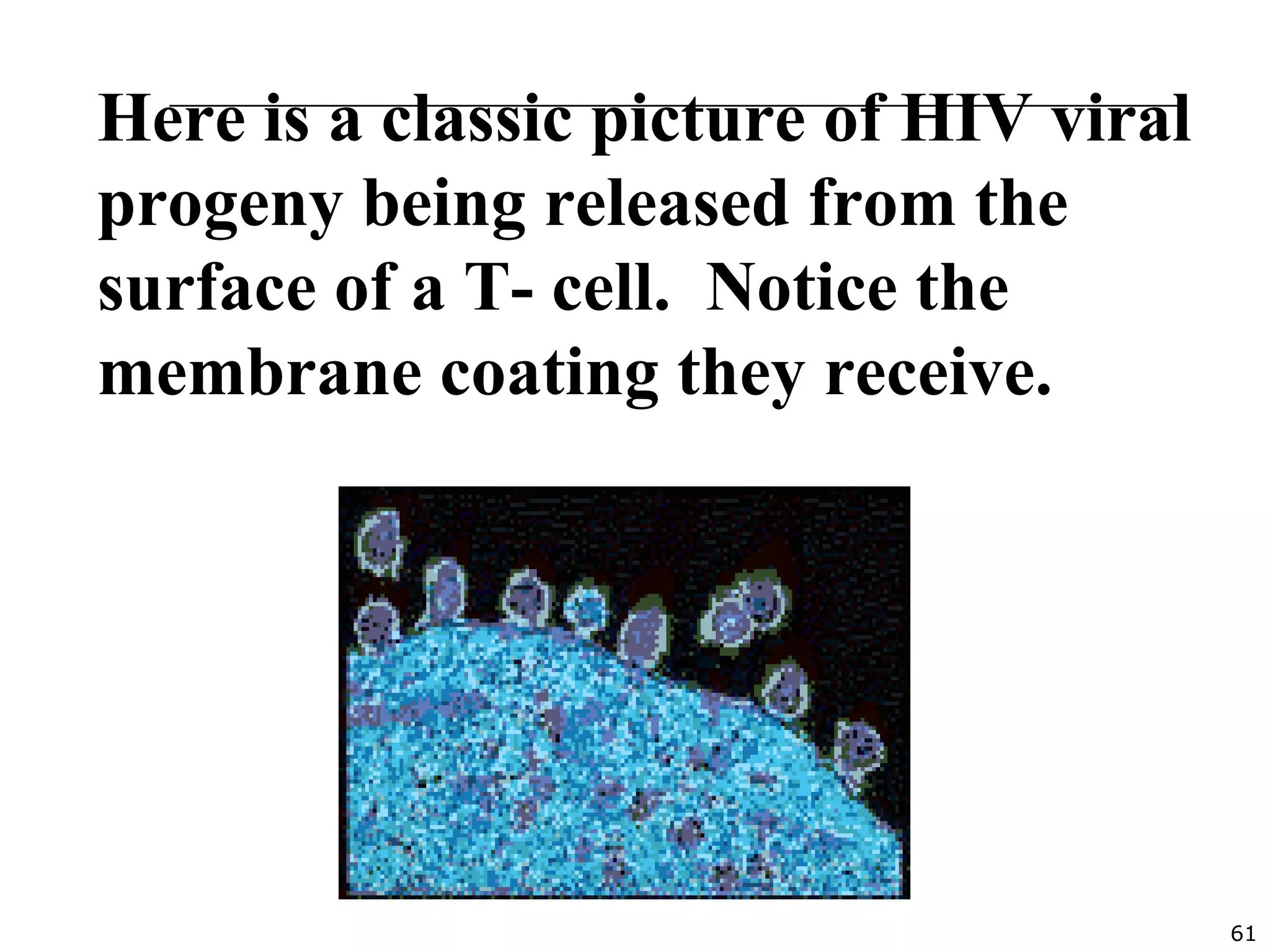
Here is a classic picture of HIV viral
progeny being released from the
surface of a T- cell. Notice the
membrane coating they receive.
62
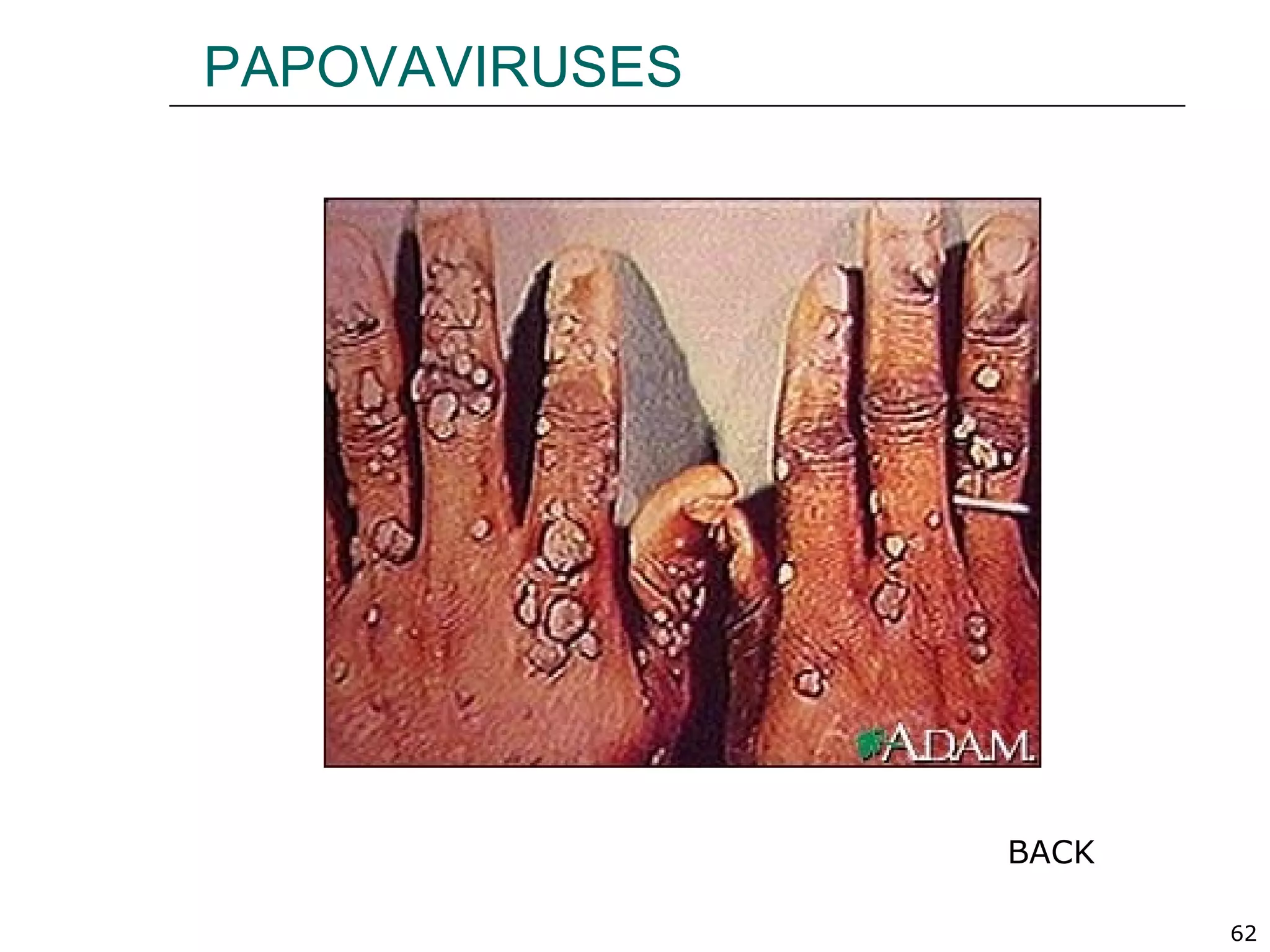
PAPOVAVIRUSES
BACK
63
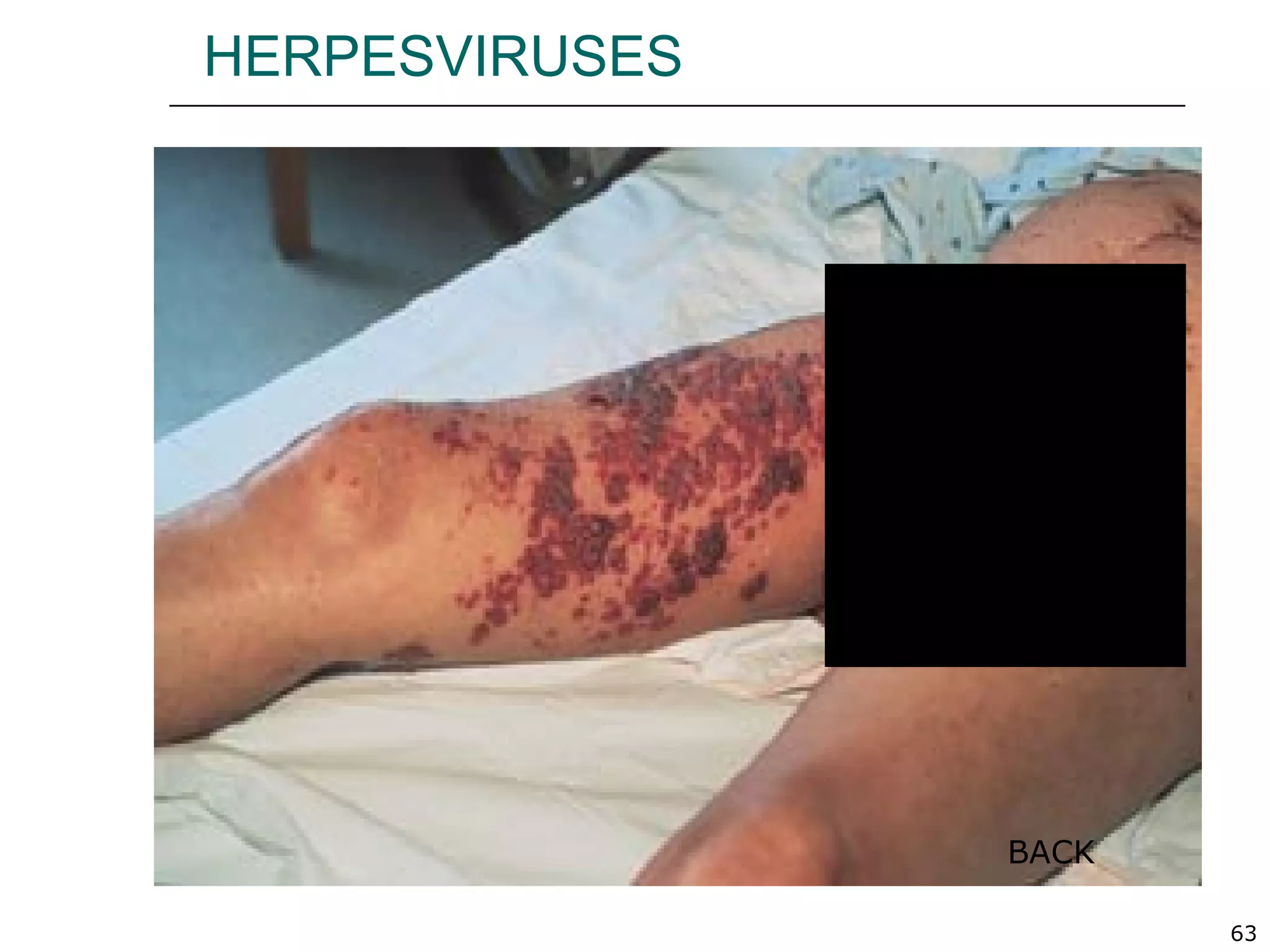
HERPESVIRUSES
BACK
64
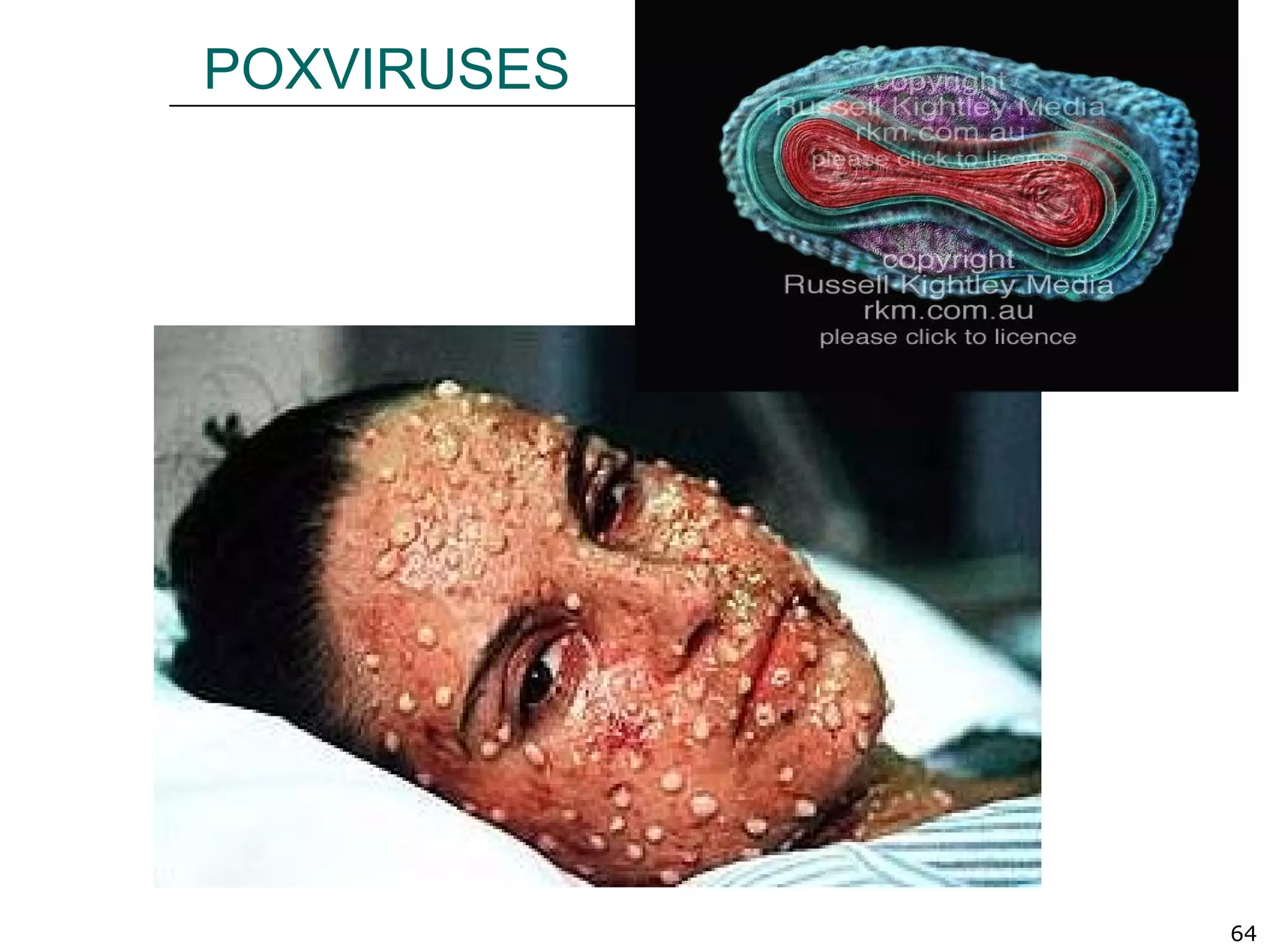
POXVIRUSES
65
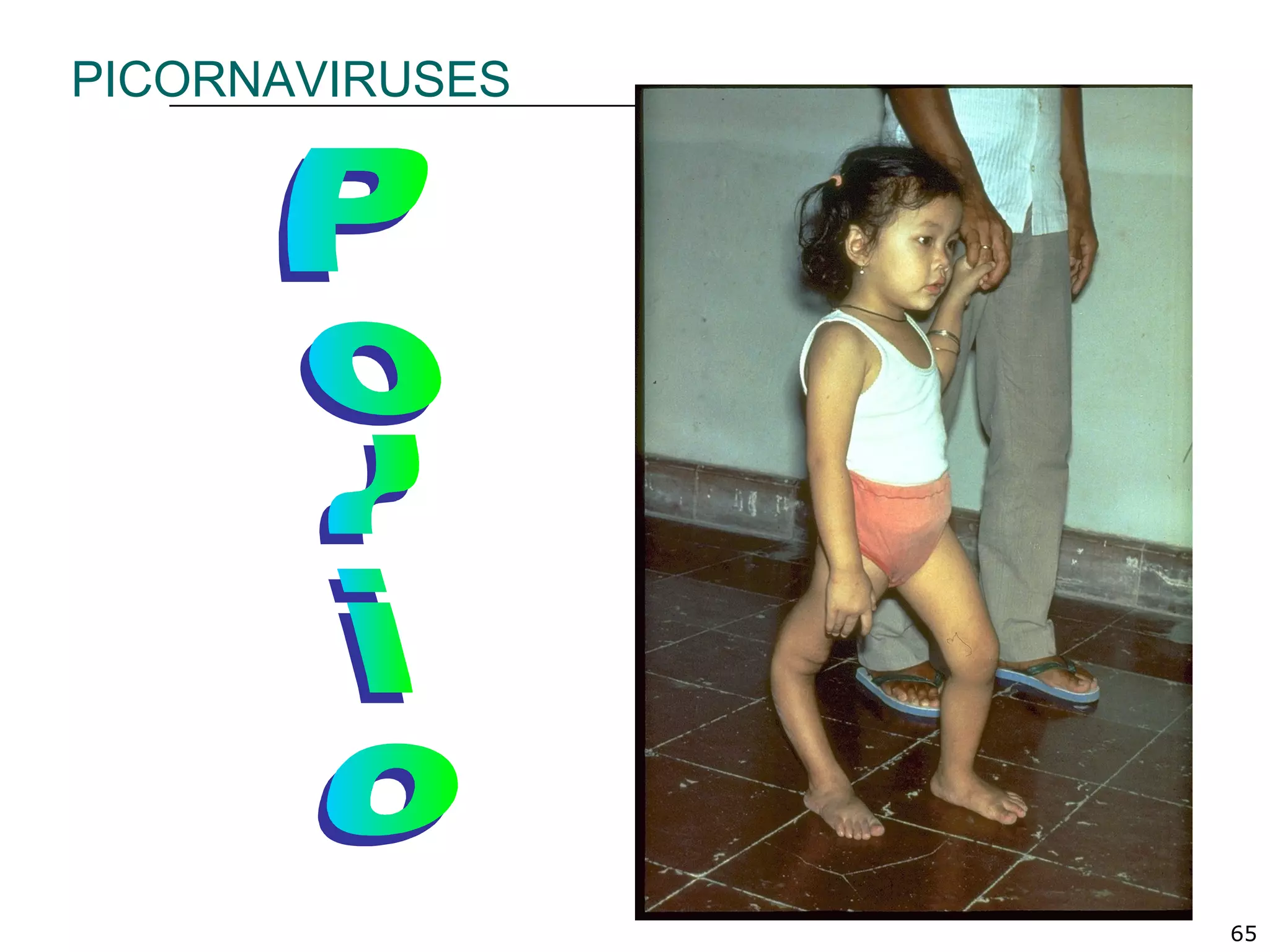
PICORNAVIRUSES

bacteria-and-viruses-combo lst edit

  • 1.
  • 2.
  • 3.
  • 4.
  • 5.
  • 6.
  • 7.
    7 Chemosynthetic bacteria usethe sulfur in the “smoke” for energy to make ATP.
  • 8.
    8 The red colorof this snow is due to a blue-green bacteria
  • 9.
    9 Kingdom Eubacteria  Canhave one of three basic shapes 1.Bacilli – rod-shaped 2.Spirilla – spiral-shaped 3.Cocci – sphere-shaped Streptococci – in chains Staphylococci – grape-like clusters
  • 10.
  • 11.
  • 12.
  • 13.
    13 Spirillium bacteria havea corkscrew shape
  • 14.
    14 Diplo-bacteria occur in pairs, suchas the diplococcus bacteria that causes gonorrhea
  • 15.
    15 Staphylo - bacteria occur inclumps, such as this staphylococcus bacteria that causes common infections of cuts
  • 16.
    16 Strepto- bacteria occur in chainsof bacteria, such as this streptococcus bacteria that causes some types of sore throats
  • 17.
  • 18.
  • 19.
  • 20.
  • 21.
    21 The tip ofa needle The red and yellow dots are bacteria
  • 22.
    22 Gram Stain  Gram-positiveretain stain and appear purple  Have thicker layer in cell wall.  Gram-negative do not retain stain and take second pink stain instead. Phylum Shape Motility Metabolism Gram reacion Cyanobacteria Bacilli, Cocci Gliding, some non- motile Aerobic, photosynthetic autotrophic Gram- negative Spirochetes Spirals Corkscrew Aerobic, and anaerobic; heterotrophic Gram- negative Gram-Pos Bacilli, cocci Flagella; some non- motile Aer/anaer.; heterotrophic, photosynthetic Mostly gram- positive Proteobacteria Bacilli, cocci, spiral Flagella; some non- motile Aer/anaer.; heterotrophic, photosynthetic autotrophic Gram- negative
  • 23.
    23 STRUCTURE OF BACTERIA StructureFunction Cell Wall Protects and gives shape Outer Membrane Protects against antibodies (Gram Neg. Only) Cell Membrane Regulates movement of materials, contains enzymes important to cellular respiration Cytoplasm Contains DNA, ribosomes, essential compounds Chromo- some Carries genetic information Plasmid Contains some genes obtained through recomb. Capsule & Slime Layer Protects the cell and assist in attaching cell to other surfaces Endospore Protects cell agains harsh enviornments Pilus Assists the cell in attaching to other surfaces Flagellum Moves the cell
  • 24.
  • 25.
    25 Nutrition and Growth Heterotrophic or Autotrophic  Some are Photoautotrophs – Use sunlight for Energy  Some are Chemoautotrophs.  Many are Obligate Anaerobes.  Oxygen = Death  Ex. Clostridium tetani – Tetanus  Some are Faculatative Anaerobes  With or without Oxygen  Ex. Escherichia Coli  Some are Obligate Aerobes  Ex.) Mycobacterium tuberculosis  Temperature requirements  Some are Thermophilic, Some prefer acidic envmt.
  • 26.
    26 These heterotrophic bacteria digest oil -- rememberoil is partially decayed plant and animal cells
  • 27.
  • 28.
  • 29.
    29 BACTERIA REPRODUCES BY FISSION Firstthe chromosomal DNA makes a copy The DNA replicates
  • 30.
    30 NEXT THE CYTOPLASM ANDCELL DIVIDES The two resulting cells are exactly the same
  • 31.
    31 In addition to thelarge chromosomal DNA, bacteria have many small loops of DNA called Plasmids
  • 32.
    32 Genetic Recombination  NonreproductiveMethods bacteria can acquire new genetic material. Characteristic Transformation Conjugation Transduction Method of DNA Transfer Across cell wall and cell membrane of recepient Through a conjugation bridge between two cells By a virus Plasmid transfer Yes Yes Not likely Chromosome transfer No Sometimes No Antibiotic resistance acquired Yes Yes Sometimes
  • 33.
    33 TRANSFORMATION This plasmid of DNAis new to the bacteria – added by transformation! Produces the glowing protein
  • 34.
  • 35.
  • 36.
    36 Bacteria and Disease DiseasePathogen Areas affected Mode of transmission Botulism Clostridium botulinum Nerves Improperly preserved food Cholera Vibrio cholerae Intestine Contaminated water Dental Caries Streptococcus mutans, sanguis, salivarius Teeth Environment to mouth Gonorrhea Neisseria gonorrhoeae Urethra, fallopian Sexual contact Lyme disease Berrelia burgdorferi Skin, joints Tick bite Rocky Mountain SF Rickettsia recketsii Blood, skin Tick bite Salmonella Salmonella Intestine Contaminated food, water Strep throat Streptococcus pyogenes URT, blood, skin Sneezes, coughs, etc. Tetanus Costridium tetani Nerves Contaminated wounds Tuberculosis Mycobacterium tuberculosis Lung, bones coughs
  • 37.
  • 38.
    38 Leprosy is a bacterial infectionthat decreases blood flow to the extremities resulting in the deterioration of toes, ears, the nose and the fingers.
  • 39.
  • 40.
  • 41.
  • 42.
  • 43.
  • 44.
  • 45.
  • 46.
  • 47.
    47 Common Antibiotics Antibiotic MechanismTarget bacteria Penicillin Inhibits cell wall synthesis Gram Positive Ampicillin Inhibits cell wall synthesis Broad spectrum Bacitracin Inhibits cell wall synthesis Gram Positive – Skin Ointment Cephalosporin Inhibits cell wall synthesis Gram Positive Tetracycline Inhibits Protein Synthesis Broad spectrum Streptomycin Inhibits Protein Synthesis Gram Neg. tuberculosis Sulfa drug Inhibits cell metabolism Bacterial meningitis, UTI Rifampin Inhibits RNA synthesis Gram Pos., some Neg. Quinolines Inhibits DNA Synthesis UTI
  • 48.
    48 Some Final Information Because antibiotics have been overused, many diseases that were once easy to treat are becoming more difficult to treat.  Some Bacteria are Useful  Ex.) Producing and Processing food  Breaking down dead organic material  Make unripened cheese like ricotta and cottage by breaking down the protein in milk.
  • 49.
  • 50.
    50 STRUCTURE  Nonliving  Composedof Nucleic acid and protein  Cause many diseases  Virology – Study of Viruses  Comparison of Viruses and Cells below Char. Of Life Virus Cell Growth No Yes Homeostasis No Yes Metabolism No Yes Mutation Yes Yes Nucleic acid DNA or RNA DNA Reproduction Only within host cell Independently by cell division Structure Nucleic acid core, protein covering, some have envelope Cytoplasm, cell membrane, etc..
  • 51.
    51 Here is anon-enveloped bacteria virus inserting it’s DNA into a bacterial cell.
  • 52.
    52 Some virus arepushed out by the cell, taking some of the cell membrane with them.
  • 53.
    53 Non enveloped viruses: 1.The outermost covering is the capsid made up of proteins 2. Non enveloped viruses are more virulent and causes host cell lysis 3. These viruses are resistant to heat, acids, and drying 4. It can survive inside gastrointestinal tract 5. It can retain its infectivity even after drying 6. It will induce antibody production in the host 7. Mode of transmission is through fecal or oral matter and dust Enveloped viruses 1. The outermost envelope is made up of phospholipids, proteins or glycoprotein which surround the capsid 2. Enveloped viruses are less virulent often released by budding and rarely cause host cell lysis 3. Are sensitive to heat, acids, and drying 4. Generally it cannot survive inside gastrointestinal tract 5. It lose its infectivity on drying 6. It will induce both cell mediated and antibody mediated immune response in the host 7. Mode of transmission is through blood or organ transplants or through secretions Deference between Non enveloped and enveloped Viruses
  • 54.
    54 Characteristics of Viruses 1. Nucleic Acid  May be DNA or RNA  Helical, closed loop, or long strand  2. Protein Coat – called CAPSID  Some have ENVELOPE  Ex. Influenza, chickepox, herpes simplex, HIV  VIRAL SHAPE  Icosahedron – 20 triangular faces  Ex.) herpes, chickenpox, polio  Helix – Coiled spring  EX.)Rabies, measles, tobacco mosaic
  • 55.
    55 All viruses havetwo main parts: 1. DNA or RNA – genetic info 2. Capsid – a protein encasement
  • 56.
    56 Grouping Viruses  Groupedaccording to:  Presence of Capsid and envelope – shape  RNA or DNA, single or double stranded – struct. Viral Group Nucleic Acid Shape and Structure Example Papovaviruses DNA Icosahedral, non-env. Warts, cancer Adenoviruses DNA Icosahedral, non-env. Resp. & intestinal infections Herpesviruses DNA Icosahedral, enveloped Herpes simplex, chicken pox, mono, shingles Poxviruses DNA Complex brick, enveloped Small pox, cow pox Picornaviruses RNA Icosahedral, non-env. Polio, hepatitis, cancer Myxoviruses RNA Helical, enveloped Influenza A, B, C Rhabdoviruses RNA Helical, enveloped Rabies Retroviruses RNA Icosahedral, enveloped AIDS, cancer
  • 57.
    57 Grouping Viruses  Viroids-The smallest known particle that can replicate.  Disrupt plant cell metabolism  Can destroy entire crops  Prions – Abnormal forms of proteins that clump together inside cells.  Clumping eventually kills the cell  Examples  Scrapie – in sheep  Mad Cow Disease
  • 58.
    Deference between viroidsand prions Viroids: 1- its an infectious RNA Particle 2- formed by small single circular RNA 3- A Protein coat is absent 4- inactivated by ribonuclease digestion but resistant to proteinase K and trypsin digestion 5- they are smaller than viruses 6- infect only higher plants (common plant diseases include potato spindle tuber disease) 58
  • 59.
     Prions:  1-its an infectious protein particle  2- its formed of only protein  3- DNA or RNA is absent  4- they are inactivated by proteinase K and trypsin digestion but resistant to ribonuclease treatment  5- smaller than viriods  6- infect animals causing neurological degenerative diseases 59 Deference between viroids and prions
  • 60.
  • 61.
    61 Here is aclassic picture of HIV viral progeny being released from the surface of a T- cell. Notice the membrane coating they receive.
  • 62.
  • 63.
  • 64.
  • 65.