AUTONOMIC NERVOUS SYSTEM
MADE BY PHARMACOLOGY FOR PHARMACY
Introduction : ANS receive input from part of the
cns that process integrate stimuli from the body and
external environment
1) Hypothalamus
2) Hyppocampus
3) Reticular formation
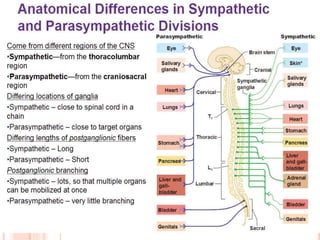
Sympathetic neurons: The efferent ANS is divided
into the sympathetic and the parasympathetic nervous
systems as well as the enteric nervous system
 The sympathetic nervous system is also called the
thoracolumbar division because of its origins.
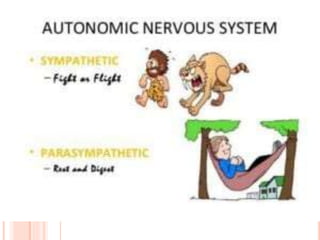
 Allow body to function under stress
 Fight or flight
Parasympathetic neurons:
preganglionic fibers arise from cranial nerves III
(oculomotor),
VII (facial),
IX (glossopharyngeal),
X (vagus) as well as from the sacral region (S2 to S4) of the
spinal cord synapse in ganglia near or on the effector
organs.
REST and digest
Maintenance function
Counterbalance sympathatic function
Vhvbhbnjk
Functional divisions within the nervous
System : nervous system is further divided into two major
functional subdivisions,
1) Somatic system : or voluntary control
2) such as contraction of the skeletal muscles essential for
locomotion
3) 2) autonomic systems : , or involuntary nervous system.
4) The regulates the everyday requirements of vital bodily
functions without the conscious participation of the mind.
Because of the involuntary nature of the autonomic
nervous system.
Function of ANS: sympathatic
•Heart : incease heart rate and increase force of
contraction
•BLOOD VESSEL : constriction
•LUNGS : bronchodilation
•GIT : decrease motility and sphincter contraction decrease
secretions
•Parasympathetic :
•Heart : decrease heart rate and decrease fore of
contraction
•Blood vessel : no effect
•GIT :increase motility and shincter relaxation increase
secretion
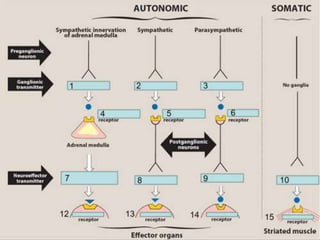
Autonomic motor pathway :
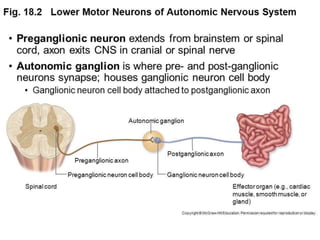
Preganglionic neurons : its cell body grey
matter of the cns (brain and spinal cord)
Its myalinated axon exist the cns
sympathatic
 Preganglionic fibers use : acetylcholine
Posganglionic fibers use : epinephrine
Postganglionic neurons :
the cell body located in an autonomic ganglion
Post ganglionic axon passes from the ganglion to the
effector cardic muscle ,smooth muscle or glande
Parasympathatic :
Preganglionic fibers use: acetylcholine
Postganglionic fibers use acetylcholine
Types of neurotransmitters : six signal compounds,
including norepinephrine (and the closely related
epinephrine), acetylcholine, dopamine, serotonin, histamine,
and γ-aminobutyric acid (GABA)
a. Acetylcholine: Acetylcholine mediates the transmission of nerve
impulses across autonomic ganglia in both the sympathetic and
parasympathetic nervous systems. It is the neurotransmitter at the
adrenal medulla. Transmission from the autonomic postganglionic
nerves to the eff ector organs in the parasympathetic system
b. Norepinephrine and epinephrine: , norepinephrine
mediates the transmission of nerve impulses from
autonomic postganglionic nerves to effector organs.
epinephrine is the transmitter, the fi ber is termed adrenergic.
These slides have been made for medical students please concerntrate on it for
learning

Autonomic nervous system.pptx

  • 1.
    AUTONOMIC NERVOUS SYSTEM MADEBY PHARMACOLOGY FOR PHARMACY
  • 2.
    Introduction : ANSreceive input from part of the cns that process integrate stimuli from the body and external environment 1) Hypothalamus 2) Hyppocampus 3) Reticular formation Sympathetic neurons: The efferent ANS is divided into the sympathetic and the parasympathetic nervous systems as well as the enteric nervous system  The sympathetic nervous system is also called the thoracolumbar division because of its origins.  Allow body to function under stress  Fight or flight
  • 3.
    Parasympathetic neurons: preganglionic fibersarise from cranial nerves III (oculomotor), VII (facial), IX (glossopharyngeal), X (vagus) as well as from the sacral region (S2 to S4) of the spinal cord synapse in ganglia near or on the effector organs. REST and digest Maintenance function Counterbalance sympathatic function
  • 4.
  • 5.
    Functional divisions withinthe nervous System : nervous system is further divided into two major functional subdivisions, 1) Somatic system : or voluntary control 2) such as contraction of the skeletal muscles essential for locomotion 3) 2) autonomic systems : , or involuntary nervous system. 4) The regulates the everyday requirements of vital bodily functions without the conscious participation of the mind. Because of the involuntary nature of the autonomic nervous system.
  • 6.
    Function of ANS:sympathatic •Heart : incease heart rate and increase force of contraction •BLOOD VESSEL : constriction •LUNGS : bronchodilation •GIT : decrease motility and sphincter contraction decrease secretions •Parasympathetic : •Heart : decrease heart rate and decrease fore of contraction •Blood vessel : no effect •GIT :increase motility and shincter relaxation increase secretion
  • 7.
    Autonomic motor pathway: Preganglionic neurons : its cell body grey matter of the cns (brain and spinal cord) Its myalinated axon exist the cns sympathatic  Preganglionic fibers use : acetylcholine Posganglionic fibers use : epinephrine Postganglionic neurons : the cell body located in an autonomic ganglion Post ganglionic axon passes from the ganglion to the effector cardic muscle ,smooth muscle or glande Parasympathatic : Preganglionic fibers use: acetylcholine Postganglionic fibers use acetylcholine
  • 11.
    Types of neurotransmitters: six signal compounds, including norepinephrine (and the closely related epinephrine), acetylcholine, dopamine, serotonin, histamine, and γ-aminobutyric acid (GABA) a. Acetylcholine: Acetylcholine mediates the transmission of nerve impulses across autonomic ganglia in both the sympathetic and parasympathetic nervous systems. It is the neurotransmitter at the adrenal medulla. Transmission from the autonomic postganglionic nerves to the eff ector organs in the parasympathetic system b. Norepinephrine and epinephrine: , norepinephrine mediates the transmission of nerve impulses from autonomic postganglionic nerves to effector organs. epinephrine is the transmitter, the fi ber is termed adrenergic.
  • 12.
    These slides havebeen made for medical students please concerntrate on it for learning