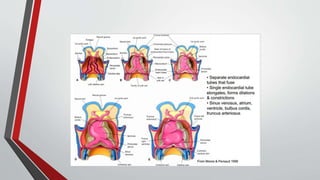
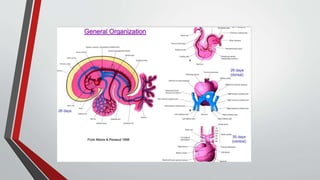
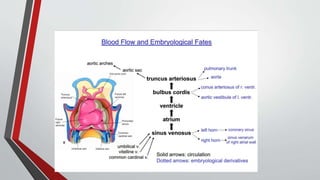
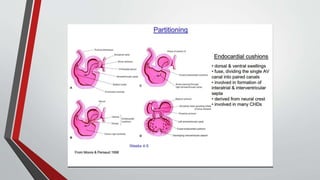
ATRIAL SEPTAL DEFECT 
Shabnam Mohammadzadeh MD 
Cardiologist 
Fellow of Adult Congenital Heart Disease
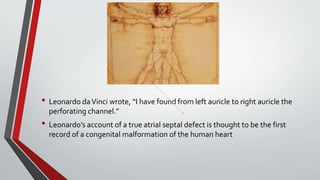
• Leonardo da Vinci wrote, “I have found from left auricle to right auricle the 
perforating channel.” 
• Leonardo’s account of a true atrial septal defect is thought to be the first 
record of a congenital malformation of the human heart
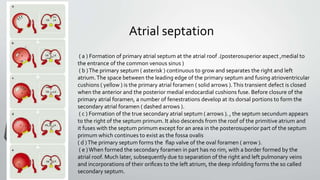
Atrial septation 
( a ) Formation of primary atrial septum at the atrial roof .(posterosuperior aspect ,medial to 
the entrance of the common venous sinus ) 
( b ) The primary septum ( asterisk ) continuous to grow and separates the right and left 
atrium. The space between the leading edge of the primary septum and fusing atrioventricular 
cushions ( yellow ) is the primary atrial foramen ( solid arrows ). This transient defect is closed 
when the anterior and the posterior medial endocardial cushions fuse. Before closure of the 
primary atrial foramen, a number of fenestrations develop at its dorsal portions to form the 
secondary atrial foramen ( dashed arrows ). 
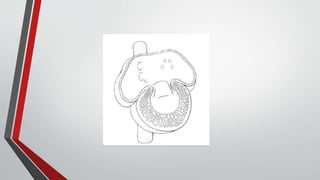
( c ) Formation of the true secondary atrial septum ( arrows ). , the septum secundum appears 
to the right of the septum primum. It also descends from the roof of the primitive atrium and 
it fuses with the septum primum except for an area in the posterosuperior part of the septum 
primum which continues to exist as the fossa ovalis 
( d ) The primary septum forms the flap valve of the oval foramen ( arrow ). 
( e ) When formed the secondary foramen in part has no rim, with a border formed by the 
atrial roof. Much later, subsequently due to separation of the right and left pulmonary veins 
and incorporations of their orifices to the left atrium, the deep infolding forms the so called 
secondary septum.
CLASSIFICATION 
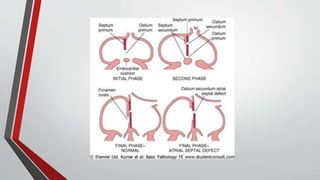
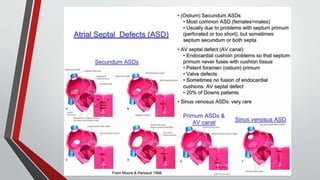
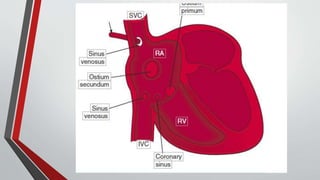
• Ostium primum ASD: caused by lack of fusion of the two endocardial cushions. The defect is in the caudal aspect of both the septum primum 
and secundum. 
• Ostium Secundum ASD: occur as a result of either excessive resorption of the septum primum or deficient growth of the septum secundum 
and are occasionally associated with an anomalous pulmonary venousconnection (<10%). 
• Sinus venosusASD (svc type): results from failure of formation (or resorption) of the septum secundum. This defect is located at the junction 
of the superior vena cava with the right atrium and is associated with anomalous drainage of the pulmonary veins. they are almost always 
associated with an anomalous pulmonary venous connection (right ≫ left) 
• Sinus venosus–inferior vena cava– type defects are very uncommon and abut the junction of the inferior vena cava inferior to the fossa ovalis 
, 
• Coronary sinus ASD: results from failure of development of the terminal section of the coronary sinus. It is located in the caudal posterior 
atrium, above the normal site of drainage of the coronary sinus. Coronary sinus septal defects are rare and arise from an opening of its wall 
with the left atrium ,thereby allowing left-to-right atrial shunting. 
• Single atrium ASD: failure of complete formation of the atrial septum.
OSTIUM SECUNDUM ASD 
• The most common type 
• lie in a folded area rather than on a flat plane. 
• Their anatomy is more complex on the right side 
• Ostium secundumdefects result from shortening of the valve of the foramen 
ovale, excessive resorption of the septum primum, or deficient growth of the 
septum secundum openings less than 5 mm in diameter. 
• the overall rate of spontaneous closure to be 87%. 
• ASD smaller than 3 mm in size diagnosed before 3 months of age, spontaneous 
closure: in 100% of patients at 1½ years of age. 
• Spontaneous closure : more than 80% of the time in patients with defects between 
3 and 8 mm before 1½ years of age 
• An ASD with a diameter larger than 8 mm rarely closes spontaneously. 
• Spontaneous closure is not likely to occur after 4 years of age.
ostium primum defects 
• Next in frequency are ostium primum defects, 
• Also called atrioventricular septal defects
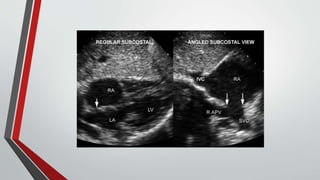
Sinus venosus atrial septal defects 
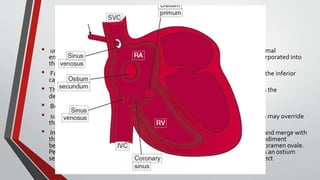
• uncommon, but not rare, (2% to 3% of interatrial communications). During normal 
embryogenesis, the inferior vena cava and the right superior vena cava are incorporated into 
the right horn of the sinus venosus. 
• Faulty resorption results in a communication near the orifice of the superior or the inferior 
cava. 
• The right valve of the sinus venosus is a broad membrane that almost partitions the 
developing right atrium. 
• Both vena cavas are located on the left side of the membrane. 
• superior vena caval sinus venosus defects : The orifice of the superior vena cava may override 
the defect, which is therefore biatrial. 
• Inferior vena caval sinus venosus defects are located below the foramen ovale and merge with 
the floor of the inferior cava. As the valve of the inferior vena cava resorbs, its rudiment 
becomes the fetal eustachian valve that directs inferior caval blood across the foramen ovale. 
Persistence of a large eustachian valve channels inferior vena caval blood across an ostium 
secundum atrial septal defect or across an inferior vena caval sinus venosus defect
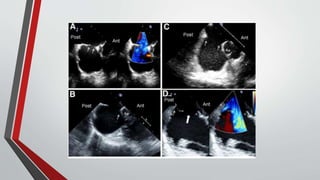
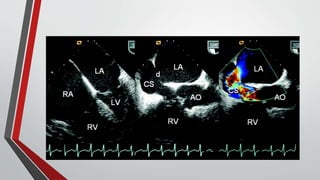
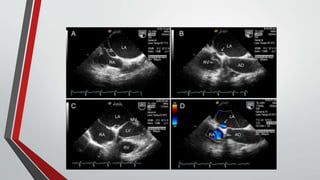
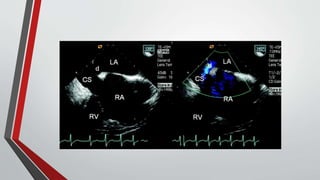
Coronary sinus atrial septal defects 
• Unroofed coronary sinus ASD is rare, (less than 1 %) of all atrial septal defects 
• failure of separation of the superior wall of the coronary sinus with the left atrium 
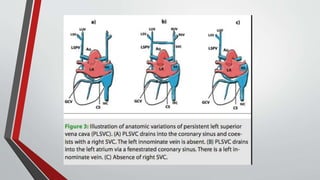
• usually associated with a persistent left superior vena cava (LSVC). Persistent LSVC occurs in 0.1–0.5 % of the 
general population and 8 % of anomalies drain into the left atrium. 
• An unroofed coronary sinus ASD is seen in 75 % of patients with persistent LSVC that drains into the left atrium. 
• Unroofed coronary sinus is classified into four groups. (Type I is a completely unroofed coronary sinus with 
persistent LSVC. Type II is a completely unroofed coronary sinus without persistent LSVC. Type III is a partially 
unroofed midportion coronary sinus defect. Type IV is a partially unroofed terminal portion coronary sinus 
defect). 
• The fenestration from the coronary sinus into the left atrium typically occurs between the left atrial appendage 
and the left upper pulmonary vein 
• A relatively rare combination consists of absence of the coronary sinus, a defect in the atrial septum in the 
location of the ostium of the coronary sinus, and a left superior vena cava connected to the left atrium. This 
combination is necessarily cyanotic because blood from the left superior vena caval enters the left atrium 
directly
COMMON ATRIUM 
• rare 
• The right-sided portion of the common chamber has features of a morpholright atrium, The 
left-sided portion of the common chamber has features of a morphologic left atrium. 
• Absence of the atrial septum necessarily includes the ostium primum(atrioventricular 
septal) location, 
• resemble a nonrestrictive atrial septal defect except for obligatory venoarterial mixing 
• a cyanotic malformation with increased pulmonary arterial blood flow 
• Despite absence of the atrial septum, venoarterial mixing is usually no more than 
moderate, with systemic arterial oxygen saturations that are often above 90%.
EPIDEMIOLOGY 
• The female: male ratio is at least 2:1 in ostium secundumatrial septal defect,in sinus venosus defects and in 
ostium primumdefects is approximately equal. 
• Ostium secundum atrial septal defects are sometimes familial, Familial scimitar syndrome has been 
reported 
• Autosomal dominant inheritance is a feature of atrial septal defect with the Holt-Oram syndrome. 
• Autosomal dominant inheritance tends to be the mode in inheritance in ostium secundumdefects with 
prolonged atrioventricular conduction In some members of a family, the atrial septal defect occurs with PR 
interval prolongation; other family members have PR prolongation with an intact atrial septum71; and still 
others experience sudden death. Mutations in the NKX2.5 gene have been associated with familial atrial 
septal defect and progressive prolongation of atrioventricular conduction. 
• Concordant familial segregation of atrial septal defect has been reported with the Axenfeld-Reiger 
Anomaly (see section Physical Appearance).
Which will have less RV failure? 
1. 8 y/o girl with severe MS and moderate size ASD. 
2. 23 Y/O male with severe PS and moderate TR and large ASD 
3. 35 Y/O female with uncontrolled HTN and coarctation of aorta 
4. 50 y/o male with recent extensive MI
Pathophysiology 
In any type of ASD, the degree of left-to-right atrial shunting depends on 
1. size of the defect 
2. the relative diastolic filling properties of the two ventricles. 
Any condition causing reduced left ventricular compliance (e.g., systemic 
hypertension, cardiomyopathy, myocardia linfarction) or increased left atrial pressure 
and/or regurgitation) tends to increase the left-to-right shunt. 
If similar forces are present in the right side of the heart, this will diminish the left-to-right 
shunt and promote right-to-left shunting.
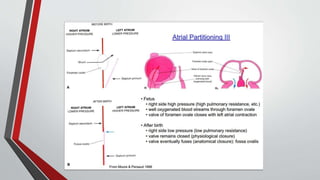
• The fetal circulation is not altered by an atrial septal defect. 
• At birth, there is little or no shunt in either direction across an atrial septal defect. 
• The right ventricle gradually becomes thinner and more compliant ,so left atrial blood then 
flows across the atrial septal defect into the more compliant right ventricle. 
• Pulmonary blood flow that is received by the right pulmonary veins is channeled into the 
right atrium because of proximity of the right pulmonary veins to the rim of the atrial septal 
defect). Pulmonary blood flow received by the left pulmonary veins is channeled directly 
into the left atrium and is then shunted across the atrial septal defect. Accordingly, the 
right ventricle is volume overloaded and the left ventricle is volume underloaded
• Pulmonary vascular disease with a right-to-left shunt at sea level occurs in 
less than 10% of patients with an atrial septal defect ( R/O PPH) 
• Right ventricular function is usually maintained through the fourth decade. 
Ischemic heart disease and systemic hypertension conspire to reduce left 
ventricular compliance and thus to increase the left-to-right shunt. The 
additional volume overload of the right atrium provokes atrial fibrillation 
and atrial flutter, which further increase the left-to-right shunt and result in 
heart failure)
• Left ventricular end-diastolic volume, stroke volume, ejection fraction, and cardiac 
output are decreased in infants and adults with an atrial septal defect, and ejection 
fraction tends to fall with exercise. 
• Diminished left ventricular functional reserve is related to the mechanical effects 
of right ventricular volume overload, which displaces the ventricular septum into 
the left ventricular cavity, reducing its size and changing its shape from ovoid to 
crescentic 
• coronary reserve is compromised in the volume-overloaded right ventricle if the 
left main coronary artery is compressed by a dilated pulmonary trunk.
• Increased resistance to right ventricular discharge can also result from massive 
occlusive thrombus in dilated hypertensive proximal pulmonary arteries . 
• Older adults experience a moderate rise in pulmonary artery pressure with 
persistence of the left-to-right shunt. Thus, pulmonary hypertension with a 
nonrestrictive atrial septal defect at sea level is bimodal and is represented in 
young females with coexisting primary pulmonary hypertension or in older adults, 
male or female, who have moderate pulmonary hypertension with a persistent left-to- 
right shunt.
Clinical Features 
• Symptoms are rare in childhood, and the decision to close an ASD is usually based on the presence of right-sided heart 
volume overload and as prophylaxis against later adverse outcomes in patients with a significant defect (>10 mm). 
• The most common initial symptoms in adults are exercise intolerance (exertional dyspnea and fatigue) and palpitations 
(typically from atrial flutter, atrial fibrillation, or sick sinus syndrome). 
• Right ventricular failure can be the initial symptom in older patients. 
• The presence of cyanosis should alert one to the possibility of shunt reversal and Eisenmenger syndrome or, alternatively, 
to a prominent eustachian valve directing inferior vena cava flow to the left atrium via a secundumASD or sinus venosus 
ASD of the inferior vena cava type. 
• Examination shows “left atrialization” of jugular venous pressure (A wave = V wave). A hyperdynamic right ventricular 
impulse may be felt at the left sternal border at the end of expiration or in the subxiphoid area on deep inspiration. A 
dilated pulmonary artery trunk may be palpated in the second left intercostal space. A wide and fixed split of S2 is the 
auscultatory hallmark of ASD, although it is not always present. A systolic ejection murmur, usually grade 2 and often 
scratchy, is best heard at the second left intercostal space, and a mid-diastolic rumble, from increased flow through the 
tricuspid valve, may be present at the left lower sternal border. When right ventricular failure occurs, a pansystolic 
murmur of tricuspid regurgitation is usual.
POINTS 
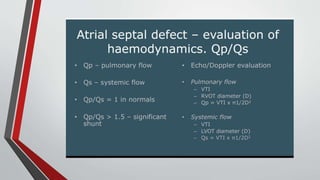
• large ASD (pulmonary artery blood flow relative to systemic blood flow [Qp/Qs] >2.0:1.0) may cause congestive heart 
failure and failure to thrive in an infant or child. 
• An undetected ASD with a significant shunt (Qp/Qs >1.5:1.0) probably causes symptoms over time in adolescence or 
adulthood, and symptomatic patients usually become progressively more physically limited as they age. 
• Effort-related dyspnea is seen in approximately 30% of patients by the third decade and in more than 75% by the fifth 
decade. 
• Exercise intolerance on cardiopulmonary testing is even more common and reflects the fact that such patients often 
do not know what “normal” feels like. 
• Supraventricular arrhythmias (atrial fibrillation or flutter) and right-sided heart failure develop by 40 years of age in 
approximately 10% of patients and become more prevalent with aging. 
• Paradoxical embolism resulting in a transient ischemic attack or stroke can call attention to the diagnosis. 
• The development of pulmonary hypertension, although probably not as common as originally thought, can occur at 
an early age. 
• If pulmonary hypertension is severe, a second causative diagnosis should be sought. 
• Life expectancy is clearly reduced in patients with an ASD, although not as severely as was quoted in earlier papers 
because only patients with large ASDs were reported.
Auscultation 
• Split S1, Load T1 , pulmonary ejection sound is uncommon, 
• The pulmonary midsystolic flow murmur , grade 2/6 or 3/6, maximal in the second left intercostal space over the pulmonary trunk,, impure 
and superficial , crescendo-decrescendo, peaking in early or mid systole and ending well before the second heart sound . 
• The pulmonary component of the second sound is prominent 
• Wide fixed splitting is an auscultatory hallmark of atrial septal defect. 
• As diastole shortens, the split narrows, and as diastole lengthens, the split widens 
• Fixed splitting means that the width of the split remains constant throughout active respiration and during the Valsalva’s maneuver. 
• Persistent splitting means that the split widens during inspiration and narrows during expiration. 
• These patterns of splitting do not apply when partial anomalous pulmonary venous connection occurs with an intact atrial septum Increased 
venous return during inspiration is not accompanied by a reciprocal fall in left-to-right shunt because the atrial septum is intact 
• Tricuspid flow murmurs are medium frequency, impure, soft, short, presystolic or mid-diastolic, and localized at the lower left sternal border 
and do not increase with inspiration despite their right-sided origin. 
• PERICARDIAL RUB 
• Continuous murmurs through restrictive atrial septal defects are rare. 
• Atrial septal defects with pulmonary vascular disease and reversed shunts are accompanied by auscultatory signs of pulmonary 
hypertension
PHYSICAL APPEARANCE 
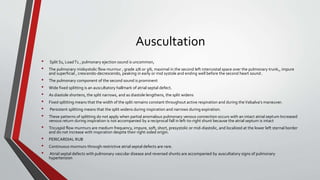
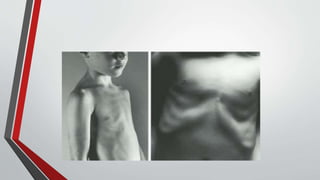
• Children with an atrial septal defect may have a delicate gracile habitus, 
• weight more affected than height 
• left precordial bulge with Harrison’s grooves
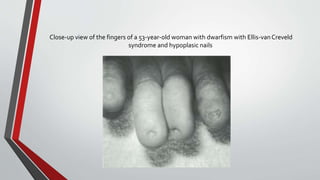
Close-up view of the fingers of a 53-year-old woman with dwarfism with Ellis-van Creveld 
syndrome and hypoplasic nails
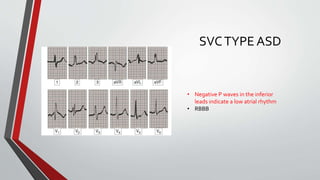
SVC TYPE ASD 
• Negative P waves in the inferior 
leads indicate a low atrial rhythm 
• RBBB
Electrocardiogram 
• Sinus rhythm or atrial fibrillation or flutter may be present. 
• The QRS axis is typically rightward in secundumASD, and “crochetage” of the QRS complex may be seen in 
the inferior leads. when the rSr prime pattern occurs with crochetage in each of the inferior limb leads, the 
specificity of the electrocardiographic diagnosis of atrial septal defect is remarkably high 
• Negative P waves in the inferior leads indicate a low atrial pacemaker, often seen in sinus venosus–superior 
vena cava–type defects, which are located in the area of the sinoatrial node and render it deficient. 
• Complete right bundle branch block appears as a function of age. Tall R or R′ waves in V1 frequently 
indicate pulmonary hypertension. 
• The QRS axis is vertical with clockwise depolarization that writes q waves in leads 2, 3, and aVF 
• sinus arrhythmia does not occur in adults with an atrial septal defect
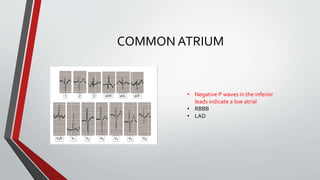
COMMON ATRIUM 
• Negative P waves in the inferior 
leads indicate a low atrial 
• RBBB 
• LAD
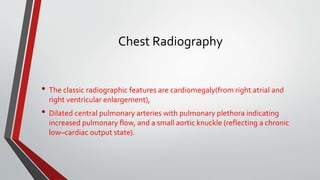
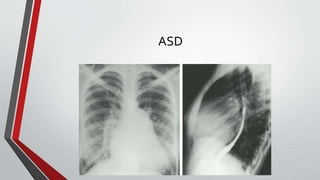
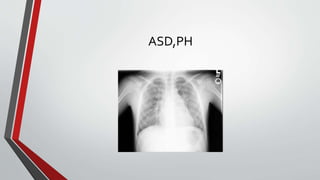
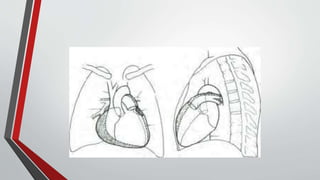
Chest Radiography 
• The classic radiographic features are cardiomegaly(from right atrial and 
right ventricular enlargement), 
• Dilated central pulmonary arteries with pulmonary plethora indicating 
increased pulmonary flow, and a small aortic knuckle (reflecting a chronic 
low–cardiac output state).
ASD
ASD,PH
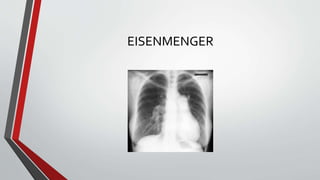
EISENMENGER
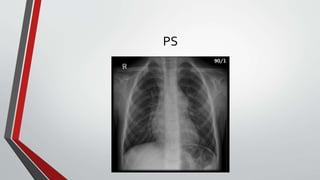
PS
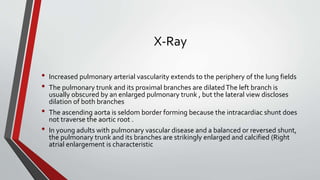
X-Ray 
• Increased pulmonary arterial vascularity extends to the periphery of the lung fields 
• The pulmonary trunk and its proximal branches are dilated The left branch is 
usually obscured by an enlarged pulmonary trunk , but the lateral view discloses 
dilation of both branches 
• The ascending aorta is seldom border forming because the intracardiac shunt does 
not traverse the aortic root . 
• In young adults with pulmonary vascular disease and a balanced or reversed shunt, 
the pulmonary trunk and its branches are strikingly enlarged and calcified (Right 
atrial enlargement is characteristic
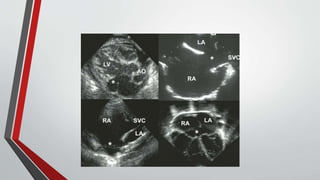
Echocardiography 
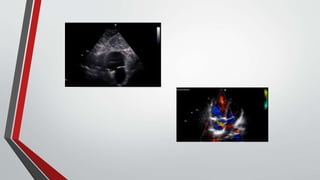
• The functional importance of the defect can be estimated by the size of the right ventricle, 
• The presence or absence of right ventricular volume overload (paradoxical septal motion), 
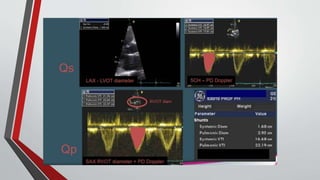
• (less accurately) estimation of Qp/Qs. 
• Indirect measurement of pulmonary artery pressure can be obtained from the Doppler velocity of the tricuspid 
regurgitation jet. 
• In ostium secundum atrial septal defects, : The mitral valve abnormalities consist of thickening and fibrosis of leaflets and 
chordae tendineae . 
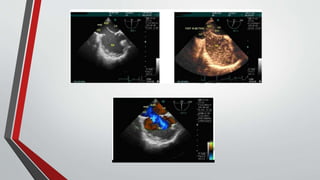
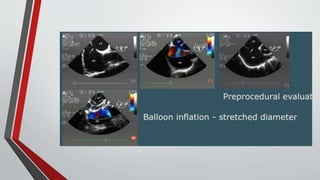
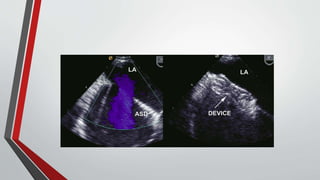
• TEE permits better visualization of the interatrial septum and is usually required when device closure is contemplated, 
partly to ensure that pulmonary venous drainage is normal 
• ICE can be used instead of TEE during device closure to help guide insertion of the device, thereby reducing fluoroscopic 
and procedural time and forgoing the need for general anesthesia.
Which one is against the diagnosis of pure ASD? 
1. Systolic murmur (IV/VI) on LUSB 
2. Orthopnea 
3. Ortostatic dyspnea 
4. Friction rub 
5. Reduced LV function 
Platypnea-orthodeoxia is a rare syndrome characterized 
by orthostatic provocation of a right-to-left shunt across 
an atrial septal defect or a patent foramen ovale. 
Platypnea (dyspnea induced by the upright position and 
relieved by recumbency) and orthodeoxia (arterial 
desaturation in the upright position with improvement 
during recumbency) are features of this rare disorder. 
Clinical suspicion may originate from the patient who 
reports that dyspnea is provoked by standing upright. 
( the supine position 
increases the work of 
breathing in patients with 
reduced lung compliance)
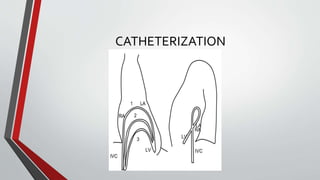
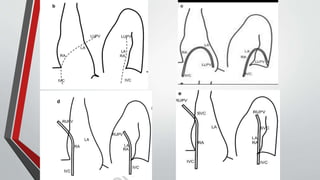
CATHETERIZATION
Indications for Intervention 
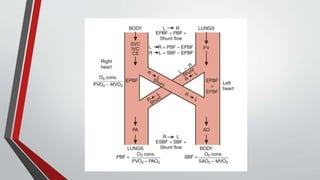
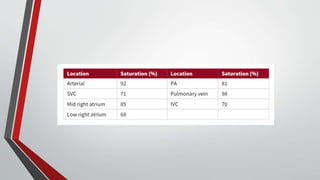
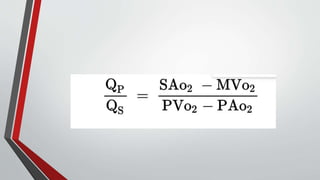
• Shunt fractions are now rarely measured and are reserved for “borderline” cases. 
• Hemodynamically insignificant ASDs (Qp/Qs <1.5) do not require closure, with the possible 
exception of attempts to prevent paradoxical emboli in older patients after a stroke. 
• “Significant” ASDs (Qp/Qs >1.5 or ASDs associated with right ventricular volume overload) 
should be closed, especially if device closure is available and appropriate. 
• For patients with pulmonary hypertension (pulmonary artery pressure >2/3 systemic 
arterial blood pressure or pulmonary arteriolar resistance >2/3 systemic arteriolar 
resistance), closure can be recommended if there is a net left-to-right shunt of at least 1.5:1 
or evidence of pulmonary artery reactivity when challenged with a pulmonary vasodilator 
(e.g., oxygen or nitric oxide).
DEVICE CLOSURE(T OR F) 
• Device closure of secundumASDs percutaneously under fluoroscopy and TEE or with ICE guidance is the 
therapy of choice when appropriate 
• Indication for device closure are the same as for surgical closure, but the selection criteria are stricter. 
• Depending on the device, this technique is available only for patients with a secundumASD that has a 
stretched diameter of less than 38mm and adequate rims to enable secure deployment of the device. 
• Anomalous pulmonary venous connection or proximity of the defect to the AV valves or coronary sinus or 
systemic venous drainage usually precludes the use of this technique. 
• major complications (e.g., device embolization, atrial perforation, thrombus formation) occurring in less 
than 1% of patients and clinical closure achieved in more than 80%. 
• Device closure of an ASD improves functional status in symptomatic patients independent of age and 
exercise capacity in asymptomatic and symptomatic patients. 
• Intermediate follow-up data have proved device closure of ASDs to be safe and effective with same 
preservation of right ventricular function and lower complication rates than reported with surgery. 
T 
T 
F, 41 
T 
T 
T 
F, 
BETTER
SURGERY(T,F) 
• ASDs can be closed surgically by primary suture closure or by applying a pericardial or synthetic patch. 
• The procedure is generally performed via a midline sternotomy, but the availability of an inframammary or 
minithoracotomy approach to a typical secundumASD should be made known to cosmetically sensitive 
patients. 
• Surgical mortality in adults without pulmonary hypertension should be less than 1%. 
• Surgical closure of an ASD improves functional status and exercise capacity in symptomatic patients, 
improves and survival, and improves or eliminates congestive heart failure, especially when patients 
undergo surgery at an earlier age. 
• surgical closure of ASDs in adult life does not prevent atrial fibrillation/flutter or stroke, especially when 
patients undergo surgery after the age of 40 years. 
• The role of a concomitant Cox-maze procedure in patients with a previous history of atrial flutter or 
fibrillation should be considered 
• In the setting of preexisting atrial tachyarrhythmias, surgical as well as device closure of an ASD does 
decrease the incidence of postoperative atrial tachyarrhythmia 
F, 
IMPROVES 
SURVIVAL
Reproductive Issues 
• Pregnancy is well tolerated in patients after ASD closure. 
• It is also well tolerated in women with unrepaired ASDs, but the risk for 
paradoxical embolism is increased (still only very low risk) during pregnancy 
and in the postpartum period. 
• Pregnancy is contraindicated in those with Eisenmenger syndrome because 
of high maternal (≈50%) and fetal (≈60%) mortality.
Follow-Up(T,F) 
• After device closure, patients require 6 months of aspirin and endocarditis prophylaxis until the 
device endothelializes, 
• following following which, which,assuming they do not that require no residual any special shunt is precautions present, they or do endocarditis not require any prophylaxis. 
special 
• precautions or endocarditis prophylaxis. 
Patients with sinus venosus defects are at risk for the development of caval and/or pulmonary 
vein stenosis and should be kept under intermittent review. 
• Patients who have undergone surgical or device repair as adults, patients with atrial arrhythmias 
preoperatively or postoperatively, and those with ventricular dysfunction should remain under 
long term cardiology surveillance. 
• All patients who have undergone device closure should probably have an echocardiogram taken 
every 5 years or so because of the possibility of late issues, especially erosion.

Atrial septal defect

  • 1.
    ATRIAL SEPTAL DEFECT Shabnam Mohammadzadeh MD Cardiologist Fellow of Adult Congenital Heart Disease
  • 2.
    • Leonardo daVinci wrote, “I have found from left auricle to right auricle the perforating channel.” • Leonardo’s account of a true atrial septal defect is thought to be the first record of a congenital malformation of the human heart
  • 8.
    Atrial septation (a ) Formation of primary atrial septum at the atrial roof .(posterosuperior aspect ,medial to the entrance of the common venous sinus ) ( b ) The primary septum ( asterisk ) continuous to grow and separates the right and left atrium. The space between the leading edge of the primary septum and fusing atrioventricular cushions ( yellow ) is the primary atrial foramen ( solid arrows ). This transient defect is closed when the anterior and the posterior medial endocardial cushions fuse. Before closure of the primary atrial foramen, a number of fenestrations develop at its dorsal portions to form the secondary atrial foramen ( dashed arrows ). ( c ) Formation of the true secondary atrial septum ( arrows ). , the septum secundum appears to the right of the septum primum. It also descends from the roof of the primitive atrium and it fuses with the septum primum except for an area in the posterosuperior part of the septum primum which continues to exist as the fossa ovalis ( d ) The primary septum forms the flap valve of the oval foramen ( arrow ). ( e ) When formed the secondary foramen in part has no rim, with a border formed by the atrial roof. Much later, subsequently due to separation of the right and left pulmonary veins and incorporations of their orifices to the left atrium, the deep infolding forms the so called secondary septum.
  • 12.
    CLASSIFICATION • Ostiumprimum ASD: caused by lack of fusion of the two endocardial cushions. The defect is in the caudal aspect of both the septum primum and secundum. • Ostium Secundum ASD: occur as a result of either excessive resorption of the septum primum or deficient growth of the septum secundum and are occasionally associated with an anomalous pulmonary venousconnection (<10%). • Sinus venosusASD (svc type): results from failure of formation (or resorption) of the septum secundum. This defect is located at the junction of the superior vena cava with the right atrium and is associated with anomalous drainage of the pulmonary veins. they are almost always associated with an anomalous pulmonary venous connection (right ≫ left) • Sinus venosus–inferior vena cava– type defects are very uncommon and abut the junction of the inferior vena cava inferior to the fossa ovalis , • Coronary sinus ASD: results from failure of development of the terminal section of the coronary sinus. It is located in the caudal posterior atrium, above the normal site of drainage of the coronary sinus. Coronary sinus septal defects are rare and arise from an opening of its wall with the left atrium ,thereby allowing left-to-right atrial shunting. • Single atrium ASD: failure of complete formation of the atrial septum.
  • 14.
    OSTIUM SECUNDUM ASD • The most common type • lie in a folded area rather than on a flat plane. • Their anatomy is more complex on the right side • Ostium secundumdefects result from shortening of the valve of the foramen ovale, excessive resorption of the septum primum, or deficient growth of the septum secundum openings less than 5 mm in diameter. • the overall rate of spontaneous closure to be 87%. • ASD smaller than 3 mm in size diagnosed before 3 months of age, spontaneous closure: in 100% of patients at 1½ years of age. • Spontaneous closure : more than 80% of the time in patients with defects between 3 and 8 mm before 1½ years of age • An ASD with a diameter larger than 8 mm rarely closes spontaneously. • Spontaneous closure is not likely to occur after 4 years of age.
  • 15.
    ostium primum defects • Next in frequency are ostium primum defects, • Also called atrioventricular septal defects
  • 16.
    Sinus venosus atrialseptal defects • uncommon, but not rare, (2% to 3% of interatrial communications). During normal embryogenesis, the inferior vena cava and the right superior vena cava are incorporated into the right horn of the sinus venosus. • Faulty resorption results in a communication near the orifice of the superior or the inferior cava. • The right valve of the sinus venosus is a broad membrane that almost partitions the developing right atrium. • Both vena cavas are located on the left side of the membrane. • superior vena caval sinus venosus defects : The orifice of the superior vena cava may override the defect, which is therefore biatrial. • Inferior vena caval sinus venosus defects are located below the foramen ovale and merge with the floor of the inferior cava. As the valve of the inferior vena cava resorbs, its rudiment becomes the fetal eustachian valve that directs inferior caval blood across the foramen ovale. Persistence of a large eustachian valve channels inferior vena caval blood across an ostium secundum atrial septal defect or across an inferior vena caval sinus venosus defect
  • 17.
    Coronary sinus atrialseptal defects • Unroofed coronary sinus ASD is rare, (less than 1 %) of all atrial septal defects • failure of separation of the superior wall of the coronary sinus with the left atrium • usually associated with a persistent left superior vena cava (LSVC). Persistent LSVC occurs in 0.1–0.5 % of the general population and 8 % of anomalies drain into the left atrium. • An unroofed coronary sinus ASD is seen in 75 % of patients with persistent LSVC that drains into the left atrium. • Unroofed coronary sinus is classified into four groups. (Type I is a completely unroofed coronary sinus with persistent LSVC. Type II is a completely unroofed coronary sinus without persistent LSVC. Type III is a partially unroofed midportion coronary sinus defect. Type IV is a partially unroofed terminal portion coronary sinus defect). • The fenestration from the coronary sinus into the left atrium typically occurs between the left atrial appendage and the left upper pulmonary vein • A relatively rare combination consists of absence of the coronary sinus, a defect in the atrial septum in the location of the ostium of the coronary sinus, and a left superior vena cava connected to the left atrium. This combination is necessarily cyanotic because blood from the left superior vena caval enters the left atrium directly
  • 19.
    COMMON ATRIUM •rare • The right-sided portion of the common chamber has features of a morpholright atrium, The left-sided portion of the common chamber has features of a morphologic left atrium. • Absence of the atrial septum necessarily includes the ostium primum(atrioventricular septal) location, • resemble a nonrestrictive atrial septal defect except for obligatory venoarterial mixing • a cyanotic malformation with increased pulmonary arterial blood flow • Despite absence of the atrial septum, venoarterial mixing is usually no more than moderate, with systemic arterial oxygen saturations that are often above 90%.
  • 20.
    EPIDEMIOLOGY • Thefemale: male ratio is at least 2:1 in ostium secundumatrial septal defect,in sinus venosus defects and in ostium primumdefects is approximately equal. • Ostium secundum atrial septal defects are sometimes familial, Familial scimitar syndrome has been reported • Autosomal dominant inheritance is a feature of atrial septal defect with the Holt-Oram syndrome. • Autosomal dominant inheritance tends to be the mode in inheritance in ostium secundumdefects with prolonged atrioventricular conduction In some members of a family, the atrial septal defect occurs with PR interval prolongation; other family members have PR prolongation with an intact atrial septum71; and still others experience sudden death. Mutations in the NKX2.5 gene have been associated with familial atrial septal defect and progressive prolongation of atrioventricular conduction. • Concordant familial segregation of atrial septal defect has been reported with the Axenfeld-Reiger Anomaly (see section Physical Appearance).
  • 21.
    Which will haveless RV failure? 1. 8 y/o girl with severe MS and moderate size ASD. 2. 23 Y/O male with severe PS and moderate TR and large ASD 3. 35 Y/O female with uncontrolled HTN and coarctation of aorta 4. 50 y/o male with recent extensive MI
  • 22.
    Pathophysiology In anytype of ASD, the degree of left-to-right atrial shunting depends on 1. size of the defect 2. the relative diastolic filling properties of the two ventricles. Any condition causing reduced left ventricular compliance (e.g., systemic hypertension, cardiomyopathy, myocardia linfarction) or increased left atrial pressure and/or regurgitation) tends to increase the left-to-right shunt. If similar forces are present in the right side of the heart, this will diminish the left-to-right shunt and promote right-to-left shunting.
  • 23.
    • The fetalcirculation is not altered by an atrial septal defect. • At birth, there is little or no shunt in either direction across an atrial septal defect. • The right ventricle gradually becomes thinner and more compliant ,so left atrial blood then flows across the atrial septal defect into the more compliant right ventricle. • Pulmonary blood flow that is received by the right pulmonary veins is channeled into the right atrium because of proximity of the right pulmonary veins to the rim of the atrial septal defect). Pulmonary blood flow received by the left pulmonary veins is channeled directly into the left atrium and is then shunted across the atrial septal defect. Accordingly, the right ventricle is volume overloaded and the left ventricle is volume underloaded
  • 24.
    • Pulmonary vasculardisease with a right-to-left shunt at sea level occurs in less than 10% of patients with an atrial septal defect ( R/O PPH) • Right ventricular function is usually maintained through the fourth decade. Ischemic heart disease and systemic hypertension conspire to reduce left ventricular compliance and thus to increase the left-to-right shunt. The additional volume overload of the right atrium provokes atrial fibrillation and atrial flutter, which further increase the left-to-right shunt and result in heart failure)
  • 25.
    • Left ventricularend-diastolic volume, stroke volume, ejection fraction, and cardiac output are decreased in infants and adults with an atrial septal defect, and ejection fraction tends to fall with exercise. • Diminished left ventricular functional reserve is related to the mechanical effects of right ventricular volume overload, which displaces the ventricular septum into the left ventricular cavity, reducing its size and changing its shape from ovoid to crescentic • coronary reserve is compromised in the volume-overloaded right ventricle if the left main coronary artery is compressed by a dilated pulmonary trunk.
  • 26.
    • Increased resistanceto right ventricular discharge can also result from massive occlusive thrombus in dilated hypertensive proximal pulmonary arteries . • Older adults experience a moderate rise in pulmonary artery pressure with persistence of the left-to-right shunt. Thus, pulmonary hypertension with a nonrestrictive atrial septal defect at sea level is bimodal and is represented in young females with coexisting primary pulmonary hypertension or in older adults, male or female, who have moderate pulmonary hypertension with a persistent left-to- right shunt.
  • 27.
    Clinical Features •Symptoms are rare in childhood, and the decision to close an ASD is usually based on the presence of right-sided heart volume overload and as prophylaxis against later adverse outcomes in patients with a significant defect (>10 mm). • The most common initial symptoms in adults are exercise intolerance (exertional dyspnea and fatigue) and palpitations (typically from atrial flutter, atrial fibrillation, or sick sinus syndrome). • Right ventricular failure can be the initial symptom in older patients. • The presence of cyanosis should alert one to the possibility of shunt reversal and Eisenmenger syndrome or, alternatively, to a prominent eustachian valve directing inferior vena cava flow to the left atrium via a secundumASD or sinus venosus ASD of the inferior vena cava type. • Examination shows “left atrialization” of jugular venous pressure (A wave = V wave). A hyperdynamic right ventricular impulse may be felt at the left sternal border at the end of expiration or in the subxiphoid area on deep inspiration. A dilated pulmonary artery trunk may be palpated in the second left intercostal space. A wide and fixed split of S2 is the auscultatory hallmark of ASD, although it is not always present. A systolic ejection murmur, usually grade 2 and often scratchy, is best heard at the second left intercostal space, and a mid-diastolic rumble, from increased flow through the tricuspid valve, may be present at the left lower sternal border. When right ventricular failure occurs, a pansystolic murmur of tricuspid regurgitation is usual.
  • 28.
    POINTS • largeASD (pulmonary artery blood flow relative to systemic blood flow [Qp/Qs] >2.0:1.0) may cause congestive heart failure and failure to thrive in an infant or child. • An undetected ASD with a significant shunt (Qp/Qs >1.5:1.0) probably causes symptoms over time in adolescence or adulthood, and symptomatic patients usually become progressively more physically limited as they age. • Effort-related dyspnea is seen in approximately 30% of patients by the third decade and in more than 75% by the fifth decade. • Exercise intolerance on cardiopulmonary testing is even more common and reflects the fact that such patients often do not know what “normal” feels like. • Supraventricular arrhythmias (atrial fibrillation or flutter) and right-sided heart failure develop by 40 years of age in approximately 10% of patients and become more prevalent with aging. • Paradoxical embolism resulting in a transient ischemic attack or stroke can call attention to the diagnosis. • The development of pulmonary hypertension, although probably not as common as originally thought, can occur at an early age. • If pulmonary hypertension is severe, a second causative diagnosis should be sought. • Life expectancy is clearly reduced in patients with an ASD, although not as severely as was quoted in earlier papers because only patients with large ASDs were reported.
  • 29.
    Auscultation • SplitS1, Load T1 , pulmonary ejection sound is uncommon, • The pulmonary midsystolic flow murmur , grade 2/6 or 3/6, maximal in the second left intercostal space over the pulmonary trunk,, impure and superficial , crescendo-decrescendo, peaking in early or mid systole and ending well before the second heart sound . • The pulmonary component of the second sound is prominent • Wide fixed splitting is an auscultatory hallmark of atrial septal defect. • As diastole shortens, the split narrows, and as diastole lengthens, the split widens • Fixed splitting means that the width of the split remains constant throughout active respiration and during the Valsalva’s maneuver. • Persistent splitting means that the split widens during inspiration and narrows during expiration. • These patterns of splitting do not apply when partial anomalous pulmonary venous connection occurs with an intact atrial septum Increased venous return during inspiration is not accompanied by a reciprocal fall in left-to-right shunt because the atrial septum is intact • Tricuspid flow murmurs are medium frequency, impure, soft, short, presystolic or mid-diastolic, and localized at the lower left sternal border and do not increase with inspiration despite their right-sided origin. • PERICARDIAL RUB • Continuous murmurs through restrictive atrial septal defects are rare. • Atrial septal defects with pulmonary vascular disease and reversed shunts are accompanied by auscultatory signs of pulmonary hypertension
  • 31.
    PHYSICAL APPEARANCE •Children with an atrial septal defect may have a delicate gracile habitus, • weight more affected than height • left precordial bulge with Harrison’s grooves
  • 32.
    Close-up view ofthe fingers of a 53-year-old woman with dwarfism with Ellis-van Creveld syndrome and hypoplasic nails
  • 33.
    SVC TYPE ASD • Negative P waves in the inferior leads indicate a low atrial rhythm • RBBB
  • 34.
    Electrocardiogram • Sinusrhythm or atrial fibrillation or flutter may be present. • The QRS axis is typically rightward in secundumASD, and “crochetage” of the QRS complex may be seen in the inferior leads. when the rSr prime pattern occurs with crochetage in each of the inferior limb leads, the specificity of the electrocardiographic diagnosis of atrial septal defect is remarkably high • Negative P waves in the inferior leads indicate a low atrial pacemaker, often seen in sinus venosus–superior vena cava–type defects, which are located in the area of the sinoatrial node and render it deficient. • Complete right bundle branch block appears as a function of age. Tall R or R′ waves in V1 frequently indicate pulmonary hypertension. • The QRS axis is vertical with clockwise depolarization that writes q waves in leads 2, 3, and aVF • sinus arrhythmia does not occur in adults with an atrial septal defect
  • 35.
    COMMON ATRIUM •Negative P waves in the inferior leads indicate a low atrial • RBBB • LAD
  • 36.
    Chest Radiography •The classic radiographic features are cardiomegaly(from right atrial and right ventricular enlargement), • Dilated central pulmonary arteries with pulmonary plethora indicating increased pulmonary flow, and a small aortic knuckle (reflecting a chronic low–cardiac output state).
  • 37.
  • 38.
  • 39.
  • 40.
  • 41.
    X-Ray • Increasedpulmonary arterial vascularity extends to the periphery of the lung fields • The pulmonary trunk and its proximal branches are dilated The left branch is usually obscured by an enlarged pulmonary trunk , but the lateral view discloses dilation of both branches • The ascending aorta is seldom border forming because the intracardiac shunt does not traverse the aortic root . • In young adults with pulmonary vascular disease and a balanced or reversed shunt, the pulmonary trunk and its branches are strikingly enlarged and calcified (Right atrial enlargement is characteristic
  • 44.
    Echocardiography • Thefunctional importance of the defect can be estimated by the size of the right ventricle, • The presence or absence of right ventricular volume overload (paradoxical septal motion), • (less accurately) estimation of Qp/Qs. • Indirect measurement of pulmonary artery pressure can be obtained from the Doppler velocity of the tricuspid regurgitation jet. • In ostium secundum atrial septal defects, : The mitral valve abnormalities consist of thickening and fibrosis of leaflets and chordae tendineae . • TEE permits better visualization of the interatrial septum and is usually required when device closure is contemplated, partly to ensure that pulmonary venous drainage is normal • ICE can be used instead of TEE during device closure to help guide insertion of the device, thereby reducing fluoroscopic and procedural time and forgoing the need for general anesthesia.
  • 52.
    Which one isagainst the diagnosis of pure ASD? 1. Systolic murmur (IV/VI) on LUSB 2. Orthopnea 3. Ortostatic dyspnea 4. Friction rub 5. Reduced LV function Platypnea-orthodeoxia is a rare syndrome characterized by orthostatic provocation of a right-to-left shunt across an atrial septal defect or a patent foramen ovale. Platypnea (dyspnea induced by the upright position and relieved by recumbency) and orthodeoxia (arterial desaturation in the upright position with improvement during recumbency) are features of this rare disorder. Clinical suspicion may originate from the patient who reports that dyspnea is provoked by standing upright. ( the supine position increases the work of breathing in patients with reduced lung compliance)
  • 55.
  • 62.
    Indications for Intervention • Shunt fractions are now rarely measured and are reserved for “borderline” cases. • Hemodynamically insignificant ASDs (Qp/Qs <1.5) do not require closure, with the possible exception of attempts to prevent paradoxical emboli in older patients after a stroke. • “Significant” ASDs (Qp/Qs >1.5 or ASDs associated with right ventricular volume overload) should be closed, especially if device closure is available and appropriate. • For patients with pulmonary hypertension (pulmonary artery pressure >2/3 systemic arterial blood pressure or pulmonary arteriolar resistance >2/3 systemic arteriolar resistance), closure can be recommended if there is a net left-to-right shunt of at least 1.5:1 or evidence of pulmonary artery reactivity when challenged with a pulmonary vasodilator (e.g., oxygen or nitric oxide).
  • 63.
    DEVICE CLOSURE(T ORF) • Device closure of secundumASDs percutaneously under fluoroscopy and TEE or with ICE guidance is the therapy of choice when appropriate • Indication for device closure are the same as for surgical closure, but the selection criteria are stricter. • Depending on the device, this technique is available only for patients with a secundumASD that has a stretched diameter of less than 38mm and adequate rims to enable secure deployment of the device. • Anomalous pulmonary venous connection or proximity of the defect to the AV valves or coronary sinus or systemic venous drainage usually precludes the use of this technique. • major complications (e.g., device embolization, atrial perforation, thrombus formation) occurring in less than 1% of patients and clinical closure achieved in more than 80%. • Device closure of an ASD improves functional status in symptomatic patients independent of age and exercise capacity in asymptomatic and symptomatic patients. • Intermediate follow-up data have proved device closure of ASDs to be safe and effective with same preservation of right ventricular function and lower complication rates than reported with surgery. T T F, 41 T T T F, BETTER
  • 66.
    SURGERY(T,F) • ASDscan be closed surgically by primary suture closure or by applying a pericardial or synthetic patch. • The procedure is generally performed via a midline sternotomy, but the availability of an inframammary or minithoracotomy approach to a typical secundumASD should be made known to cosmetically sensitive patients. • Surgical mortality in adults without pulmonary hypertension should be less than 1%. • Surgical closure of an ASD improves functional status and exercise capacity in symptomatic patients, improves and survival, and improves or eliminates congestive heart failure, especially when patients undergo surgery at an earlier age. • surgical closure of ASDs in adult life does not prevent atrial fibrillation/flutter or stroke, especially when patients undergo surgery after the age of 40 years. • The role of a concomitant Cox-maze procedure in patients with a previous history of atrial flutter or fibrillation should be considered • In the setting of preexisting atrial tachyarrhythmias, surgical as well as device closure of an ASD does decrease the incidence of postoperative atrial tachyarrhythmia F, IMPROVES SURVIVAL
  • 67.
    Reproductive Issues •Pregnancy is well tolerated in patients after ASD closure. • It is also well tolerated in women with unrepaired ASDs, but the risk for paradoxical embolism is increased (still only very low risk) during pregnancy and in the postpartum period. • Pregnancy is contraindicated in those with Eisenmenger syndrome because of high maternal (≈50%) and fetal (≈60%) mortality.
  • 68.
    Follow-Up(T,F) • Afterdevice closure, patients require 6 months of aspirin and endocarditis prophylaxis until the device endothelializes, • following following which, which,assuming they do not that require no residual any special shunt is precautions present, they or do endocarditis not require any prophylaxis. special • precautions or endocarditis prophylaxis. Patients with sinus venosus defects are at risk for the development of caval and/or pulmonary vein stenosis and should be kept under intermittent review. • Patients who have undergone surgical or device repair as adults, patients with atrial arrhythmias preoperatively or postoperatively, and those with ventricular dysfunction should remain under long term cardiology surveillance. • All patients who have undergone device closure should probably have an echocardiogram taken every 5 years or so because of the possibility of late issues, especially erosion.