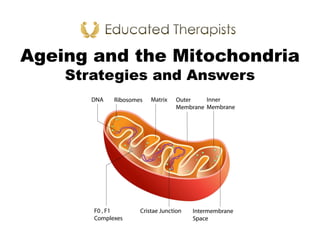
Ageing and the Mitochondria
Strategies and Answers
Jacine Greenwood
Founder of Roccoco
Founder of Educated Therapists
International Speaker
Mother of 3 Beautiful Children
Passion - Skin
Outline
• Why ATP is critical for looking young.
• The energy cycle and what happens
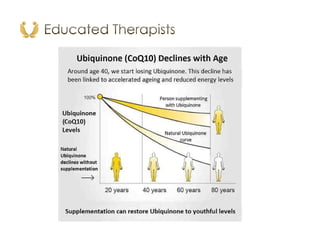
• ATP and the decline with aging.
• How to increase ATP topically
• Which vitamins enhance ATP production
• LED and Microcurrent.
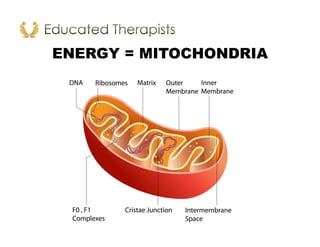
ENERGY = MITOCHONDRIA
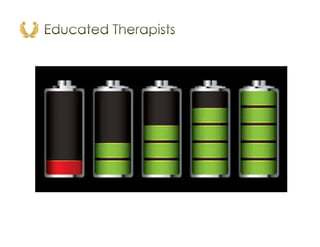
Why ATP is critical for looking young
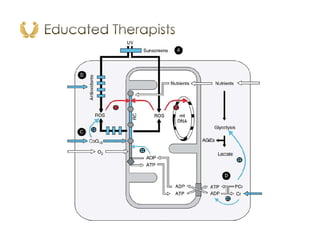
ATP – The energy cycle
ATP + H2O = ADP + Pi + H+ + energy + heat.
THE ENERGY CYCLE
Vitamin Supplementation
Some authors have recommended the following:
25-150mg of the "basic Bs" - B1, B2, B3, B5, B6;
300-10,000mcg biotin
100-1,000mcg B12
400-2,000mcg folic acid
Magnesium 400-800mg daily
Alpha Lipoic Acid
Carnitine
NADH
Coming soon.......$29 per month
Membership to the most up to date skin and
business strategies.
For more info:
www.educatedtherapists.com
References
Goldstein S, Moerman EJ, Porter K. High-voltage electron microscopy of human
diploid fibroblasts during ageing in vitro. Morpho-metric analysis of mitochondria.
Exp Cell Res. 1984;154:101–111
Brantova O, Tesarova M, Hansikova H, et al. Ultrastructural changesof mitochondria
in the cultivated skin fibroblasts of patients with point mutations in mitochondrial
DNA. Ultrastruct Pathol 2006;30:239–245.
Feldman D, Bryce GF, Shapiro SS. Mitochondrial inclusions in keratinocytes of
hairless mouse skin exposed to UVB radiation. J Cutan Pathol. 1990;17:96–100.
Guillery O, Malka F, Frachon P, et al. Modulation of mitochondrial morphology by
bioenergetics defects in primary human fibroblasts. Neuromuscul Disord.
2008;18:319–330.
Lazarou M, McKenzie M, Ohtake A, Thorburn DR, Ryan MT.
Analysis of the assembly profiles for mitochondrial and nuclear DNA
encoded subunits into complex. Mol Cell Biol. 2007;27:4228–4237.
Papa S. Mitochondrial oxidative phosphorylation changes in the
life span. Molecular aspects and physiopathological implications.
Biochim Biophys Acta. 1996;1276:87–105.
Zwerschke W, Mazurek S, Stockl P, et al. Metabolic analysis of
senescent human fibroblasts reveals a role for AMP in cellular
senescence. Biochem J. 2003;376:403–411.
Sugrue MM, Tatton WG. Mitochondrial membrane potential in aging
cells. Biol Signals Recept. 2001;10:176–188.
McLennan HR, Degli Esposti M. The contribution of mitochondrial
respiratory complexes to the production of reactive oxygen species.
J Bioenerg Biomembr. 2000;32:153–162.
Crane FL. Biochemical functions of coenzyme Q10.
J Am Coll Nutr. 2001;20:591–598.
Lopez-Lluch G, Barroso MP, Martin SF, et al. Role of plasma membrane
coenzyme Q on the regulation of apoptosis. Biofactors. 1999;9:171–177.
Mellors A, Tappel AL. The inhibition of mitochondrial peroxidation by
ubiquinone and ubiquinol. J Biol Chem. 1966; 241:4353–4356.
Meyer LE, Machado LB, Santiago AP, et al. Mitochondrial creatine
kinase activity prevents reactive oxygen species generation:
Antioxidant role of mitochondrial kinase-dependent ADP re-cycling
activity. J Biol Chem. 2006;281:37361–37371.
Lenz H, Schmidt M, Welge V, et al. Inhibition of cytosolic and mitochondrial
creatine kinase by siRNA in HaCaT- and HeLaS3-cells affects cell viability
and mitochondrial morphology. Mol Cell Biochem. 2007;306:153–162.
Ponticos M, Lu QL, Morgan JE, et al. Dual regulation of the AMP-activated
protein kinase provides a novel mechanism for the control of creatine kinase in
skeletal muscle. EMBO J. 1998;17:1688–1699.
Hornig-Do HT, von Kleist-Retzow JC, Lanz K, et al. Human epidermal
keratinocytes accumulate superoxide due to low activity of Mn-SOD,
leading to mitochondrial functional impairment.
J Invest Dermatol. 2007;127:1084–1093.
Dzeja PP, Terzic A. Phosphotransfer networks and cellular energetics.
J Exp Biol. 2003;206:2039–2047.
Bessman SP, Carpenter CL. The creatine-creatine phosphate energy
shuttle. Annu Rev Biochem. 1985;54:831–862.
Blatt T, Lenz H, Koop U, et al. Stimulation of skin’s energy metabolism
provides multiple benefits for mature human skin.
Biofactors. 2005;25:179-185.
Birch-Machin MA. The role of mitochondria in ageing and carcinogenesis.
Clin Exp Dermatol. 2006;31:548–552.
Jendrach M, Pohl S, Voth M, et al. Morpho-dynamic changes of
mitochondria during ageing of human endothelial cells.
Mech Ageing Dev. 2005;126:813–821.
Hansford RG. Bioenergetics in aging. Biochim Biophys Acta.
1983;726:41–80.
Frei B, Kim MC, Ames BN. Ubiquinol-10 is an effective lipid-soluble antioxidant
at physiological concentrations.
Proc Natl Acad Sci USA. 1990;87:4879–4883.
Lass A, Kwong L, Sohal RS. Mitochondrial coenzyme Q content and aging.
Biofactors. 1999;9:199–205.
Hoppe U, Bergemann J, Diembeck W, et al. Coenzyme Q10, a
cutaneous antioxidant and energizer. Biofactors. 1999;9:371–378.
Crayhon, R. The Carnitine Miracle. NYC: M. Evans, 1998
Leibovitz, B. & Mueller, J. (1993) “Carnitine” J Opt Nutr 2: 90-119.
Siliprandi, N. et al (1990) “Metabolic changes induced by maximal exercise in
human subjects following l-carnitine administration”
Biochim Biophys Acta 1034: 17-21.
Birkmayer, G. NADH – The Energizing Coenzyme. New Canaan: Keats.
1998.
Berneburg M, Gremmel T, Kurten V, et al. Creatine supplementation
normalizes mutagenesis of mitochondrial DNA as well as functional
consequences. J Invest Dermatol. 2005;125:213–220.
Wolber R, Stab F, Max H, et al. Alpha-glucosylrutin, a highly effective
flavonoid for protection against oxidative stress.
J Dtsch Dermatol Ges. 2004;2:580–587.
Lu CY, Lee HC, Fahn HJ, Wei YH. Oxidative damage elicited by
imbalance of free radical scavenging enzymes is associated with
large-scale mtDNA deletions in aging human skin.
Mutat Res. 1999;423:11–21.
. Berneburg M, Grether-Beck S, Kurten V, et al. Singlet oxygen
mediates the UVA-induced generation of the photoaging-associated
mitochondrial common deletion. J Biol Chem.1999;274:15345–1534
Hipkiss AR. Does chronic glycolysis accelerate aging? Could this
explain how dietary restriction works?
Ann N Y Acad Sci. 2006; 1067:361–368
Alikhani Z, Alikhani M, Boyd CM, et al. Advanced glycation end
products enhance expression of pro-apoptotic genes and stimulate
fibroblast apoptosis through cytoplasmic and mitochondrial path-
ways. J Biol Chem. 2005;280:12087–12095.
. Eshaghian A, Vleugels RA, Canter JA, et al. Mitochondrial DNA
deletions serve as biomarkers of aging in the skin, but are typically absent
in nonmelanoma skin cancers. J Invest Dermatol. 2006;126:336–344.
Schroeder P, Gremmel T, Berneburg M, Krutmann J. Partial
depletion of mitochondrial DNA from human skin fibroblasts induces
a gene expression profile reminiscent of photoaged skin.
J Invest Dermatol. 2008;128:2297–2303.
Berneburg M, Plettenberg H, Medve-Konig K, et al. Induction of the
photoaging-associated mitochondrial common deletion in vivo in
normal human skin. J Invest Dermatol. 2004;122:1277–1283.
Yang JH, Lee HC, Wei YH. Photoageing-associated mitochondrial
DNA length mutations in human skin.
Arch Dermatol Res. 1995;287:641–648.
Wei YH, Lu CY, Wei CY, Ma YS, Lee HC. Oxidative stress in human
Aging and mitochondrial disease-consequences of defective
mitochondrial respiration and impaired antioxidant enzyme
system.Chin J Physiol. 2001;44:1–11.
Cadenas E, Davies KJ. Mitochondrial free radical generation,
oxidative stress, and aging. Free Radic Biol Med. 2000;29:222–230.
Droge W. Free radicals in the physiological control of cell
function.Physiol Rev. 2002;82:47–95.

Atp and mitochondria

  • 1.
    Ageing and theMitochondria Strategies and Answers
  • 2.
    Jacine Greenwood Founder ofRoccoco Founder of Educated Therapists International Speaker Mother of 3 Beautiful Children Passion - Skin
  • 3.
    Outline • Why ATPis critical for looking young. • The energy cycle and what happens • ATP and the decline with aging. • How to increase ATP topically • Which vitamins enhance ATP production • LED and Microcurrent.
  • 4.
  • 11.
    Why ATP iscritical for looking young
  • 14.
    ATP – Theenergy cycle ATP + H2O = ADP + Pi + H+ + energy + heat.
  • 15.
  • 19.
    Vitamin Supplementation Some authorshave recommended the following: 25-150mg of the "basic Bs" - B1, B2, B3, B5, B6; 300-10,000mcg biotin 100-1,000mcg B12 400-2,000mcg folic acid Magnesium 400-800mg daily Alpha Lipoic Acid Carnitine NADH
  • 22.
    Coming soon.......$29 permonth Membership to the most up to date skin and business strategies. For more info: www.educatedtherapists.com
  • 23.
    References Goldstein S, MoermanEJ, Porter K. High-voltage electron microscopy of human diploid fibroblasts during ageing in vitro. Morpho-metric analysis of mitochondria. Exp Cell Res. 1984;154:101–111 Brantova O, Tesarova M, Hansikova H, et al. Ultrastructural changesof mitochondria in the cultivated skin fibroblasts of patients with point mutations in mitochondrial DNA. Ultrastruct Pathol 2006;30:239–245. Feldman D, Bryce GF, Shapiro SS. Mitochondrial inclusions in keratinocytes of hairless mouse skin exposed to UVB radiation. J Cutan Pathol. 1990;17:96–100. Guillery O, Malka F, Frachon P, et al. Modulation of mitochondrial morphology by bioenergetics defects in primary human fibroblasts. Neuromuscul Disord. 2008;18:319–330.
  • 24.
    Lazarou M, McKenzieM, Ohtake A, Thorburn DR, Ryan MT. Analysis of the assembly profiles for mitochondrial and nuclear DNA encoded subunits into complex. Mol Cell Biol. 2007;27:4228–4237. Papa S. Mitochondrial oxidative phosphorylation changes in the life span. Molecular aspects and physiopathological implications. Biochim Biophys Acta. 1996;1276:87–105. Zwerschke W, Mazurek S, Stockl P, et al. Metabolic analysis of senescent human fibroblasts reveals a role for AMP in cellular senescence. Biochem J. 2003;376:403–411. Sugrue MM, Tatton WG. Mitochondrial membrane potential in aging cells. Biol Signals Recept. 2001;10:176–188. McLennan HR, Degli Esposti M. The contribution of mitochondrial respiratory complexes to the production of reactive oxygen species. J Bioenerg Biomembr. 2000;32:153–162.
  • 25.
    Crane FL. Biochemicalfunctions of coenzyme Q10. J Am Coll Nutr. 2001;20:591–598. Lopez-Lluch G, Barroso MP, Martin SF, et al. Role of plasma membrane coenzyme Q on the regulation of apoptosis. Biofactors. 1999;9:171–177. Mellors A, Tappel AL. The inhibition of mitochondrial peroxidation by ubiquinone and ubiquinol. J Biol Chem. 1966; 241:4353–4356. Meyer LE, Machado LB, Santiago AP, et al. Mitochondrial creatine kinase activity prevents reactive oxygen species generation: Antioxidant role of mitochondrial kinase-dependent ADP re-cycling activity. J Biol Chem. 2006;281:37361–37371. Lenz H, Schmidt M, Welge V, et al. Inhibition of cytosolic and mitochondrial creatine kinase by siRNA in HaCaT- and HeLaS3-cells affects cell viability and mitochondrial morphology. Mol Cell Biochem. 2007;306:153–162.
  • 26.
    Ponticos M, LuQL, Morgan JE, et al. Dual regulation of the AMP-activated protein kinase provides a novel mechanism for the control of creatine kinase in skeletal muscle. EMBO J. 1998;17:1688–1699. Hornig-Do HT, von Kleist-Retzow JC, Lanz K, et al. Human epidermal keratinocytes accumulate superoxide due to low activity of Mn-SOD, leading to mitochondrial functional impairment. J Invest Dermatol. 2007;127:1084–1093. Dzeja PP, Terzic A. Phosphotransfer networks and cellular energetics. J Exp Biol. 2003;206:2039–2047. Bessman SP, Carpenter CL. The creatine-creatine phosphate energy shuttle. Annu Rev Biochem. 1985;54:831–862. Blatt T, Lenz H, Koop U, et al. Stimulation of skin’s energy metabolism provides multiple benefits for mature human skin. Biofactors. 2005;25:179-185.
  • 27.
    Birch-Machin MA. Therole of mitochondria in ageing and carcinogenesis. Clin Exp Dermatol. 2006;31:548–552. Jendrach M, Pohl S, Voth M, et al. Morpho-dynamic changes of mitochondria during ageing of human endothelial cells. Mech Ageing Dev. 2005;126:813–821. Hansford RG. Bioenergetics in aging. Biochim Biophys Acta. 1983;726:41–80. Frei B, Kim MC, Ames BN. Ubiquinol-10 is an effective lipid-soluble antioxidant at physiological concentrations. Proc Natl Acad Sci USA. 1990;87:4879–4883. Lass A, Kwong L, Sohal RS. Mitochondrial coenzyme Q content and aging. Biofactors. 1999;9:199–205. Hoppe U, Bergemann J, Diembeck W, et al. Coenzyme Q10, a cutaneous antioxidant and energizer. Biofactors. 1999;9:371–378.
  • 28.
    Crayhon, R. TheCarnitine Miracle. NYC: M. Evans, 1998 Leibovitz, B. & Mueller, J. (1993) “Carnitine” J Opt Nutr 2: 90-119. Siliprandi, N. et al (1990) “Metabolic changes induced by maximal exercise in human subjects following l-carnitine administration” Biochim Biophys Acta 1034: 17-21. Birkmayer, G. NADH – The Energizing Coenzyme. New Canaan: Keats. 1998. Berneburg M, Gremmel T, Kurten V, et al. Creatine supplementation normalizes mutagenesis of mitochondrial DNA as well as functional consequences. J Invest Dermatol. 2005;125:213–220. Wolber R, Stab F, Max H, et al. Alpha-glucosylrutin, a highly effective flavonoid for protection against oxidative stress. J Dtsch Dermatol Ges. 2004;2:580–587.
  • 29.
    Lu CY, LeeHC, Fahn HJ, Wei YH. Oxidative damage elicited by imbalance of free radical scavenging enzymes is associated with large-scale mtDNA deletions in aging human skin. Mutat Res. 1999;423:11–21. . Berneburg M, Grether-Beck S, Kurten V, et al. Singlet oxygen mediates the UVA-induced generation of the photoaging-associated mitochondrial common deletion. J Biol Chem.1999;274:15345–1534 Hipkiss AR. Does chronic glycolysis accelerate aging? Could this explain how dietary restriction works? Ann N Y Acad Sci. 2006; 1067:361–368 Alikhani Z, Alikhani M, Boyd CM, et al. Advanced glycation end products enhance expression of pro-apoptotic genes and stimulate fibroblast apoptosis through cytoplasmic and mitochondrial path- ways. J Biol Chem. 2005;280:12087–12095.
  • 30.
    . Eshaghian A,Vleugels RA, Canter JA, et al. Mitochondrial DNA deletions serve as biomarkers of aging in the skin, but are typically absent in nonmelanoma skin cancers. J Invest Dermatol. 2006;126:336–344. Schroeder P, Gremmel T, Berneburg M, Krutmann J. Partial depletion of mitochondrial DNA from human skin fibroblasts induces a gene expression profile reminiscent of photoaged skin. J Invest Dermatol. 2008;128:2297–2303. Berneburg M, Plettenberg H, Medve-Konig K, et al. Induction of the photoaging-associated mitochondrial common deletion in vivo in normal human skin. J Invest Dermatol. 2004;122:1277–1283. Yang JH, Lee HC, Wei YH. Photoageing-associated mitochondrial DNA length mutations in human skin. Arch Dermatol Res. 1995;287:641–648.
  • 31.
    Wei YH, LuCY, Wei CY, Ma YS, Lee HC. Oxidative stress in human Aging and mitochondrial disease-consequences of defective mitochondrial respiration and impaired antioxidant enzyme system.Chin J Physiol. 2001;44:1–11. Cadenas E, Davies KJ. Mitochondrial free radical generation, oxidative stress, and aging. Free Radic Biol Med. 2000;29:222–230. Droge W. Free radicals in the physiological control of cell function.Physiol Rev. 2002;82:47–95.