REJUVENATION
K.VAISHALI
GUIDE: SUDHEER SIR
IV YEAR B.PHARMACY
INTRODUCTION:
Rejuvenation is the reversal of aging and thus requires a different
strategy, namely repair of the damage that is associated with aging or
replacement of damaged tissue with new tissue. Rejuvenation can be a
means of life extension, but most life extension strategies do not involve
rejuvenation
HISTORY:
 Various myths tells the stories about the guest for rejuvenation. It was
believed that magic or innervations supernatural power can be back the
youth and many mythical advantages set out a journey to do that, for
themselves, their relatives or some authority that sent them
 An ancient Chinese emperor actually sent out ships of young men and
women to find a pearl that would rejuvenate him. This led to a myth
among modern Chinese that Japan was founded by these people. In some
religions, people were to be rejuvenated after death prior to placing them
in heaven.
 The stories continued well into the 16th century. A famous Spanish
explorer Juan Ponce de León led the expedition around the Caribbean
islands and into Florida to find the Fountain of Youth. Led by the rumors,
the expedition continued the search and many perished. The Fountain was
nowhere to be found as locals were unaware of its exact location.
 Since the emergence of philosophy, sages and self-
proclaimed wizards always made enormous efforts to find the secret of
youth, both for themselves and for their noble patrons and sponsors. It was
widely believed that some potions may restore the youth. Another
commonly cited approach was attempting to transfer the essence of youth
from young people to old. drinking their blood
AGING
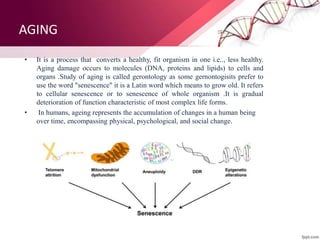
• It is a process that converts a healthy, fit organism in one i.e.., less healthy.
Aging damage occurs to molecules (DNA, proteins and lipids) to cells and
organs .Study of aging is called gerontology as some gernontogisits prefer to
use the word "senescence" it is a Latin word which means to grow old. It refers
to cellular senescence or to senescence of whole organism .It is gradual
deterioration of function characteristic of most complex life forms.
• In humans, ageing represents the accumulation of changes in a human being
over time, encompassing physical, psychological, and social change.
THEORIES OF AGING
BIOLOGICAL THEORY
1. STOCHASTIC
a. Error theory
b. Free radical theory
c. Cross linkage theory
d. Wear and tear theory
2.NONSTASTIC
a. Programmed theory
b. Immunity theory
SOCIOLOGICAL THEORY
a) Disengagement
theory
b) Activity or
development
task theory
c) Age stratification
theory
3.PSYCHOLOGICAL THEORIES:
a) Maslow's hierarchy of human needs (1954)
b) Jungs theory of individualism (1960)
c) Eriksons eight stages of life (1993)
d) Pecks's expansion of eriksons theory
e) Selective optimization with compensation
(1987)
ERROR THEORY
• Originally proposed in 1963
• error's can occur in the transcription in any step of the protein synthesis of DNA
• Error causes the reproduction of an enzyme or protein i.e.., not an exact copy.
• As transcription error to occur, the end product would not even resemble the original
cell, there by compromising its functional ability.
• Not all aged cells contain altered or misspecified proteins. Nor is aging automatically
or necessarily accelerated if misspecified proteins or enzymes are introduced into a
cell.
FREE RADICAL THEORY:
Free radicals are by products of metabolism can increase as a result of environmental pollutants'.
When they accumulate, they damage cell membrane, decreasing its efficiency.
The body produce antioxidants that scavenge the free radical. Free radicals are highly reactive
molecules or atoms that have unpaired electrons in an outer orbital. Atoms or small molecules that
are free radical tend to be most unstable, because large molecules have the capacity to form
resonance structure.
All this highly reactive oxygen-containing molecules are reactive oxygen species(ROS),such as
superoxide anion, hydroxyl radical, hydrogen peroxide and nitric oxide, are normal byproducts of
metabolism took place in mitochondria, and are believed to be one important source of DNA
damage.
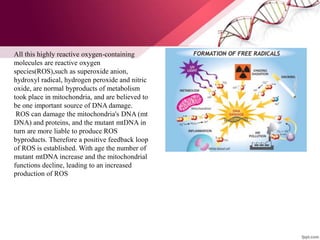
All this highly reactive oxygen-containing
molecules are reactive oxygen
species(ROS),such as superoxide anion,
hydroxyl radical, hydrogen peroxide and nitric
oxide, are normal byproducts of metabolism
took place in mitochondria, and are believed to
be one important source of DNA damage.
ROS can damage the mitochondria's DNA (mt
DNA) and proteins, and the mutant mtDNA in
turn are more liable to produce ROS
byproducts. Therefore a positive feedback loop
of ROS is established. With age the number of
mutant mtDNA increase and the mitochondrial
functions decline, leading to an increased
production of ROS
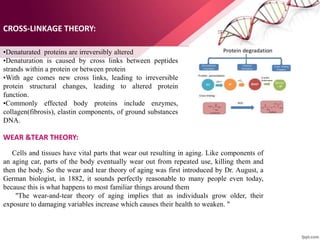
CROSS-LINKAGE THEORY:
•Denaturated proteins are irreversibly altered
•Denaturation is caused by cross links between peptides
strands within a protein or between protein
•With age comes new cross links, leading to irreversible
protein structural changes, leading to altered protein
function.
•Commonly effected body proteins include enzymes,
collagen(fibrosis), elastin components, of ground substances
DNA.
Cells and tissues have vital parts that wear out resulting in aging. Like components of
an aging car, parts of the body eventually wear out from repeated use, killing them and
then the body. So the wear and tear theory of aging was first introduced by Dr. August, a
German biologist, in 1882, it sounds perfectly reasonable to many people even today,
because this is what happens to most familiar things around them
''The wear-and-tear theory of aging implies that as individuals grow older, their
exposure to damaging variables increase which causes their health to weaken. "
WEAR &TEAR THEORY:
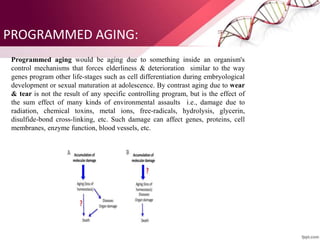
PROGRAMMED AGING:
Programmed aging would be aging due to something inside an organism's
control mechanisms that forces elderliness & deterioration similar to the way
genes program other life-stages such as cell differentiation during embryological
development or sexual maturation at adolescence. By contrast aging due to wear
& tear is not the result of any specific controlling program, but is the effect of
the sum effect of many kinds of environmental assaults i.e., damage due to
radiation, chemical toxins, metal ions, free-radicals, hydrolysis, glycerin,
disulfide-bond cross-linking, etc. Such damage can affect genes, proteins, cell
membranes, enzyme function, blood vessels, etc.
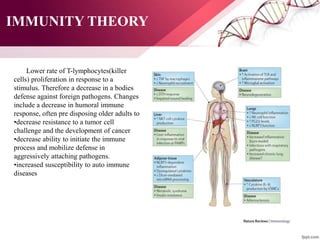
IMMUNITY THEORY
Lower rate of T-lymphocytes(killer
cells) proliferation in response to a
stimulus. Therefore a decrease in a bodies
defense against foreign pathogens. Changes
include a decrease in humoral immune
response, often pre disposing older adults to
•decrease resistance to a tumor cell
challenge and the development of cancer
•decrease ability to initiate the immune
process and mobilize defense in
aggressively attaching pathogens.
•increased susceptibility to auto immune
diseases
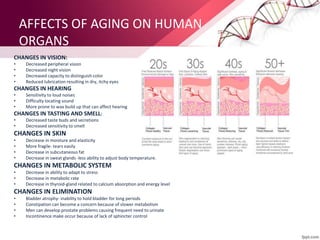
AFFECTS OF AGING ON HUMAN
ORGANS
CHANGES IN VISION:
• Decreased peripheral vision
• Decreased night vision
• Decreased capacity to distinguish color
• Reduced lubrication resulting in dry, itchy eyes
CHANGES IN HEARING
• Sensitivity to loud noises
• Difficulty locating sound
• More prone to wax build up that can affect hearing
CHANGES IN TASTING AND SMELL:
• Decreased taste buds and secretions
• Decreased sensitivity to smell
CHANGES IN SKIN
• Decrease in moisture and elasticity
• More fragile- tears easily
• Decrease in subcutaneous fat
• Decrease in sweat glands -less ability to adjust body temperature.
CHANGES IN METABOLIC SYSTEM
• Decrease in ability to adapt to stress
• Decrease in metabolic rate
• Decrease in thyroid-gland related to calcium absorption and energy level
CHANGES IN ELIMINATION
• Bladder atrophy- inability to hold bladder for long periods
• Constipation can become a concern because of slower metabolism
• Men can develop prostate problems causing frequent need to urinate
• Incontinence make occur because of lack of sphincter control
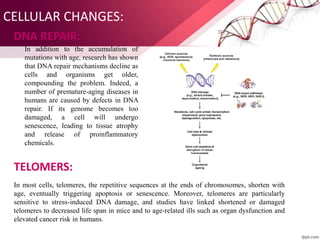
CELLULAR CHANGES:
DNA REPAIR:
In addition to the accumulation of
mutations with age, research has shown
that DNA repair mechanisms decline as
cells and organisms get older,
compounding the problem. Indeed, a
number of premature-aging diseases in
humans are caused by defects in DNA
repair. If its genome becomes too
damaged, a cell will undergo
senescence, leading to tissue atrophy
and release of proinflammatory
chemicals.
TELOMERS:
In most cells, telomeres, the repetitive sequences at the ends of chromosomes, shorten with
age, eventually triggering apoptosis or senescence. Moreover, telomeres are particularly
sensitive to stress-induced DNA damage, and studies have linked shortened or damaged
telomeres to decreased life span in mice and to age-related ills such as organ dysfunction and
elevated cancer risk in humans.
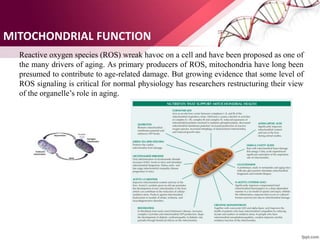
MITOCHONDRIAL FUNCTION
Reactive oxygen species (ROS) wreak havoc on a cell and have been proposed as one of
the many drivers of aging. As primary producers of ROS, mitochondria have long been
presumed to contribute to age-related damage. But growing evidence that some level of
ROS signaling is critical for normal physiology has researchers restructuring their view
of the organelle’s role in aging.
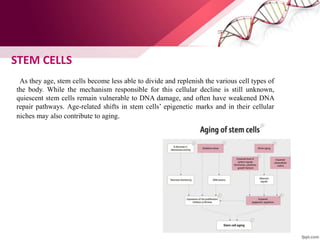
STEM CELLS
As they age, stem cells become less able to divide and replenish the various cell types of
the body. While the mechanism responsible for this cellular decline is still unknown,
quiescent stem cells remain vulnerable to DNA damage, and often have weakened DNA
repair pathways. Age-related shifts in stem cells’ epigenetic marks and in their cellular
niches may also contribute to aging.
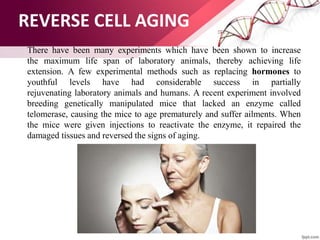
REVERSE CELL AGING
There have been many experiments which have been shown to increase
the maximum life span of laboratory animals, thereby achieving life
extension. A few experimental methods such as replacing hormones to
youthful levels have had considerable success in partially
rejuvenating laboratory animals and humans. A recent experiment involved
breeding genetically manipulated mice that lacked an enzyme called
telomerase, causing the mice to age prematurely and suffer ailments. When
the mice were given injections to reactivate the enzyme, it repaired the
damaged tissues and reversed the signs of aging.
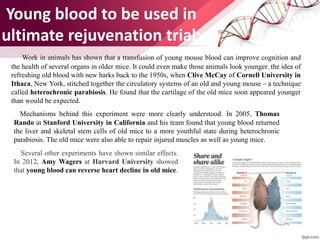
Young blood to be used in
ultimate rejuvenation trial:
Work in animals has shown that a transfusion of young mouse blood can improve cognition and
the health of several organs in older mice. It could even make those animals look younger. the idea of
refreshing old blood with new harks back to the 1950s, when Clive McCay of Cornell University in
Ithaca, New York, stitched together the circulatory systems of an old and young mouse – a technique
called heterochronic parabiosis. He found that the cartilage of the old mice soon appeared younger
than would be expected.
Mechanisms behind this experiment were more clearly understood. In 2005, Thomas
Rando at Stanford University in California and his team found that young blood returned
the liver and skeletal stem cells of old mice to a more youthful state during heterochronic
parabiosis. The old mice were also able to repair injured muscles as well as young mice.
Several other experiments have shown similar effects.
In 2012, Amy Wagers at Harvard University showed
that young blood can reverse heart decline in old mice.
STEM CELLS THERAPY
ANTI-AGING:
Your body is capable of self renewal or repair, using your own cells. An example is when you get a cut or
break bone your body sends signals that damaged has occurred. stem cells in your blood stream or in the
adjacent tissue respond to go to the area and start the repair process. An we age the no. Of stem cells in our
body declines. By the age of '40'. we loose 50% of our stem cells.
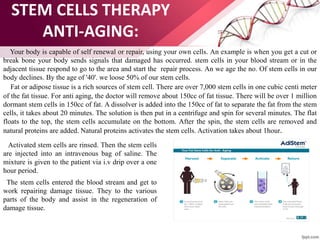
Fat or adipose tissue is a rich sources of stem cell. There are over 7,000 stem cells in one cubic centi meter
of the fat tissue. For anti aging, the doctor will remove about 150cc of fat tissue. There will be over 1 million
dormant stem cells in 150cc of fat. A dissolver is added into the 150cc of fat to separate the fat from the stem
cells, it takes about 20 minutes. The solution is then put in a centrifuge and spin for several minutes. The flat
floats to the top, the stem cells accumulate on the bottom. After the spin, the stem cells are removed and
natural proteins are added. Natural proteins activates the stem cells. Activation takes about 1hour.
Activated stem cells are rinsed. Then the stem cells
are injected into an intravenous bag of saline. The
mixture is given to the patient via i.v drip over a one
hour period.
The stem cells entered the blood stream and get to
work repairing damage tissue. They to the various
parts of the body and assist in the regeneration of
damage tissue.
MITOCHONDRIAL
REJUVENATION:
Replacement of damaged mitochondria with normal mitochondria, which will produce sufficient energy
through respiration, restores the differentiated cells. Mitochondrial dysfunction is a primary cause of
age-related
BIOGENESIS OF MITOCHONDRIA:
Mitochondrial biogenesis is the process by which cells increase their individual mitochondrial mass
and copy number. Mitochondrial biogenesis is activated by numerous different signals during times of
cellular stress or in response to environmental stimuli, such as aerobic exercise. The mitochondrion is a key
regulator of the metabolic activity of the cell, and is also an important organelle in both production and
degradation of free radicals. This can be done by following methods
•Calorie restriction and fasting
•dietary polyphenols
•endurance exercise
CALORIE RESTRICTION:
In 1935, Nutritional scientist professor M.mcCAY published his seminar paper that rats fed a diet with 30-
40% fever calories lived about 33% longer than rats fed ad libitum.
SIRT1(SILENT INFORMATION
REGULATORY TYPE -1):
SIRT-1 enzyme that deacetylates protein that
contribute to the cellular regulation (reaction to stressors
and longevity). This gene is activated by calorie
restriction in mammals and act as trigger in
mitochondria biogenesis.
It is a naturally occurring polyphones in resveratol, curcumin, quecetin,catechins having anti oxidants and
anti inflammatory properties. Activates SIRT1 directly or indirectly.
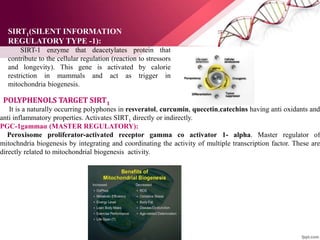
PGC-1gammaα (MASTER REGULATORY):
Peroxisome proliferator-activated receptor gamma co activator 1- alpha. Master regulator of
mitochndria biogenesis by integrating and coordinating the activity of multiple transcription factor. These are
directly related to mitochondrial biogenesis activity.
POLYPHENOLS TARGET SIRT1:
TELOMERS REJUVENATION:
The entire chromosomes has about 150 millions of base pairs. Each time a cell divides, an average person
loses 30 to 200 base pairs from the ends of that telomere. Our bodies are composed of more than billions of
cells. Cells are continually dying and new cells are continually being formed
Unique structures at the end of chromosomes are necessary for chromosomal integrity and over all genomic
stability called as telomeres which protect our genetic data, make it possible to how we grow and get cancer.
These telomeres become too short to replicate after a fixed no. of cell divisions. Eventually the cell will stop
growing and enter cellular senescence
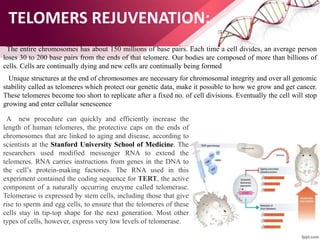
A new procedure can quickly and efficiently increase the
length of human telomeres, the protective caps on the ends of
chromosomes that are linked to aging and disease, according to
scientists at the Stanford University School of Medicine. The
researchers used modified messenger RNA to extend the
telomeres. RNA carries instructions from genes in the DNA to
the cell’s protein-making factories. The RNA used in this
experiment contained the coding sequence for TERT, the active
component of a naturally occurring enzyme called telomerase.
Telomerase is expressed by stem cells, including those that give
rise to sperm and egg cells, to ensure that the telomeres of these
cells stay in tip-top shape for the next generation. Most other
types of cells, however, express very low levels of telomerase.
HORMONES IN ANTIAGING:
Hormones are chemical messengers that are keeping your body functioning. From regulating metabolism
and growth to controlling immune function and reproduction, hormones are major players in all that you do
and all that you are – physically at least.
Most people associate human growth hormone and DHEA with aging, but progesterone, testosterone,
estrogen and cortisol play a role in aging as well. If the delicate balance of any one of these hormones is
destroyed, it can take a serious toll on your body, mind and spirit – and be mistaken as classic signs of aging.
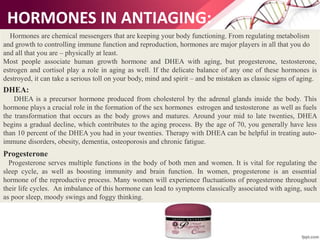
DHEA:
DHEA is a precursor hormone produced from cholesterol by the adrenal glands inside the body. This
hormone plays a crucial role in the formation of the sex hormones estrogen and testosterone as well as fuels
the transformation that occurs as the body grows and matures. Around your mid to late twenties, DHEA
begins a gradual decline, which contributes to the aging process. By the age of 70, you generally have less
than 10 percent of the DHEA you had in your twenties. Therapy with DHEA can be helpful in treating auto-
immune disorders, obesity, dementia, osteoporosis and chronic fatigue.
Progesterone
Progesterone serves multiple functions in the body of both men and women. It is vital for regulating the
sleep cycle, as well as boosting immunity and brain function. In women, progesterone is an essential
hormone of the reproductive process. Many women will experience fluctuations of progesterone throughout
their life cycles. An imbalance of this hormone can lead to symptoms classically associated with aging, such
as poor sleep, moody swings and foggy thinking.
Growth hormone
The hormone HGH (human growth hormone) is secreted by the pituitary gland and is crucial for normal
development and maintenance of organs and tissues - especially in children. HGH enhances tissue growth,
increases muscle mass and strengthens bone density throughout the life cycle.
Hormone therapy with HGH is most commonly used in the medical industry to treat children with stunted
growth or young people suffering from hormone deficiencies. In a few cases, HGH may be necessary for
treatment of hormone imbalance in adults, but this is rare.
ESTROGEN:
The term estrogen collectively refers to the hormones, estradiol, estrone and estriol. Each
has a different chemical structure and function. Like testosterone, estrogen plays a role in the
physiology of both men and women. However, estrogen plays a greater role in the aging
process for women than in men.
The primary role of estrogen in the female body is to stimulate growth and development of
sexual characteristics and reproduction, induce the changes of the breasts during adolescence
and pregnancy and aid the growth of the uterine lining during the follicular phase of the
menstrual cycle. Estrogen is responsible for hundreds of functions in the female body
including protecting women from heart disease and colon cancer. It also regulates several
metabolic processes, including cholesterol levels and bone growth.
In men, estrogen aids in the facilitation of many of the physical changes men experience
during puberty, such as chest and facial hair growth, muscle development and deepening of
the voice. Estrogen also helps to protect the bones and the brain in men.
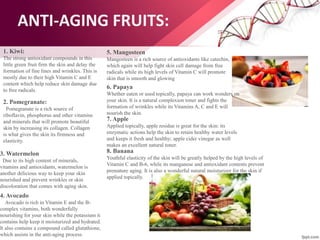
ANTI-AGING FRUITS:
1. Kiwi:
The strong antioxidant compounds in this
little green fruit firm the skin and delay the
formation of fine lines and wrinkles. This is
mostly due to their high Vitamin C and E
content which help reduce skin damage due
to free radicals.
2. Pomegranate:
Pomegranate is a rich source of
riboflavin, phosphorus and other vitamins
and minerals that will promote beautiful
skin by increasing its collagen. Collagen
is what gives the skin its firmness and
elasticity.
3. Watermelon
Due to its high content of minerals,
vitamins and antioxidants, watermelon is
another delicious way to keep your skin
nourished and prevent wrinkles or skin
discoloration that comes with aging skin.
4. Avocado
Avocado is rich in Vitamin E and the B-
complex vitamins, both wonderfully
nourishing for your skin while the potassium it
contains help keep it moisturized and hydrated.
It also contains a compound called glutathione,
which assists in the anti-aging process.
5. Mangosteen
Mangosteen is a rich source of antioxidants like catechin,
which again will help fight skin cell damage from free
radicals while its high levels of Vitamin C will promote
skin that is smooth and glowing
6. Papaya
Whether eaten or used topically, papaya can work wonders on
your skin. It is a natural complexion toner and fights the
formation of wrinkles while its Vitamins A, C and E will
nourish the skin.
7. Apple
Applied topically, apple residue is great for the skin: its
enzymatic actions help the skin to retain healthy water levels
and keeps it fresh and healthy; apple cider vinegar as well
makes an excellent natural toner.
8. Banana
Youthful elasticity of the skin will be greatly helped by the high levels of
Vitamin C and B-6, while its manganese and antioxidant contents prevent
premature aging. It is also a wonderful natural moisturizer for the skin if
applied topically.
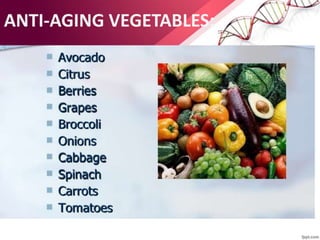
ANTI-AGING VEGETABLES:
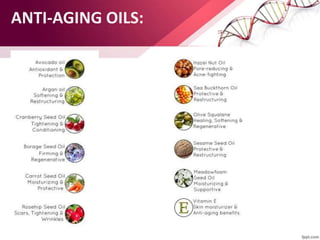
ANTI-AGING OILS:
1. De Grey, Aubrey D. N. J. (2004). "Welcome to Rejuvenation Research". Rejuvenation Research.
2. Steven Shapin and Christopher Martyn, "How to live forever: lessons of history", British Medical
Journal, Bowen, Richard L.;
3. Atwood, Craig S. (2004). "Living and Dying ".Gerontology.
4. Dillin A, Gottschling DE, Nyström T (2014). "The good and the bad of being connected: the
integrons of aging". Curr Opin Cell Biol.
5. ROTHSTEIN, M. ‘‘Evidence For and Against the Error Catastrophe Hypothesis.’’ In Modern
Biological Theories of Aging. Edited by Huber R. Warner et al. New York: Raven Press, 1987.
Pages 139–154.
6. Lagouge M, Larsson NG: The Role of Mitochondrial DNA Mutations and Free Radicals in
Disease and Ageing. J. Intern. Med. 2013;273(6):529-543.
7. Goldsmith T (2014). Modern evolutionary mechanics theories and resolving the programmed/non-
programmed aging controversy. Biochemistry (Mosc); 79 (10): 1049 - 55
8. Trindade LS, Aigaki T, Peixoto AA (2013). A novel classification system for evolutionary aging
theories. Frontiers in Genetics;
REFRENCES:
REJUVENATION

REJUVENATION

  • 1.
  • 2.
    INTRODUCTION: Rejuvenation is thereversal of aging and thus requires a different strategy, namely repair of the damage that is associated with aging or replacement of damaged tissue with new tissue. Rejuvenation can be a means of life extension, but most life extension strategies do not involve rejuvenation
  • 3.
    HISTORY:  Various mythstells the stories about the guest for rejuvenation. It was believed that magic or innervations supernatural power can be back the youth and many mythical advantages set out a journey to do that, for themselves, their relatives or some authority that sent them  An ancient Chinese emperor actually sent out ships of young men and women to find a pearl that would rejuvenate him. This led to a myth among modern Chinese that Japan was founded by these people. In some religions, people were to be rejuvenated after death prior to placing them in heaven.  The stories continued well into the 16th century. A famous Spanish explorer Juan Ponce de León led the expedition around the Caribbean islands and into Florida to find the Fountain of Youth. Led by the rumors, the expedition continued the search and many perished. The Fountain was nowhere to be found as locals were unaware of its exact location.  Since the emergence of philosophy, sages and self- proclaimed wizards always made enormous efforts to find the secret of youth, both for themselves and for their noble patrons and sponsors. It was widely believed that some potions may restore the youth. Another commonly cited approach was attempting to transfer the essence of youth from young people to old. drinking their blood
  • 4.
    AGING • It isa process that converts a healthy, fit organism in one i.e.., less healthy. Aging damage occurs to molecules (DNA, proteins and lipids) to cells and organs .Study of aging is called gerontology as some gernontogisits prefer to use the word "senescence" it is a Latin word which means to grow old. It refers to cellular senescence or to senescence of whole organism .It is gradual deterioration of function characteristic of most complex life forms. • In humans, ageing represents the accumulation of changes in a human being over time, encompassing physical, psychological, and social change.
  • 5.
    THEORIES OF AGING BIOLOGICALTHEORY 1. STOCHASTIC a. Error theory b. Free radical theory c. Cross linkage theory d. Wear and tear theory 2.NONSTASTIC a. Programmed theory b. Immunity theory SOCIOLOGICAL THEORY a) Disengagement theory b) Activity or development task theory c) Age stratification theory 3.PSYCHOLOGICAL THEORIES: a) Maslow's hierarchy of human needs (1954) b) Jungs theory of individualism (1960) c) Eriksons eight stages of life (1993) d) Pecks's expansion of eriksons theory e) Selective optimization with compensation (1987)
  • 6.
    ERROR THEORY • Originallyproposed in 1963 • error's can occur in the transcription in any step of the protein synthesis of DNA • Error causes the reproduction of an enzyme or protein i.e.., not an exact copy. • As transcription error to occur, the end product would not even resemble the original cell, there by compromising its functional ability. • Not all aged cells contain altered or misspecified proteins. Nor is aging automatically or necessarily accelerated if misspecified proteins or enzymes are introduced into a cell. FREE RADICAL THEORY: Free radicals are by products of metabolism can increase as a result of environmental pollutants'. When they accumulate, they damage cell membrane, decreasing its efficiency. The body produce antioxidants that scavenge the free radical. Free radicals are highly reactive molecules or atoms that have unpaired electrons in an outer orbital. Atoms or small molecules that are free radical tend to be most unstable, because large molecules have the capacity to form resonance structure. All this highly reactive oxygen-containing molecules are reactive oxygen species(ROS),such as superoxide anion, hydroxyl radical, hydrogen peroxide and nitric oxide, are normal byproducts of metabolism took place in mitochondria, and are believed to be one important source of DNA damage.
  • 7.
    All this highlyreactive oxygen-containing molecules are reactive oxygen species(ROS),such as superoxide anion, hydroxyl radical, hydrogen peroxide and nitric oxide, are normal byproducts of metabolism took place in mitochondria, and are believed to be one important source of DNA damage. ROS can damage the mitochondria's DNA (mt DNA) and proteins, and the mutant mtDNA in turn are more liable to produce ROS byproducts. Therefore a positive feedback loop of ROS is established. With age the number of mutant mtDNA increase and the mitochondrial functions decline, leading to an increased production of ROS
  • 8.
    CROSS-LINKAGE THEORY: •Denaturated proteinsare irreversibly altered •Denaturation is caused by cross links between peptides strands within a protein or between protein •With age comes new cross links, leading to irreversible protein structural changes, leading to altered protein function. •Commonly effected body proteins include enzymes, collagen(fibrosis), elastin components, of ground substances DNA. Cells and tissues have vital parts that wear out resulting in aging. Like components of an aging car, parts of the body eventually wear out from repeated use, killing them and then the body. So the wear and tear theory of aging was first introduced by Dr. August, a German biologist, in 1882, it sounds perfectly reasonable to many people even today, because this is what happens to most familiar things around them ''The wear-and-tear theory of aging implies that as individuals grow older, their exposure to damaging variables increase which causes their health to weaken. " WEAR &TEAR THEORY:
  • 9.
    PROGRAMMED AGING: Programmed agingwould be aging due to something inside an organism's control mechanisms that forces elderliness & deterioration similar to the way genes program other life-stages such as cell differentiation during embryological development or sexual maturation at adolescence. By contrast aging due to wear & tear is not the result of any specific controlling program, but is the effect of the sum effect of many kinds of environmental assaults i.e., damage due to radiation, chemical toxins, metal ions, free-radicals, hydrolysis, glycerin, disulfide-bond cross-linking, etc. Such damage can affect genes, proteins, cell membranes, enzyme function, blood vessels, etc.
  • 10.
    IMMUNITY THEORY Lower rateof T-lymphocytes(killer cells) proliferation in response to a stimulus. Therefore a decrease in a bodies defense against foreign pathogens. Changes include a decrease in humoral immune response, often pre disposing older adults to •decrease resistance to a tumor cell challenge and the development of cancer •decrease ability to initiate the immune process and mobilize defense in aggressively attaching pathogens. •increased susceptibility to auto immune diseases
  • 11.
    AFFECTS OF AGINGON HUMAN ORGANS CHANGES IN VISION: • Decreased peripheral vision • Decreased night vision • Decreased capacity to distinguish color • Reduced lubrication resulting in dry, itchy eyes CHANGES IN HEARING • Sensitivity to loud noises • Difficulty locating sound • More prone to wax build up that can affect hearing CHANGES IN TASTING AND SMELL: • Decreased taste buds and secretions • Decreased sensitivity to smell CHANGES IN SKIN • Decrease in moisture and elasticity • More fragile- tears easily • Decrease in subcutaneous fat • Decrease in sweat glands -less ability to adjust body temperature. CHANGES IN METABOLIC SYSTEM • Decrease in ability to adapt to stress • Decrease in metabolic rate • Decrease in thyroid-gland related to calcium absorption and energy level CHANGES IN ELIMINATION • Bladder atrophy- inability to hold bladder for long periods • Constipation can become a concern because of slower metabolism • Men can develop prostate problems causing frequent need to urinate • Incontinence make occur because of lack of sphincter control
  • 12.
    CELLULAR CHANGES: DNA REPAIR: Inaddition to the accumulation of mutations with age, research has shown that DNA repair mechanisms decline as cells and organisms get older, compounding the problem. Indeed, a number of premature-aging diseases in humans are caused by defects in DNA repair. If its genome becomes too damaged, a cell will undergo senescence, leading to tissue atrophy and release of proinflammatory chemicals. TELOMERS: In most cells, telomeres, the repetitive sequences at the ends of chromosomes, shorten with age, eventually triggering apoptosis or senescence. Moreover, telomeres are particularly sensitive to stress-induced DNA damage, and studies have linked shortened or damaged telomeres to decreased life span in mice and to age-related ills such as organ dysfunction and elevated cancer risk in humans.
  • 13.
    MITOCHONDRIAL FUNCTION Reactive oxygenspecies (ROS) wreak havoc on a cell and have been proposed as one of the many drivers of aging. As primary producers of ROS, mitochondria have long been presumed to contribute to age-related damage. But growing evidence that some level of ROS signaling is critical for normal physiology has researchers restructuring their view of the organelle’s role in aging.
  • 14.
    STEM CELLS As theyage, stem cells become less able to divide and replenish the various cell types of the body. While the mechanism responsible for this cellular decline is still unknown, quiescent stem cells remain vulnerable to DNA damage, and often have weakened DNA repair pathways. Age-related shifts in stem cells’ epigenetic marks and in their cellular niches may also contribute to aging.
  • 15.
    REVERSE CELL AGING Therehave been many experiments which have been shown to increase the maximum life span of laboratory animals, thereby achieving life extension. A few experimental methods such as replacing hormones to youthful levels have had considerable success in partially rejuvenating laboratory animals and humans. A recent experiment involved breeding genetically manipulated mice that lacked an enzyme called telomerase, causing the mice to age prematurely and suffer ailments. When the mice were given injections to reactivate the enzyme, it repaired the damaged tissues and reversed the signs of aging.
  • 16.
    Young blood tobe used in ultimate rejuvenation trial: Work in animals has shown that a transfusion of young mouse blood can improve cognition and the health of several organs in older mice. It could even make those animals look younger. the idea of refreshing old blood with new harks back to the 1950s, when Clive McCay of Cornell University in Ithaca, New York, stitched together the circulatory systems of an old and young mouse – a technique called heterochronic parabiosis. He found that the cartilage of the old mice soon appeared younger than would be expected. Mechanisms behind this experiment were more clearly understood. In 2005, Thomas Rando at Stanford University in California and his team found that young blood returned the liver and skeletal stem cells of old mice to a more youthful state during heterochronic parabiosis. The old mice were also able to repair injured muscles as well as young mice. Several other experiments have shown similar effects. In 2012, Amy Wagers at Harvard University showed that young blood can reverse heart decline in old mice.
  • 17.
    STEM CELLS THERAPY ANTI-AGING: Yourbody is capable of self renewal or repair, using your own cells. An example is when you get a cut or break bone your body sends signals that damaged has occurred. stem cells in your blood stream or in the adjacent tissue respond to go to the area and start the repair process. An we age the no. Of stem cells in our body declines. By the age of '40'. we loose 50% of our stem cells. Fat or adipose tissue is a rich sources of stem cell. There are over 7,000 stem cells in one cubic centi meter of the fat tissue. For anti aging, the doctor will remove about 150cc of fat tissue. There will be over 1 million dormant stem cells in 150cc of fat. A dissolver is added into the 150cc of fat to separate the fat from the stem cells, it takes about 20 minutes. The solution is then put in a centrifuge and spin for several minutes. The flat floats to the top, the stem cells accumulate on the bottom. After the spin, the stem cells are removed and natural proteins are added. Natural proteins activates the stem cells. Activation takes about 1hour. Activated stem cells are rinsed. Then the stem cells are injected into an intravenous bag of saline. The mixture is given to the patient via i.v drip over a one hour period. The stem cells entered the blood stream and get to work repairing damage tissue. They to the various parts of the body and assist in the regeneration of damage tissue.
  • 18.
    MITOCHONDRIAL REJUVENATION: Replacement of damagedmitochondria with normal mitochondria, which will produce sufficient energy through respiration, restores the differentiated cells. Mitochondrial dysfunction is a primary cause of age-related BIOGENESIS OF MITOCHONDRIA: Mitochondrial biogenesis is the process by which cells increase their individual mitochondrial mass and copy number. Mitochondrial biogenesis is activated by numerous different signals during times of cellular stress or in response to environmental stimuli, such as aerobic exercise. The mitochondrion is a key regulator of the metabolic activity of the cell, and is also an important organelle in both production and degradation of free radicals. This can be done by following methods •Calorie restriction and fasting •dietary polyphenols •endurance exercise CALORIE RESTRICTION: In 1935, Nutritional scientist professor M.mcCAY published his seminar paper that rats fed a diet with 30- 40% fever calories lived about 33% longer than rats fed ad libitum.
  • 19.
    SIRT1(SILENT INFORMATION REGULATORY TYPE-1): SIRT-1 enzyme that deacetylates protein that contribute to the cellular regulation (reaction to stressors and longevity). This gene is activated by calorie restriction in mammals and act as trigger in mitochondria biogenesis. It is a naturally occurring polyphones in resveratol, curcumin, quecetin,catechins having anti oxidants and anti inflammatory properties. Activates SIRT1 directly or indirectly. PGC-1gammaα (MASTER REGULATORY): Peroxisome proliferator-activated receptor gamma co activator 1- alpha. Master regulator of mitochndria biogenesis by integrating and coordinating the activity of multiple transcription factor. These are directly related to mitochondrial biogenesis activity. POLYPHENOLS TARGET SIRT1:
  • 20.
    TELOMERS REJUVENATION: The entirechromosomes has about 150 millions of base pairs. Each time a cell divides, an average person loses 30 to 200 base pairs from the ends of that telomere. Our bodies are composed of more than billions of cells. Cells are continually dying and new cells are continually being formed Unique structures at the end of chromosomes are necessary for chromosomal integrity and over all genomic stability called as telomeres which protect our genetic data, make it possible to how we grow and get cancer. These telomeres become too short to replicate after a fixed no. of cell divisions. Eventually the cell will stop growing and enter cellular senescence A new procedure can quickly and efficiently increase the length of human telomeres, the protective caps on the ends of chromosomes that are linked to aging and disease, according to scientists at the Stanford University School of Medicine. The researchers used modified messenger RNA to extend the telomeres. RNA carries instructions from genes in the DNA to the cell’s protein-making factories. The RNA used in this experiment contained the coding sequence for TERT, the active component of a naturally occurring enzyme called telomerase. Telomerase is expressed by stem cells, including those that give rise to sperm and egg cells, to ensure that the telomeres of these cells stay in tip-top shape for the next generation. Most other types of cells, however, express very low levels of telomerase.
  • 21.
    HORMONES IN ANTIAGING: Hormonesare chemical messengers that are keeping your body functioning. From regulating metabolism and growth to controlling immune function and reproduction, hormones are major players in all that you do and all that you are – physically at least. Most people associate human growth hormone and DHEA with aging, but progesterone, testosterone, estrogen and cortisol play a role in aging as well. If the delicate balance of any one of these hormones is destroyed, it can take a serious toll on your body, mind and spirit – and be mistaken as classic signs of aging. DHEA: DHEA is a precursor hormone produced from cholesterol by the adrenal glands inside the body. This hormone plays a crucial role in the formation of the sex hormones estrogen and testosterone as well as fuels the transformation that occurs as the body grows and matures. Around your mid to late twenties, DHEA begins a gradual decline, which contributes to the aging process. By the age of 70, you generally have less than 10 percent of the DHEA you had in your twenties. Therapy with DHEA can be helpful in treating auto- immune disorders, obesity, dementia, osteoporosis and chronic fatigue. Progesterone Progesterone serves multiple functions in the body of both men and women. It is vital for regulating the sleep cycle, as well as boosting immunity and brain function. In women, progesterone is an essential hormone of the reproductive process. Many women will experience fluctuations of progesterone throughout their life cycles. An imbalance of this hormone can lead to symptoms classically associated with aging, such as poor sleep, moody swings and foggy thinking.
  • 22.
    Growth hormone The hormoneHGH (human growth hormone) is secreted by the pituitary gland and is crucial for normal development and maintenance of organs and tissues - especially in children. HGH enhances tissue growth, increases muscle mass and strengthens bone density throughout the life cycle. Hormone therapy with HGH is most commonly used in the medical industry to treat children with stunted growth or young people suffering from hormone deficiencies. In a few cases, HGH may be necessary for treatment of hormone imbalance in adults, but this is rare. ESTROGEN: The term estrogen collectively refers to the hormones, estradiol, estrone and estriol. Each has a different chemical structure and function. Like testosterone, estrogen plays a role in the physiology of both men and women. However, estrogen plays a greater role in the aging process for women than in men. The primary role of estrogen in the female body is to stimulate growth and development of sexual characteristics and reproduction, induce the changes of the breasts during adolescence and pregnancy and aid the growth of the uterine lining during the follicular phase of the menstrual cycle. Estrogen is responsible for hundreds of functions in the female body including protecting women from heart disease and colon cancer. It also regulates several metabolic processes, including cholesterol levels and bone growth. In men, estrogen aids in the facilitation of many of the physical changes men experience during puberty, such as chest and facial hair growth, muscle development and deepening of the voice. Estrogen also helps to protect the bones and the brain in men.
  • 23.
    ANTI-AGING FRUITS: 1. Kiwi: Thestrong antioxidant compounds in this little green fruit firm the skin and delay the formation of fine lines and wrinkles. This is mostly due to their high Vitamin C and E content which help reduce skin damage due to free radicals. 2. Pomegranate: Pomegranate is a rich source of riboflavin, phosphorus and other vitamins and minerals that will promote beautiful skin by increasing its collagen. Collagen is what gives the skin its firmness and elasticity. 3. Watermelon Due to its high content of minerals, vitamins and antioxidants, watermelon is another delicious way to keep your skin nourished and prevent wrinkles or skin discoloration that comes with aging skin. 4. Avocado Avocado is rich in Vitamin E and the B- complex vitamins, both wonderfully nourishing for your skin while the potassium it contains help keep it moisturized and hydrated. It also contains a compound called glutathione, which assists in the anti-aging process. 5. Mangosteen Mangosteen is a rich source of antioxidants like catechin, which again will help fight skin cell damage from free radicals while its high levels of Vitamin C will promote skin that is smooth and glowing 6. Papaya Whether eaten or used topically, papaya can work wonders on your skin. It is a natural complexion toner and fights the formation of wrinkles while its Vitamins A, C and E will nourish the skin. 7. Apple Applied topically, apple residue is great for the skin: its enzymatic actions help the skin to retain healthy water levels and keeps it fresh and healthy; apple cider vinegar as well makes an excellent natural toner. 8. Banana Youthful elasticity of the skin will be greatly helped by the high levels of Vitamin C and B-6, while its manganese and antioxidant contents prevent premature aging. It is also a wonderful natural moisturizer for the skin if applied topically.
  • 24.
  • 25.
  • 26.
    1. De Grey,Aubrey D. N. J. (2004). "Welcome to Rejuvenation Research". Rejuvenation Research. 2. Steven Shapin and Christopher Martyn, "How to live forever: lessons of history", British Medical Journal, Bowen, Richard L.; 3. Atwood, Craig S. (2004). "Living and Dying ".Gerontology. 4. Dillin A, Gottschling DE, Nyström T (2014). "The good and the bad of being connected: the integrons of aging". Curr Opin Cell Biol. 5. ROTHSTEIN, M. ‘‘Evidence For and Against the Error Catastrophe Hypothesis.’’ In Modern Biological Theories of Aging. Edited by Huber R. Warner et al. New York: Raven Press, 1987. Pages 139–154. 6. Lagouge M, Larsson NG: The Role of Mitochondrial DNA Mutations and Free Radicals in Disease and Ageing. J. Intern. Med. 2013;273(6):529-543. 7. Goldsmith T (2014). Modern evolutionary mechanics theories and resolving the programmed/non- programmed aging controversy. Biochemistry (Mosc); 79 (10): 1049 - 55 8. Trindade LS, Aigaki T, Peixoto AA (2013). A novel classification system for evolutionary aging theories. Frontiers in Genetics; REFRENCES: