Consider the Following Patient
 Two year-old Zola and her parents just recently
moved to the United States from Southern Africa.
Zola has been having many painful health
problems and developmental delays. Zola has
had troubles healing from cuts and wounds and
she also suffers from severe swelling in her
fingers and toes. Those symptoms are
accompanied by fever, paleness, dehydration,
fatigue, and pneumonia like symptoms.
What would your initial diagnosis be for
Zola?
 Anemia
What tests would you preform to strengthen your
diagnosis for Zola?
 Blood Testing
 Hemoglobin electrophoresis – used to separate abnormal
hemoglobin's by their charged migrations down an electrical field
 Hemoglobin S results in sickle-cell anemia from an amino acid substitution
of Val instead of Glu. Valine has a R group with no electrical charge
whereas glutamate has a negative charge. Therefore hemoglobin S has
two fewer negative charges than the normal hemoglobin A.
 Hemoglobin fractionation by HPLC
 Isoelectric focusing
 Genetic Testing
SICKLE-CELL ANEMIA
By: Madison Hanson
Hemoglobin
 Protein in your red blood cell that carries
oxygen to your cells
 Oxygen attaches to the iron containing part of
hemoglobin
 Blood contains iron discovered in 1747
 Chemical structure of hemoglobin discovered
in 1960s
 Depending on health, hemoglobin is able to
carry up to four oxygen molecules
Hemoglobin Molecular
Structure
• The amino acids form alpha
helices
• The alpha subunits are red (2)
• The beta subunits are blue (2)
• The iron containing heme
groups are green (4)
• Hydrogen bonds stabilize
hemoglobin
• Salt bridges and the
hydrophobic effect bind the
polypeptides
Case Study
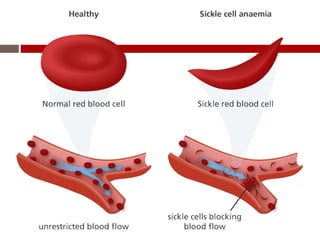
 Sickle-cell anemia is diagnosed by the type of
hemoglobin found in the blood
 Normal hemoglobin A is disk shaped and flows
throughout the blood vessels with ease
 Sickle-cell hemoglobin S is C shaped and will
build up and cause obstructions in the blood
vessels
Treatment
 Medications
 Antibiotics to lower risk of infection
 Pain-relieving medication
 Hydroxyurea – decreases serious complications, reduce need for
blood transfusions, and prevents sickling of blood cells
 Ribonucleic Reductase Inhibitor - interferes with the growth of the abnormal
hemoglobin and produces more fetal hemoglobin. This medication is also
used for cancer treatment where it interferes with the growth of the cancer
cells by inhibiting the formation of deoxyribonucleotides, which are the building
blocks for DNA. Essentially, this medication does not allow the S phase of the
cell cycle to replicate the DNA, therefore reducing the replication of the cancer
cells.
 Blood Transfusions
 Bone Marrow Transplant (rare)
References
Chhabra, Namrata. "Hydroxyurea in the Treatment of
Leukemia." Biochemistry for Medics - Clinical Cases.
N.p., 13 Mar. 2016. Web. 14 Dec. 2016.
"Facts About Sickle Cell Disease." Centers for Disease
Control and Prevention. Centers for Disease Control and
Prevention, 17 Nov. 2016. Web. 11 Dec. 2016.
"Haemoglobin." The Oxford Companion to the Body.
Encyclopedia.com, n.d. Web. 11 Dec. 2016.
Indian J Hematol Blood Transfus. 2014 Jun; 30(2): 91–96.
Published online 2013 May 24. doi: 10.1007/s12288-013-
0261-4
Sickle Cell Anemia. N.p., 11 June 2014. Web.
"Sickle Cell Tests." Sickle Cell Tests: The Test. N.p., n.d. Web.
11 Dec. 2016.

Sickle-Cell Anemia Case Study

  • 1.
    Consider the FollowingPatient  Two year-old Zola and her parents just recently moved to the United States from Southern Africa. Zola has been having many painful health problems and developmental delays. Zola has had troubles healing from cuts and wounds and she also suffers from severe swelling in her fingers and toes. Those symptoms are accompanied by fever, paleness, dehydration, fatigue, and pneumonia like symptoms.
  • 2.
    What would yourinitial diagnosis be for Zola?  Anemia
  • 3.
    What tests wouldyou preform to strengthen your diagnosis for Zola?  Blood Testing  Hemoglobin electrophoresis – used to separate abnormal hemoglobin's by their charged migrations down an electrical field  Hemoglobin S results in sickle-cell anemia from an amino acid substitution of Val instead of Glu. Valine has a R group with no electrical charge whereas glutamate has a negative charge. Therefore hemoglobin S has two fewer negative charges than the normal hemoglobin A.  Hemoglobin fractionation by HPLC  Isoelectric focusing  Genetic Testing
  • 4.
  • 5.
    Hemoglobin  Protein inyour red blood cell that carries oxygen to your cells  Oxygen attaches to the iron containing part of hemoglobin  Blood contains iron discovered in 1747  Chemical structure of hemoglobin discovered in 1960s  Depending on health, hemoglobin is able to carry up to four oxygen molecules
  • 6.
    Hemoglobin Molecular Structure • Theamino acids form alpha helices • The alpha subunits are red (2) • The beta subunits are blue (2) • The iron containing heme groups are green (4) • Hydrogen bonds stabilize hemoglobin • Salt bridges and the hydrophobic effect bind the polypeptides
  • 7.
    Case Study  Sickle-cellanemia is diagnosed by the type of hemoglobin found in the blood  Normal hemoglobin A is disk shaped and flows throughout the blood vessels with ease  Sickle-cell hemoglobin S is C shaped and will build up and cause obstructions in the blood vessels
  • 11.
    Treatment  Medications  Antibioticsto lower risk of infection  Pain-relieving medication  Hydroxyurea – decreases serious complications, reduce need for blood transfusions, and prevents sickling of blood cells  Ribonucleic Reductase Inhibitor - interferes with the growth of the abnormal hemoglobin and produces more fetal hemoglobin. This medication is also used for cancer treatment where it interferes with the growth of the cancer cells by inhibiting the formation of deoxyribonucleotides, which are the building blocks for DNA. Essentially, this medication does not allow the S phase of the cell cycle to replicate the DNA, therefore reducing the replication of the cancer cells.  Blood Transfusions  Bone Marrow Transplant (rare)
  • 12.
    References Chhabra, Namrata. "Hydroxyureain the Treatment of Leukemia." Biochemistry for Medics - Clinical Cases. N.p., 13 Mar. 2016. Web. 14 Dec. 2016. "Facts About Sickle Cell Disease." Centers for Disease Control and Prevention. Centers for Disease Control and Prevention, 17 Nov. 2016. Web. 11 Dec. 2016. "Haemoglobin." The Oxford Companion to the Body. Encyclopedia.com, n.d. Web. 11 Dec. 2016. Indian J Hematol Blood Transfus. 2014 Jun; 30(2): 91–96. Published online 2013 May 24. doi: 10.1007/s12288-013- 0261-4 Sickle Cell Anemia. N.p., 11 June 2014. Web. "Sickle Cell Tests." Sickle Cell Tests: The Test. N.p., n.d. Web. 11 Dec. 2016.