ATHEROSCLEROSIS
Introduction
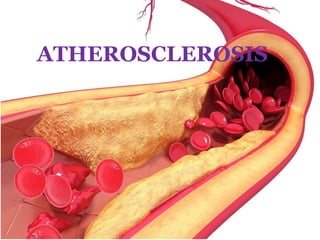
• Atherosclerosis is the condition in which an artery wall thickens as
the result of a build-up of fatty materials such as cholesterol.
• It is also known as Arteriosclerotic Vascular Disease or ASVD).
• It is commonly referred to as a hardening or furring of the arteries.
Cont….
• It is caused by the formation of multiple plaques within the
arteries.
• It can restrict blood flow.
• These plaques can also burst, causing a blood clot.
• Although atherosclerosis is often considered a heart problem, it can
affect arteries anywhere in your body.
• Atherosclerosis is a preventable and treatable condition.
Definition
A process of progressive thickening and hardening of
the walls of medium-sized and large arteries as a
result of fat deposits on their inner lining.
Causes of Atherosclerosis
• Damage or injury to the inner layer of an artery that
may be caused by
High blood pressure
High cholesterol
An irritant, such as nicotine
Certain diseases, such as diabetes
Risk factors
A family history of
early heart disease
An unhealthy diet Diabetes
High blood
pressure
High cholesterol
High levels of C-
reactive protein
(CRP), a marker of
inflammation
Lack of exercise Obesity
Sleep apnea
Smoking and other
tobacco use
Hardening of the arteries occurs over time. Aging is a risk factor for
atherosclerosis. Other things that may increase the risk of atherosclerosis
include:
Signs and Symptoms
• Chest pain (angina).
• Atherosclerosis in the arteries leading to brain, have symptoms
such as
Sudden numbness or weakness in arms or legs,
Difficulty speaking or slurred speech, or drooping muscles in
face.
Cont….
• Atherosclerosis in the arteries in arms and legs, produces
decreased blood flow is called peripheral artery occlusive
disease (PAOD) have symptoms such as leg pain when walking
• Sometimes atherosclerosis causes erectile dysfunction in men.
• high blood pressure or kidney failure.
Tests and diagnosis
Blood tests.
Doppler
ultrasound
Ankle-brachial
index.
Other imaging
tests.
Angiogram.
Electrocardiogram
(ECG).
CT and MRI
Treatments and drugs
• Lifestyle changes, such as eating a healthy diet and exercising,
are often the first line of defense in treating atherosclerosis.
• Medication or surgical procedures may be recommended as well.
• Cholesterol medications- cholesterol medications includes drugs
known as statins and fibrates.
• Anti-platelet medications such as aspirin, to reduce the likelihood
that platelets will clump in narrowed arteries, form a blood clot and
cause further blockage.
• Anticoagulants- An anticoagulant, such as heparin or warfarin can
help thin blood to prevent clots from forming.
Cont…..
• Blood pressure medications- Medications to control blood
pressure such as beta blockers, angiotensin converting enzyme
(ACE) inhibitors and calcium channel blockers can help slow the
progression of atherosclerosis
• Certain medications to control specific risk factors for atheroscleros
s, such as diabetes.
• Surgical procedure- Angioplasty and Bypass Surgery ( Coronary
Artery Bypass Graft Surgery)
• Thrombolytic therapy- Insert a clot dissolving drug into artery at The
point of the clot to break it up.
Prevention
• Quitting smoking
• Eating healthy foods
• Exercising regularly
• Maintaining a healthy weight
• Checking and maintaining a healthy blood pressure
• Checking and maintaining healthy cholesterol and blood sugar
levels
Complications
• Coronary artery disease
• Carotid artery disease
• Peripheral artery disease
• Aneurysms
• Chronic kidney disease.
Summary
So far today we have
discussed about atherosclerosis.
Expected Questions
Short
• Describe the Atherosclerosis.
References
• Jacob Anthikad, Biochemistry for nurses
• Pankaja Naik, Essentials of Biochemistry
• Satyanarayan, Essentials of Biochemistry
• A. C. Deb, Biochemistry
THANK YOU

Atherosclerosis. pptx

  • 1.
  • 2.
    Introduction • Atherosclerosis isthe condition in which an artery wall thickens as the result of a build-up of fatty materials such as cholesterol. • It is also known as Arteriosclerotic Vascular Disease or ASVD). • It is commonly referred to as a hardening or furring of the arteries.
  • 3.
    Cont…. • It iscaused by the formation of multiple plaques within the arteries. • It can restrict blood flow. • These plaques can also burst, causing a blood clot. • Although atherosclerosis is often considered a heart problem, it can affect arteries anywhere in your body. • Atherosclerosis is a preventable and treatable condition.
  • 4.
    Definition A process ofprogressive thickening and hardening of the walls of medium-sized and large arteries as a result of fat deposits on their inner lining.
  • 6.
    Causes of Atherosclerosis •Damage or injury to the inner layer of an artery that may be caused by High blood pressure High cholesterol An irritant, such as nicotine Certain diseases, such as diabetes
  • 7.
    Risk factors A familyhistory of early heart disease An unhealthy diet Diabetes High blood pressure High cholesterol High levels of C- reactive protein (CRP), a marker of inflammation Lack of exercise Obesity Sleep apnea Smoking and other tobacco use Hardening of the arteries occurs over time. Aging is a risk factor for atherosclerosis. Other things that may increase the risk of atherosclerosis include:
  • 10.
    Signs and Symptoms •Chest pain (angina). • Atherosclerosis in the arteries leading to brain, have symptoms such as Sudden numbness or weakness in arms or legs, Difficulty speaking or slurred speech, or drooping muscles in face.
  • 11.
    Cont…. • Atherosclerosis inthe arteries in arms and legs, produces decreased blood flow is called peripheral artery occlusive disease (PAOD) have symptoms such as leg pain when walking • Sometimes atherosclerosis causes erectile dysfunction in men. • high blood pressure or kidney failure.
  • 12.
    Tests and diagnosis Bloodtests. Doppler ultrasound Ankle-brachial index. Other imaging tests. Angiogram. Electrocardiogram (ECG). CT and MRI
  • 13.
    Treatments and drugs •Lifestyle changes, such as eating a healthy diet and exercising, are often the first line of defense in treating atherosclerosis. • Medication or surgical procedures may be recommended as well. • Cholesterol medications- cholesterol medications includes drugs known as statins and fibrates. • Anti-platelet medications such as aspirin, to reduce the likelihood that platelets will clump in narrowed arteries, form a blood clot and cause further blockage. • Anticoagulants- An anticoagulant, such as heparin or warfarin can help thin blood to prevent clots from forming.
  • 14.
    Cont….. • Blood pressuremedications- Medications to control blood pressure such as beta blockers, angiotensin converting enzyme (ACE) inhibitors and calcium channel blockers can help slow the progression of atherosclerosis • Certain medications to control specific risk factors for atheroscleros s, such as diabetes. • Surgical procedure- Angioplasty and Bypass Surgery ( Coronary Artery Bypass Graft Surgery) • Thrombolytic therapy- Insert a clot dissolving drug into artery at The point of the clot to break it up.
  • 15.
    Prevention • Quitting smoking •Eating healthy foods • Exercising regularly • Maintaining a healthy weight • Checking and maintaining a healthy blood pressure • Checking and maintaining healthy cholesterol and blood sugar levels
  • 16.
    Complications • Coronary arterydisease • Carotid artery disease • Peripheral artery disease • Aneurysms • Chronic kidney disease.
  • 17.
    Summary So far todaywe have discussed about atherosclerosis.
  • 18.
  • 19.
    References • Jacob Anthikad,Biochemistry for nurses • Pankaja Naik, Essentials of Biochemistry • Satyanarayan, Essentials of Biochemistry • A. C. Deb, Biochemistry
  • 20.