Communicable Disease
BY.
MR. ABHIJIT BHOYAR
M. SC. NURSING
CHILD HEALTH NURSING
INTRODUCTION
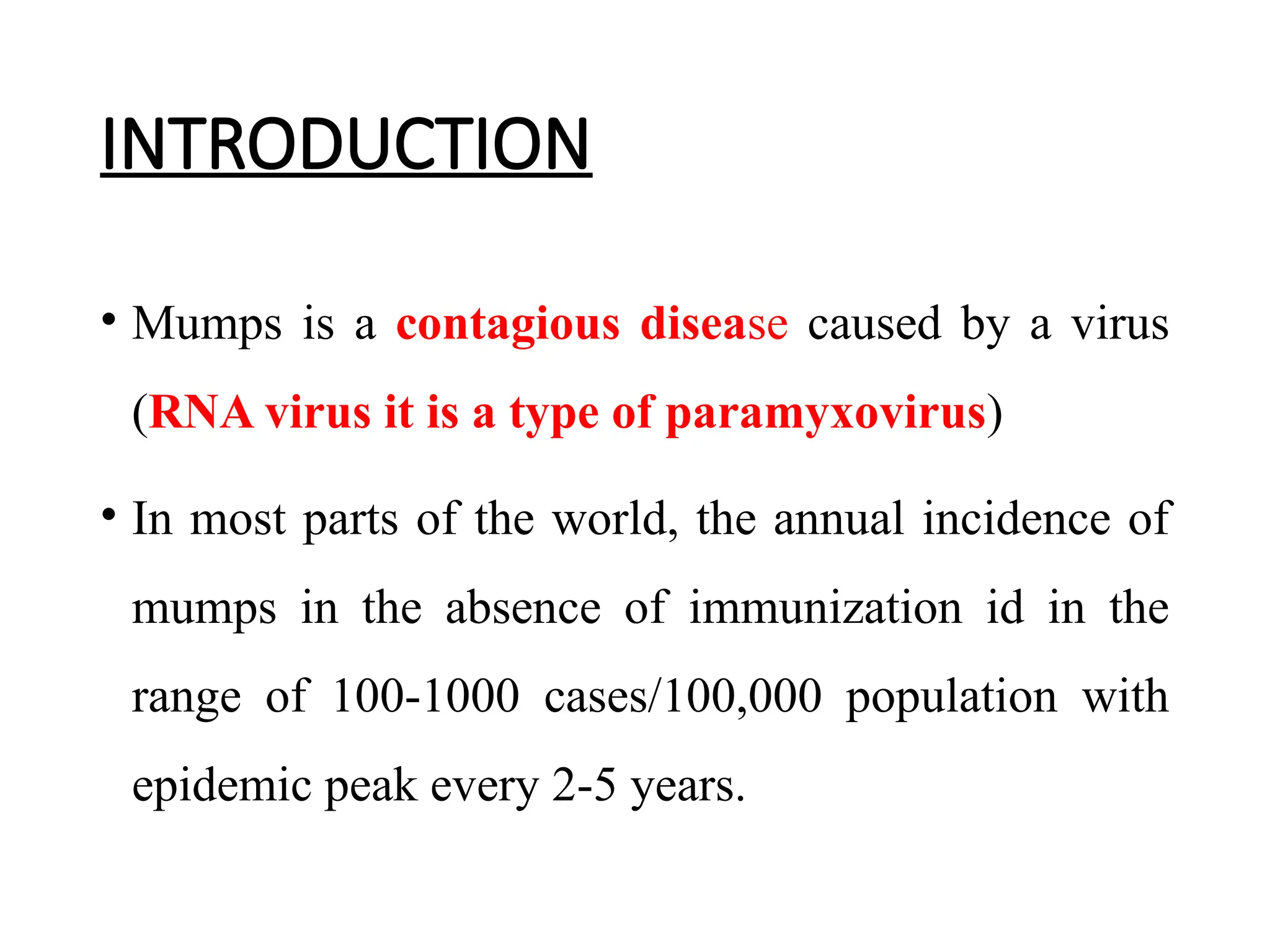
• Mumps is a contagious disease caused by a virus
(RNA virus it is a type of paramyxovirus)
• In most parts of the world, the annual incidence of
mumps in the absence of immunization id in the
range of 100-1000 cases/100,000 population with
epidemic peak every 2-5 years.
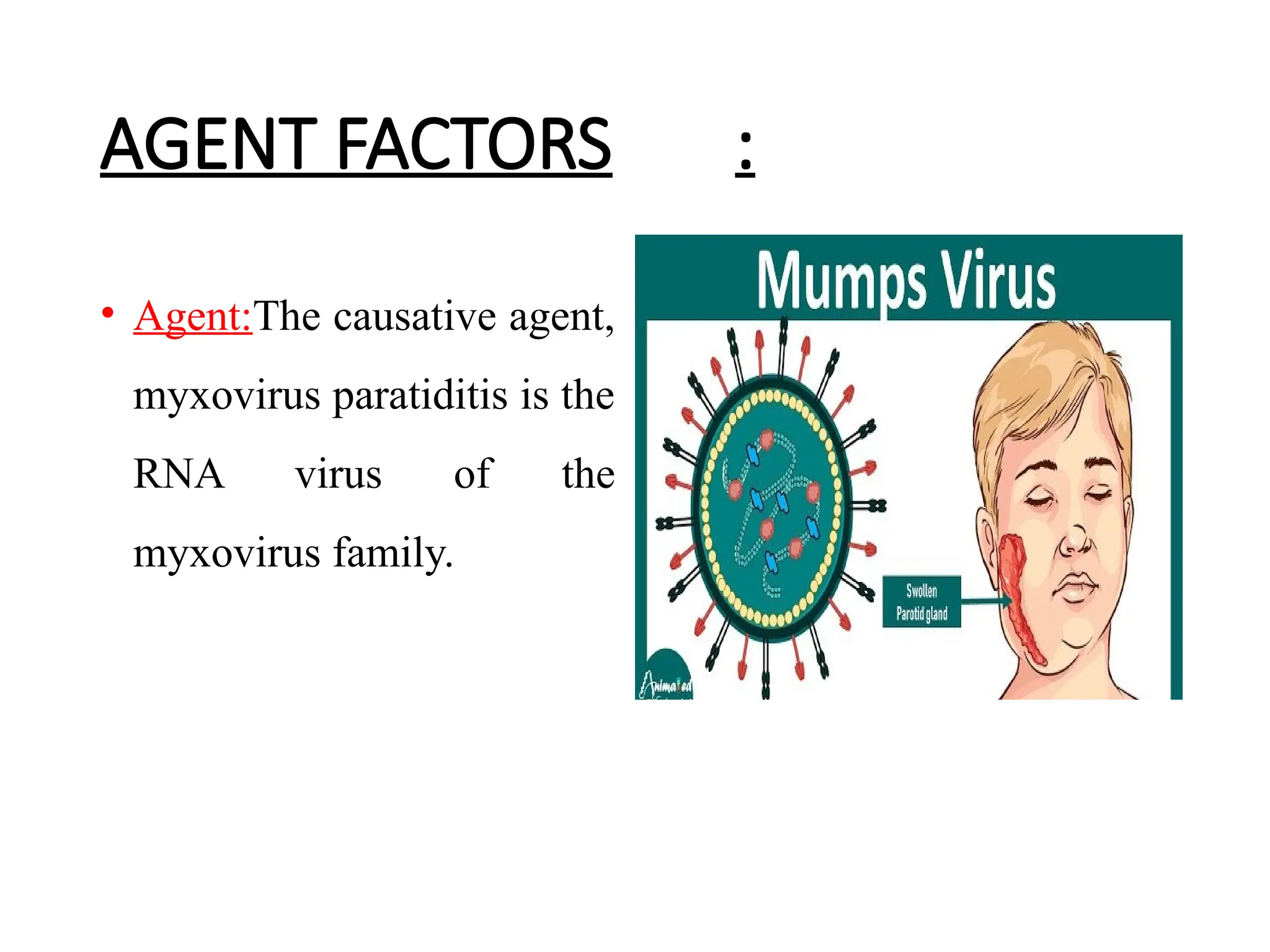
AGENT FACTORS :
• Agent:The causative agent,
myxovirus paratiditis is the
RNA virus of the
myxovirus family.
Source of
infection
COUGHING
SNEEZING
• Source of infection: both clinical and subclinical
cases. Mumps spreads easily from person to
person through respiratory droplets (coughing,
sneezing, talking), direct contact with infected
saliva, or sharing items like cups, bottles, or
utensils
HOST FACTORS:
• Age & gender: mumps is the most frequent cause
of parotitis in the age group 5-9 years. The disease
more tend to be serious in adults than in children.
• The most infants below the age of 6 months are
immune because of maternal antibodies.
ENVIRONMENTAL FACTORS:
• Mumps is largely an epidemic disease.
• Cases occur throughout the year, but the peak
incidence is in winter and spring.
• Overcrowding area
INCUBATION PERIOD:
• The disease is spread mainly by droplet infection
and after direct contact with an infected person.
MODE OF TRANSMISSION:
• Varies from 2-3 weeks, usually 18 days.
CLINICAL FEATURES:
• Pain and
swelling in
either one or
both the
parotid glands.
• Ear ache on the affected side
• there is pain and stiffness on opening the mouth
• Mumps also affects the testes, pancreas, CNS,
ovaries, etc.
• In severe cases, there may be fever, headache.
INVESTIGATION:
A care provider may diagnose mumps based on typical
symptoms and known exposure to mumps. Tests used to look
for the virus and diagnose mumps include:
• A test of a sample from the mouth.
• A blood test that may show an immune system reaction to
the virus.
• A test of a sample of urine.
TREATMENT:
There is no specific treatment for mumps. Most people recover
within 3 to 10 days.
Steps you can take to aid recovery and lessen symptoms
include:
• Rest.
• Pain relievers such as ibuprofen and acetaminophen
• A cold or warm cloth for swollen salivary glands.
• A cold cloth or ice pack for swollen testicles.
• Drinking plenty of fluids.
• Isolation
COMPLICATIONS:
• Orchitis
• Ovaritis
• Pancreatitis
• Meningo-encephalitis
• Thyroiditis
• Neuritis
• Hepatitis
• Myocarditis
Complications of mumps are more likely among people who
aren't vaccinated. They can happen even if a person didn't
have swollen salivary glands.
Complications happen when the virus reaches other tissues in
the body. Complications may include:
• Swollen testicles. This complication, also called orchitis,
causes severe pain. It's more common with a mumps
infection after puberty. A swollen testicle may lead to a
decrease in the size of the testicle and a decline in fertility.
• Swollen ovaries. This complication, also caused oophoritis,
causes pain, upset stomach, vomiting and fever. This
complication is more likely after puberty. The condition doesn't
seem to affect fertility.
• Encephalitis. Encephalitis is swelling, called inflammation, in
the brain that may damage tissues. This complication can cause
changes in consciousness, seizures and loss of muscle control.
• Meningitis. Meningitis is swelling, or inflammation, of the
membranes around the brain and spinal cord. It may cause
head, fever and neck stiffness. Meningitis related to mumps
rarely causes long-term problems.
• Hearing loss. This complication can happen suddenly or
over time. Hearing usually gets better after the illness.
• Pancreatitis. Mumps can cause damage to the pancreas,
called pancreatitis, from swelling. Symptoms may include
pain or tenderness near the stomach, upset stomach,
vomiting and fever.
• Miscarriage. Getting mumps during the first 12 weeks of
pregnancy may increase the risk that a pregnancy will end,
called miscarriage.
PREVENTION:
• Vaccination:
• MMR Vaccine 0.5 ml intramuscularly.
THANK
YOU

Mumps_nursing_power point presentation_Abhijit

  • 1.
    Communicable Disease BY. MR. ABHIJITBHOYAR M. SC. NURSING CHILD HEALTH NURSING
  • 2.
    INTRODUCTION • Mumps isa contagious disease caused by a virus (RNA virus it is a type of paramyxovirus) • In most parts of the world, the annual incidence of mumps in the absence of immunization id in the range of 100-1000 cases/100,000 population with epidemic peak every 2-5 years.
  • 3.
    AGENT FACTORS : •Agent:The causative agent, myxovirus paratiditis is the RNA virus of the myxovirus family.
  • 4.
  • 5.
    • Source ofinfection: both clinical and subclinical cases. Mumps spreads easily from person to person through respiratory droplets (coughing, sneezing, talking), direct contact with infected saliva, or sharing items like cups, bottles, or utensils
  • 6.
    HOST FACTORS: • Age& gender: mumps is the most frequent cause of parotitis in the age group 5-9 years. The disease more tend to be serious in adults than in children. • The most infants below the age of 6 months are immune because of maternal antibodies.
  • 7.
    ENVIRONMENTAL FACTORS: • Mumpsis largely an epidemic disease. • Cases occur throughout the year, but the peak incidence is in winter and spring. • Overcrowding area
  • 8.
    INCUBATION PERIOD: • Thedisease is spread mainly by droplet infection and after direct contact with an infected person. MODE OF TRANSMISSION: • Varies from 2-3 weeks, usually 18 days.
  • 9.
    CLINICAL FEATURES: • Painand swelling in either one or both the parotid glands.
  • 11.
    • Ear acheon the affected side • there is pain and stiffness on opening the mouth • Mumps also affects the testes, pancreas, CNS, ovaries, etc. • In severe cases, there may be fever, headache.
  • 12.
    INVESTIGATION: A care providermay diagnose mumps based on typical symptoms and known exposure to mumps. Tests used to look for the virus and diagnose mumps include: • A test of a sample from the mouth. • A blood test that may show an immune system reaction to the virus. • A test of a sample of urine.
  • 13.
    TREATMENT: There is nospecific treatment for mumps. Most people recover within 3 to 10 days. Steps you can take to aid recovery and lessen symptoms include: • Rest. • Pain relievers such as ibuprofen and acetaminophen • A cold or warm cloth for swollen salivary glands. • A cold cloth or ice pack for swollen testicles. • Drinking plenty of fluids. • Isolation
  • 14.
    COMPLICATIONS: • Orchitis • Ovaritis •Pancreatitis • Meningo-encephalitis • Thyroiditis • Neuritis • Hepatitis • Myocarditis
  • 15.
    Complications of mumpsare more likely among people who aren't vaccinated. They can happen even if a person didn't have swollen salivary glands. Complications happen when the virus reaches other tissues in the body. Complications may include: • Swollen testicles. This complication, also called orchitis, causes severe pain. It's more common with a mumps infection after puberty. A swollen testicle may lead to a decrease in the size of the testicle and a decline in fertility.
  • 16.
    • Swollen ovaries.This complication, also caused oophoritis, causes pain, upset stomach, vomiting and fever. This complication is more likely after puberty. The condition doesn't seem to affect fertility. • Encephalitis. Encephalitis is swelling, called inflammation, in the brain that may damage tissues. This complication can cause changes in consciousness, seizures and loss of muscle control.
  • 17.
    • Meningitis. Meningitisis swelling, or inflammation, of the membranes around the brain and spinal cord. It may cause head, fever and neck stiffness. Meningitis related to mumps rarely causes long-term problems. • Hearing loss. This complication can happen suddenly or over time. Hearing usually gets better after the illness.
  • 18.
    • Pancreatitis. Mumpscan cause damage to the pancreas, called pancreatitis, from swelling. Symptoms may include pain or tenderness near the stomach, upset stomach, vomiting and fever. • Miscarriage. Getting mumps during the first 12 weeks of pregnancy may increase the risk that a pregnancy will end, called miscarriage.
  • 19.
    PREVENTION: • Vaccination: • MMRVaccine 0.5 ml intramuscularly.
  • 21.