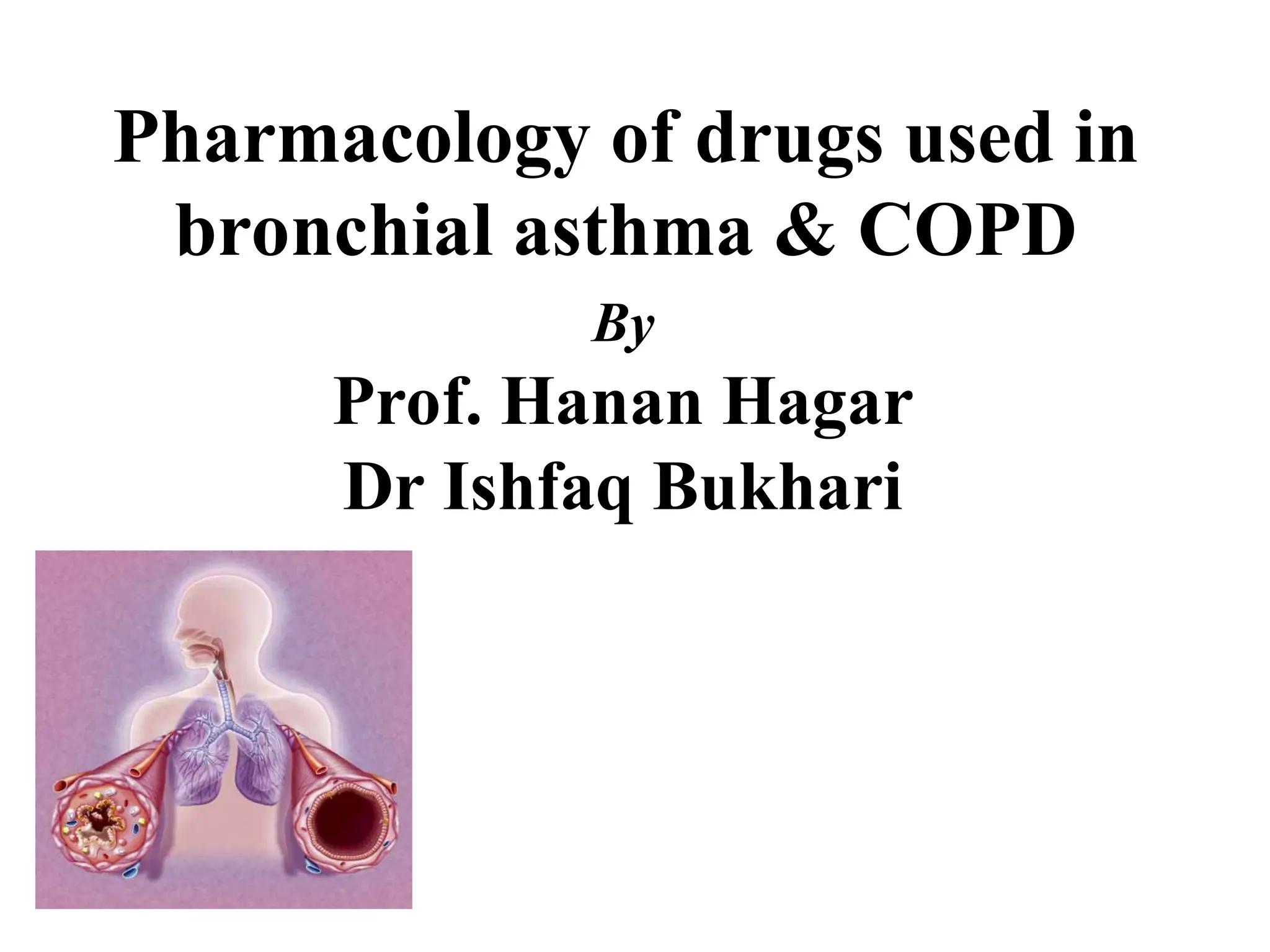
Pharmacology of drugs used in
bronchial asthma & COPD
By
Prof. Hanan Hagar
Dr Ishfaq Bukhari
ILOs: The students should be able to
1. Different types of drugs used for treatment of asthma
2. Differentiate between treatment and prophylactic therapy for asthma
3. Recognize the different types of bronchodilators regarding
pharmacokinetics, pharmacodynamics, uses and side effects.
4. Identify the different anti-inflammatory drugs for asthma in respect to
kinetics, dynamics, uses and side effects.
Bronchial Asthma
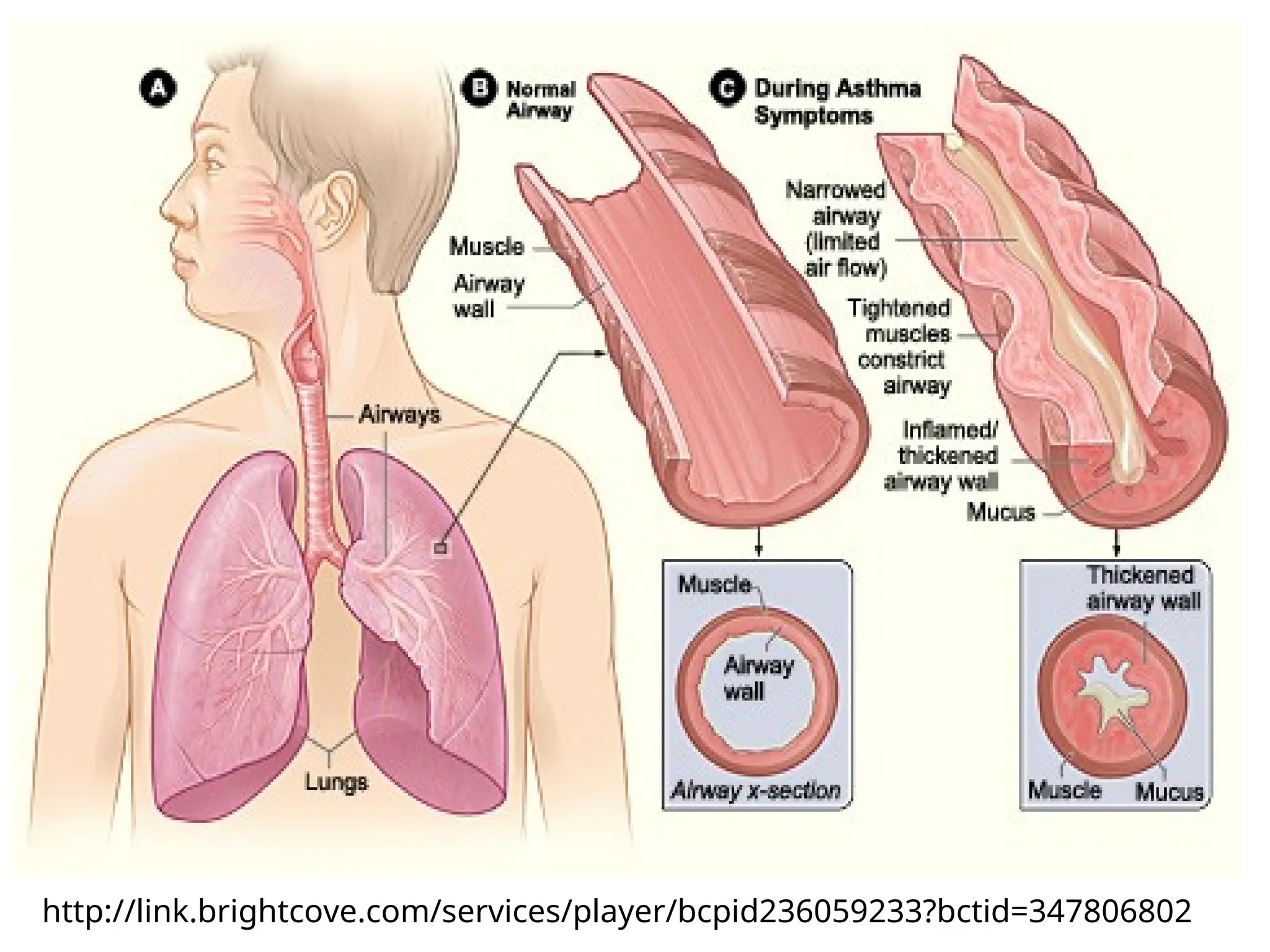
Asthma is a chronic inflammatory disorder of
bronchial airways that result in airway
obstruction in response to external stimuli
(as pollen grains, cold air and tobacco smoke).
Characters of airways in asthmatic patients :
 Airway hyper-reactivity:
Airway hyper-reactivity: abnormal sensitivity
abnormal sensitivity
of the airways to any external stimuli.
 Inflammation
Inflammation
 ↑
↑ edema, swelling
edema, swelling
 ↑
↑ Thick mucus production.
Thick mucus production.
 Bronchospasm
Bronchospasm (constriction of the bronchial
(constriction of the bronchial
smooth muscles).
smooth muscles).
http://link.brightcove.com/services/player/bcpid236059233?bctid=347806802
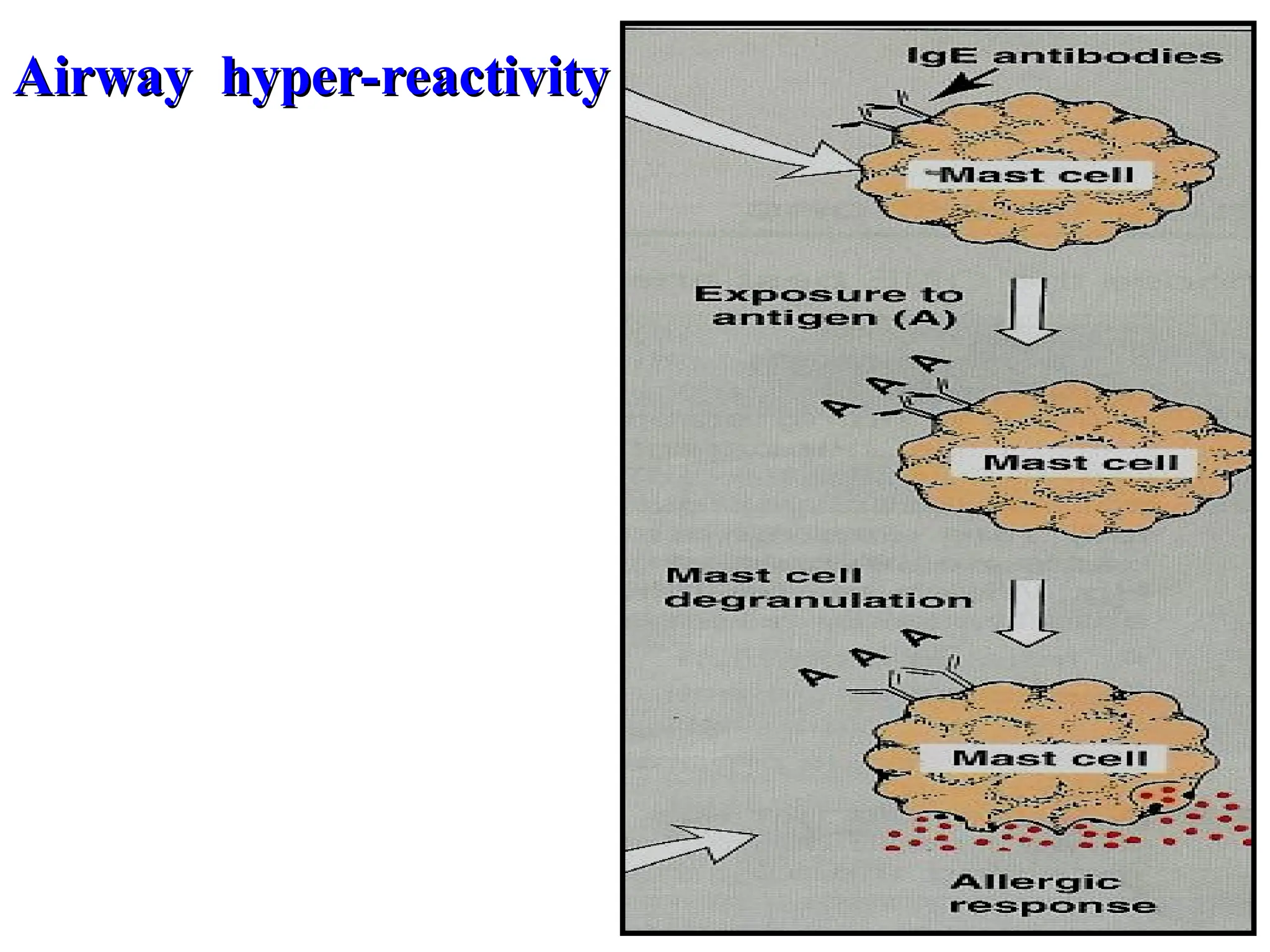
Airway hyper-reactivity
Symptoms of asthma
Asthma produces recurrent episodic attack of
 Acute bronchoconstriction
 Shortness of breath
 Chest tightness
 Wheezing
 Rapid respiration
 Cough
Symptoms can happen each time the airways
are irritated by inhaled irritants or allergens.
Causes
 Infection
 Stress
 Exercise (cold air)
 Pets
 Seasonal changes
 Emotional conditions
 Some drugs as aspirin, β-bockers
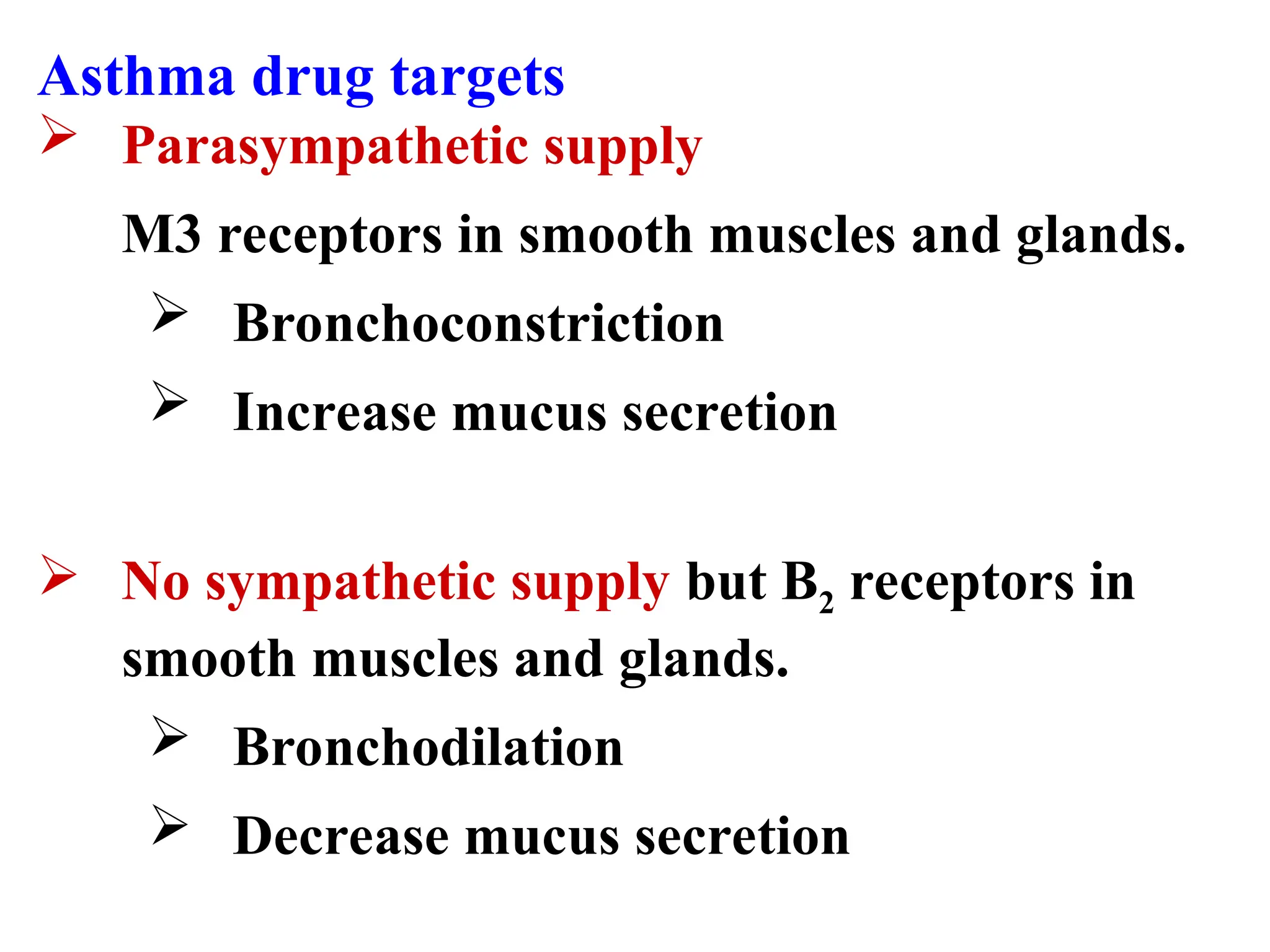
Asthma drug targets
 Parasympathetic supply
M3 receptors in smooth muscles and glands.
 Bronchoconstriction
 Increase mucus secretion
 No sympathetic supply but B2 receptors in
smooth muscles and glands.
 Bronchodilation
 Decrease mucus secretion
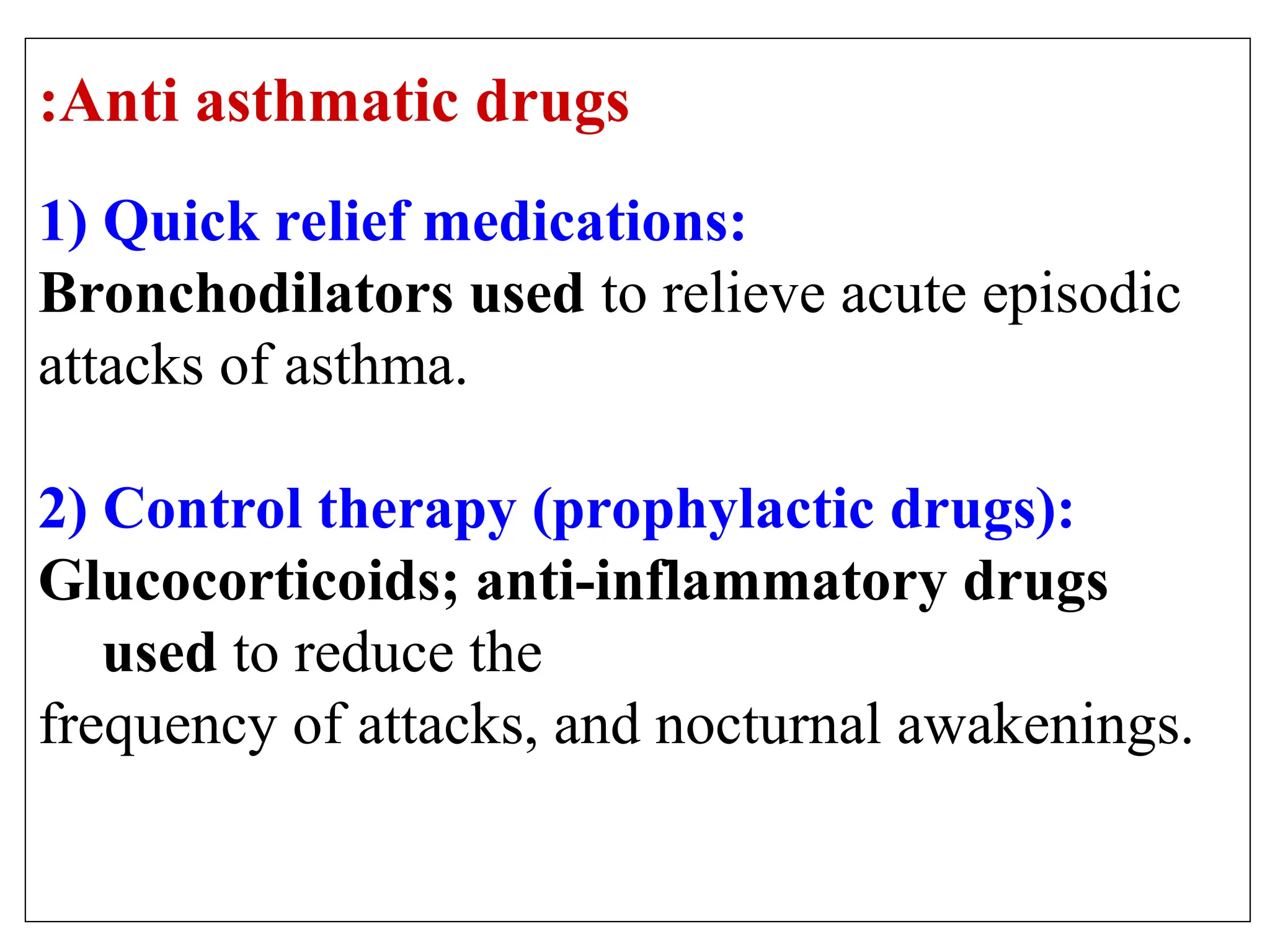
Anti asthmatic drugs
:
1) Quick relief medications:
Bronchodilators used to relieve acute episodic
attacks of asthma.
2) Control therapy (prophylactic drugs):
Glucocorticoids; anti-inflammatory drugs
used to reduce the
frequency of attacks, and nocturnal awakenings.
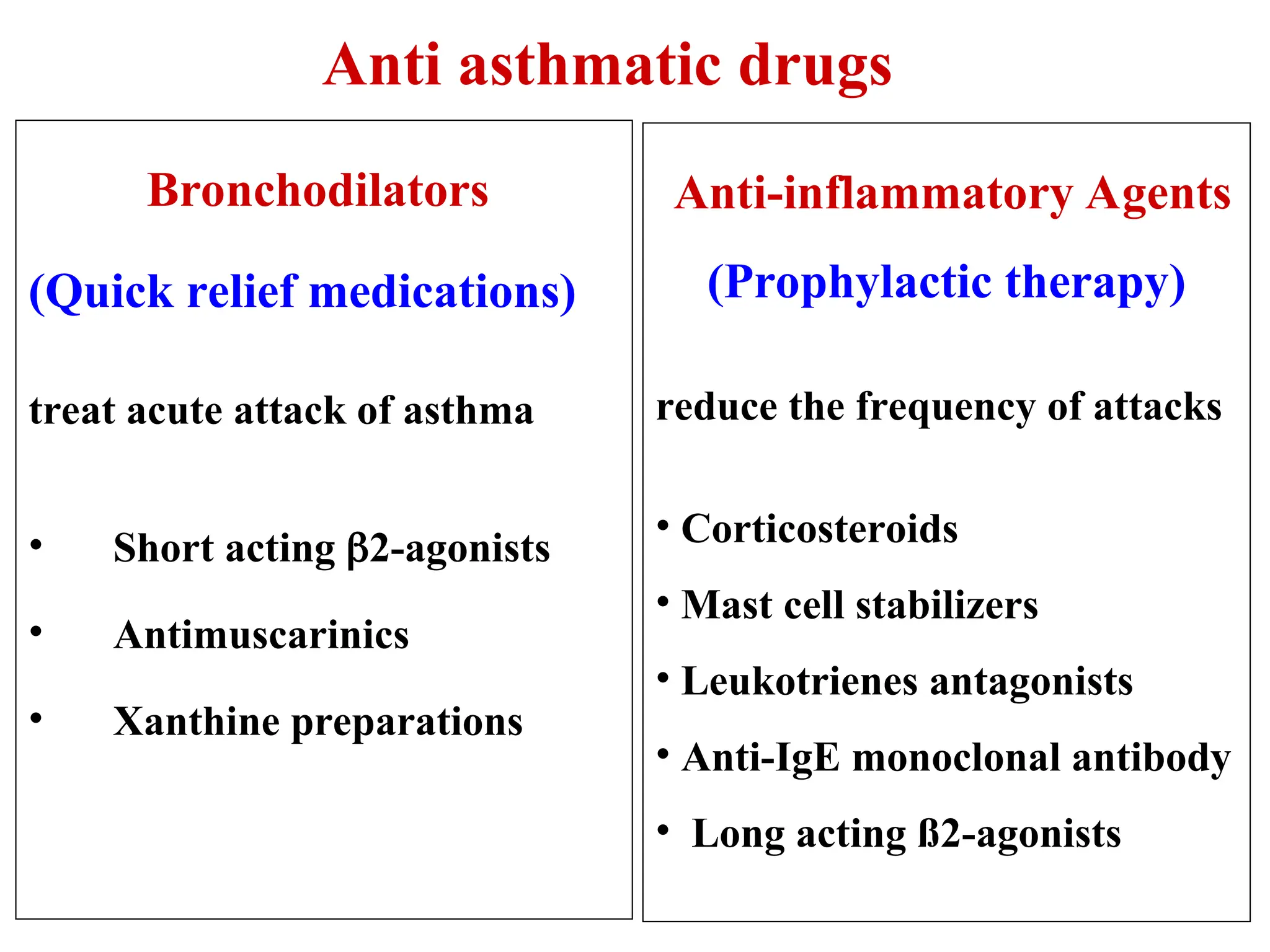
Anti asthmatic drugs
Bronchodilators
(Quick relief medications)
treat acute attack of asthma
• Short acting 2-agonists
• Antimuscarinics
• Xanthine preparations
Anti-inflammatory Agents
(
Prophylactic therapy
)
reduce the frequency of attacks
• Corticosteroids
• Mast cell stabilizers
• Leukotrienes antagonists
• Anti-IgE monoclonal antibody
• Long acting ß2-agonists
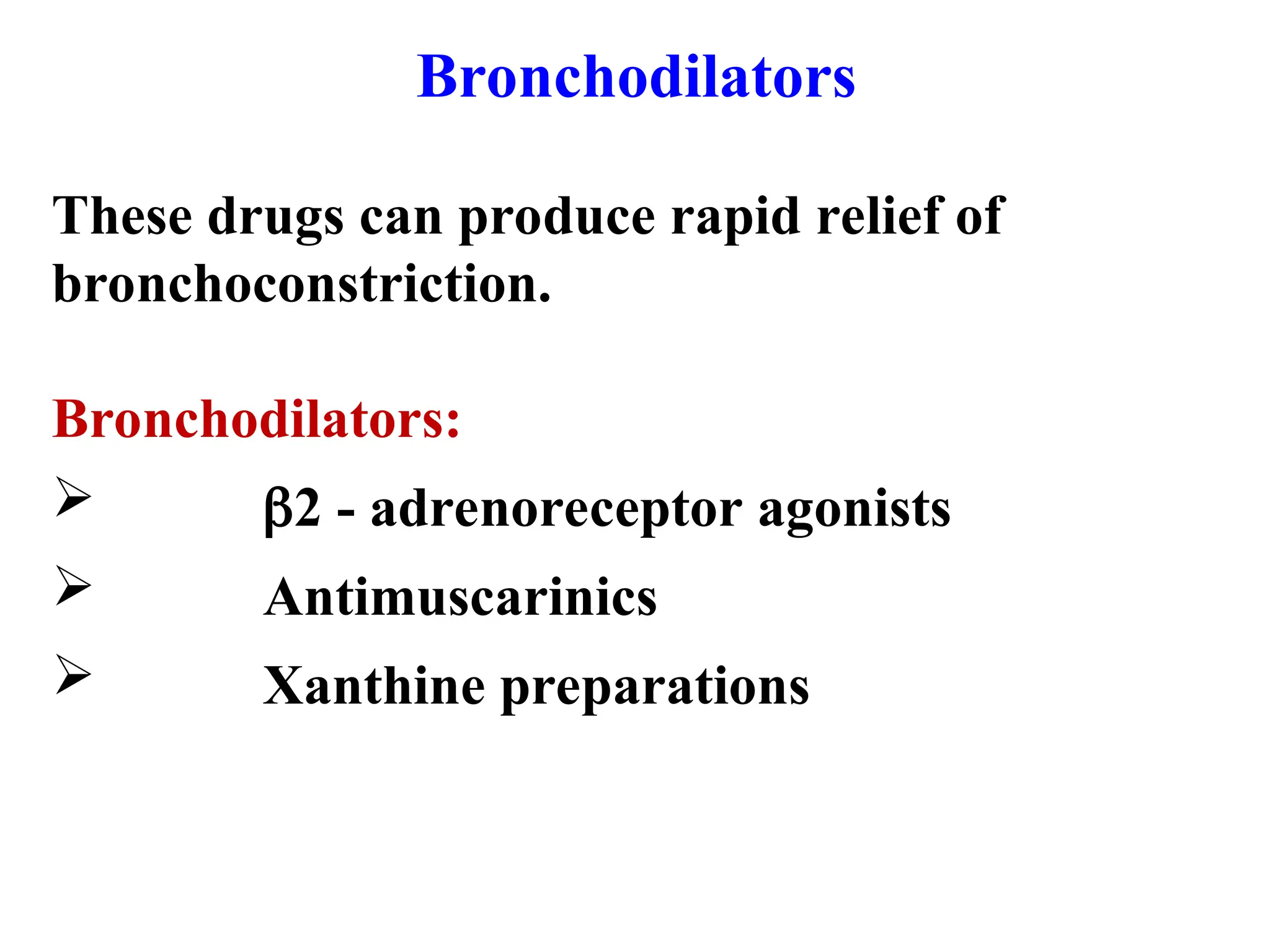
Bronchodilators
These drugs can produce rapid relief of
bronchoconstriction.
Bronchodilators:
 2 - adrenoreceptor agonists
 Antimuscarinics
 Xanthine preparations
Sympathomimetics
- adrenoceptor agonists
Mechanism of Action
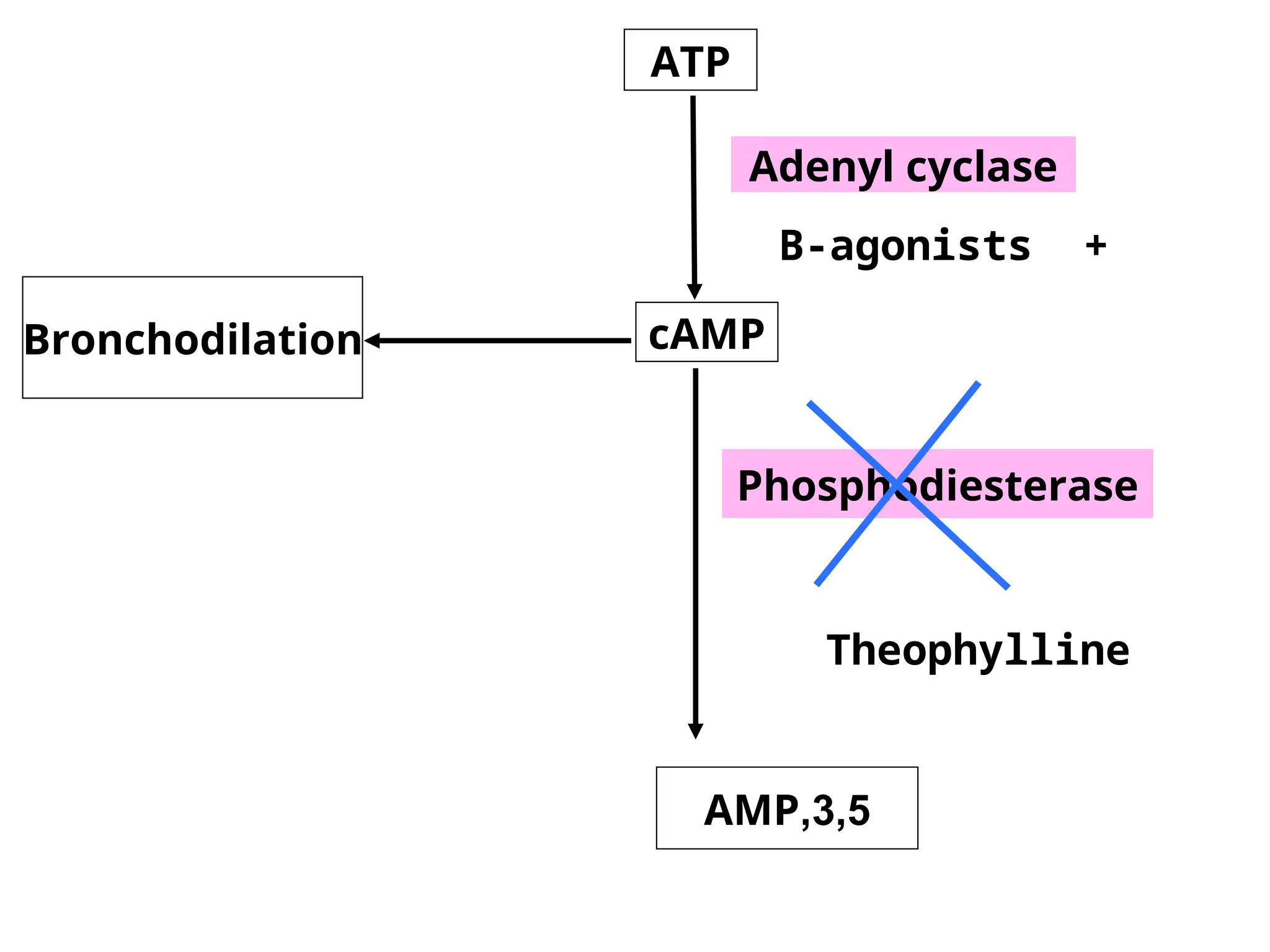
 direct 2 stimulation  stimulate adenyl cyclase
  cAMP  bronchodilation.
 Increase mucus clearance by (increasing ciliary
activity).
 Stabilization of mast cell membrane.
Classification of  agonists
 Non selective  agonists:
epinephrine - isoprenaline
 Selective 2 – agonists (Preferable).
Salbutamol (albuterol)
Terbutaline
Salmeterol
Formeterol
Non selective -agonists.
Epinephrine
• Potent bronchodilator
• Given subcutaneously, S.C.
• rapid action (maximum effect within 15 min).
• Has short duration of action (60-90 min)
• Drug of choice for acute anaphylaxis
(hypersensitivity reactions).
Disadvantages
 Not effective orally.
 Hyperglycemia
 Skeletal muscle tremor
 CVS side effects:
tachycardia, arrhythmia, hypertension
 Not suitable for asthmatic patients with
hypertension or heart failure.
Contraindications:
CVS patients, diabetic patients
Selective 2 –agonists
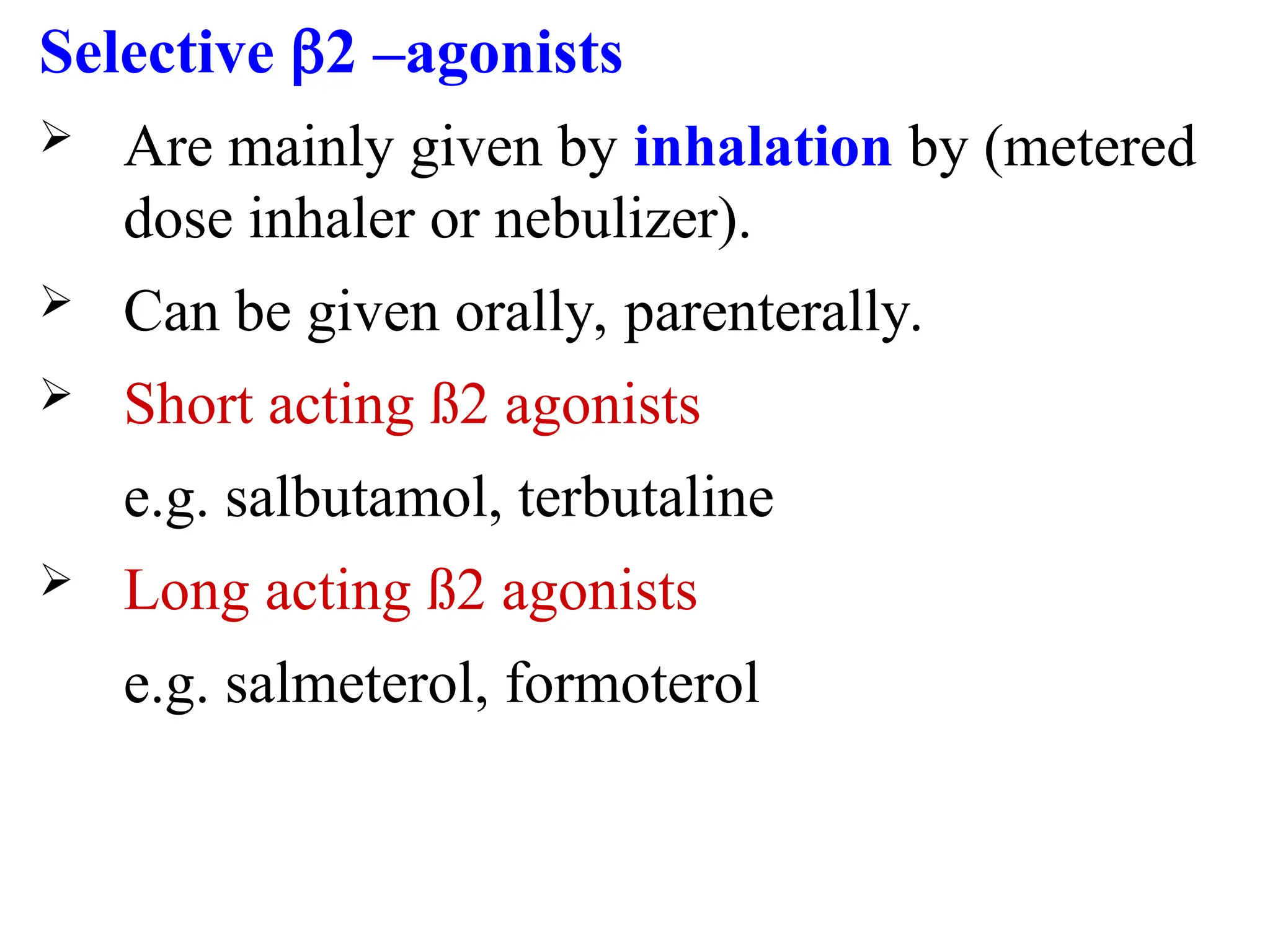
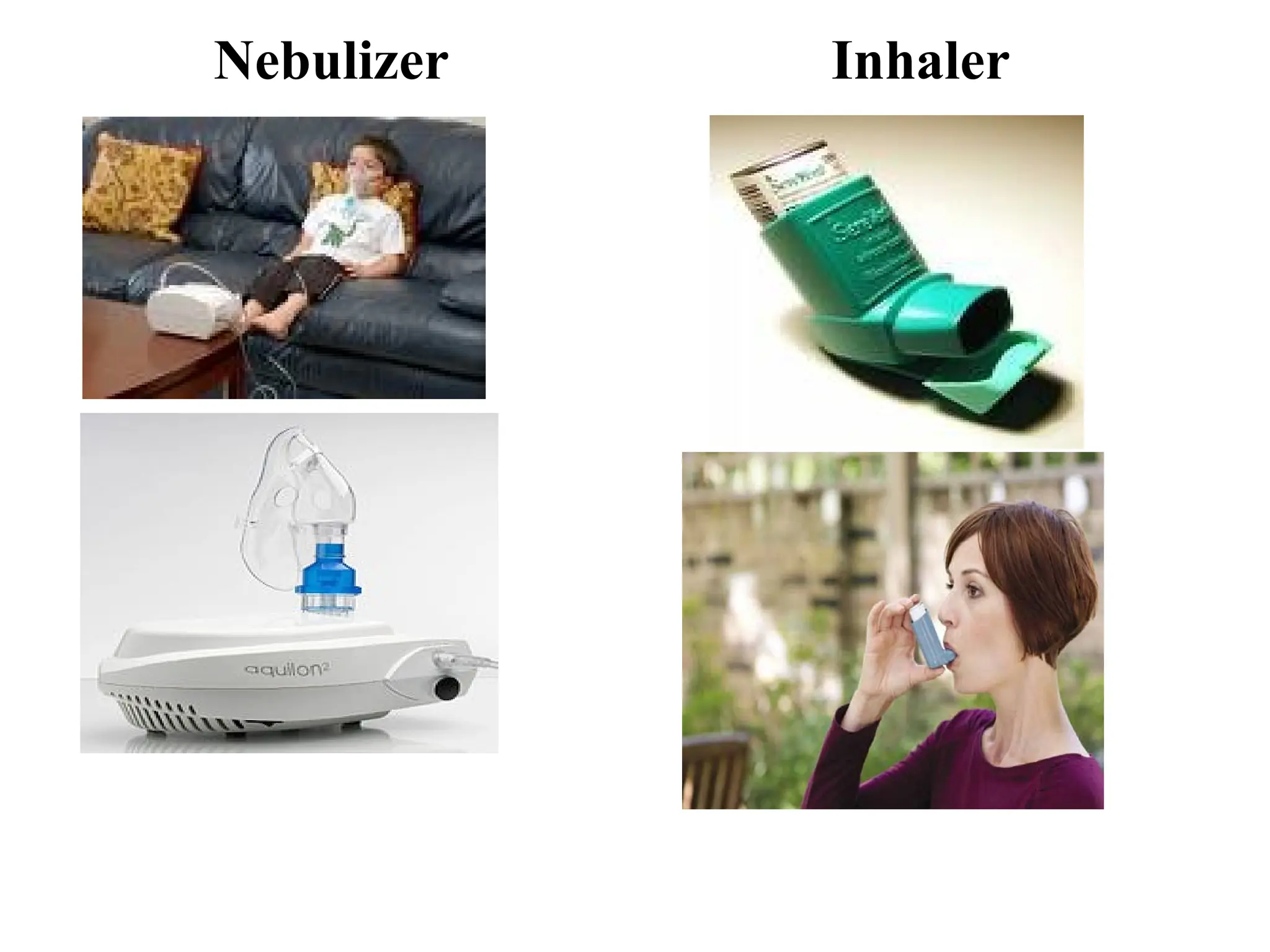
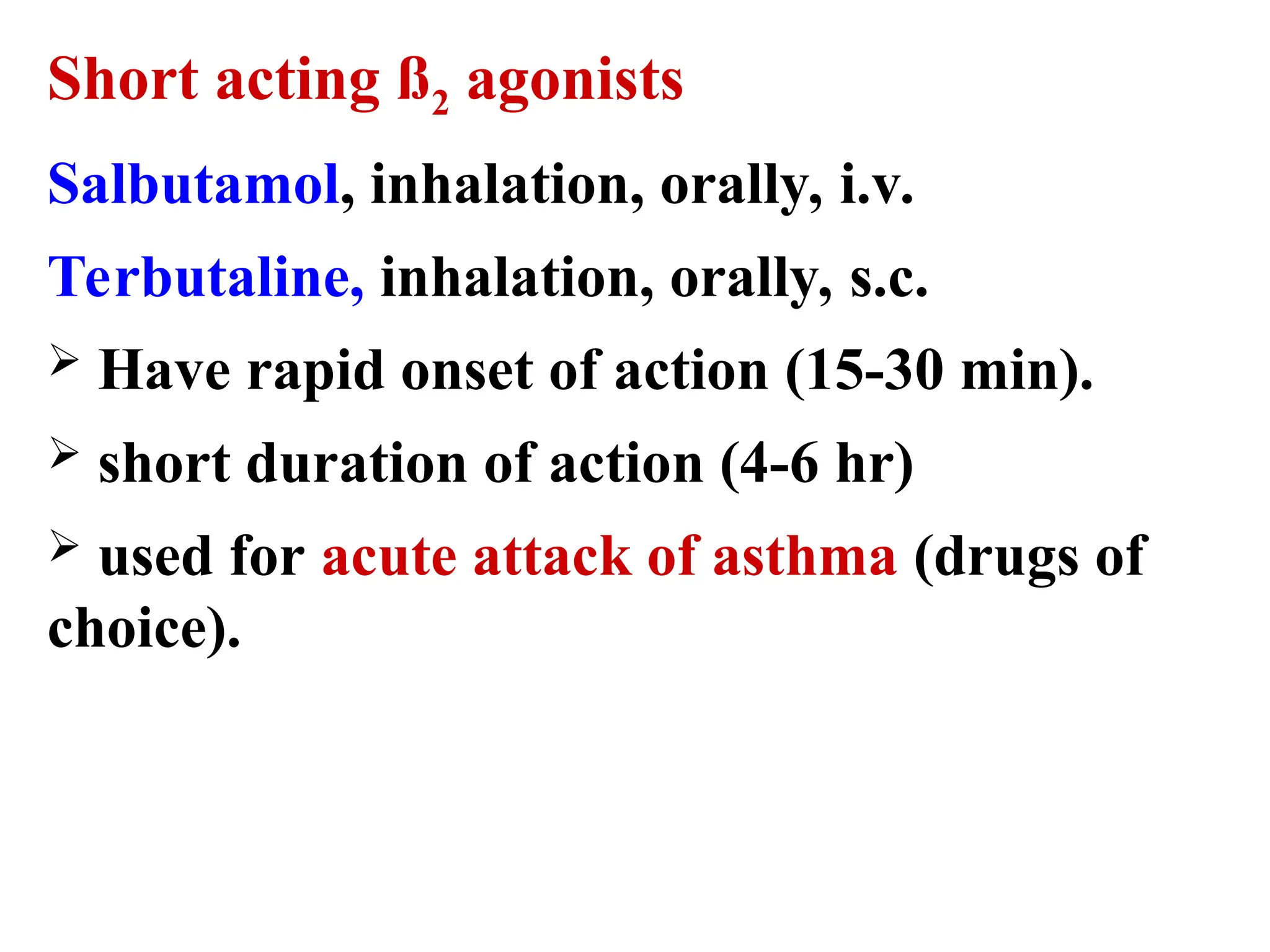
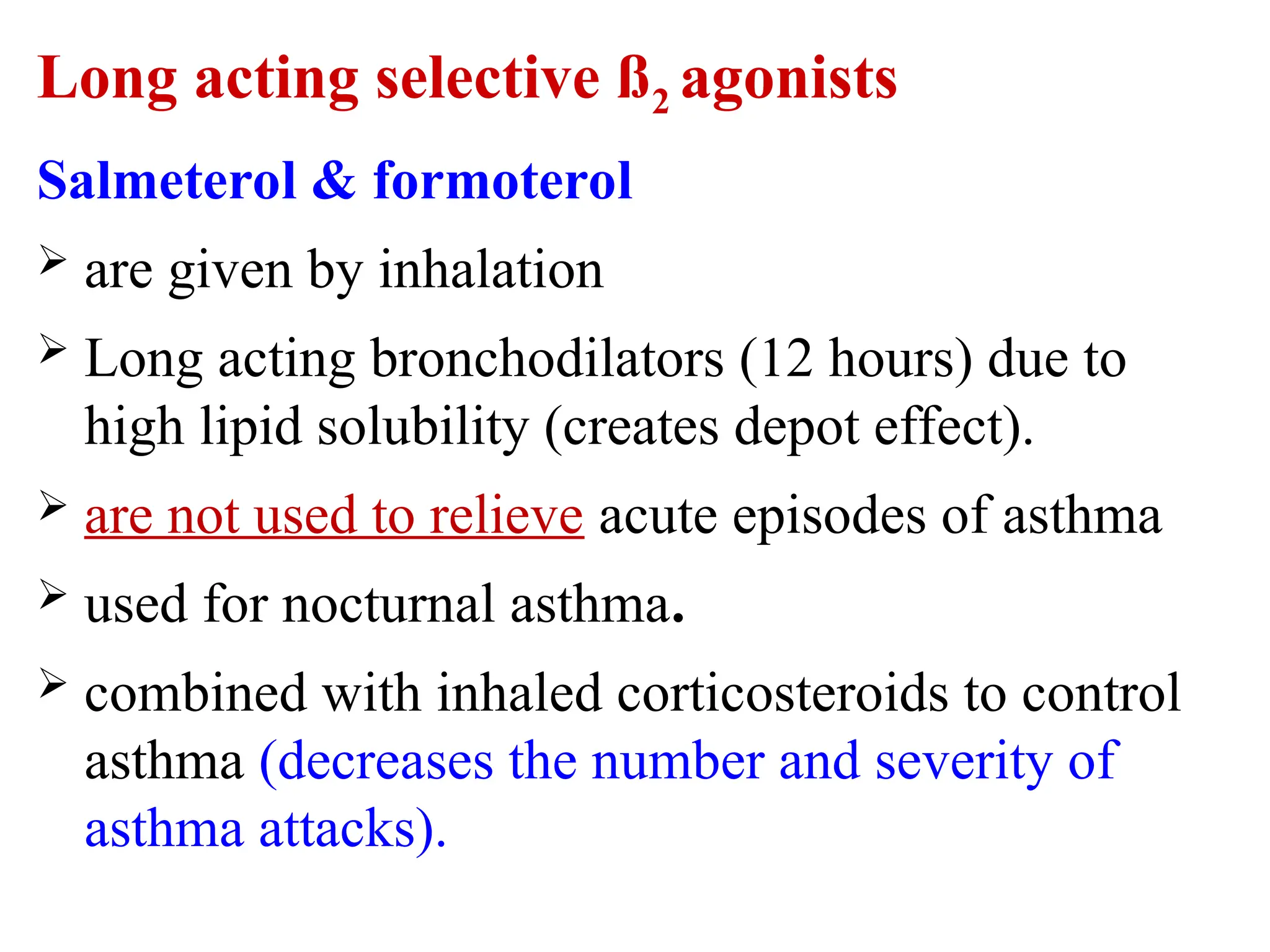
 Are mainly given by inhalation by (metered
dose inhaler or nebulizer).
 Can be given orally, parenterally.
 Short acting ß2 agonists
e.g. salbutamol, terbutaline
 Long acting ß2 agonists
e.g. salmeterol, formoterol
Nebulizer Inhaler
Short acting ß2 agonists
Salbutamol, inhalation, orally, i.v.
Terbutaline, inhalation, orally, s.c.
 Have rapid onset of action (15-30 min).
 short duration of action (4-6 hr)
 used for acute attack of asthma (drugs of
choice).
Long acting selective ß2 agonists
Salmeterol & formoterol
 are given by inhalation
 Long acting bronchodilators (12 hours) due to
high lipid solubility (creates depot effect).
 are not used to relieve acute episodes of asthma
 used for nocturnal asthma.
 combined with inhaled corticosteroids to control
asthma (decreases the number and severity of
asthma attacks).
Advantages of ß2 agonists
 Minimal CVS side effects
 suitable for asthmatic patients with
CV disorders as hypertension or heart failure.
Disadvantages of ß2 agonists
 Skeletal muscle tremors.
 Nervousness
 Tolerance (β-receptors down regulation).
 Overdose may produce tachycardia due to
β1stimulation.
Muscarinic antagonists
Ipratropium – Tiotropium
 Act by blocking muscarinic receptors .
 given by aerosol inhalation
 Have delayed onset of action.
 Quaternary derivatives of atropine (polar).
 Does not diffuse into the blood
 Do not enter CNS.
 Have minimal systemic side effects
 Ipratropium has short duration of action 3-5 hr
 Tiotropium has longer duration of action (24 h).
Pharmacodynamics
 Inhibit bronchoconstriction and mucus secretion
 Less effective than β2-agonists.
 No anti-inflammatory action only bronchodilator
Uses
 Main choice in chronic obstructive pulmonary
diseases (COPD).
 In acute severe asthma combined with β2 agonists
& corticosteroids.
Methylxanthines
 Theophylline - aminophylline
Mechanism of Action
 are phosphodiestrase inhibitors
  cAMP  bronchodilation
 Adenosine receptors antagonists (A1) (not very
significant in asthma)
 Increase diaphragmatic contraction
 Stabilization of mast cell membrane
Bronchodilation
Adenyl cyclase
Phosphodiesterase
ATP
cAMP
3,5
,
AMP
+
B-agonists
Theophylline
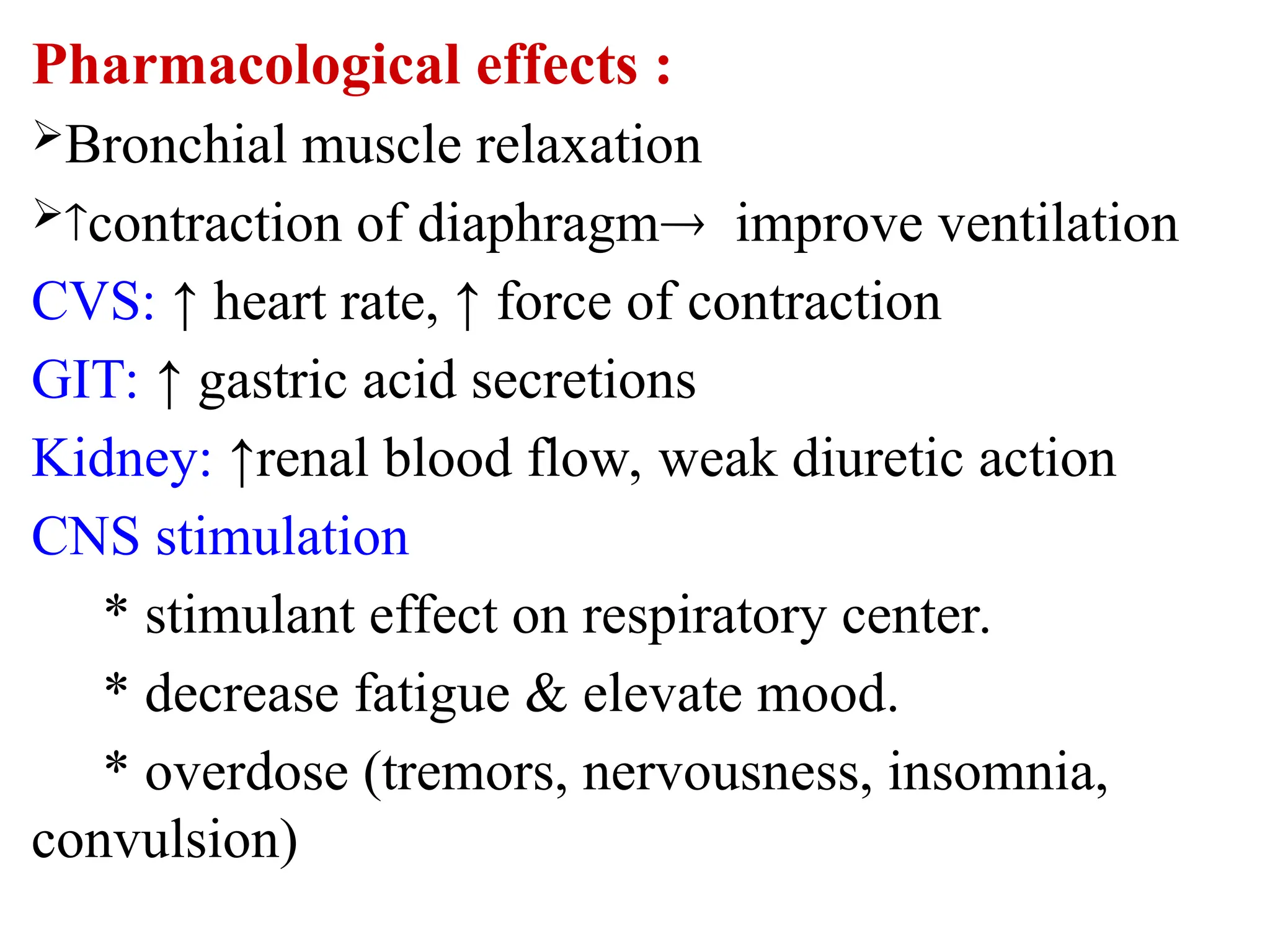
Pharmacological effects :
Bronchial muscle relaxation
contraction of diaphragm improve ventilation
CVS: ↑ heart rate, ↑ force of contraction
GIT: ↑ gastric acid secretions
Kidney: ↑renal blood flow, weak diuretic action
CNS stimulation
* stimulant effect on respiratory center.
* decrease fatigue & elevate mood.
* overdose (tremors, nervousness, insomnia,
convulsion)
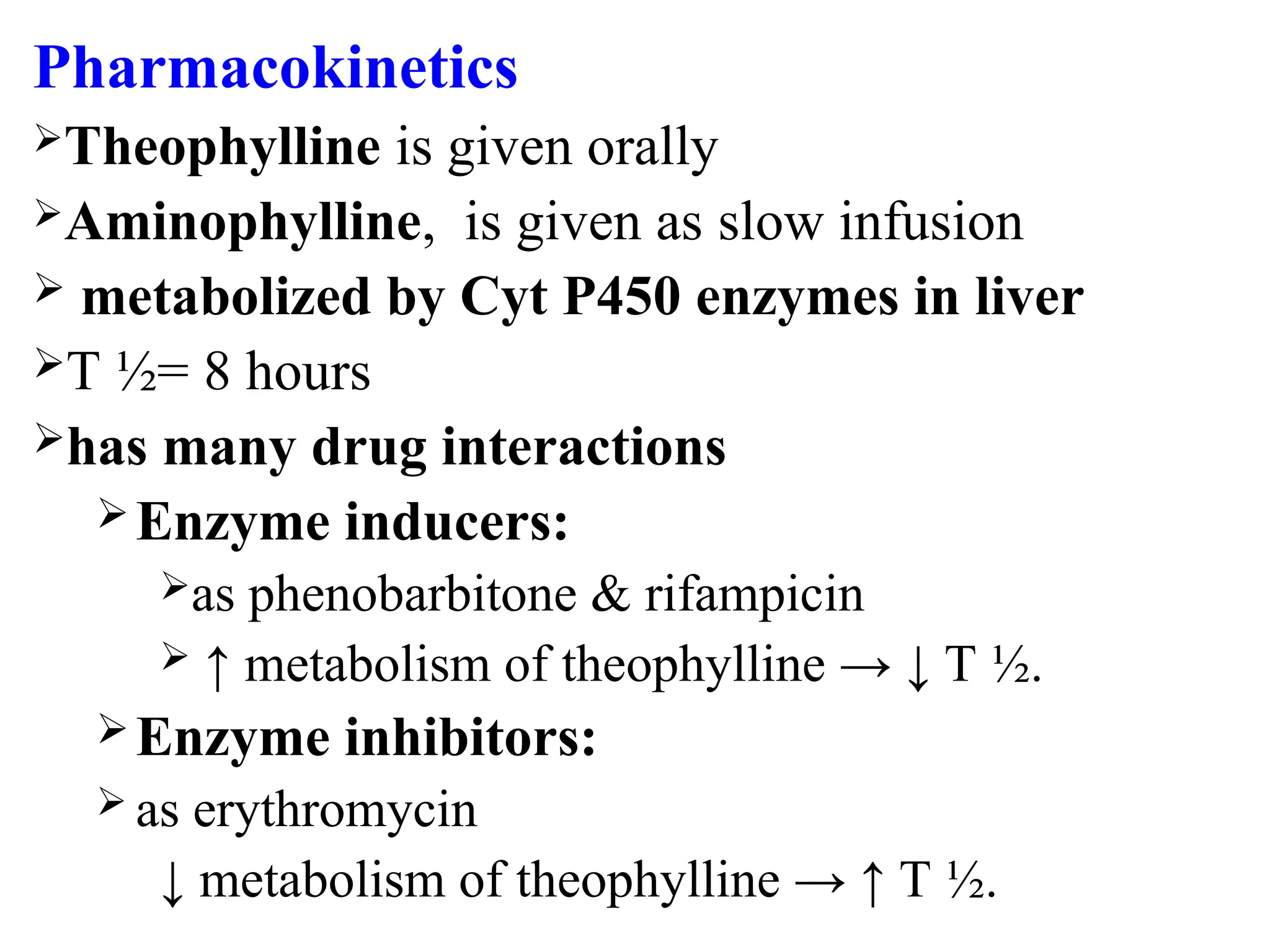
Pharmacokinetics
Theophylline is given orally
Aminophylline, is given as slow infusion
 metabolized by Cyt P450 enzymes in liver
T ½= 8 hours
has many drug interactions
Enzyme inducers:
as phenobarbitone & rifampicin
 ↑ metabolism of theophylline → ↓ T ½.
Enzyme inhibitors:
 as erythromycin
↓ metabolism of theophylline → ↑ T ½.
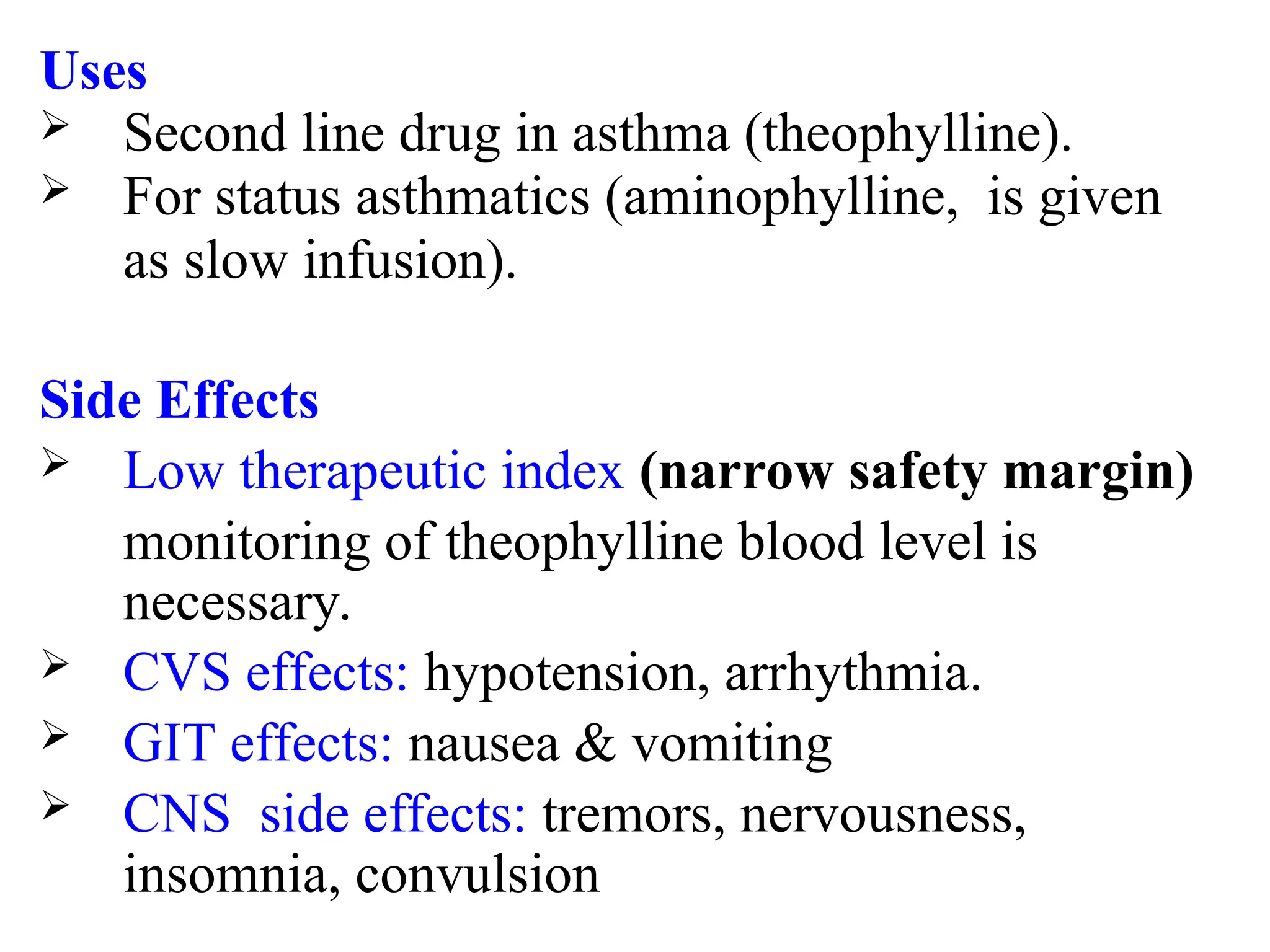
Uses
 Second line drug in asthma (theophylline).
 For status asthmatics (aminophylline, is given
as slow infusion).
Side Effects
 Low therapeutic index (narrow safety margin)
monitoring of theophylline blood level is
necessary.
 CVS effects: hypotension, arrhythmia.
 GIT effects: nausea & vomiting
 CNS side effects: tremors, nervousness,
insomnia, convulsion
Prophylactic therapy
Anti - inflammatory drugs include:
 Glucocorticoids to be discussed in (COPD)
 Leukotrienes antagonists
 Mast cell stabilizers
 Anti-IgE monoclonal antibody
e.g. omalizumab
Anti - inflammatory drugs:
(control medications / prophylactic therapy)
 ↓ bronchial hyper-reactivity.
 ↓ reduce inflammation of airways
 ↓ reduce the spasm of airways
Glucocorticoids
Mechanism of action
 Anti-inflammatory action due to:
 Inhibition of phospholipase A2
 ↓ prostaglandin and leukotrienes
 ↓ Number of inflammatory cells in airways.
 Mast cell stabilization →↓ histamine release.
 ↓ capillary permeability and mucosal edema.
 Inhibition of antigen-antibody reaction.
 Upregulate β2 receptors (have additive effect to B2
agonists).
Routes of administration
 Inhalation:
e.g. Budesonide & Fluticasone, beclometasone
– Given by inhalation (metered-dose inhaler).
– Have first pass metabolism
– Best choice in asthma, less side effects
 Orally: Prednisone, methyl prednisolone (for
acute asthma attack)
 Injection: Hydrocortisone, dexamethasone
Glucocorticoids in asthma
 Are not bronchodilators
 Reduce bronchial inflammation
 Reduce bronchial hyper-reactivity to stimuli
 Have delayed onset of action (effect usually
attained after 2-4 weeks).
 Maximum action at 9-12 months.
 Given as prophylactic medications, used alone or
combined with β2 agonists.
 Effective in allergic, exercise, antigen and irritant-
induced asthma,
Systemic corticosteroids are reserved for:
– Status asthmaticus (i.v.).
Inhalation has very less side effects:
– Oropharyngeal candidiasis (thrush).
– Dysphonia (voice hoarseness).
(to reduce these effects, Instruct patient to rinse
mouth properly after inhalation).
Withdrawal
– Abrupt stop of corticosteroids should be
avoided and dose should be tapered (to avoid
exacerbation of asthmatic attack and adrenal
insufficency).
Mast cell stabilizers
e.g. Cromoglycate – Nedocromil (not commonly
used)
 act by stabilization of mast cell membrane.
 given by inhalation (aerosol, nebulizer).
Have poor oral absorption (10%)
Pharmacodynamics
 are Not bronchodilators
 Not effective in acute attack of asthma.
 Prophylactic anti-inflammatory drug
 Reduce bronchial hyper-reactivity.
 Effective in exercise, antigen and irritant-induced
asthma.
 Children respond better than adults
Uses
 Prophylactic therapy in asthma especially in
children.
 Allergic rhinitis.
 Conjunctivitis.
Side effects
 Bitter taste
 minor upper respiratory tract irritation (burning
sensation, nasal congestion)
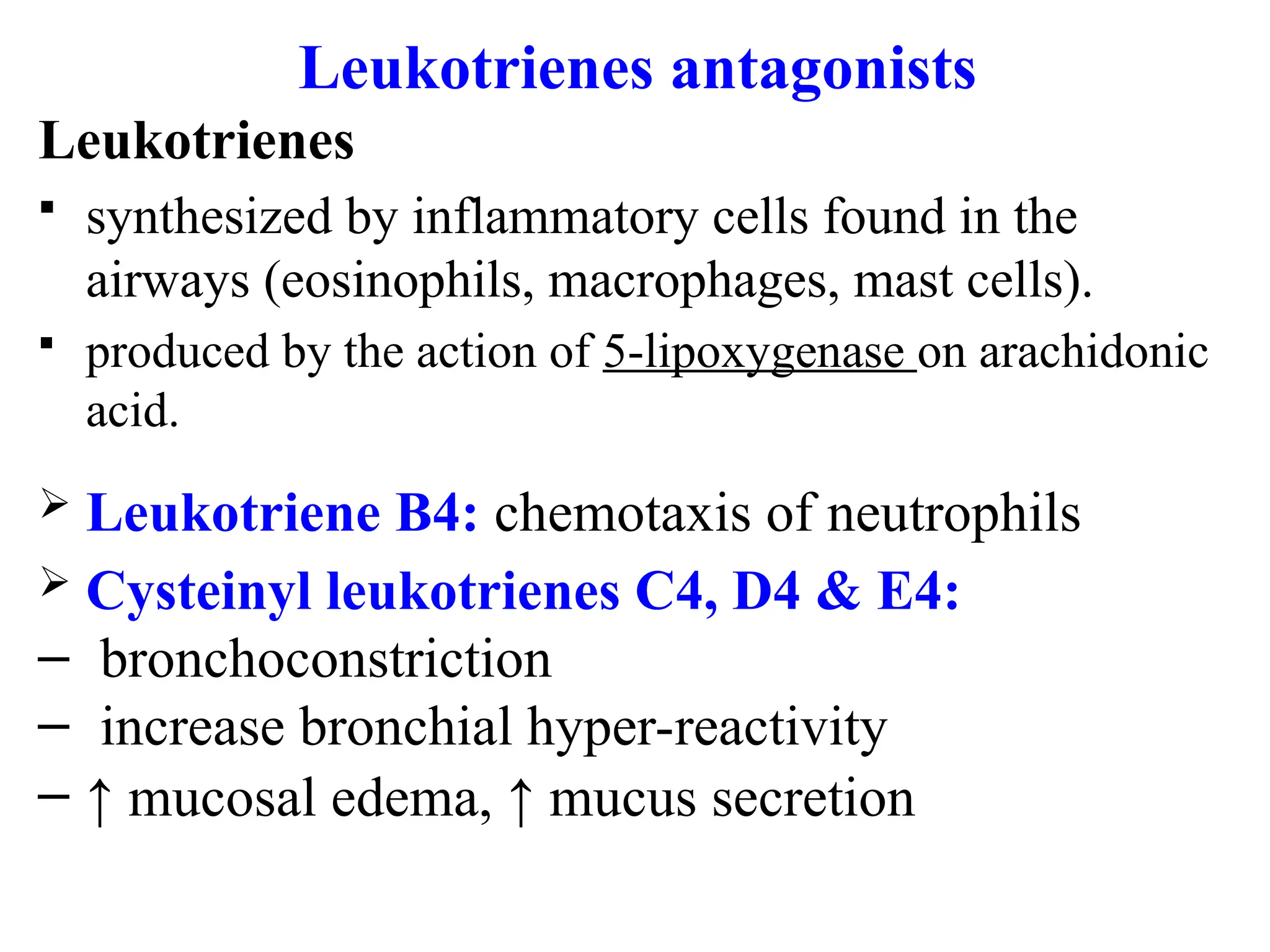
Leukotrienes antagonists
Leukotrienes
 synthesized by inflammatory cells found in the
airways (eosinophils, macrophages, mast cells).
 produced by the action of 5-lipoxygenase on arachidonic
acid.
 Leukotriene B4: chemotaxis of neutrophils
 Cysteinyl leukotrienes C4, D4 & E4:
– bronchoconstriction
– increase bronchial hyper-reactivity
– ↑ mucosal edema, ↑ mucus secretion
Leukotriene receptor antagonists
e.g. zafirlukast, montelukast, pranlukast
 are selective, reversible antagonists of cysteinyl
leukotriene receptors (CysLT1receptors).
 Taken orally.
 Are bronchodilators
 Have anti-inflammatory action
 Less effective than inhaled corticosteroids
 Have glucocorticoids sparing effect (potentiate
corticosteroid actions).
Uses of leukotriene receptor antagonists
 Not effective in acute attack of asthma.
 Prophylaxis of mild to moderate asthma.
 Aspirin-induced asthma
 Antigen and exercise-induced asthma
 Can be combined with glucocorticoids (additive
effects, low dose of glucocorticoids can be
used).
Side effects:
Elevation of liver enzymes, headache, dyspepsia
Anti-IgE monoclonal antibody
e.g. Omalizumab
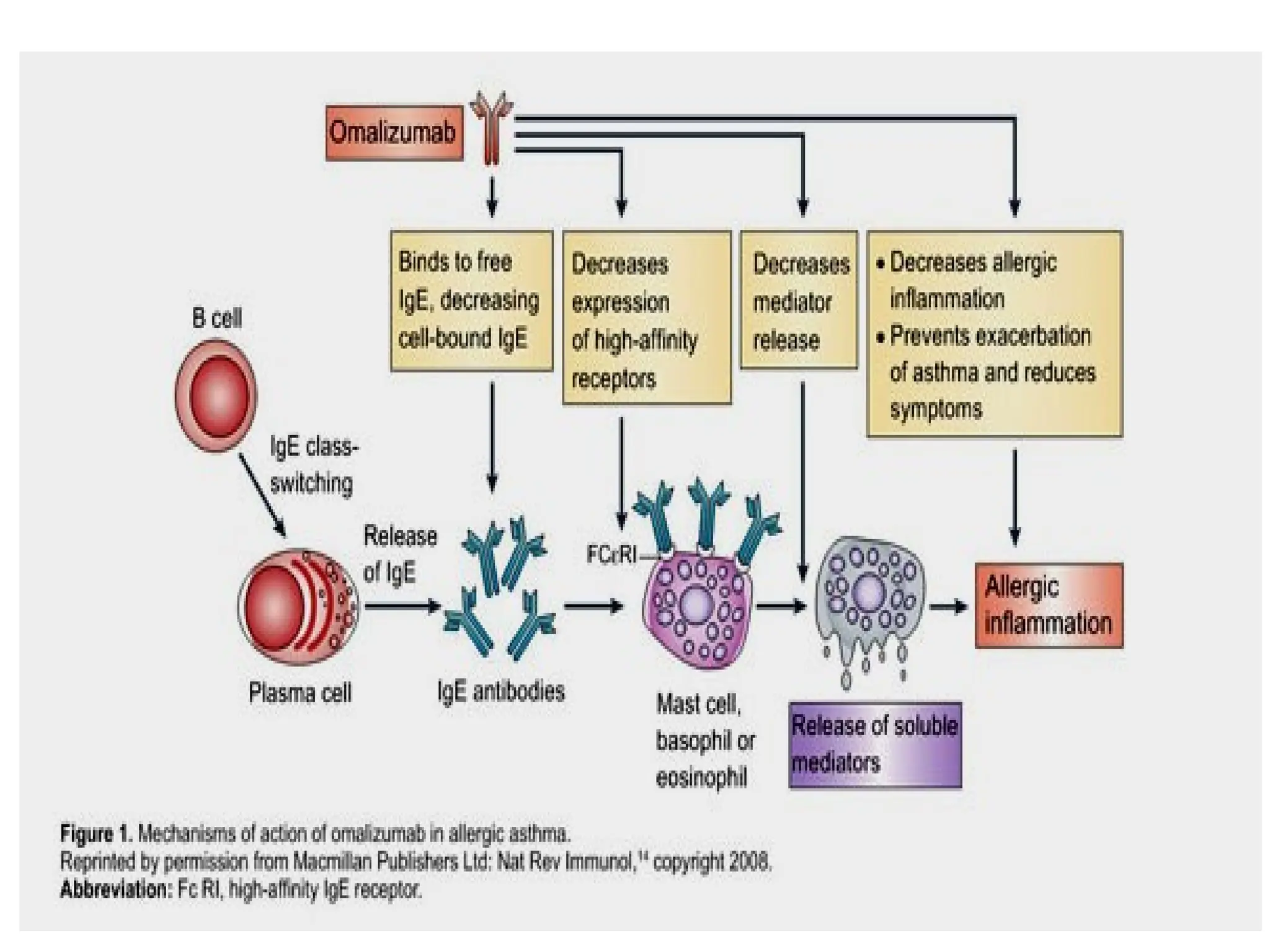
 is a monoclonal antibody directed against human
IgE – given by injection (s.c.)
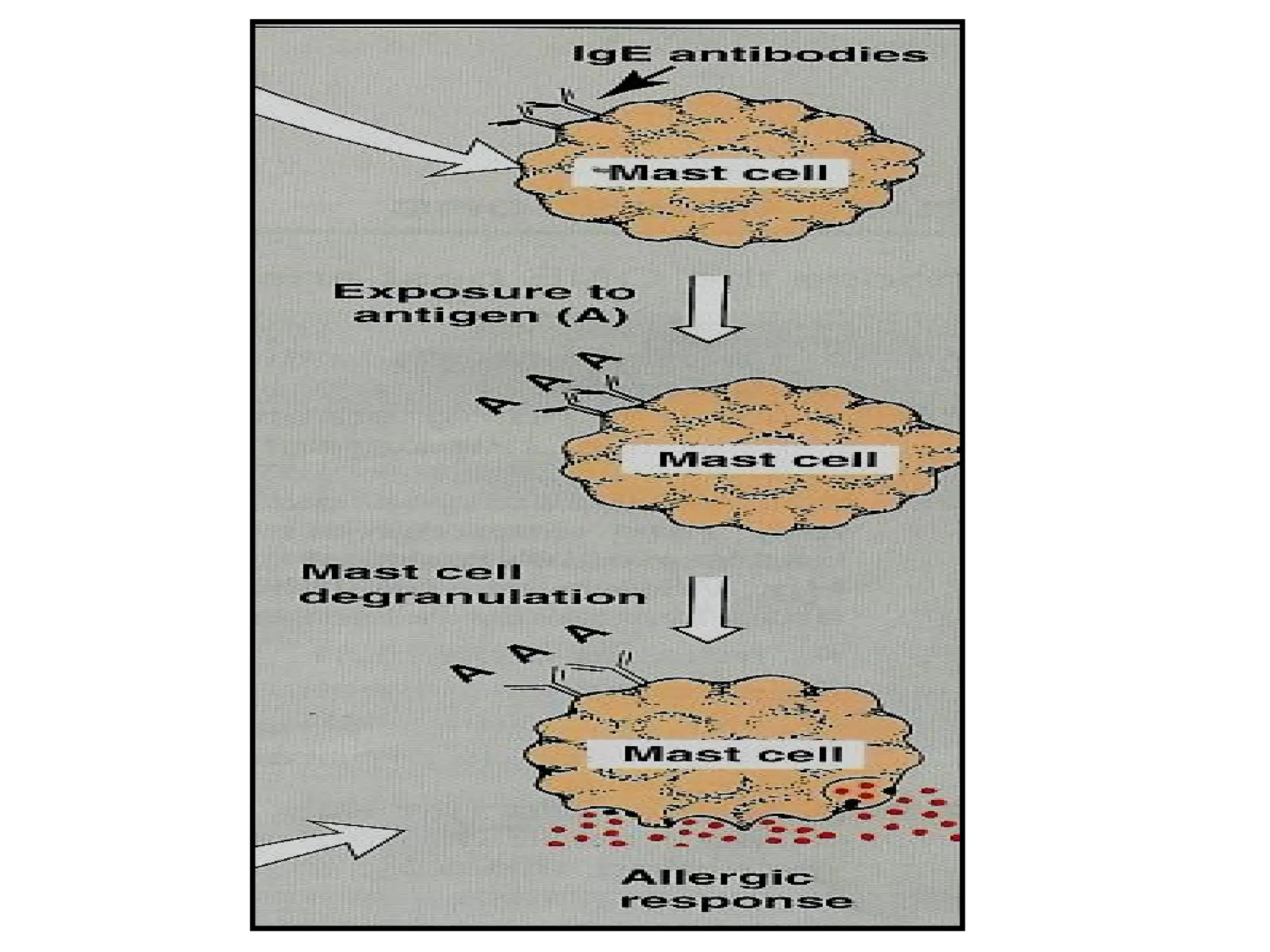
 prevents IgE binding with its receptors on mast
cells & basophiles.
 ↓ release of allergic mediators.
 Expensive-not first line therapy.
 used for treatment of moderate to severe allergic
asthma which does not respond to high doses
of corticosteroids.
• COPD NEXT

Drugs used in Asthma & COPD for class presentation.ppt

  • 1.
    Pharmacology of drugsused in bronchial asthma & COPD By Prof. Hanan Hagar Dr Ishfaq Bukhari
  • 2.
    ILOs: The studentsshould be able to 1. Different types of drugs used for treatment of asthma 2. Differentiate between treatment and prophylactic therapy for asthma 3. Recognize the different types of bronchodilators regarding pharmacokinetics, pharmacodynamics, uses and side effects. 4. Identify the different anti-inflammatory drugs for asthma in respect to kinetics, dynamics, uses and side effects.
  • 3.
    Bronchial Asthma Asthma isa chronic inflammatory disorder of bronchial airways that result in airway obstruction in response to external stimuli (as pollen grains, cold air and tobacco smoke).
  • 4.
    Characters of airwaysin asthmatic patients : Characters of airways in asthmatic patients :  Airway hyper-reactivity: Airway hyper-reactivity: abnormal sensitivity abnormal sensitivity of the airways to any external stimuli. of the airways to any external stimuli.  Inflammation Inflammation  ↑ ↑ edema, swelling edema, swelling  ↑ ↑ Thick mucus production. Thick mucus production.  Bronchospasm Bronchospasm (constriction of the bronchial (constriction of the bronchial smooth muscles). smooth muscles).
  • 5.
  • 6.
  • 7.
    Symptoms of asthma Asthmaproduces recurrent episodic attack of  Acute bronchoconstriction  Shortness of breath  Chest tightness  Wheezing  Rapid respiration  Cough Symptoms can happen each time the airways are irritated by inhaled irritants or allergens.
  • 8.
    Causes  Infection  Stress Exercise (cold air)  Pets  Seasonal changes  Emotional conditions  Some drugs as aspirin, β-bockers
  • 9.
    Asthma drug targets Parasympathetic supply M3 receptors in smooth muscles and glands.  Bronchoconstriction  Increase mucus secretion  No sympathetic supply but B2 receptors in smooth muscles and glands.  Bronchodilation  Decrease mucus secretion
  • 10.
    Anti asthmatic drugs : 1)Quick relief medications: Bronchodilators used to relieve acute episodic attacks of asthma. 2) Control therapy (prophylactic drugs): Glucocorticoids; anti-inflammatory drugs used to reduce the frequency of attacks, and nocturnal awakenings.
  • 11.
    Anti asthmatic drugs Bronchodilators (Quickrelief medications) treat acute attack of asthma • Short acting 2-agonists • Antimuscarinics • Xanthine preparations Anti-inflammatory Agents ( Prophylactic therapy ) reduce the frequency of attacks • Corticosteroids • Mast cell stabilizers • Leukotrienes antagonists • Anti-IgE monoclonal antibody • Long acting ß2-agonists
  • 12.
    Bronchodilators These drugs canproduce rapid relief of bronchoconstriction. Bronchodilators:  2 - adrenoreceptor agonists  Antimuscarinics  Xanthine preparations
  • 13.
    Sympathomimetics - adrenoceptor agonists Mechanismof Action  direct 2 stimulation  stimulate adenyl cyclase   cAMP  bronchodilation.  Increase mucus clearance by (increasing ciliary activity).  Stabilization of mast cell membrane.
  • 14.
    Classification of agonists  Non selective  agonists: epinephrine - isoprenaline  Selective 2 – agonists (Preferable). Salbutamol (albuterol) Terbutaline Salmeterol Formeterol
  • 15.
    Non selective -agonists. Epinephrine •Potent bronchodilator • Given subcutaneously, S.C. • rapid action (maximum effect within 15 min). • Has short duration of action (60-90 min) • Drug of choice for acute anaphylaxis (hypersensitivity reactions).
  • 16.
    Disadvantages  Not effectiveorally.  Hyperglycemia  Skeletal muscle tremor  CVS side effects: tachycardia, arrhythmia, hypertension  Not suitable for asthmatic patients with hypertension or heart failure. Contraindications: CVS patients, diabetic patients
  • 17.
    Selective 2 –agonists Are mainly given by inhalation by (metered dose inhaler or nebulizer).  Can be given orally, parenterally.  Short acting ß2 agonists e.g. salbutamol, terbutaline  Long acting ß2 agonists e.g. salmeterol, formoterol
  • 18.
  • 19.
    Short acting ß2agonists Salbutamol, inhalation, orally, i.v. Terbutaline, inhalation, orally, s.c.  Have rapid onset of action (15-30 min).  short duration of action (4-6 hr)  used for acute attack of asthma (drugs of choice).
  • 20.
    Long acting selectiveß2 agonists Salmeterol & formoterol  are given by inhalation  Long acting bronchodilators (12 hours) due to high lipid solubility (creates depot effect).  are not used to relieve acute episodes of asthma  used for nocturnal asthma.  combined with inhaled corticosteroids to control asthma (decreases the number and severity of asthma attacks).
  • 21.
    Advantages of ß2agonists  Minimal CVS side effects  suitable for asthmatic patients with CV disorders as hypertension or heart failure. Disadvantages of ß2 agonists  Skeletal muscle tremors.  Nervousness  Tolerance (β-receptors down regulation).  Overdose may produce tachycardia due to β1stimulation.
  • 22.
    Muscarinic antagonists Ipratropium –Tiotropium  Act by blocking muscarinic receptors .  given by aerosol inhalation  Have delayed onset of action.  Quaternary derivatives of atropine (polar).  Does not diffuse into the blood  Do not enter CNS.  Have minimal systemic side effects  Ipratropium has short duration of action 3-5 hr  Tiotropium has longer duration of action (24 h).
  • 23.
    Pharmacodynamics  Inhibit bronchoconstrictionand mucus secretion  Less effective than β2-agonists.  No anti-inflammatory action only bronchodilator Uses  Main choice in chronic obstructive pulmonary diseases (COPD).  In acute severe asthma combined with β2 agonists & corticosteroids.
  • 24.
    Methylxanthines  Theophylline -aminophylline Mechanism of Action  are phosphodiestrase inhibitors   cAMP  bronchodilation  Adenosine receptors antagonists (A1) (not very significant in asthma)  Increase diaphragmatic contraction  Stabilization of mast cell membrane
  • 25.
  • 26.
    Pharmacological effects : Bronchialmuscle relaxation contraction of diaphragm improve ventilation CVS: ↑ heart rate, ↑ force of contraction GIT: ↑ gastric acid secretions Kidney: ↑renal blood flow, weak diuretic action CNS stimulation * stimulant effect on respiratory center. * decrease fatigue & elevate mood. * overdose (tremors, nervousness, insomnia, convulsion)
  • 27.
    Pharmacokinetics Theophylline is givenorally Aminophylline, is given as slow infusion  metabolized by Cyt P450 enzymes in liver T ½= 8 hours has many drug interactions Enzyme inducers: as phenobarbitone & rifampicin  ↑ metabolism of theophylline → ↓ T ½. Enzyme inhibitors:  as erythromycin ↓ metabolism of theophylline → ↑ T ½.
  • 28.
    Uses  Second linedrug in asthma (theophylline).  For status asthmatics (aminophylline, is given as slow infusion). Side Effects  Low therapeutic index (narrow safety margin) monitoring of theophylline blood level is necessary.  CVS effects: hypotension, arrhythmia.  GIT effects: nausea & vomiting  CNS side effects: tremors, nervousness, insomnia, convulsion
  • 29.
    Prophylactic therapy Anti -inflammatory drugs include:  Glucocorticoids to be discussed in (COPD)  Leukotrienes antagonists  Mast cell stabilizers  Anti-IgE monoclonal antibody e.g. omalizumab
  • 30.
    Anti - inflammatorydrugs: (control medications / prophylactic therapy)  ↓ bronchial hyper-reactivity.  ↓ reduce inflammation of airways  ↓ reduce the spasm of airways
  • 31.
    Glucocorticoids Mechanism of action Anti-inflammatory action due to:  Inhibition of phospholipase A2  ↓ prostaglandin and leukotrienes  ↓ Number of inflammatory cells in airways.  Mast cell stabilization →↓ histamine release.  ↓ capillary permeability and mucosal edema.  Inhibition of antigen-antibody reaction.  Upregulate β2 receptors (have additive effect to B2 agonists).
  • 32.
    Routes of administration Inhalation: e.g. Budesonide & Fluticasone, beclometasone – Given by inhalation (metered-dose inhaler). – Have first pass metabolism – Best choice in asthma, less side effects  Orally: Prednisone, methyl prednisolone (for acute asthma attack)  Injection: Hydrocortisone, dexamethasone
  • 33.
    Glucocorticoids in asthma Are not bronchodilators  Reduce bronchial inflammation  Reduce bronchial hyper-reactivity to stimuli  Have delayed onset of action (effect usually attained after 2-4 weeks).  Maximum action at 9-12 months.  Given as prophylactic medications, used alone or combined with β2 agonists.  Effective in allergic, exercise, antigen and irritant- induced asthma,
  • 34.
    Systemic corticosteroids arereserved for: – Status asthmaticus (i.v.).
  • 35.
    Inhalation has veryless side effects: – Oropharyngeal candidiasis (thrush). – Dysphonia (voice hoarseness). (to reduce these effects, Instruct patient to rinse mouth properly after inhalation). Withdrawal – Abrupt stop of corticosteroids should be avoided and dose should be tapered (to avoid exacerbation of asthmatic attack and adrenal insufficency).
  • 36.
    Mast cell stabilizers e.g.Cromoglycate – Nedocromil (not commonly used)  act by stabilization of mast cell membrane.  given by inhalation (aerosol, nebulizer). Have poor oral absorption (10%)
  • 37.
    Pharmacodynamics  are Notbronchodilators  Not effective in acute attack of asthma.  Prophylactic anti-inflammatory drug  Reduce bronchial hyper-reactivity.  Effective in exercise, antigen and irritant-induced asthma.  Children respond better than adults
  • 38.
    Uses  Prophylactic therapyin asthma especially in children.  Allergic rhinitis.  Conjunctivitis. Side effects  Bitter taste  minor upper respiratory tract irritation (burning sensation, nasal congestion)
  • 39.
    Leukotrienes antagonists Leukotrienes  synthesizedby inflammatory cells found in the airways (eosinophils, macrophages, mast cells).  produced by the action of 5-lipoxygenase on arachidonic acid.  Leukotriene B4: chemotaxis of neutrophils  Cysteinyl leukotrienes C4, D4 & E4: – bronchoconstriction – increase bronchial hyper-reactivity – ↑ mucosal edema, ↑ mucus secretion
  • 40.
    Leukotriene receptor antagonists e.g.zafirlukast, montelukast, pranlukast  are selective, reversible antagonists of cysteinyl leukotriene receptors (CysLT1receptors).  Taken orally.  Are bronchodilators  Have anti-inflammatory action  Less effective than inhaled corticosteroids  Have glucocorticoids sparing effect (potentiate corticosteroid actions).
  • 41.
    Uses of leukotrienereceptor antagonists  Not effective in acute attack of asthma.  Prophylaxis of mild to moderate asthma.  Aspirin-induced asthma  Antigen and exercise-induced asthma  Can be combined with glucocorticoids (additive effects, low dose of glucocorticoids can be used). Side effects: Elevation of liver enzymes, headache, dyspepsia
  • 42.
    Anti-IgE monoclonal antibody e.g.Omalizumab  is a monoclonal antibody directed against human IgE – given by injection (s.c.)  prevents IgE binding with its receptors on mast cells & basophiles.  ↓ release of allergic mediators.  Expensive-not first line therapy.  used for treatment of moderate to severe allergic asthma which does not respond to high doses of corticosteroids.
  • 45.