Objectives 
 What is bronchial asthma? 
 Etiology 
 Pathophysiology of Asthma 
 Approaches to treatment 
 Phamacotherapy 
 Treatment plan 
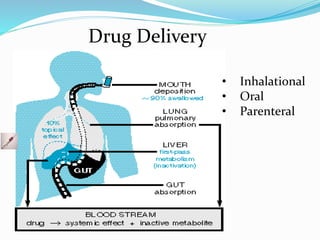
 Drug delivery 
 Status Asthmaticus
Bronchial Asthma 
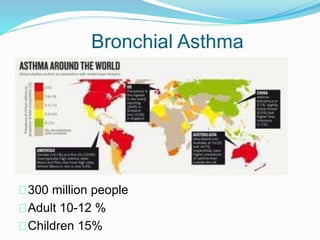
300 million people 
Adult 10-12 % 
Children 15%
Bronchial Asthma 
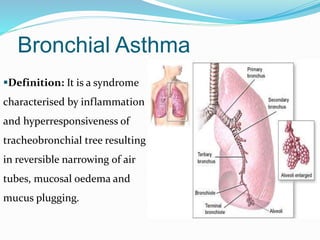
Definition: It is a syndrome 
characterised by inflammation 
and hyperresponsiveness of 
tracheobronchial tree resulting 
in reversible narrowing of air 
tubes, mucosal oedema and 
mucus plugging.
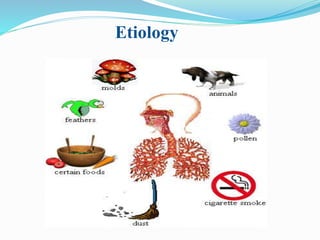
Etiology
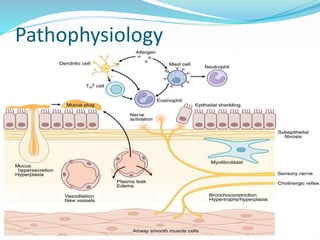
Pathophysiology
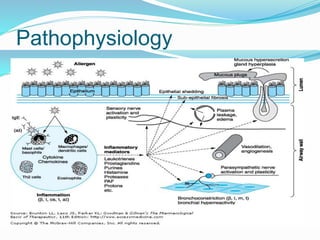
Pathophysiology
Signs & Symptoms 
 Dyspnoea 
 Wheezing 
 Cough 
 Limitation of activity
Approaches To Treatment 
Prevention of Ag : Ab reaction 
Neutralisation of IgE 
Suppression of inflammation and hyperreactivity 
Prevention of release of mediators 
Antagonism of released mediators 
Blockade of constrictor neurotransmittor 
Mimicking dilator neurotransmittor 
Directly acting bronchodilators
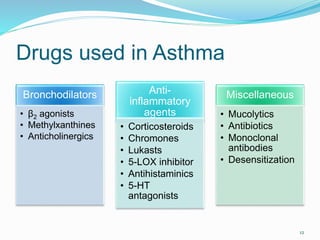
Drugs used in Asthma 
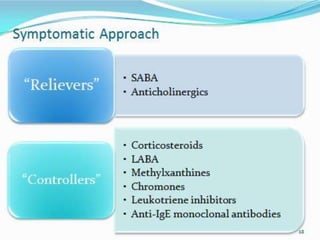
Bronchodilators 
• β2 agonists 
• Methylxanthines 
• Anticholinergics 
Anti-inflammatory 
agents 
• Corticosteroids 
• Chromones 
• Lukasts 
• 5-LOX inhibitor 
• Antihistaminics 
• 5-HT 
antagonists 
Miscellaneous 
• Mucolytics 
• Antibiotics 
• Monoclonal 
antibodies 
• Desensitization 
12
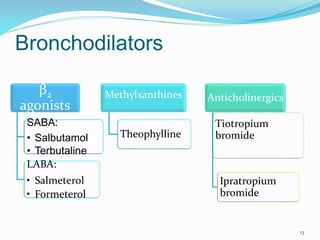
Bronchodilators 
β2 
agonists 
SABA: 
• Salbutamol 
• Terbutaline 
LABA: 
• Salmeterol 
• Formeterol 
Methylxanthines 
Theophylline 
Anticholinergics 
Tiotropium 
bromide 
Ipratropium 
bromide 
13
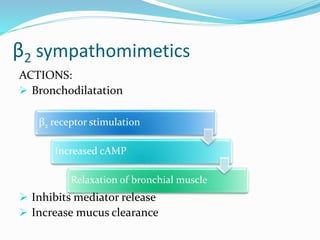
β2 sympathomimetics 
ACTIONS: 
 Bronchodilatation 
β2 receptor stimulation 
Increased cAMP 
Relaxation of bronchial muscle 
 Inhibits mediator release 
 Increase mucus clearance
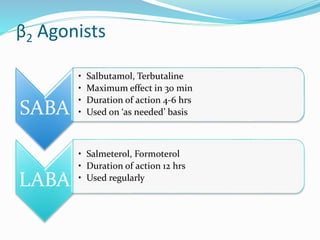
β2 Agonists 
SABA 
• Salbutamol, Terbutaline 
• Maximum effect in 30 min 
• Duration of action 4-6 hrs 
• Used on ‘as needed’ basis 
LABA 
• Salmeterol, Formoterol 
• Duration of action 12 hrs 
• Used regularly
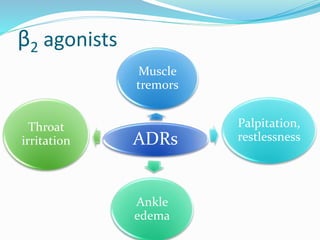
β2 agonists 
Muscle 
tremors 
ADRs 
Palpitation, 
restlessness 
Ankle 
edema 
Throat 
irritation
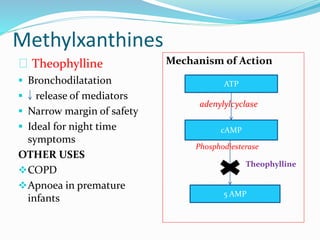
Methylxanthines 
Theophylline 
 Bronchodilatation 
 release of mediators 
 Narrow margin of safety 
 Ideal for night time 
symptoms 
OTHER USES 
COPD 
Apnoea in premature 
infants 
Mechanism of Action 
ATP 
adenylylcyclase 
cAMP 
Phosphodiesterase 
Theophylline 
5 AMP
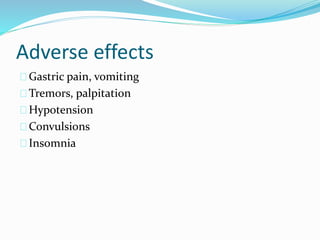
Adverse effects 
Gastric pain, vomiting 
Tremors, palpitation 
Hypotension 
Convulsions 
Insomnia
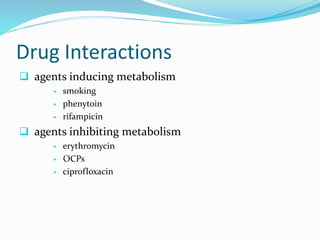
Drug Interactions 
 agents inducing metabolism 
 smoking 
 phenytoin 
 rifampicin 
 agents inhibiting metabolism 
 erythromycin 
 OCPs 
 ciprofloxacin
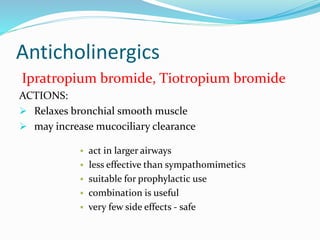
Anticholinergics 
Ipratropium bromide, Tiotropium bromide 
ACTIONS: 
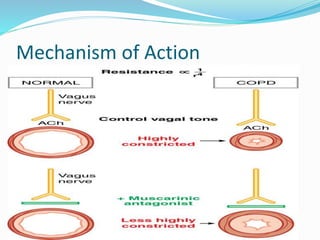
 Relaxes bronchial smooth muscle 
 may increase mucociliary clearance 
 act in larger airways 
 less effective than sympathomimetics 
 suitable for prophylactic use 
 combination is useful 
 very few side effects - safe
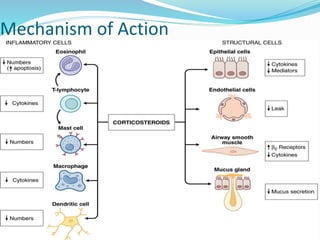
Mechanism of Action
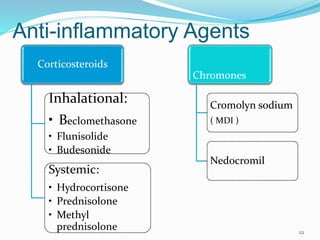
Anti-inflammatory Agents 
Corticosteroids 
Inhalational: 
• Beclomethasone 
• Flunisolide 
• Budesonide 
Systemic: 
• Hydrocortisone 
• Prednisolone 
• Methyl 
prednisolone 
Chromones 
Cromolyn sodium 
( MDI ) 
Nedocromil 
22
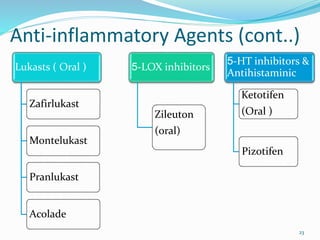
Anti-inflammatory Agents (cont..) 
5-HT inhibitors & 
Antihistaminic 
Ketotifen 
(Oral ) 
Pizotifen 
Lukasts ( Oral ) 
Zafirlukast 
Montelukast 
Pranlukast 
Acolade 
5-LOX inhibitors 
Zileuton 
(oral) 
23
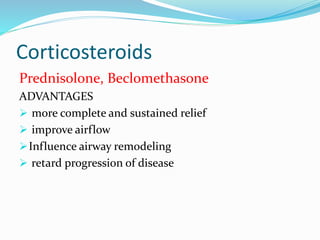
Corticosteroids 
Prednisolone, Beclomethasone 
ADVANTAGES 
 more complete and sustained relief 
 improve airflow 
Influence airway remodeling 
 retard progression of disease
Mechanism of Action
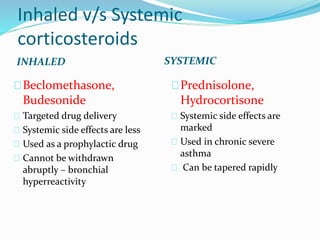
Inhaled v/s Systemic 
corticosteroids 
INHALED SYSTEMIC 
Beclomethasone, 
Budesonide 
Targeted drug delivery 
Systemic side effects are less 
Used as a prophylactic drug 
Cannot be withdrawn 
abruptly – bronchial 
hyperreactivity 
Prednisolone, 
Hydrocortisone 
Systemic side effects are 
marked 
Used in chronic severe 
asthma 
Can be tapered rapidly
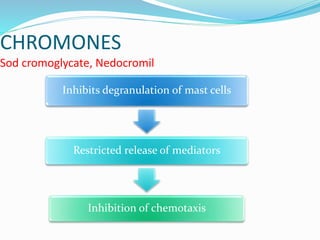
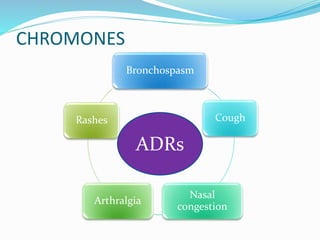
CHROMONES 
Sod cromoglycate, Nedocromil 
Inhibits degranulation of mast cells 
Restricted release of mediators 
Inhibition of chemotaxis
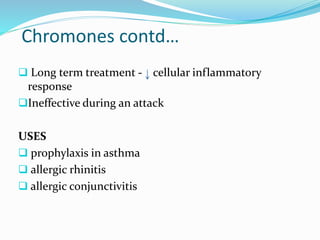
Chromones contd… 
 Long term treatment - cellular inflammatory 
response 
Ineffective during an attack 
USES 
 prophylaxis in asthma 
 allergic rhinitis 
 allergic conjunctivitis
CHROMONES 
Bronchospasm 
Cough 
Nasal 
ADRs 
congestion 
Rashes 
Arthralgia
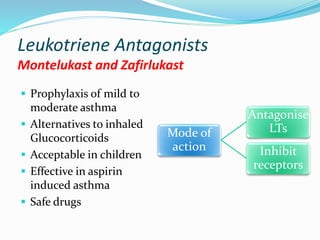
Leukotriene Antagonists 
Montelukast and Zafirlukast 
 Prophylaxis of mild to 
moderate asthma 
 Alternatives to inhaled 
Glucocorticoids 
 Acceptable in children 
 Effective in aspirin 
induced asthma 
 Safe drugs 
Mode of 
action 
Antagonise 
LTs 
Inhibit 
receptors
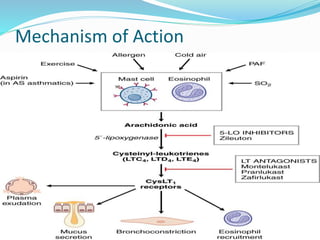
Mechanism of Action
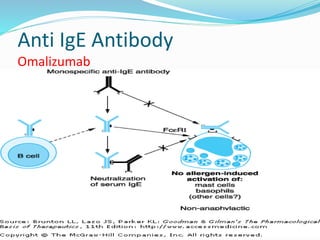
Anti IgE Antibody 
Omalizumab
• Inhalational 
• Oral 
• Parenteral 
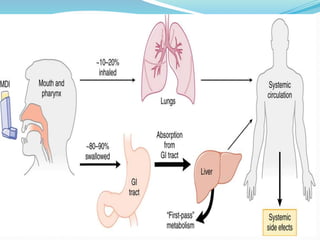
Drug Delivery
Inhalational Drug Delivery Systems 
MDI Dischalers Spacer 
Rotahalers Nebulizer 
37 
Green 
[Salmeterol] 
Orange 
[Fluticasone] 
Blue 
[SABA] 
Brown 
[budesonide]
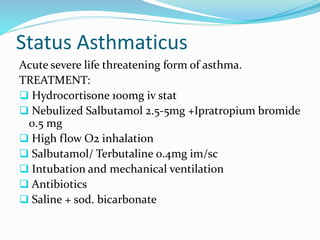
Status Asthmaticus 
Acute severe life threatening form of asthma. 
TREATMENT: 
 Hydrocortisone 100mg iv stat 
 Nebulized Salbutamol 2.5-5mg +Ipratropium bromide 
0.5 mg 
 High flow O2 inhalation 
 Salbutamol/ Terbutaline 0.4mg im/sc 
 Intubation and mechanical ventilation 
 Antibiotics 
 Saline + sod. bicarbonate
Bronchial asthma pharmacology

Bronchial asthma pharmacology

  • 3.
    Objectives  Whatis bronchial asthma?  Etiology  Pathophysiology of Asthma  Approaches to treatment  Phamacotherapy  Treatment plan  Drug delivery  Status Asthmaticus
  • 4.
    Bronchial Asthma 300million people Adult 10-12 % Children 15%
  • 5.
    Bronchial Asthma Definition:It is a syndrome characterised by inflammation and hyperresponsiveness of tracheobronchial tree resulting in reversible narrowing of air tubes, mucosal oedema and mucus plugging.
  • 6.
  • 7.
  • 8.
  • 10.
    Signs & Symptoms  Dyspnoea  Wheezing  Cough  Limitation of activity
  • 11.
    Approaches To Treatment Prevention of Ag : Ab reaction Neutralisation of IgE Suppression of inflammation and hyperreactivity Prevention of release of mediators Antagonism of released mediators Blockade of constrictor neurotransmittor Mimicking dilator neurotransmittor Directly acting bronchodilators
  • 12.
    Drugs used inAsthma Bronchodilators • β2 agonists • Methylxanthines • Anticholinergics Anti-inflammatory agents • Corticosteroids • Chromones • Lukasts • 5-LOX inhibitor • Antihistaminics • 5-HT antagonists Miscellaneous • Mucolytics • Antibiotics • Monoclonal antibodies • Desensitization 12
  • 13.
    Bronchodilators β2 agonists SABA: • Salbutamol • Terbutaline LABA: • Salmeterol • Formeterol Methylxanthines Theophylline Anticholinergics Tiotropium bromide Ipratropium bromide 13
  • 14.
    β2 sympathomimetics ACTIONS:  Bronchodilatation β2 receptor stimulation Increased cAMP Relaxation of bronchial muscle  Inhibits mediator release  Increase mucus clearance
  • 15.
    β2 Agonists SABA • Salbutamol, Terbutaline • Maximum effect in 30 min • Duration of action 4-6 hrs • Used on ‘as needed’ basis LABA • Salmeterol, Formoterol • Duration of action 12 hrs • Used regularly
  • 16.
    β2 agonists Muscle tremors ADRs Palpitation, restlessness Ankle edema Throat irritation
  • 17.
    Methylxanthines Theophylline Bronchodilatation  release of mediators  Narrow margin of safety  Ideal for night time symptoms OTHER USES COPD Apnoea in premature infants Mechanism of Action ATP adenylylcyclase cAMP Phosphodiesterase Theophylline 5 AMP
  • 18.
    Adverse effects Gastricpain, vomiting Tremors, palpitation Hypotension Convulsions Insomnia
  • 19.
    Drug Interactions agents inducing metabolism  smoking  phenytoin  rifampicin  agents inhibiting metabolism  erythromycin  OCPs  ciprofloxacin
  • 20.
    Anticholinergics Ipratropium bromide,Tiotropium bromide ACTIONS:  Relaxes bronchial smooth muscle  may increase mucociliary clearance  act in larger airways  less effective than sympathomimetics  suitable for prophylactic use  combination is useful  very few side effects - safe
  • 21.
  • 22.
    Anti-inflammatory Agents Corticosteroids Inhalational: • Beclomethasone • Flunisolide • Budesonide Systemic: • Hydrocortisone • Prednisolone • Methyl prednisolone Chromones Cromolyn sodium ( MDI ) Nedocromil 22
  • 23.
    Anti-inflammatory Agents (cont..) 5-HT inhibitors & Antihistaminic Ketotifen (Oral ) Pizotifen Lukasts ( Oral ) Zafirlukast Montelukast Pranlukast Acolade 5-LOX inhibitors Zileuton (oral) 23
  • 24.
    Corticosteroids Prednisolone, Beclomethasone ADVANTAGES  more complete and sustained relief  improve airflow Influence airway remodeling  retard progression of disease
  • 25.
  • 26.
    Inhaled v/s Systemic corticosteroids INHALED SYSTEMIC Beclomethasone, Budesonide Targeted drug delivery Systemic side effects are less Used as a prophylactic drug Cannot be withdrawn abruptly – bronchial hyperreactivity Prednisolone, Hydrocortisone Systemic side effects are marked Used in chronic severe asthma Can be tapered rapidly
  • 27.
    CHROMONES Sod cromoglycate,Nedocromil Inhibits degranulation of mast cells Restricted release of mediators Inhibition of chemotaxis
  • 28.
    Chromones contd… Long term treatment - cellular inflammatory response Ineffective during an attack USES  prophylaxis in asthma  allergic rhinitis  allergic conjunctivitis
  • 29.
    CHROMONES Bronchospasm Cough Nasal ADRs congestion Rashes Arthralgia
  • 30.
    Leukotriene Antagonists Montelukastand Zafirlukast  Prophylaxis of mild to moderate asthma  Alternatives to inhaled Glucocorticoids  Acceptable in children  Effective in aspirin induced asthma  Safe drugs Mode of action Antagonise LTs Inhibit receptors
  • 31.
  • 32.
    Anti IgE Antibody Omalizumab
  • 35.
    • Inhalational •Oral • Parenteral Drug Delivery
  • 37.
    Inhalational Drug DeliverySystems MDI Dischalers Spacer Rotahalers Nebulizer 37 Green [Salmeterol] Orange [Fluticasone] Blue [SABA] Brown [budesonide]
  • 38.
    Status Asthmaticus Acutesevere life threatening form of asthma. TREATMENT:  Hydrocortisone 100mg iv stat  Nebulized Salbutamol 2.5-5mg +Ipratropium bromide 0.5 mg  High flow O2 inhalation  Salbutamol/ Terbutaline 0.4mg im/sc  Intubation and mechanical ventilation  Antibiotics  Saline + sod. bicarbonate

Editor's Notes

  • #19 Gastric pain,Rectal inflammation,Pain at the site of i.m. injection, Precordial pain,Syncope,Sudden death