Learning Intention:
To become familiar with Aseptic Technique and to use
it to plate bacterial cultures.
Success Criteria:
1. I can organise my work area in a safe manner
taking into consideration the requirements for
sterility.
2. I can open and close bacterial culture tubes without
putting the lid down on the bench.
3. I can plate bacteria onto the agar without
damaging the agar.
4. I can apply the mastring
5. I am confident using Aseptic Technique
 Mastring
 Impregnated
 Reconstitute
 Plate (microbiological definition)
 Flame (microbiological definition)
 Nutrient agar
 Aseptic
 Incubation
Aseptic technique refers to a procedure that is
performed under sterile conditions. This
includes medical and laboratory techniques
which deal with cultures and human cells and
tissue for transplantation. The largest example
of aseptic techniques is in hospital operating
theatres. It is used to stop the spread of
infection.
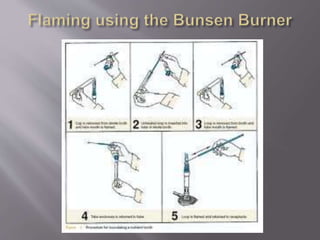
 Flame sterilization - metal loops used for picking up cultures , forceps
and the necks of glass/plastic reciprocals are flamed to prevent microbial
contamination.

Reducing the time in which microbial samples and sterilised instruments
have contact with the air

The use of an autoclave or pressure cooker to sterilise growth media and
broths and also non-metal/ glass instruments such as plastic spreaders
etc.

Ensuring your work space and yourself is cleaned with appropriate
cleaning substances and disinfectants.

The main aim is to prevent the contamination from you to your
environment and from the environment to you and therefore the possible
spread of the contaminant outside of the laboratory.
Horizontal laminar
flow cabinets pass
the filtered air across
the work and out
into the room.
 1. Work in groups of three. Each person plates
a different bacteria.
 2. Collect equipment: laboratory coat, gloves,
bunsen burner, matches, swabs x3, disinfectant,
disposable, 3 nutrient agar plates, marker,
masking tape, mastring, bacterial cultures to be
shared amongst class, beaker containing
disinfectant for used swabs, forceps.
 3. Disinfect your work area- working from back
to front.
 4. Arrange equipment as shown in demonstration.
 5. light Bunsen Burner and flame the top of the
bacterial culture tube. Remember to hold the cap
in your little finger. Do not put it down on the
bench.
 6. Insert the swab and soak up some of the
bacterial broth culture.
 7. Remove and reseal the tube with the lid.
 8. Still holding the swab, open the petri dish and
very gently spread the bacteria over the nutrient
agar as demonstrated.
 9. Close the petri dish lid and place the infected
swab into the beaker containing disinfectant.
 10. Flame the forceps and carefully pick up a
mastring at the white tab part only.
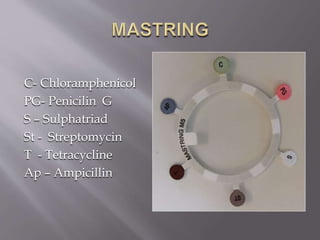
C- Chloramphenicol
PG- Penicilin G
S – Sulphatriad
St - Streptomycin
T - Tetracycline
Ap – Ampicillin
 11. Ensure all the disks are in contact with the agar
by gently tapping only the white spaces on the
disc.
 12. Close the petri dish lid.
 13. Flame the forceps.
 14 Label the petri dish with your initials, the name
of the bacteria, incubation time (48hrs), incubation
temperature (30o), and date.
 15. Seal plate with masking tape.
 16. Place all plates at the front of the class.
 17. pack away equipment.
 18. Disinfectant your work area.
 19. Wash your hands with soap and water.
E Coli –Escherichia coli
Staph Albus - Staphylococcus albus
B Subtilis -Bacillius subtilis
 Nomenclature of bacteria refers to naming bacteria and other
organisms according to the binomial system, which was
introduced by Carl Linnaeus (1674-1748).
 A bacterium has a species name, composed of a genus name that
tells you to which genus it belongs and a species epithet which,
together with the genus name, is unique to the bacterium.
 An example is Moraxella bovis, where the genus name indicates
that the bacterium belongs to the genus Moraxella and the species
name indicates that the bacterium has been isolated from cattle.
 The genus name and the species epithet form the scientific name
of the species, which is always written in italics, with a capital
letter starting the Genus name only. The species name is always
written in lower case.
 1. What is a control and what is it used for?
 2. Why are the cultures incubated at 30o and
 not 37o?
 3. Why is it important not to touch the
 coloured discs?
 4. What is the purpose of flaming the culture
 tube before and after insertion of the swab?
 5. Why should there be minimal talking and
 moving around whilst performing this
 experiment?
 6. Describe how the plates should be disposed
 of and why?
Review
- 3 things I have learnt today……….
- 2 new words I can add to my Biology vocabulary
list and there meaning……………………
- My understanding of aseptic technique is …….

Using Aseptic Technique to identify the effect of antibiotics on 3 strains of Bacteria - It's use and procedure- Year 12 Biology 2014

  • 1.
    Learning Intention: To becomefamiliar with Aseptic Technique and to use it to plate bacterial cultures. Success Criteria: 1. I can organise my work area in a safe manner taking into consideration the requirements for sterility. 2. I can open and close bacterial culture tubes without putting the lid down on the bench. 3. I can plate bacteria onto the agar without damaging the agar. 4. I can apply the mastring 5. I am confident using Aseptic Technique
  • 2.
     Mastring  Impregnated Reconstitute  Plate (microbiological definition)  Flame (microbiological definition)  Nutrient agar  Aseptic  Incubation
  • 3.
    Aseptic technique refersto a procedure that is performed under sterile conditions. This includes medical and laboratory techniques which deal with cultures and human cells and tissue for transplantation. The largest example of aseptic techniques is in hospital operating theatres. It is used to stop the spread of infection.
  • 4.
     Flame sterilization- metal loops used for picking up cultures , forceps and the necks of glass/plastic reciprocals are flamed to prevent microbial contamination.  Reducing the time in which microbial samples and sterilised instruments have contact with the air  The use of an autoclave or pressure cooker to sterilise growth media and broths and also non-metal/ glass instruments such as plastic spreaders etc.  Ensuring your work space and yourself is cleaned with appropriate cleaning substances and disinfectants.  The main aim is to prevent the contamination from you to your environment and from the environment to you and therefore the possible spread of the contaminant outside of the laboratory.
  • 7.
    Horizontal laminar flow cabinetspass the filtered air across the work and out into the room.
  • 8.
     1. Workin groups of three. Each person plates a different bacteria.  2. Collect equipment: laboratory coat, gloves, bunsen burner, matches, swabs x3, disinfectant, disposable, 3 nutrient agar plates, marker, masking tape, mastring, bacterial cultures to be shared amongst class, beaker containing disinfectant for used swabs, forceps.  3. Disinfect your work area- working from back to front.
  • 9.
     4. Arrangeequipment as shown in demonstration.  5. light Bunsen Burner and flame the top of the bacterial culture tube. Remember to hold the cap in your little finger. Do not put it down on the bench.  6. Insert the swab and soak up some of the bacterial broth culture.  7. Remove and reseal the tube with the lid.  8. Still holding the swab, open the petri dish and very gently spread the bacteria over the nutrient agar as demonstrated.  9. Close the petri dish lid and place the infected swab into the beaker containing disinfectant.  10. Flame the forceps and carefully pick up a mastring at the white tab part only.
  • 10.
    C- Chloramphenicol PG- PenicilinG S – Sulphatriad St - Streptomycin T - Tetracycline Ap – Ampicillin
  • 11.
     11. Ensureall the disks are in contact with the agar by gently tapping only the white spaces on the disc.  12. Close the petri dish lid.  13. Flame the forceps.  14 Label the petri dish with your initials, the name of the bacteria, incubation time (48hrs), incubation temperature (30o), and date.  15. Seal plate with masking tape.  16. Place all plates at the front of the class.  17. pack away equipment.  18. Disinfectant your work area.  19. Wash your hands with soap and water.
  • 12.
    E Coli –Escherichiacoli Staph Albus - Staphylococcus albus B Subtilis -Bacillius subtilis
  • 13.
     Nomenclature ofbacteria refers to naming bacteria and other organisms according to the binomial system, which was introduced by Carl Linnaeus (1674-1748).  A bacterium has a species name, composed of a genus name that tells you to which genus it belongs and a species epithet which, together with the genus name, is unique to the bacterium.  An example is Moraxella bovis, where the genus name indicates that the bacterium belongs to the genus Moraxella and the species name indicates that the bacterium has been isolated from cattle.  The genus name and the species epithet form the scientific name of the species, which is always written in italics, with a capital letter starting the Genus name only. The species name is always written in lower case.
  • 14.
     1. Whatis a control and what is it used for?  2. Why are the cultures incubated at 30o and  not 37o?  3. Why is it important not to touch the  coloured discs?  4. What is the purpose of flaming the culture  tube before and after insertion of the swab?  5. Why should there be minimal talking and  moving around whilst performing this  experiment?  6. Describe how the plates should be disposed  of and why?
  • 15.
    Review - 3 thingsI have learnt today………. - 2 new words I can add to my Biology vocabulary list and there meaning…………………… - My understanding of aseptic technique is …….