 Composition of glassware:-
 Laboratory glassware is usually manufactured from
borosilicate glass. It is resistant to the action of
chemicals with the exception of hydrofluoric acid.
 It is made up withstand mechanical breakage and
a sudden change of temp. the main components of
borosilicate glass are:-
 Silica:-80.6%
 Boric oxide:-12.6%
 Sodium oxide:-4.15%
 Aluminium oxide :2.2%
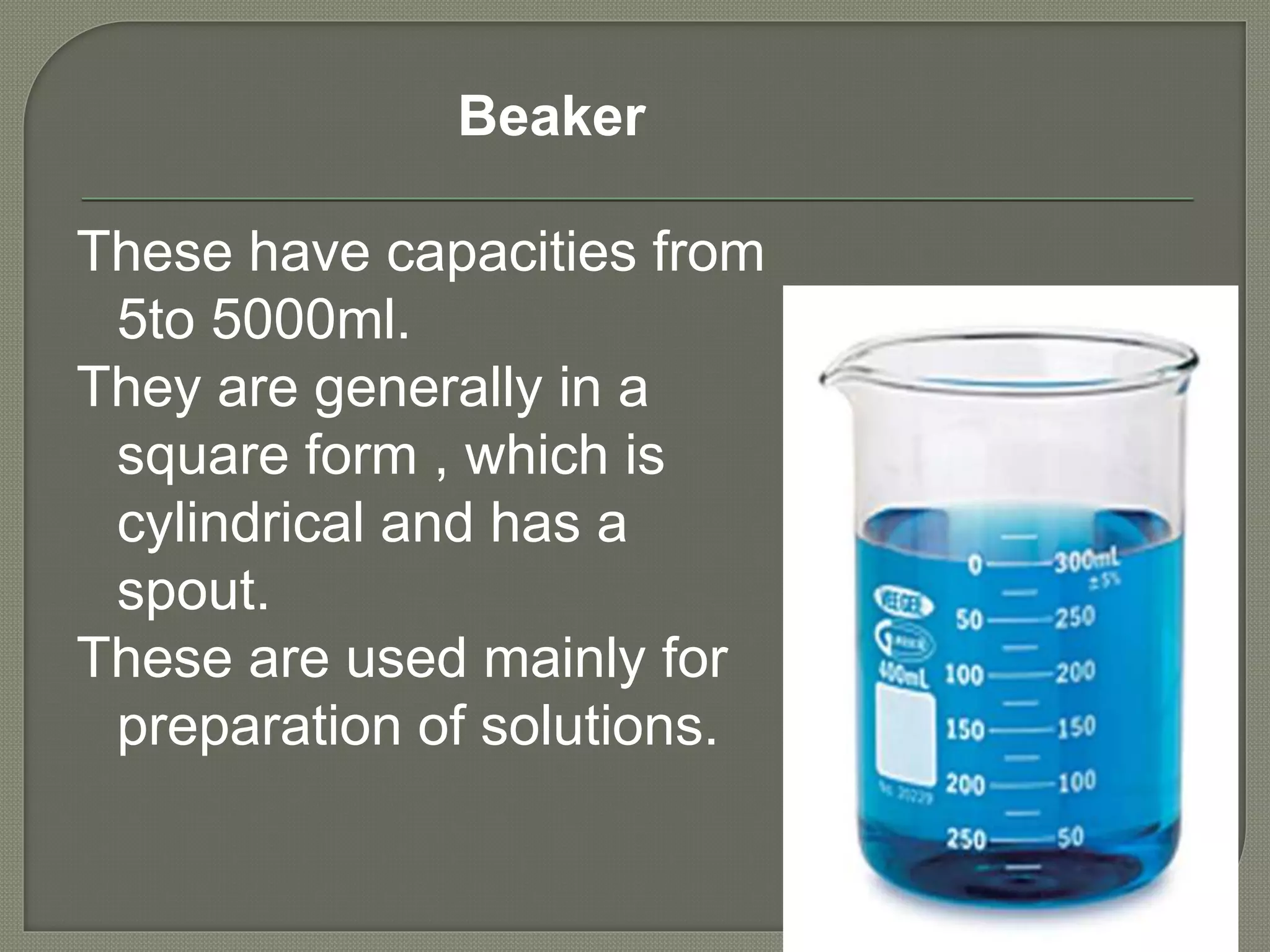
Beaker
These have capacities from
5to 5000ml.
They are generally in a
square form , which is
cylindrical and has a
spout.
These are used mainly for
preparation of solutions.
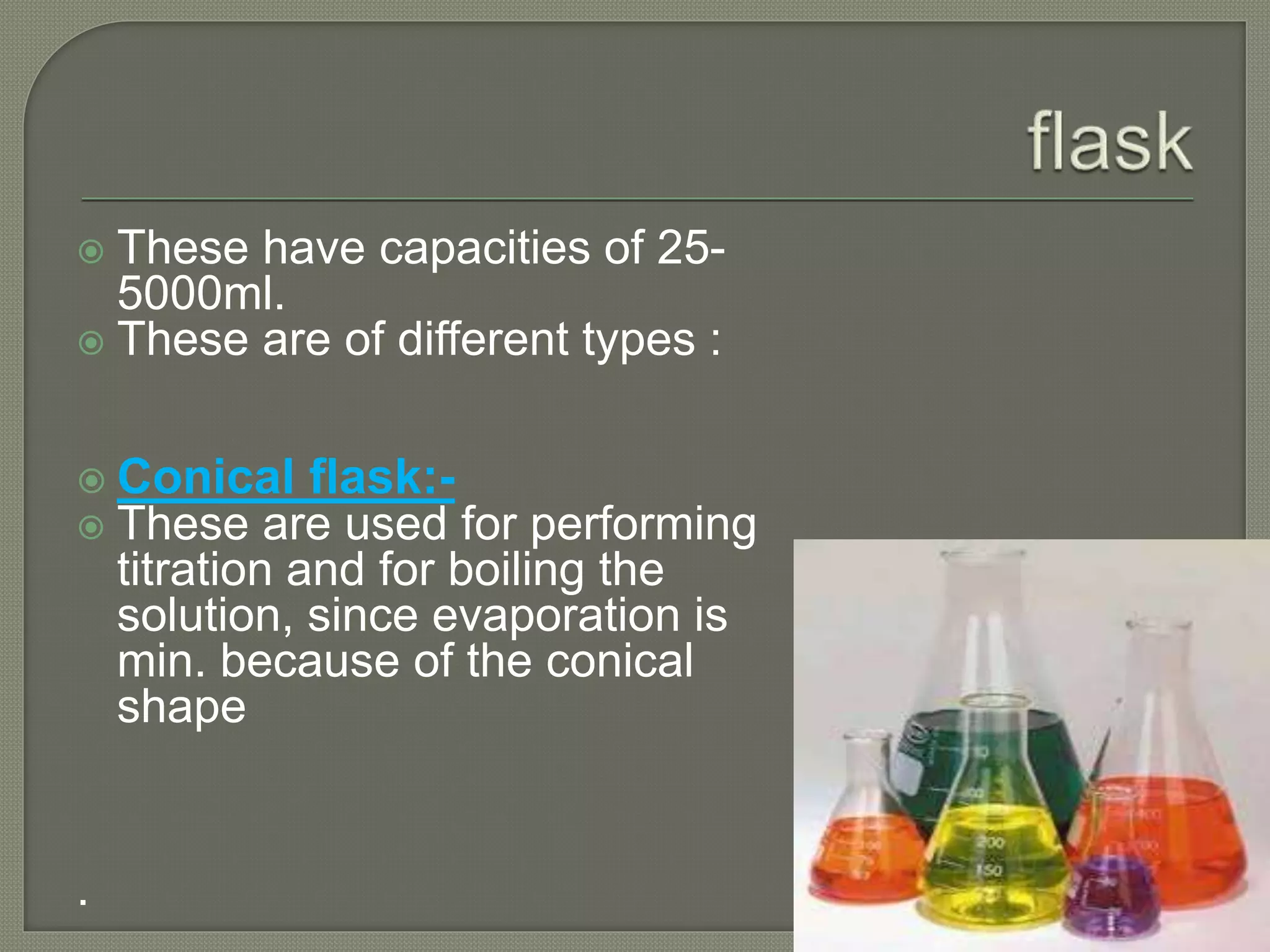
 These have capacities of 25-
5000ml.
 These are of different types :
 Conical flask:-
 These are used for performing
titration and for boiling the
solution, since evaporation is
min. because of the conical
shape
.
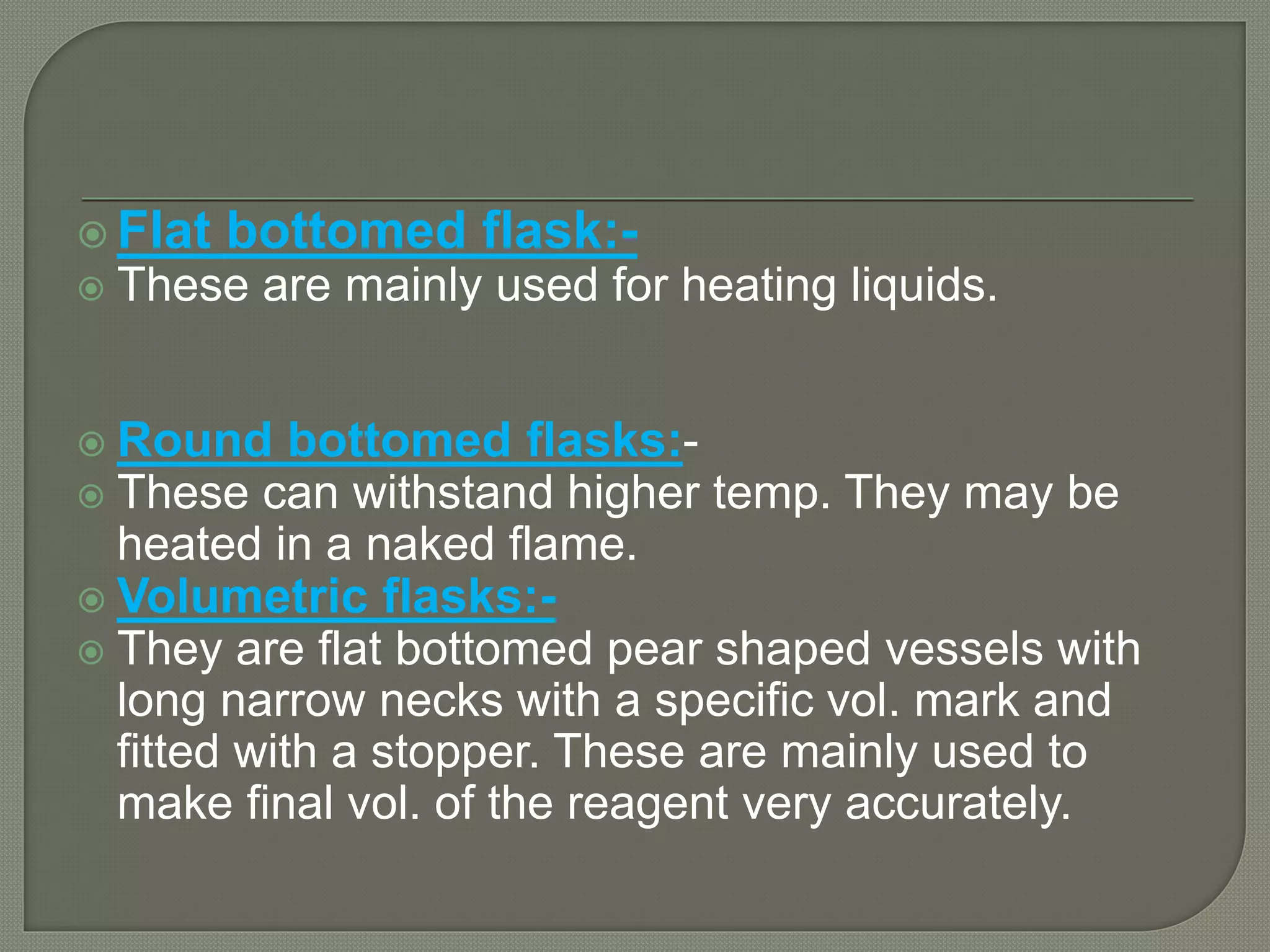
 Flat bottomed flask:-
 These are mainly used for heating liquids.
 Round bottomed flasks:-
 These can withstand higher temp. They may be
heated in a naked flame.
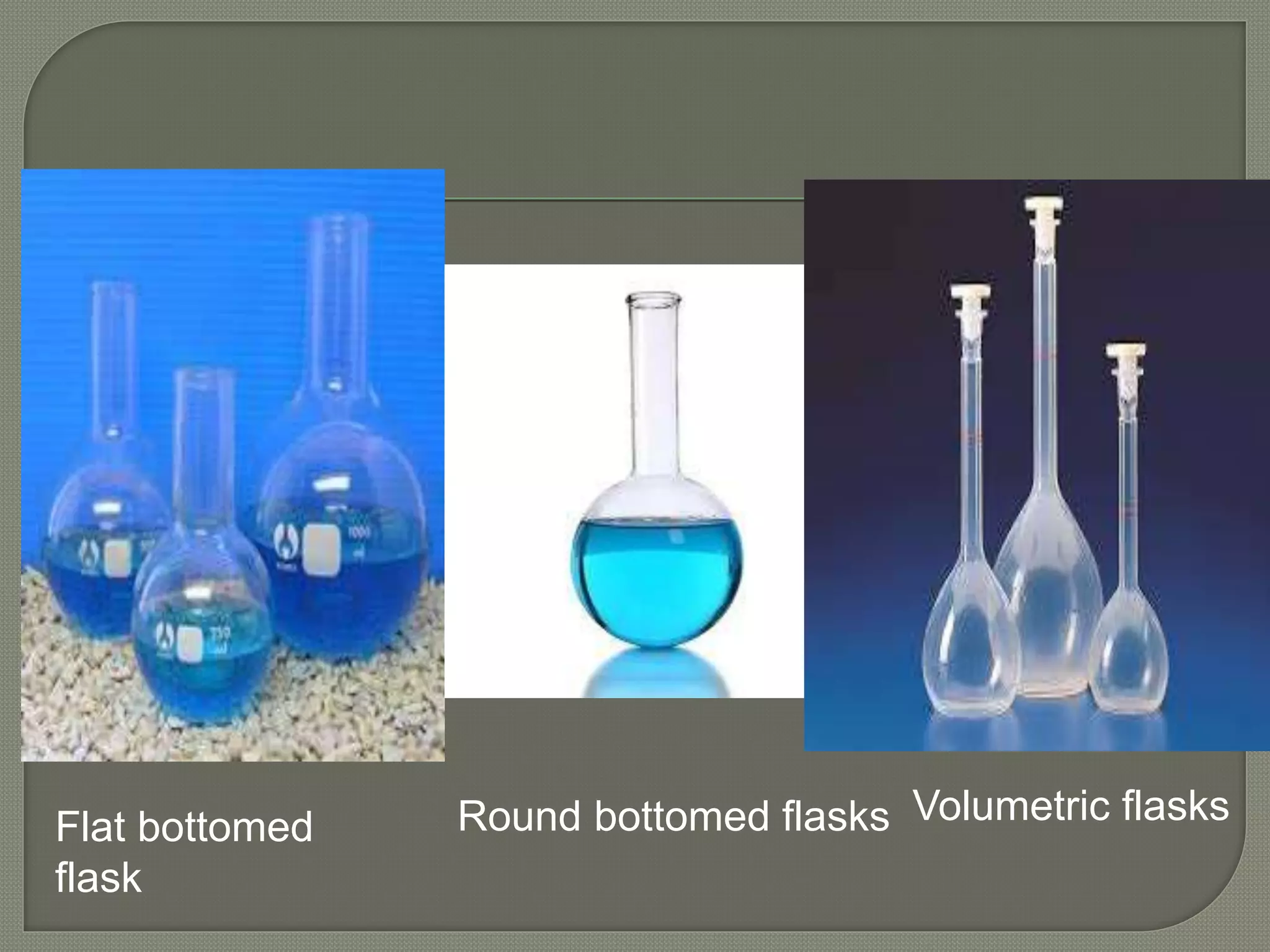
 Volumetric flasks:-
 They are flat bottomed pear shaped vessels with
long narrow necks with a specific vol. mark and
fitted with a stopper. These are mainly used to
make final vol. of the reagent very accurately.
Flat bottomed
flask
Round bottomed flasks Volumetric flasks
They are available in 10-
2000ml.
They are used to measure
quantity of the liquid. A
high degree of accuracy is
not possible because of
wide bore.
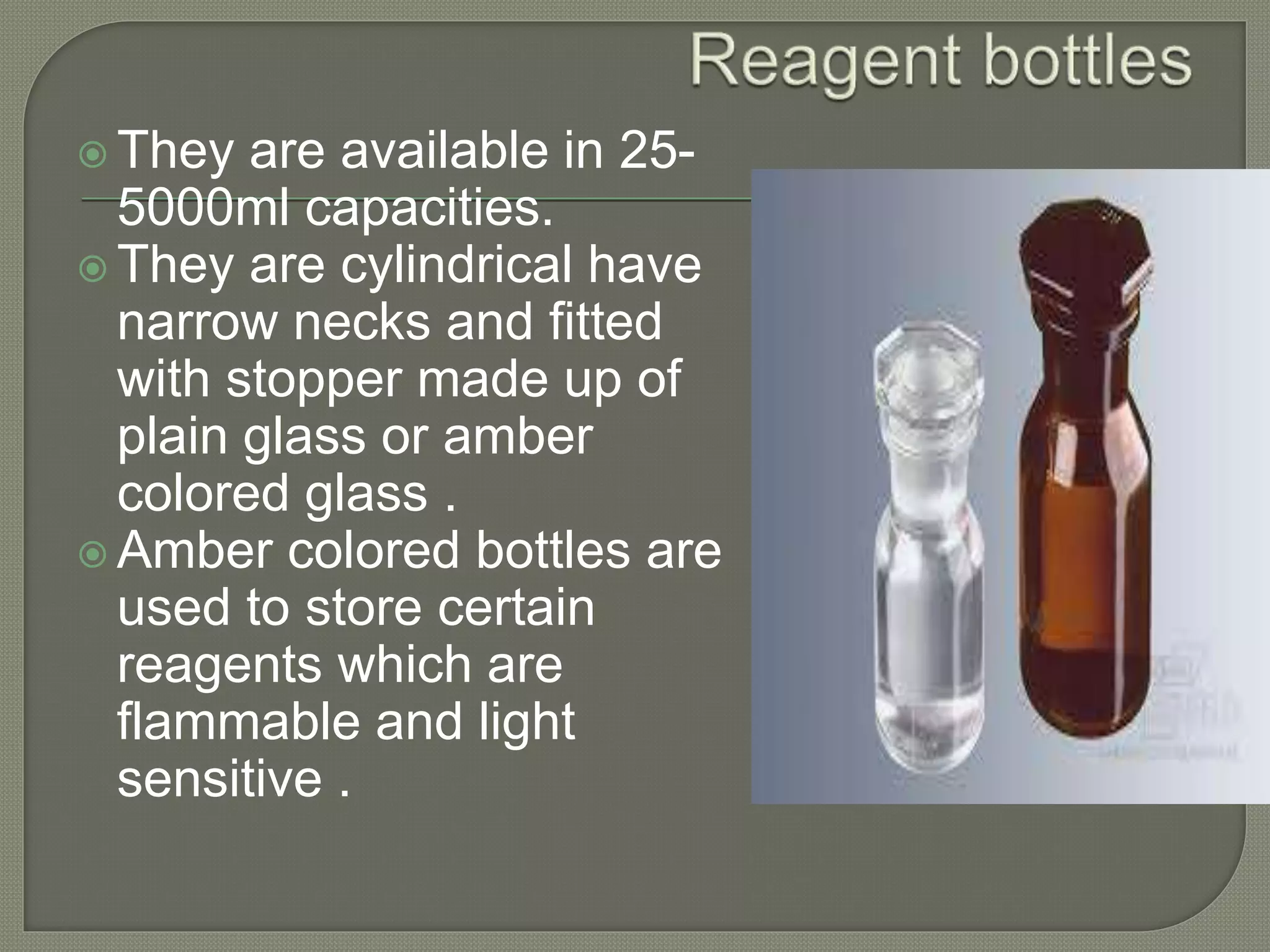
 They are available in 25-
5000ml capacities.
 They are cylindrical have
narrow necks and fitted
with stopper made up of
plain glass or amber
colored glass .
 Amber colored bottles are
used to store certain
reagents which are
flammable and light
sensitive .
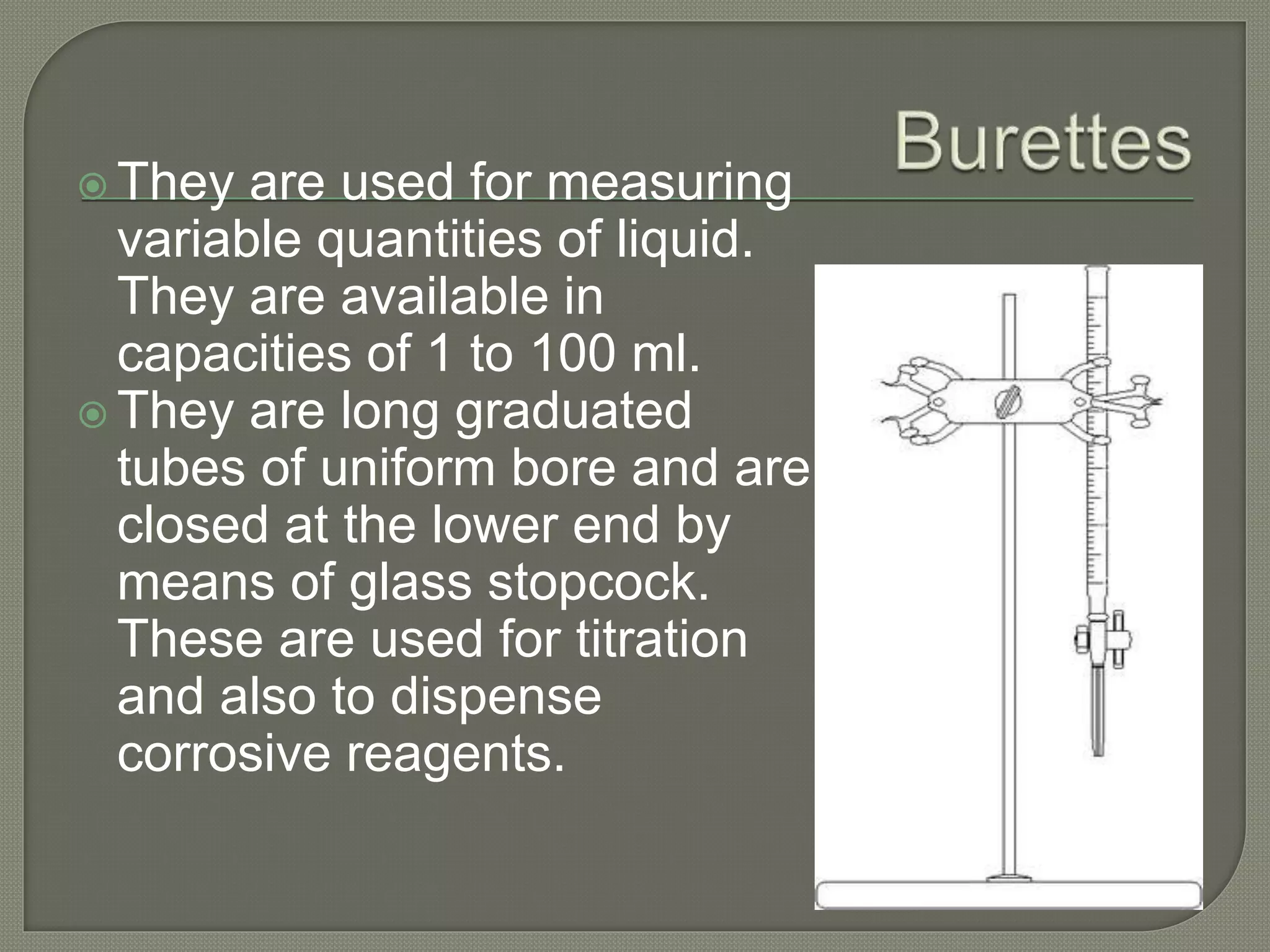
 They are used for measuring
variable quantities of liquid.
They are available in
capacities of 1 to 100 ml.
 They are long graduated
tubes of uniform bore and are
closed at the lower end by
means of glass stopcock.
These are used for titration
and also to dispense
corrosive reagents.
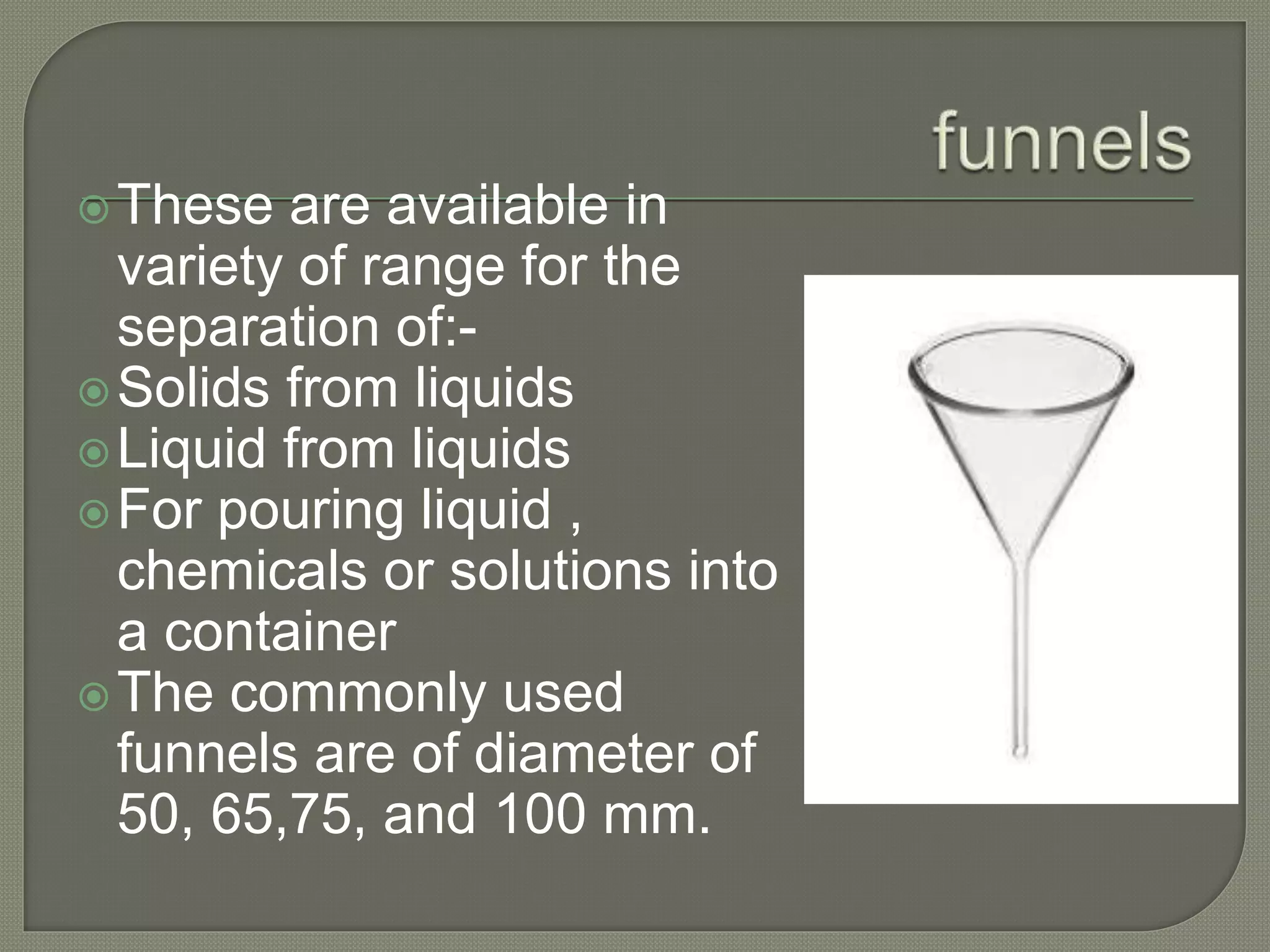
These are available in
variety of range for the
separation of:-
Solids from liquids
Liquid from liquids
For pouring liquid ,
chemicals or solutions into
a container
The commonly used
funnels are of diameter of
50, 65,75, and 100 mm.
 These are of uniform
thickness & withstand
mechanical & thermal
shocks. Tubes with rim are
preferred when reagent in a
tube is directly heated on the
flame with test tube holder.
 The commonly used test tube
in biochemistry is 15×125
mm
These are used for dispensing controlled
quantities of liquids and are classified as:-
Graduated pipettes
 Serological
 Mohar
Volumetric pipettes
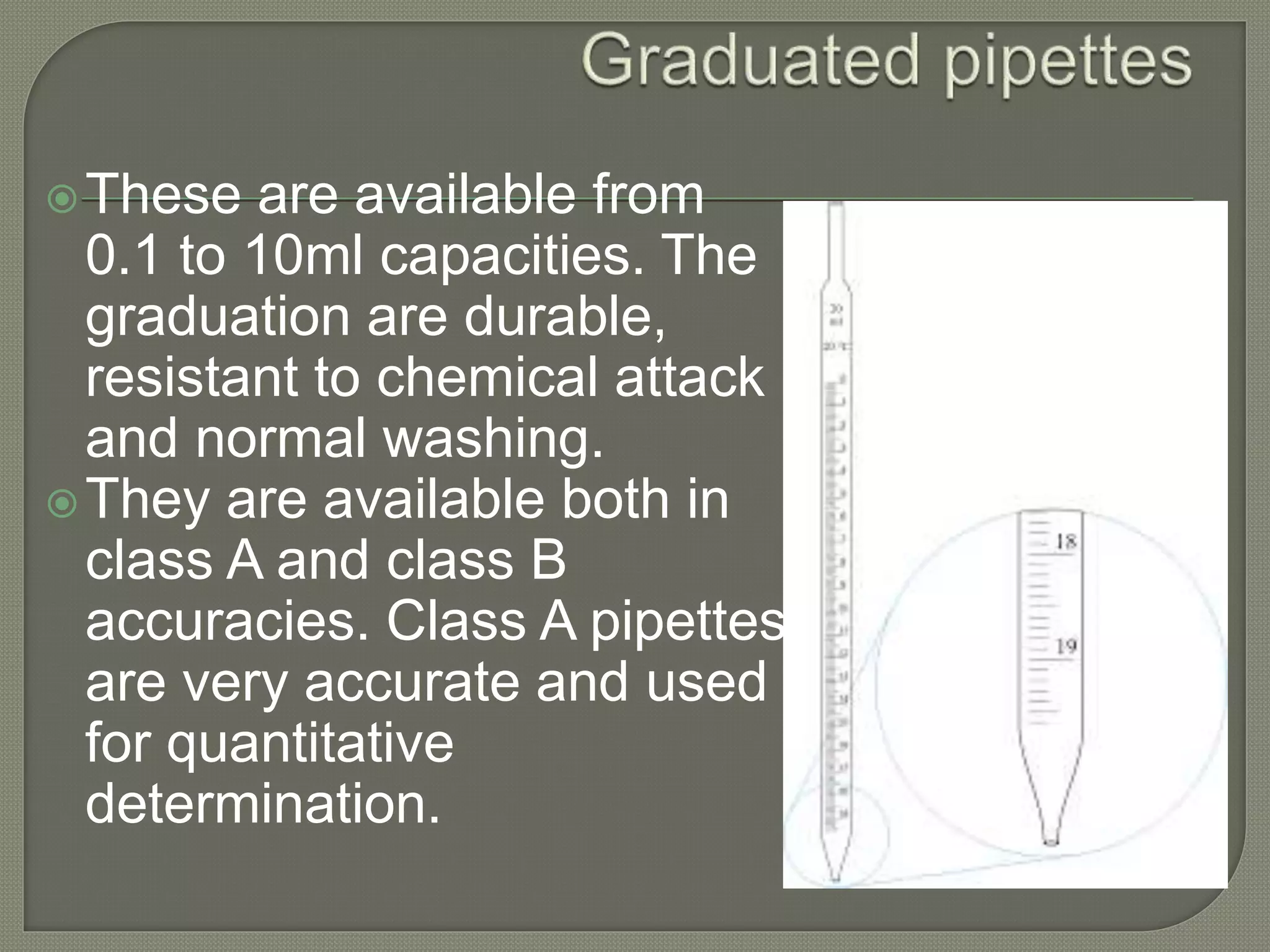
These are available from
0.1 to 10ml capacities. The
graduation are durable,
resistant to chemical attack
and normal washing.
They are available both in
class A and class B
accuracies. Class A pipettes
are very accurate and used
for quantitative
determination.
These are graduated
pipettes marked up to the
tip. These are mainly used
for pipetting reagents .
However 0.1 & 0.2 ml
pipettes are used for
pipetting specimen like
blood ,serum, plasma as
well as different standards.
These are mainly used to
perform serological tests.
These are graduated above
the tip so that even if the tip
is broken these can be
used for their full
capacities. The use is the
same as that of serological
pipettes .
These are not convenient
to perform serological test.
These pipettes are not
graduated but
designed specifically
with a central bulb to
designed specific
quantity of the
specimen. These
pipettes are more
accurate.
These pipettes can be prepared in the
laboratory by using glass tubing. These are
used by attaching rubber teats for the
separation of serum & plasma from the
cells. In qualitative determination , few
drops of specimen are required to perform
a test.
Glassware

Glassware

  • 2.
     Composition ofglassware:-  Laboratory glassware is usually manufactured from borosilicate glass. It is resistant to the action of chemicals with the exception of hydrofluoric acid.  It is made up withstand mechanical breakage and a sudden change of temp. the main components of borosilicate glass are:-  Silica:-80.6%  Boric oxide:-12.6%  Sodium oxide:-4.15%  Aluminium oxide :2.2%
  • 3.
    Beaker These have capacitiesfrom 5to 5000ml. They are generally in a square form , which is cylindrical and has a spout. These are used mainly for preparation of solutions.
  • 4.
     These havecapacities of 25- 5000ml.  These are of different types :  Conical flask:-  These are used for performing titration and for boiling the solution, since evaporation is min. because of the conical shape .
  • 5.
     Flat bottomedflask:-  These are mainly used for heating liquids.  Round bottomed flasks:-  These can withstand higher temp. They may be heated in a naked flame.  Volumetric flasks:-  They are flat bottomed pear shaped vessels with long narrow necks with a specific vol. mark and fitted with a stopper. These are mainly used to make final vol. of the reagent very accurately.
  • 6.
    Flat bottomed flask Round bottomedflasks Volumetric flasks
  • 7.
    They are availablein 10- 2000ml. They are used to measure quantity of the liquid. A high degree of accuracy is not possible because of wide bore.
  • 8.
     They areavailable in 25- 5000ml capacities.  They are cylindrical have narrow necks and fitted with stopper made up of plain glass or amber colored glass .  Amber colored bottles are used to store certain reagents which are flammable and light sensitive .
  • 9.
     They areused for measuring variable quantities of liquid. They are available in capacities of 1 to 100 ml.  They are long graduated tubes of uniform bore and are closed at the lower end by means of glass stopcock. These are used for titration and also to dispense corrosive reagents.
  • 10.
    These are availablein variety of range for the separation of:- Solids from liquids Liquid from liquids For pouring liquid , chemicals or solutions into a container The commonly used funnels are of diameter of 50, 65,75, and 100 mm.
  • 11.
     These areof uniform thickness & withstand mechanical & thermal shocks. Tubes with rim are preferred when reagent in a tube is directly heated on the flame with test tube holder.  The commonly used test tube in biochemistry is 15×125 mm
  • 12.
    These are usedfor dispensing controlled quantities of liquids and are classified as:- Graduated pipettes  Serological  Mohar Volumetric pipettes
  • 13.
    These are availablefrom 0.1 to 10ml capacities. The graduation are durable, resistant to chemical attack and normal washing. They are available both in class A and class B accuracies. Class A pipettes are very accurate and used for quantitative determination.
  • 14.
    These are graduated pipettesmarked up to the tip. These are mainly used for pipetting reagents . However 0.1 & 0.2 ml pipettes are used for pipetting specimen like blood ,serum, plasma as well as different standards. These are mainly used to perform serological tests.
  • 15.
    These are graduatedabove the tip so that even if the tip is broken these can be used for their full capacities. The use is the same as that of serological pipettes . These are not convenient to perform serological test.
  • 16.
    These pipettes arenot graduated but designed specifically with a central bulb to designed specific quantity of the specimen. These pipettes are more accurate.
  • 17.
    These pipettes canbe prepared in the laboratory by using glass tubing. These are used by attaching rubber teats for the separation of serum & plasma from the cells. In qualitative determination , few drops of specimen are required to perform a test.