Art of Feature Engineering For Data Science
Nabeel Sarwar
Machine Learning Engineer at Comcast
Spark Summit Europe - October 26th, 2017
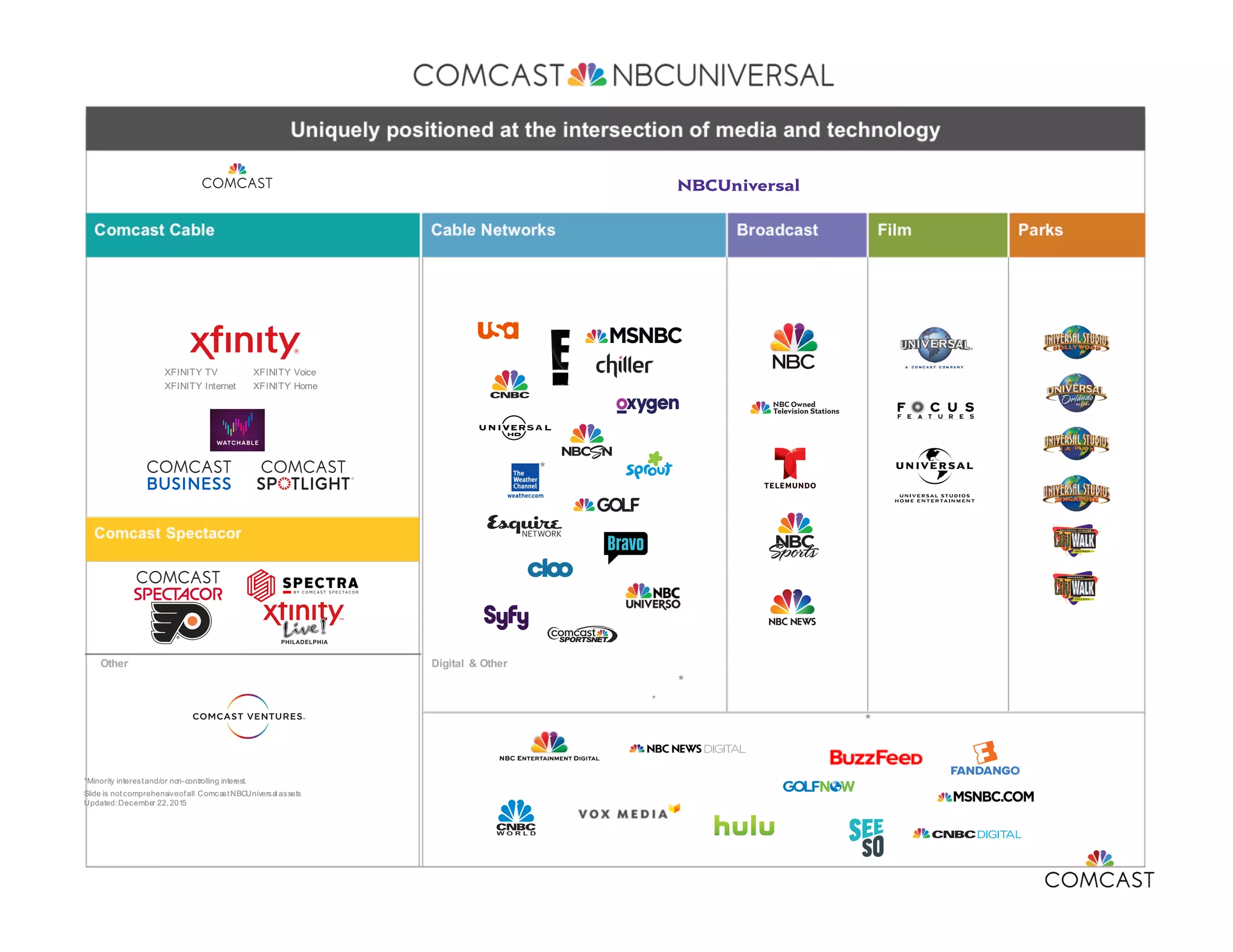
What is Comcast NBCUniversal?
• Much like Ireland’s Sky
• Provide Broadband Services in the United States
- Internet
- Video
- Media
- Mobile
• ~25 million customers on combination of broadband services
• Use Case: machine learning to optimize customer experience
- While complying with all applicable privacy policies and laws
XFINITY TV
XFINITY Internet
XFINITY Voice
XFINITY Home ®
Digital & OtherOther
*Minority interestand/or non-controlling interest.
Slide is notcomprehensiveofall ComcastNBCUniversal assets
Updated:December 22,2015
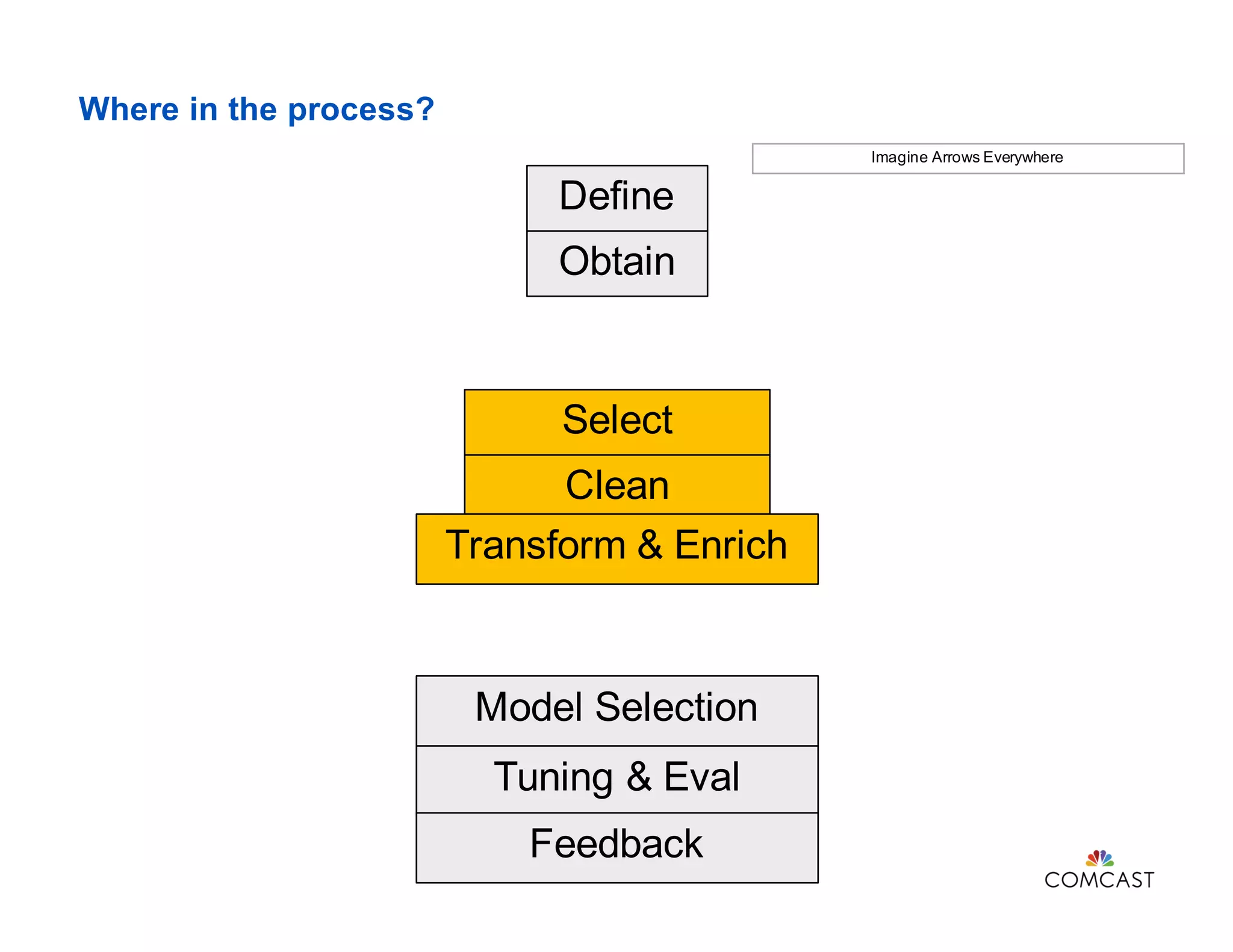
Where in the process?
Obtain
Select
Clean
Transform & Enrich
Define
Model Selection
Tuning & Eval
Feedback
Imagine Arrows Everywhere
Feature Engineering 101
• Cheat sheet to some of the terminology and best practices
• Why is feature engineering necessary?
• How and how much feature engineering?
• Feature Engineering Process variations
• Select
• Clean
• Normalize and Transform
• Philosophies
- Confirm a hypothesis
- Explore trends
- Middle ground approach
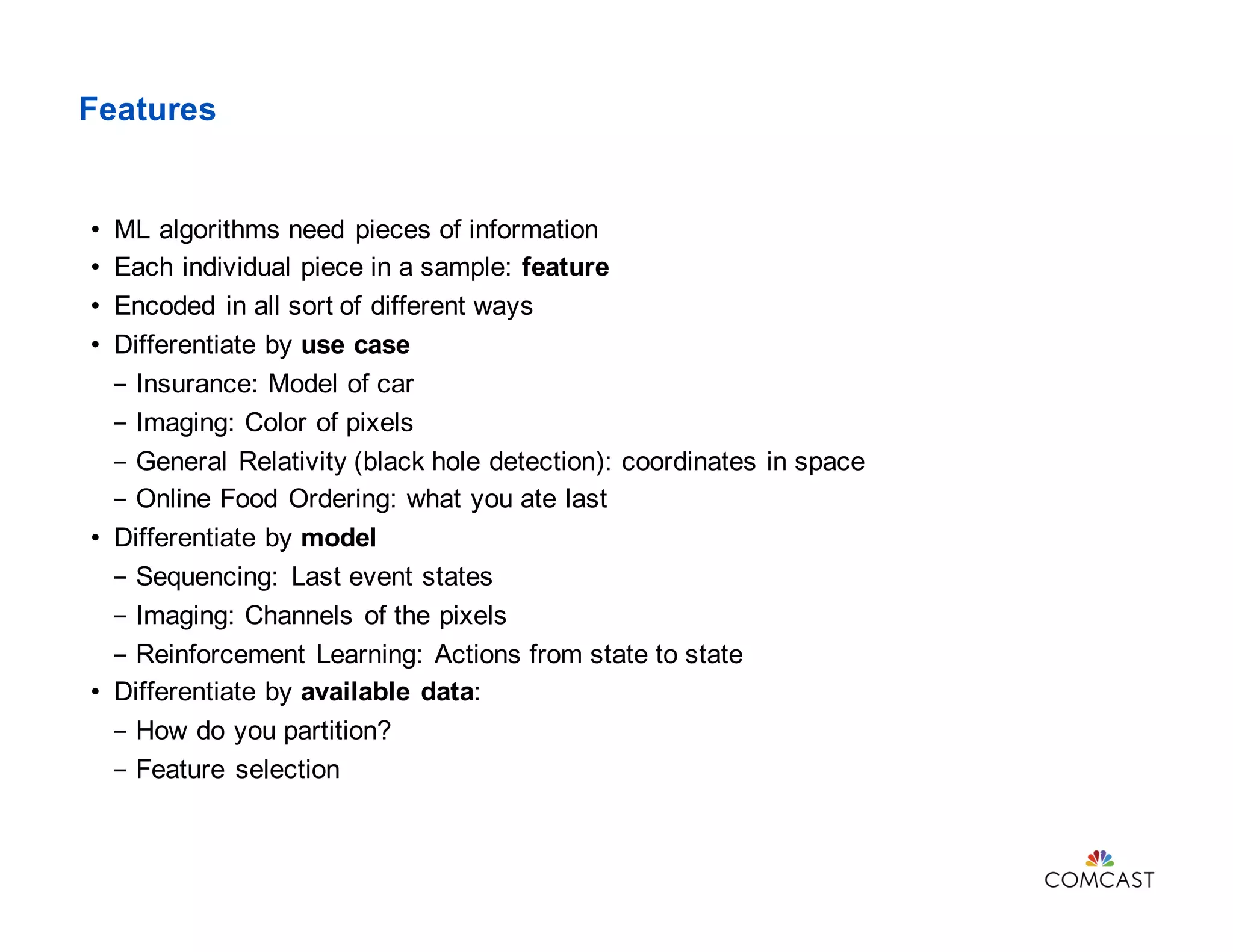
Features
• ML algorithms need pieces of information
• Each individual piece in a sample: feature
• Encoded in all sort of different ways
• Differentiate by use case
- Insurance: Model of car
- Imaging: Color of pixels
- General Relativity (black hole detection): coordinates in space
- Online Food Ordering: what you ate last
• Differentiate by model
- Sequencing: Last event states
- Imaging: Channels of the pixels
- Reinforcement Learning: Actions from state to state
• Differentiate by available data:
- How do you partition?
- Feature selection
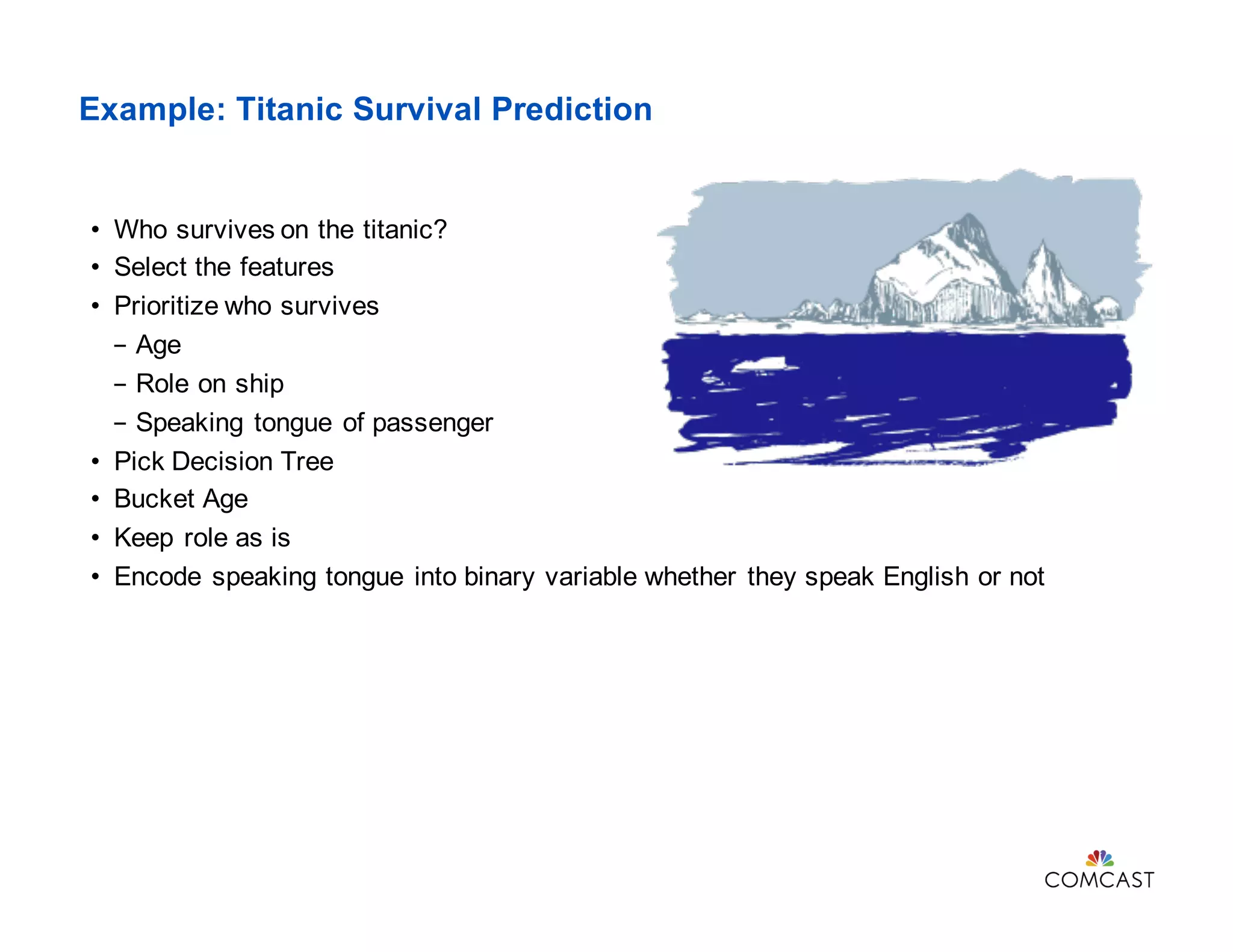
Example: Titanic Survival Prediction
• Who survives on the titanic?
• Select the features
• Prioritize who survives
- Age
- Role on ship
- Speaking tongue of passenger
• Pick Decision Tree
• Bucket Age
• Keep role as is
• Encode speaking tongue into binary variable whether they speak English or not
How to actually do it
Categorical Variables
• Discrete (but not necessarily disjoint) levels
• Can often seem numeric
• Encoding methods
- Leave as is (but encode into some number - StringIndexer)
- One Hot Encoding
- Binary Encoding
• Text: Tokenizing & Word2Vec
• Decision Trees and variants can often do worse with one hot encoding
Numerical Variables
• Can be continuous or discrete
• Can become categorical through binning and bucketting
• To scale or not variables
- Some variables might be weighted higher than others (KNN?)
- Per mini-batch in neural network training
- Normalize or max-min scaling
• Always determine relevant stats:
- Mean
- Variance
- Kurtosis
- Mode
- Median
• Specifically for words: term frequency-inverse documentfrequency (tf-idf)
Cleaning Data
• Correcting for input mistakes or known mistakes in the data (normalization)
- If predicting text: Knowing the last few sequence was Iceland instead of ice land
• Transforming missing data and outliers
- Missing Data -> Imputation
- Mean
- Mode
- Matrix Factorization (A = LDU)
• Converting data into known formats for rest of pipeline
- Can be very simple: Mapping categories to different numbers
- Or very difficult: Cleaning irregularly sampled data
Selecting Features
• Domain Knowledge
• Statistically correlate features
- Weights
- Gini
- Correlation
- Information Gain
- Information Criteria (AIC, BIC, Bayes Factors)
• Global Gains vs Local Gains
• Throw all the data and then down sample
• Throw in little data and then increase until acceptable tolerance
• Noisy or dirty data
• Some models prefer no intra feature other interactions
- Ordinary Least Squares and some exponential families
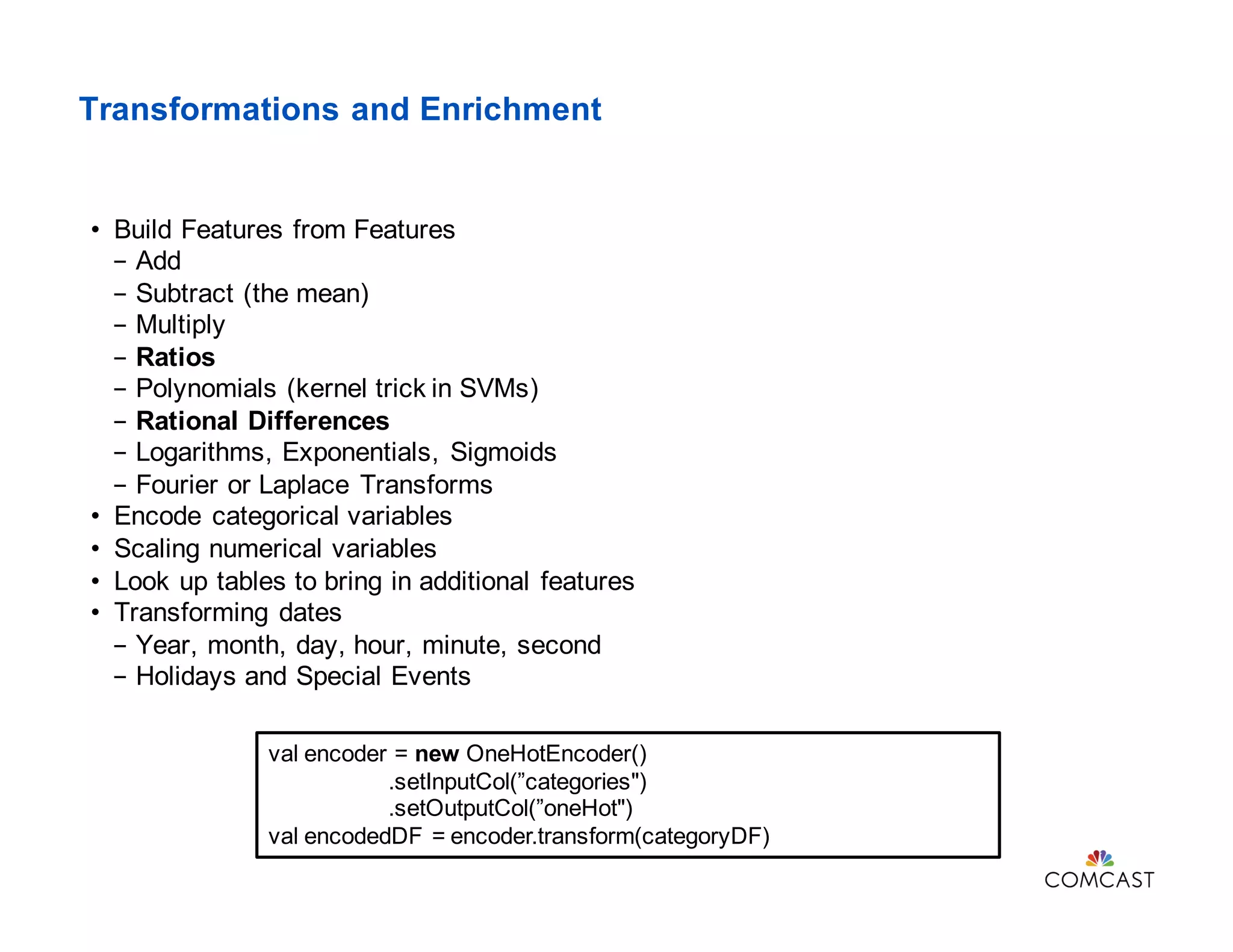
Transformations and Enrichment
• Build Features from Features
- Add
- Subtract (the mean)
- Multiply
- Ratios
- Polynomials (kernel trick in SVMs)
- Rational Differences
- Logarithms, Exponentials, Sigmoids
- Fourier or Laplace Transforms
• Encode categorical variables
• Scaling numerical variables
• Look up tables to bring in additional features
• Transforming dates
- Year, month, day, hour, minute, second
- Holidays and Special Events
val encoder = new OneHotEncoder()
.setInputCol(”categories")
.setOutputCol(”oneHot")
val encodedDF = encoder.transform(categoryDF)
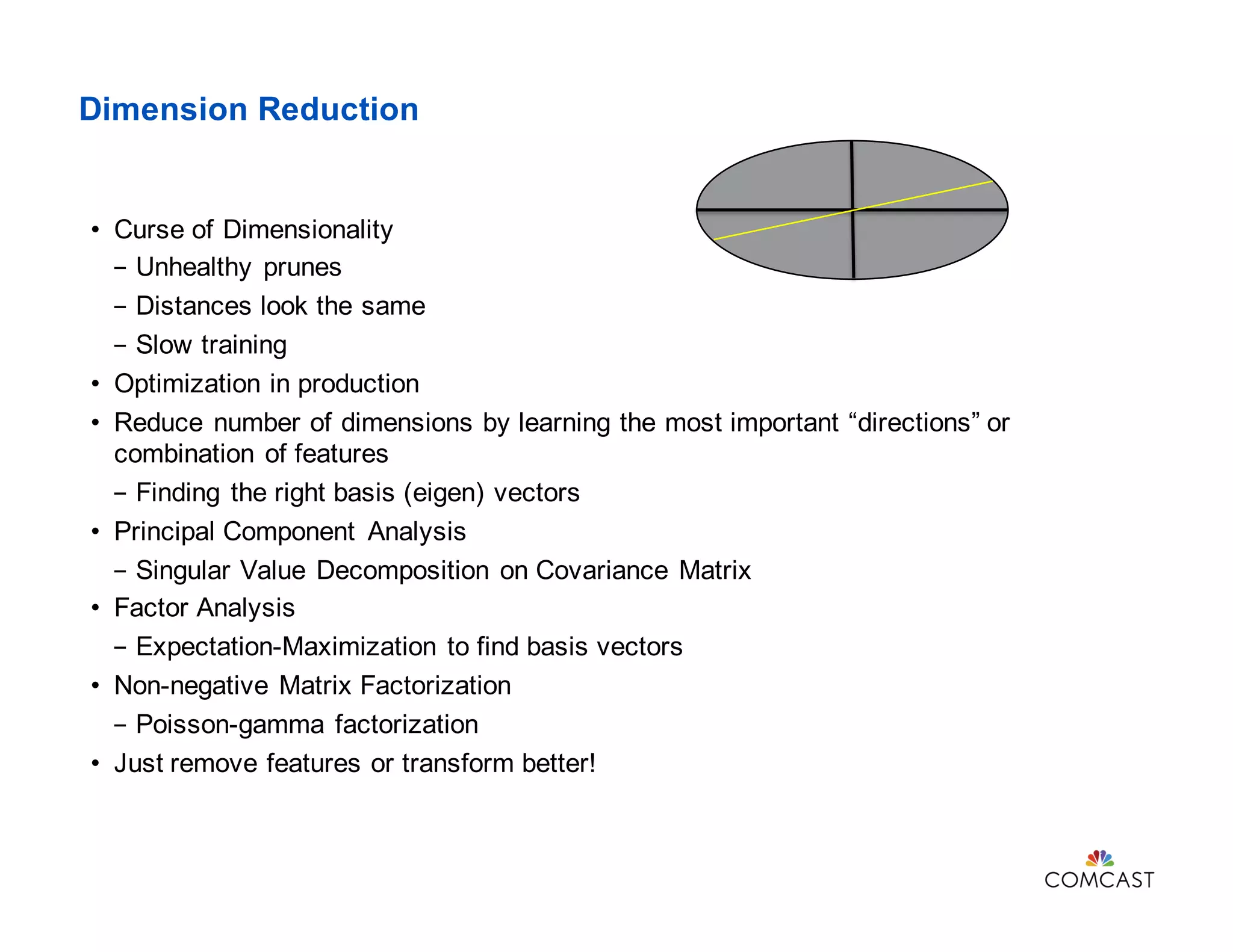
Dimension Reduction
• Curse of Dimensionality
- Unhealthy prunes
- Distances look the same
- Slow training
• Optimization in production
• Reduce number of dimensions by learning the most important “directions” or
combination of features
- Finding the right basis (eigen) vectors
• Principal Component Analysis
- Singular Value Decomposition on Covariance Matrix
• Factor Analysis
- Expectation-Maximization to find basis vectors
• Non-negative Matrix Factorization
- Poisson-gamma factorization
• Just remove features or transform better!
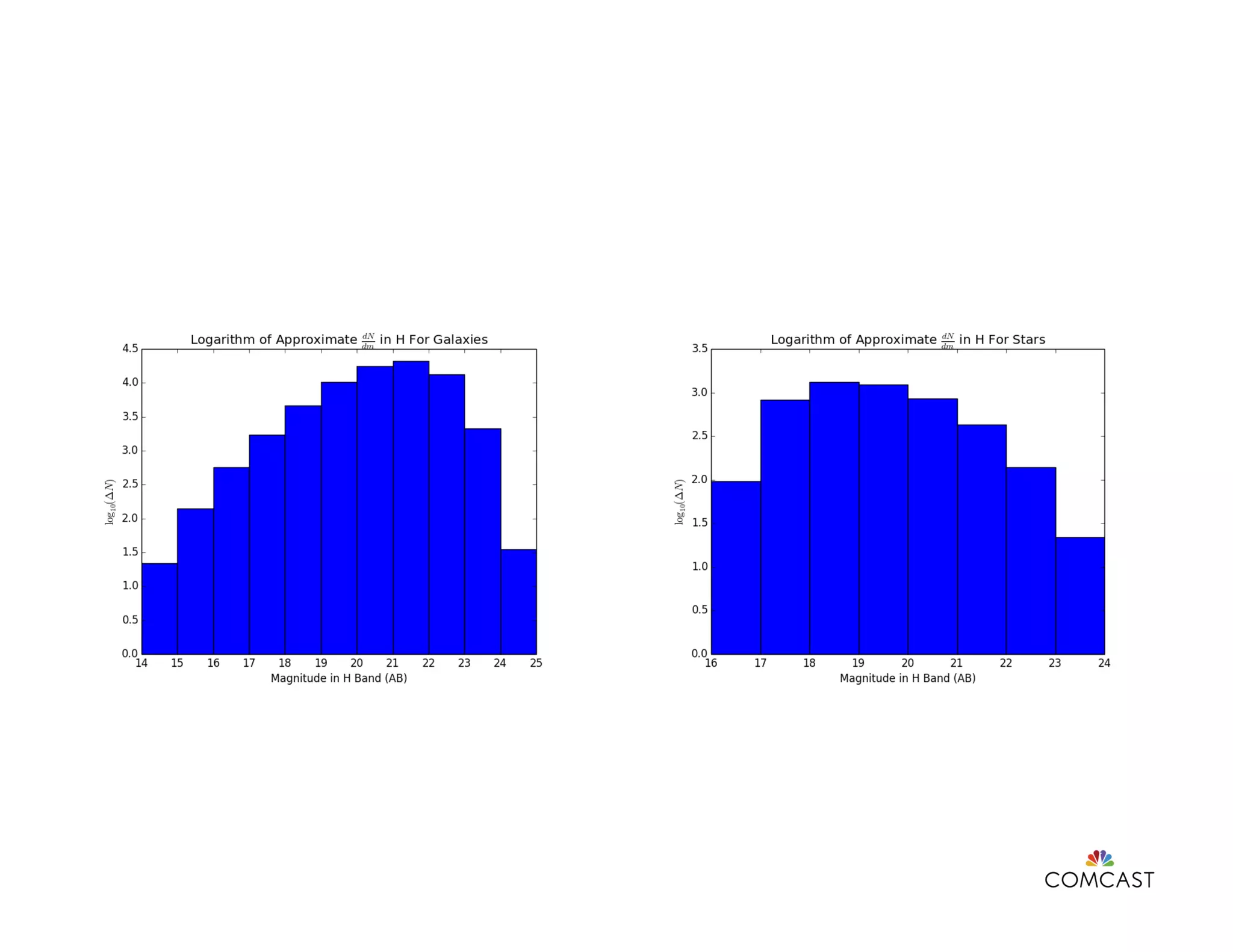
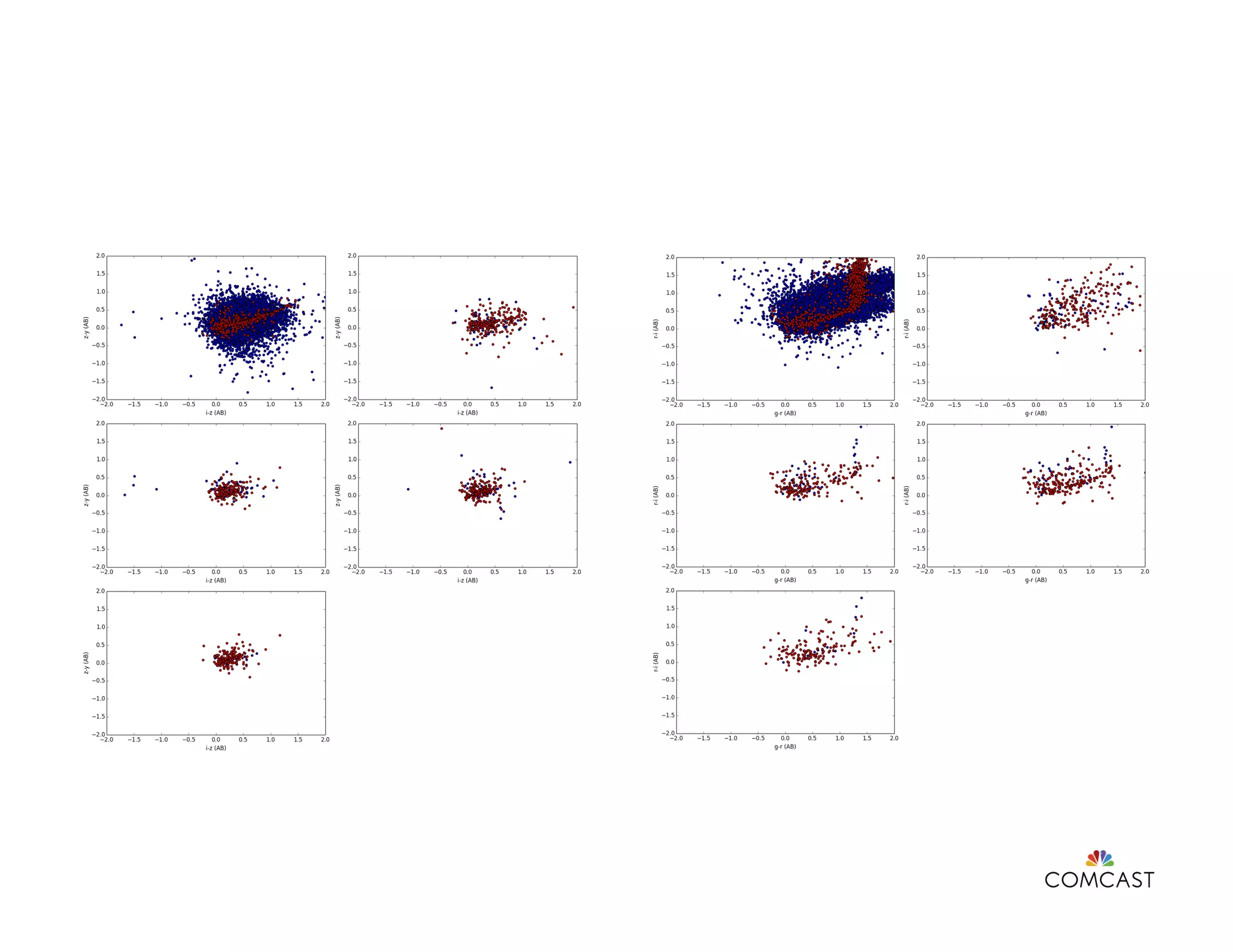
A Harder Use Case: Star-Galaxy Separation
• Stars and galaxies look like little points in space, hard to differentiate on images
• Can read temperatures
• Know that Stars are one-dimensional based on temperature
• Galaxies are composed of various stars
• Bin the temperatures
• Logarithm of temperatures
• Form Features from the combination of differences
• Logarithms on same magnitudes
- No need to scale
Philosophy
• Explore:
- Not sure what exactly is there
- Try out different combinations until you see trends
- Select all and throw out as needed
• Confirmation:
- Have some hypothesis on how data is supposed to behave
- Statistical tests
- Add Feature if it passes your confirmation test
• Hybrid:
- Data sets often have a combination of features that fit both philosophies
New Horizons
• Deep Learning: Feature Engineering -> Architecture building
- Still need good data and good features
• Meta Features
- Models building features for other models
• Automation!
- Combinatorial complexity
Art of Feature Engineering for Data Science with Nabeel Sarwar

Art of Feature Engineering for Data Science with Nabeel Sarwar

  • 1.
    Art of FeatureEngineering For Data Science Nabeel Sarwar Machine Learning Engineer at Comcast Spark Summit Europe - October 26th, 2017
  • 2.
    What is ComcastNBCUniversal? • Much like Ireland’s Sky • Provide Broadband Services in the United States - Internet - Video - Media - Mobile • ~25 million customers on combination of broadband services • Use Case: machine learning to optimize customer experience - While complying with all applicable privacy policies and laws
  • 3.
    XFINITY TV XFINITY Internet XFINITYVoice XFINITY Home ® Digital & OtherOther *Minority interestand/or non-controlling interest. Slide is notcomprehensiveofall ComcastNBCUniversal assets Updated:December 22,2015
  • 4.
    Where in theprocess? Obtain Select Clean Transform & Enrich Define Model Selection Tuning & Eval Feedback Imagine Arrows Everywhere
  • 5.
    Feature Engineering 101 •Cheat sheet to some of the terminology and best practices • Why is feature engineering necessary? • How and how much feature engineering? • Feature Engineering Process variations • Select • Clean • Normalize and Transform • Philosophies - Confirm a hypothesis - Explore trends - Middle ground approach
  • 6.
    Features • ML algorithmsneed pieces of information • Each individual piece in a sample: feature • Encoded in all sort of different ways • Differentiate by use case - Insurance: Model of car - Imaging: Color of pixels - General Relativity (black hole detection): coordinates in space - Online Food Ordering: what you ate last • Differentiate by model - Sequencing: Last event states - Imaging: Channels of the pixels - Reinforcement Learning: Actions from state to state • Differentiate by available data: - How do you partition? - Feature selection
  • 7.
    Example: Titanic SurvivalPrediction • Who survives on the titanic? • Select the features • Prioritize who survives - Age - Role on ship - Speaking tongue of passenger • Pick Decision Tree • Bucket Age • Keep role as is • Encode speaking tongue into binary variable whether they speak English or not
  • 8.
  • 9.
    Categorical Variables • Discrete(but not necessarily disjoint) levels • Can often seem numeric • Encoding methods - Leave as is (but encode into some number - StringIndexer) - One Hot Encoding - Binary Encoding • Text: Tokenizing & Word2Vec • Decision Trees and variants can often do worse with one hot encoding
  • 10.
    Numerical Variables • Canbe continuous or discrete • Can become categorical through binning and bucketting • To scale or not variables - Some variables might be weighted higher than others (KNN?) - Per mini-batch in neural network training - Normalize or max-min scaling • Always determine relevant stats: - Mean - Variance - Kurtosis - Mode - Median • Specifically for words: term frequency-inverse documentfrequency (tf-idf)
  • 11.
    Cleaning Data • Correctingfor input mistakes or known mistakes in the data (normalization) - If predicting text: Knowing the last few sequence was Iceland instead of ice land • Transforming missing data and outliers - Missing Data -> Imputation - Mean - Mode - Matrix Factorization (A = LDU) • Converting data into known formats for rest of pipeline - Can be very simple: Mapping categories to different numbers - Or very difficult: Cleaning irregularly sampled data
  • 12.
    Selecting Features • DomainKnowledge • Statistically correlate features - Weights - Gini - Correlation - Information Gain - Information Criteria (AIC, BIC, Bayes Factors) • Global Gains vs Local Gains • Throw all the data and then down sample • Throw in little data and then increase until acceptable tolerance • Noisy or dirty data • Some models prefer no intra feature other interactions - Ordinary Least Squares and some exponential families
  • 13.
    Transformations and Enrichment •Build Features from Features - Add - Subtract (the mean) - Multiply - Ratios - Polynomials (kernel trick in SVMs) - Rational Differences - Logarithms, Exponentials, Sigmoids - Fourier or Laplace Transforms • Encode categorical variables • Scaling numerical variables • Look up tables to bring in additional features • Transforming dates - Year, month, day, hour, minute, second - Holidays and Special Events val encoder = new OneHotEncoder() .setInputCol(”categories") .setOutputCol(”oneHot") val encodedDF = encoder.transform(categoryDF)
  • 14.
    Dimension Reduction • Curseof Dimensionality - Unhealthy prunes - Distances look the same - Slow training • Optimization in production • Reduce number of dimensions by learning the most important “directions” or combination of features - Finding the right basis (eigen) vectors • Principal Component Analysis - Singular Value Decomposition on Covariance Matrix • Factor Analysis - Expectation-Maximization to find basis vectors • Non-negative Matrix Factorization - Poisson-gamma factorization • Just remove features or transform better!
  • 15.
    A Harder UseCase: Star-Galaxy Separation • Stars and galaxies look like little points in space, hard to differentiate on images • Can read temperatures • Know that Stars are one-dimensional based on temperature • Galaxies are composed of various stars • Bin the temperatures • Logarithm of temperatures • Form Features from the combination of differences • Logarithms on same magnitudes - No need to scale
  • 18.
    Philosophy • Explore: - Notsure what exactly is there - Try out different combinations until you see trends - Select all and throw out as needed • Confirmation: - Have some hypothesis on how data is supposed to behave - Statistical tests - Add Feature if it passes your confirmation test • Hybrid: - Data sets often have a combination of features that fit both philosophies
  • 19.
    New Horizons • DeepLearning: Feature Engineering -> Architecture building - Still need good data and good features • Meta Features - Models building features for other models • Automation! - Combinatorial complexity