This document outlines an introduction to applications of proteomics in microbiology. It discusses how proteomic techniques like MALDI-TOF can help understand host-pathogen interactions and identify microorganisms to diagnose infectious diseases. Specifically, it explains that proteomics can identify virulence proteins and post-translational modifications involved in infection. It also discusses how proteomics can be used to identify differentially expressed proteins in diseases like cancer to develop new drug therapies and identify antigenic proteins for vaccine development.
This slide introduces the theme of proteomics applications in microbiology.
An overview of the topics covered in the lecture, including host-pathogen interactions, proteomic techniques, diagnostics, and therapeutic developments.
Discusses the significance of microbial infections and how proteomics helps in identifying proteins linked to host-pathogen interactions and resistance mechanisms.
Brief mention of Shotgun Proteomic Analysis, a technique commonly used in proteomics studies.
Explains interactions between hosts and pathogens, highlighting virulence proteins and posttranslational modifications studied in proteomics.
Lists various proteomic techniques such as MS methods, yeast hybrid, and affinity purification used for analysis.
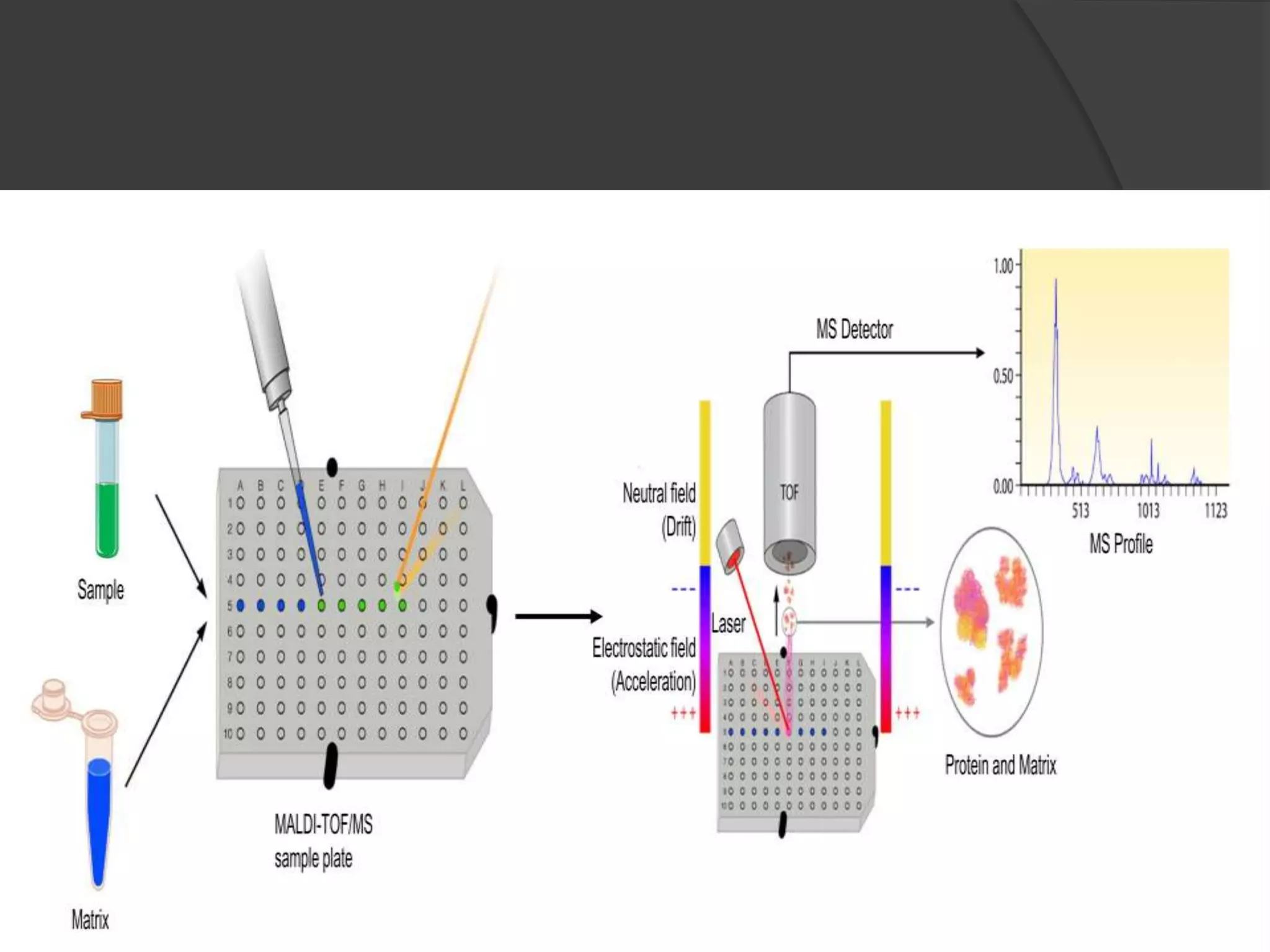
Describes the role of MALDI-TOF in identifying microorganisms quickly, including the process involved in protein analysis.
Covers contributions of proteomics in identifying cancer-related proteins and drug development for resistant conditions.
Discusses the different medical microbiology research areas that employ proteomic technologies.
Details how proteomics aids in identifying antigenic proteins for vaccine development and understanding antibiotic resistance.
A closing slide thanking the audience for their attention.
Outline of lecture
Introduction
Understanding Host-Pathogen interactions and
infectious diseases.
Proteomics techniques
Role of MALDI-TOF in diagnosis
Role of Proteomics in Medical Microbiological
Research and Diagnosis
Research areas in medical microbiology that
utilize proteomic technologies
Role of Proteomics in development of therapy
and vaccine
3.
Introduction
Microbial isa leading cause of death around the
world. Therefore understanding of microbial
infection and defense system and survival
strategies is of great interest in order to defeat
microbial infection.
Microbial proteomics helps to identify the
proteins associated with microbial host-
pathogen interactions and antimicrobial
resistant mechanism by using 2-D gel based and
gel free method with combination of MALDI-
TOF-LC
Understanding Host-Pathogen
interactions andinfectious diseases
Provide information about interaction
between host and pathogen.
Proteomic profiling provides new insights of
virulence proteins like proteoglycans.
Host-pathogen interactions of microbes will
affect posttranslational modifications like
phosphorylation,glycosylation and
acetylation identified by MS.
6.
Proteomic Techniques
1. Chemicalcross-linking MS
2. Proximately dependent labeling strategies
MS
3. Yeast 2 hybrid
4. Affinity purification MS(AP-MS)
5. Protein Correlation profiling
7.
Role of MALDI-TOFin diagnosis
It can be used for early identification of
bacteria in blood, urinary tract infection and
other clinical samples.
MALDI-TOF MS is most emerging tool
used to identify microorganisms at special
level.
Process involves different steps as
i. Protein separation
ii. 2D gel analysis
iii. Gel digestion and analysis
9.
Role of Proteomicsin Medical
Microbiological Research and Diagnosis
It is used to identify differentially expressed
cancer cells.
Proteomics has identified proteins involved
in metastasis and multidrug resistance that
are highly expressed in glioblastoma
multiform compared with brain tissue.
Proteomics shows solution for drug
development against the resistance. For
example chloroquine.
10.
Research areas inmedical
microbiology that utilize proteomic
technologies
11.
Role of Proteomicsin development of
therapy and vaccine
Antigenic proteins can be identified by an
immune response against the infection; these
proteins can be used in the development of
vaccine.
Pseudomonas aeruginosa develops resistant
against beta-lactam antibiotics; proteomics
can identify the resistance mechanism; it
reduces the expression of outer membrane
protein.