 What is meant by proteolysis?
 How protein degradation occur?
 Where protein degradation occur?
 Why we need proteolysis?
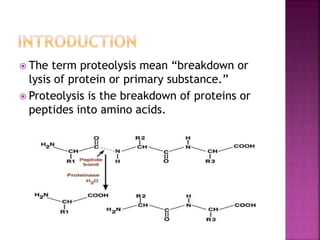
 The term proteolysis mean “breakdown or
lysis of protein or primary substance.”
 Proteolysis is the breakdown of proteins or
peptides into amino acids.
 The hydrolytic breakdown of proteins into
substances such as peptides and simpler,
soluble amino acids, by the action of
enzymes which are named as “proteolytic
enzymes” or “proteases”
 Proteases are of two types:
 EXOPEPTIDASES
 ENDOPEPTIDASES OR PROTEINASES
 They cleave near the N or C terminus of
peptides or proteins.
 Example:
 carboxypeptidase
 Aminopeptidase
 They cleave internal peptide bonds in
peptides and proteins.
 Example:
pepsin,renin,trypsin,chymotrypsin.
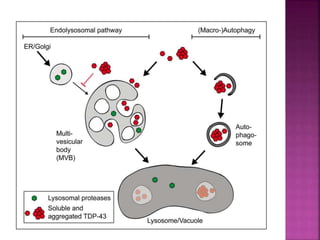
 It occurs in several compartments:
 Lysosomal protein breakdown(individual
protease degrade proteins)
 Ubiquitin-dependent protein
breakdown(proteosome system degrades
proteins)
 Acidic pH
 Various hydrolyses ( proteases,nucleases)
 Significance:
 Degradation of extracellular or intracellular
fragments.
 PROTEIN UPTAKE:
 Endocytosis
 Autophagy
 phagocytosis
 Neutral Ph
 ATP-dependent degradation
 Significance:
 Digestion of proteins programmed for quick
destruction
 Digestion of misfolding
 Denatured
 Abnormal proteins
 The most utmost function of proteolysis is in
regulation of proteins.
 It activate a cellular protein or switch it off
by impairing its functionality.
 Proteolysis is implicated in
 Digestion
 Cell cycle regulation
 apoptosis
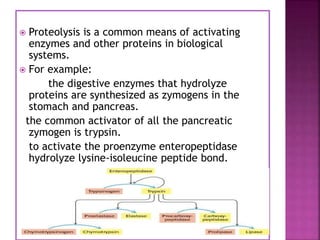
 Proteolysis is a common means of activating
enzymes and other proteins in biological
systems.
 For example:
the digestive enzymes that hydrolyze
proteins are synthesized as zymogens in the
stomach and pancreas.
the common activator of all the pancreatic
zymogen is trypsin.
to activate the proenzyme enteropeptidase
hydrolyze lysine-isoleucine peptide bond.
 Example:
 Fibrinogen is made up of three globular chains.
 fibrinogen is converted by thrombin into fibrin
clot and hydrolyze 4 arginine-glycine peptide
bond.
Proteolysis 1

Proteolysis 1

  • 2.
     What ismeant by proteolysis?  How protein degradation occur?  Where protein degradation occur?  Why we need proteolysis?
  • 3.
     The termproteolysis mean “breakdown or lysis of protein or primary substance.”  Proteolysis is the breakdown of proteins or peptides into amino acids.
  • 4.
     The hydrolyticbreakdown of proteins into substances such as peptides and simpler, soluble amino acids, by the action of enzymes which are named as “proteolytic enzymes” or “proteases”
  • 5.
     Proteases areof two types:  EXOPEPTIDASES  ENDOPEPTIDASES OR PROTEINASES
  • 6.
     They cleavenear the N or C terminus of peptides or proteins.  Example:  carboxypeptidase  Aminopeptidase
  • 7.
     They cleaveinternal peptide bonds in peptides and proteins.  Example: pepsin,renin,trypsin,chymotrypsin.
  • 8.
     It occursin several compartments:  Lysosomal protein breakdown(individual protease degrade proteins)  Ubiquitin-dependent protein breakdown(proteosome system degrades proteins)
  • 9.
     Acidic pH Various hydrolyses ( proteases,nucleases)  Significance:  Degradation of extracellular or intracellular fragments.  PROTEIN UPTAKE:  Endocytosis  Autophagy  phagocytosis
  • 11.
     Neutral Ph ATP-dependent degradation  Significance:  Digestion of proteins programmed for quick destruction  Digestion of misfolding  Denatured  Abnormal proteins
  • 13.
     The mostutmost function of proteolysis is in regulation of proteins.  It activate a cellular protein or switch it off by impairing its functionality.  Proteolysis is implicated in  Digestion  Cell cycle regulation  apoptosis
  • 14.
     Proteolysis isa common means of activating enzymes and other proteins in biological systems.  For example: the digestive enzymes that hydrolyze proteins are synthesized as zymogens in the stomach and pancreas. the common activator of all the pancreatic zymogen is trypsin. to activate the proenzyme enteropeptidase hydrolyze lysine-isoleucine peptide bond.
  • 15.
     Example:  Fibrinogenis made up of three globular chains.  fibrinogen is converted by thrombin into fibrin clot and hydrolyze 4 arginine-glycine peptide bond.