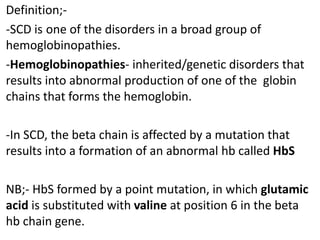
This document provides an overview of sickle cell disease (SCD), including its definition, epidemiology, pathogenesis, clinical presentation, diagnosis, treatment, and counseling. SCD is caused by a genetic mutation resulting in abnormal hemoglobin called HbS. It most commonly presents as painful vasoclusive crises, acute chest syndrome, splenic sequestration, or aplastic crises. Treatment involves management of symptoms, antibiotics, hydroxyurea, blood transfusions, and counseling to enable informed family planning decisions.
![Acute chest crises
• Management is similar to vaso-occlusive crises with the addition of
antibiotics (usually a quinolone or macrolide, since wall-deficient
["atypical"] bacteria are thought to contribute to the syndrome), oxygen
supplementation for hypoxia, and close observation. Should the
pulmonary infiltrate worsen or the oxygen requirements increase, simple
blood transfusion or exchange transfusion is indicated. The latter involves
the exchange of a significant portion of the patients red cell mass for
normal red cells, which decreases the percent hemoglobin S in the
patient's blood.
Hydroxyurea
• The first approved drug for the causative treatment of sickle cell anemia,
hydroxyurea, was shown to decrease the number and severity of attacks in
a study in 1995 (Charache et al) and shown to increase survival time in a
study in 2003. This is achieved by reactivating fetal hemoglobin production
in place of the hemoglobin S that causes sickle cell anemia. Hydroxyurea
had previously been used as a chemotherapy agent, and there is some
concern that long-term use may be harmful, but it is likely that the
benefits outweigh the risk](https://image.slidesharecdn.com/sicklecelldisease-160823214650/85/Sickle-cell-disease-24-320.jpg)