MICROCYTIC
ANEMIA
Presented by- Dr. Monika Nema
Dr. Monika Nema
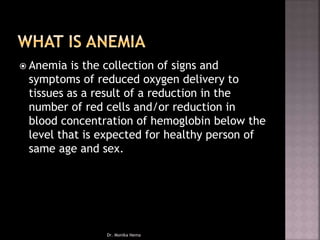
 Anemia is the collection of signs and
symptoms of reduced oxygen delivery to
tissues as a result of a reduction in the
number of red cells and/or reduction in
blood concentration of hemoglobin below the
level that is expected for healthy person of
same age and sex.
Dr. Monika Nema
 The world health organization (WHO) has
defined anemia as Hb<13.0 g/dl for men and
<12g/dl for women.
Dr. Monika Nema
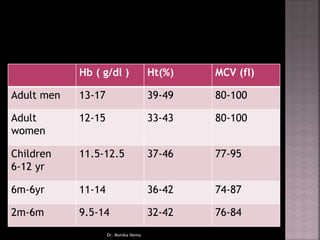
Hb ( g/dl ) Ht(%) MCV (fl)
Adult men 13-17 39-49 80-100
Adult
women
12-15 33-43 80-100
Children
6-12 yr
11.5-12.5 37-46 77-95
6m-6yr 11-14 36-42 74-87
2m-6m 9.5-14 32-42 76-84
Dr. Monika Nema
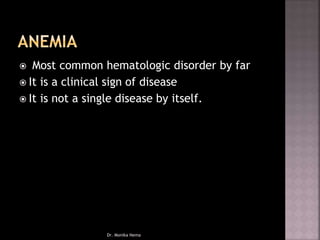
 Most common hematologic disorder by far
 It is a clinical sign of disease
 It is not a single disease by itself.
Dr. Monika Nema
Dr. Monika Nema
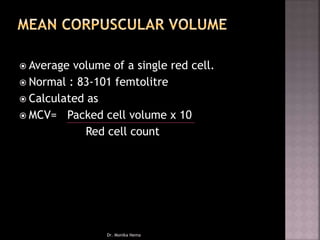
 Average volume of a single red cell.
 Normal : 83-101 femtolitre
 Calculated as
 MCV= Packed cell volume x 10
Red cell count
Dr. Monika Nema
 Average amount of haemoglobin in each red
cells.
 Normal: 27-32 picogram.
 MCH= Hemoglobin concentration x 10
Red cell count
Dr. Monika Nema
 Represents the average concentration of
haemoglobin in a given volume of packed
cells.
 Normal : 31.5-34.5 g/dl.
 MCHC= Hemoglobin concentration x 100
Packed cell volume
Dr. Monika Nema
 It is a measure of degree of variation in red
cell size(anisocytosis) in a blood sample.
 Normal :
 As coefficient of variation(CV)- 11.6-14 %
 As Standard deviation(SD) – 39-46%
Dr. Monika Nema
Dr. Monika Nema
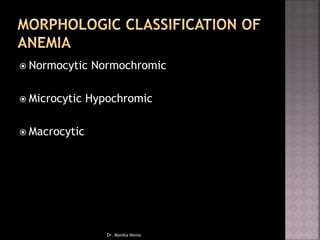
 Normocytic Normochromic
 Microcytic Hypochromic
 Macrocytic
Dr. Monika Nema
Dr. Monika Nema
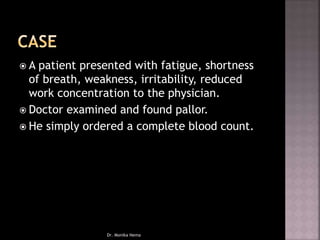
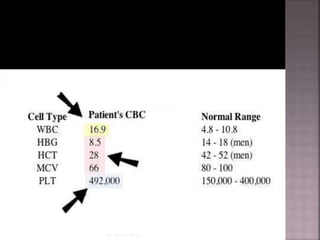
 A patient presented with fatigue, shortness
of breath, weakness, irritability, reduced
work concentration to the physician.
 Doctor examined and found pallor.
 He simply ordered a complete blood count.
Dr. Monika Nema
Dr. Monika Nema
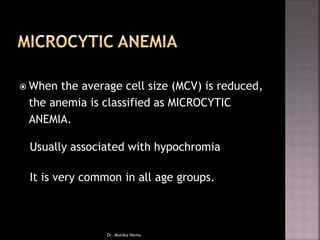
 When the average cell size (MCV) is reduced,
the anemia is classified as MICROCYTIC
ANEMIA.
Usually associated with hypochromia
It is very common in all age groups.
Dr. Monika Nema
Dr. Monika Nema
Dr. Monika Nema
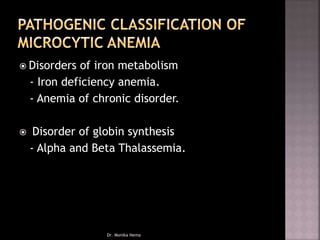
 Disorders of iron metabolism
- Iron deficiency anemia.
- Anemia of chronic disorder.
 Disorder of globin synthesis
- Alpha and Beta Thalassemia.
Dr. Monika Nema
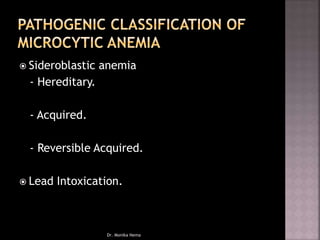
 Sideroblastic anemia
- Hereditary.
- Acquired.
- Reversible Acquired.
 Lead Intoxication.
Dr. Monika Nema
Dr. Monika Nema
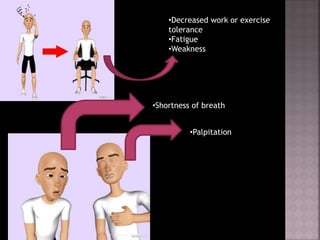
•Shortness of breath
•Palpitation
•Decreased work or exercise
tolerance
•Fatigue
•Weakness
Dr. Monika Nema
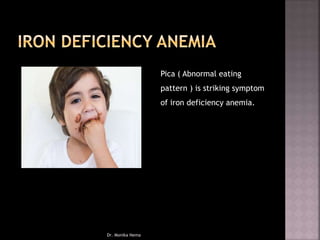
Pica ( Abnormal eating
pattern ) is striking symptom
of iron deficiency anemia.
Dr. Monika Nema
 Iron deficiency usually arises from chronic
blood loss.
 The major cause in younger women is
menstruation.
 In non menstruating women and in men, the
most common source is gastrointestinal
hemorrhage.
(esophageal varices,hiatus hernia, peptic
ulcer,gastritis,neoplasm ,hook worm
infestation)
Dr. Monika Nema
 Inadequate dietary intake of iron
 Defective absorption of iron (Achlorhydriya, Gastric
surgery, Celiac disease, Duodenal bypass, Drugs,
Tannins, Phytate, Bran)
Dr. Monika Nema
 Increased requirements of iron
(Pregnancy, Infancy, Lactation)
 Inadequate presentation to erythroid precursors
(Atransferrinemia, Atransferrin receptor antibodies)
 Abnormal iron balance
(Aceruloplasminemia, Autosomal dominent
hemochromatosis due to mutation in ferroportin)
Dr. Monika Nema
 Is an inherited autosomal recessive blood disease
which results in reduced synthesis or no synthesis of
one of the globin chains that make up hemoglobin
causing the formation of abnormal hemoglobin
molecules leading to anemia.
 Thalassemia is a quantitative problem.
Dr. Monika Nema
 Thalassemia minor patients are usually
asymptomatic. Diagnosis is made through
evaluation of positive family history.
Dr. Monika Nema
These are group of disorders of varying
aetiology in which marrow shows marked
dyserythropoiesis & intra mitochondrial
accumulation of Fe in erythroid
precursors
Dr. Monika Nema
 In sideroblastic anemia, majority of patient
exhibits manifestations of iron overload.
 Abnormal glucose tolerance, cardiac
arrhythmia and congestive heart failure can
occur.
Dr. Monika Nema
 In case of Lead poisoning,
There can be occupational history of inhaling
fumes in industry.
Ingestion of lead based paint chips by
children.
Ingestion of contaminated herbs and food
supplements.
Gasoline sniffing in addicted person.
Dr. Monika Nema
A. Chronic inflammation
 Rheumatoid arthritis
 systemic lupus erythematosis
 Crohn’s disease
B. Chronic infection
 Tuberculosis
 Urinary tract disease
 HIV infection
 Bacterial endocarditis
 pneumonia
C. Neoplasm
 Carcinoma
 Lymphoma
 Myeloma
Dr. Monika Nema
 Anemia is related to decrease in release of iron
from macrophage to plasma
 Reduced RBC lifespan
 Inadequate erythropoietin response to anemia,
caused by effects of cytokine such IL-1, TNF on
erythropoiesis
 Hepcidin released by the liver in response to
inflammation.
 Hepcidin functions to regulate (inhibit) iron transport
across the gut mucosa, thereby preventing excess iron
absorption and maintaining normal iron levels within
the body. Hepcidin also inhibits transport of iron out
of macrophages (where iron is stored)
Dr. Monika Nema
 The clinical manifestation vary widely in
anemia of chronic disease because of its
association with so many diseases.
 Usually, the signs and symptoms of the
underlying disorder overshadow those of the
anemia.
Dr. Monika Nema
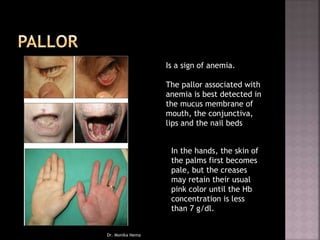
In the hands, the skin of
the palms first becomes
pale, but the creases
may retain their usual
pink color until the Hb
concentration is less
than 7 g/dl.
Is a sign of anemia.
The pallor associated with
anemia is best detected in
the mucus membrane of
mouth, the conjunctiva,
lips and the nail beds
Dr. Monika Nema
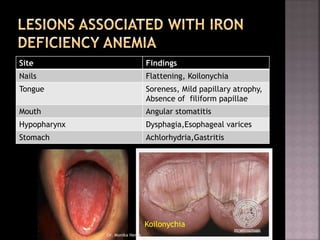
Site Findings
Nails Flattening, Koilonychia
Tongue Soreness, Mild papillary atrophy,
Absence of filiform papillae
Mouth Angular stomatitis
Hypopharynx Dysphagia,Esophageal varices
Stomach Achlorhydria,Gastritis
Koilonychia
Dr. Monika Nema
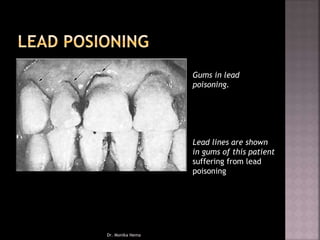
Gums in lead
poisoning.
Lead lines are shown
in gums of this patient
suffering from lead
poisoning
Dr. Monika Nema
Dr. Monika Nema
 Most microcytic anemia are due to deficient
hemoglobin synthesis often associated with
iron deficiency or impaired iron use.
Dr. Monika Nema
Erythrocytes:
 If symptoms of anemia are the presenting
complain, the blood hemoglobin is usually
8 g/dl or lower.
 MCV – decreased. (Microcytic)
 MCH- decreased. (Hypochromic)
 Anisocytosis- Important early sign . Leading
to raised Red Cell Distribution Width.
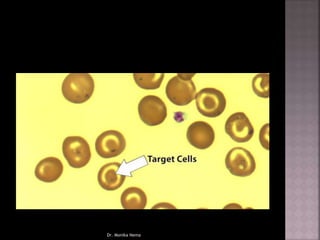
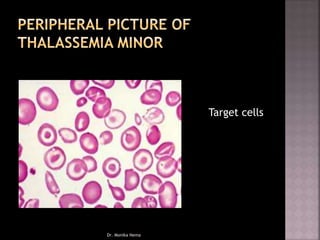
 Few pencil cells, few target cells can be
seen.
Dr. Monika Nema
Dr. Monika Nema
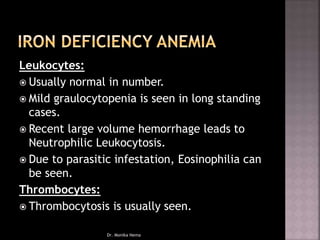
Leukocytes:
 Usually normal in number.
 Mild graulocytopenia is seen in long standing
cases.
 Recent large volume hemorrhage leads to
Neutrophilic Leukocytosis.
 Due to parasitic infestation, Eosinophilia can
be seen.
Thrombocytes:
 Thrombocytosis is usually seen.
Dr. Monika Nema
Dr. Monika Nema
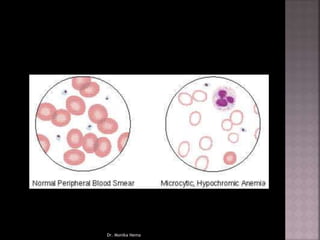
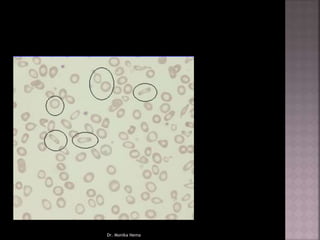
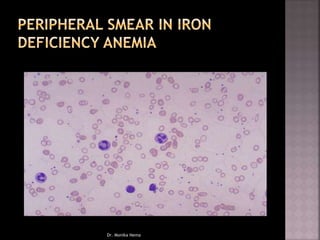
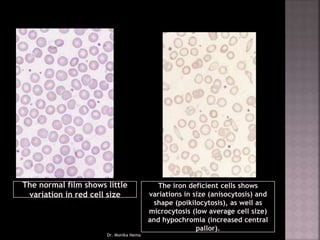
The normal film shows little
variation in red cell size
The iron deficient cells shows
variations in size (anisocytosis) and
shape (poikilocytosis), as well as
microcytosis (low average cell size)
and hypochromia (increased central
pallor).
Dr. Monika Nema
 Usually normocytic normochromic anemia is
seen.
 Hypochromia is more common than
microcytosis.
 Microcytosis in anemia of chronic disease is
usually not as striking as that commonly
associated with iron deficiency anemia.
Dr. Monika Nema
 In iron deficiency anemia, hypochromia
follows microcytosis.
 Whereas in anemia of chronic disease,
hypochromia preceeds microcytosis.
Dr. Monika Nema
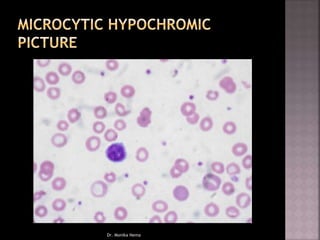
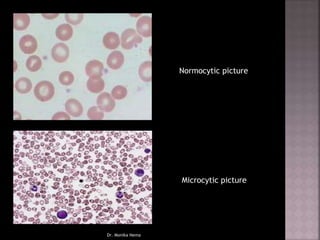
Normocytic picture
Microcytic picture
Dr. Monika Nema
Dr. Monika Nema
 It is a measure of amount of iron bound to
transferrin.
 Shows diurnal variation
Highest in morning and lowest in evening.
 Influenced by recent ingestion and
absorption of iron medication.
 Normal value : 0.6-1.7 microgram/L.
Dr. Monika Nema
 The principal source of iron for hemoglobin
production is that carried by transferrin, the
iron transport protein in plasma.
 When transferrin saturation with iron is less
than 16%, RBC production rate decreases and
hypochromic,microcytic cells are
manufactured. This state is known as iron
deficient erythropoiesis.
 Normal transferrin saturation is 16-50%.
Dr. Monika Nema
 It is indirect measurement of transferrin in
terms of amount of iron it will bind.
 Shows slight fluctuation.
 Normal value : 2.5-4.0 microgram/L.
Dr. Monika Nema
 Disulphide linked transmembrane protein
that facilitates entry of transferrin bound
iron into cells.
Dr. Monika Nema
 Ferritin is chiefly intracellular iron storage
protein.
 Serum ferritin is glycosylated and contains
little or no iron.
 In most circumstances, Serum ferritin is
proportional to total body iron stores.
 Not influenced by recent iron therapy.
 Normal :
Male – 15-300 microgram/L.
Female – 15-200 microgram/L.
Dr. Monika Nema
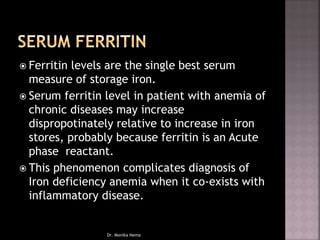
 Ferritin levels are the single best serum
measure of storage iron.
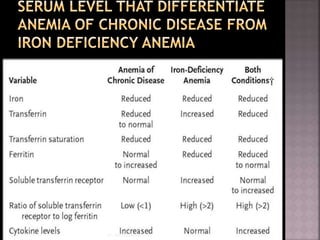
 Serum ferritin level in patient with anemia of
chronic diseases may increase
dispropotinately relative to increase in iron
stores, probably because ferritin is an Acute
phase reactant.
 This phenomenon complicates diagnosis of
Iron deficiency anemia when it co-exists with
inflammatory disease.
Dr. Monika Nema
Dr. Monika Nema
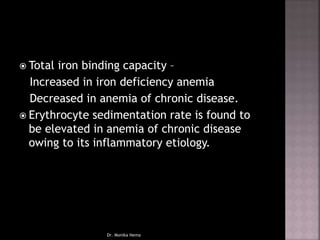
 Total iron binding capacity –
Increased in iron deficiency anemia
Decreased in anemia of chronic disease.
 Erythrocyte sedimentation rate is found to
be elevated in anemia of chronic disease
owing to its inflammatory etiology.
Dr. Monika Nema
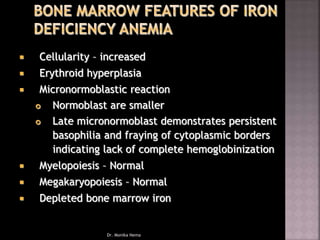
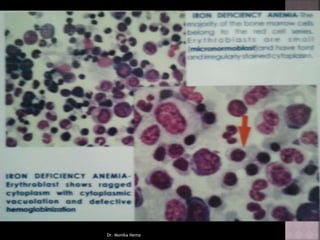
 Cellularity – increased
 Erythroid hyperplasia
 Micronormoblastic reaction
 Normoblast are smaller
 Late micronormoblast demonstrates persistent
basophilia and fraying of cytoplasmic borders
indicating lack of complete hemoglobinization
 Myelopoiesis – Normal
 Megakaryopoiesis – Normal
 Depleted bone marrow iron
Dr. Monika Nema
Dr. Monika Nema
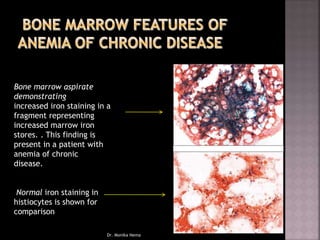
Bone marrow aspirate
demonstrating
increased iron staining in a
fragment representing
increased marrow iron
stores. . This finding is
present in a patient with
anemia of chronic
disease.
Normal iron staining in
histiocytes is shown for
comparison
Dr. Monika Nema
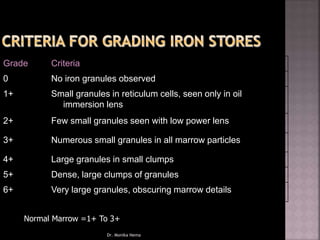
Grade Criteria
0 No iron granules observed
1+ Small granules in reticulum cells, seen only in oil
immersion lens
2+ Few small granules seen with low power lens
3+ Numerous small granules in all marrow particles
4+ Large granules in small clumps
5+ Dense, large clumps of granules
6+ Very large granules, obscuring marrow details
Normal Marrow =1+ To 3+
Dr. Monika Nema
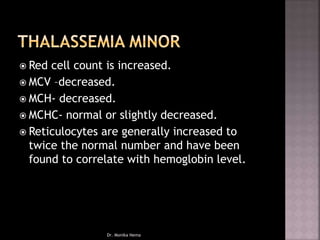
 Red cell count is increased.
 MCV –decreased.
 MCH- decreased.
 MCHC- normal or slightly decreased.
 Reticulocytes are generally increased to
twice the normal number and have been
found to correlate with hemoglobin level.
Dr. Monika Nema
Dr. Monika Nema
Target cells
Dr. Monika Nema
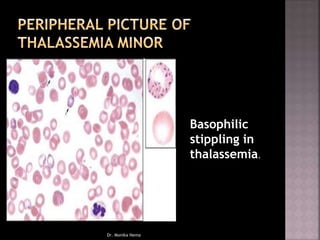
Basophilic
stippling in
thalassemia.
Dr. Monika Nema
Dr. Monika Nema
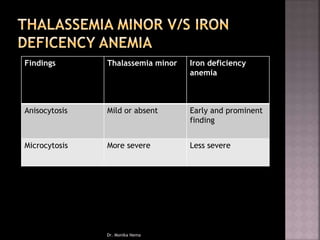
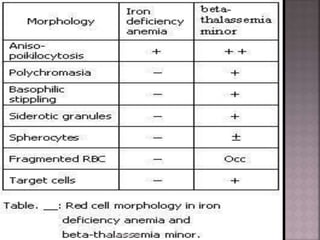
Findings Thalassemia minor Iron deficiency
anemia
Anisocytosis Mild or absent Early and prominent
finding
Microcytosis More severe Less severe
Dr. Monika Nema
Dr. Monika Nema
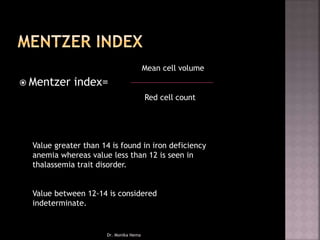
 Mentzer index=
Mean cell volume
Red cell count
Value greater than 14 is found in iron deficiency
anemia whereas value less than 12 is seen in
thalassemia trait disorder.
Value between 12-14 is considered
indeterminate.
Dr. Monika Nema
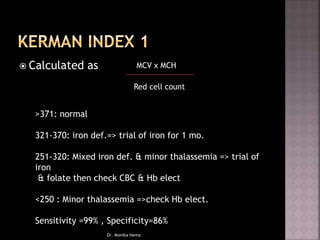
 Calculated as MCV x MCH
Red cell count
>371: normal
321-370: iron def.=> trial of iron for 1 mo.
251-320: Mixed iron def. & minor thalassemia => trial of
iron
& folate then check CBC & Hb elect
<250 : Minor thalassemia =>check Hb elect.
Sensitivity =99% , Specificity=86%
Dr. Monika Nema
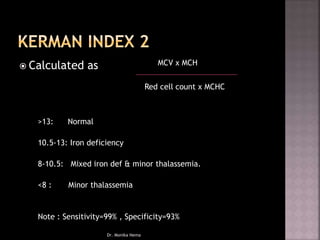
 Calculated as MCV x MCH
Red cell count x MCHC
>13: Normal
10.5-13: Iron deficiency
8-10.5: Mixed iron def & minor thalassemia.
<8 : Minor thalassemia
Note : Sensitivity=99% , Specificity=93%
Dr. Monika Nema
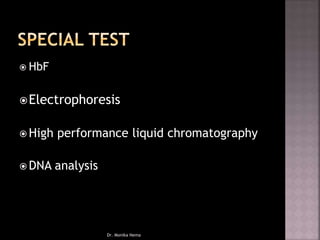
 HbF
Electrophoresis
 High performance liquid chromatography
 DNA analysis
Dr. Monika Nema
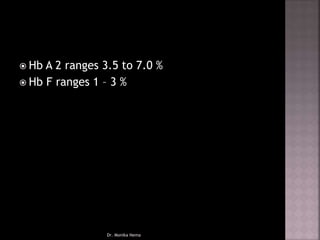
 Hb A 2 ranges 3.5 to 7.0 %
 Hb F ranges 1 – 3 %
Dr. Monika Nema
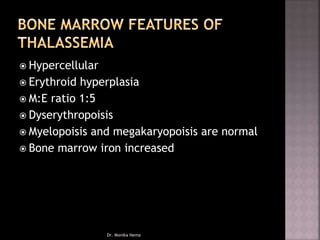
 Hypercellular
 Erythroid hyperplasia
 M:E ratio 1:5
 Dyserythropoisis
 Myelopoisis and megakaryopoisis are normal
 Bone marrow iron increased
Dr. Monika Nema
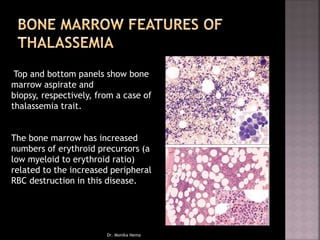
Top and bottom panels show bone
marrow aspirate and
biopsy, respectively, from a case of
thalassemia trait.
The bone marrow has increased
numbers of erythroid precursors (a
low myeloid to erythroid ratio)
related to the increased peripheral
RBC destruction in this disease.
Dr. Monika Nema
 Peripheral smear: microcytic hypochromic
,anisopoiklocytosis ,few cell show basophilic
stippling,WBC and platelet normal.
 Serum iron and percent transferrin saturation
increased
 Bone marrow: hypercellular,normoblastic or
micronormoblastic reaction with vacuolation
in cytoplasm, sideroblast , megakaryopoisis
and normal myelopoisis.
Dr. Monika Nema
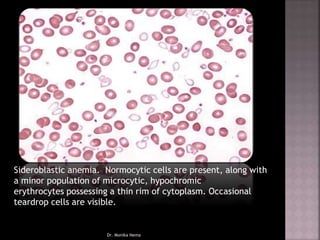
Sideroblastic anemia. Normocytic cells are present, along with
a minor population of microcytic, hypochromic
erythrocytes possessing a thin rim of cytoplasm. Occasional
teardrop cells are visible.
Dr. Monika Nema
Dr. Monika Nema
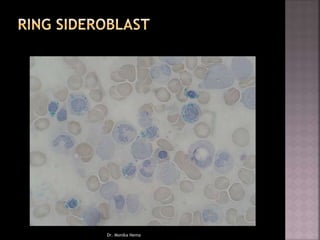
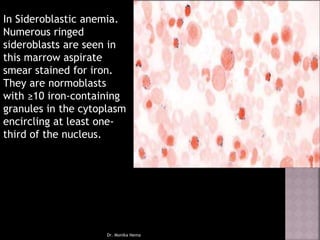
In Sideroblastic anemia.
Numerous ringed
sideroblasts are seen in
this marrow aspirate
smear stained for iron.
They are normoblasts
with ≥10 iron-containing
granules in the cytoplasm
encircling at least one-
third of the nucleus.
Dr. Monika Nema
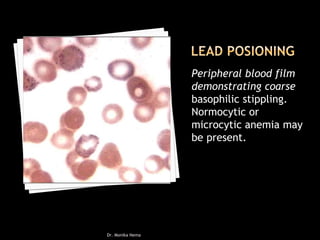
Peripheral blood film
demonstrating coarse
basophilic stippling.
Normocytic or
microcytic anemia may
be present.
Dr. Monika Nema
Dr. Monika Nema
Dr. Monika Nema
PRESENTED BY :- DR.MONIKA
NEMA
Dr. Monika Nema

Microcytic anemia

  • 1.
    MICROCYTIC ANEMIA Presented by- Dr.Monika Nema Dr. Monika Nema
  • 2.
     Anemia isthe collection of signs and symptoms of reduced oxygen delivery to tissues as a result of a reduction in the number of red cells and/or reduction in blood concentration of hemoglobin below the level that is expected for healthy person of same age and sex. Dr. Monika Nema
  • 3.
     The worldhealth organization (WHO) has defined anemia as Hb<13.0 g/dl for men and <12g/dl for women. Dr. Monika Nema
  • 4.
    Hb ( g/dl) Ht(%) MCV (fl) Adult men 13-17 39-49 80-100 Adult women 12-15 33-43 80-100 Children 6-12 yr 11.5-12.5 37-46 77-95 6m-6yr 11-14 36-42 74-87 2m-6m 9.5-14 32-42 76-84 Dr. Monika Nema
  • 5.
     Most commonhematologic disorder by far  It is a clinical sign of disease  It is not a single disease by itself. Dr. Monika Nema
  • 6.
  • 7.
     Average volumeof a single red cell.  Normal : 83-101 femtolitre  Calculated as  MCV= Packed cell volume x 10 Red cell count Dr. Monika Nema
  • 8.
     Average amountof haemoglobin in each red cells.  Normal: 27-32 picogram.  MCH= Hemoglobin concentration x 10 Red cell count Dr. Monika Nema
  • 9.
     Represents theaverage concentration of haemoglobin in a given volume of packed cells.  Normal : 31.5-34.5 g/dl.  MCHC= Hemoglobin concentration x 100 Packed cell volume Dr. Monika Nema
  • 10.
     It isa measure of degree of variation in red cell size(anisocytosis) in a blood sample.  Normal :  As coefficient of variation(CV)- 11.6-14 %  As Standard deviation(SD) – 39-46% Dr. Monika Nema
  • 11.
  • 12.
     Normocytic Normochromic Microcytic Hypochromic  Macrocytic Dr. Monika Nema
  • 13.
  • 14.
     A patientpresented with fatigue, shortness of breath, weakness, irritability, reduced work concentration to the physician.  Doctor examined and found pallor.  He simply ordered a complete blood count. Dr. Monika Nema
  • 15.
  • 16.
     When theaverage cell size (MCV) is reduced, the anemia is classified as MICROCYTIC ANEMIA. Usually associated with hypochromia It is very common in all age groups. Dr. Monika Nema
  • 17.
  • 18.
  • 19.
     Disorders ofiron metabolism - Iron deficiency anemia. - Anemia of chronic disorder.  Disorder of globin synthesis - Alpha and Beta Thalassemia. Dr. Monika Nema
  • 20.
     Sideroblastic anemia -Hereditary. - Acquired. - Reversible Acquired.  Lead Intoxication. Dr. Monika Nema
  • 21.
  • 22.
    •Shortness of breath •Palpitation •Decreasedwork or exercise tolerance •Fatigue •Weakness Dr. Monika Nema
  • 23.
    Pica ( Abnormaleating pattern ) is striking symptom of iron deficiency anemia. Dr. Monika Nema
  • 24.
     Iron deficiencyusually arises from chronic blood loss.  The major cause in younger women is menstruation.  In non menstruating women and in men, the most common source is gastrointestinal hemorrhage. (esophageal varices,hiatus hernia, peptic ulcer,gastritis,neoplasm ,hook worm infestation) Dr. Monika Nema
  • 25.
     Inadequate dietaryintake of iron  Defective absorption of iron (Achlorhydriya, Gastric surgery, Celiac disease, Duodenal bypass, Drugs, Tannins, Phytate, Bran) Dr. Monika Nema
  • 26.
     Increased requirementsof iron (Pregnancy, Infancy, Lactation)  Inadequate presentation to erythroid precursors (Atransferrinemia, Atransferrin receptor antibodies)  Abnormal iron balance (Aceruloplasminemia, Autosomal dominent hemochromatosis due to mutation in ferroportin) Dr. Monika Nema
  • 27.
     Is aninherited autosomal recessive blood disease which results in reduced synthesis or no synthesis of one of the globin chains that make up hemoglobin causing the formation of abnormal hemoglobin molecules leading to anemia.  Thalassemia is a quantitative problem. Dr. Monika Nema
  • 28.
     Thalassemia minorpatients are usually asymptomatic. Diagnosis is made through evaluation of positive family history. Dr. Monika Nema
  • 29.
    These are groupof disorders of varying aetiology in which marrow shows marked dyserythropoiesis & intra mitochondrial accumulation of Fe in erythroid precursors Dr. Monika Nema
  • 30.
     In sideroblasticanemia, majority of patient exhibits manifestations of iron overload.  Abnormal glucose tolerance, cardiac arrhythmia and congestive heart failure can occur. Dr. Monika Nema
  • 31.
     In caseof Lead poisoning, There can be occupational history of inhaling fumes in industry. Ingestion of lead based paint chips by children. Ingestion of contaminated herbs and food supplements. Gasoline sniffing in addicted person. Dr. Monika Nema
  • 32.
    A. Chronic inflammation Rheumatoid arthritis  systemic lupus erythematosis  Crohn’s disease B. Chronic infection  Tuberculosis  Urinary tract disease  HIV infection  Bacterial endocarditis  pneumonia C. Neoplasm  Carcinoma  Lymphoma  Myeloma Dr. Monika Nema
  • 33.
     Anemia isrelated to decrease in release of iron from macrophage to plasma  Reduced RBC lifespan  Inadequate erythropoietin response to anemia, caused by effects of cytokine such IL-1, TNF on erythropoiesis  Hepcidin released by the liver in response to inflammation.  Hepcidin functions to regulate (inhibit) iron transport across the gut mucosa, thereby preventing excess iron absorption and maintaining normal iron levels within the body. Hepcidin also inhibits transport of iron out of macrophages (where iron is stored) Dr. Monika Nema
  • 34.
     The clinicalmanifestation vary widely in anemia of chronic disease because of its association with so many diseases.  Usually, the signs and symptoms of the underlying disorder overshadow those of the anemia. Dr. Monika Nema
  • 35.
    In the hands,the skin of the palms first becomes pale, but the creases may retain their usual pink color until the Hb concentration is less than 7 g/dl. Is a sign of anemia. The pallor associated with anemia is best detected in the mucus membrane of mouth, the conjunctiva, lips and the nail beds Dr. Monika Nema
  • 36.
    Site Findings Nails Flattening,Koilonychia Tongue Soreness, Mild papillary atrophy, Absence of filiform papillae Mouth Angular stomatitis Hypopharynx Dysphagia,Esophageal varices Stomach Achlorhydria,Gastritis Koilonychia Dr. Monika Nema
  • 37.
    Gums in lead poisoning. Leadlines are shown in gums of this patient suffering from lead poisoning Dr. Monika Nema
  • 38.
  • 39.
     Most microcyticanemia are due to deficient hemoglobin synthesis often associated with iron deficiency or impaired iron use. Dr. Monika Nema
  • 40.
    Erythrocytes:  If symptomsof anemia are the presenting complain, the blood hemoglobin is usually 8 g/dl or lower.  MCV – decreased. (Microcytic)  MCH- decreased. (Hypochromic)  Anisocytosis- Important early sign . Leading to raised Red Cell Distribution Width.  Few pencil cells, few target cells can be seen. Dr. Monika Nema
  • 41.
  • 42.
    Leukocytes:  Usually normalin number.  Mild graulocytopenia is seen in long standing cases.  Recent large volume hemorrhage leads to Neutrophilic Leukocytosis.  Due to parasitic infestation, Eosinophilia can be seen. Thrombocytes:  Thrombocytosis is usually seen. Dr. Monika Nema
  • 43.
  • 44.
    The normal filmshows little variation in red cell size The iron deficient cells shows variations in size (anisocytosis) and shape (poikilocytosis), as well as microcytosis (low average cell size) and hypochromia (increased central pallor). Dr. Monika Nema
  • 45.
     Usually normocyticnormochromic anemia is seen.  Hypochromia is more common than microcytosis.  Microcytosis in anemia of chronic disease is usually not as striking as that commonly associated with iron deficiency anemia. Dr. Monika Nema
  • 46.
     In irondeficiency anemia, hypochromia follows microcytosis.  Whereas in anemia of chronic disease, hypochromia preceeds microcytosis. Dr. Monika Nema
  • 47.
  • 48.
  • 49.
     It isa measure of amount of iron bound to transferrin.  Shows diurnal variation Highest in morning and lowest in evening.  Influenced by recent ingestion and absorption of iron medication.  Normal value : 0.6-1.7 microgram/L. Dr. Monika Nema
  • 50.
     The principalsource of iron for hemoglobin production is that carried by transferrin, the iron transport protein in plasma.  When transferrin saturation with iron is less than 16%, RBC production rate decreases and hypochromic,microcytic cells are manufactured. This state is known as iron deficient erythropoiesis.  Normal transferrin saturation is 16-50%. Dr. Monika Nema
  • 51.
     It isindirect measurement of transferrin in terms of amount of iron it will bind.  Shows slight fluctuation.  Normal value : 2.5-4.0 microgram/L. Dr. Monika Nema
  • 52.
     Disulphide linkedtransmembrane protein that facilitates entry of transferrin bound iron into cells. Dr. Monika Nema
  • 53.
     Ferritin ischiefly intracellular iron storage protein.  Serum ferritin is glycosylated and contains little or no iron.  In most circumstances, Serum ferritin is proportional to total body iron stores.  Not influenced by recent iron therapy.  Normal : Male – 15-300 microgram/L. Female – 15-200 microgram/L. Dr. Monika Nema
  • 54.
     Ferritin levelsare the single best serum measure of storage iron.  Serum ferritin level in patient with anemia of chronic diseases may increase dispropotinately relative to increase in iron stores, probably because ferritin is an Acute phase reactant.  This phenomenon complicates diagnosis of Iron deficiency anemia when it co-exists with inflammatory disease. Dr. Monika Nema
  • 55.
  • 56.
     Total ironbinding capacity – Increased in iron deficiency anemia Decreased in anemia of chronic disease.  Erythrocyte sedimentation rate is found to be elevated in anemia of chronic disease owing to its inflammatory etiology. Dr. Monika Nema
  • 57.
     Cellularity –increased  Erythroid hyperplasia  Micronormoblastic reaction  Normoblast are smaller  Late micronormoblast demonstrates persistent basophilia and fraying of cytoplasmic borders indicating lack of complete hemoglobinization  Myelopoiesis – Normal  Megakaryopoiesis – Normal  Depleted bone marrow iron Dr. Monika Nema
  • 58.
  • 59.
    Bone marrow aspirate demonstrating increasediron staining in a fragment representing increased marrow iron stores. . This finding is present in a patient with anemia of chronic disease. Normal iron staining in histiocytes is shown for comparison Dr. Monika Nema
  • 60.
    Grade Criteria 0 Noiron granules observed 1+ Small granules in reticulum cells, seen only in oil immersion lens 2+ Few small granules seen with low power lens 3+ Numerous small granules in all marrow particles 4+ Large granules in small clumps 5+ Dense, large clumps of granules 6+ Very large granules, obscuring marrow details Normal Marrow =1+ To 3+ Dr. Monika Nema
  • 61.
     Red cellcount is increased.  MCV –decreased.  MCH- decreased.  MCHC- normal or slightly decreased.  Reticulocytes are generally increased to twice the normal number and have been found to correlate with hemoglobin level. Dr. Monika Nema
  • 62.
  • 63.
  • 64.
  • 65.
  • 66.
    Findings Thalassemia minorIron deficiency anemia Anisocytosis Mild or absent Early and prominent finding Microcytosis More severe Less severe Dr. Monika Nema
  • 67.
  • 68.
     Mentzer index= Meancell volume Red cell count Value greater than 14 is found in iron deficiency anemia whereas value less than 12 is seen in thalassemia trait disorder. Value between 12-14 is considered indeterminate. Dr. Monika Nema
  • 69.
     Calculated asMCV x MCH Red cell count >371: normal 321-370: iron def.=> trial of iron for 1 mo. 251-320: Mixed iron def. & minor thalassemia => trial of iron & folate then check CBC & Hb elect <250 : Minor thalassemia =>check Hb elect. Sensitivity =99% , Specificity=86% Dr. Monika Nema
  • 70.
     Calculated asMCV x MCH Red cell count x MCHC >13: Normal 10.5-13: Iron deficiency 8-10.5: Mixed iron def & minor thalassemia. <8 : Minor thalassemia Note : Sensitivity=99% , Specificity=93% Dr. Monika Nema
  • 71.
     HbF Electrophoresis  Highperformance liquid chromatography  DNA analysis Dr. Monika Nema
  • 72.
     Hb A2 ranges 3.5 to 7.0 %  Hb F ranges 1 – 3 % Dr. Monika Nema
  • 73.
     Hypercellular  Erythroidhyperplasia  M:E ratio 1:5  Dyserythropoisis  Myelopoisis and megakaryopoisis are normal  Bone marrow iron increased Dr. Monika Nema
  • 74.
    Top and bottompanels show bone marrow aspirate and biopsy, respectively, from a case of thalassemia trait. The bone marrow has increased numbers of erythroid precursors (a low myeloid to erythroid ratio) related to the increased peripheral RBC destruction in this disease. Dr. Monika Nema
  • 75.
     Peripheral smear:microcytic hypochromic ,anisopoiklocytosis ,few cell show basophilic stippling,WBC and platelet normal.  Serum iron and percent transferrin saturation increased  Bone marrow: hypercellular,normoblastic or micronormoblastic reaction with vacuolation in cytoplasm, sideroblast , megakaryopoisis and normal myelopoisis. Dr. Monika Nema
  • 76.
    Sideroblastic anemia. Normocyticcells are present, along with a minor population of microcytic, hypochromic erythrocytes possessing a thin rim of cytoplasm. Occasional teardrop cells are visible. Dr. Monika Nema
  • 77.
  • 78.
    In Sideroblastic anemia. Numerousringed sideroblasts are seen in this marrow aspirate smear stained for iron. They are normoblasts with ≥10 iron-containing granules in the cytoplasm encircling at least one- third of the nucleus. Dr. Monika Nema
  • 79.
    Peripheral blood film demonstratingcoarse basophilic stippling. Normocytic or microcytic anemia may be present. Dr. Monika Nema
  • 80.
  • 81.
  • 82.
    PRESENTED BY :-DR.MONIKA NEMA Dr. Monika Nema