INTRODUCTION TO
ANTIBIOTICS
Dr. Ajmer Singh Grewal
Antibiotics: Greek words anti (against) and biotikos (concerning life) refers to substances
produced by microorganisms, which selectively suppress the growth of or kill other
microorganisms at very low concentration.
Chemotherapeutic agents: The use of drugs (chemical entity) with selective toxicity against
infections/ viruses, bacteria, protozoa, fungi and helminths.
Antimicrobials: Derived from the Greek words anti (against), mikros (little) and bios (life) and
refers to all agents of natural, synthetic or semi-synthetic origin which at low concentrations kill
or inhibits the growth of microorganisms but causes little or no host damage. Antimicrobials
include both chemotherapeutic agents + antibiotics.
ANTIBIOTICS
OLD DEFINITION: An antibiotic is a chemical substance produced by various species of
microorganisms which in low concentration destroy or inhibit the growth of other species of
microorganisms.
NEW DEFINITION: An antibiotic is a product produced by a microorganism or a similar
substance produced wholly or partially by chemical synthesis, which in low concentrations,
inhibits the growth of other microorganisms.
An antibiotic has been chosen so that it will kill the desired bacteria, but not the cells in human
body. Each different type of antibiotic affects the different bacteria in different ways (i.e.,
different mechanism of action).
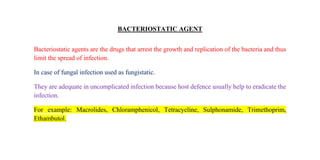
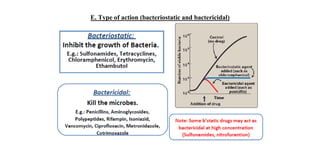
BACTERIOSTATIC AGENT
Bacteriostatic agents are the drugs that arrest the growth and replication of the bacteria and thus
limit the spread of infection.
In case of fungal infection used as fungistatic.
They are adequate in uncomplicated infection because host defence usually help to eradicate the
infection.
For example: Macrolides, Chloramphenicol, Tetracycline, Sulphonamide, Trimethoprim,
Ethambutol.
BACTERICIDAL AGENT
Bactericidal agents are the drugs that kill or irreversible damage the multiplying bacteria so that
decrease the number of viable organisms.
In case of fungal used as fungicidal.
For example: Beta lactam antibiotics, Co-trimaxazole, Aminoglycoside, Fluoroquinolones,
Isoniazide, Pyrazinamide, Rifampicin.
HISTORY OF ANTIBIOTICS
Antibiotics use is found since ancient times. Topical application of mouldy bread, with many
references to its beneficial effects arising from ancient Egypt, China, Serbia, Greece and Rome
was used by many civilizations. John Parkinson (1567-1650) was the first person to directly
document the use of moulds to treat infection.
Antibiotics truly revolutionized medicine in the 20th
century by Alexander Fleming (1881-1955).
The first commercially available antibacterial was Prontosil, a sulphonamide developed by the
German biochemist Gerhard Domagk in the 1930s.
Before this, in 1928, Alexander Fleming had discovered the first antibiotic, penicillin, but it took
over a decade before penicillin was introduced as a treatment for bacterial infections. The
introduction of penicillin marked the beginning of the so-called “golden era” of antibiotics. Most
of the antibiotic classes used at present were discovered between 1940 and 1962. Each class
typically contains several antibiotics that have been discovered over time or are modified
versions of previous types.
CLASSIFICATION
A. Chemical structure
B. Mechanism of action
C. Type of organisms (against which primarily active)
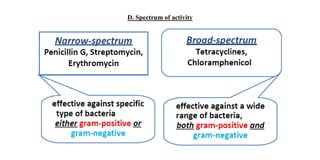
D. Spectrum of activity
E. Type of action (bacteriostatic and bactericidal)
F. Source of antibiotics
A. Chemical structure
• Sulfonamides and related drugs: Dapsone, Sulfadiazine, Paraaminosalicylic acid (PAS)
• Diaminopyrimidines: Trimethoprim, Pyrimethamine
• Quinolones: Nalidixic acid, Norfloxacin, Ciprofloxacin
• Beta lactam antibiotics: Penicillins, Cephalosporins
• Tetracyclines: Oxytetracycline, Doxycycline
• Nitrobenzene derivative: Chloramphenicol
• Aminoglycosides: Streptomycin, Gentamycin, Amikacin, Neomycin
• Macrolide antibiotics: Erythromycin, Clarithromycin, Azithromycin
• Lincosamide antibiotics: Clindamycin
• Glycopeptide antibiotics: Vancomycin
• Polypeptide antibiotics: Polymyxin-B, Bacitracin, Tyrothricin
• Nitrofuran derivatives: Nitrofurantoin
• Nitroimidazoles: Metronidazole, Tinidazole
• Nicotinic acid derivatives: Isoniazid, Pyrezinamide, Ethionamide
• Polyene antibiotics: Amphotericin-B, Nystatin, Hamycin
• Azole derivatives: Miconazole, Clotrimazole, Ketoconazole, Fluconazole
• Others: Rifampin, Ethambutol, Griseofulvin
B. Mechanism of action
C. Type of organisms (against which primarily active)
• Antibacterial (a class of antibiotics used for the treatment of infections caused due to
bacteria): Penicillins, Aminoglycosides, Erythromycin, etc.
• Antiviral (a class of antibiotics used for the treatment of infections caused due to viruses):
Acyclovir, Amantadine B, Zidovudine, etc.
• Antifungal (a class of antibiotics used for the treatment of fungal infections): Griseofulvin,
Amphotericin B, Ketoconazole, etc.
• Antiprotozoal (a class of antibiotics used for the treatment of protozoan infection):
Chloroquine, Pyrimethamine, Metronidazole, etc.
• Anthelminthic (a group of antiparasitic drugs that expel parasitic worms and other internal
parasites from the body by either stunning or killing them and without causing significant
damage to the host): Mebendazole, Niclosamide, Diethyl carbamazine, etc.
D. Spectrum of activity
E. Type of action (bacteriostatic and bactericidal)
F. Source of antibiotics
Fungi: Penicillin, Griseofulvin, Cephalosporin
Bacteria: Polymyxin B, Tyrothricin, Colistin, Aztreonam, Bacitracin
Actinomycetes: Aminoglycosides, Macrolides, Tetracyclines, Polyenes, Chloramphenicol

Antibiotics: Introduction.pdf

  • 1.
  • 2.
    Antibiotics: Greek wordsanti (against) and biotikos (concerning life) refers to substances produced by microorganisms, which selectively suppress the growth of or kill other microorganisms at very low concentration. Chemotherapeutic agents: The use of drugs (chemical entity) with selective toxicity against infections/ viruses, bacteria, protozoa, fungi and helminths. Antimicrobials: Derived from the Greek words anti (against), mikros (little) and bios (life) and refers to all agents of natural, synthetic or semi-synthetic origin which at low concentrations kill or inhibits the growth of microorganisms but causes little or no host damage. Antimicrobials include both chemotherapeutic agents + antibiotics.
  • 3.
    ANTIBIOTICS OLD DEFINITION: Anantibiotic is a chemical substance produced by various species of microorganisms which in low concentration destroy or inhibit the growth of other species of microorganisms. NEW DEFINITION: An antibiotic is a product produced by a microorganism or a similar substance produced wholly or partially by chemical synthesis, which in low concentrations, inhibits the growth of other microorganisms. An antibiotic has been chosen so that it will kill the desired bacteria, but not the cells in human body. Each different type of antibiotic affects the different bacteria in different ways (i.e., different mechanism of action).
  • 4.
    BACTERIOSTATIC AGENT Bacteriostatic agentsare the drugs that arrest the growth and replication of the bacteria and thus limit the spread of infection. In case of fungal infection used as fungistatic. They are adequate in uncomplicated infection because host defence usually help to eradicate the infection. For example: Macrolides, Chloramphenicol, Tetracycline, Sulphonamide, Trimethoprim, Ethambutol.
  • 5.
    BACTERICIDAL AGENT Bactericidal agentsare the drugs that kill or irreversible damage the multiplying bacteria so that decrease the number of viable organisms. In case of fungal used as fungicidal. For example: Beta lactam antibiotics, Co-trimaxazole, Aminoglycoside, Fluoroquinolones, Isoniazide, Pyrazinamide, Rifampicin.
  • 6.
    HISTORY OF ANTIBIOTICS Antibioticsuse is found since ancient times. Topical application of mouldy bread, with many references to its beneficial effects arising from ancient Egypt, China, Serbia, Greece and Rome was used by many civilizations. John Parkinson (1567-1650) was the first person to directly document the use of moulds to treat infection. Antibiotics truly revolutionized medicine in the 20th century by Alexander Fleming (1881-1955). The first commercially available antibacterial was Prontosil, a sulphonamide developed by the German biochemist Gerhard Domagk in the 1930s. Before this, in 1928, Alexander Fleming had discovered the first antibiotic, penicillin, but it took over a decade before penicillin was introduced as a treatment for bacterial infections. The introduction of penicillin marked the beginning of the so-called “golden era” of antibiotics. Most of the antibiotic classes used at present were discovered between 1940 and 1962. Each class typically contains several antibiotics that have been discovered over time or are modified versions of previous types.
  • 13.
    CLASSIFICATION A. Chemical structure B.Mechanism of action C. Type of organisms (against which primarily active) D. Spectrum of activity E. Type of action (bacteriostatic and bactericidal) F. Source of antibiotics
  • 14.
    A. Chemical structure •Sulfonamides and related drugs: Dapsone, Sulfadiazine, Paraaminosalicylic acid (PAS) • Diaminopyrimidines: Trimethoprim, Pyrimethamine • Quinolones: Nalidixic acid, Norfloxacin, Ciprofloxacin • Beta lactam antibiotics: Penicillins, Cephalosporins • Tetracyclines: Oxytetracycline, Doxycycline • Nitrobenzene derivative: Chloramphenicol • Aminoglycosides: Streptomycin, Gentamycin, Amikacin, Neomycin • Macrolide antibiotics: Erythromycin, Clarithromycin, Azithromycin
  • 15.
    • Lincosamide antibiotics:Clindamycin • Glycopeptide antibiotics: Vancomycin • Polypeptide antibiotics: Polymyxin-B, Bacitracin, Tyrothricin • Nitrofuran derivatives: Nitrofurantoin • Nitroimidazoles: Metronidazole, Tinidazole • Nicotinic acid derivatives: Isoniazid, Pyrezinamide, Ethionamide • Polyene antibiotics: Amphotericin-B, Nystatin, Hamycin • Azole derivatives: Miconazole, Clotrimazole, Ketoconazole, Fluconazole • Others: Rifampin, Ethambutol, Griseofulvin
  • 16.
  • 18.
    C. Type oforganisms (against which primarily active) • Antibacterial (a class of antibiotics used for the treatment of infections caused due to bacteria): Penicillins, Aminoglycosides, Erythromycin, etc. • Antiviral (a class of antibiotics used for the treatment of infections caused due to viruses): Acyclovir, Amantadine B, Zidovudine, etc. • Antifungal (a class of antibiotics used for the treatment of fungal infections): Griseofulvin, Amphotericin B, Ketoconazole, etc. • Antiprotozoal (a class of antibiotics used for the treatment of protozoan infection): Chloroquine, Pyrimethamine, Metronidazole, etc. • Anthelminthic (a group of antiparasitic drugs that expel parasitic worms and other internal parasites from the body by either stunning or killing them and without causing significant damage to the host): Mebendazole, Niclosamide, Diethyl carbamazine, etc.
  • 19.
  • 20.
    E. Type ofaction (bacteriostatic and bactericidal)
  • 21.
    F. Source ofantibiotics Fungi: Penicillin, Griseofulvin, Cephalosporin Bacteria: Polymyxin B, Tyrothricin, Colistin, Aztreonam, Bacitracin Actinomycetes: Aminoglycosides, Macrolides, Tetracyclines, Polyenes, Chloramphenicol