ANTIBIOTICS
Presented By:-
Mridul Chhokar
B.Pharmacy
DEFINATIONS
 Antibiotics, also called antibacterials, are a type of antimicrobial
drug used in the treatment and prevention of bacterial infections.
They may either kill or inhibit the growth of bacteria. A limited
number of antibiotics also possess antiprotozoal activity.
Antibiotics are not effective against viruses such as the common
cold or influenza, and their inappropriate use allows the
emergence of resistant organisms.
ACTIONS
Bactericidal = kill bacteria
Bacteriostatic = Inhibits growth of Susceptible
Bacteria, rather them killing them immediately will
eventually leads to Bacterial Death.
HISTORY
 In 1928, Alexander Fleming identified penicillin, the first
chemical compound with antibiotic properties. Fleming was
working on a culture of disease-causing bacteria when he
noticed the spores of a little green mold (Penicillium
chrysogenum), in one of his culture plates. He observed that
the presence of the mold killed or prevented the growth of
the bacteria.
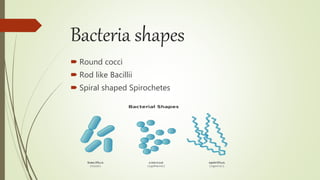
Bacteria shapes
 Round cocci
 Rod like Bacillii
 Spiral shaped Spirochetes
CLASSIFICATION OF ANTIBIOTICS
 Sulfonamides
 Penicillin
 Cephalospoins Tetracyclins
 Macrolides
 Aminoglycosides
 Quinolones
HOW ANTIBIOTICS WORK
 Block protein formation.
 Macrolides
 Tetracycline
 Aminoglycosides
 Inhibits cell formation
 Interfere with DNA formation
 Nalidixic acid
 Prevent folic acid synthesis
 Sulfonamides
SULFONAMIDES
 One of the first group of antibacterial agents having
Bacteriostatic action.
 Prevent synthesis of folic acid.
 Does’nt effect human cells.
 TREAT:- Urinary Tract Infections.(URIs)
SULFONAMIDES: SIDE EFFECTS
 Anemia
 Thrombocytopenia
 Steven-Johnson syndrome
 Diarrhea
 Nausea
 Headache
 Urticaria
PENICILLIN
 First introduced in the 1940s
 Bactericidal: inhibits cell wall synthesis
 Kill a wide variety of bacteria
 Also called “beta-lactams”
 Prevention and treatment from infection caused by
susceptible bacteria such as :-
• Gram +ve bacteria
PENICILLIN
 Natural
Penicilllin G
Penicillin V
 Aminopenicillins
Amoxicillin
Ampicillin
 Penicillinase-resistant
Oxacillin
Nafcillin
MECHANISM OF ACTION
 Penicillin enters the bacteria via cell wall.
 Inside the cell , they bind to penicillin-binding protein.
 Once bound, normal cell wall synthesis was disrupted.
 Because of this bacteria dies from cell lysis.
 Penicllin do not kill other other cells in the body.
ADVERSE EFFECT
 Allergy
 Diarrhea
 Nausea
CEPHALOSPORINS
 Semisynthetic
 Related to penicillin
 Bactericidal
 4 generations
CEPHALOSPORINS
 Semisynthetic derivatives from a fungus
 Structurally and pharmacologically related
to penicillins
 Bactericidal action
 Broad spectrum
 Divided into groups according to their antimicrobial activity
CEPHALOSPORINS : USES
 Surgical prophylaxis
 URIs
 Otitis media
SIDE EFFECTS
 Allergy
Rash, swelling, itching
Tetracyclines
 Bind to Ca2+ and Mg2+ and Al3+ ions to
form insoluble complexes
 Thus, dairy products, antacids, and iron
salts reduce absorption of tetracyclines
Tetracyclines: uses
 Acne
 Chronic bronchitis
 Lyme disease
 Mycoplasma pneumoniae infection
 Rickettsia infection
 Some venereal diseases, such as Chlamydia infection
 Traveler’s diarrhea
ADVERSE EFFECT
 Discoloration of permanent teeth and tooth
enamel in fetuses and children
 May retard fetal skeletal development if taken
during pregnancy
 Diarrhea
MACROLIDES
 erythromycin
 azithromycin (Zithromax)
 clarithromycin (Biaxin)
 dirithromycin
 troleandomycin
bactericidal action
MACROLIDES: USES
 Strep infections
 Mild-to-moderate URIs
 Lyme disease
 STDs
SIDE EFFECTS
 Strep infections
 Mild-to-moderate URIs
 Lyme disease
 STDs
Aminoglycosides
 gentamicin (Garamycin)
 kanamycin
 neomycin
 streptomycin
 tobramycin
 amikacin (Amikin)
 netilmicin
AMINOGLYCOSIDES: USES
 Used to kill gram-negative bacteria such as Pseudomonas
spp., E. coli, Proteus spp., Klebsiella spp., Serratia spp.
 Often used in combination with other antibiotics for
synergistic effect.
ADVERSE EFFECT
Headache
Paresthesia
Neuromuscular blockade
Dizziness
Vertigo
Skin rash
Fever
QUINOLONES
 ciprofloxacin (Cipro)
 enoxacin (Penetrex)
 lomefloxacin (Maxaquin)
 norfloxacin (Noroxin)
 ofloxacin (Floxin)
QUINOLONES: USES
 Lower respiratory tract infections
 Bone & joint infections
 Infectious diarrhea
 UTIs
 Skin infections
 STDs
 Anthrax
SIDE EFFECTS
 HA
 N-V-D
 Allergic reaction
Antibiotic resistance
The ability of bacteria and other microorganisms
to resist the effects of an antibiotic to which they
were once sensitive. Antibiotic resistance is a
major concern of overuse of antibiotics. Also
known as drug resistance.
Therefore a great care should be taken before
taking antibiotics and it should be only taken on
the advice of Pharmacist or a Doctor.
Antibiotics
Antibiotics

Antibiotics

  • 1.
  • 3.
    DEFINATIONS  Antibiotics, alsocalled antibacterials, are a type of antimicrobial drug used in the treatment and prevention of bacterial infections. They may either kill or inhibit the growth of bacteria. A limited number of antibiotics also possess antiprotozoal activity. Antibiotics are not effective against viruses such as the common cold or influenza, and their inappropriate use allows the emergence of resistant organisms.
  • 4.
    ACTIONS Bactericidal = killbacteria Bacteriostatic = Inhibits growth of Susceptible Bacteria, rather them killing them immediately will eventually leads to Bacterial Death.
  • 5.
    HISTORY  In 1928,Alexander Fleming identified penicillin, the first chemical compound with antibiotic properties. Fleming was working on a culture of disease-causing bacteria when he noticed the spores of a little green mold (Penicillium chrysogenum), in one of his culture plates. He observed that the presence of the mold killed or prevented the growth of the bacteria.
  • 6.
    Bacteria shapes  Roundcocci  Rod like Bacillii  Spiral shaped Spirochetes
  • 7.
    CLASSIFICATION OF ANTIBIOTICS Sulfonamides  Penicillin  Cephalospoins Tetracyclins  Macrolides  Aminoglycosides  Quinolones
  • 8.
    HOW ANTIBIOTICS WORK Block protein formation.  Macrolides  Tetracycline  Aminoglycosides  Inhibits cell formation  Interfere with DNA formation  Nalidixic acid  Prevent folic acid synthesis  Sulfonamides
  • 9.
    SULFONAMIDES  One ofthe first group of antibacterial agents having Bacteriostatic action.  Prevent synthesis of folic acid.  Does’nt effect human cells.  TREAT:- Urinary Tract Infections.(URIs)
  • 10.
    SULFONAMIDES: SIDE EFFECTS Anemia  Thrombocytopenia  Steven-Johnson syndrome  Diarrhea  Nausea  Headache  Urticaria
  • 11.
    PENICILLIN  First introducedin the 1940s  Bactericidal: inhibits cell wall synthesis  Kill a wide variety of bacteria  Also called “beta-lactams”  Prevention and treatment from infection caused by susceptible bacteria such as :- • Gram +ve bacteria
  • 12.
    PENICILLIN  Natural Penicilllin G PenicillinV  Aminopenicillins Amoxicillin Ampicillin  Penicillinase-resistant Oxacillin Nafcillin
  • 13.
    MECHANISM OF ACTION Penicillin enters the bacteria via cell wall.  Inside the cell , they bind to penicillin-binding protein.  Once bound, normal cell wall synthesis was disrupted.  Because of this bacteria dies from cell lysis.  Penicllin do not kill other other cells in the body.
  • 14.
    ADVERSE EFFECT  Allergy Diarrhea  Nausea
  • 15.
    CEPHALOSPORINS  Semisynthetic  Relatedto penicillin  Bactericidal  4 generations
  • 16.
    CEPHALOSPORINS  Semisynthetic derivativesfrom a fungus  Structurally and pharmacologically related to penicillins  Bactericidal action  Broad spectrum  Divided into groups according to their antimicrobial activity
  • 17.
    CEPHALOSPORINS : USES Surgical prophylaxis  URIs  Otitis media
  • 18.
  • 19.
    Tetracyclines  Bind toCa2+ and Mg2+ and Al3+ ions to form insoluble complexes  Thus, dairy products, antacids, and iron salts reduce absorption of tetracyclines
  • 20.
    Tetracyclines: uses  Acne Chronic bronchitis  Lyme disease  Mycoplasma pneumoniae infection  Rickettsia infection  Some venereal diseases, such as Chlamydia infection  Traveler’s diarrhea
  • 21.
    ADVERSE EFFECT  Discolorationof permanent teeth and tooth enamel in fetuses and children  May retard fetal skeletal development if taken during pregnancy  Diarrhea
  • 22.
    MACROLIDES  erythromycin  azithromycin(Zithromax)  clarithromycin (Biaxin)  dirithromycin  troleandomycin bactericidal action
  • 23.
    MACROLIDES: USES  Strepinfections  Mild-to-moderate URIs  Lyme disease  STDs
  • 24.
    SIDE EFFECTS  Strepinfections  Mild-to-moderate URIs  Lyme disease  STDs
  • 25.
    Aminoglycosides  gentamicin (Garamycin) kanamycin  neomycin  streptomycin  tobramycin  amikacin (Amikin)  netilmicin
  • 26.
    AMINOGLYCOSIDES: USES  Usedto kill gram-negative bacteria such as Pseudomonas spp., E. coli, Proteus spp., Klebsiella spp., Serratia spp.  Often used in combination with other antibiotics for synergistic effect.
  • 27.
  • 28.
    QUINOLONES  ciprofloxacin (Cipro) enoxacin (Penetrex)  lomefloxacin (Maxaquin)  norfloxacin (Noroxin)  ofloxacin (Floxin)
  • 29.
    QUINOLONES: USES  Lowerrespiratory tract infections  Bone & joint infections  Infectious diarrhea  UTIs  Skin infections  STDs  Anthrax
  • 30.
    SIDE EFFECTS  HA N-V-D  Allergic reaction
  • 31.
    Antibiotic resistance The abilityof bacteria and other microorganisms to resist the effects of an antibiotic to which they were once sensitive. Antibiotic resistance is a major concern of overuse of antibiotics. Also known as drug resistance. Therefore a great care should be taken before taking antibiotics and it should be only taken on the advice of Pharmacist or a Doctor.