SEPSIS PROTOCOL (SURVIVING SEPSIS GUIDELINES 2016)
Critical Care Medicine March 2017 • Volume 45 • Number 3
Notes by: Col Bharat Malhotra Senior Advisor Medicine
A. INITIAL RESUSCITATION
Step 1: Take care of airway and breathing
• Proper airway care and, if needed, assisted ventilation should be promptly initiated in all patients with
severe sepsis and shock.
Step 2: Assess severity of sepsis
• Categorizing patients into sepsis and septic shock.
• Sepsis and septic shock are medical emergencies, and it is recommended that treatment and resuscitation
begin immediately.
SEPSIS SEPTIC SHOCK
Sepsis is
• life-threatening organ dysfunction
• caused by a dysregulated host response
• to infection.
Septic shock is a
• subset of sepsis
• with circulatory and cellular/metabolic
dysfunction
• associated with a higher risk of mortality
NOTE: The Sepsis-3 definition also proposed clinical criteria to operationalize the new definitions; however, in the studies used to
establish the evidence for these guidelines, patient populations were primarily characterized by the previous definition of sepsis,
severe sepsis, and septic shock stated in the 1991 and 2001 consensus documents.
Step 3: Maintain circulation
Insert a wide-bore peripheral line and give initial fluid challenge in sepsis-induced hypoperfusion or septic
shock. Sepsis-induced hypoperfusion may be manifested by acute organ dysfunction and/ or ±
decreased blood pressure and increased serum lactate.
Normal saline or
Ringer lactate
Monitor
1
2
3
Treatment & resuscitation begin immediately
IV crystalloid fluid
30 mL/kg CRYSTALLOID FLUID
within the first 3 h (WITHIN 01 Hour @2018 UPDATE)
Additional Fluids
Additional fluids be guided by frequent
reassessment of hemodynamic status after
initial fluid resuscitation
Reassessment should include a thorough clinical examination
and evaluation of available physiologic variables (heart rate,
blood pressure, arterial oxygen saturation, respiratory rate,
temperature, urine output, and others, as available)
Echocardiography in recent years has become available to many
bedside clinicians and enables a more detailed assessment of the
causes of the hemodynamic issues.
The use of CVP alone to guide fluid resuscitation can no longer
be justified.
4 Recommend further hemodynamic assessment (such as assessing cardiac function) to
determine the type of shock if the clinical examination does not lead to a clear diagnosis.
5 Dynamic over static variables be used to predict fluid responsiveness, where available
6 Recommended an initial target mean arterial pressure (MAP) of 65 mm Hg in patients with
septic shock requiring vasopressors.
7 Suggested guiding resuscitation to normalize lactate in patients with elevated lactate
levels as a marker of tissue hypoperfusion.
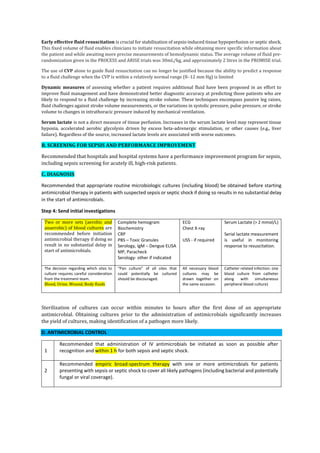
Early effective fluid resuscitation is crucial for stabilization of sepsis-induced tissue hypoperfusion or septic shock.
This fixed volume of fluid enables clinicians to initiate resuscitation while obtaining more specific information about
the patient and while awaiting more precise measurements of hemodynamic status. The average volume of fluid pre-
randomization given in the PROCESS and ARISE trials was 30mL/kg, and approximately 2 litres in the PROMISE trial.
The use of CVP alone to guide fluid resuscitation can no longer be justified because the ability to predict a response
to a fluid challenge when the CVP is within a relatively normal range (8–12 mm Hg) is limited
Dynamic measures of assessing whether a patient requires additional fluid have been proposed in an effort to
improve fluid management and have demonstrated better diagnostic accuracy at predicting those patients who are
likely to respond to a fluid challenge by increasing stroke volume. These techniques encompass passive leg raises,
fluid challenges against stroke volume measurements, or the variations in systolic pressure, pulse pressure, or stroke
volume to changes in intrathoracic pressure induced by mechanical ventilation.
Serum lactate is not a direct measure of tissue perfusion. Increases in the serum lactate level may represent tissue
hypoxia, accelerated aerobic glycolysis driven by excess beta-adrenergic stimulation, or other causes (e.g., liver
failure). Regardless of the source, increased lactate levels are associated with worse outcomes.
B. SCREENING FOR SEPSIS AND PERFORMANCE IMPROVEMENT
Recommended that hospitals and hospital systems have a performance improvement program for sepsis,
including sepsis screening for acutely ill, high-risk patients.
C. DIAGNOSIS
Recommended that appropriate routine microbiologic cultures (including blood) be obtained before starting
antimicrobial therapy in patients with suspected sepsis or septic shock if doing so results in no substantial delay
in the start of antimicrobials.
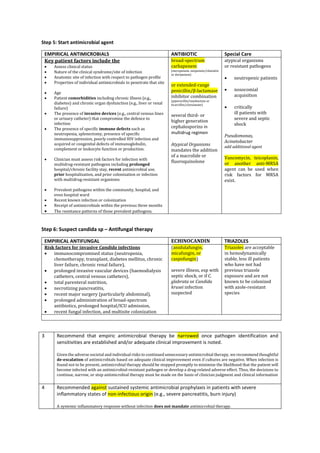
Step 4: Send initial investigations
Two or more sets (aerobic and
anaerobic) of blood cultures are
recommended before initiation
antimicrobial therapy if doing so
result in no substantial delay in
start of antimicrobials.
Complete hemogram
Biochemistry
CRP
PBS – Toxic Granules
Serology, IgM – Dengue ELISA
MP, Paracheck
Serology- other if indicated
ECG
Chest X-ray
USS - if required
Serum Lactate (> 2 mmol/L)
Serial lactate measurement
is useful in monitoring
response to resuscitation.
The decision regarding which sites to
culture requires careful consideration
from the treatment team.
Blood, Urine, Wound, Body fluids
“Pan culture” of all sites that
could potentially be cultured
should be discouraged.
All necessary blood
cultures may be
drawn together on
the same occasion.
Catheter related infection: one
blood culture from catheter
along with simultaneous
peripheral blood culture)
Sterilization of cultures can occur within minutes to hours after the first dose of an appropriate
antimicrobial. Obtaining cultures prior to the administration of antimicrobials significantly increases
the yield of cultures, making identification of a pathogen more likely.
D. ANTIMICROBIAL CONTROL
1
Recommended that administration of IV antimicrobials be initiated as soon as possible after
recognition and within 1 h for both sepsis and septic shock.
2
Recommended empiric broad-spectrum therapy with one or more antimicrobials for patients
presenting with sepsis or septic shock to cover all likely pathogens (including bacterial and potentially
fungal or viral coverage).
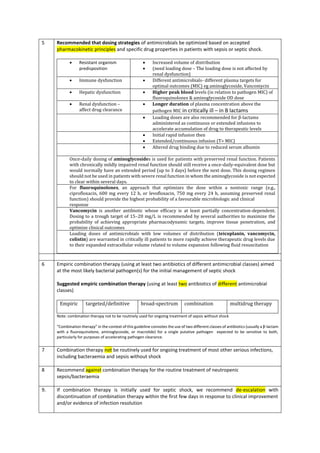
Step 5: Start antimicrobial agent
EMPIRICAL ANTIMICROBIALS ANTIBIOTIC Special Care
Key patient factors include the
• Assess clinical status
• Nature of the clinical syndrome/site of infection
• Anatomic site of infection with respect to pathogen profile
• Properties of individual antimicrobials to penetrate that site
• Age
• Patient comorbidities including chronic illness (e.g.,
diabetes) and chronic organ dysfunction (e.g., liver or renal
failure)
• The presence of invasive devices (e.g., central venous lines
or urinary catheter) that compromise the defence to
infection
• The presence of specific immune defects such as
neutropenia, splenectomy, presence of specific
immunosuppression, poorly controlled HIV infection and
acquired or congenital defects of immunoglobulin,
complement or leukocyte function or production.
• Clinician must assess risk factors for infection with
multidrug-resistant pathogens including prolonged
hospital/chronic facility stay, recent antimicrobial use,
prior hospitalization, and prior colonization or infection
with multidrug-resistant organisms
• Prevalent pathogens within the community, hospital, and
even hospital ward
• Recent known infection or colonization
• Receipt of antimicrobials within the previous three months
• The resistance patterns of those prevalent pathogens.
broad-spectrum
carbapenem
(meropenem, imipenem/cilastatin
or doripenem)
or extended-range
penicillin/β-lactamase
inhibitor combination
(piperacillin/tazobactam or
ticarcillin/clavulanate)
several third- or
higher generation
cephalosporins in
multidrug regimen
Atypical Organisms
mandates the addition
of a macrolide or
fluoroquinolone
atypical organisms
or resistant pathogens
• neutropenic patients
• nosocomial
acquisition
• critically
ill patients with
severe and septic
shock
Pseudomonas,
Acinetobacter
add additional agent
Vancomycin, teicoplanin,
or another anti-MRSA
agent can be used when
risk factors for MRSA
exist.
Step 6: Suspect candida sp – Antifungal therapy
EMPIRICAL ANTIFUNGAL ECHINOCANDIN TRIAZOLES
Risk factors for invasive Candida infections
• immunocompromised status (neutropenia,
chemotherapy, transplant, diabetes mellitus, chronic
liver failure, chronic renal failure),
• prolonged invasive vascular devices (haemodialysis
catheters, central venous catheters),
• total parenteral nutrition,
• necrotizing pancreatitis,
• recent major surgery (particularly abdominal),
• prolonged administration of broad-spectrum
antibiotics, prolonged hospital/ICU admission,
• recent fungal infection, and multisite colonization
(anidulafungin,
micafungin, or
caspofungin)
severe illness, esp with
septic shock, or if C.
glabrata or Candida
krusei infection
suspected
Triazoles are acceptable
in hemodynamically
stable, less ill patients
who have not had
previous triazole
exposure and are not
known to be colonized
with azole-resistant
species
3 Recommend that empiric antimicrobial therapy be narrowed once pathogen identification and
sensitivities are established and/or adequate clinical improvement is noted.
Given the adverse societal and individual risks to continued unnecessary antimicrobial therapy, we recommend thoughtful
de-escalation of antimicrobials based on adequate clinical improvement even if cultures are negative. When infection is
found not to be present, antimicrobial therapy should be stopped promptly to minimize the likelihood that the patient will
become infected with an antimicrobial-resistant pathogen or develop a drug-related adverse effect. Thus, the decisions to
continue, narrow, or stop antimicrobial therapy must be made on the basis of clinician judgment and clinical information
4 Recommended against sustained systemic antimicrobial prophylaxis in patients with severe
inflammatory states of non-infectious origin (e.g., severe pancreatitis, burn injury)
A systemic inflammatory response without infection does not mandate antimicrobial therapy.
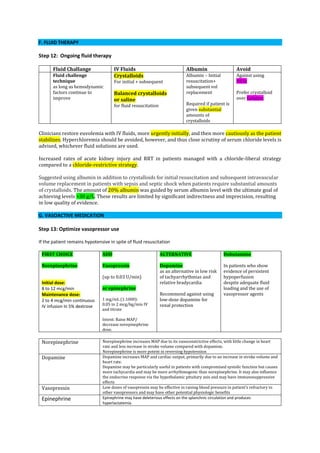
5 Recommended that dosing strategies of antimicrobials be optimized based on accepted
pharmacokinetic principles and specific drug properties in patients with sepsis or septic shock.
• Resistant organism
predisposition
• Increased volume of distribution
• (need loading dose – The loading dose is not affected by
renal dysfunction)
• Immune dysfunction • Different antimicrobials- different plasma targets for
optimal outcomes (MIC) eg aminoglycoside, Vancomycin
• Hepatic dysfunction • Higher peak blood levels (in relation to pathogen MIC) of
fluoroquinolones & aminoglycoside OD dose
• Renal dysfunction –
affect drug clearance
• Longer duration of plasma concentration above the
pathogen MIC in critically ill – in B lactams
• Loading doses are also recommended for β-lactams
administered as continuous or extended infusions to
accelerate accumulation of drug to therapeutic levels
• Initial rapid infusion then
• Extended/continuous infusion (T> MIC)
• Altered drug binding due to reduced serum albumin
Once-daily dosing of aminoglycosides is used for patients with preserved renal function. Patients
with chronically mildly impaired renal function should still receive a once-daily-equivalent dose but
would normally have an extended period (up to 3 days) before the next dose. This dosing regimen
should not be used in patients with severe renal function in whom the aminoglycoside is not expected
to clear within several days.
For fluoroquinolones, an approach that optimizes the dose within a nontoxic range (e.g.,
ciprofloxacin, 600 mg every 12 h, or levofloxacin, 750 mg every 24 h, assuming preserved renal
function) should provide the highest probability of a favourable microbiologic and clinical
response
Vancomycin is another antibiotic whose efficacy is at least partially concentration-dependent.
Dosing to a trough target of 15–20 mg/L is recommended by several authorities to maximize the
probability of achieving appropriate pharmacodynamic targets, improve tissue penetration, and
optimize clinical outcomes
Loading doses of antimicrobials with low volumes of distribution (teicoplanin, vancomycin,
colistin) are warranted in critically ill patients to more rapidly achieve therapeutic drug levels due
to their expanded extracellular volume related to volume expansion following fluid resuscitation
6 Empiric combination therapy (using at least two antibiotics of different antimicrobial classes) aimed
at the most likely bacterial pathogen(s) for the initial management of septic shock
Suggested empiric combination therapy (using at least two antibiotics of different antimicrobial
classes)
Empiric targeted/definitive broad-spectrum combination multidrug therapy
Note: combination therapy not to be routinely used for ongoing treatment of sepsis without shock
“Combination therapy” in the context of this guideline connotes the use of two different classes of antibiotics (usually a β-lactam
with a fluoroquinolone, aminoglycoside, or macrolide) for a single putative pathogen expected to be sensitive to both,
particularly for purposes of accelerating pathogen clearance.
7 Combination therapy not be routinely used for ongoing treatment of most other serious infections,
including bacteraemia and sepsis without shock
8 Recommend against combination therapy for the routine treatment of neutropenic
sepsis/bacteraemia
9. If combination therapy is initially used for septic shock, we recommend de-escalation with
discontinuation of combination therapy within the first few days in response to clinical improvement
and/or evidence of infection resolution
10
11
12
13
Suggested antimicrobial treatment duration
Duration of
7–10 days is
adequate
Longer courses are appropriate in
• slow clinical response,
• undrainable foci of infection,
• bacteremia with S. aureus,
• some fungal infections,
• or immunologic deficiencies
Shorter courses are
appropriate in
Rapid clinical
resolution following
effective source
control
daily assessment
for de-escalation of
antimicrobial
therapy
For individual patients, prolonged antibiotic therapy is associated with specific illnesses such as Clostridium difficile
colitis and increased mortality risk due to superinfections and MDR pathogens.
In particular, uncomplicated S. aureus bacteraemia requires at least 14 days of therapy, while complicated
bacteraemia requires treatment as an endovascular infection with 6 weeks of therapy.
Patients with candidemia (whether or not catheter associated) , deep Candida infections and highly resistant gram
negative pathogens whether or not associated with sepsis, require more prolonged therapy. Larger abscesses and
osteomyelitis have limited drug penetration and require longer therapy. Endocarditis require prolong therapy.
14
15
Suggested that measurement of procalcitonin levels can be used to support shortening the duration
of antimicrobial therapy in sepsis patients.
It is suggested that procalcitonin levels can be used to support the discontinuation of empiric
antibiotics in patients who initially appeared to have sepsis, but subsequently have limited clinical
evidence of infection
Measurement of serum procalcitonin is commonly used in many parts of the world to assist in the diagnosis of acute
infection and to help define the duration of antimicrobial therapy. The use of galactomannan and β-d-glucan to assist in
the assessment of invasive aspergillus (and a broad range of fungal pathogens) has become well accepted.
E. SOURCE CONTROL
Step 11: Control source of infection
1 Recommended that a specific anatomic diagnosis of infection requiring emergent source control be
identified or excluded as rapidly as possible in patients with sepsis or septic shock, and that any
required source control intervention be implemented as soon as medically and logistically practical
after the diagnosis is made.
Infection site is amenable to source control measures (specifically the drainage of an abscess, debridement of infected
necrotic tissue, removal of a potentially infected device, and definitive control of a source of ongoing microbial
contamination.
Prolonged efforts at medical stabilization prior to source control for severely ill patients, particularly those with septic shock,
are generally not warranted. The least invasive effective option for source control should be pursued.
2 Recommended prompt removal of intravascular access devices that are a possible source of sepsis or
septic shock after other vascular access has been established.
In the absence of both septic shock and fungemia, some implanted, tunneled catheter infections may be able to be treated
effectively with prolonged antimicrobial therapy if removal of the catheter is not practical. However, catheter removal (with
antimicrobial therapy) is definitive and is preferred where possible.
F. FLUID THERAPY
Step 12: Ongoing fluid therapy
Fluid Challange IV Fluids Albumin Avoid
Fluid challenge
technique
as long as hemodynamic
factors continue to
improve
Crystalloids
For initial + subsequent
Balanced crystalloids
or saline
for fluid resuscitation
Albumin – Initial
resuscitation+
subsequent vol
replacement
Required if patient is
given substantial
amounts of
crystalloids
Against using
HESs
Prefer crystalloid
over Gelatins
Clinicians restore euvolemia with IV fluids, more urgently initially, and then more cautiously as the patient
stabilizes. Hyperchloremia should be avoided, however, and thus close scrutiny of serum chloride levels is
advised, whichever fluid solutions are used.
Increased rates of acute kidney injury and RRT in patients managed with a chloride-liberal strategy
compared to a chloride-restrictive strategy.
Suggested using albumin in addition to crystalloids for initial resuscitation and subsequent intravascular
volume replacement in patients with sepsis and septic shock when patients require substantial amounts
of crystalloids. The amount of 20% albumin was guided by serum albumin level with the ultimate goal of
achieving levels >30 g/L. These results are limited by significant indirectness and imprecision, resulting
in low quality of evidence.
G. VASOACTIVE MEDICATION
Step 13: Optimize vasopressor use
If the patient remains hypotensive in spite of fluid resuscitation
FIRST CHOICE
Norepinephrine
Initial dose:
8 to 12 mcg/min
Maintenance dose:
2 to 4 mcg/min continuous
IV infusion In 5% dextrose
ADD
Vasopressin
(up to 0.03 U/min)
or epinephrine
1 mg/mL (1:1000):
0.05 to 2 mcg/kg/min IV
and titrate
Intent: Raise MAP/
decrease norepinephrine
dose.
ALTERNATIVE
Dopamine
as an alternative in low risk
of tachyarrhythmias and
relative bradycardia
Recommend against using
low-dose dopamine for
renal protection
Dobutamine
In patients who show
evidence of persistent
hypoperfusion
despite adequate fluid
loading and the use of
vasopressor agents
Norepinephrine Norepinephrine increases MAP due to its vasoconstrictive effects, with little change in heart
rate and less increase in stroke volume compared with dopamine.
Norepinephrine is more potent in reversing hypotension
Dopamine Dopamine increases MAP and cardiac output, primarily due to an increase in stroke volume and
heart rate.
Dopamine may be particularly useful in patients with compromised systolic function but causes
more tachycardia and may be more arrhythmogenic than norepinephrine. It may also influence
the endocrine response via the hypothalamic pituitary axis and may have immunosuppressive
effects
Vasopressin Low doses of vasopressin may be effective in raising blood pressure in patient’s refractory to
other vasopressors and may have other potential physiologic benefits
Epinephrine Epinephrine may have deleterious effects on the splanchnic circulation and produces
hyperlactatemia.
Epinephrine may increase aerobic lactate production via stimulation of skeletal muscle β2-
adrenergic receptors and thus may preclude the use of lactate clearance to guide resuscitation.
Dobutamine
(In Selected cases)
Some patients, however, may have improved tissue perfusion with inotropic therapy aimed at
increasing oxygen delivery. In this situation, dobutamine is used in patients with measured or
suspected low cardiac output in the presence of adequate left ventricular filling pressure (or clinical
assessment of adequate fluid resuscitation) and adequate MAP.
Norepinephrine increases MAP due to its vasoconstrictive effects, with little change in heart rate and less
increase in stroke volume compared with dopamine.
Suggested that all patients requiring vasopressors have an arterial catheter placed as soon as practical if
resources are available.
H. STEROIDS
Step 14: Consider corticosteroids in specific situations (hypotensive despite fluid + vasopressor)
Suggested against using IV hydrocortisone to treat septic shock patients if adequate fluid resuscitation
and vasopressor therapy are able to restore hemodynamic stability.
If this is not achievable, we suggest IV hydrocortisone at a dose of 200 mg per day. (50mg IV QID)
Taper steroids when vasopressors are no longer needed.
Septic shock patients who have relative adrenal insufficiency (no adequate stress response), random
cortisol levels have not been demonstrated to be useful.
Several randomized trials on the use of low-dose hydrocortisone in septic shock patients revealed a
significant increase of hyperglycaemia and hypernatremia as side effects
I BLOOD PRODUCTS
Step 14: Recommendations for RBC transfusion, FFP, platelets
1. Recommended that RBC transfusion occur only when haemoglobin concentration decreases to
<7.0 g/dL in adults in the absence of extenuating circumstances, such as myocardial ischemia,
severe hypoxemia, or acute haemorrhage.
2. Recommend against the use of erythropoietin for treatment of anaemia associated with sepsis.
Erythropoietin administration may be associated with an increased incidence of thrombotic
events in the critically ill.
3. Suggested against the use of fresh frozen plasma to correct clotting abnormalities in the absence
of bleeding or planned invasive procedures.
Current recommendations are based primarily on expert opinion that fresh frozen plasma be
transfused when there is a documented deficiency of coagulation factors (increased
prothrombin time, international normalized ratio, or partial thromboplastin time) and the
presence of active bleeding or before surgical or invasive procedures
4. Suggested prophylactic platelet transfusion when counts are <10,000/mm3 (10 × 109/L) in the
absence of apparent bleeding and
When counts are <20,000/mm3 (20 × 109/L) if the patient has a significant risk of bleeding.
Higher platelet counts [ ≥50,000/mm3 (50 × 109/L)] are advised for active bleeding, surgery, or
invasive procedures.
J. IMMUNOGLOBULINS
Suggested against the use of IV immunoglobulins in patients with sepsis or septic shock
K. BLOOD PURIFICATION
No recommendation regarding the use of blood purification techniques.
L. ANTICOAGULANTS
Recommended against the use of antithrombin for the treatment of sepsis and septic shock
No recommendation regarding the use of thrombomodulin or heparin for the treatment of sepsis or septic shock
M. MECHANICAL VENTILATION
Step 15: Recommendations for Mechanical ventilator settings
For the current document, we used the 2012 Berlin definition and the terms mild, moderate, and severe ARDS
(Pao2/Fio2 ≤300, ≤200, and ≤100 mm Hg, respectively)
1. Target tidal volume Target tidal volume 6 mL/kg predicted body weight (PBW)
2. Plateau
pressures
Upper limit goal for plateau pressures of 30 cm H2O
3. PEEP Suggest using higher PEEP over lower PEEP
Raising PEEP in ARDS may open lung units to participate in gas exchange. This
may increase Pao2 when PEEP is applied through either an endotracheal
tube or a face mask
High tidal volumes coupled with high plateau pressures should be avoided in ARDS. Clinicians should use as a starting
point the objective of reducing tidal volume over 1–2h from its initial value toward the goal of a “low” tidal volume (≈6
mL/kg PBW) achieved in conjunction with an end inspiratory plateau pressure ≤30 cmH2O. If plateau pressure remains
>30 cm H2O after reduction of tidal volume to 6 mL/kg PBW, tidal volume may be further reduced to as low as 4 mL/kg
PBW. Respiratory rate should be increased to a maximum of 35 breaths/min during tidal volume reduction to maintain
minute ventilation.
Volume- and pressure limited ventilation may lead to hypercapnia even with these maximum tolerated set respiratory
rates; this appears to be tolerated and safe in the absence of contraindications.
4. Suggest using recruitment manoeuvres – severe hypoxemia
Temporarily raising transpulmonary pressure may facilitate opening atelectatic alveoli to permit gas exchange but could
also over distend aerated lung units, leading to ventilator-induced lung injury and transient hypotension.
Although the effects of recruitment manoeuvres improve oxygenation initially, the effects can be transient. Selected
patients with severe hypoxemia may benefit from recruitment manoeuvres in conjunction with higher levels of PEEP,
but little evidence supports the routine use in all ARDS patients
5. Prone over supine position
In patients with ARDS and a Pao2/Fio2 ratio < 150, the use of prone compared with supine
position within the first 36 hours of intubation, when performed for > 16 hours a day, showed
improved survival. However, prone position was associated with an increase in pressure sores.
6. Refractory hypoxia
In patients with refractory hypoxia, alternative strategies, including airway pressure release ventilation
(APRV) and extracorporeal membrane oxygenation, may be considered as rescue therapies in experienced
centres
Recommended against using high-frequency oscillatory ventilation (HFOV) in patients with sepsis-induced
ARDS.
7. NIV
No recommendation regarding the use of non-invasive ventilation (NIV) for patients with sepsis-induced
ARDS. In contrast to indications such as cardiogenic pulmonary oedema or chronic obstructive pulmonary
disease exacerbation where NIV use is brief, ARDS often takes days or weeks to improve, and prolonged NIV
use may lead to complications such as facial skin breakdown, inadequate nutritional intake, and failure to
rest respiratory muscles.
8. NMBAs
Suggested using neuromuscular blocking agents (NMBAs) for ≤ 48 hours in adult patients with
sepsis induced ARDS and a Pao2/Fio2 ratio < 150 mm Hg.
9. Conservative fluid strategy
Recommended a conservative fluid strategy for patients with established sepsis-induced ARDS
who do not have evidence of tissue hypoperfusion. Mechanisms for the development of
pulmonary oedema in patients with ARDS include increased capillary permeability, increased
hydrostatic pressure, and decreased oncotic pressure.
10. Avoid β-2 agonist
Recommend against the use of β-2 agonists for the treatment of patients with sepsis-induced
ARDS without bronchospasm. Pooled analysis suggests β-agonists may reduce survival to hospital
discharge in ARDS patients and led to more arrhythmias
11. Recommended against the routine use of the PA catheter for patients with sepsis-induced ARDS.
12.
13.
Other measures
Suggested using lower tidal volumes over higher tidal volumes in adult patients with sepsis-
induced respiratory failure without ARDS.
Recommended that mechanically ventilated sepsis patients be maintained with the head of the
bed elevated between 30 and 45 degrees to limit aspiration risk and to prevent the development
of VAP. When necessary, patients may be laid flat when indicated for procedures, hemodynamic
measurements, and during episodes of hypotension. Patients should not be fed enterally while
supine.
14. Weaning
Recommended using spontaneous breathing trials in mechanically ventilated patients with sepsis
who are ready for weaning.
Spontaneous breathing trial options include a low level of pressure support, CPAP (≈5 cm H2O),
or use of a T-piece. A recently published clinical practice guideline suggests the use of inspiratory
pressure augmentation rather than T-piece or CPAP for an initial spontaneous breathing trial for
acutely hospitalized adults on mechanical ventilation for more than 24 hours.
Recommended using a weaning protocol in mechanically ventilated patients with sepsis-induced
respiratory failure who can tolerate weaning
N. SEDATION AND ANALGESIA
Step 16: Recommendations for Sedation strategies for mechanical ventilator
continuous or intermittent
sedation be minimized
targeting specific titration end
points
Nurse-directed protocols
(sedation scales)
administration of intermittent
rather than continuous
Daily sedation interruption (DSI) limiting sedation
primary use of opioids alone and
avoidance of sedatives
use of short-acting drugs such as propofol and dexmedetomidine
may result in better outcomes than the use of benzodiazepines
O. GLUCOSE CONTROL
Step 17: Recommendations for glucose control and monitoring
Recommended a protocolized approach to blood glucose management in ICU patients with sepsis,
commencing insulin dosing when two consecutive blood glucose levels are > 180 mg/dL This approach
should target an upper blood glucose level ≤ 180 mg/dL rather than an upper target blood glucose level ≤
110 mg/dL
Recommended that blood glucose values be monitored every 1 to 2 hours until glucose values and insulin
infusion rates are stable, then every 4 hours thereafter in patients receiving insulin infusions
Monitor glucose levels = point of-care testing of capillary blood be interpreted with caution
= use of arterial blood rather than capillary blood if patients have arterial catheters
Target glucose levels: = between 140 and 180 mg/dL (ADA guidelines)
= Stricter ranges, such as 110–140mg/dL, may be appropriate for selected patients
if this can be achieved without significant hypoglycaemia
Treatment should avoid hyperglycaemia (>180 mg/dL), hypoglycaemia, and wide swings in glucose levels
P. RENAL REPLACEMENT THERAPY
Step 18: Recommendations for RRT
Continuous RRT (CRRT) or intermittent
RRT
CRRT to facilitate management of fluid
balance in hemodynamically unstable patients
Against the use of RRT in patients with
sepsis and acute kidney injury for increase
in creatinine or oliguria without other
definitive indications for dialysis
Q. BICARBONATE THERAPY
Suggested against the use of sodium bicarbonate therapy to improve hemodynamic or to reduce
vasopressor requirements in patients with hypoperfusion-induced lactic acidaemia with pH ≥ 7.15.
Although sodium bicarbonate therapy may be useful in limiting tidal volume in ARDS in some
situations of permissive hypercapnia, no evidence supports the use of sodium bicarbonate therapy in
the treatment of hypoperfusion-induced lactic academia associated with sepsis.
R. VENOUS THROMBOEMBOLISM PROPHYLAXIS
Step 19: Recommendations for VTE
The incidence of DVT acquired in the ICU may be as high as 10% and the incidence of acquired PE may be
2%–4%. Patients with sepsis and septic shock are likely at increased risk for this complication.
prophylaxis [UFH] or [LMWH]) against (VTE)
in the absence of contraindications
LMWH rather than UFH for VTE prophylaxis
If no contraindication to LMWH
combination pharmacologic VTE prophylaxis
and mechanical prophylaxis, whenever possible
mechanical VTE prophylaxis when pharmacologic
VTE is contraindicated
Precautions are generally suggested regarding use of LMWH in patients with renal dysfunction
S. STRESS ULCER PROPHYLAXIS
Step 19: Recommendations for stress ulcer prophylaxis
The exact mechanism is not completely understood, but is believed to be related to disruption of protective
mechanisms against gastric acid, gastric mucosal hypoperfusion, increased acid production, and oxidative
injury to the digestive track. A multicentre prospective cohort study found the incidence of clinically
important GI bleeding to be 2.6%.
Recommended stress ulcer prophylaxis in
who have risk factors for (GI) bleeding
proton pump inhibitors (PPIs)
or histamine-2 receptor antagonists (H2RAs)
Recommended against stress ulcer prophylaxis in
without risk factors or (GI) bleeding
The strongest clinical predictors of GI bleeding risk in critically ill patients are
• mechanical ventilation for > 48 hours and coagulopathy
• pre-existing liver disease, need for RRT,
• higher organ failure scores
T. NUTRITION
Step 20 Nutrition
Recommend against the administration of early
parenteral nutrition alone or parenteral nutrition
in combination with enteral feedings
Who can be fed enterally
initiate early enteral nutrition in critically ill
patients with sepsis
If early enteral feeding is not feasible
initiate IV glucose and advance enteral feeds → as
tolerated over the first 7 days
Suggested in who can be fed enterally
early trophic/hypocaloric or early full
enteral feeding → feeds should be advanced
according to patient tolerance
With feeding intolerance /
high risk of aspiration
➢ suggest measurement of gastric residuals
➢ use of prokinetic agents
➢ post-pyloric feeding tubes
Recommend against
➢ use of omega-3 fatty acids
➢ IV selenium
➢ use of arginine
➢ use of glutamine
use of carnitine (no recommendation)
U. SETTING GOALS OF CARE
Recommend that goals of care and prognosis be discussed with patients and families. It should be
addressed as early as feasible, but no later than within 72 hours of ICU admission
Recommended that goals of care be incorporated into treatment and end-of-life care planning,
utilizing palliative care principles where appropriate.
Reference:
Surviving Sepsis Campaign: International Guidelines for Management of Sepsis and Septic Shock:
2016. Critical Care Medicine Critical Care Medicine. 45: p 486-552, March 2017. (free access)
Surviving Sepsis Campaign: International Guidelines for Management of Sepsis and Septic Shock:
2016. Intensive Care Med (2017) 43:304–377 (free access)

Sepsis protocol 2016 : Notes2021

  • 1.
    SEPSIS PROTOCOL (SURVIVINGSEPSIS GUIDELINES 2016) Critical Care Medicine March 2017 • Volume 45 • Number 3 Notes by: Col Bharat Malhotra Senior Advisor Medicine A. INITIAL RESUSCITATION Step 1: Take care of airway and breathing • Proper airway care and, if needed, assisted ventilation should be promptly initiated in all patients with severe sepsis and shock. Step 2: Assess severity of sepsis • Categorizing patients into sepsis and septic shock. • Sepsis and septic shock are medical emergencies, and it is recommended that treatment and resuscitation begin immediately. SEPSIS SEPTIC SHOCK Sepsis is • life-threatening organ dysfunction • caused by a dysregulated host response • to infection. Septic shock is a • subset of sepsis • with circulatory and cellular/metabolic dysfunction • associated with a higher risk of mortality NOTE: The Sepsis-3 definition also proposed clinical criteria to operationalize the new definitions; however, in the studies used to establish the evidence for these guidelines, patient populations were primarily characterized by the previous definition of sepsis, severe sepsis, and septic shock stated in the 1991 and 2001 consensus documents. Step 3: Maintain circulation Insert a wide-bore peripheral line and give initial fluid challenge in sepsis-induced hypoperfusion or septic shock. Sepsis-induced hypoperfusion may be manifested by acute organ dysfunction and/ or ± decreased blood pressure and increased serum lactate. Normal saline or Ringer lactate Monitor 1 2 3 Treatment & resuscitation begin immediately IV crystalloid fluid 30 mL/kg CRYSTALLOID FLUID within the first 3 h (WITHIN 01 Hour @2018 UPDATE) Additional Fluids Additional fluids be guided by frequent reassessment of hemodynamic status after initial fluid resuscitation Reassessment should include a thorough clinical examination and evaluation of available physiologic variables (heart rate, blood pressure, arterial oxygen saturation, respiratory rate, temperature, urine output, and others, as available) Echocardiography in recent years has become available to many bedside clinicians and enables a more detailed assessment of the causes of the hemodynamic issues. The use of CVP alone to guide fluid resuscitation can no longer be justified. 4 Recommend further hemodynamic assessment (such as assessing cardiac function) to determine the type of shock if the clinical examination does not lead to a clear diagnosis. 5 Dynamic over static variables be used to predict fluid responsiveness, where available 6 Recommended an initial target mean arterial pressure (MAP) of 65 mm Hg in patients with septic shock requiring vasopressors. 7 Suggested guiding resuscitation to normalize lactate in patients with elevated lactate levels as a marker of tissue hypoperfusion.
  • 2.
    Early effective fluidresuscitation is crucial for stabilization of sepsis-induced tissue hypoperfusion or septic shock. This fixed volume of fluid enables clinicians to initiate resuscitation while obtaining more specific information about the patient and while awaiting more precise measurements of hemodynamic status. The average volume of fluid pre- randomization given in the PROCESS and ARISE trials was 30mL/kg, and approximately 2 litres in the PROMISE trial. The use of CVP alone to guide fluid resuscitation can no longer be justified because the ability to predict a response to a fluid challenge when the CVP is within a relatively normal range (8–12 mm Hg) is limited Dynamic measures of assessing whether a patient requires additional fluid have been proposed in an effort to improve fluid management and have demonstrated better diagnostic accuracy at predicting those patients who are likely to respond to a fluid challenge by increasing stroke volume. These techniques encompass passive leg raises, fluid challenges against stroke volume measurements, or the variations in systolic pressure, pulse pressure, or stroke volume to changes in intrathoracic pressure induced by mechanical ventilation. Serum lactate is not a direct measure of tissue perfusion. Increases in the serum lactate level may represent tissue hypoxia, accelerated aerobic glycolysis driven by excess beta-adrenergic stimulation, or other causes (e.g., liver failure). Regardless of the source, increased lactate levels are associated with worse outcomes. B. SCREENING FOR SEPSIS AND PERFORMANCE IMPROVEMENT Recommended that hospitals and hospital systems have a performance improvement program for sepsis, including sepsis screening for acutely ill, high-risk patients. C. DIAGNOSIS Recommended that appropriate routine microbiologic cultures (including blood) be obtained before starting antimicrobial therapy in patients with suspected sepsis or septic shock if doing so results in no substantial delay in the start of antimicrobials. Step 4: Send initial investigations Two or more sets (aerobic and anaerobic) of blood cultures are recommended before initiation antimicrobial therapy if doing so result in no substantial delay in start of antimicrobials. Complete hemogram Biochemistry CRP PBS – Toxic Granules Serology, IgM – Dengue ELISA MP, Paracheck Serology- other if indicated ECG Chest X-ray USS - if required Serum Lactate (> 2 mmol/L) Serial lactate measurement is useful in monitoring response to resuscitation. The decision regarding which sites to culture requires careful consideration from the treatment team. Blood, Urine, Wound, Body fluids “Pan culture” of all sites that could potentially be cultured should be discouraged. All necessary blood cultures may be drawn together on the same occasion. Catheter related infection: one blood culture from catheter along with simultaneous peripheral blood culture) Sterilization of cultures can occur within minutes to hours after the first dose of an appropriate antimicrobial. Obtaining cultures prior to the administration of antimicrobials significantly increases the yield of cultures, making identification of a pathogen more likely. D. ANTIMICROBIAL CONTROL 1 Recommended that administration of IV antimicrobials be initiated as soon as possible after recognition and within 1 h for both sepsis and septic shock. 2 Recommended empiric broad-spectrum therapy with one or more antimicrobials for patients presenting with sepsis or septic shock to cover all likely pathogens (including bacterial and potentially fungal or viral coverage).
  • 3.
    Step 5: Startantimicrobial agent EMPIRICAL ANTIMICROBIALS ANTIBIOTIC Special Care Key patient factors include the • Assess clinical status • Nature of the clinical syndrome/site of infection • Anatomic site of infection with respect to pathogen profile • Properties of individual antimicrobials to penetrate that site • Age • Patient comorbidities including chronic illness (e.g., diabetes) and chronic organ dysfunction (e.g., liver or renal failure) • The presence of invasive devices (e.g., central venous lines or urinary catheter) that compromise the defence to infection • The presence of specific immune defects such as neutropenia, splenectomy, presence of specific immunosuppression, poorly controlled HIV infection and acquired or congenital defects of immunoglobulin, complement or leukocyte function or production. • Clinician must assess risk factors for infection with multidrug-resistant pathogens including prolonged hospital/chronic facility stay, recent antimicrobial use, prior hospitalization, and prior colonization or infection with multidrug-resistant organisms • Prevalent pathogens within the community, hospital, and even hospital ward • Recent known infection or colonization • Receipt of antimicrobials within the previous three months • The resistance patterns of those prevalent pathogens. broad-spectrum carbapenem (meropenem, imipenem/cilastatin or doripenem) or extended-range penicillin/β-lactamase inhibitor combination (piperacillin/tazobactam or ticarcillin/clavulanate) several third- or higher generation cephalosporins in multidrug regimen Atypical Organisms mandates the addition of a macrolide or fluoroquinolone atypical organisms or resistant pathogens • neutropenic patients • nosocomial acquisition • critically ill patients with severe and septic shock Pseudomonas, Acinetobacter add additional agent Vancomycin, teicoplanin, or another anti-MRSA agent can be used when risk factors for MRSA exist. Step 6: Suspect candida sp – Antifungal therapy EMPIRICAL ANTIFUNGAL ECHINOCANDIN TRIAZOLES Risk factors for invasive Candida infections • immunocompromised status (neutropenia, chemotherapy, transplant, diabetes mellitus, chronic liver failure, chronic renal failure), • prolonged invasive vascular devices (haemodialysis catheters, central venous catheters), • total parenteral nutrition, • necrotizing pancreatitis, • recent major surgery (particularly abdominal), • prolonged administration of broad-spectrum antibiotics, prolonged hospital/ICU admission, • recent fungal infection, and multisite colonization (anidulafungin, micafungin, or caspofungin) severe illness, esp with septic shock, or if C. glabrata or Candida krusei infection suspected Triazoles are acceptable in hemodynamically stable, less ill patients who have not had previous triazole exposure and are not known to be colonized with azole-resistant species 3 Recommend that empiric antimicrobial therapy be narrowed once pathogen identification and sensitivities are established and/or adequate clinical improvement is noted. Given the adverse societal and individual risks to continued unnecessary antimicrobial therapy, we recommend thoughtful de-escalation of antimicrobials based on adequate clinical improvement even if cultures are negative. When infection is found not to be present, antimicrobial therapy should be stopped promptly to minimize the likelihood that the patient will become infected with an antimicrobial-resistant pathogen or develop a drug-related adverse effect. Thus, the decisions to continue, narrow, or stop antimicrobial therapy must be made on the basis of clinician judgment and clinical information 4 Recommended against sustained systemic antimicrobial prophylaxis in patients with severe inflammatory states of non-infectious origin (e.g., severe pancreatitis, burn injury) A systemic inflammatory response without infection does not mandate antimicrobial therapy.
  • 4.
    5 Recommended thatdosing strategies of antimicrobials be optimized based on accepted pharmacokinetic principles and specific drug properties in patients with sepsis or septic shock. • Resistant organism predisposition • Increased volume of distribution • (need loading dose – The loading dose is not affected by renal dysfunction) • Immune dysfunction • Different antimicrobials- different plasma targets for optimal outcomes (MIC) eg aminoglycoside, Vancomycin • Hepatic dysfunction • Higher peak blood levels (in relation to pathogen MIC) of fluoroquinolones & aminoglycoside OD dose • Renal dysfunction – affect drug clearance • Longer duration of plasma concentration above the pathogen MIC in critically ill – in B lactams • Loading doses are also recommended for β-lactams administered as continuous or extended infusions to accelerate accumulation of drug to therapeutic levels • Initial rapid infusion then • Extended/continuous infusion (T> MIC) • Altered drug binding due to reduced serum albumin Once-daily dosing of aminoglycosides is used for patients with preserved renal function. Patients with chronically mildly impaired renal function should still receive a once-daily-equivalent dose but would normally have an extended period (up to 3 days) before the next dose. This dosing regimen should not be used in patients with severe renal function in whom the aminoglycoside is not expected to clear within several days. For fluoroquinolones, an approach that optimizes the dose within a nontoxic range (e.g., ciprofloxacin, 600 mg every 12 h, or levofloxacin, 750 mg every 24 h, assuming preserved renal function) should provide the highest probability of a favourable microbiologic and clinical response Vancomycin is another antibiotic whose efficacy is at least partially concentration-dependent. Dosing to a trough target of 15–20 mg/L is recommended by several authorities to maximize the probability of achieving appropriate pharmacodynamic targets, improve tissue penetration, and optimize clinical outcomes Loading doses of antimicrobials with low volumes of distribution (teicoplanin, vancomycin, colistin) are warranted in critically ill patients to more rapidly achieve therapeutic drug levels due to their expanded extracellular volume related to volume expansion following fluid resuscitation 6 Empiric combination therapy (using at least two antibiotics of different antimicrobial classes) aimed at the most likely bacterial pathogen(s) for the initial management of septic shock Suggested empiric combination therapy (using at least two antibiotics of different antimicrobial classes) Empiric targeted/definitive broad-spectrum combination multidrug therapy Note: combination therapy not to be routinely used for ongoing treatment of sepsis without shock “Combination therapy” in the context of this guideline connotes the use of two different classes of antibiotics (usually a β-lactam with a fluoroquinolone, aminoglycoside, or macrolide) for a single putative pathogen expected to be sensitive to both, particularly for purposes of accelerating pathogen clearance. 7 Combination therapy not be routinely used for ongoing treatment of most other serious infections, including bacteraemia and sepsis without shock 8 Recommend against combination therapy for the routine treatment of neutropenic sepsis/bacteraemia 9. If combination therapy is initially used for septic shock, we recommend de-escalation with discontinuation of combination therapy within the first few days in response to clinical improvement and/or evidence of infection resolution
  • 5.
    10 11 12 13 Suggested antimicrobial treatmentduration Duration of 7–10 days is adequate Longer courses are appropriate in • slow clinical response, • undrainable foci of infection, • bacteremia with S. aureus, • some fungal infections, • or immunologic deficiencies Shorter courses are appropriate in Rapid clinical resolution following effective source control daily assessment for de-escalation of antimicrobial therapy For individual patients, prolonged antibiotic therapy is associated with specific illnesses such as Clostridium difficile colitis and increased mortality risk due to superinfections and MDR pathogens. In particular, uncomplicated S. aureus bacteraemia requires at least 14 days of therapy, while complicated bacteraemia requires treatment as an endovascular infection with 6 weeks of therapy. Patients with candidemia (whether or not catheter associated) , deep Candida infections and highly resistant gram negative pathogens whether or not associated with sepsis, require more prolonged therapy. Larger abscesses and osteomyelitis have limited drug penetration and require longer therapy. Endocarditis require prolong therapy. 14 15 Suggested that measurement of procalcitonin levels can be used to support shortening the duration of antimicrobial therapy in sepsis patients. It is suggested that procalcitonin levels can be used to support the discontinuation of empiric antibiotics in patients who initially appeared to have sepsis, but subsequently have limited clinical evidence of infection Measurement of serum procalcitonin is commonly used in many parts of the world to assist in the diagnosis of acute infection and to help define the duration of antimicrobial therapy. The use of galactomannan and β-d-glucan to assist in the assessment of invasive aspergillus (and a broad range of fungal pathogens) has become well accepted. E. SOURCE CONTROL Step 11: Control source of infection 1 Recommended that a specific anatomic diagnosis of infection requiring emergent source control be identified or excluded as rapidly as possible in patients with sepsis or septic shock, and that any required source control intervention be implemented as soon as medically and logistically practical after the diagnosis is made. Infection site is amenable to source control measures (specifically the drainage of an abscess, debridement of infected necrotic tissue, removal of a potentially infected device, and definitive control of a source of ongoing microbial contamination. Prolonged efforts at medical stabilization prior to source control for severely ill patients, particularly those with septic shock, are generally not warranted. The least invasive effective option for source control should be pursued. 2 Recommended prompt removal of intravascular access devices that are a possible source of sepsis or septic shock after other vascular access has been established. In the absence of both septic shock and fungemia, some implanted, tunneled catheter infections may be able to be treated effectively with prolonged antimicrobial therapy if removal of the catheter is not practical. However, catheter removal (with antimicrobial therapy) is definitive and is preferred where possible.
  • 6.
    F. FLUID THERAPY Step12: Ongoing fluid therapy Fluid Challange IV Fluids Albumin Avoid Fluid challenge technique as long as hemodynamic factors continue to improve Crystalloids For initial + subsequent Balanced crystalloids or saline for fluid resuscitation Albumin – Initial resuscitation+ subsequent vol replacement Required if patient is given substantial amounts of crystalloids Against using HESs Prefer crystalloid over Gelatins Clinicians restore euvolemia with IV fluids, more urgently initially, and then more cautiously as the patient stabilizes. Hyperchloremia should be avoided, however, and thus close scrutiny of serum chloride levels is advised, whichever fluid solutions are used. Increased rates of acute kidney injury and RRT in patients managed with a chloride-liberal strategy compared to a chloride-restrictive strategy. Suggested using albumin in addition to crystalloids for initial resuscitation and subsequent intravascular volume replacement in patients with sepsis and septic shock when patients require substantial amounts of crystalloids. The amount of 20% albumin was guided by serum albumin level with the ultimate goal of achieving levels >30 g/L. These results are limited by significant indirectness and imprecision, resulting in low quality of evidence. G. VASOACTIVE MEDICATION Step 13: Optimize vasopressor use If the patient remains hypotensive in spite of fluid resuscitation FIRST CHOICE Norepinephrine Initial dose: 8 to 12 mcg/min Maintenance dose: 2 to 4 mcg/min continuous IV infusion In 5% dextrose ADD Vasopressin (up to 0.03 U/min) or epinephrine 1 mg/mL (1:1000): 0.05 to 2 mcg/kg/min IV and titrate Intent: Raise MAP/ decrease norepinephrine dose. ALTERNATIVE Dopamine as an alternative in low risk of tachyarrhythmias and relative bradycardia Recommend against using low-dose dopamine for renal protection Dobutamine In patients who show evidence of persistent hypoperfusion despite adequate fluid loading and the use of vasopressor agents Norepinephrine Norepinephrine increases MAP due to its vasoconstrictive effects, with little change in heart rate and less increase in stroke volume compared with dopamine. Norepinephrine is more potent in reversing hypotension Dopamine Dopamine increases MAP and cardiac output, primarily due to an increase in stroke volume and heart rate. Dopamine may be particularly useful in patients with compromised systolic function but causes more tachycardia and may be more arrhythmogenic than norepinephrine. It may also influence the endocrine response via the hypothalamic pituitary axis and may have immunosuppressive effects Vasopressin Low doses of vasopressin may be effective in raising blood pressure in patient’s refractory to other vasopressors and may have other potential physiologic benefits Epinephrine Epinephrine may have deleterious effects on the splanchnic circulation and produces hyperlactatemia.
  • 7.
    Epinephrine may increaseaerobic lactate production via stimulation of skeletal muscle β2- adrenergic receptors and thus may preclude the use of lactate clearance to guide resuscitation. Dobutamine (In Selected cases) Some patients, however, may have improved tissue perfusion with inotropic therapy aimed at increasing oxygen delivery. In this situation, dobutamine is used in patients with measured or suspected low cardiac output in the presence of adequate left ventricular filling pressure (or clinical assessment of adequate fluid resuscitation) and adequate MAP. Norepinephrine increases MAP due to its vasoconstrictive effects, with little change in heart rate and less increase in stroke volume compared with dopamine. Suggested that all patients requiring vasopressors have an arterial catheter placed as soon as practical if resources are available. H. STEROIDS Step 14: Consider corticosteroids in specific situations (hypotensive despite fluid + vasopressor) Suggested against using IV hydrocortisone to treat septic shock patients if adequate fluid resuscitation and vasopressor therapy are able to restore hemodynamic stability. If this is not achievable, we suggest IV hydrocortisone at a dose of 200 mg per day. (50mg IV QID) Taper steroids when vasopressors are no longer needed. Septic shock patients who have relative adrenal insufficiency (no adequate stress response), random cortisol levels have not been demonstrated to be useful. Several randomized trials on the use of low-dose hydrocortisone in septic shock patients revealed a significant increase of hyperglycaemia and hypernatremia as side effects I BLOOD PRODUCTS Step 14: Recommendations for RBC transfusion, FFP, platelets 1. Recommended that RBC transfusion occur only when haemoglobin concentration decreases to <7.0 g/dL in adults in the absence of extenuating circumstances, such as myocardial ischemia, severe hypoxemia, or acute haemorrhage. 2. Recommend against the use of erythropoietin for treatment of anaemia associated with sepsis. Erythropoietin administration may be associated with an increased incidence of thrombotic events in the critically ill. 3. Suggested against the use of fresh frozen plasma to correct clotting abnormalities in the absence of bleeding or planned invasive procedures. Current recommendations are based primarily on expert opinion that fresh frozen plasma be transfused when there is a documented deficiency of coagulation factors (increased prothrombin time, international normalized ratio, or partial thromboplastin time) and the presence of active bleeding or before surgical or invasive procedures 4. Suggested prophylactic platelet transfusion when counts are <10,000/mm3 (10 × 109/L) in the absence of apparent bleeding and When counts are <20,000/mm3 (20 × 109/L) if the patient has a significant risk of bleeding. Higher platelet counts [ ≥50,000/mm3 (50 × 109/L)] are advised for active bleeding, surgery, or invasive procedures. J. IMMUNOGLOBULINS Suggested against the use of IV immunoglobulins in patients with sepsis or septic shock
  • 8.
    K. BLOOD PURIFICATION Norecommendation regarding the use of blood purification techniques. L. ANTICOAGULANTS Recommended against the use of antithrombin for the treatment of sepsis and septic shock No recommendation regarding the use of thrombomodulin or heparin for the treatment of sepsis or septic shock M. MECHANICAL VENTILATION Step 15: Recommendations for Mechanical ventilator settings For the current document, we used the 2012 Berlin definition and the terms mild, moderate, and severe ARDS (Pao2/Fio2 ≤300, ≤200, and ≤100 mm Hg, respectively) 1. Target tidal volume Target tidal volume 6 mL/kg predicted body weight (PBW) 2. Plateau pressures Upper limit goal for plateau pressures of 30 cm H2O 3. PEEP Suggest using higher PEEP over lower PEEP Raising PEEP in ARDS may open lung units to participate in gas exchange. This may increase Pao2 when PEEP is applied through either an endotracheal tube or a face mask High tidal volumes coupled with high plateau pressures should be avoided in ARDS. Clinicians should use as a starting point the objective of reducing tidal volume over 1–2h from its initial value toward the goal of a “low” tidal volume (≈6 mL/kg PBW) achieved in conjunction with an end inspiratory plateau pressure ≤30 cmH2O. If plateau pressure remains >30 cm H2O after reduction of tidal volume to 6 mL/kg PBW, tidal volume may be further reduced to as low as 4 mL/kg PBW. Respiratory rate should be increased to a maximum of 35 breaths/min during tidal volume reduction to maintain minute ventilation. Volume- and pressure limited ventilation may lead to hypercapnia even with these maximum tolerated set respiratory rates; this appears to be tolerated and safe in the absence of contraindications. 4. Suggest using recruitment manoeuvres – severe hypoxemia Temporarily raising transpulmonary pressure may facilitate opening atelectatic alveoli to permit gas exchange but could also over distend aerated lung units, leading to ventilator-induced lung injury and transient hypotension. Although the effects of recruitment manoeuvres improve oxygenation initially, the effects can be transient. Selected patients with severe hypoxemia may benefit from recruitment manoeuvres in conjunction with higher levels of PEEP, but little evidence supports the routine use in all ARDS patients 5. Prone over supine position In patients with ARDS and a Pao2/Fio2 ratio < 150, the use of prone compared with supine position within the first 36 hours of intubation, when performed for > 16 hours a day, showed improved survival. However, prone position was associated with an increase in pressure sores. 6. Refractory hypoxia In patients with refractory hypoxia, alternative strategies, including airway pressure release ventilation (APRV) and extracorporeal membrane oxygenation, may be considered as rescue therapies in experienced centres Recommended against using high-frequency oscillatory ventilation (HFOV) in patients with sepsis-induced ARDS. 7. NIV No recommendation regarding the use of non-invasive ventilation (NIV) for patients with sepsis-induced ARDS. In contrast to indications such as cardiogenic pulmonary oedema or chronic obstructive pulmonary disease exacerbation where NIV use is brief, ARDS often takes days or weeks to improve, and prolonged NIV use may lead to complications such as facial skin breakdown, inadequate nutritional intake, and failure to rest respiratory muscles.
  • 9.
    8. NMBAs Suggested usingneuromuscular blocking agents (NMBAs) for ≤ 48 hours in adult patients with sepsis induced ARDS and a Pao2/Fio2 ratio < 150 mm Hg. 9. Conservative fluid strategy Recommended a conservative fluid strategy for patients with established sepsis-induced ARDS who do not have evidence of tissue hypoperfusion. Mechanisms for the development of pulmonary oedema in patients with ARDS include increased capillary permeability, increased hydrostatic pressure, and decreased oncotic pressure. 10. Avoid β-2 agonist Recommend against the use of β-2 agonists for the treatment of patients with sepsis-induced ARDS without bronchospasm. Pooled analysis suggests β-agonists may reduce survival to hospital discharge in ARDS patients and led to more arrhythmias 11. Recommended against the routine use of the PA catheter for patients with sepsis-induced ARDS. 12. 13. Other measures Suggested using lower tidal volumes over higher tidal volumes in adult patients with sepsis- induced respiratory failure without ARDS. Recommended that mechanically ventilated sepsis patients be maintained with the head of the bed elevated between 30 and 45 degrees to limit aspiration risk and to prevent the development of VAP. When necessary, patients may be laid flat when indicated for procedures, hemodynamic measurements, and during episodes of hypotension. Patients should not be fed enterally while supine. 14. Weaning Recommended using spontaneous breathing trials in mechanically ventilated patients with sepsis who are ready for weaning. Spontaneous breathing trial options include a low level of pressure support, CPAP (≈5 cm H2O), or use of a T-piece. A recently published clinical practice guideline suggests the use of inspiratory pressure augmentation rather than T-piece or CPAP for an initial spontaneous breathing trial for acutely hospitalized adults on mechanical ventilation for more than 24 hours. Recommended using a weaning protocol in mechanically ventilated patients with sepsis-induced respiratory failure who can tolerate weaning N. SEDATION AND ANALGESIA Step 16: Recommendations for Sedation strategies for mechanical ventilator continuous or intermittent sedation be minimized targeting specific titration end points Nurse-directed protocols (sedation scales) administration of intermittent rather than continuous Daily sedation interruption (DSI) limiting sedation primary use of opioids alone and avoidance of sedatives use of short-acting drugs such as propofol and dexmedetomidine may result in better outcomes than the use of benzodiazepines O. GLUCOSE CONTROL Step 17: Recommendations for glucose control and monitoring Recommended a protocolized approach to blood glucose management in ICU patients with sepsis, commencing insulin dosing when two consecutive blood glucose levels are > 180 mg/dL This approach
  • 10.
    should target anupper blood glucose level ≤ 180 mg/dL rather than an upper target blood glucose level ≤ 110 mg/dL Recommended that blood glucose values be monitored every 1 to 2 hours until glucose values and insulin infusion rates are stable, then every 4 hours thereafter in patients receiving insulin infusions Monitor glucose levels = point of-care testing of capillary blood be interpreted with caution = use of arterial blood rather than capillary blood if patients have arterial catheters Target glucose levels: = between 140 and 180 mg/dL (ADA guidelines) = Stricter ranges, such as 110–140mg/dL, may be appropriate for selected patients if this can be achieved without significant hypoglycaemia Treatment should avoid hyperglycaemia (>180 mg/dL), hypoglycaemia, and wide swings in glucose levels P. RENAL REPLACEMENT THERAPY Step 18: Recommendations for RRT Continuous RRT (CRRT) or intermittent RRT CRRT to facilitate management of fluid balance in hemodynamically unstable patients Against the use of RRT in patients with sepsis and acute kidney injury for increase in creatinine or oliguria without other definitive indications for dialysis Q. BICARBONATE THERAPY Suggested against the use of sodium bicarbonate therapy to improve hemodynamic or to reduce vasopressor requirements in patients with hypoperfusion-induced lactic acidaemia with pH ≥ 7.15. Although sodium bicarbonate therapy may be useful in limiting tidal volume in ARDS in some situations of permissive hypercapnia, no evidence supports the use of sodium bicarbonate therapy in the treatment of hypoperfusion-induced lactic academia associated with sepsis. R. VENOUS THROMBOEMBOLISM PROPHYLAXIS Step 19: Recommendations for VTE The incidence of DVT acquired in the ICU may be as high as 10% and the incidence of acquired PE may be 2%–4%. Patients with sepsis and septic shock are likely at increased risk for this complication. prophylaxis [UFH] or [LMWH]) against (VTE) in the absence of contraindications LMWH rather than UFH for VTE prophylaxis If no contraindication to LMWH combination pharmacologic VTE prophylaxis and mechanical prophylaxis, whenever possible mechanical VTE prophylaxis when pharmacologic VTE is contraindicated Precautions are generally suggested regarding use of LMWH in patients with renal dysfunction S. STRESS ULCER PROPHYLAXIS Step 19: Recommendations for stress ulcer prophylaxis The exact mechanism is not completely understood, but is believed to be related to disruption of protective mechanisms against gastric acid, gastric mucosal hypoperfusion, increased acid production, and oxidative injury to the digestive track. A multicentre prospective cohort study found the incidence of clinically important GI bleeding to be 2.6%.
  • 11.
    Recommended stress ulcerprophylaxis in who have risk factors for (GI) bleeding proton pump inhibitors (PPIs) or histamine-2 receptor antagonists (H2RAs) Recommended against stress ulcer prophylaxis in without risk factors or (GI) bleeding The strongest clinical predictors of GI bleeding risk in critically ill patients are • mechanical ventilation for > 48 hours and coagulopathy • pre-existing liver disease, need for RRT, • higher organ failure scores T. NUTRITION Step 20 Nutrition Recommend against the administration of early parenteral nutrition alone or parenteral nutrition in combination with enteral feedings Who can be fed enterally initiate early enteral nutrition in critically ill patients with sepsis If early enteral feeding is not feasible initiate IV glucose and advance enteral feeds → as tolerated over the first 7 days Suggested in who can be fed enterally early trophic/hypocaloric or early full enteral feeding → feeds should be advanced according to patient tolerance With feeding intolerance / high risk of aspiration ➢ suggest measurement of gastric residuals ➢ use of prokinetic agents ➢ post-pyloric feeding tubes Recommend against ➢ use of omega-3 fatty acids ➢ IV selenium ➢ use of arginine ➢ use of glutamine use of carnitine (no recommendation) U. SETTING GOALS OF CARE Recommend that goals of care and prognosis be discussed with patients and families. It should be addressed as early as feasible, but no later than within 72 hours of ICU admission Recommended that goals of care be incorporated into treatment and end-of-life care planning, utilizing palliative care principles where appropriate. Reference: Surviving Sepsis Campaign: International Guidelines for Management of Sepsis and Septic Shock: 2016. Critical Care Medicine Critical Care Medicine. 45: p 486-552, March 2017. (free access) Surviving Sepsis Campaign: International Guidelines for Management of Sepsis and Septic Shock: 2016. Intensive Care Med (2017) 43:304–377 (free access)