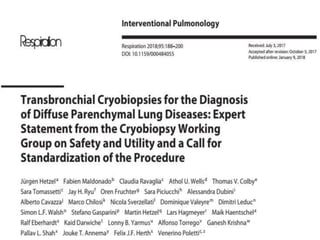


Mahmoud Elhusseiny Abolmagd MSc, MD
lecturer of Pulmonary & Critical Care Medicine
Mansoura University
Transbronchial Cryo-biopsy in ILD:
The Journey From Practice to Guidelines
Introduction
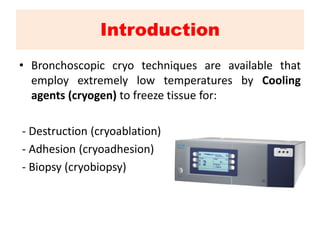
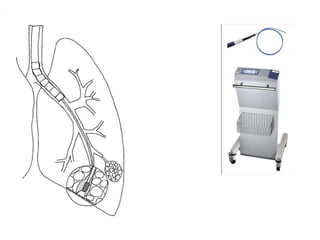
• Bronchoscopic cryo techniques are available that
employ extremely low temperatures by Cooling
agents (cryogen) to freeze tissue for:
- Destruction (cryoablation)
- Adhesion (cryoadhesion)
- Biopsy (cryobiopsy)
Question
• Which of the following is the gold standard of
diagnosis of ILD?
1) HRCT
2) MDT
3) SLB
4) TBLCB
Question
• Which of the following is the gold standard of
diagnosis of fibrosing ILD?
1) HRCT
2) MDT
3) SLB
4) TBLCB
Scope of the problem
Lung Biopsy
• Diagnostic algorithm in interstitial lung disease (ILD).
• required in up to 30% of patients.
• In the absence of a pulmonary biopsy, the diagnosis
of IPF is underestimated, since the typical
radiological pattern of IPF is found only in 50% of
cases, while in the remaining cases the HRCT picture
is rather atypical and does not allow for a reliable
diagnosis.
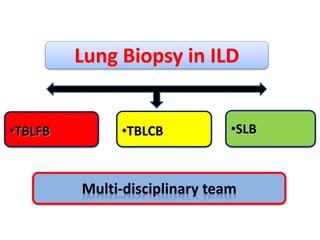
Lung Biopsy in ILD
•SLB
•TBLFB •TBLCB
Guidelines 2018
• The updated American Thoracic Society, European
Respiratory Society, Japanese Respiratory Society,
and Latin American Thoracic Society idiopathic
pulmonary fibrosis guidelines recommend for TBLC in
suspected idiopathic pulmonary fibrosis cases.
Introduction
• Historically, surgical lung biopsy (SLB) has been
considered as the definitive means of obtaining
adequate biopsy specimens. However, in many
patients, the risk/benefit ratio of the procedure is
unacceptable. Morbidity and mortality related to SLB
are substantial, particularly in older subjects, in
patients with significant comorbidities or severe
respiratory impairment, and in cases with a final
diagnosis of IPF.
Introduction
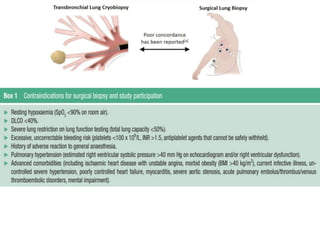
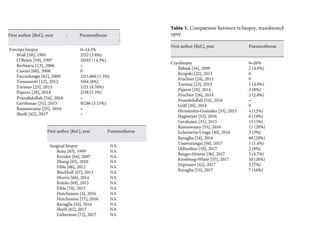
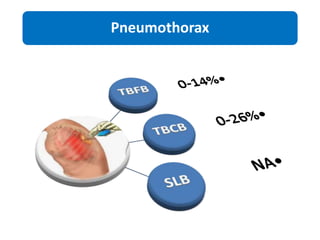
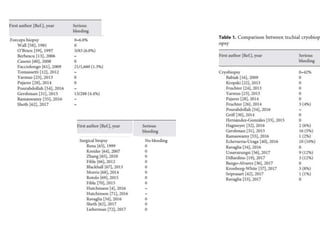
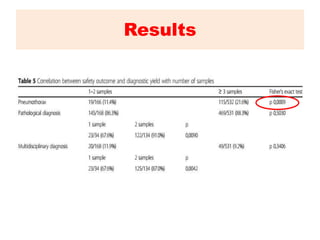
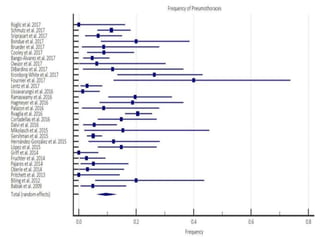
• Available data indicate pneumothorax to be a complication associated
with TBCB. However, the rate varies considerably between different
studies: from less than 1% to almost 30%. In a meta-analysis that included
15 studies comprising 994 patients, the average rate was 10% . the same
results were confirmed by a more recent meta-analysis of 13
studies with an incidence of postprocedural pneumothorax of 9.5% (5.9–
14.9%) .
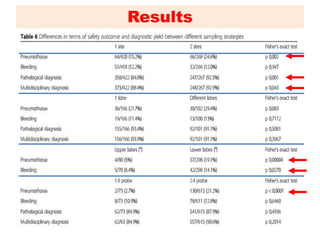
The risk of pneumothorax increases with UIP histology, fibrotic reticulation
on HRCT scan, and with biopsies taken close to the pleura
Key points ‫كله‬ ‫في‬ ‫حلوة‬
Introduction
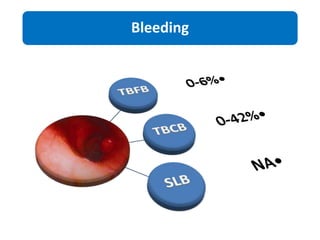
• Conversely, biopsies obtained too
proximally from the middle third of the lung increase
the risk of severe bleeding due to the fact that in this
region, medium-sized arterial vessels that
accompany the bronchi lack the protective shield
afforded by complete cartilage plates present in
more central airways
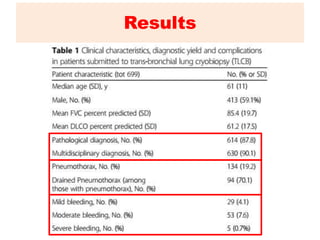
Results
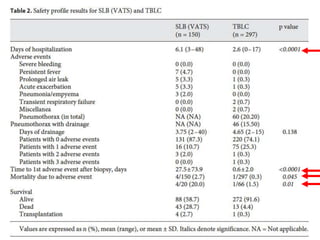
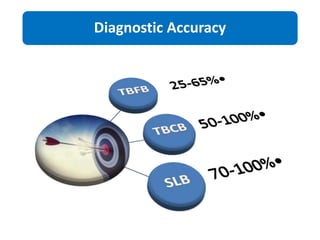
Diagnostic Accuracy
Pneumothorax
Bleeding
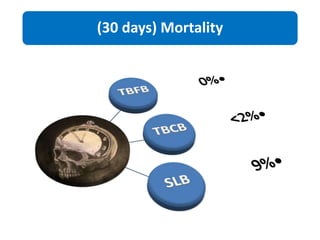
(30 days) Mortality
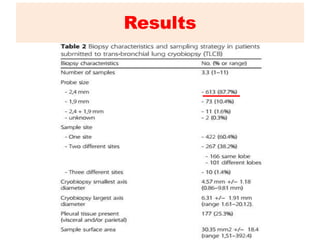
Results
Results
Introduction
• Clinical information, radiological features and biopsy
results were then reviewed by clinicians, radiologist
and pathologists and a multidisciplinary diagnosis
was made, with cryobiopsy considered diagnostic if
additional evaluation, including surgical lung biopsy,
was considered to be unnecessary.
Results
Introduction
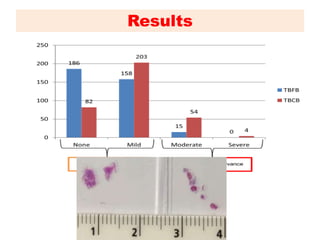
• bleeding was defined as:
- “No bleeding”
- “Mild” if requiring just endoscopic suction.
- “Moderate” if requiring further endoscopic procedures (bronchial
occlusion and/or instillation of ice-cold saline).
- “Severe” if requiring surgical interventions, transfusions and/or admission
to intensive care unit for hemodynamic or respiratory instability.
- There is no generally accepted bleeding severity scale and therefore
comparability of different papers is difficult. However,
Results
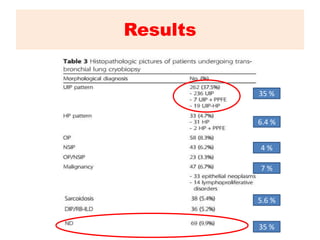
Results
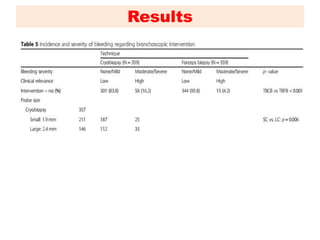
35 %
6.4 %
4 %
35 %
7 %
5.6 %
Results
Results
Results
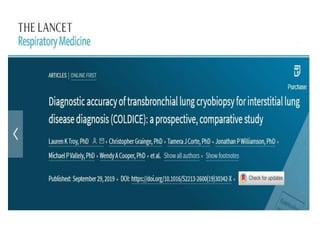
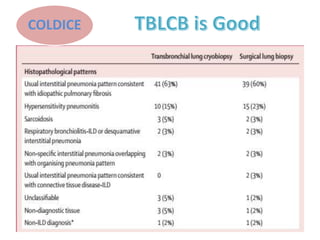
COLDICE
Results
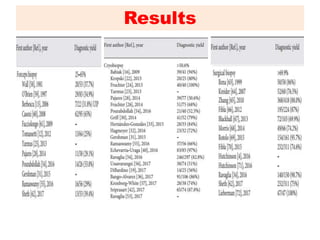
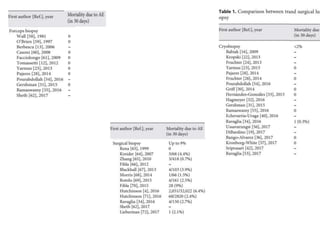
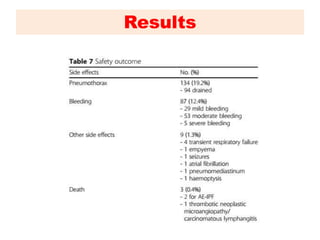
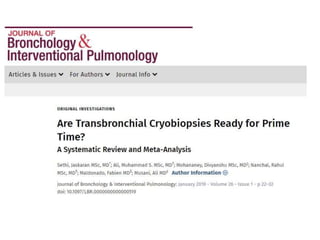
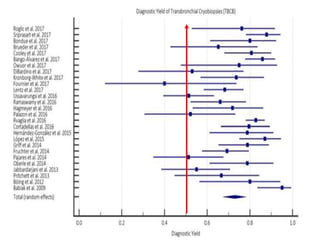
• A total of 27 studies were included in the review
with 1443 patients reported data on the
performance of cryobiopsies for diagnosing DPLD.
• The diagnostic yield was 72.9%.
• The overall complication rate was 23.1%.
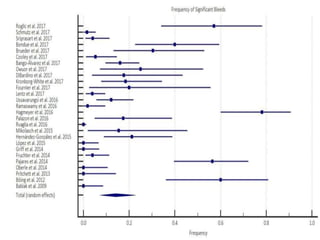
• The incidence of significant bleeding was 14.2%.
• Pneumothorax was seen in 9.4% of patients.
• Overall reported mortality was 0.3%.
Introduction
• Exclusion criteria for TBCBs vary substantially across studies:
- FEV1 < 50% predicted.
- FVC < 50% predicted.
- DLCOr < 50% predicted.
- Echo to exclude those with estimated PASP >40 mm Hg.
- Significant hypoxemia, PaO2 <55–60 mm Hg on room air.
- Bleeding diathesis and anticoagulant therapy, treatment with
antiplatelet drugs and thrombocytopenia with platelets <50 ×
109 /L.
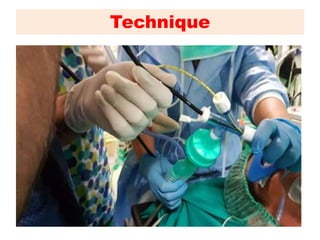
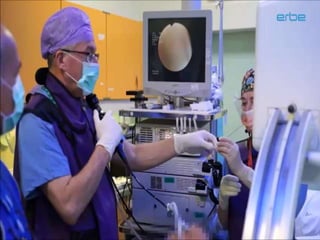
Technique
• Finally, a smaller 1.1 mm cryoprobe used in
conjunction with an oversheath is in development. This system
permits the bronchoscope to remain wedged in the
biopsied segment as the smaller cryobiopsy is extracted
through the working channel, which is protected by the
oversheath. To date, this probe has only been tested in two
in vivo animal studies, and it is unclear whether biopsies will
be of sufficient size to diagnose DPLDs (
Guidelines 2025
• The updated American Thoracic Society,
European Respiratory Society, Japanese
Respiratory Society, and Latin American
Thoracic Society idiopathic pulmonary
fibrosis guidelines recommend for TBLC in
suspected idiopathic pulmonary fibrosis
cases.
Closing Comments
• Indications for TBLCB in the diagnosis of ILD within
the context of a multidisciplinary discussion are
currently under evaluation.
• The recent introduction of TBLCB as a promising and
safer alternative to SLB is generating considerable
interest in the pulmonary community.
• Patients with DPLD without a diagnosis after
integration of clinical profile, laboratory tests, and
HRCT features could be submitted to TBCB instead of
SLB in centers with an established experience in the
MDD and TBCB.
Closing Comments
• Indications for transbronchial lung cryobiopsy in the
diagnosis of diffuse parenchymal lung diseases
within the context of a multidisciplinary discussion
are currently under evaluation.
Pulmonologist
Thoracic Radiologist
Thoracic Pathologist
Multidisciplinary Collaboration
Rheumatologist
Thank You..

Transbronchial lung Cryobiopsy

  • 1.
    Mahmoud Elhusseiny AbolmagdMSc, MD lecturer of Pulmonary & Critical Care Medicine Mansoura University Transbronchial Cryo-biopsy in ILD: The Journey From Practice to Guidelines
  • 2.
    Introduction • Bronchoscopic cryotechniques are available that employ extremely low temperatures by Cooling agents (cryogen) to freeze tissue for: - Destruction (cryoablation) - Adhesion (cryoadhesion) - Biopsy (cryobiopsy)
  • 4.
    Question • Which ofthe following is the gold standard of diagnosis of ILD? 1) HRCT 2) MDT 3) SLB 4) TBLCB
  • 5.
    Question • Which ofthe following is the gold standard of diagnosis of fibrosing ILD? 1) HRCT 2) MDT 3) SLB 4) TBLCB
  • 6.
    Scope of theproblem
  • 7.
    Lung Biopsy • Diagnosticalgorithm in interstitial lung disease (ILD). • required in up to 30% of patients. • In the absence of a pulmonary biopsy, the diagnosis of IPF is underestimated, since the typical radiological pattern of IPF is found only in 50% of cases, while in the remaining cases the HRCT picture is rather atypical and does not allow for a reliable diagnosis.
  • 8.
    Lung Biopsy inILD •SLB •TBLFB •TBLCB
  • 9.
    Guidelines 2018 • Theupdated American Thoracic Society, European Respiratory Society, Japanese Respiratory Society, and Latin American Thoracic Society idiopathic pulmonary fibrosis guidelines recommend for TBLC in suspected idiopathic pulmonary fibrosis cases.
  • 11.
    Introduction • Historically, surgicallung biopsy (SLB) has been considered as the definitive means of obtaining adequate biopsy specimens. However, in many patients, the risk/benefit ratio of the procedure is unacceptable. Morbidity and mortality related to SLB are substantial, particularly in older subjects, in patients with significant comorbidities or severe respiratory impairment, and in cases with a final diagnosis of IPF.
  • 12.
    Introduction • Available dataindicate pneumothorax to be a complication associated with TBCB. However, the rate varies considerably between different studies: from less than 1% to almost 30%. In a meta-analysis that included 15 studies comprising 994 patients, the average rate was 10% . the same results were confirmed by a more recent meta-analysis of 13 studies with an incidence of postprocedural pneumothorax of 9.5% (5.9– 14.9%) . The risk of pneumothorax increases with UIP histology, fibrotic reticulation on HRCT scan, and with biopsies taken close to the pleura
  • 13.
    Key points ‫كله‬‫في‬ ‫حلوة‬
  • 14.
    Introduction • Conversely, biopsiesobtained too proximally from the middle third of the lung increase the risk of severe bleeding due to the fact that in this region, medium-sized arterial vessels that accompany the bronchi lack the protective shield afforded by complete cartilage plates present in more central airways
  • 21.
  • 22.
  • 24.
  • 26.
  • 28.
  • 30.
  • 31.
  • 33.
    Introduction • Clinical information,radiological features and biopsy results were then reviewed by clinicians, radiologist and pathologists and a multidisciplinary diagnosis was made, with cryobiopsy considered diagnostic if additional evaluation, including surgical lung biopsy, was considered to be unnecessary.
  • 34.
  • 35.
    Introduction • bleeding wasdefined as: - “No bleeding” - “Mild” if requiring just endoscopic suction. - “Moderate” if requiring further endoscopic procedures (bronchial occlusion and/or instillation of ice-cold saline). - “Severe” if requiring surgical interventions, transfusions and/or admission to intensive care unit for hemodynamic or respiratory instability. - There is no generally accepted bleeding severity scale and therefore comparability of different papers is difficult. However,
  • 36.
  • 37.
    Results 35 % 6.4 % 4% 35 % 7 % 5.6 %
  • 38.
  • 39.
  • 40.
  • 42.
  • 44.
    Results • A totalof 27 studies were included in the review with 1443 patients reported data on the performance of cryobiopsies for diagnosing DPLD. • The diagnostic yield was 72.9%. • The overall complication rate was 23.1%. • The incidence of significant bleeding was 14.2%. • Pneumothorax was seen in 9.4% of patients. • Overall reported mortality was 0.3%.
  • 48.
    Introduction • Exclusion criteriafor TBCBs vary substantially across studies: - FEV1 < 50% predicted. - FVC < 50% predicted. - DLCOr < 50% predicted. - Echo to exclude those with estimated PASP >40 mm Hg. - Significant hypoxemia, PaO2 <55–60 mm Hg on room air. - Bleeding diathesis and anticoagulant therapy, treatment with antiplatelet drugs and thrombocytopenia with platelets <50 × 109 /L.
  • 49.
  • 51.
    • Finally, asmaller 1.1 mm cryoprobe used in conjunction with an oversheath is in development. This system permits the bronchoscope to remain wedged in the biopsied segment as the smaller cryobiopsy is extracted through the working channel, which is protected by the oversheath. To date, this probe has only been tested in two in vivo animal studies, and it is unclear whether biopsies will be of sufficient size to diagnose DPLDs (
  • 52.
    Guidelines 2025 • Theupdated American Thoracic Society, European Respiratory Society, Japanese Respiratory Society, and Latin American Thoracic Society idiopathic pulmonary fibrosis guidelines recommend for TBLC in suspected idiopathic pulmonary fibrosis cases.
  • 53.
    Closing Comments • Indicationsfor TBLCB in the diagnosis of ILD within the context of a multidisciplinary discussion are currently under evaluation. • The recent introduction of TBLCB as a promising and safer alternative to SLB is generating considerable interest in the pulmonary community. • Patients with DPLD without a diagnosis after integration of clinical profile, laboratory tests, and HRCT features could be submitted to TBCB instead of SLB in centers with an established experience in the MDD and TBCB.
  • 54.
    Closing Comments • Indicationsfor transbronchial lung cryobiopsy in the diagnosis of diffuse parenchymal lung diseases within the context of a multidisciplinary discussion are currently under evaluation.
  • 55.
  • 56.

Editor's Notes

  • #56 Sharif R. Am J Manag Care. 2017;23(11 Suppl):S176-S182. Ryerson CJ, Corte TJ, Lee JS, et al. A Standardized Diagnostic Ontology for Fibrotic Interstitial Lung Disease. An International Working Group Perspective. Am J Respir Crit Care Med. 2017 Nov 15;196(10):1249-1254. doi: 10.1164/rccm.201702-0400PP.