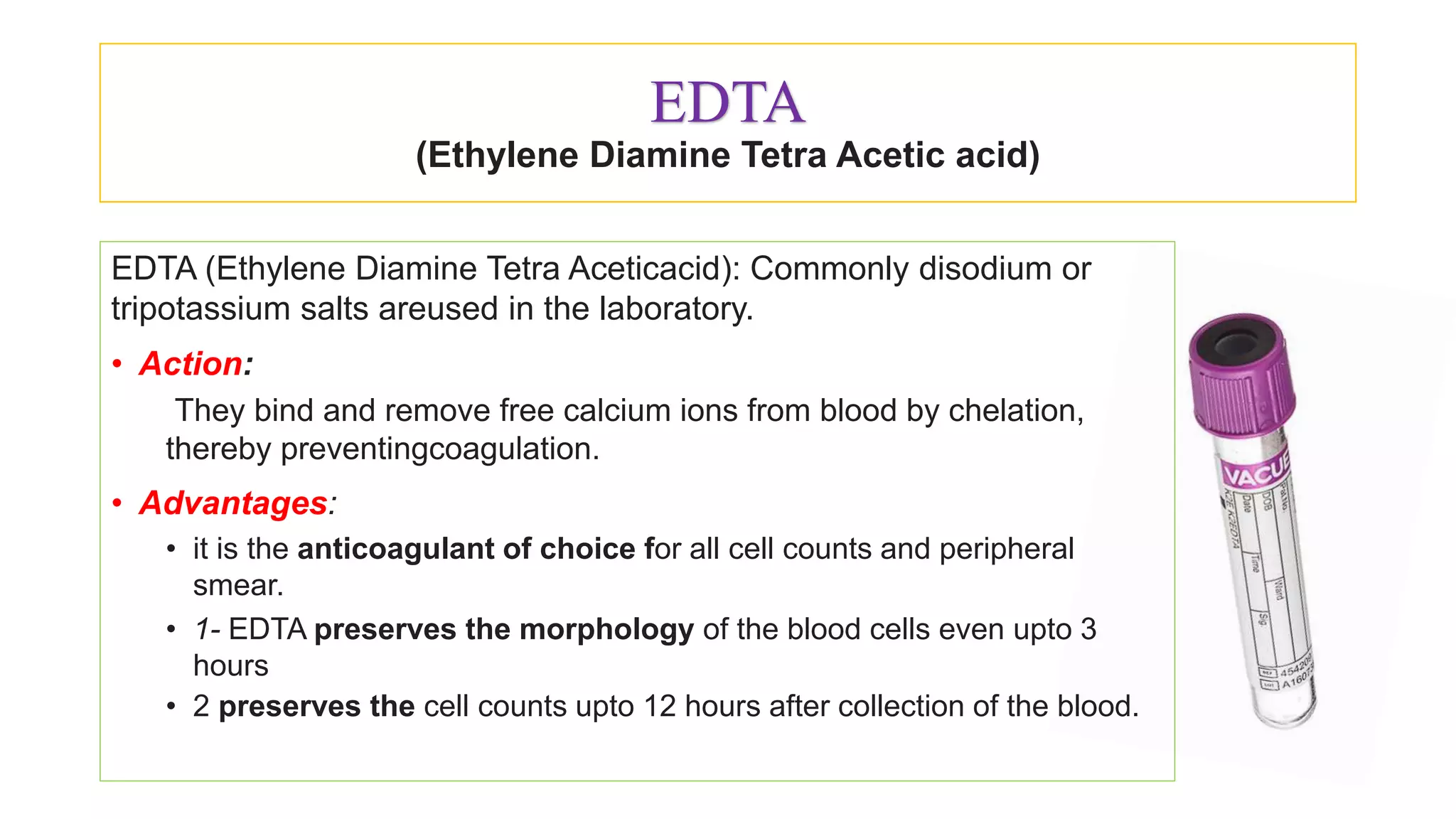
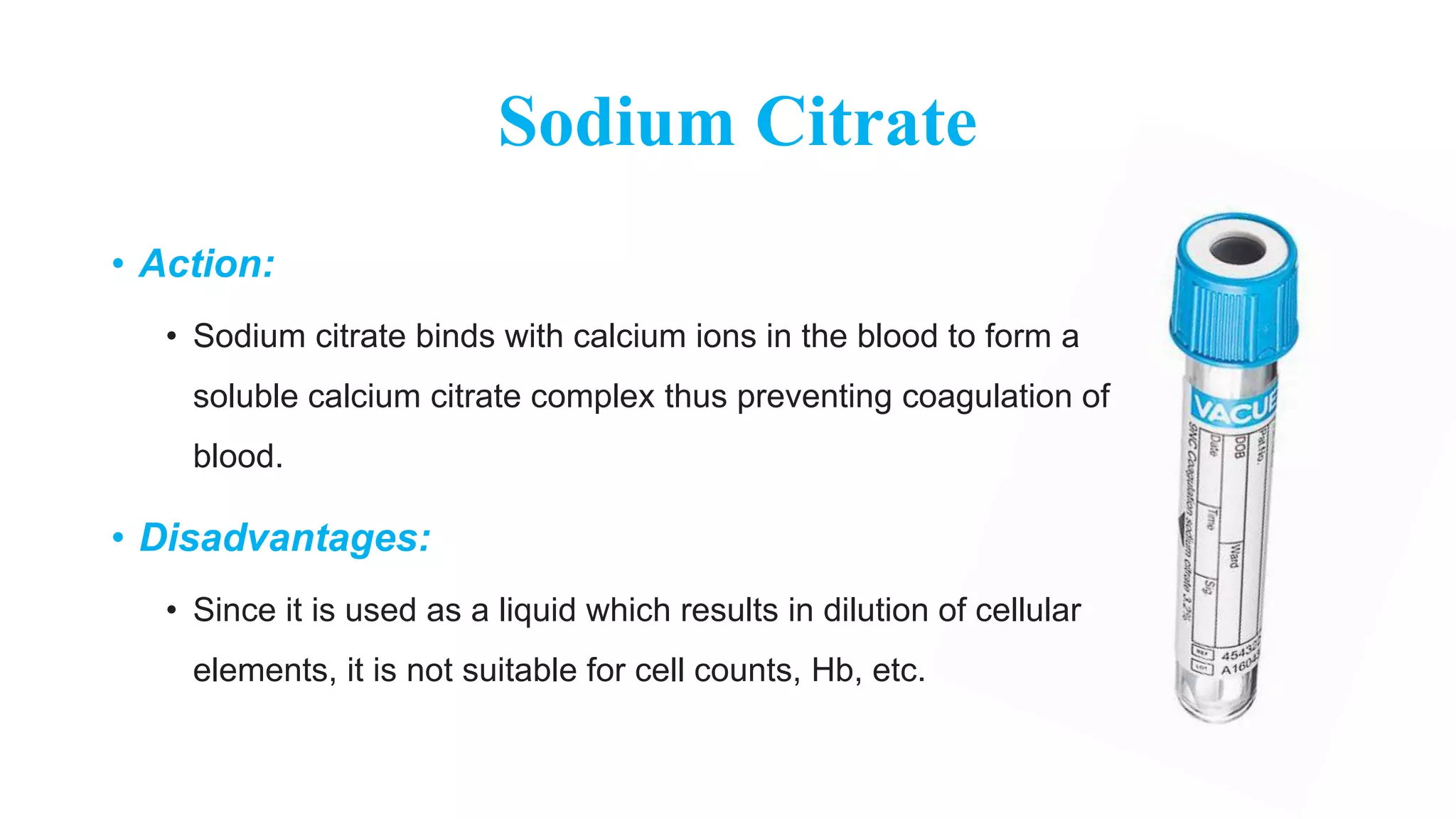
Anticoagulants like EDTA, oxalate, sodium citrate, and sodium fluoride prevent blood from clotting by various mechanisms. EDTA is the anticoagulant of choice for cell counts and smears as it preserves cell morphology while binding calcium. Oxalate can shrink or swell red blood cells. Sodium citrate complexes with calcium to prevent clotting and is used for coagulation studies and ESR. Sodium fluoride inhibits glycolysis and is used for blood sugar estimation. Heparin prevents thrombin formation but is more expensive and can affect cells. Each anticoagulant has specific advantages and disadvantages for different tests.