COLLECTION OF BLOOD
&
ANTICOAGULANTS
 Why to collect blood..??
 For proper blood investigations to be done, obtaining
the specimen is the first and foremost step.
 Common examinations done on blood are..??
 Hematological
 Biochemical
 Serological
 Cultural
What are the Sites for sample collection..??
 Veins: Most commonly used.
 Capillaries.
 Arteries: In case of pediatric patients, ABG.
 Blood and its components:
 Whole blood
 Plasma
 Serum
 Red cells/PCV
 WBC
 Platelets
PHLEBOTOMY TRAY :
 Syringes & needles .
 Tourniquet
 Specimen containers . Plain bulb & anticoagulant bulbs.
 Request form
 70 % alcohol or 0.5% chlorhexidine
 Sterile gauze swabs
 Adhesive dressings
 Self sealing plastic bags
 Rack to hold the specimen containers.
 What is the Technique of blood collection..??
 Identification.
 Universal precautions.
 Inform the patient of the procedure/consent.
 Venous blood is best collected from the antecubital vein.
 The skin should be cleaned with 70% alcohol or 0.5 %
chlorhexidine & allowed to dry spontaneously.
INSTRUMENTS USED
IN COLLECTION OF
BLOOD &
TECHNIQUE
 The tourniquet should be tied just above the puncture site, which is
released once blood starts flowing into the syringe. Delay may lead to
haemoconcentration as a result of stagnation.
 Insert the needle through the skin at a plane parallel to the vein & care
should be taken that the vein doesn't get counter punctured.
 The piston of the syringe should not be withdrawn fast as it may cause
hemolysis.
 Sufficient amount of blood should be withdrawn and dispensed in
appropriate bulbs.
 The bulbs should be shaken for a while so that the blood gets mixed with
the anticoagulant properly.
 Remove the needle and apply a sterile swab over the site & apply pressure
over it. After the bleeding stops , apply a small adhesive dressing.
 BIO-MEDICAL WASTE MANAGEMENT..!!!!
 Complications..!!!
Various Types of bulbs..??
 CBC bulb (EDTA or double oxalate)
 Citrate bulb (trisodium citrate)
 Heparin bulb
 Blood sugar bulb (sodium flouride & k.oxalate)
 Urea bulb (potassium oxalate)
 Plain bulb
 Wide mouth bulb (for urine)
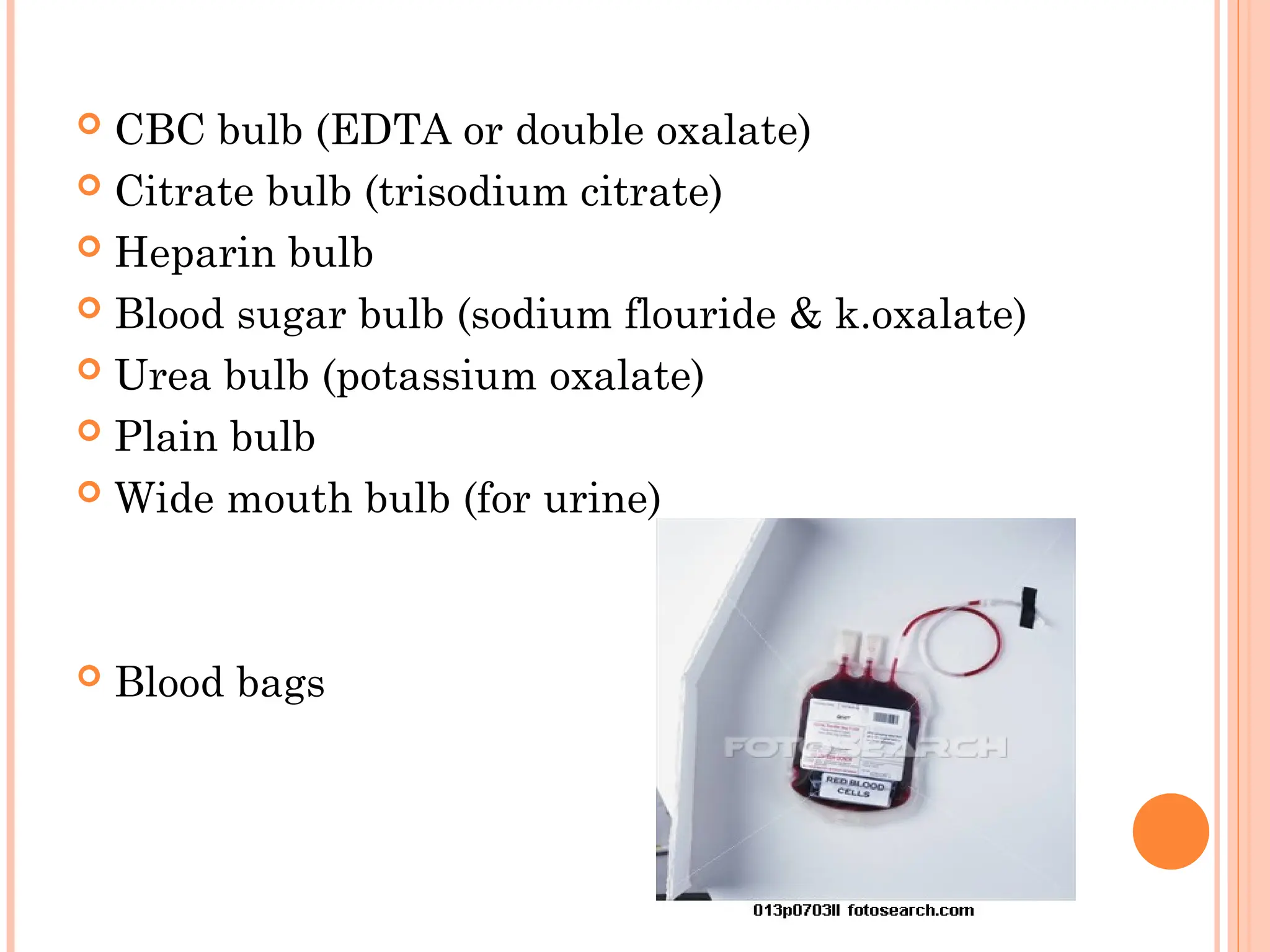
 Blood bags
 What are ANTICOAGULANTS..??
 Agents which prevent the coagulation of blood.
 DIFFERENT TYPES..
 EDTA (Ethylenediaminetetra Acetic acid)
 Trisodium Citrate
 Double oxalate
 Heparin
 ACD - Acid-citrate-dextrose
 CPD/CPDA - Citrate - phosphate - dextrose
/CPD+adenine
 EDTA (sequestrene/versene)- :
 Commonly used anticoagulant in routine practice.
 K/Na/Li salts of EDTA can be used.
 Mechanism Of Action:
It acts by chelating the calcium molecules in the blood.
 1.2 mg EDTA /ml of blood is required.
 EDTA is used for Hb. estimation, TLC, DLC, PS, hematocrit,
sickling test, reticulocyte count, hemoglobin electrophoresis.
 DISADVANTAGES:
• RBC morphology is hampered if the concentration is more than
the required.
• Not good for coagulation studies.
 Trisodium Citrate :
 It is used for coagulation studies.
 Mechanism of action :
It also works on the principle of calcium chelation.
 9 volumes of blood are added to 1 volume of 32gm/l sodium citrate
solution.
 For ESR estimation, 4 volumes of blood are added to 1 volume of
sodium citrate solution & well mixed.
 Double Oxalate:
 It contains
ammonium oxalate ( 3 parts)
potassium oxalate ( 2 parts )
 This combination minimizes the morphological changes that
occur in the erythrocytes.
 Mechanism of action :
Calcium chelation
 Uses - Routine hematological examinations & ESR
determination.
 Disadvantage: Crenation of red cells - cannot be used for making
blood films.
 HEPARIN:
 It is used for chemistry , blood gas analysis & emergency tests.
 It is the best anticoagulant for osmotic fragility tests &
immunophenotyping.
 The lithium or sodium salt of heparin at a concentration of 10- 20
IU / ml blood is generally used.
 It is not suitable for blood counts as it induces platelet &
leukocyte clumping & gives faint blue color on PS.
 ACD - acid – citrate - dextrose
 CPDA - citrate - phosphate - dextrose – adenine
 49ml/350ml of blood
 Uses- Blood bags for transfusion purposes
 Acid – provides optimum pH
 Citrate – Anticoagulant
 Dextrose – Nutrition
 Adenine & phosphate – Controls rate of glycolysis.
Additives –
 SODIUM FLUORIDE :
 It prevents glycolysis
 It is used for blood sugar estimation.
Thank you

Sample Collection and anticoagulants.ppt

  • 1.
  • 2.
     Why tocollect blood..??  For proper blood investigations to be done, obtaining the specimen is the first and foremost step.  Common examinations done on blood are..??  Hematological  Biochemical  Serological  Cultural
  • 3.
    What are theSites for sample collection..??  Veins: Most commonly used.  Capillaries.  Arteries: In case of pediatric patients, ABG.
  • 4.
     Blood andits components:  Whole blood  Plasma  Serum  Red cells/PCV  WBC  Platelets
  • 5.
    PHLEBOTOMY TRAY : Syringes & needles .  Tourniquet  Specimen containers . Plain bulb & anticoagulant bulbs.  Request form  70 % alcohol or 0.5% chlorhexidine  Sterile gauze swabs  Adhesive dressings  Self sealing plastic bags  Rack to hold the specimen containers.
  • 6.
     What isthe Technique of blood collection..??  Identification.  Universal precautions.  Inform the patient of the procedure/consent.  Venous blood is best collected from the antecubital vein.  The skin should be cleaned with 70% alcohol or 0.5 % chlorhexidine & allowed to dry spontaneously.
  • 7.
    INSTRUMENTS USED IN COLLECTIONOF BLOOD & TECHNIQUE
  • 8.
     The tourniquetshould be tied just above the puncture site, which is released once blood starts flowing into the syringe. Delay may lead to haemoconcentration as a result of stagnation.  Insert the needle through the skin at a plane parallel to the vein & care should be taken that the vein doesn't get counter punctured.  The piston of the syringe should not be withdrawn fast as it may cause hemolysis.  Sufficient amount of blood should be withdrawn and dispensed in appropriate bulbs.  The bulbs should be shaken for a while so that the blood gets mixed with the anticoagulant properly.  Remove the needle and apply a sterile swab over the site & apply pressure over it. After the bleeding stops , apply a small adhesive dressing.  BIO-MEDICAL WASTE MANAGEMENT..!!!!  Complications..!!!
  • 9.
  • 10.
     CBC bulb(EDTA or double oxalate)  Citrate bulb (trisodium citrate)  Heparin bulb  Blood sugar bulb (sodium flouride & k.oxalate)  Urea bulb (potassium oxalate)  Plain bulb  Wide mouth bulb (for urine)  Blood bags
  • 11.
     What areANTICOAGULANTS..??  Agents which prevent the coagulation of blood.  DIFFERENT TYPES..  EDTA (Ethylenediaminetetra Acetic acid)  Trisodium Citrate  Double oxalate  Heparin  ACD - Acid-citrate-dextrose  CPD/CPDA - Citrate - phosphate - dextrose /CPD+adenine
  • 12.
     EDTA (sequestrene/versene)-:  Commonly used anticoagulant in routine practice.  K/Na/Li salts of EDTA can be used.  Mechanism Of Action: It acts by chelating the calcium molecules in the blood.  1.2 mg EDTA /ml of blood is required.  EDTA is used for Hb. estimation, TLC, DLC, PS, hematocrit, sickling test, reticulocyte count, hemoglobin electrophoresis.  DISADVANTAGES: • RBC morphology is hampered if the concentration is more than the required. • Not good for coagulation studies.
  • 13.
     Trisodium Citrate:  It is used for coagulation studies.  Mechanism of action : It also works on the principle of calcium chelation.  9 volumes of blood are added to 1 volume of 32gm/l sodium citrate solution.  For ESR estimation, 4 volumes of blood are added to 1 volume of sodium citrate solution & well mixed.
  • 14.
     Double Oxalate: It contains ammonium oxalate ( 3 parts) potassium oxalate ( 2 parts )  This combination minimizes the morphological changes that occur in the erythrocytes.  Mechanism of action : Calcium chelation  Uses - Routine hematological examinations & ESR determination.  Disadvantage: Crenation of red cells - cannot be used for making blood films.
  • 15.
     HEPARIN:  Itis used for chemistry , blood gas analysis & emergency tests.  It is the best anticoagulant for osmotic fragility tests & immunophenotyping.  The lithium or sodium salt of heparin at a concentration of 10- 20 IU / ml blood is generally used.  It is not suitable for blood counts as it induces platelet & leukocyte clumping & gives faint blue color on PS.
  • 16.
     ACD -acid – citrate - dextrose  CPDA - citrate - phosphate - dextrose – adenine  49ml/350ml of blood  Uses- Blood bags for transfusion purposes  Acid – provides optimum pH  Citrate – Anticoagulant  Dextrose – Nutrition  Adenine & phosphate – Controls rate of glycolysis.
  • 17.
    Additives –  SODIUMFLUORIDE :  It prevents glycolysis  It is used for blood sugar estimation.
  • 18.