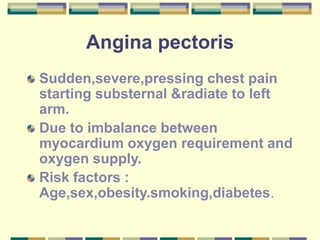
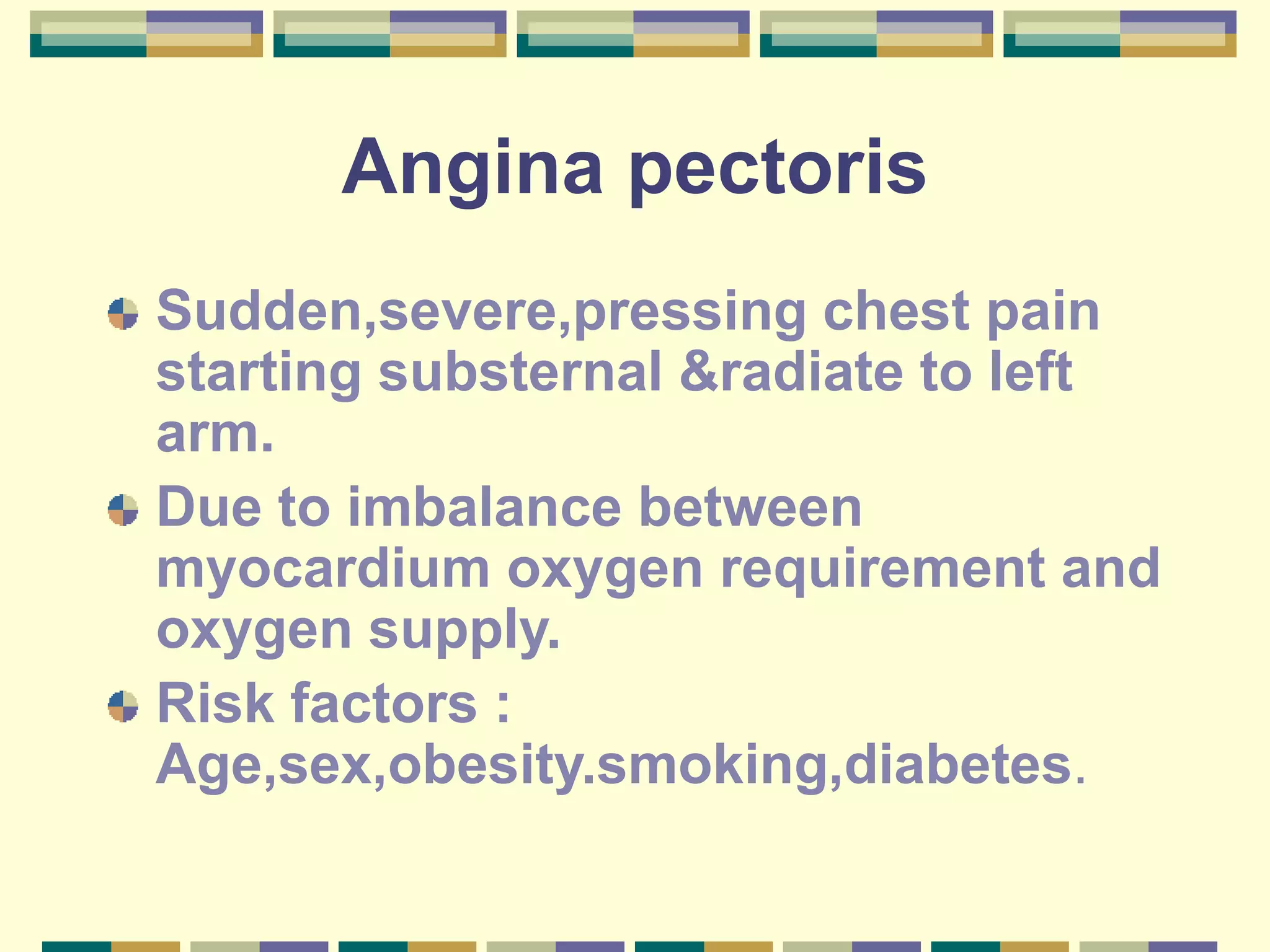
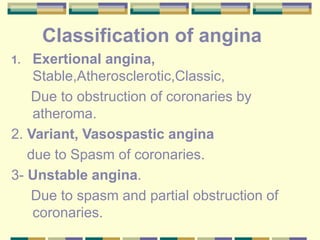
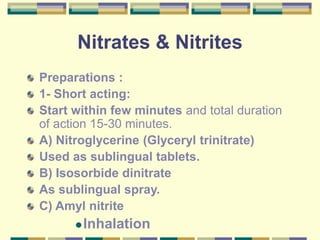
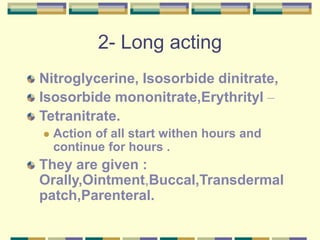
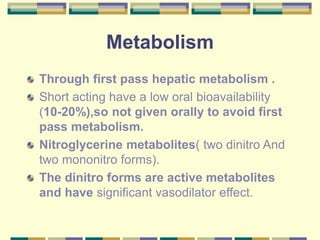
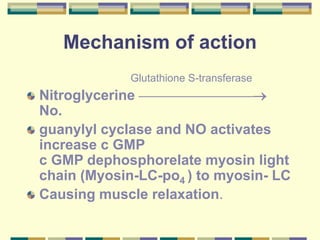
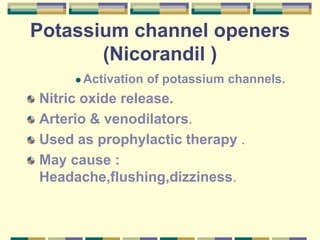
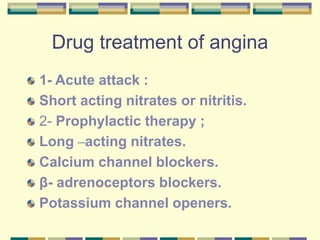
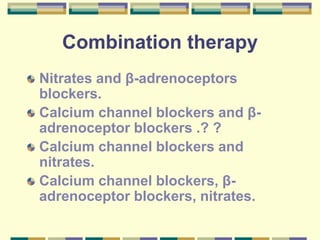
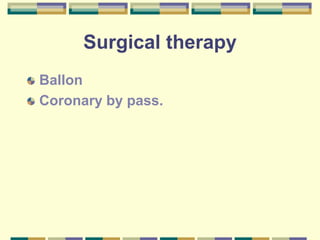
Angina pectoris is caused by an imbalance between myocardial oxygen demand and supply. It presents as sudden, severe chest pain that may radiate to the left arm. There are three classifications of angina based on onset and severity: exertional, variant, and unstable. Nitrates like nitroglycerin are used to treat acute attacks by reducing preload and afterload, while calcium channel blockers, beta blockers, and potassium channel openers are used long-term for prophylaxis by decreasing myocardial oxygen demand and relieving coronary spasm. Surgical options include balloon angioplasty and coronary artery bypass grafting.



![ONFH[AVN HIP] -TRIPLE REGIME -A NOVAL SURGICAL CONCEPT .pptx](https://cdn.slidesharecdn.com/ss_thumbnails/onfhavnhip2026koaconcalicutdrgokuldevdrmashraf-260210064517-213ec005-thumbnail.jpg?width=640&height=640&fit=bounds)


![PERI-PROSTHETIC FRACTURE NAIL-PLATE CONSTRUCT [NPC].pptx](https://cdn.slidesharecdn.com/ss_thumbnails/drarunkumardrmohamedashrafperiprostheticfrasturenail-plateconstructnpc-260209164459-7e9d15a1-thumbnail.jpg?width=640&height=640&fit=bounds)


