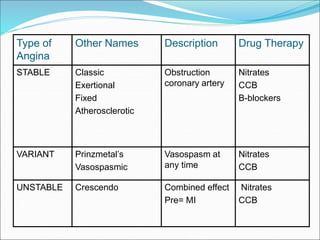
1) Angina pectoris is characterized by chest pain due to myocardial ischemia. There are three main types: typical (classical), variant, and unstable angina.
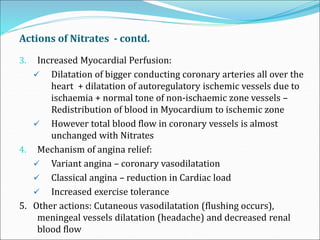
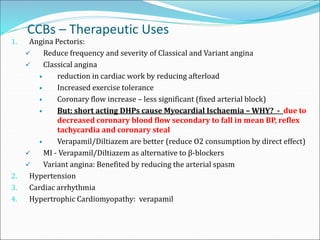
2) Typical angina is induced by exercise and associated with atherosclerosis. Variant angina occurs at rest and is caused by coronary vasospasm. Unstable angina involves coronary spasm and atherosclerosis with longer, worsening chest pain.
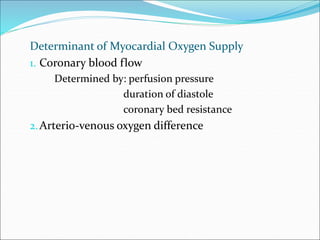
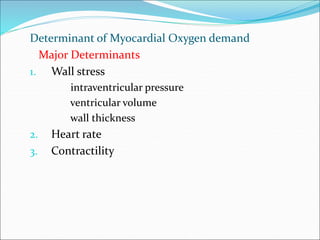
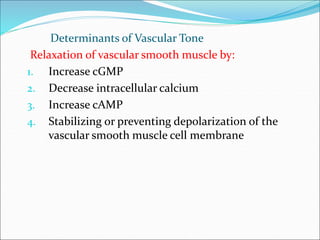
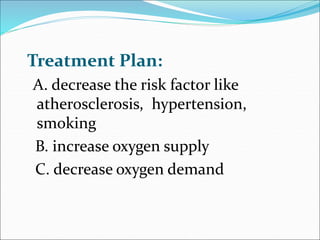
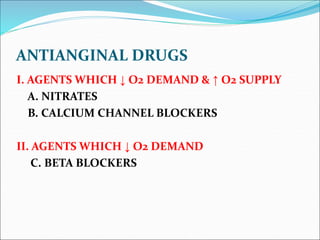
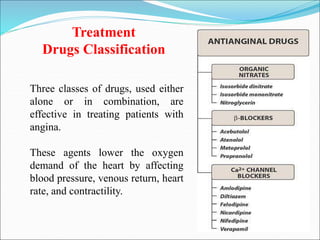
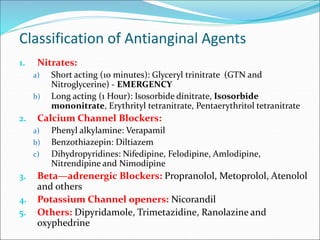
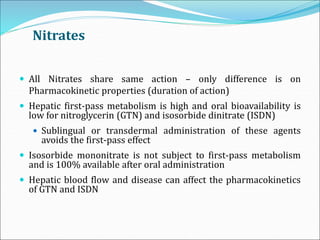
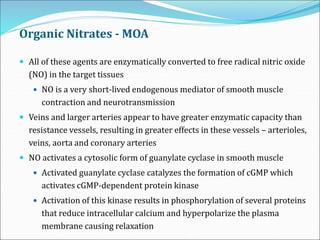
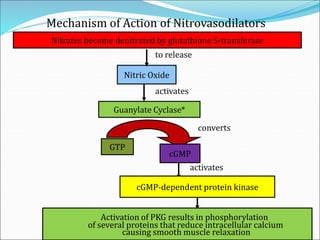
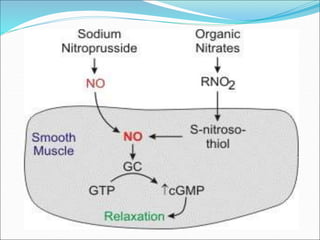
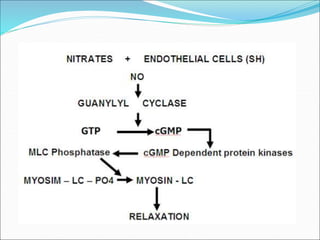
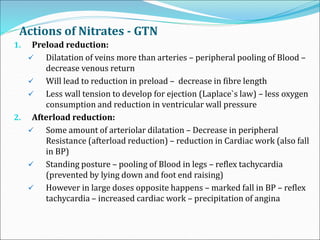
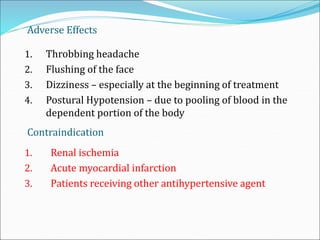
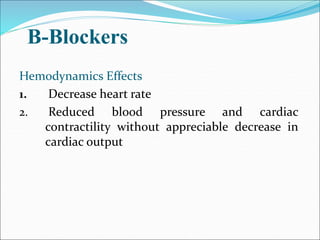
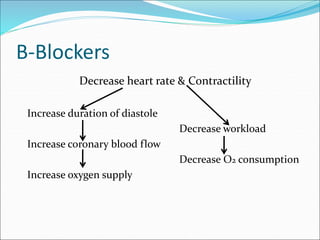
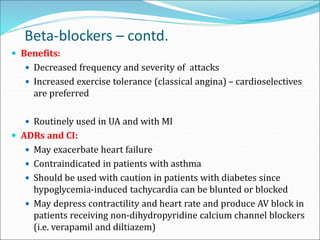
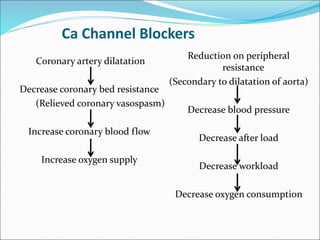
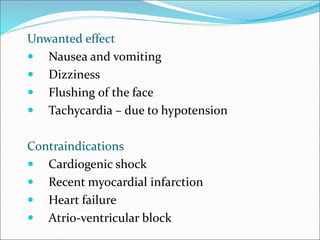
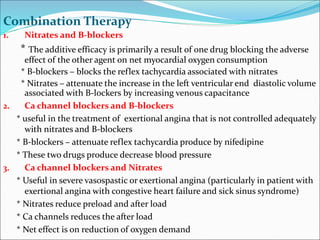
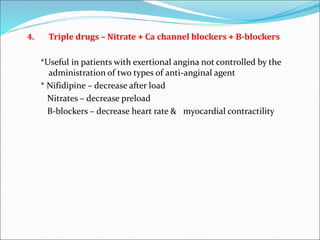
3) Treatment involves decreasing oxygen demand and increasing supply. Nitrates, calcium channel blockers, and beta blockers are commonly used either alone or in combination to relieve angina by reducing preload, afterload, heart rate, and contractility.