Ali Al-Nasrullah
Angina Pectoris
Learning Objectives
• Definition of angina.
• General symptoms of angina.
• Types of angina.
• 1 Question about the case
Angina Pectoris
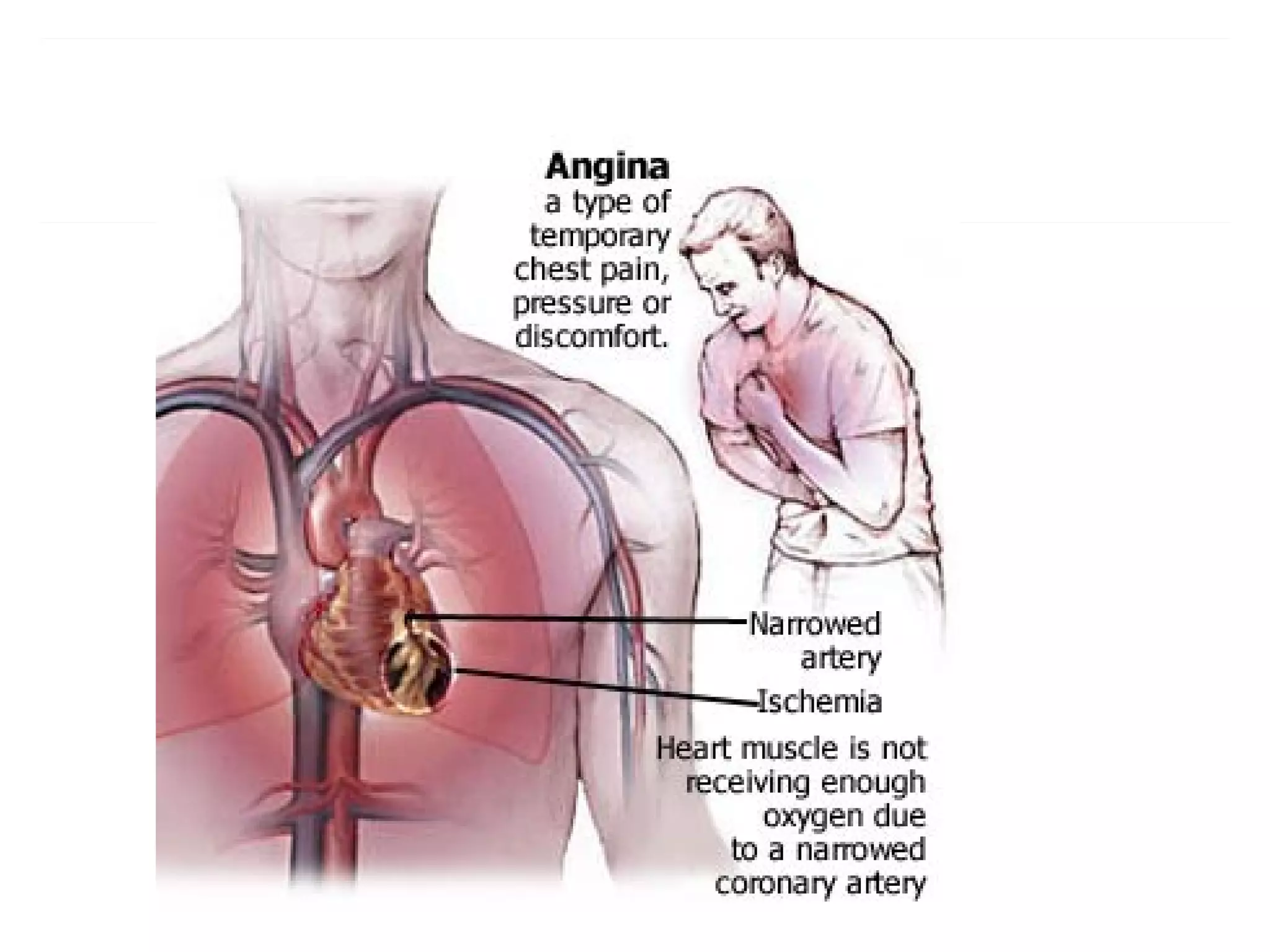
• is recurring acute chest pain or discomfort resulting
from decreased blood supply to the heart muscle
(myocardial ischemia).
• “Increasing Demand of oxygen but the heart can’t
supply”
• Generally due to obstruction or spasm of the
coronary arteries.
• The chest pain comes either as a form of pressure or
discomfort
General Symptoms
• Severe chest discomfort (heaviness, pressure, tightness, choking,
squeezing)
• The pain may radiate to the shoulders, arms, back,
neck, or jaw.
• Palpitations
• Sweating
• Dizziness
• Dyspnea
Types
• Angina is consisted of three types:
• Stable
• Unstable
• Variant (Prinzmetal's Angina)
Stable Angina
• Most common type
• Induced by physical activity (increase demand of
O2), or emotional stress.
• And can’t be supplied because of partially
occluded coronary artery caused by
atherosclerosis)
• The pain is relieved by rest.
Unstable Angina
• Dangerous and requires emergency treatment.
It is the rupture of the fibrous cap, leading to the blockage of
the artery by clotted blood.
• Occurs with increasing frequency (progression)
• Affects the patient's life by not being able to
work.
• Low response to therapy and could lead to MI.
Prinzmetal's Angina
Usually affects arteries already narrowed by atherosclerosis
•Occurs when  a person is at rest or sleep
•The pain is induced from the spasm of the coronary artery.
Thereby when the coronary artery is going to spasms it
narrows the artery thus lowering the amount of blood to the
heart.
•The pain is fluctuated during the day (come and goes)
The Case
• The patient’s pain is:
• 1- Tight feeling on the chest (Angina)
• 2- During walking or cycling (physical activity)
• 3-Disappears in rest
•
What type of angina is this ?
Answer
Stable Angina

Angina pectoris

  • 1.
  • 2.
    Learning Objectives • Definitionof angina. • General symptoms of angina. • Types of angina. • 1 Question about the case
  • 3.
    Angina Pectoris • isrecurring acute chest pain or discomfort resulting from decreased blood supply to the heart muscle (myocardial ischemia). • “Increasing Demand of oxygen but the heart can’t supply” • Generally due to obstruction or spasm of the coronary arteries. • The chest pain comes either as a form of pressure or discomfort
  • 6.
    General Symptoms • Severechest discomfort (heaviness, pressure, tightness, choking, squeezing) • The pain may radiate to the shoulders, arms, back, neck, or jaw. • Palpitations • Sweating • Dizziness • Dyspnea
  • 8.
    Types • Angina isconsisted of three types: • Stable • Unstable • Variant (Prinzmetal's Angina)
  • 9.
    Stable Angina • Mostcommon type • Induced by physical activity (increase demand of O2), or emotional stress. • And can’t be supplied because of partially occluded coronary artery caused by atherosclerosis) • The pain is relieved by rest.
  • 11.
    Unstable Angina • Dangerousand requires emergency treatment. It is the rupture of the fibrous cap, leading to the blockage of the artery by clotted blood. • Occurs with increasing frequency (progression) • Affects the patient's life by not being able to work. • Low response to therapy and could lead to MI.
  • 13.
    Prinzmetal's Angina Usually affectsarteries already narrowed by atherosclerosis •Occurs when  a person is at rest or sleep •The pain is induced from the spasm of the coronary artery. Thereby when the coronary artery is going to spasms it narrows the artery thus lowering the amount of blood to the heart. •The pain is fluctuated during the day (come and goes)
  • 15.
    The Case • Thepatient’s pain is: • 1- Tight feeling on the chest (Angina) • 2- During walking or cycling (physical activity) • 3-Disappears in rest • What type of angina is this ?
  • 16.