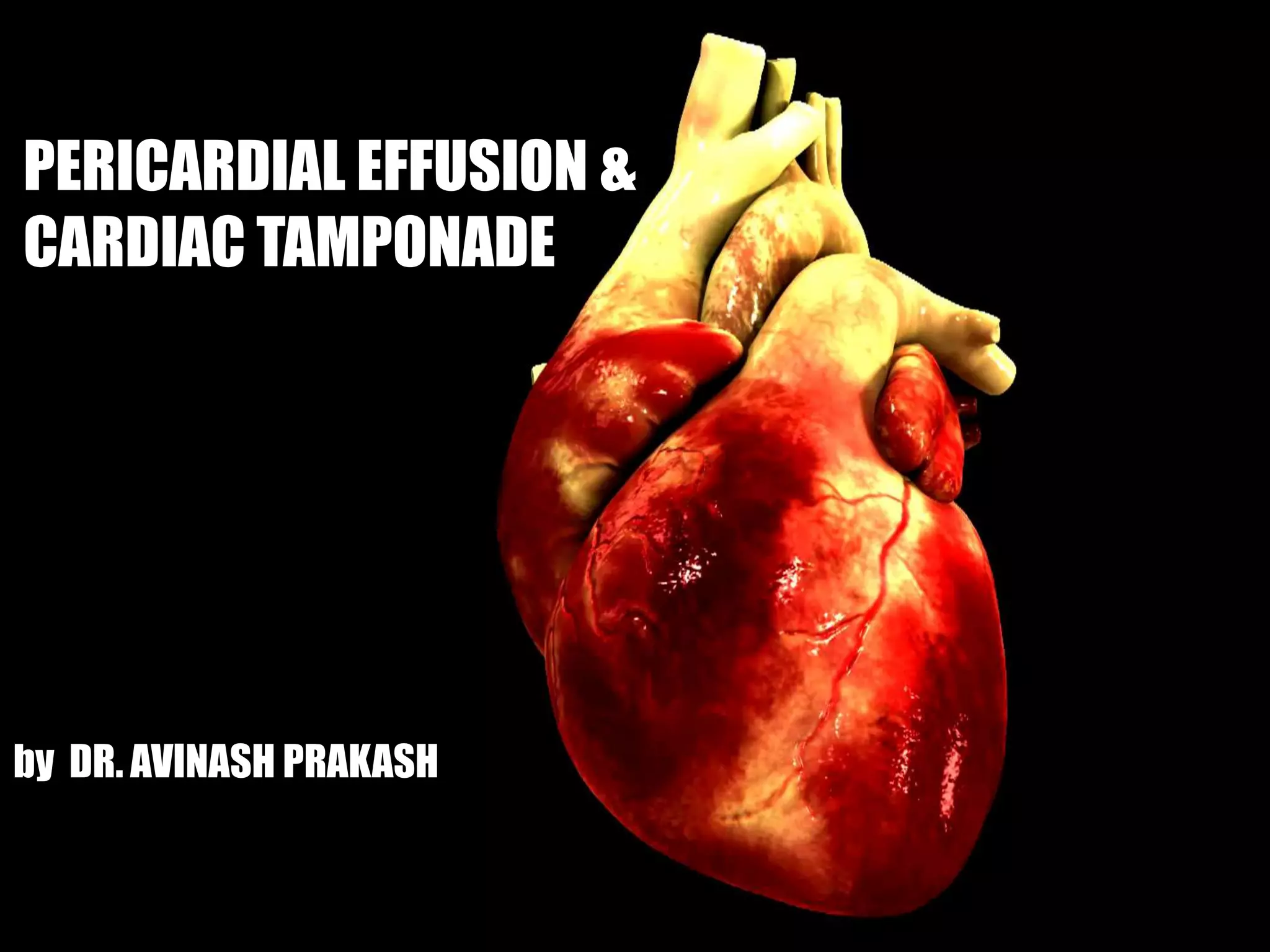
PERICARDIAL EFFUSION &
CARDIAC TAMPONADE


by DR. AVINASH PRAKASH
IMPORTANT POINTS
• Definition
• Patho-physiology
• etiology
• Clinical features
• Investigations
• Treatment
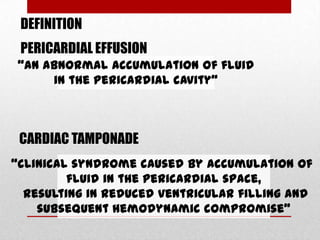
DEFINITION
 PERICARDIAL EFFUSION
 “an abnormal accumulation of fluid
      in the pericardial cavity”


 CARDIAC TAMPONADE
“clinical syndrome caused by accumulation of
         fluid in the pericardial space,
  resulting in reduced ventricular filling and
    subsequent hemodynamic compromise”
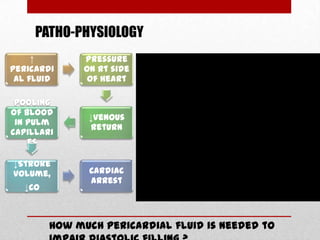
PATHO-PHYSIOLOGY
     ↑        Pressure
pericardi     on rt side
 al fluid      of heart

 Pooling
of blood
               ↓Venous
 in pulm
               return
capillari
    es

↓Stroke
volume,        Cardiac
               Arrest
  ↓CO


        How much pericardial fluid is needed to
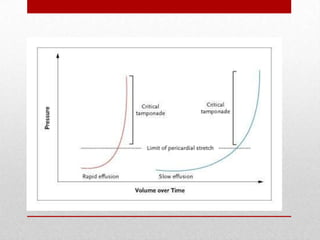
Pericardial Pressure-
Volume Relation
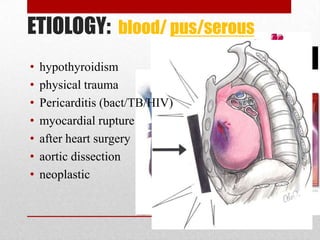
ETIOLOGY: blood/ pus/serous
•   hypothyroidism
•   physical trauma
•   Pericarditis (bact/TB/HIV)
•   myocardial rupture
•   after heart surgery
•   aortic dissection
•   neoplastic
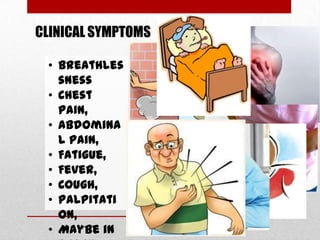
CLINICAL SYMPTOMS

 • Breathles
   sness
 • Chest
   pain,
 • Abdomina
   l pain,
 • Fatigue,
 • Fever,
 • Cough,
 • Palpitati
   on,
 • Maybe in
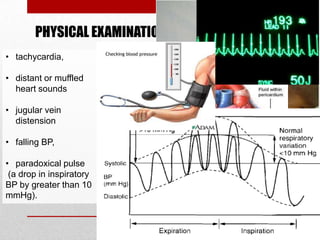
PHYSICAL EXAMINATION
• tachycardia,

• distant or muffled
  heart sounds

• jugular vein
  distension

• falling BP,

• paradoxical pulse
 (a drop in inspiratory
BP by greater than 10
mmHg).
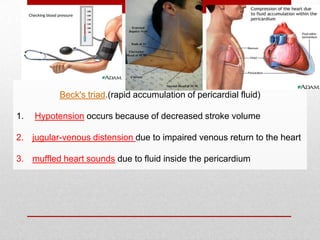
Beck's triad.(rapid accumulation of pericardial fluid)

1.   Hypotension occurs because of decreased stroke volume

2. jugular-venous distension due to impaired venous return to the heart

3. muffled heart sounds due to fluid inside the pericardium
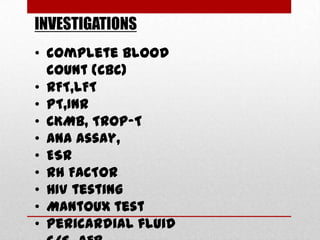
INVESTIGATIONS
• complete blood
  count (CBC)
• RFT,LFT
• PT,INR
• CKMB, TROP-T
• ANA assay,
• ESR
• Rh FACTOR
• HIV testing
• Mantoux test
• Pericardial fluid
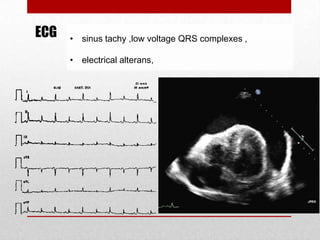
ECG   • sinus tachy ,low voltage QRS complexes ,

      • electrical alterans,
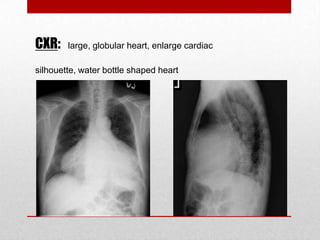
CXR:    large, globular heart, enlarge cardiac

silhouette, water bottle shaped heart
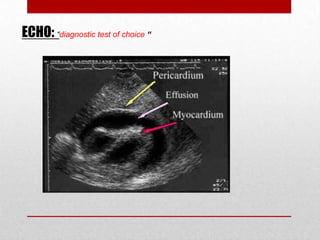
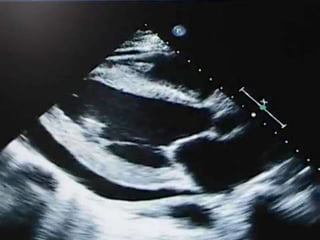
ECHO: “diagnostic test of choice “
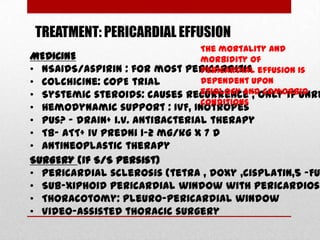
TREATMENT: PERICARDIAL EFFUSION
                              The mortality and
MEDICINE                      morbidity of
• NSAIDS/Aspirin : for most pericarditis effusion is
                              pericardial
• Colchicine: COPE trial      dependent upon
                              etiology and comorbid
• Systemic steroids: causes recurrence ; only if unre
                              conditions
• Hemodynamic support : IVF, Inotropes
• Pus? – drain+ i.v. antibacterial therapy
• TB- ATT+ iv predni 1-2 mg/kg x 7 d
• Antineoplastic therapy
SURGERY (if S/S persist)
• Pericardial sclerosis (tetra , doxy ,cisplatin,5 –FU
• Sub-xiphoid pericardial window with pericardiost
• Thoracotomy: pleuro-pericardial window
• Video-assisted thoracic surgery
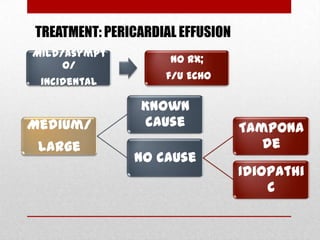
TREATMENT: PERICARDIAL EFFUSION
Mild/asympt
                     No Rx;
     o/
                    f/u ECHO
 incidental

                Known
Medium/         cause             Tampona
 large                               de
               No cause
                                  Idiopathi
                                      c
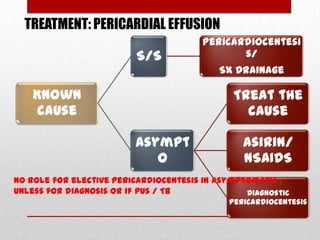
TREATMENT: PERICARDIAL EFFUSION
                                        Pericardiocentesi
                          S/S                  s/
                                           Sx Drainage

    Known                                      Treat the
     cause                                       cause

                          Asympt                 Asirin/
                             o                   NSAIDS
No role for elective pericardiocentesis in asymptomatic ,
unless for diagnosis or if pus / TB              Diagnostic
                                              pericardiocentesis
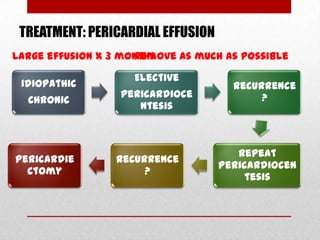
TREATMENT: PERICARDIAL EFFUSION
Large effusion x 3 months
                     Remove as much as possible

                    Elective
 Idiopathic                          Recurrence
                  pericardioce            ?
  Chronic
                     ntesis


                                      Repeat
Pericardie       Recurrence
                                   Pericardiocen
  ctomy               ?
                                        tesis
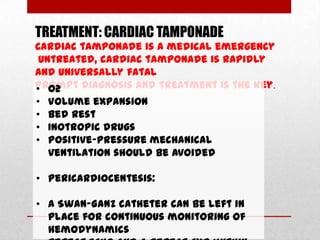
TREATMENT: CARDIAC TAMPONADE
Cardiac tamponade is a medical emergency
 Untreated, cardiac tamponade is rapidly
and universally fatal
Prompt diagnosis and treatment is the key.
• O2
•   Volume expansion
•   Bed rest
•   Inotropic drugs
•   Positive-pressure mechanical
    ventilation should be avoided

• Pericardiocentesis:

• A Swan-Ganz catheter can be left in
  place for continuous monitoring of
  hemodynamics
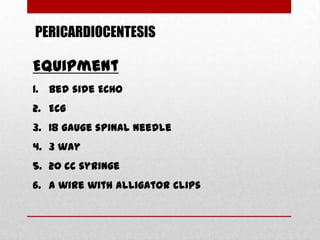
PERICARDIOCENTESIS

Equipment
1. Bed side ECHO
2. ECG
3. 18 gauge spinal needle
4. 3 way
5. 20 cc syringe
6. A wire with alligator clips
PERICARDIOCENTESIS
PREPARATION:

1.   surface
     landmarks
2.   Clean
3.   Drape
4.   LA
5.   Raise the
     head of the
     bed
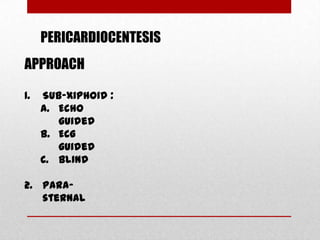
PERICARDIOCENTESIS
APPROACH

1.   Sub-xiphoid :
     A. Echo
        guided
     B. ECG
        guided
     C. Blind

2. Para-
   sternal
PERICARDIOCENTESIS
AFTER CARE

1.   Monitor vitals
2.   Look out for complications
3.   Repeat ECHO & CXR
4.   If Pt still symptomatic then may require
     placement of catheter in the pericardial
     space or surgical creation of a
     pericardial window
PERICARDIOCENTESIS
COMPLICATIONS

1.   Cardiac arrhythmia
2.   Pneumothorax
3.   Pleural effusion
4.   Myocardial injury

5.   Peritoneal injury
6.   Liver/stomach injury
7.   Internal mammary artery injury
8.   Diaphragmatic injury
RECURRENT TAMPONADE


•   pericardial window
•   Sclerosing the pericardium
•   Pericardio-peritoneal shunt
•   Pericardiectomy
• Signs & symptoms and management of
 TAKE HOME MESSAGE the rate of
 pericardial effusion depends on
 accumulation of effusion

• Elective pericardiocentesis is not warranted in
 all pericardial effusions

• Cardiac tamponade is a medical emergency, and
 if untreated, its rapidly and universally fatal

• Prompt diagnosis and treatment is the key.

• Pericardiocentesis is a life saving procedure in
 tamponade

• Monitor vitals after the procedure to look for
Cardiac tamponade

Cardiac tamponade

  • 1.
    PERICARDIAL EFFUSION & CARDIACTAMPONADE by DR. AVINASH PRAKASH
  • 5.
    IMPORTANT POINTS • Definition •Patho-physiology • etiology • Clinical features • Investigations • Treatment
  • 6.
    DEFINITION PERICARDIAL EFFUSION “an abnormal accumulation of fluid in the pericardial cavity” CARDIAC TAMPONADE “clinical syndrome caused by accumulation of fluid in the pericardial space, resulting in reduced ventricular filling and subsequent hemodynamic compromise”
  • 7.
    PATHO-PHYSIOLOGY ↑ Pressure pericardi on rt side al fluid of heart Pooling of blood ↓Venous in pulm return capillari es ↓Stroke volume, Cardiac Arrest ↓CO How much pericardial fluid is needed to
  • 8.
  • 9.
    ETIOLOGY: blood/ pus/serous • hypothyroidism • physical trauma • Pericarditis (bact/TB/HIV) • myocardial rupture • after heart surgery • aortic dissection • neoplastic
  • 10.
    CLINICAL SYMPTOMS •Breathles sness • Chest pain, • Abdomina l pain, • Fatigue, • Fever, • Cough, • Palpitati on, • Maybe in
  • 11.
    PHYSICAL EXAMINATION • tachycardia, •distant or muffled heart sounds • jugular vein distension • falling BP, • paradoxical pulse (a drop in inspiratory BP by greater than 10 mmHg).
  • 12.
    Beck's triad.(rapid accumulationof pericardial fluid) 1. Hypotension occurs because of decreased stroke volume 2. jugular-venous distension due to impaired venous return to the heart 3. muffled heart sounds due to fluid inside the pericardium
  • 13.
    INVESTIGATIONS • complete blood count (CBC) • RFT,LFT • PT,INR • CKMB, TROP-T • ANA assay, • ESR • Rh FACTOR • HIV testing • Mantoux test • Pericardial fluid
  • 14.
    ECG • sinus tachy ,low voltage QRS complexes , • electrical alterans,
  • 15.
    CXR: large, globular heart, enlarge cardiac silhouette, water bottle shaped heart
  • 16.
  • 18.
    TREATMENT: PERICARDIAL EFFUSION The mortality and MEDICINE morbidity of • NSAIDS/Aspirin : for most pericarditis effusion is pericardial • Colchicine: COPE trial dependent upon etiology and comorbid • Systemic steroids: causes recurrence ; only if unre conditions • Hemodynamic support : IVF, Inotropes • Pus? – drain+ i.v. antibacterial therapy • TB- ATT+ iv predni 1-2 mg/kg x 7 d • Antineoplastic therapy SURGERY (if S/S persist) • Pericardial sclerosis (tetra , doxy ,cisplatin,5 –FU • Sub-xiphoid pericardial window with pericardiost • Thoracotomy: pleuro-pericardial window • Video-assisted thoracic surgery
  • 19.
    TREATMENT: PERICARDIAL EFFUSION Mild/asympt No Rx; o/ f/u ECHO incidental Known Medium/ cause Tampona large de No cause Idiopathi c
  • 20.
    TREATMENT: PERICARDIAL EFFUSION Pericardiocentesi S/S s/ Sx Drainage Known Treat the cause cause Asympt Asirin/ o NSAIDS No role for elective pericardiocentesis in asymptomatic , unless for diagnosis or if pus / TB Diagnostic pericardiocentesis
  • 21.
    TREATMENT: PERICARDIAL EFFUSION Largeeffusion x 3 months Remove as much as possible Elective Idiopathic Recurrence pericardioce ? Chronic ntesis Repeat Pericardie Recurrence Pericardiocen ctomy ? tesis
  • 22.
    TREATMENT: CARDIAC TAMPONADE Cardiactamponade is a medical emergency Untreated, cardiac tamponade is rapidly and universally fatal Prompt diagnosis and treatment is the key. • O2 • Volume expansion • Bed rest • Inotropic drugs • Positive-pressure mechanical ventilation should be avoided • Pericardiocentesis: • A Swan-Ganz catheter can be left in place for continuous monitoring of hemodynamics
  • 23.
    PERICARDIOCENTESIS Equipment 1. Bed sideECHO 2. ECG 3. 18 gauge spinal needle 4. 3 way 5. 20 cc syringe 6. A wire with alligator clips
  • 24.
    PERICARDIOCENTESIS PREPARATION: 1. surface landmarks 2. Clean 3. Drape 4. LA 5. Raise the head of the bed
  • 25.
    PERICARDIOCENTESIS APPROACH 1. Sub-xiphoid : A. Echo guided B. ECG guided C. Blind 2. Para- sternal
  • 27.
    PERICARDIOCENTESIS AFTER CARE 1. Monitor vitals 2. Look out for complications 3. Repeat ECHO & CXR 4. If Pt still symptomatic then may require placement of catheter in the pericardial space or surgical creation of a pericardial window
  • 28.
    PERICARDIOCENTESIS COMPLICATIONS 1. Cardiac arrhythmia 2. Pneumothorax 3. Pleural effusion 4. Myocardial injury 5. Peritoneal injury 6. Liver/stomach injury 7. Internal mammary artery injury 8. Diaphragmatic injury
  • 29.
    RECURRENT TAMPONADE • pericardial window • Sclerosing the pericardium • Pericardio-peritoneal shunt • Pericardiectomy
  • 30.
    • Signs &symptoms and management of TAKE HOME MESSAGE the rate of pericardial effusion depends on accumulation of effusion • Elective pericardiocentesis is not warranted in all pericardial effusions • Cardiac tamponade is a medical emergency, and if untreated, its rapidly and universally fatal • Prompt diagnosis and treatment is the key. • Pericardiocentesis is a life saving procedure in tamponade • Monitor vitals after the procedure to look for