
ARRHYTHMIA
submitted by;
Mavumnkal biju Brincelet
Group:733
What is an arrhythmia?
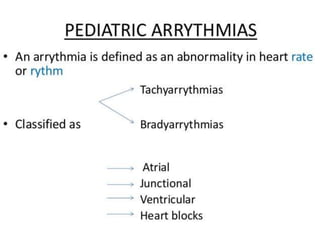
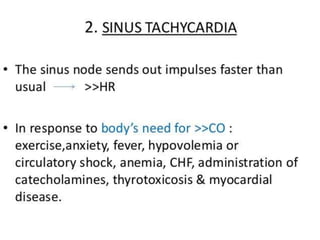
• An arrhythmia is any change in the regular, even
rhythm of the heartbeat. If a child has an
arrhythmia, his or her heart might beat too fast or
too slow, or it might skip a beat or have extra beats.
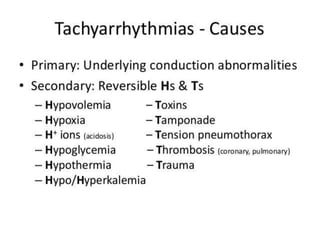
An arrhythmia might result from a physical
condition such as ,a heart defect or in response to
outside factors, such as a fever, infection, and
certain medications. Even crying and playing can
briefly alter a child’s heart rate.
How does an arrhythmia occur?
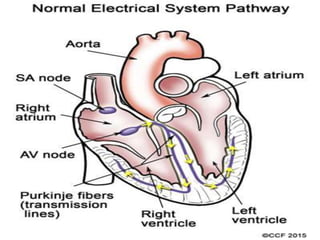
• The pumping action of the heart is powered by an
electrical pathway that runs through the nerves in the
walls of the heart. With each heartbeat, an electrical
signal is generated and travels from the top of the heart
to the bottom.
• The signal begins in a group of cells in the right atrium
(the upper right chamber of the heart) called the
sinoatrial node (SA node). From there, the signal travels
through special pathways to stimulate the right and left
atria, causing them to contract and send blood into the
ventricles (the bottom chambers of the heart).
The current continues through its circuit to another group of cells
called the atrioventricular node (AV node), which is between the
atria and the ventricles. From there, the electric current moves on to
another pathway called the bundle of His, where the signal branches
out to stimulate the right and left ventricles, causing them to
contract and send blood to the lungs and the rest of the body.
When the circuit is working properly, the heart beats at a regular,
smooth pace. When something interrupts the circuit, the heartbeat
can become irregular, and an arrhythmia occurs.
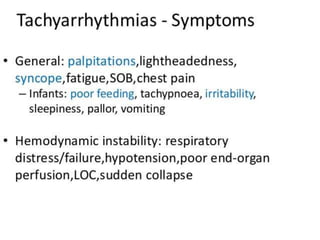
symptoms of arrhythmias include:
• Weakness
• Tiredness
• Palpitations
• Feeling lightheaded or
dizzy
• Fainting or near fainting
• Paleness
• Chest pain
• A slow heartbeat
• A fast heartbeat
• Feeling pauses between
heartbeats
• Sweating
• Shortness of breath
• Difficulty feeding (infants)
• Irritability in infants
Types of arrhythmias
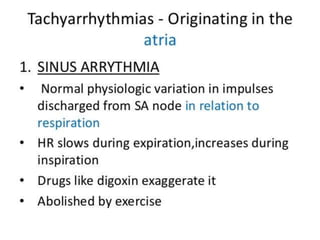
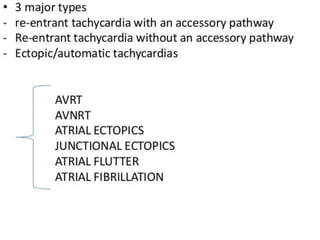
• Atrial arrhythmias in children include:
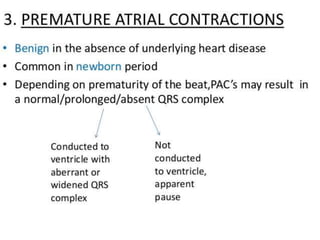
• Premature atrial contractions (PACs) — early beats that start in
the atria
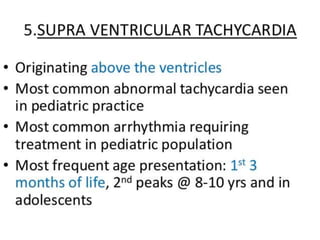
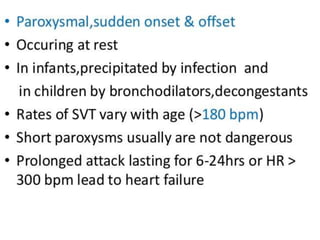
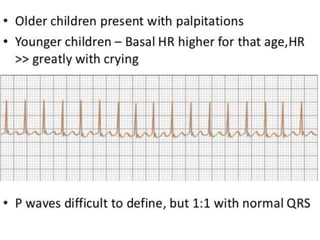
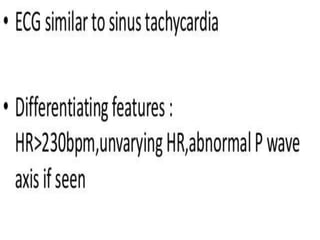
• Supraventricular tachycardia (SVT) — a rapid, usually regular
rhythm, starting from above the ventricles (SVT begins and ends
suddenly)
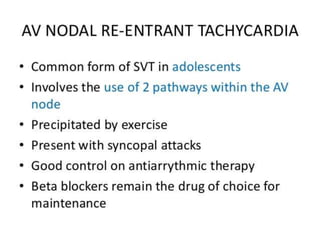
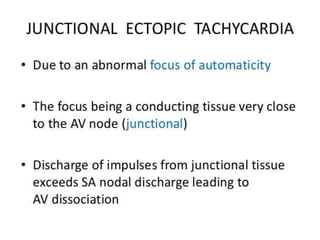
• AV nodal reentrant tachycardia (AVNRT) — a rapid heart rate due
to more than one pathway through the AV node
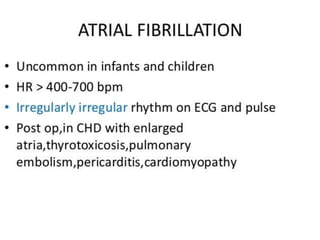
• Atrial fibrillation — a condition in which many impulses begin and
spread through the atria, competing for a chance to travel
through the AV node
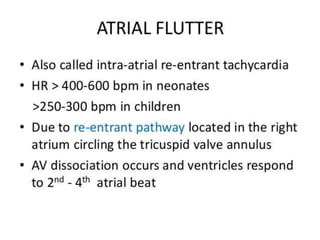
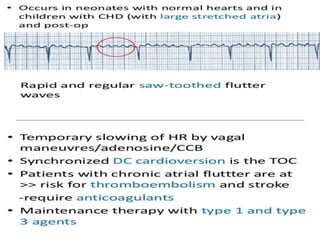
• Atrial flutter — an arrhythmia caused by one or more rapid
circuits in the atrium
• Wolff-Parkinson-White syndrome — a condition in which an
electrical signal may arrive at the ventricle too quickly due to an
extra conduction pathway or a shortcut from the atria to the
ventricles
• Ventricular arrhythmias in children include:
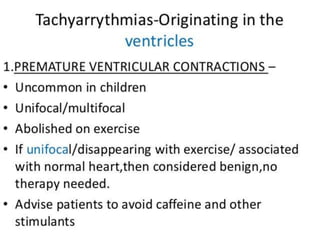
• Premature ventricular contractions (PVCs) — early extra
beats beginning in the ventricles. These occur when the
electrical signal starts in the ventricles, causing them to
contract before receiving signals from the atria
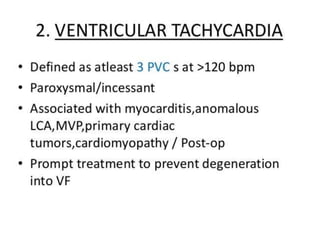
• Ventricular tachycardia (V-tach) — a life-threatening
condition in which electrical signals start from the ventricles
in a fast and irregular rate
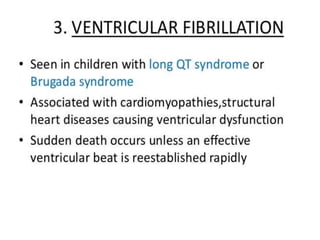
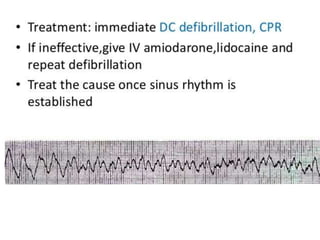
• Ventricular fibrillation — an irregular, disorganized firing of
impulses from the ventricles
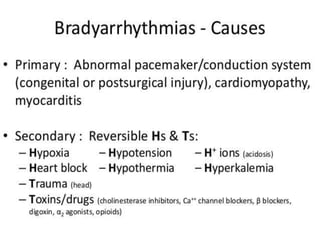
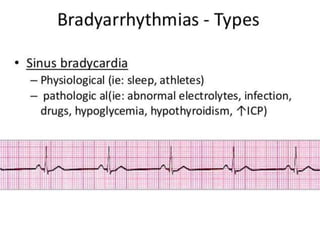
• Bradyarrhythmias
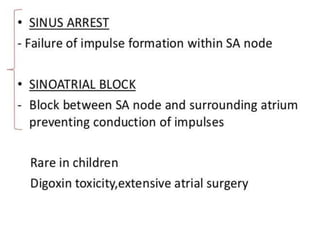
• Sinus node dysfunction — a slow heart rhythm due to an
abnormal SA node
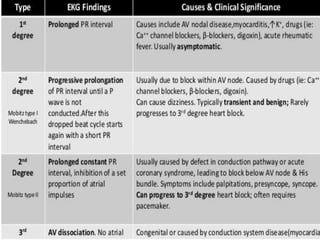
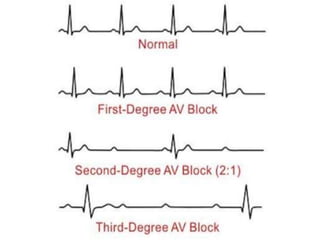
• Heart block — a delay or complete block of the electrical
impulse from the SA node to the ventricles
Arrhythmia
Arrhythmia
Arrhythmia
Arrhythmia
Arrhythmia
Arrhythmia
Arrhythmia
Arrhythmia
Arrhythmia
Arrhythmia
Arrhythmia
Arrhythmia
Arrhythmia
Arrhythmia
Arrhythmia
Arrhythmia
Arrhythmia
Arrhythmia
Arrhythmia
Arrhythmia
Arrhythmia
Arrhythmia
Arrhythmia
Arrhythmia
Arrhythmia
Arrhythmia
Arrhythmia
Arrhythmia
Arrhythmia
Arrhythmia
Arrhythmia
Arrhythmia
Arrhythmia
Arrhythmia
Arrhythmia
Arrhythmia
Arrhythmia
Arrhythmia
Arrhythmia
Arrhythmia

Arrhythmia

  • 1.
  • 3.
    What is anarrhythmia? • An arrhythmia is any change in the regular, even rhythm of the heartbeat. If a child has an arrhythmia, his or her heart might beat too fast or too slow, or it might skip a beat or have extra beats. An arrhythmia might result from a physical condition such as ,a heart defect or in response to outside factors, such as a fever, infection, and certain medications. Even crying and playing can briefly alter a child’s heart rate.
  • 4.
    How does anarrhythmia occur? • The pumping action of the heart is powered by an electrical pathway that runs through the nerves in the walls of the heart. With each heartbeat, an electrical signal is generated and travels from the top of the heart to the bottom. • The signal begins in a group of cells in the right atrium (the upper right chamber of the heart) called the sinoatrial node (SA node). From there, the signal travels through special pathways to stimulate the right and left atria, causing them to contract and send blood into the ventricles (the bottom chambers of the heart).
  • 5.
    The current continuesthrough its circuit to another group of cells called the atrioventricular node (AV node), which is between the atria and the ventricles. From there, the electric current moves on to another pathway called the bundle of His, where the signal branches out to stimulate the right and left ventricles, causing them to contract and send blood to the lungs and the rest of the body. When the circuit is working properly, the heart beats at a regular, smooth pace. When something interrupts the circuit, the heartbeat can become irregular, and an arrhythmia occurs.
  • 6.
    symptoms of arrhythmiasinclude: • Weakness • Tiredness • Palpitations • Feeling lightheaded or dizzy • Fainting or near fainting • Paleness • Chest pain • A slow heartbeat • A fast heartbeat • Feeling pauses between heartbeats • Sweating • Shortness of breath • Difficulty feeding (infants) • Irritability in infants
  • 7.
    Types of arrhythmias •Atrial arrhythmias in children include: • Premature atrial contractions (PACs) — early beats that start in the atria • Supraventricular tachycardia (SVT) — a rapid, usually regular rhythm, starting from above the ventricles (SVT begins and ends suddenly) • AV nodal reentrant tachycardia (AVNRT) — a rapid heart rate due to more than one pathway through the AV node • Atrial fibrillation — a condition in which many impulses begin and spread through the atria, competing for a chance to travel through the AV node • Atrial flutter — an arrhythmia caused by one or more rapid circuits in the atrium • Wolff-Parkinson-White syndrome — a condition in which an electrical signal may arrive at the ventricle too quickly due to an extra conduction pathway or a shortcut from the atria to the ventricles
  • 8.
    • Ventricular arrhythmiasin children include: • Premature ventricular contractions (PVCs) — early extra beats beginning in the ventricles. These occur when the electrical signal starts in the ventricles, causing them to contract before receiving signals from the atria • Ventricular tachycardia (V-tach) — a life-threatening condition in which electrical signals start from the ventricles in a fast and irregular rate • Ventricular fibrillation — an irregular, disorganized firing of impulses from the ventricles • Bradyarrhythmias • Sinus node dysfunction — a slow heart rhythm due to an abnormal SA node • Heart block — a delay or complete block of the electrical impulse from the SA node to the ventricles