Anemia
Clinical Pharmacy
Submitted to: Ma’am Sobia Jawed
Group: 09
Definition of Anemia
 Deficiency in the oxygen-carrying capacity
of the blood due to a diminished
erythrocyte mass.
 Anemia is classified as:
 Regenerative: In a regenerative anemia, the bone
marrow responds appropriately to the decreased red cell
mass by increasing RBC production and releasing
reticulocytes.
 Non regenerative: In a non-regenerative anemia, the
bone marrow responds inadequately to the increased need
for RBC.
Measurements of Anemia
 Hemoglobin = grams of hemoglobin per 100 mL of whole
blood (g/dL)
 Hematocrit = percent of a sample of whole blood occupied by
intact red blood cells
 RBC = millions of red blood cells per microL of whole blood
 MCV = Mean corpuscular volume
 If > 100 → Macrocytic anemia
 If 80 – 100 → Normocytic anemia
 If < 80 → Microcytic anemia
 RDW = Red blood cell distribution width
 = (Standard deviation of red cell volume ÷ mean
cell volume) × 100
 Normal value is 11-15%
 If elevated, suggests large variability in sizes of
RBCs
Laboratory Definition of Anemia
 Hgb:
 Women: <12.0
 Men: < 13.5
 Hct:
 Women: < 36
 Men: <41
Symptoms of Anemia
 Decreased oxygenation
 Exertional dyspnea
 Dyspnea at rest
 Fatigue
 Bounding pulses
 Lethargy, confusion
 Decreased volume
 Fatigue
 Muscle cramps
 Postural dizziness
 syncope
Classification on Etiology
 Decrease in the total circulating red cell mass
 (hematocrit, hemoglobin concentration)
 Classification:
 A. Underlying mechanism
 blood loss
 increased destruction
 decreased production
 B. Morphology of erythrocytes
 size (micro-, macro-, normocytic)
 shape (spherocytosis, stomato-,...)
 color (degree of hemoglobinization: normo- hypo-,
hyperchromic)
Special Considerations in
Determining Anemia
 Acute Bleed
 Drop in Hgb or Hct may not be shown until 36
to 48 hours after acute bleed (even though
patient may be hypotensive)
 Acute Blood Loss – non-regenerative,
then moderately regenerative 3-7 days
later
 Chronic Blood Loss – marked
regeneration
Symptoms of Anemia
Acute Blood loss
 Clinical signs depend on the
degree of anemia, the duration
(acute or chronic), and the
underlying cause. In acute
blood loss, the patient usually
presents with tachycardia, pale
mucous membranes, bounding
or weak pulses, and
hypotension.
Chronic Blood loss
 Patients with chronic anemia
have had time to adjust, and
their clinical presentation is
usually more indolent with
vague signs of lethargy,
weakness, and anorexia.
 These patients will have similar
physical examination findings,
pale mucous membranes,
tachycardia, and possibly
splenomegaly or a new heart
murmur, or both.
Causes of Anemia -- Erythrocyte Loss
 May be due to:
 Erythrocyte loss (bleeding)
 Decreased Erythrocyte production
 low erythropoietin
 Decreased marrow response to erythropoietin
 Increased Erythrocyte destruction (hemolysis)
 The cause of the blood loss may be obvious, eg, trauma. If no evidence of external bleeding is
found, a source of internal or occult blood loss must be sought, eg, a ruptured splenic tumor,
other neoplasia, coagulopathy, GI ulceration, or parasites.
 Chronic bleeding (long-term bleeding) is often undetected for a long time. The patient
gradually loses blood, which means a loss of red blood cells and hemoglobin.
 Acute bleeding (not long term), can also reduce red blood cell count. Excessive blood loss can
be caused by:
 Stomach ulcers.
 Hemorrhoids.
 Inflammation of the stomach (gastritis).
 NSAIDS (nonsteroidal anti-inflammatory drugs)
 Menstruation - women who have very heavy periods (menorrhagia) have a higher
risk of developing anemia.
 Surgery and Trauma which results in bleeding, such as a car accident.
 Blood donations - some regular blood donors may develop anemia.
Anemia Due to Excessive Bleeding
or Trauma
• Excessive bleeding is the most common cause of anemia. When blood is lost,
the body quickly pulls water from tissues outside the bloodstream in an
attempt to keep the blood vessels filled. As a result, the blood is diluted, and
the hematocrit (the percentage of red blood cells in the total blood volume) is
reduced. Eventually, increased production of red blood cells by the bone
marrow may correct the anemia. However, over time, bleeding reduces the
amount of iron in the body, so that the bone marrow is not able to increase
production of new red blood cells to replace those lost.
• The symptoms may be severe initially, especially if anemia develops rapidly
from a sudden loss of blood, such as from an injury, surgery, childbirth, or a
ruptured blood vessel. Losing large amounts of blood suddenly can create
two problems:
• Blood pressure falls because the amount of fluid left in the blood
vessels is insufficient.
• The body's oxygen supply is drastically reduced because the
number of oxygen-carrying red blood cells has decreased so quickly.
• Either problem may lead to a heart attack, stroke, or death.
Acute Blood Loss
Acute Ulcer
Non-steroidal anti-inflammatory drugs (NSAIDs)
Non-steroidal anti-inflammatory drugs (NSAIDs) can cause bleeding in the
stomach. Ibuprofen and aspirin are two commonly prescribed NSAIDs.
Stomach ulcers
The acid in your stomach (which helps your body to digest food) can sometimes eat
into your stomach lining. When this happens, the acid forms an ulcer (an open sore).
This is also known as a stomach ulcer (or a peptic ulcer). Stomach ulcers can cause
your stomach lining to bleed, which leads to anaemia. In some cases, this blood
loss can cause you to vomit blood or pass blood in your stools faeces
Angio-dysplasia
Gastrointestinal bleeding can also be caused by a condition called angiodysplasia.
This is due to abnormal blood vessels in the gastrointestinal tract, which can cause
bleeding.
Less common acute ulcers
Bleeding ulcer
Internal bleeding is caused by a peptic ulcer which has been left untreated. When
this happens, it is now referred to as a bleeding ulcer - this is the most dangerous
type of ulcer.
Esophageal ulcer
This type of ulcer occurs in the lower end of your esophagus. Esophageal ulcers are
often associated with a bad case of acid reflux, or GERD as it is commonly called
(short for gastro esophageal reflux disease).
Stress ulcer
Stress ulcers are a group of lesions (or lacerations) found in the esophagus,
stomach or duodenum. These are normally only found in critically ill or severely
stressed patients.
Refractory ulcer
Refractory ulcers are simply peptic ulcers that have not healed after at least 3
months of treatment.
Chronic Ulcers
 A chronic ulcer is an ulcer that does not heal in an orderly set of stages and in a 
predictable amount of time the way most ulcer do; ulcer that do not heal within 
three months are often considered chronic. 
Chronic ulcer seem to be detained in 
one or more of the phases of wound healing. For example, chronic ulcer often 
remain in the inflammatory stage for too long. In acute ulcer, there is a precise 
balance between production and degradation of molecules such as collagen; in 
chronic ulcer this balancee is lost and degradation plays too large a role
Classification
 The vast majority of chronic ulcer can be classified into three categories: venous 
ulcers, diabetic, and pressure ulcers. A small number of ulcer that do not fall into 
these categories may be due to causes such as radiation poisoning or ischemia.
Venous and arterial ulcers
Venous ulcers, which usually occur in the legs, account for about 70% to 90% of chronic ulcer and
mostly affect the elderly. They are thought to be due to venous hypertension caused by improper
function of valves that exist in the veins to prevent blood from flowing backward. Ischemia results
from the dysfunction and, combined with reperfusion injury, causes the tissue damage that leads to
the ulcer.
Diabetic ulcers
Another major cause of chronic ulcer, diabetes, is increasing in prevalence. Diabetics have a 15%
higher risk for amputation than the general population due to chronic ulcers. Diabetes
causes neuropathy, which inhibits nociception and the perception of pain. Thus patients may not
initially notice small ulcer to legs and feet, and may therefore fail to prevent infection or
repeated injury. Further, diabetes causes immune compromise and damage to small blood vessels,
preventing adequate oxygenation of tissue, which can cause chronic ulcer. Pressure also plays a role
in the formation of diabetic ulcers.
Pressure ulcers
Another leading type of chronic ulcer is pressure ulcers, which usually occur in people with
conditions such as paralysis that inhibit movement of body parts that are commonly subjected to
pressure such as the heels, shoulder blades, and sacrum. Pressure ulcers are caused by ischemia
that occurs when pressure on the tissue is greater than the pressure in capillaries, and thus restricts
blood flow into the area. Muscle tissue, which needs more oxygen and nutrients than skin does,
shows the worst effects from prolonged pressure. As in other chronic ulcers, reperfusion
injury damages tissue.
Diagnosis
 Chronic ulcer may affect only the epidermis and dermis, or they may affect tissues all 
the way to the fascia. They may be formed originally by the same things that cause acute 
ones, such as surgery or accidental trauma, or they may form as the result of systemic 
infection,  vascular,  immune,  or  nerve  insufficiency,  or  comorbidities  such 
as neoplasias or metabolic disorders. The reason a wound becomes chronic is that the 
body’s  ability  to  deal  with  the  damage  is  overwhelmed  by  factors  such  as  repeated 
trauma, continued pressure, ischemia, or illness.
Ischemia
 Ischemia is  an  important  factor  in  the  formation  and  persistence  of  ulcer,  especially 
when it occurs repetitively (as it usually does) or when combined with a patient’s old 
age. Ischemia  causes  tissue  to  become  inflamed  and  cells  to  release  factors  that 
attract neutrophils such  as interleukins, chemokines, leukotrienes,  and complement 
factors.
Pathophysiology
Bacterial colonization
Since more oxygen in the wound environment allows white blood cells to 
produce ROS to kill bacteria, patients with inadequate tissue oxygenation, for 
example those who suffered hypothermia during surgery, are at higher risk 
for  infection. The  host’s immune  response to  the  presence  of  bacteria 
prolongs  inflammation,  delays  healing,  and  damages  tissue. Infection  can 
lead not only to chronic ulcer but also to gangrene, loss of the infected limb, 
and death of the patient.
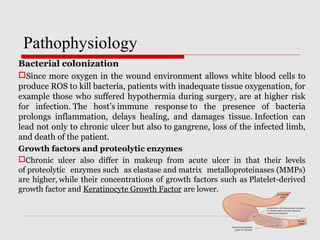
Growth factors and proteolytic enzymes
Chronic  ulcer  also  differ  in  makeup  from  acute  ulcer  in  that  their  levels 
of proteolytic  enzymes such  as elastase and matrix  metalloproteinases (MMPs) 
are higher, 
while their concentrations of growth factors such as Platelet-derived 
growth factor and Keratinocyte Growth Factor are lower.
Pathophysiology
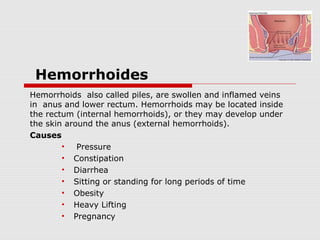
Hemorrhoides
Hemorrhoids also called piles, are swollen and inflamed veins
in anus and lower rectum. Hemorrhoids may be located inside
the rectum (internal hemorrhoids), or they may develop under
the skin around the anus (external hemorrhoids).
Causes
• Pressure
• Constipation
• Diarrhea
• Sitting or standing for long periods of time
• Obesity
• Heavy Lifting
• Pregnancy
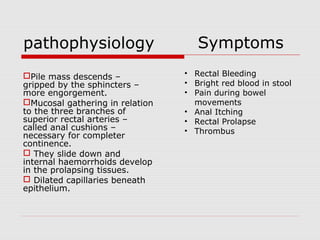
pathophysiology
Pile mass descends –
gripped by the sphincters –
more engorgement.
Mucosal gathering in relation
to the three branches of
superior rectal arteries –
called anal cushions –
necessary for completer
continence.
 They slide down and
internal haemorrhoids develop
in the prolapsing tissues.
 Dilated capillaries beneath
epithelium.
Symptoms
• Rectal Bleeding
• Bright red blood in stool
• Pain during bowel
movements
• Anal Itching
• Rectal Prolapse
• Thrombus
Chronic Vaginal Bleeding
 vaginal bleeding is abnormal bleeding from the vagina
that is due to changes in hormone levels or abnormal
bleeding in the absence of intracavitary or uterine
pathology.
 Most menstrual cycles occur every 22 to 35 days.
Normal menstrual flow lasts 3 to 7 days, with most blood
loss occurring within the first 3 days.
 The menstrual flow amounts to 35 mL and consists of
effluent debris and blood. Patients with menorrhagia lose
more than 80 mL of blood with each menstrual cycle and
often develop anemia.
 Although approximately 16 mg of iron are lost with each
menstrual cycle, this rarely results in anemia in women
with adequate intake of dietary iron.
Prevalence and symptoms
 Approximately 9% to 30% of reproductive-age women have menstrual
irregularities requiring medical evaluation. 20% of cases occur in
adolescent girls, and more than 50% occur in women older than 45.
 Involve more blood loss (loss of more than about 3 ounces of blood or
periods that last more than 7 days) but occur at regular intervals
(menorrhagia)
 Involve more blood loss and occur frequently and irregularly between
menses (menometrorrhagia)
 A woman may feel tired or have fatigue if she loses too much blood
over time. This is a symptom of anemia.
 If bleeding continues, women may develop iron deficiency and anemia.
Diagnosis:
During the general examination, clinicians should look for signs of anemia (eg,
conjunctival pallor).
Blood tests include CBC if bleeding is unusually heavy or has lasted at least several
days or if findings suggest anemia or hypovolemia. If anemia is identified and is not
obviously due to iron deficiency (e.g, based on microcytic, hypochromic RBC indices),
iron studies are done.
 TSH, prolactin , and progesterone levels are also measured.
 The serum ferritin level, which reflects body iron stores, is measured if
women have chronic, heavy bleeding.
Review of systems should seek symptoms of possible causes, including missed
menses, breast swelling, and nausea (pregnancy-related bleeding); abdominal pain,
light-headedness, and syncope (ectopic pregnancy or ruptured ovarian cyst); chronic
pain and weight loss (cancer); and easy bruising and excessive bleeding due to tooth
brushing or venipuncture (a bleeding disorder).
Imaging includes transvaginal ultrasonography if women have any of the following:
 Age > 35
 Risk factors for endometrial cancer
 Bleeding that continues despite use of empiric hormone therapy
Treatment for Anemia caused
by Vaginal bleeding
 Folic acid dose: 400 to 800 mcg
orally, intramuscularly,
subcutaneously or IV once a day
 Vitamin C dose: 75-150 mg per day
 Vitamin B-12 dose: 2-10
micrograms of vitamin B12 daily
combined with iron and/or folic acid
for up to 16 weeks and other
vitamins that help build red blood
cells.
Lab Findings
 Serum Iron
 LOW (< 60 micrograms/dL)
 Total Iron Binding Capacity (TIBC)
 HIGH ( > 360 micrograms/dL)
 Serum Ferritin
 LOW (< 20 nanograms/mL)
 Can be “falsely”normal in inflammatory
states
Diagnosis
Medical and Family Histories
Let your doctor know about any medicines you take, what you typically
eat (your diet), and whether you have family members who have anemia or
a history of it.
Physical Exam
Listen to your heart for a rapid or irregular heartbeat
Listen to your lungs for rapid or uneven breathing
Feel your abdomen to check the size of your liver and spleen
Your doctor also may do a pelvic or rectal exam to check for common
sources of blood loss.
Diagnostic Tests and Procedures
You may have various blood tests and other tests or procedures to find out
what type of anemia you have and how severe it is.
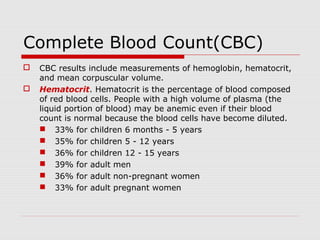
Complete Blood Count(CBC)
 CBC results include measurements of hemoglobin, hematocrit,
and mean corpuscular volume.
 Hematocrit. Hematocrit is the percentage of blood composed
of red blood cells. People with a high volume of plasma (the
liquid portion of blood) may be anemic even if their blood
count is normal because the blood cells have become diluted.
 33% for children 6 months - 5 years
 35% for children 5 - 12 years
 36% for children 12 - 15 years
 39% for adult men
 36% for adult non-pregnant women
 33% for adult pregnant women
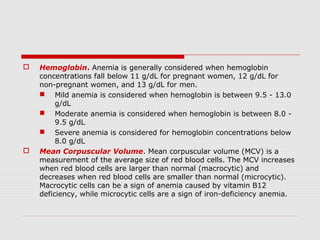
 Hemoglobin. Anemia is generally considered when hemoglobin
concentrations fall below 11 g/dL for pregnant women, 12 g/dL for
non-pregnant women, and 13 g/dL for men.
 Mild anemia is considered when hemoglobin is between 9.5 - 13.0
g/dL
 Moderate anemia is considered when hemoglobin is between 8.0 -
9.5 g/dL
 Severe anemia is considered for hemoglobin concentrations below
8.0 g/dL
 Mean Corpuscular Volume. Mean corpuscular volume (MCV) is a
measurement of the average size of red blood cells. The MCV increases
when red blood cells are larger than normal (macrocytic) and
decreases when red blood cells are smaller than normal (microcytic).
Macrocytic cells can be a sign of anemia caused by vitamin B12
deficiency, while microcytic cells are a sign of iron-deficiency anemia.
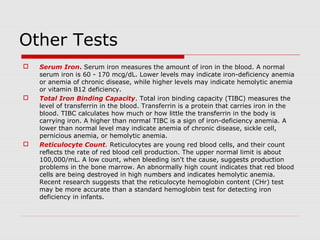
Other Tests
 Serum Iron. Serum iron measures the amount of iron in the blood. A normal
serum iron is 60 - 170 mcg/dL. Lower levels may indicate iron-deficiency anemia
or anemia of chronic disease, while higher levels may indicate hemolytic anemia
or vitamin B12 deficiency.
 Total Iron Binding Capacity. Total iron binding capacity (TIBC) measures the
level of transferrin in the blood. Transferrin is a protein that carries iron in the
blood. TIBC calculates how much or how little the transferrin in the body is
carrying iron. A higher than normal TIBC is a sign of iron-deficiency anemia. A
lower than normal level may indicate anemia of chronic disease, sickle cell,
pernicious anemia, or hemolytic anemia.
 Reticulocyte Count. Reticulocytes are young red blood cells, and their count
reflects the rate of red blood cell production. The upper normal limit is about
100,000/mL. A low count, when bleeding isn't the cause, suggests production
problems in the bone marrow. An abnormally high count indicates that red blood
cells are being destroyed in high numbers and indicates hemolytic anemia.
Recent research suggests that the reticulocyte hemoglobin content (CHr) test
may be more accurate than a standard hemoglobin test for detecting iron
deficiency in infants.
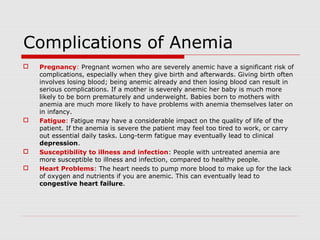
Complications of Anemia
 Pregnancy: Pregnant women who are severely anemic have a significant risk of
complications, especially when they give birth and afterwards. Giving birth often
involves losing blood; being anemic already and then losing blood can result in
serious complications. If a mother is severely anemic her baby is much more
likely to be born prematurely and underweight. Babies born to mothers with
anemia are much more likely to have problems with anemia themselves later on
in infancy.
 Fatigue: Fatigue may have a considerable impact on the quality of life of the
patient. If the anemia is severe the patient may feel too tired to work, or carry
out essential daily tasks. Long-term fatigue may eventually lead to clinical
depression.
 Susceptibility to illness and infection: People with untreated anemia are
more susceptible to illness and infection, compared to healthy people.
 Heart Problems: The heart needs to pump more blood to make up for the lack
of oxygen and nutrients if you are anemic. This can eventually lead to
congestive heart failure.
Treating Acute Blood LossTreating Acute Blood Loss
 Stop the Bleeding
 Replace fluid loss
 Oxygen support
 Treat underlying disorder
Stop the Bleeding
1. Assess coagulation status
2. External arterial bleeder
 Temporary
 Cautery - silver nitrate, Kwik Stop,
electrocautery
 Epinephrine
 Permanent
 Excise abnormal tissue for biopsy
 Reveal normal artery and ligate
Stop the Bleeding
3. Abdominal bleeder
 exploratory surgery as soon as vascular volume and
oxygen carrying capacity restored
4. GI bleeder
 Sucralfate PO – 1-3g in a slurry
 Barium PO – 3-5 ml/lb
 Endoscopic cautery
 surgery
Replace fluid loss
 crystalloids
 10 ml/lb bolus and then reassess
 1-2 ml/lb/hr when hypovolemia replaced
 Colloids
 Hetastarch
 10 ml/kg over 5-15 minutes
 repeat once if needed
 Oxyglobin
 3-5 ml/kg added to fluids running at 0.5-2ml/lb/hr
 Or 10 ml/kg/hr for up to 3 hours
 If IV access is difficult, try intraosseous
Oxygen support
 Transfusion – RBC or whole
blood
 Oxyglobin
 Oxygen – nasal, flow-by, mask,
intubate
 Oral iron salts
 Ferrous sulfate – 325 mg po Q Day
 Side effects: constipation, black stools,
positive hemmoccult test
 Vitamin C can facilitate iron absorption.
Treat underlying disorder
Transfusion
 PCV threshold higher for acute blood loss
 20-25% with signs of hypoxia
 Or if going to surgery
 Improves oxygen carrying capacity
 May improve hemostasis
 Normally, transfusion of 10 ml/lb whole blood is given
over a minimum of 2 hours
 Pretreat with dexamethasone
 Give as fast as is tolerated
 Collect blood from the abdomen, pass through filter
and re-administer (use anticoagulant)
 No limitation on administration rate
Chronic Blood Loss Anemia
The chronic diseases that are associated with this process include:
Certain cancers. Examples include lymphomas and Hodgkin's disease.
Autoimmune diseases. Examples include rheumatoid arthritis, systemic lupus
erythematosus, inflammatory bowel disease, and polymyalgia rheumatica.
Long-term infections. Examples include chronic or recurrent urinary tract
infections, osteomyelitis, HIV/AIDS, hepatitis C.
Liver disease. Cirrhosis can reduce the production of red blood cells.
Gastrointestinal bleeding may also contribute to blood loss.
Heart failure. Many patients with heart failure also have anemia. Anemia is
associated with a higher risk of death in patients with heart failure. However, it is
unclear whether anemia actually causes or worsens heart failure. Recent research
suggests it may actually be a sign (marker) of heart failure. Iron deficiency in heart
failure can be due to a number of factors
Chronic kidney disease. The hormone erythropoietin (EPO) is produced in the
kidneys and stimulates the bone marrow production of red blood cells. Diseased
kidneys do not release sufficient amounts of EPO. Anemia can result and is universal
in end-stage renal disease (kidney failure). Chronic kidney disease is a common
complication of diabetes.
Chronic Blood Loss Anemia
Certain chronic diseases
ulcerative colitis
Cancer, including lymphoma
Hodgkin disease
Breast cancer
Chronic kidney disease
Long-term infections, such as bacterial endocarditis, osteomyelitis (bone
infection)
HIV/AIDS, hepatitis B or hepatitis C.
39
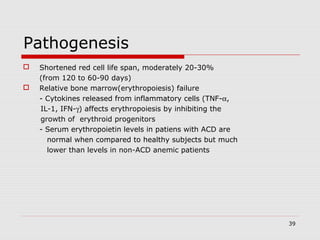
Pathogenesis
 Shortened red cell life span, moderately 20-30%
(from 120 to 60-90 days)
 Relative bone marrow(erythropoiesis) failure
- Cytokines released from inflammatory cells (TNF-α,
IL-1, IFN-γ) affects erythropoiesis by inhibiting the
growth of erythroid progenitors
- Serum erythropoietin levels in patiens with ACD are
normal when compared to healthy subjects but much
lower than levels in non-ACD anemic patients
40
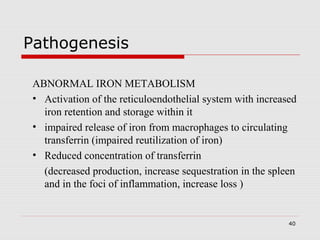
Pathogenesis
ABNORMAL IRON METABOLISM
• Activation of the reticuloendothelial system with increased
iron retention and storage within it
• impaired release of iron from macrophages to circulating
transferrin (impaired reutilization of iron)
• Reduced concentration of transferrin
(decreased production, increase sequestration in the spleen
and in the foci of inflammation, increase loss )
41
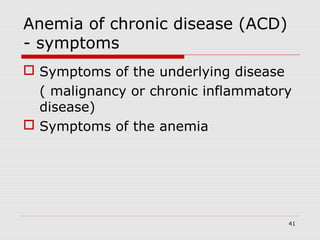
Anemia of chronic disease (ACD)
- symptoms
 Symptoms of the underlying disease
( malignancy or chronic inflammatory
disease)
 Symptoms of the anemia
42
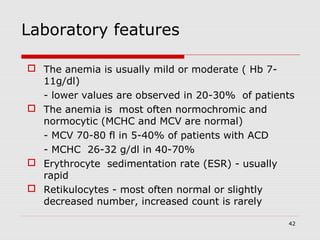
Laboratory features
 The anemia is usually mild or moderate ( Hb 7-
11g/dl)
- lower values are observed in 20-30% of patients
 The anemia is most often normochromic and
normocytic (MCHC and MCV are normal)
- MCV 70-80 fl in 5-40% of patients with ACD
- MCHC 26-32 g/dl in 40-70%
 Erythrocyte sedimentation rate (ESR) - usually
rapid
 Retikulocytes - most often normal or slightly
decreased number, increased count is rarely
43
Laboratory features
 Iron metabolism
1. Serum Iron - decreased (it is necessary for the
diagnosis of ACD)
2. TIBC - reduced or low-normal (N)
3. Transferrin saturation(TS) - moderately decreased
( higher than in iron-deficiency anemia), usually > 10%
4. Serum Ferritin-increased or normal
5. Serum Transferrin Receptor (sTR)-Normal
6. Sideroblasts in the bone marrow-reduced (5-20%)
Treating Chronic Blood LossTreating Chronic Blood Loss
 Correct Anemia - Transfusion
 Treat underlying disorder
 Correct Iron Deficiency
Correct Anemia – Transfusion
 Anemia severe enough to cause clinical signs (PCV
<15-20%)
 Or preparing for corrective surgery
 Conservative transfusion volume to avoid
precipitating CHF
 Volume overload more of a problem in cats than
in dogs
 Use packed cells
 Correction of anemia results in resolution of
cardiomegaly within several weeks
Treat Underlying Disorder
 Deworm/deflea after patient is stabilized
 If GI Bleeding confirmed
 Abdominal US
 Endoscopy
 Exploratory Laparotomy
 Confirm blood loss has resolved by monitoring
reticulocyte count
 < 40,0000/ul
 Retics more sensitive than anemia for chronic
blood loss
Correct Iron Deficiency
 Ferrous sulfate 5 mg/lb/day PO
 Give with a meal
 Continue for weeks to months
 Serology to confirm iron stores are replete
 TIBC – falls back to normal
 Transferrin – 20-60% saturated
 Iron – 60-230 ug/dl
Anemia blood loss

Anemia blood loss

  • 2.
    Anemia Clinical Pharmacy Submitted to:Ma’am Sobia Jawed Group: 09
  • 3.
    Definition of Anemia Deficiency in the oxygen-carrying capacity of the blood due to a diminished erythrocyte mass.  Anemia is classified as:  Regenerative: In a regenerative anemia, the bone marrow responds appropriately to the decreased red cell mass by increasing RBC production and releasing reticulocytes.  Non regenerative: In a non-regenerative anemia, the bone marrow responds inadequately to the increased need for RBC.
  • 4.
    Measurements of Anemia Hemoglobin = grams of hemoglobin per 100 mL of whole blood (g/dL)  Hematocrit = percent of a sample of whole blood occupied by intact red blood cells  RBC = millions of red blood cells per microL of whole blood  MCV = Mean corpuscular volume  If > 100 → Macrocytic anemia  If 80 – 100 → Normocytic anemia  If < 80 → Microcytic anemia  RDW = Red blood cell distribution width  = (Standard deviation of red cell volume ÷ mean cell volume) × 100  Normal value is 11-15%  If elevated, suggests large variability in sizes of RBCs
  • 5.
    Laboratory Definition ofAnemia  Hgb:  Women: <12.0  Men: < 13.5  Hct:  Women: < 36  Men: <41
  • 6.
    Symptoms of Anemia Decreased oxygenation  Exertional dyspnea  Dyspnea at rest  Fatigue  Bounding pulses  Lethargy, confusion  Decreased volume  Fatigue  Muscle cramps  Postural dizziness  syncope
  • 7.
    Classification on Etiology Decrease in the total circulating red cell mass  (hematocrit, hemoglobin concentration)  Classification:  A. Underlying mechanism  blood loss  increased destruction  decreased production  B. Morphology of erythrocytes  size (micro-, macro-, normocytic)  shape (spherocytosis, stomato-,...)  color (degree of hemoglobinization: normo- hypo-, hyperchromic)
  • 8.
    Special Considerations in DeterminingAnemia  Acute Bleed  Drop in Hgb or Hct may not be shown until 36 to 48 hours after acute bleed (even though patient may be hypotensive)  Acute Blood Loss – non-regenerative, then moderately regenerative 3-7 days later  Chronic Blood Loss – marked regeneration
  • 9.
    Symptoms of Anemia AcuteBlood loss  Clinical signs depend on the degree of anemia, the duration (acute or chronic), and the underlying cause. In acute blood loss, the patient usually presents with tachycardia, pale mucous membranes, bounding or weak pulses, and hypotension. Chronic Blood loss  Patients with chronic anemia have had time to adjust, and their clinical presentation is usually more indolent with vague signs of lethargy, weakness, and anorexia.  These patients will have similar physical examination findings, pale mucous membranes, tachycardia, and possibly splenomegaly or a new heart murmur, or both.
  • 10.
    Causes of Anemia-- Erythrocyte Loss  May be due to:  Erythrocyte loss (bleeding)  Decreased Erythrocyte production  low erythropoietin  Decreased marrow response to erythropoietin  Increased Erythrocyte destruction (hemolysis)  The cause of the blood loss may be obvious, eg, trauma. If no evidence of external bleeding is found, a source of internal or occult blood loss must be sought, eg, a ruptured splenic tumor, other neoplasia, coagulopathy, GI ulceration, or parasites.  Chronic bleeding (long-term bleeding) is often undetected for a long time. The patient gradually loses blood, which means a loss of red blood cells and hemoglobin.  Acute bleeding (not long term), can also reduce red blood cell count. Excessive blood loss can be caused by:  Stomach ulcers.  Hemorrhoids.  Inflammation of the stomach (gastritis).  NSAIDS (nonsteroidal anti-inflammatory drugs)  Menstruation - women who have very heavy periods (menorrhagia) have a higher risk of developing anemia.  Surgery and Trauma which results in bleeding, such as a car accident.  Blood donations - some regular blood donors may develop anemia.
  • 11.
    Anemia Due toExcessive Bleeding or Trauma • Excessive bleeding is the most common cause of anemia. When blood is lost, the body quickly pulls water from tissues outside the bloodstream in an attempt to keep the blood vessels filled. As a result, the blood is diluted, and the hematocrit (the percentage of red blood cells in the total blood volume) is reduced. Eventually, increased production of red blood cells by the bone marrow may correct the anemia. However, over time, bleeding reduces the amount of iron in the body, so that the bone marrow is not able to increase production of new red blood cells to replace those lost. • The symptoms may be severe initially, especially if anemia develops rapidly from a sudden loss of blood, such as from an injury, surgery, childbirth, or a ruptured blood vessel. Losing large amounts of blood suddenly can create two problems: • Blood pressure falls because the amount of fluid left in the blood vessels is insufficient. • The body's oxygen supply is drastically reduced because the number of oxygen-carrying red blood cells has decreased so quickly. • Either problem may lead to a heart attack, stroke, or death.
  • 12.
    Acute Blood Loss AcuteUlcer Non-steroidal anti-inflammatory drugs (NSAIDs) Non-steroidal anti-inflammatory drugs (NSAIDs) can cause bleeding in the stomach. Ibuprofen and aspirin are two commonly prescribed NSAIDs. Stomach ulcers The acid in your stomach (which helps your body to digest food) can sometimes eat into your stomach lining. When this happens, the acid forms an ulcer (an open sore). This is also known as a stomach ulcer (or a peptic ulcer). Stomach ulcers can cause your stomach lining to bleed, which leads to anaemia. In some cases, this blood loss can cause you to vomit blood or pass blood in your stools faeces Angio-dysplasia Gastrointestinal bleeding can also be caused by a condition called angiodysplasia. This is due to abnormal blood vessels in the gastrointestinal tract, which can cause bleeding.
  • 13.
    Less common acuteulcers Bleeding ulcer Internal bleeding is caused by a peptic ulcer which has been left untreated. When this happens, it is now referred to as a bleeding ulcer - this is the most dangerous type of ulcer. Esophageal ulcer This type of ulcer occurs in the lower end of your esophagus. Esophageal ulcers are often associated with a bad case of acid reflux, or GERD as it is commonly called (short for gastro esophageal reflux disease). Stress ulcer Stress ulcers are a group of lesions (or lacerations) found in the esophagus, stomach or duodenum. These are normally only found in critically ill or severely stressed patients. Refractory ulcer Refractory ulcers are simply peptic ulcers that have not healed after at least 3 months of treatment.
  • 14.
    Chronic Ulcers  A chroniculcer is an ulcer that does not heal in an orderly set of stages and in a  predictable amount of time the way most ulcer do; ulcer that do not heal within  three months are often considered chronic.  Chronic ulcer seem to be detained in  one or more of the phases of wound healing. For example, chronic ulcer often  remain in the inflammatory stage for too long. In acute ulcer, there is a precise  balance between production and degradation of molecules such as collagen; in  chronic ulcer this balancee is lost and degradation plays too large a role Classification  The vast majority of chronic ulcer can be classified into three categories: venous  ulcers, diabetic, and pressure ulcers. A small number of ulcer that do not fall into  these categories may be due to causes such as radiation poisoning or ischemia.
  • 15.
    Venous and arterialulcers Venous ulcers, which usually occur in the legs, account for about 70% to 90% of chronic ulcer and mostly affect the elderly. They are thought to be due to venous hypertension caused by improper function of valves that exist in the veins to prevent blood from flowing backward. Ischemia results from the dysfunction and, combined with reperfusion injury, causes the tissue damage that leads to the ulcer. Diabetic ulcers Another major cause of chronic ulcer, diabetes, is increasing in prevalence. Diabetics have a 15% higher risk for amputation than the general population due to chronic ulcers. Diabetes causes neuropathy, which inhibits nociception and the perception of pain. Thus patients may not initially notice small ulcer to legs and feet, and may therefore fail to prevent infection or repeated injury. Further, diabetes causes immune compromise and damage to small blood vessels, preventing adequate oxygenation of tissue, which can cause chronic ulcer. Pressure also plays a role in the formation of diabetic ulcers. Pressure ulcers Another leading type of chronic ulcer is pressure ulcers, which usually occur in people with conditions such as paralysis that inhibit movement of body parts that are commonly subjected to pressure such as the heels, shoulder blades, and sacrum. Pressure ulcers are caused by ischemia that occurs when pressure on the tissue is greater than the pressure in capillaries, and thus restricts blood flow into the area. Muscle tissue, which needs more oxygen and nutrients than skin does, shows the worst effects from prolonged pressure. As in other chronic ulcers, reperfusion injury damages tissue. Diagnosis
  • 16.
     Chronic ulcer may affect only the epidermis and dermis, or they may affect tissues all  the way to the fascia. They may be formed originally by the same things that cause acute  ones, such as surgery or accidental trauma, or they may form as the result of systemic  infection,  vascular, immune,  or  nerve  insufficiency,  or  comorbidities  such  as neoplasias or metabolic disorders. The reason a wound becomes chronic is that the  body’s  ability  to  deal  with  the  damage  is  overwhelmed  by  factors  such  as  repeated  trauma, continued pressure, ischemia, or illness. Ischemia  Ischemia is  an  important  factor  in  the  formation  and  persistence  of  ulcer,  especially  when it occurs repetitively (as it usually does) or when combined with a patient’s old  age. Ischemia  causes  tissue  to  become  inflamed  and  cells  to  release  factors  that  attract neutrophils such  as interleukins, chemokines, leukotrienes,  and complement  factors. Pathophysiology
  • 17.
    Bacterial colonization Since more oxygen in the wound environment allows white blood cells to  produce ROS to kill bacteria, patients with inadequate tissue oxygenation, for  example those who suffered hypothermia during surgery, are at higher risk  for  infection. The host’s immune  response to  the  presence  of  bacteria  prolongs  inflammation,  delays  healing,  and  damages  tissue. Infection  can  lead not only to chronic ulcer but also to gangrene, loss of the infected limb,  and death of the patient. Growth factors and proteolytic enzymes Chronic  ulcer  also  differ  in  makeup  from  acute  ulcer  in  that  their  levels  of proteolytic  enzymes such  as elastase and matrix  metalloproteinases (MMPs)  are higher,  while their concentrations of growth factors such as Platelet-derived  growth factor and Keratinocyte Growth Factor are lower. Pathophysiology
  • 18.
    Hemorrhoides Hemorrhoids also calledpiles, are swollen and inflamed veins in anus and lower rectum. Hemorrhoids may be located inside the rectum (internal hemorrhoids), or they may develop under the skin around the anus (external hemorrhoids). Causes • Pressure • Constipation • Diarrhea • Sitting or standing for long periods of time • Obesity • Heavy Lifting • Pregnancy
  • 19.
    pathophysiology Pile mass descends– gripped by the sphincters – more engorgement. Mucosal gathering in relation to the three branches of superior rectal arteries – called anal cushions – necessary for completer continence.  They slide down and internal haemorrhoids develop in the prolapsing tissues.  Dilated capillaries beneath epithelium. Symptoms • Rectal Bleeding • Bright red blood in stool • Pain during bowel movements • Anal Itching • Rectal Prolapse • Thrombus
  • 20.
    Chronic Vaginal Bleeding vaginal bleeding is abnormal bleeding from the vagina that is due to changes in hormone levels or abnormal bleeding in the absence of intracavitary or uterine pathology.  Most menstrual cycles occur every 22 to 35 days. Normal menstrual flow lasts 3 to 7 days, with most blood loss occurring within the first 3 days.  The menstrual flow amounts to 35 mL and consists of effluent debris and blood. Patients with menorrhagia lose more than 80 mL of blood with each menstrual cycle and often develop anemia.  Although approximately 16 mg of iron are lost with each menstrual cycle, this rarely results in anemia in women with adequate intake of dietary iron.
  • 21.
    Prevalence and symptoms Approximately 9% to 30% of reproductive-age women have menstrual irregularities requiring medical evaluation. 20% of cases occur in adolescent girls, and more than 50% occur in women older than 45.  Involve more blood loss (loss of more than about 3 ounces of blood or periods that last more than 7 days) but occur at regular intervals (menorrhagia)  Involve more blood loss and occur frequently and irregularly between menses (menometrorrhagia)  A woman may feel tired or have fatigue if she loses too much blood over time. This is a symptom of anemia.  If bleeding continues, women may develop iron deficiency and anemia.
  • 22.
    Diagnosis: During the generalexamination, clinicians should look for signs of anemia (eg, conjunctival pallor). Blood tests include CBC if bleeding is unusually heavy or has lasted at least several days or if findings suggest anemia or hypovolemia. If anemia is identified and is not obviously due to iron deficiency (e.g, based on microcytic, hypochromic RBC indices), iron studies are done.  TSH, prolactin , and progesterone levels are also measured.  The serum ferritin level, which reflects body iron stores, is measured if women have chronic, heavy bleeding. Review of systems should seek symptoms of possible causes, including missed menses, breast swelling, and nausea (pregnancy-related bleeding); abdominal pain, light-headedness, and syncope (ectopic pregnancy or ruptured ovarian cyst); chronic pain and weight loss (cancer); and easy bruising and excessive bleeding due to tooth brushing or venipuncture (a bleeding disorder). Imaging includes transvaginal ultrasonography if women have any of the following:  Age > 35  Risk factors for endometrial cancer  Bleeding that continues despite use of empiric hormone therapy
  • 23.
    Treatment for Anemiacaused by Vaginal bleeding  Folic acid dose: 400 to 800 mcg orally, intramuscularly, subcutaneously or IV once a day  Vitamin C dose: 75-150 mg per day  Vitamin B-12 dose: 2-10 micrograms of vitamin B12 daily combined with iron and/or folic acid for up to 16 weeks and other vitamins that help build red blood cells.
  • 24.
    Lab Findings  SerumIron  LOW (< 60 micrograms/dL)  Total Iron Binding Capacity (TIBC)  HIGH ( > 360 micrograms/dL)  Serum Ferritin  LOW (< 20 nanograms/mL)  Can be “falsely”normal in inflammatory states
  • 25.
    Diagnosis Medical and FamilyHistories Let your doctor know about any medicines you take, what you typically eat (your diet), and whether you have family members who have anemia or a history of it. Physical Exam Listen to your heart for a rapid or irregular heartbeat Listen to your lungs for rapid or uneven breathing Feel your abdomen to check the size of your liver and spleen Your doctor also may do a pelvic or rectal exam to check for common sources of blood loss. Diagnostic Tests and Procedures You may have various blood tests and other tests or procedures to find out what type of anemia you have and how severe it is.
  • 26.
    Complete Blood Count(CBC) CBC results include measurements of hemoglobin, hematocrit, and mean corpuscular volume.  Hematocrit. Hematocrit is the percentage of blood composed of red blood cells. People with a high volume of plasma (the liquid portion of blood) may be anemic even if their blood count is normal because the blood cells have become diluted.  33% for children 6 months - 5 years  35% for children 5 - 12 years  36% for children 12 - 15 years  39% for adult men  36% for adult non-pregnant women  33% for adult pregnant women
  • 27.
     Hemoglobin. Anemiais generally considered when hemoglobin concentrations fall below 11 g/dL for pregnant women, 12 g/dL for non-pregnant women, and 13 g/dL for men.  Mild anemia is considered when hemoglobin is between 9.5 - 13.0 g/dL  Moderate anemia is considered when hemoglobin is between 8.0 - 9.5 g/dL  Severe anemia is considered for hemoglobin concentrations below 8.0 g/dL  Mean Corpuscular Volume. Mean corpuscular volume (MCV) is a measurement of the average size of red blood cells. The MCV increases when red blood cells are larger than normal (macrocytic) and decreases when red blood cells are smaller than normal (microcytic). Macrocytic cells can be a sign of anemia caused by vitamin B12 deficiency, while microcytic cells are a sign of iron-deficiency anemia.
  • 28.
    Other Tests  SerumIron. Serum iron measures the amount of iron in the blood. A normal serum iron is 60 - 170 mcg/dL. Lower levels may indicate iron-deficiency anemia or anemia of chronic disease, while higher levels may indicate hemolytic anemia or vitamin B12 deficiency.  Total Iron Binding Capacity. Total iron binding capacity (TIBC) measures the level of transferrin in the blood. Transferrin is a protein that carries iron in the blood. TIBC calculates how much or how little the transferrin in the body is carrying iron. A higher than normal TIBC is a sign of iron-deficiency anemia. A lower than normal level may indicate anemia of chronic disease, sickle cell, pernicious anemia, or hemolytic anemia.  Reticulocyte Count. Reticulocytes are young red blood cells, and their count reflects the rate of red blood cell production. The upper normal limit is about 100,000/mL. A low count, when bleeding isn't the cause, suggests production problems in the bone marrow. An abnormally high count indicates that red blood cells are being destroyed in high numbers and indicates hemolytic anemia. Recent research suggests that the reticulocyte hemoglobin content (CHr) test may be more accurate than a standard hemoglobin test for detecting iron deficiency in infants.
  • 29.
    Complications of Anemia Pregnancy: Pregnant women who are severely anemic have a significant risk of complications, especially when they give birth and afterwards. Giving birth often involves losing blood; being anemic already and then losing blood can result in serious complications. If a mother is severely anemic her baby is much more likely to be born prematurely and underweight. Babies born to mothers with anemia are much more likely to have problems with anemia themselves later on in infancy.  Fatigue: Fatigue may have a considerable impact on the quality of life of the patient. If the anemia is severe the patient may feel too tired to work, or carry out essential daily tasks. Long-term fatigue may eventually lead to clinical depression.  Susceptibility to illness and infection: People with untreated anemia are more susceptible to illness and infection, compared to healthy people.  Heart Problems: The heart needs to pump more blood to make up for the lack of oxygen and nutrients if you are anemic. This can eventually lead to congestive heart failure.
  • 30.
    Treating Acute BloodLossTreating Acute Blood Loss  Stop the Bleeding  Replace fluid loss  Oxygen support  Treat underlying disorder
  • 31.
    Stop the Bleeding 1.Assess coagulation status 2. External arterial bleeder  Temporary  Cautery - silver nitrate, Kwik Stop, electrocautery  Epinephrine  Permanent  Excise abnormal tissue for biopsy  Reveal normal artery and ligate
  • 32.
    Stop the Bleeding 3.Abdominal bleeder  exploratory surgery as soon as vascular volume and oxygen carrying capacity restored 4. GI bleeder  Sucralfate PO – 1-3g in a slurry  Barium PO – 3-5 ml/lb  Endoscopic cautery  surgery
  • 33.
    Replace fluid loss crystalloids  10 ml/lb bolus and then reassess  1-2 ml/lb/hr when hypovolemia replaced  Colloids  Hetastarch  10 ml/kg over 5-15 minutes  repeat once if needed  Oxyglobin  3-5 ml/kg added to fluids running at 0.5-2ml/lb/hr  Or 10 ml/kg/hr for up to 3 hours  If IV access is difficult, try intraosseous
  • 34.
    Oxygen support  Transfusion– RBC or whole blood  Oxyglobin  Oxygen – nasal, flow-by, mask, intubate
  • 35.
     Oral ironsalts  Ferrous sulfate – 325 mg po Q Day  Side effects: constipation, black stools, positive hemmoccult test  Vitamin C can facilitate iron absorption. Treat underlying disorder
  • 36.
    Transfusion  PCV thresholdhigher for acute blood loss  20-25% with signs of hypoxia  Or if going to surgery  Improves oxygen carrying capacity  May improve hemostasis  Normally, transfusion of 10 ml/lb whole blood is given over a minimum of 2 hours  Pretreat with dexamethasone  Give as fast as is tolerated  Collect blood from the abdomen, pass through filter and re-administer (use anticoagulant)  No limitation on administration rate
  • 37.
    Chronic Blood LossAnemia The chronic diseases that are associated with this process include: Certain cancers. Examples include lymphomas and Hodgkin's disease. Autoimmune diseases. Examples include rheumatoid arthritis, systemic lupus erythematosus, inflammatory bowel disease, and polymyalgia rheumatica. Long-term infections. Examples include chronic or recurrent urinary tract infections, osteomyelitis, HIV/AIDS, hepatitis C. Liver disease. Cirrhosis can reduce the production of red blood cells. Gastrointestinal bleeding may also contribute to blood loss. Heart failure. Many patients with heart failure also have anemia. Anemia is associated with a higher risk of death in patients with heart failure. However, it is unclear whether anemia actually causes or worsens heart failure. Recent research suggests it may actually be a sign (marker) of heart failure. Iron deficiency in heart failure can be due to a number of factors Chronic kidney disease. The hormone erythropoietin (EPO) is produced in the kidneys and stimulates the bone marrow production of red blood cells. Diseased kidneys do not release sufficient amounts of EPO. Anemia can result and is universal in end-stage renal disease (kidney failure). Chronic kidney disease is a common complication of diabetes.
  • 38.
    Chronic Blood LossAnemia Certain chronic diseases ulcerative colitis Cancer, including lymphoma Hodgkin disease Breast cancer Chronic kidney disease Long-term infections, such as bacterial endocarditis, osteomyelitis (bone infection) HIV/AIDS, hepatitis B or hepatitis C.
  • 39.
    39 Pathogenesis  Shortened redcell life span, moderately 20-30% (from 120 to 60-90 days)  Relative bone marrow(erythropoiesis) failure - Cytokines released from inflammatory cells (TNF-α, IL-1, IFN-γ) affects erythropoiesis by inhibiting the growth of erythroid progenitors - Serum erythropoietin levels in patiens with ACD are normal when compared to healthy subjects but much lower than levels in non-ACD anemic patients
  • 40.
    40 Pathogenesis ABNORMAL IRON METABOLISM •Activation of the reticuloendothelial system with increased iron retention and storage within it • impaired release of iron from macrophages to circulating transferrin (impaired reutilization of iron) • Reduced concentration of transferrin (decreased production, increase sequestration in the spleen and in the foci of inflammation, increase loss )
  • 41.
    41 Anemia of chronicdisease (ACD) - symptoms  Symptoms of the underlying disease ( malignancy or chronic inflammatory disease)  Symptoms of the anemia
  • 42.
    42 Laboratory features  Theanemia is usually mild or moderate ( Hb 7- 11g/dl) - lower values are observed in 20-30% of patients  The anemia is most often normochromic and normocytic (MCHC and MCV are normal) - MCV 70-80 fl in 5-40% of patients with ACD - MCHC 26-32 g/dl in 40-70%  Erythrocyte sedimentation rate (ESR) - usually rapid  Retikulocytes - most often normal or slightly decreased number, increased count is rarely
  • 43.
    43 Laboratory features  Ironmetabolism 1. Serum Iron - decreased (it is necessary for the diagnosis of ACD) 2. TIBC - reduced or low-normal (N) 3. Transferrin saturation(TS) - moderately decreased ( higher than in iron-deficiency anemia), usually > 10% 4. Serum Ferritin-increased or normal 5. Serum Transferrin Receptor (sTR)-Normal 6. Sideroblasts in the bone marrow-reduced (5-20%)
  • 44.
    Treating Chronic BloodLossTreating Chronic Blood Loss  Correct Anemia - Transfusion  Treat underlying disorder  Correct Iron Deficiency
  • 45.
    Correct Anemia –Transfusion  Anemia severe enough to cause clinical signs (PCV <15-20%)  Or preparing for corrective surgery  Conservative transfusion volume to avoid precipitating CHF  Volume overload more of a problem in cats than in dogs  Use packed cells  Correction of anemia results in resolution of cardiomegaly within several weeks
  • 46.
    Treat Underlying Disorder Deworm/deflea after patient is stabilized  If GI Bleeding confirmed  Abdominal US  Endoscopy  Exploratory Laparotomy  Confirm blood loss has resolved by monitoring reticulocyte count  < 40,0000/ul  Retics more sensitive than anemia for chronic blood loss
  • 47.
    Correct Iron Deficiency Ferrous sulfate 5 mg/lb/day PO  Give with a meal  Continue for weeks to months  Serology to confirm iron stores are replete  TIBC – falls back to normal  Transferrin – 20-60% saturated  Iron – 60-230 ug/dl