Chapter 10 
Blood and Circulatory System 
Disorders
Review of the Circulatory System 
 The circulatory system consists of the 
cardiovascular system and lymphatic system 
 This chapter will cover the blood vessels, the 
blood, and associated disorders. 
•Copyright © 2014, 2011, 2006 by Saunders, an imprint of Elsevier, Inc. •2
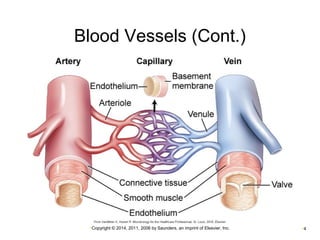
Blood Vessels 
 Arteries—arterioles 
 Transport blood away from heart 
 Veins—venules 
 Return blood back to the heart 
 Capillaries 
 Microcirculation within tissues 
 Systemic circulation 
 Exchange of gases, nutrients, and wastes in 
tissues 
 Pulmonary circulation 
 Gas exchange in lungs 
•Copyright © 2014, 2011, 2006 by Saunders, an imprint of Elsevier, Inc. •3
Blood Vessels (Cont.) 
•Copyright © 2014, 2011, 2006 by Saunders, an imprint of Elsevier, Inc. •4
Histology of Arteries and Veins 
 Tunica intima—endothelium (simple 
squamous epithelium) 
 Tunica media—middle layer, mostly smooth 
muscle 
 Tunica adventitia (externa)—connective 
tissue with fibrocytes, collagen (type I), and 
elastic fibers 
•Copyright © 2014, 2011, 2006 by Saunders, an imprint of Elsevier, Inc. •5
Blood 
•Copyright © 2014, 2011, 2006 by Saunders, an imprint of Elsevier, Inc. •6
Composition of Blood 
•Copyright © 2014, 2011, 2006 by Saunders, an imprint of Elsevier, Inc. •7 
 Plasma 
 Plasma proteins 
 Cellular component 
 Erythrocytes 
 Leukocytes 
 Thrombocytes (platelets)
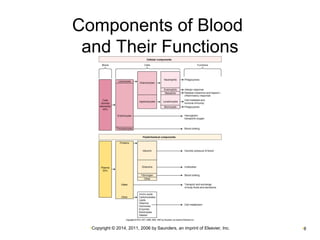
Components of Blood 
and Their Functions 
•Copyright © 2014, 2011, 2006 by Saunders, an imprint of Elsevier, Inc. •8
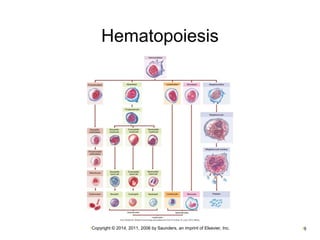
Hematopoiesis 
•Copyright © 2014, 2011, 2006 by Saunders, an imprint of Elsevier, Inc. •9
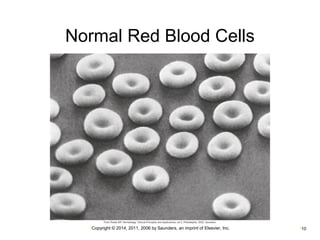
Normal Red Blood Cells 
•Copyright © 2014, 2011, 2006 by Saunders, an imprint of Elsevier, Inc. •10
Erythrocytes (Red Blood Cells) 
 Biconcave flexible discs 
 No nucleus in mature state 
 Contains hemoglobin 
 Globin portion 
 Heme group 
 Life span—»120 days 
 Erythropoietin produced in the kidney 
stimulates erythrocyte production. 
•Copyright © 2014, 2011, 2006 by Saunders, an imprint of Elsevier, Inc. •11
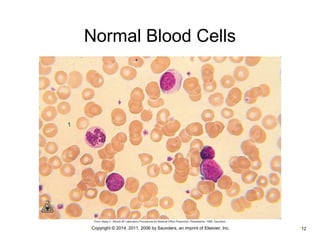
Normal Blood Cells 
•Copyright © 2014, 2011, 2006 by Saunders, an imprint of Elsevier, Inc. •12
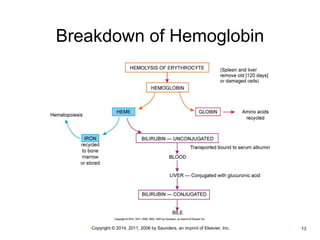
Breakdown of Hemoglobin 
•Copyright © 2014, 2011, 2006 by Saunders, an imprint of Elsevier, Inc. •13
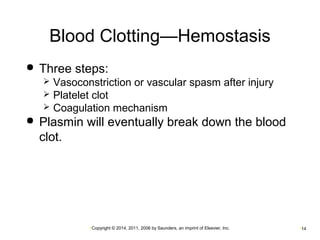
Blood Clotting—Hemostasis 
 Three steps: 
 Vasoconstriction or vascular spasm after injury 
 Platelet clot 
 Coagulation mechanism 
 Plasmin will eventually break down the blood 
clot. 
•Copyright © 2014, 2011, 2006 by Saunders, an imprint of Elsevier, Inc. •14
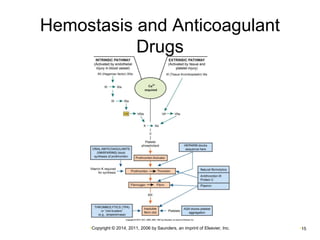
Hemostasis and Anticoagulant 
Drugs 
•Copyright © 2014, 2011, 2006 by Saunders, an imprint of Elsevier, Inc. •15
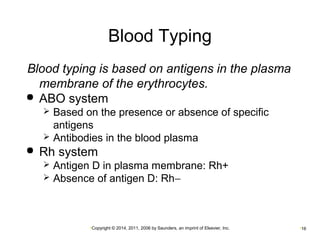
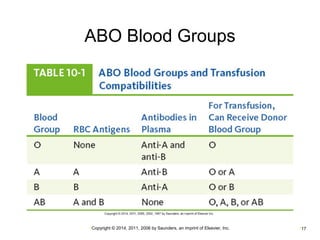
Blood Typing 
Blood typing is based on antigens in the plasma 
membrane of the erythrocytes. 
 ABO system 
 Based on the presence or absence of specific 
antigens 
 Antibodies in the blood plasma 
 Rh system 
 Antigen D in plasma membrane: Rh+ 
 Absence of antigen D: Rh- 
•Copyright © 2014, 2011, 2006 by Saunders, an imprint of Elsevier, Inc. •16
ABO Blood Groups 
•Copyright © 2014, 2011, 2006 by Saunders, an imprint of Elsevier, Inc. •17
Diagnostic Tests 
 Complete blood count (CBC) 
 Includes total red blood cells (RBCs), white blood 
cells (WBCs), and platelets 
 Leukocytosis (increased WBCs) 
• Associated with inflammation or infection 
 Leukopenia (decreased WBCs) 
• Associated with some viral infections, radiation, 
chemotherapy 
 Increased eosinophils 
• Common in allergic responses 
 Differential count for WBCs 
•Copyright © 2014, 2011, 2006 by Saunders, an imprint of Elsevier, Inc. •18
Diagnostic Tests (Cont.) 
 Morphology 
 Observed with blood smears 
 Shows size, shape, uniformity, maturity of cells 
• Different types of anemia can be distinguished. 
 Hematocrit 
 Percent by volume of cellular elements in blood 
 Hemoglobin 
 Amount of hemoglobin per unit volume of blood 
 Mean corpuscular volume (MCV) 
• Indicates the oxygen-carrying capacity of blood 
•Copyright © 2014, 2011, 2006 by Saunders, an imprint of Elsevier, Inc. •19
Diagnostic Tests (Cont.) 
 Reticulocyte count 
 Assessment of bone marrow function 
 Chemical analysis 
 Determines serum levels of components, such as iron, 
vitamin B12, folic acid, cholesterol, urea, glucose 
 Bleeding time 
 Measures platelet function 
 Prothrombin time (PT) and partial thromboplastin 
time (PTT) 
 Measure function of various factors in coagulation process 
 International normalized ratio (INR) is a standardized 
version. 
•Copyright © 2014, 2011, 2006 by Saunders, an imprint of Elsevier, Inc. •20
Blood Therapies 
 Whole blood, packed red blood cells, packed 
platelets 
 For severe anemia or thrombocytopenia 
 Plasma or colloid volume-expanding solutions 
 To maintain blood volume 
 Artificial blood products 
 Compatible with all blood types 
 None of them can perform all the complex 
functions of normal whole blood. 
•Copyright © 2014, 2011, 2006 by Saunders, an imprint of Elsevier, Inc. •21
Blood Therapies (Cont.) 
 Epoetin alfa 
 Artificial form of erythropoietin 
• Before certain surgical procedures 
• Anemia related to cancer 
• Chronic renal failure 
 Bone marrow or stem cell transplantation 
 Close tissue match necessary 
• Treatment of some cancers 
• Severe immunodeficiency 
• Severe blood cell diseases 
 Drug treatment 
 Aids in the clotting process 
•Copyright © 2014, 2011, 2006 by Saunders, an imprint of Elsevier, Inc. •22
Blood Dyscrasias 
•Copyright © 2014, 2011, 2006 by Saunders, an imprint of Elsevier, Inc. •23
The Anemias 
 Anemia causes a reduction in oxygen 
transport. 
 Basic problem is hemoglobin deficit 
 Oxygen deficit leads to: 
 Less energy production in all cells 
• Cell metabolism and reproduction diminished 
 Compensation mechanisms 
• Tachycardia and peripheral vasoconstriction 
 General signs of anemia 
• Fatigue, pallor (pale face), dyspnea, tachycardia 
•Copyright © 2014, 2011, 2006 by Saunders, an imprint of Elsevier, Inc. •24
The Anemias (Cont.) 
 Oxygen deficit leads to: 
 Decreased regeneration of epithelial cells 
• Digestive tract becomes inflamed and ulcerated, leading 
to stomatitis 
• Inflamed and cracked lips 
• Dysphasia 
• Hair and skin may show degenerative changes. 
 Severe anemia may lead to angina or congestive 
heart failure (CHF). 
•Copyright © 2014, 2011, 2006 by Saunders, an imprint of Elsevier, Inc. •25
Iron Deficiency Anemia 
 Insufficient iron impairs hemoglobin 
synthesis. 
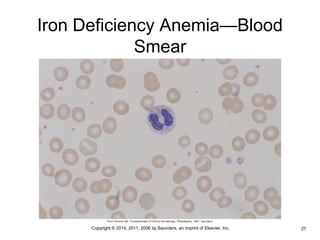
 Microcytic, hypochromic RBCs 
• Result of low hemoglobin concentration in cells 
 Very common 
 Ranges from mild to severe 
 Occurs in all age groups, but more common in 
women of childbearing age 
 Estimated that one in five women is affected 
• Proportion increases for pregnant women 
 Frequently sign of an underlying problem 
•Copyright © 2014, 2011, 2006 by Saunders, an imprint of Elsevier, Inc. •26
Iron Deficiency Anemia—Blood 
Smear 
•Copyright © 2014, 2011, 2006 by Saunders, an imprint of Elsevier, Inc. •27
Iron Deficiency Anemia: Causes 
 Dietary intake of iron below minimum 
requirement 
 Chronic blood loss 
 As from bleeding, ulcer, hemorrhoids, cancer 
 Impaired duodenal absorption of iron 
 In many disorders, malabsorption syndromes 
 Severe liver disease 
 May affect iron absorption as well as storage 
•Copyright © 2014, 2011, 2006 by Saunders, an imprint of Elsevier, Inc. •28
Iron Deficiency Anemia: Signs 
and Symptoms 
 Pallor of skin and mucous membranes 
 Fatigue, lethargy, cold intolerance 
 Irritability 
 Degenerative changes 
 Stomatitis and glossitis 
 Menstrual irregularities 
 Delayed healing 
 Tachycardia, heart palpitations, dyspnea, 
syncope 
•Copyright © 2014, 2011, 2006 by Saunders, an imprint of Elsevier, Inc. •29
Pernicious Anemia: Vitamin B12 
Deficiency 
 Basic problem is lack of absorption of vitamin 
B12 because of lack of intrinsic factor 
 Intrinsic factor secreted by gastric mucosa 
 Required for intestinal absorption of vitamin B12 
 Characterized by very large, immature, 
nucleated erythrocytes 
 Carry less hemoglobin 
 Shorter life span 
•Copyright © 2014, 2011, 2006 by Saunders, an imprint of Elsevier, Inc. •30
Pernicious Anemia: Vitamin B12 
Deficiency (Cont.) 
 Dietary insufficiency is very rarely a cause. 
 Genetic factors have been implicated. 
 More common in light-skinned women of northern 
European ancestry 
 Often accompanies chronic gastritis 
 May also be an outcome of gastric surgery 
•Copyright © 2014, 2011, 2006 by Saunders, an imprint of Elsevier, Inc. •31
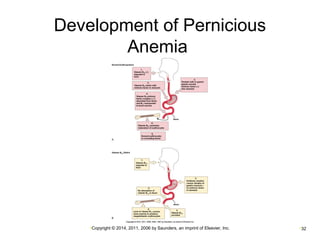
Development of Pernicious 
Anemia 
•Copyright © 2014, 2011, 2006 by Saunders, an imprint of Elsevier, Inc. •32
Vitamin B12 and Nerve Cells 
 Vitamin B12 is needed for the function and 
maintenance of neurons. 
 Significant deficit of the vitamin will cause 
symptoms in the peripheral nerves. 
 These may be reversible. 
•Copyright © 2014, 2011, 2006 by Saunders, an imprint of Elsevier, Inc. •33
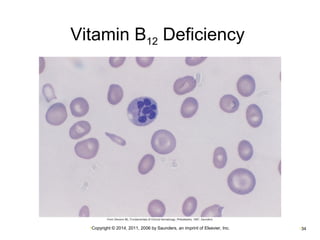
Vitamin B12 Deficiency 
•Copyright © 2014, 2011, 2006 by Saunders, an imprint of Elsevier, Inc. •34
Pernicious Anemia: Vitamin B12 
Deficiency (Cont.) 
 Manifestations in addition to those typical for 
anemias 
 Tongue is typically enlarged, red, sore, and shiny. 
 Digestive discomfort, often with nausea and 
diarrhea 
 Feeling of pins and needles, tingling in limbs 
 Diagnostic tests 
 Microscopic examination (erythrocytes) 
 Bone marrow examination (hyperactive) 
 Vitamin B12 serum levels below normal 
 Presence of hypochlorhydria or achlorhydria 
• Presence of gastric atrophy 
•Copyright © 2014, 2011, 2006 by Saunders, an imprint of Elsevier, Inc. •35
Aplastic Anemia 
 Impairment or failure of bone marrow 
 May be temporary or permanent 
 Often idiopathic but possible causes include: 
 Myelotoxins 
• Radiation, industrial chemicals, drugs 
•Copyright © 2014, 2011, 2006 by Saunders, an imprint of Elsevier, Inc. •36 
 Viruses 
• Particularly hepatitis C 
 Genetic abnormalities 
• Myelodysplastic syndrome 
• Fanconi’s anemia
Aplastic Anemia (Cont.) 
 Blood counts indicate pancytopenia. 
 Anemia, leukopenia, thrombocytopenia 
 Bone marrow biopsy may be required. 
 Erythrocytes often appear normal. 
 Identification of cause and prompt treatment 
needed for bone marrow recovery 
 Removal of any bone marrow suppressants 
 Failure to identify cause and treat effectively is 
life-threatening! 
•Copyright © 2014, 2011, 2006 by Saunders, an imprint of Elsevier, Inc. •37
Hemolytic Anemia 
 Results from excessive destruction of RBCs 
 Causes 
 Genetic defects 
 Immune reactions 
 Changes in blood chemistry 
 Infections such as malaria 
 Toxins in the blood 
 Antigen-antibody reactions 
• Incompatible blood transfusion 
• Erythroblastosis fetalis 
•Copyright © 2014, 2011, 2006 by Saunders, an imprint of Elsevier, Inc. •38
Sickle Cell Anemia 
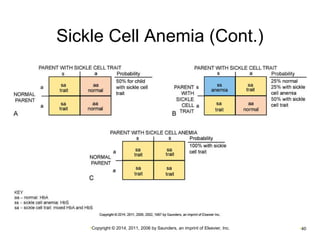
 Genetic condition 
 Autosomal 
 Incomplete dominance 
 Anemia occurs in homozygous recessive. 
 Diagnostic testing is available. 
 More common in individuals of African ancestry 
• Heterozygous condition is somewhat protective against 
malaria. 
• One in ten African Americans is heterozygous for the 
trait. 
•Copyright © 2014, 2011, 2006 by Saunders, an imprint of Elsevier, Inc. •39
Sickle Cell Anemia (Cont.) 
•Copyright © 2014, 2011, 2006 by Saunders, an imprint of Elsevier, Inc. •40
Sickle Cell Anemia (Cont.) 
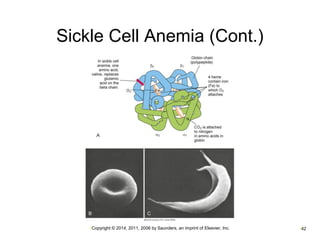
 Abnormal hemoglobin (HbS) 
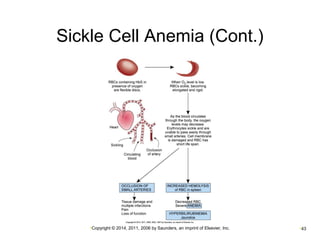
 Sickle cell crisis occurs whenever oxygen 
levels are lowered. 
 Altered hemoglobin is unstable and changes 
shape in hypoxemia. 
 Sickle-shaped cells are too large to pass 
through the microcirculation. 
 Obstruction leads to multiple infarctions and 
areas of necrosis. 
•Copyright © 2014, 2011, 2006 by Saunders, an imprint of Elsevier, Inc. •41
Sickle Cell Anemia (Cont.) 
•Copyright © 2014, 2011, 2006 by Saunders, an imprint of Elsevier, Inc. •42
Sickle Cell Anemia (Cont.) 
•Copyright © 2014, 2011, 2006 by Saunders, an imprint of Elsevier, Inc. •43
Sickle Cell Anemia (Cont.) 
 Multiple infarctions affect brain, bones, 
organs 
 In addition to basic anemia: 
 Hyperbilirubinemia, jaundice, gallstones 
• Caused by high rate of hemolysis 
 Clinical signs 
 Do not usually appear until the child is about 12 
months old 
•Copyright © 2014, 2011, 2006 by Saunders, an imprint of Elsevier, Inc. •44
Sickle Cell Anemia: Signs and 
Symptoms 
 Severe pain because of ischemia of tissues and 
infarction 
 Pallor, weakness, tachycardia, dyspnea 
 Hyperbilirubinemia—jaundice 
 Splenomegaly 
 Vascular occlusions and infarctions 
•Copyright © 2014, 2011, 2006 by Saunders, an imprint of Elsevier, Inc. •45 
 In lungs 
• Acute chest syndrome 
 Smaller blood vessels 
• Hand-foot syndrome 
 Delay of growth and development 
 Congestive heart failure
Sickle Cell Anemia (Cont.) 
 Diagnostic tests 
 Blood test 
• Hemoglobin electrophoresis 
 Prenatal DNA analysis 
 Treatment 
 Hydroxyurea has reduced the frequency of this 
crisis. 
 Dietary supplementation with folic acid 
 Bone marrow transplantation 
 Immunization in children 
• Against pneumonia, influenza, meningitis 
•Copyright © 2014, 2011, 2006 by Saunders, an imprint of Elsevier, Inc. •46
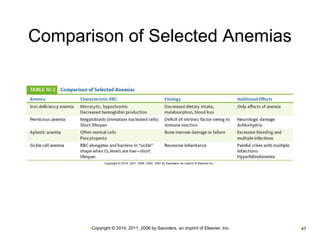
Comparison of Selected Anemias 
•Copyright © 2014, 2011, 2006 by Saunders, an imprint of Elsevier, Inc. •47
Polycythemia 
 Primary polycythemia—polycythemia vera 
 Increased production of erythrocytes and other 
cells in the bone marrow 
 Neoplastic disorder 
 Serum erythropoietin levels are low. 
 Secondary polycythemia—erythrocytosis 
 Increase in RBCs in response to prolonged 
hypoxia 
 Increased erythropoietin secretion 
 Compensation mechanism to provide increased 
oxygen transport 
•Copyright © 2014, 2011, 2006 by Saunders, an imprint of Elsevier, Inc. •48
Polycythemia: Signs and 
Symptoms 
 Distended blood vessels, sluggish blood flow 
 Increased blood pressure 
 Hypertrophied heart 
 Hepatomegaly 
 Splenomegaly 
 Dyspnea 
 Headaches 
 Visual disturbances 
 Thromboses and infarctions 
•Copyright © 2014, 2011, 2006 by Saunders, an imprint of Elsevier, Inc. •49
Polycythemia (Cont.) 
 Diagnostic tests 
 Increased cell counts 
 Increased hemoglobin and hematocrit values 
 Hypercellular bone marrow 
 Hyperuricemia 
 Treatment 
 Identify cause 
 Drugs or radiation 
• Suppression of bone marrow activity 
 Periodic phlebotomy 
•Copyright © 2014, 2011, 2006 by Saunders, an imprint of Elsevier, Inc. •50
Indications of Blood-Clotting 
Disorders 
 Persistent bleeding from gums 
 Repeated epistaxis 
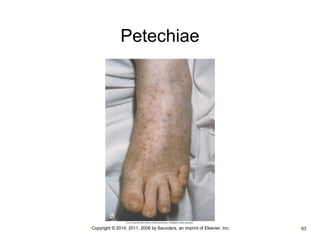
 Petechiae 
 Pinpoint, flat, red spots on skin and mucous 
membrane 
 Frequent purpura and ecchymosis 
 More than normal bleeding in trauma 
 Bleeding into joint—hemarthroses 
 Swollen, red, painful 
 Hemoptysis 
•Copyright © 2014, 2011, 2006 by Saunders, an imprint of Elsevier, Inc. •51
Blood-Clotting Disorders 
 Hematemesis 
 Coarse brown particles (coffee ground emesis) 
 Blood in feces 
 Black or occult 
 Anemia 
 Feeling faint and anxious 
 Low blood pressure 
 Rapid pulse 
•Copyright © 2014, 2011, 2006 by Saunders, an imprint of Elsevier, Inc. •52
Petechiae 
•Copyright © 2014, 2011, 2006 by Saunders, an imprint of Elsevier, Inc. •53
Hemophilia A 
 Classic hemophilia 
 Deficit or abnormality of factor VIII 
 Most common inherited clotting disorder 
 X-linked recessive trait 
 Manifested in men, carried by women 
 Varying degrees of severity 
 Prolonged bleeding after minor tissue trauma 
 Spontaneous bleeding into joints 
 Possible hematuria or blood in feces 
•Copyright © 2014, 2011, 2006 by Saunders, an imprint of Elsevier, Inc. •54
Hemophilia A (Cont.) 
 Diagnostic tests 
 Bleeding time and PT normal 
 PTT, activated PTT (aPTT), coagulation time 
prolonged 
 Serum levels of factor VIII are low. 
 Treatment 
 Desmopressin (DDAVP) 
 Replacement therapy for factor VIII 
•Copyright © 2014, 2011, 2006 by Saunders, an imprint of Elsevier, Inc. •55
Von Willebrand’s Disease 
 Most common hereditary clotting disorder 
 Three major types 
 Signs and symptoms include: 
 Skin rashes 
 Frequent nosebleeds 
 Easy bruising 
 Bleeding of gums 
 Abnormal menstrual bleeding 
 Treatment based on type and severity 
•Copyright © 2014, 2011, 2006 by Saunders, an imprint of Elsevier, Inc. •56
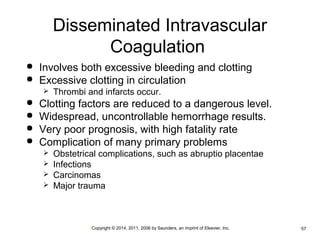
Disseminated Intravascular 
Coagulation 
 Involves both excessive bleeding and clotting 
 Excessive clotting in circulation 
 Thrombi and infarcts occur. 
 Clotting factors are reduced to a dangerous level. 
 Widespread, uncontrollable hemorrhage results. 
 Very poor prognosis, with high fatality rate 
 Complication of many primary problems 
 Obstetrical complications, such as abruptio placentae 
 Infections 
 Carcinomas 
 Major trauma 
•Copyright © 2014, 2011, 2006 by Saunders, an imprint of Elsevier, Inc. •57
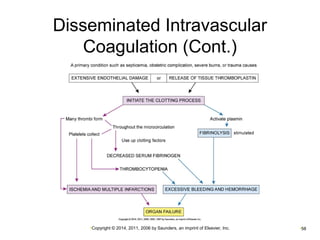
Disseminated Intravascular 
Coagulation (Cont.) 
•Copyright © 2014, 2011, 2006 by Saunders, an imprint of Elsevier, Inc. •58
Thrombophilia 
 Group of inherited or acquired disorders 
 Risk of abnormal clots in veins or arteries 
 Blood testing for clotting factor levels and 
abnormal antibody levels 
 Causative condition should be treated. 
•Copyright © 2014, 2011, 2006 by Saunders, an imprint of Elsevier, Inc. •59
Myelodysplastic Syndromes 
 Diseases that involve inadequate production 
of cells by the bone marrow 
 Signs and symptoms include anemia; 
dependent on type of deficiencies that occur 
 May be idiopathic or occur after 
chemotherapy or radiation treatment 
 Treatment measures depend on deficiency 
type. 
 Transfusion replacement 
 Chelation therapy to reduce iron overload 
 Bone marrow transplantation 
•Copyright © 2014, 2011, 2006 by Saunders, an imprint of Elsevier, Inc. •60
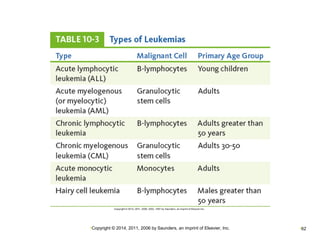
The Leukemias 
 Group of neoplastic disorders involving white blood 
cells 
 Uncontrolled WBC production in bone or lymph 
nodes 
 Other hemopoietic tissues are reduced. 
 One or more types of leukocytes are undifferentiated, 
immature, and nonfunctional. 
 Large numbers released into general circulation 
 Infiltrate lymph nodes, spleen, liver, brain, other 
organs 
•Copyright © 2014, 2011, 2006 by Saunders, an imprint of Elsevier, Inc. •61
•Copyright © 2014, 2011, 2006 by Saunders, an imprint of Elsevier, Inc. •62
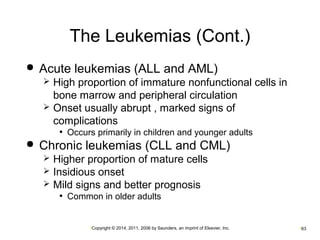
The Leukemias (Cont.) 
 Acute leukemias (ALL and AML) 
 High proportion of immature nonfunctional cells in 
bone marrow and peripheral circulation 
 Onset usually abrupt , marked signs of 
complications 
• Occurs primarily in children and younger adults 
 Chronic leukemias (CLL and CML) 
 Higher proportion of mature cells 
 Insidious onset 
 Mild signs and better prognosis 
• Common in older adults 
•Copyright © 2014, 2011, 2006 by Saunders, an imprint of Elsevier, Inc. •63
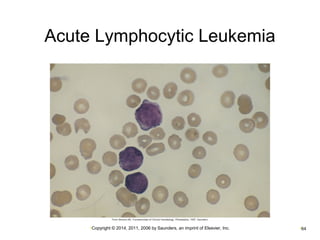
Acute Lymphocytic Leukemia 
•Copyright © 2014, 2011, 2006 by Saunders, an imprint of Elsevier, Inc. •64
Signs and Symptoms of 
Acute Leukemia 
 Usual signs at onset 
 Frequent or uncontrolled infections 
 Petechiae and purpura 
 Signs of anemia 
 Severe and steady bone pain 
 Weight loss, fatigue, possible fever 
 Enlarged lymph nodes, spleen, liver 
 Headache, visual disturbances, drowsiness, 
vomiting 
•Copyright © 2014, 2011, 2006 by Saunders, an imprint of Elsevier, Inc. •65
The Leukemias (Cont.) 
 Diagnostic tests 
 Peripheral blood smears 
• Immature leukocytes and altered numbers of WBCs 
• Numbers of RBCs and platelets decreased 
• Bone marrow biopsy for confirmation 
 Treatment 
 Chemotherapy 
 ALL in young children responds well to drugs 
 Biological therapy (interferon) 
• May be used to stimulate the immune system 
•Copyright © 2014, 2011, 2006 by Saunders, an imprint of Elsevier, Inc. •66
Complications of Leukemia 
 Opportunistic infections, including pneumonia 
 Sepsis 
 Congestive heart failure 
 Hemorrhage 
 Liver failure 
 Renal failure 
 CNS depression and coma 
•Copyright © 2014, 2011, 2006 by Saunders, an imprint of Elsevier, Inc. •67
Multiple Myeloma 
 Neoplastic disease that involves increased 
production of plasma cells in bone marrow 
 Unknown cause 
 Occurs in older adults 
 Production of other blood cells is impaired 
 Multiple tumors in bone 
 Loss of bone 
 Severe bone pain 
 Prognosis poor, with short life expectancy 
•Copyright © 2014, 2011, 2006 by Saunders, an imprint of Elsevier, Inc. •68
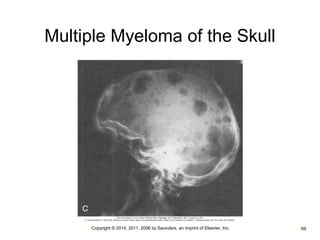
Multiple Myeloma of the Skull 
•Copyright © 2014, 2011, 2006 by Saunders, an imprint of Elsevier, Inc. •69
Chapter 11 
Lymphatic System Disorders
Review of the Lymphatic System 
•Copyright © 2014, 2011, 2006 by Saunders, an imprint of Elsevier, Inc. •71
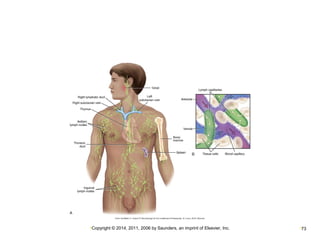
Structures 
 Lymphatic vessels 
 Lymphoid tissue 
 Lymphatic nodules 
 Tonsils 
 Lymph nodes 
 Spleen 
 Thymus gland 
 Red bone marrow 
•Copyright © 2014, 2011, 2006 by Saunders, an imprint of Elsevier, Inc. •72
•Copyright © 2014, 2011, 2006 by Saunders, an imprint of Elsevier, Inc. •73
Function 
 Return of excess interstitial fluid to the 
cardiovascular system 
 Vessels empty into the subclavian veins. 
 Filter and destroy foreign material 
 Initiate the immune response 
 Absorb lipids from the GI tract 
•Copyright © 2014, 2011, 2006 by Saunders, an imprint of Elsevier, Inc. •74
Lymphatic Vessels 
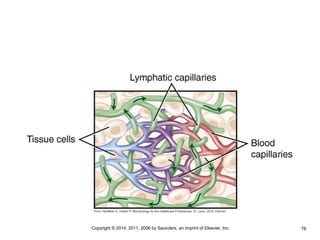
 Originate as capillaries in contact with blood 
capillary bed in tissues 
 Lymph collected by lymphatic trunks 
 Lymphatic trunks empty into ducts 
 Ducts empty into the subclavian veins 
•Copyright © 2014, 2011, 2006 by Saunders, an imprint of Elsevier, Inc. •75
•Copyright © 2014, 2011, 2006 by Saunders, an imprint of Elsevier, Inc. •76
Lymph 
 Clear, watery, isotonic fluid 
 Circulates in lymphatic vessels 
 Resembles blood plasma, with a lower 
protein content 
 Returned to the cardiovascular system 
•Copyright © 2014, 2011, 2006 by Saunders, an imprint of Elsevier, Inc. •77
Lymphatic Disorders 
•Copyright © 2014, 2011, 2006 by Saunders, an imprint of Elsevier, Inc. •78
Lymphomas 
 Malignant neoplasms involving lymphocyte 
proliferation in lymph nodes 
 Specific causes not identified 
 Higher risk in adults who received radiation during 
childhood 
 Two main disorders 
 Hodgkin’s lymphoma 
 Non-Hodgkin’s lymphoma 
• Distinguished by multiple node involvement 
• Nonorganized, with widespread metastases 
•Copyright © 2014, 2011, 2006 by Saunders, an imprint of Elsevier, Inc. •79
Hodgkin’s Lymphoma 
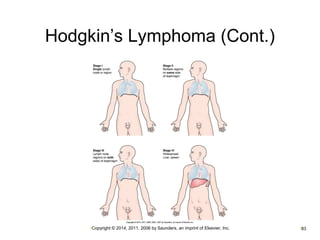
 Initially involves a single lymph node 
 Cancer spreads to adjacent nodes 
 To organs via lymphatics 
 T lymphocytes seem to be defective; lymphocyte 
count decreased 
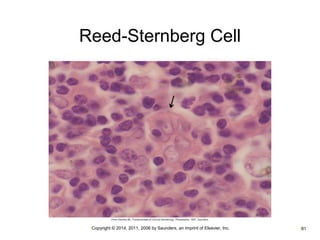
 Presence of Reed-Sternberg cells 
• Giant cells present in lymph node 
 Four subtypes 
• Based on cell found at biopsy 
•Copyright © 2014, 2011, 2006 by Saunders, an imprint of Elsevier, Inc. •80
Reed-Sternberg Cell 
•Copyright © 2014, 2011, 2006 by Saunders, an imprint of Elsevier, Inc. •81
Hodgkin’s Lymphoma (Cont.) 
 Symptoms 
 First indicator—usually a painless enlarged lymph 
node 
 Later—splenomegaly and enlarged lymph nodes 
 General signs of cancer 
• Weight loss, anemia, low-grade fever, night sweats; 
fatigue may develop. 
 Treatment 
 Radiation, chemotherapy, surgery 
•Copyright © 2014, 2011, 2006 by Saunders, an imprint of Elsevier, Inc. •82
Hodgkin’s Lymphoma (Cont.) 
•Copyright © 2014, 2011, 2006 by Saunders, an imprint of Elsevier, Inc. •83
Hodgkin’s Lymphoma (Cont.) 
 Staging and prognosis dependent on: 
 Number of nodes involved 
 Location of nodes involved 
•Copyright © 2014, 2011, 2006 by Saunders, an imprint of Elsevier, Inc. •84
Non-Hodgkin’s Lymphoma 
 Increasing in incidence 
 Partially caused by HIV infection 
 Similar to Hodgkin’s lymphoma 
 Clinical signs and symptoms are similar. 
 More difficult to treat when tumors are not 
localized 
 Initial manifestation—enlarged, painless 
lymph node 
•Copyright © 2014, 2011, 2006 by Saunders, an imprint of Elsevier, Inc. •85
Multiple Myeloma 
 Neoplastic disease that involves increased 
production of plasma cells in bone marrow 
 Unknown cause 
 Occurs in older adults 
 Production of other blood cells is impaired 
 Multiple tumors in bone 
 Loss of bone 
 Severe bone pain 
 Prognosis poor, with short life expectancy 
•Copyright © 2014, 2011, 2006 by Saunders, an imprint of Elsevier, Inc. •86
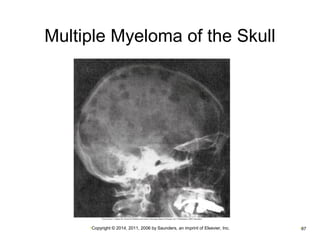
Multiple Myeloma of the Skull 
•Copyright © 2014, 2011, 2006 by Saunders, an imprint of Elsevier, Inc. •87
Signs and Symptoms of Multiple 
Myeloma 
 Onset usually insidious 
 Malignancy well advanced before diagnosis 
 Pain caused by bone involvement 
 Anemia and bleeding tendency 
 Impaired kidney function and eventually 
failure 
 Chemotherapy to encourage remission 
 Median survival, 3 years 
•Copyright © 2014, 2011, 2006 by Saunders, an imprint of Elsevier, Inc. •88
Lymphedema 
 Obstruction of lymphatic vessels 
 Most common form is congenital 
 Extremities swell because of lymph 
accumulation 
 Treatment: 
 Diuretics 
 Bed rest 
 Massage of affected area 
 Elevation of affected extremity 
•Copyright © 2014, 2011, 2006 by Saunders, an imprint of Elsevier, Inc. •89
Elephantiasis 
 Lymphedema 
 Caused by blockage because of parasitic infection 
 Significant swelling of affected extremity 
 Extreme swelling of legs, breast, and/or genitalia 
 Thickening of subcutaneous tissue 
 Frequent infections 
 Skin ulcerations 
 Fever 
 Treatment—medication regimen to kill 
parasite 
•Copyright © 2014, 2011, 2006 by Saunders, an imprint of Elsevier, Inc. •90
Castleman’s Disease 
 Rare illness 
 Involves overgrowth of lymphoid tissue 
 Two types 
 Unicentric form 
• Affects a single lymph node 
 Multicentric form 
• Affects multiple lymph nodes and tissue—may have 
severe effects on the immune system 
 Signs, symptoms, and treatment depend on 
the type of the disease 
•Copyright © 2014, 2011, 2006 by Saunders, an imprint of Elsevier, Inc. •91
Chapter 12 
Cardiovascular System Disorders
Review of the Normal 
Cardiovascular System 
•Copyright © 2014, 2011, 2006 by Saunders, an imprint of Elsevier, Inc. •93
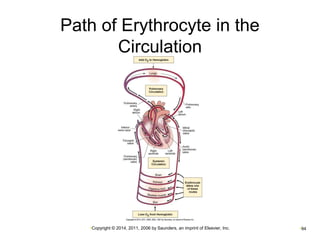
Path of Erythrocyte in the 
Circulation 
•Copyright © 2014, 2011, 2006 by Saunders, an imprint of Elsevier, Inc. •94
Circulatory System 
 The circulatory system is composed of: 
 Vessels 
 Fluid 
 Pump 
 Blood flows from systemic to pulmonary to 
systemic circulation 
•Copyright © 2014, 2011, 2006 by Saunders, an imprint of Elsevier, Inc. •95
Heart: Anatomy 
 Located in the mediastinum 
 Located in the pericardial sac 
 Parietal pericardium 
 Epicardium (visceral pericardium) 
 Pericardial cavity 
 Myocardium 
 Endocardium 
 Heart valves 
 Atrioventricular valves 
 Semilunar valves 
•Copyright © 2014, 2011, 2006 by Saunders, an imprint of Elsevier, Inc. •96 
 Septum
Heart: Conduction System 
 Conduction pathway 
 Sinoatrial (SA) node 
• Pacemaker 
• Sinus rhythm 
 Atrioventricular (AV) node 
 Located in floor of the right atrium 
 AV bundle (bundle of His) 
 Right and left branches 
 Purkinje fibers 
 Terminal fibers 
•Copyright © 2014, 2011, 2006 by Saunders, an imprint of Elsevier, Inc. •97
Heart: Conduction System (Cont.) 
 Electrocardiogram (ECG) 
•Copyright © 2014, 2011, 2006 by Saunders, an imprint of Elsevier, Inc. •98 
 P wave 
• Depolarization of atria 
 QRS wave 
• Depolarization of ventricles 
 T wave 
• Repolarization of ventricles
Control of the Heart 
 Cardiac control center in medulla oblongata 
 Controls rate and force of contraction 
 Located in the medulla 
 Baroreceptors 
 Detect changes in blood pressure 
 Located in the aorta and internal carotid arteries 
 Sympathetic stimulation (cardiac accelerator nerve) 
 Increases heart rate (tachycardia) 
 Parasympathetic stimulation (cranial nerve [CN] X; 
vagus nerve) 
 Decreases heart rate (bradycardia) 
•Copyright © 2014, 2011, 2006 by Saunders, an imprint of Elsevier, Inc. •99
Factors that Increase Heart Rate 
 Increased thyroid hormones or epinephrine 
 Elevated body temperature, infection 
 Example: Fever 
 Increased environmental temperature 
 Especially in high humidity 
 Exertion or exercise 
 Smoking 
 Stress response 
 Pregnancy 
 Pain 
•Copyright © 2014, 2011, 2006 by Saunders, an imprint of Elsevier, Inc. •100
Coronary Circulation 
 Right and left coronary arteries 
 Branch of aorta immediately distal to the aortic 
valve 
 Part of the systemic circulation 
 Left coronary artery divides into: 
 Left anterior descending or interventricular artery 
 Left circumflex artery 
•Copyright © 2014, 2011, 2006 by Saunders, an imprint of Elsevier, Inc. •101
Coronary Circulation (Cont.) 
 Right coronary artery branches 
 Right marginal artery 
 Posterior interventricular artery 
 Many small branches extend from these 
arteries to supply the myocardium and 
endocardium. 
 Collateral circulation is extremely limited. 
•Copyright © 2014, 2011, 2006 by Saunders, an imprint of Elsevier, Inc. •102
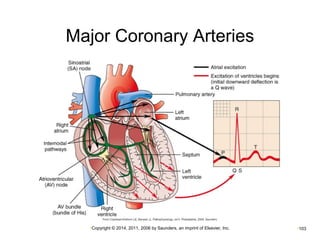
Major Coronary Arteries 
•Copyright © 2014, 2011, 2006 by Saunders, an imprint of Elsevier, Inc. •103
Cardiac Cycle 
•Copyright © 2014, 2011, 2006 by Saunders, an imprint of Elsevier, Inc. •104 
 Diastole 
 Relaxation of myocardium required for filling chambers 
 Systole 
 Contraction of myocardium provides increase in pressure to 
eject blood 
 Cycle begins with 
 Atria relaxed, filling with blood ® AV valves open ® blood 
flows into ventricles ® atria contract, remaining blood 
forced into ventricles ® atria relax ® ventricles contract ® 
AV valves close ® semilunar valves open ® blood into 
aorta and pulmonary artery ® ventricles relax
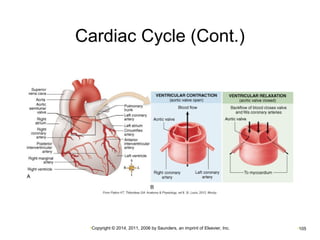
Cardiac Cycle (Cont.) 
•Copyright © 2014, 2011, 2006 by Saunders, an imprint of Elsevier, Inc. •105
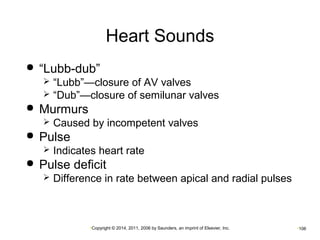
Heart Sounds 
 “Lubb-dub” 
 “Lubb”—closure of AV valves 
 “Dub”—closure of semilunar valves 
•Copyright © 2014, 2011, 2006 by Saunders, an imprint of Elsevier, Inc. •106 
 Murmurs 
 Caused by incompetent valves 
 Pulse 
 Indicates heart rate 
 Pulse deficit 
 Difference in rate between apical and radial pulses
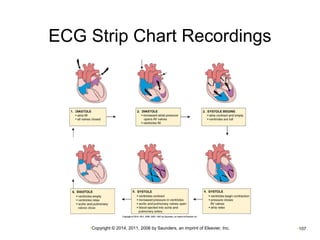
ECG Strip Chart Recordings 
•Copyright © 2014, 2011, 2006 by Saunders, an imprint of Elsevier, Inc. •107
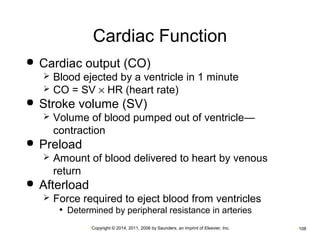
Cardiac Function 
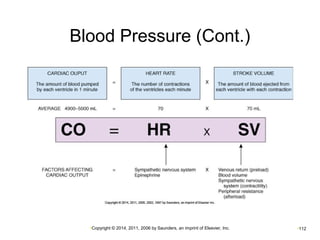
 Cardiac output (CO) 
 Blood ejected by a ventricle in 1 minute 
 CO = SV ´ HR (heart rate) 
 Stroke volume (SV) 
 Volume of blood pumped out of ventricle— 
contraction 
•Copyright © 2014, 2011, 2006 by Saunders, an imprint of Elsevier, Inc. •108 
 Preload 
 Amount of blood delivered to heart by venous 
return 
 Afterload 
 Force required to eject blood from ventricles 
• Determined by peripheral resistance in arteries
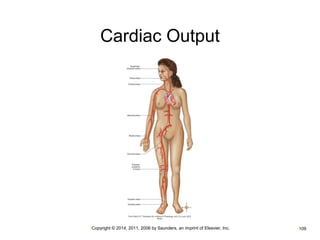
Cardiac Output 
•Copyright © 2014, 2011, 2006 by Saunders, an imprint of Elsevier, Inc. •109
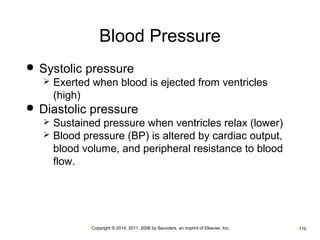
Blood Pressure 
 Systolic pressure 
 Exerted when blood is ejected from ventricles 
(high) 
 Diastolic pressure 
 Sustained pressure when ventricles relax (lower) 
 Blood pressure (BP) is altered by cardiac output, 
blood volume, and peripheral resistance to blood 
flow. 
•Copyright © 2014, 2011, 2006 by Saunders, an imprint of Elsevier, Inc. •110
Blood Pressure (Cont.) 
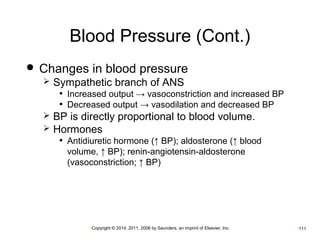
 Changes in blood pressure 
 Sympathetic branch of ANS 
• Increased output → vasoconstriction and increased BP 
• Decreased output → vasodilation and decreased BP 
 BP is directly proportional to blood volume. 
 Hormones 
• Antidiuretic hormone (↑ BP); aldosterone (↑ blood 
volume, ↑ BP); renin-angiotensin-aldosterone 
(vasoconstriction; ↑ BP) 
•Copyright © 2014, 2011, 2006 by Saunders, an imprint of Elsevier, Inc. •111
Blood Pressure (Cont.) 
•Copyright © 2014, 2011, 2006 by Saunders, an imprint of Elsevier, Inc. •112
Heart Disorders 
•Copyright © 2014, 2011, 2006 by Saunders, an imprint of Elsevier, Inc. •113
Diagnostic Tests for 
Cardiovascular Function 
 Electrocardiography 
 Useful in the initial diagnosis and monitoring of 
dysrhythmias, myocardial infarction, infection, pericarditis 
 Auscultation 
 Determination of valvular abnormalities or abnormal shunts 
of blood that cause murmurs 
 Detected by listening through a stethoscope 
 Echocardiography 
 Used to record heart valve movements, blood flow, and 
cardiac output 
 Exercise stress tests 
 Used to assess general cardiovascular function 
•Copyright © 2014, 2011, 2006 by Saunders, an imprint of Elsevier, Inc. •114
Diagnostic Tests for 
Cardiovascular Function (Cont.) 
 Chest x-ray films 
 Used to show shape and size of the heart 
• Nuclear imaging 
• Tomographic studies 
 Cardiac catheterization 
 Measures pressure and assesses valve and heart 
function 
• Determines central venous pressure and pulmonary 
capillary wedge pressure 
 Angiography 
 Visualization of blood flow in the coronary arteries 
•Copyright © 2014, 2011, 2006 by Saunders, an imprint of Elsevier, Inc. •115
Diagnostic Tests for 
Cardiovascular Function (Cont.) 
 Doppler studies 
 Assess blood flow in peripheral vessels 
 Record sounds of blood flow or obstruction 
 Blood tests 
 Assess levels of serum triglycerides, cholesterol, 
sodium, potassium, calcium, other electrolytes 
 Arterial blood gas determination 
 Checks the current oxygen level and acid-base 
balance 
•Copyright © 2014, 2011, 2006 by Saunders, an imprint of Elsevier, Inc. •116
General Treatment Measures for 
Cardiac Disorders 
 Dietary modifications 
 To decrease total fat intake 
 General weight reduction 
 Reduce salt intake 
 Regular exercise program 
 Increases high-density lipoprotein levels 
 Lowers serum lipid levels 
 Reduces stress levels 
 Cessation of smoking 
 Decreases risk of coronary disease 
•Copyright © 2014, 2011, 2006 by Saunders, an imprint of Elsevier, Inc. •117
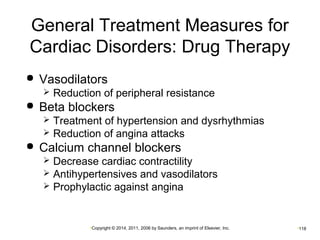
General Treatment Measures for 
Cardiac Disorders: Drug Therapy 
 Vasodilators 
 Reduction of peripheral resistance 
 Beta blockers 
 Treatment of hypertension and dysrhythmias 
 Reduction of angina attacks 
 Calcium channel blockers 
 Decrease cardiac contractility 
 Antihypertensives and vasodilators 
 Prophylactic against angina 
•Copyright © 2014, 2011, 2006 by Saunders, an imprint of Elsevier, Inc. •118
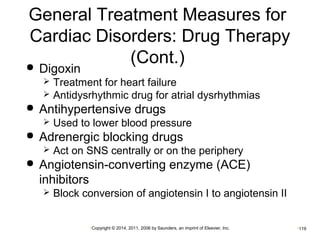
General Treatment Measures for 
Cardiac Disorders: Drug Therapy 
(Cont.)  Digoxin 
 Treatment for heart failure 
 Antidysrhythmic drug for atrial dysrhythmias 
 Antihypertensive drugs 
 Used to lower blood pressure 
 Adrenergic blocking drugs 
 Act on SNS centrally or on the periphery 
 Angiotensin-converting enzyme (ACE) 
inhibitors 
 Block conversion of angiotensin I to angiotensin II 
•Copyright © 2014, 2011, 2006 by Saunders, an imprint of Elsevier, Inc. •119
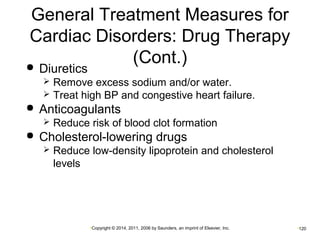
General Treatment Measures for 
Cardiac Disorders: Drug Therapy 
(Cont.)  Diuretics 
 Remove excess sodium and/or water. 
 Treat high BP and congestive heart failure. 
 Anticoagulants 
 Reduce risk of blood clot formation 
 Cholesterol-lowering drugs 
 Reduce low-density lipoprotein and cholesterol 
levels 
•Copyright © 2014, 2011, 2006 by Saunders, an imprint of Elsevier, Inc. •120
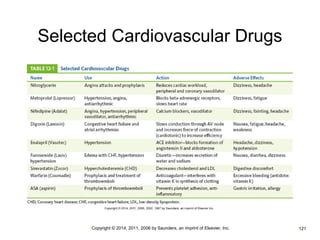
Selected Cardiovascular Drugs 
•Copyright © 2014, 2011, 2006 by Saunders, an imprint of Elsevier, Inc. •121
Coronary Artery Disease (CAD) or 
Ischemic Heart Disease (IHD) or 
Acute Coronary Syndrome 
•Copyright © 2014, 2011, 2006 by Saunders, an imprint of Elsevier, Inc. •122
Arteriosclerosis and 
Atherosclerosis 
 Arteriosclerosis 
 General term for all types of arterial changes 
• Degenerative changes in small arteries and arterioles 
• Loss of elasticity 
• Lumen gradually narrows and may become obstructed 
• Cause of increased BP 
 Atherosclerosis 
 Presence of atheromas in large arteries 
• Plaques consisting of lipids, calcium, and possible clots 
• Related to diet, exercise, and stress 
•Copyright © 2014, 2011, 2006 by Saunders, an imprint of Elsevier, Inc. •123
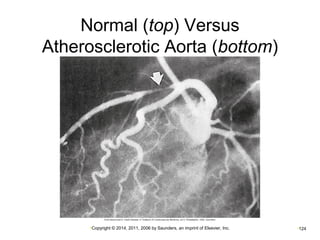
Normal (top) Versus 
Atherosclerotic Aorta (bottom) 
•Copyright © 2014, 2011, 2006 by Saunders, an imprint of Elsevier, Inc. •124
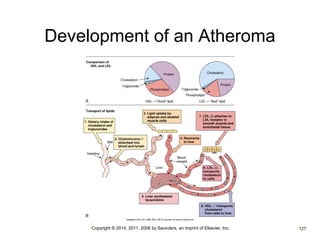
Lipid Transport 
 Lipids are transported in combination with 
proteins. 
 Low-density lipoprotein (LDL) 
 Transports cholesterol from liver to cells 
 Major factor contributing to atheroma formation 
 High-density lipoprotein (HDL) 
 Transports cholesterol away from the peripheral 
cells to liver—“good” lipoprotein 
 Catabolism in liver and excretion 
•Copyright © 2014, 2011, 2006 by Saunders, an imprint of Elsevier, Inc. •125
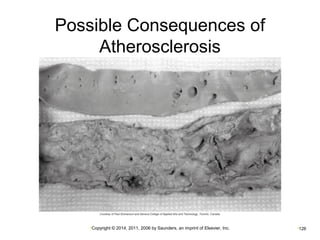
Possible Consequences of 
Atherosclerosis 
•Copyright © 2014, 2011, 2006 by Saunders, an imprint of Elsevier, Inc. •126
Development of an Atheroma 
•Copyright © 2014, 2011, 2006 by Saunders, an imprint of Elsevier, Inc. •127
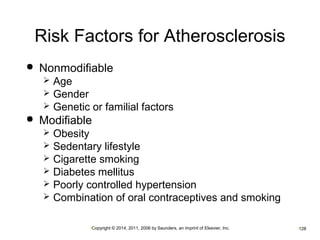
Risk Factors for Atherosclerosis 
 Nonmodifiable 
 Age 
 Gender 
 Genetic or familial factors 
 Modifiable 
 Obesity 
 Sedentary lifestyle 
 Cigarette smoking 
 Diabetes mellitus 
 Poorly controlled hypertension 
 Combination of oral contraceptives and smoking 
•Copyright © 2014, 2011, 2006 by Saunders, an imprint of Elsevier, Inc. •128
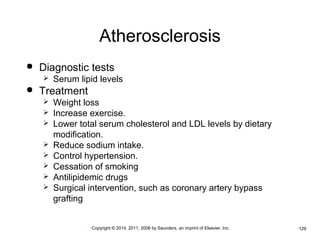
Atherosclerosis 
 Diagnostic tests 
 Serum lipid levels 
•Copyright © 2014, 2011, 2006 by Saunders, an imprint of Elsevier, Inc. •129 
 Treatment 
 Weight loss 
 Increase exercise. 
 Lower total serum cholesterol and LDL levels by dietary 
modification. 
 Reduce sodium intake. 
 Control hypertension. 
 Cessation of smoking 
 Antilipidemic drugs 
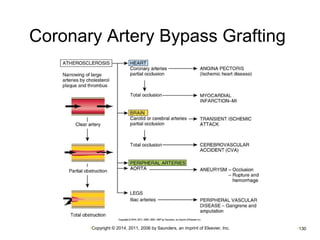
 Surgical intervention, such as coronary artery bypass 
grafting
Coronary Artery Bypass Grafting 
•Copyright © 2014, 2011, 2006 by Saunders, an imprint of Elsevier, Inc. •130
Angina Pectoris 
 Occurs when there is a deficit of oxygen to 
meet myocardial needs 
 Chest pain may occur in different patterns. 
 Classic or exertional angina 
 Variant angina 
• Vasospasm occurs at rest. 
 Unstable angina 
• Prolonged pain at rest—may precede myocardial 
infarction 
•Copyright © 2014, 2011, 2006 by Saunders, an imprint of Elsevier, Inc. •131
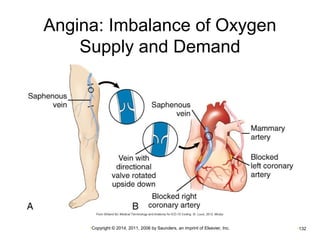
Angina: Imbalance of Oxygen 
Supply and Demand 
•Copyright © 2014, 2011, 2006 by Saunders, an imprint of Elsevier, Inc. •132
Angina Pectoris (Cont.) 
 Recurrent, intermittent brief episodes of 
substernal chest pain 
 Triggered by physical or emotional stress 
 Attacks vary in severity and duration but 
become more frequent and longer as disease 
progresses. 
 Relieved by rest and administration of 
coronary vasodilators 
 Example: nitroglycerin 
• Primarily acts by reducing systemic resistance, 
decreasing the demand for oxygen 
•Copyright © 2014, 2011, 2006 by Saunders, an imprint of Elsevier, Inc. •133
Emergency Treatment for Angina 
 Rest, stop activity 
 Patient seated in upright position 
 Administration of nitroglycerin—sublingual 
 Check pulse and respiration. 
 Administer oxygen, if necessary. 
 Patient known to have angina 
 Second dose of nitroglycerin 
 Patient without history of angina 
 Emergency medical aid 
•Copyright © 2014, 2011, 2006 by Saunders, an imprint of Elsevier, Inc. •134
Myocardial Infarction 
 Occurs when coronary artery is totally 
obstructed 
 Atherosclerosis is most common cause 
 Thrombus from atheroma may obstruct artery 
 Vasospasm is cause in a small percentage. 
 Size and location of the infarct determine the 
damage. 
•Copyright © 2014, 2011, 2006 by Saunders, an imprint of Elsevier, Inc. •135
Warning Signs of Heart Attack 
 Feeling of pressure, heaviness, or burning in 
chest—especially with increased activity 
 Sudden shortness of breath, weakness, 
fatigue 
 Nausea, indigestion 
 Anxiety and fear 
 Pain may occur and, if present, is usually 
 Substernal 
 Crushing 
 Radiating 
•Copyright © 2014, 2011, 2006 by Saunders, an imprint of Elsevier, Inc. •136
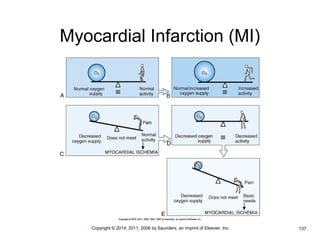
Myocardial Infarction (MI) 
•Copyright © 2014, 2011, 2006 by Saunders, an imprint of Elsevier, Inc. •137
Myocardial Infarction (Cont.) 
 Diagnostic tests 
 Changes in ECG 
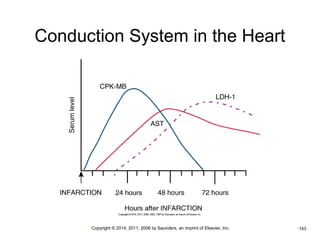
 Serum enzyme and isoenzyme levels 
 Serum levels of myosin and cardiac troponin are 
elevated. 
 Leukocytosis, elevated CRP and ESR common 
 Arterial blood gas measurements may be altered 
in severe cases. 
 Pulmonary artery pressure measurements helpful 
•Copyright © 2014, 2011, 2006 by Saunders, an imprint of Elsevier, Inc. •138
Myocardial Infarction: 
Complications 
 Sudden death 
 Cardiogenic shock 
 Congestive heart failure 
 Rupture of necrotic heart tissue/cardiac 
tamponade 
 Thromboembolism causing cerebrovascular 
accident (CVA; with left ventricular MI) 
•Copyright © 2014, 2011, 2006 by Saunders, an imprint of Elsevier, Inc. •139
Myocardial Infarction: Treatment 
 Reduce cardiac demand. 
 Oxygen therapy 
 Analgesics 
 Anticoagulants 
 Thrombolytic agents may be used. 
 Tissue plasminogen activator 
 Medication to treat: 
 Dysrhythmias, hypertension, congestive heart 
failure 
 Cardiac rehabilitation begins immediately. 
•Copyright © 2014, 2011, 2006 by Saunders, an imprint of Elsevier, Inc. •140
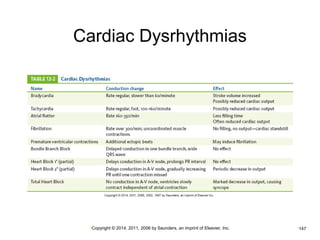
Cardiac Dysrhythmias 
(Arrhythmias) 
 Deviations from normal cardiac rate or rhythm 
 Caused by electrolyte abnormalities, fever, 
hypoxia, stress, infection, drug toxicity 
 Electrocardiography—for monitoring the 
conduction system 
• Detects abnormalities 
 Reduction of the efficiency of the heart’s 
pumping cycle 
 Many types of abnormal conduction patterns exist. 
•Copyright © 2014, 2011, 2006 by Saunders, an imprint of Elsevier, Inc. •141
Sinus Node Abnormalities 
•Copyright © 2014, 2011, 2006 by Saunders, an imprint of Elsevier, Inc. •142 
 SA node 
 Pacemaker of the heart; rate can be altered. 
 Bradycardia 
 Regular but slow heart rate 
 Tachycardia 
 Regular rapid heart rate 
 Sick sinus syndrome 
 Marked by altering bradycardia and tachycardia 
• Often requires mechanical pacemaker
Conduction System in the Heart 
•Copyright © 2014, 2011, 2006 by Saunders, an imprint of Elsevier, Inc. •143
Atrial Conduction Abnormalities 
 Premature atrial contractions or beats (PACs, 
PABs) 
 Extra contraction or ectopic beats 
• Irritable atrial muscle cells outside conduction pathway 
 Atrial flutter 
 Atrial heart rate of 160 to 350 beats/min 
• AV node delays conduction—ventricular rate slower 
 Atrial fibrillation 
 Rate over 350 beats/min 
• Causes pooling of blood in the atria 
• Thrombus formation is a risk. 
•Copyright © 2014, 2011, 2006 by Saunders, an imprint of Elsevier, Inc. •144
Atrioventricular Node 
Abnormalities 
 Heart blocks 
 Conduction excessively delayed or stopped at AV 
node or bundle of His 
 First-degree block 
 Conduction delay between atrial and ventricular 
contractions 
 Second-degree block 
 Every second to third atrial beat dropped at AV 
node 
 Third-degree block 
 No transmission from atria to ventricles 
•Copyright © 2014, 2011, 2006 by Saunders, an imprint of Elsevier, Inc. •145
Ventricular Conduction 
Abnormalities 
 Bundle branch block 
 Interference with conduction in one of the bundle branches 
 Ventricular tachycardia 
 Likely to reduce cardiac output as reduced diastole occurs 
 Ventricular fibrillation 
 Muscle fibers contract independently and rapidly 
 Cardiac standstill occurs if not treated immediately! 
 Premature ventricular contractions (PVCs) 
 Additional beats from ventricular muscle cell or ectopic 
pacemaker; may lead to ventricular fibrillation 
•Copyright © 2014, 2011, 2006 by Saunders, an imprint of Elsevier, Inc. •146
Cardiac Dysrhythmias 
•Copyright © 2014, 2011, 2006 by Saunders, an imprint of Elsevier, Inc. •147
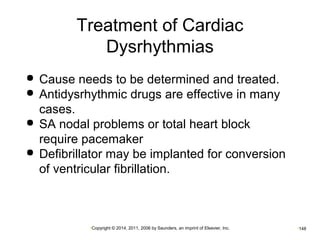
Treatment of Cardiac 
Dysrhythmias 
 Cause needs to be determined and treated. 
 Antidysrhythmic drugs are effective in many 
cases. 
 SA nodal problems or total heart block 
require pacemaker 
 Defibrillator may be implanted for conversion 
of ventricular fibrillation. 
•Copyright © 2014, 2011, 2006 by Saunders, an imprint of Elsevier, Inc. •148
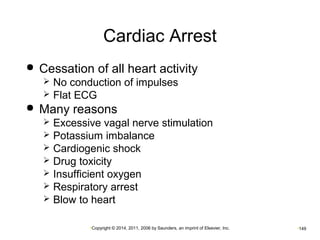
Cardiac Arrest 
 Cessation of all heart activity 
 No conduction of impulses 
 Flat ECG 
 Many reasons 
 Excessive vagal nerve stimulation 
 Potassium imbalance 
 Cardiogenic shock 
 Drug toxicity 
 Insufficient oxygen 
 Respiratory arrest 
 Blow to heart 
•Copyright © 2014, 2011, 2006 by Saunders, an imprint of Elsevier, Inc. •149
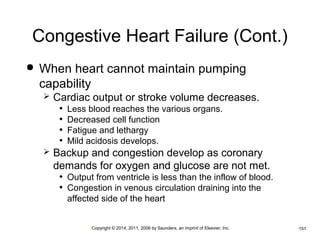
Congestive Heart Failure 
 Heart is unable to pump out sufficient blood 
to meet metabolic demands of the body. 
 Usually a complication of another 
cardiopulmonary condition 
 May involve a combination of factors 
 Various compensation mechanisms maintain 
cardiac output. 
 Some of these often aggravate the condition. 
•Copyright © 2014, 2011, 2006 by Saunders, an imprint of Elsevier, Inc. •150
Congestive Heart Failure (Cont.) 
 When heart cannot maintain pumping 
capability 
 Cardiac output or stroke volume decreases. 
• Less blood reaches the various organs. 
• Decreased cell function 
• Fatigue and lethargy 
• Mild acidosis develops. 
 Backup and congestion develop as coronary 
demands for oxygen and glucose are not met. 
• Output from ventricle is less than the inflow of blood. 
• Congestion in venous circulation draining into the 
affected side of the heart 
•Copyright © 2014, 2011, 2006 by Saunders, an imprint of Elsevier, Inc. •151
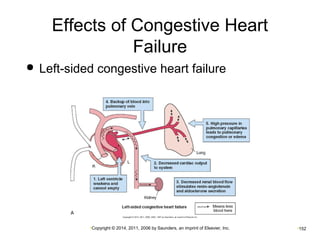
Effects of Congestive Heart 
Failure 
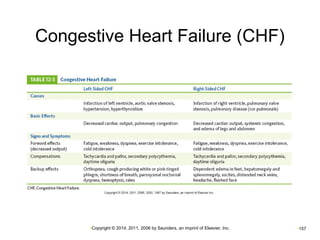
 Left-sided congestive heart failure 
•Copyright © 2014, 2011, 2006 by Saunders, an imprint of Elsevier, Inc. •152
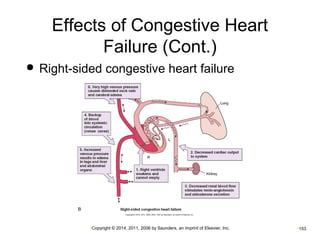
Effects of Congestive Heart 
Failure (Cont.) 
 Right-sided congestive heart failure 
•Copyright © 2014, 2011, 2006 by Saunders, an imprint of Elsevier, Inc. •153
Signs and Symptoms of 
Congestive Heart Failure 
 Forward effects (similar with failure on either 
side) 
 Decreased blood supply to tissues, general 
hypoxia 
 Fatigue and weakness 
 Dyspnea and shortness of breath 
 Compensation mechanisms 
 Tachycardia 
 Cutaneous and visceral vasoconstriction 
 Daytime oliguria 
•Copyright © 2014, 2011, 2006 by Saunders, an imprint of Elsevier, Inc. •154
Signs and Symptoms of Congestive 
Heart Failure (Cont.) 
 Backup effects of left-sided failure 
 Related to pulmonary congestion 
 Dyspnea and orthopnea 
• Develop as fluid accumulates in the lungs 
•Copyright © 2014, 2011, 2006 by Saunders, an imprint of Elsevier, Inc. •155 
 Cough 
• Associated with fluid irritating the respiratory passages 
 Paroxysmal nocturnal dyspnea 
• Indicates the presence of acute pulmonary edema 
• Usually develops during sleep 
• Excess fluid in lungs frequently leads to infections such 
as pneumonia.
Signs and Symptoms of 
Congestive Heart Failure (Cont.) 
 Signs of right-sided failure and systemic 
backup 
 Dependent edema in feet, legs, or buttocks 
 Increased pressure in jugular veins leads to 
distention. 
 Hepatomegaly and splenomegaly 
• Digestive disturbances 
•Copyright © 2014, 2011, 2006 by Saunders, an imprint of Elsevier, Inc. •156 
 Ascites 
• Complication when fluid accumulates in peritoneal cavity 
• Marked abdominal distention 
 Acute right-sided failure 
• Flushed face, distended neck veins, headache, visual 
disturbances
Congestive Heart Failure (CHF) 
•Copyright © 2014, 2011, 2006 by Saunders, an imprint of Elsevier, Inc. •157
Young Children with CHF 
 Often secondary to congenital heart disease 
 Feeding difficulties often first sign 
 Failure to gain weight or meet developmental 
guidelines 
 Short sleep periods 
 Tripod position to play 
 Cough, rapid grunting respirations, flared 
nostrils, wheezing 
 Radiographs show cardiomegaly. 
 Arterial blood gases used to measure hypoxia 
•Copyright © 2014, 2011, 2006 by Saunders, an imprint of Elsevier, Inc. •158
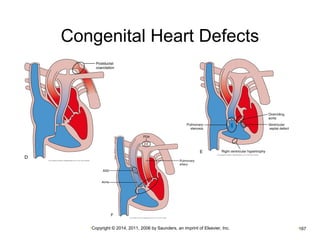
Congenital Heart Defects 
 Cardiac anomalies 
 Structural defects in the heart that develop during 
the first 8 weeks of embryonic life 
 Congenital heart disease 
 Valvular defects 
 Septal defects 
 Detected by the presence of heart murmurs 
 If untreated, child may develop heart failure. 
 May be cyanotic or acyanotic, depending on 
direction of shunting 
•Copyright © 2014, 2011, 2006 by Saunders, an imprint of Elsevier, Inc. •159
Congenital Heart Defects (Cont.) 
 Signs and symptoms of large defects 
 Pallor 
 Tachycardia 
• Occurs with very rapid sleeping pulse and frequent pulse 
deficit 
 Dyspnea on exertion 
 Squatting position—toddlers and older children 
• Appears to modify blood flow, more comfortable 
 Clubbed fingers 
 Intolerance for exercise and exposure to cold 
weather 
 Delayed growth and development 
•Copyright © 2014, 2011, 2006 by Saunders, an imprint of Elsevier, Inc. •160
Congenital Heart Defects (Cont.) 
 Severe defects are often diagnosed at birth. 
 Others may not be detected for some time. 
 Examination techniques 
 Radiography 
 Diagnostic imaging 
 Cardiac catheterization 
 Echocardiography 
 Electrocardiography 
 Surgical repair 
•Copyright © 2014, 2011, 2006 by Saunders, an imprint of Elsevier, Inc. •161
Ventricular Septal Defect 
 VSD is the most common congenital heart 
defect. 
 Opening in the interventricular septum 
 May vary in size and location 
 Untreated VSD 
 Pressure usually higher in left ventricle. 
 Shunt from left → right 
 Acyanotic condition unless respiratory condition 
increases pressure in right ventricle 
•Copyright © 2014, 2011, 2006 by Saunders, an imprint of Elsevier, Inc. •162
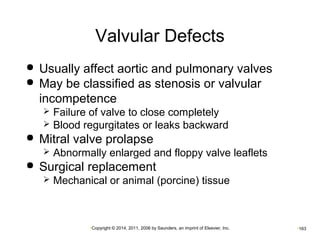
Valvular Defects 
 Usually affect aortic and pulmonary valves 
 May be classified as stenosis or valvular 
incompetence 
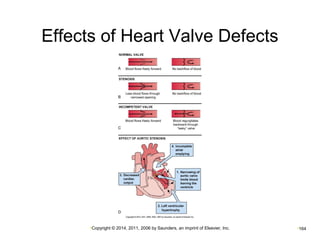
 Failure of valve to close completely 
 Blood regurgitates or leaks backward 
 Mitral valve prolapse 
 Abnormally enlarged and floppy valve leaflets 
 Surgical replacement 
 Mechanical or animal (porcine) tissue 
•Copyright © 2014, 2011, 2006 by Saunders, an imprint of Elsevier, Inc. •163
Effects of Heart Valve Defects 
•Copyright © 2014, 2011, 2006 by Saunders, an imprint of Elsevier, Inc. •164
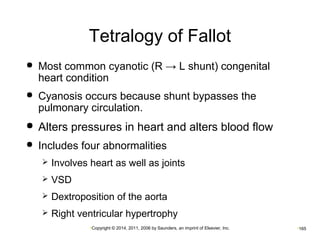
Tetralogy of Fallot 
 Most common cyanotic (R → L shunt) congenital 
heart condition 
 Cyanosis occurs because shunt bypasses the 
pulmonary circulation. 
 Alters pressures in heart and alters blood flow 
 Includes four abnormalities 
 Involves heart as well as joints 
 VSD 
 Dextroposition of the aorta 
 Right ventricular hypertrophy 
•Copyright © 2014, 2011, 2006 by Saunders, an imprint of Elsevier, Inc. •165
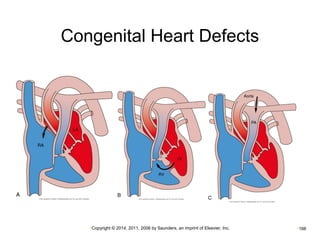
Congenital Heart Defects 
•Copyright © 2014, 2011, 2006 by Saunders, an imprint of Elsevier, Inc. •166
Congenital Heart Defects 
•Copyright © 2014, 2011, 2006 by Saunders, an imprint of Elsevier, Inc. •167
Inflammation and Infection in the 
Heart 
•Copyright © 2014, 2011, 2006 by Saunders, an imprint of Elsevier, Inc. •168
Rheumatic Fever and Rheumatic 
Heart Disease 
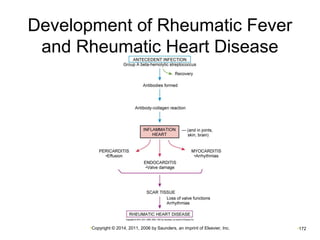
 Rheumatic fever 
 Acute systemic inflammatory condition 
• May result from an abnormal immune reaction 
• Can occur a few weeks after an untreated infection 
(usually group A b-hemolytic Streptococcus) 
 Involves heart as well as joints 
 Usually occurs in children ages 5 to 15 years 
 Long-term effects 
• Rheumatic heart disease 
• May be complicated by infective endocarditis and heart 
failure in older adults 
•Copyright © 2014, 2011, 2006 by Saunders, an imprint of Elsevier, Inc. •169
Rheumatic Fever and Rheumatic 
Heart Disease (Cont.) 
 Acute stage—inflammation of the heart 
 Pericarditis 
 Myocarditis 
 Endocarditis and incompetent heart valves 
 Other sites of inflammation 
 Large joints 
 Erythema marginatum 
 Nontender subcutaneous nodules 
 Involuntary jerky movement of the face, arms, legs 
•Copyright © 2014, 2011, 2006 by Saunders, an imprint of Elsevier, Inc. •170
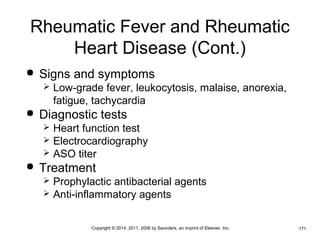
Rheumatic Fever and Rheumatic 
Heart Disease (Cont.) 
 Signs and symptoms 
 Low-grade fever, leukocytosis, malaise, anorexia, 
fatigue, tachycardia 
 Diagnostic tests 
 Heart function test 
 Electrocardiography 
 ASO titer 
 Treatment 
 Prophylactic antibacterial agents 
 Anti-inflammatory agents 
•Copyright © 2014, 2011, 2006 by Saunders, an imprint of Elsevier, Inc. •171
Development of Rheumatic Fever 
and Rheumatic Heart Disease 
•Copyright © 2014, 2011, 2006 by Saunders, an imprint of Elsevier, Inc. •172
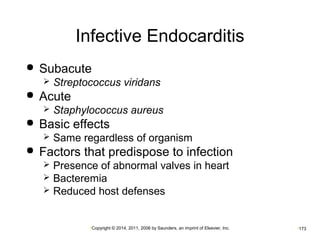
Infective Endocarditis 
 Subacute 
 Streptococcus viridans 
•Copyright © 2014, 2011, 2006 by Saunders, an imprint of Elsevier, Inc. •173 
 Acute 
 Staphylococcus aureus 
 Basic effects 
 Same regardless of organism 
 Factors that predispose to infection 
 Presence of abnormal valves in heart 
 Bacteremia 
 Reduced host defenses
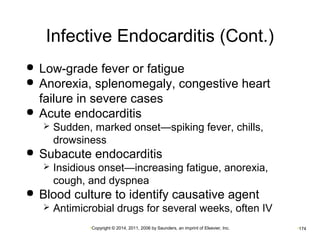
Infective Endocarditis (Cont.) 
 Low-grade fever or fatigue 
 Anorexia, splenomegaly, congestive heart 
failure in severe cases 
 Acute endocarditis 
 Sudden, marked onset—spiking fever, chills, 
drowsiness 
 Subacute endocarditis 
 Insidious onset—increasing fatigue, anorexia, 
cough, and dyspnea 
 Blood culture to identify causative agent 
 Antimicrobial drugs for several weeks, often IV 
•Copyright © 2014, 2011, 2006 by Saunders, an imprint of Elsevier, Inc. •174
Pericarditis 
 Usually secondary to another condition 
 Classified by cause or type of exudate 
 Acute pericarditis 
 May involve simple inflammation of the 
pericardium 
 May be secondary to: 
• Open heart surgery, myocardial infarction, rheumatic 
fever, systemic lupus erythematosus, cancer, renal 
failure, trauma, viral infection 
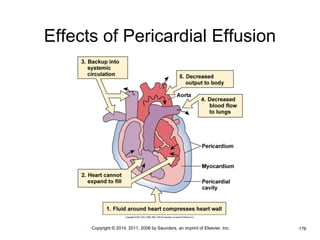
 Effusion may develop. 
• Large volume of fluid accumulates in pericardial sac 
• Leads to distended neck veins, faint heart sounds, 
pulsus paradoxus 
•Copyright © 2014, 2011, 2006 by Saunders, an imprint of Elsevier, Inc. •175
Effects of Pericardial Effusion 
•Copyright © 2014, 2011, 2006 by Saunders, an imprint of Elsevier, Inc. •176
Pericarditis (Cont.) 
 Chronic pericarditis 
 Results in formation of adhesions between the 
pericardial membranes 
 Fibrous tissue often results from tuberculosis or 
radiation to the mediastinum. 
 Limiting movement of the heart during diastole 
and systole → reduced cardiac output 
 Inflammation or infection may develop from 
adjacent structures. 
 Causes fatigue, weakness, abdominal discomfort 
• Caused by systemic venous congestion 
•Copyright © 2014, 2011, 2006 by Saunders, an imprint of Elsevier, Inc. •177
Vascular Disorders 
•Copyright © 2014, 2011, 2006 by Saunders, an imprint of Elsevier, Inc. •178
Arterial Diseases—Hypertension 
 High blood pressure 
 Common 
 May occur in any age group 
 More common in individuals of African ancestry 
 Sometimes classified as systolic or diastolic 
•Copyright © 2014, 2011, 2006 by Saunders, an imprint of Elsevier, Inc. •179
Arterial Diseases—Hypertension 
(Cont.) 
•Copyright © 2014, 2011, 2006 by Saunders, an imprint of Elsevier, Inc. •180 
 Primary 
 Essential hypertension 
 Blood pressure consistently above 140/90 mm Hg 
• May be adjusted for age 
 Increase in arteriolar vasoconstriction 
 Over long period of time—damage to arterial walls 
• Blood supply to involved area is reduced. 
• Ischemia and necrosis of tissues, with loss of function
Arterial Diseases—Hypertension 
(Cont.) 
 Secondary hypertension 
 Results from renal or endocrine disease, 
pheochromocytoma (benign tumor of the adrenal 
medulla) 
 Underlying problem must be treated to reduce 
blood pressure. 
 Malignant or resistant hypertension 
 Uncontrollable, severe, and rapidly progressive 
form with many complications 
 Diastolic pressure is extremely high. 
•Copyright © 2014, 2011, 2006 by Saunders, an imprint of Elsevier, Inc. •181
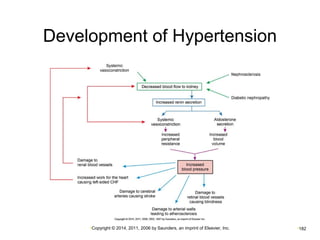
Development of Hypertension 
•Copyright © 2014, 2011, 2006 by Saunders, an imprint of Elsevier, Inc. •182
Arterial Diseases—Hypertension 
(Cont.) 
 Areas most frequently damaged by hypertension 
•Copyright © 2014, 2011, 2006 by Saunders, an imprint of Elsevier, Inc. •183 
 Kidneys 
 Heart 
 Brain 
 Retina 
 Predisposing factors 
 Incidence increases with age. 
 Men affected more frequently and more severely 
 Incidence in women increases after middle age. 
 Genetic factors 
 Sodium intake, excessive alcohol intake, obesity, smoking, 
prolonged or recurrent stress
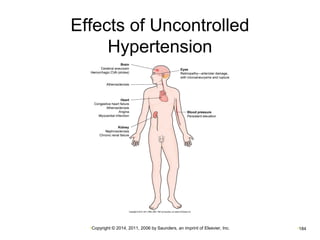
Effects of Uncontrolled 
Hypertension 
•Copyright © 2014, 2011, 2006 by Saunders, an imprint of Elsevier, Inc. •184
Arterial Diseases—Hypertension 
(Cont.) 
 Frequently asymptomatic in early stages 
 Initial signs vague and nonspecific 
• Fatigue, malaise, sometimes morning occipital headache 
 Essential hypertension treated in steps 
 Lifestyle changes 
 Reduction of sodium intake 
 Weight reduction 
 Reduction of stress 
 Drugs 
• Diuretics, ACE inhibitors, drug combinations 
•Copyright © 2014, 2011, 2006 by Saunders, an imprint of Elsevier, Inc. •185
Peripheral Vascular Disease: 
Atherosclerosis 
 Disease in arteries outside the heart 
 Increased incidence with diabetes 
 Most common sites 
 Abdominal aorta 
 Carotid arteries 
 Femoral and iliac arteries 
 Diagnostic tests 
 Blood flow assessed by Doppler studies and 
arteriography 
 Plethysmography measures the size of limbs and 
blood volume in organs or tissues. 
•Copyright © 2014, 2011, 2006 by Saunders, an imprint of Elsevier, Inc. •186
Peripheral Vascular Disease: 
Atherosclerosis (Cont.) 
 Signs and symptoms 
 Increasing fatigue and weakness in the legs 
 Intermittent claudication (leg pain) 
• Associated with exercise caused by muscle ischemia 
 Sensory impairment 
• Tingling, burning, numbness 
 Peripheral pulses distal to occlusion become 
weak. 
 Appearance of the skin of the feet and legs 
changes. 
• Marked pallor or cyanosis 
• Skin dry and hairless 
• Toenails thick and hard 
•Copyright © 2014, 2011, 2006 by Saunders, an imprint of Elsevier, Inc. •187
Peripheral Vascular Disease: 
Atherosclerosis (Cont.) 
 Treatment 
 Maintain control of blood glucose level. 
 Reduce body mass index. 
 Reduce serum cholesterol level. 
 Platelet inhibitors or anticoagulant medication 
 Cessation of smoking 
 Increase activity and exercise 
 Maintain dependent position for legs—improves 
arterial perfusion 
 Peripheral vasodilators 
 Observe skin for breakdown and treat promptly. 
 If gangrene develops, amputation is required. 
•Copyright © 2014, 2011, 2006 by Saunders, an imprint of Elsevier, Inc. •188
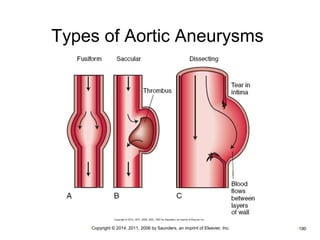
Aortic Aneurysm 
 Localized dilation and weakening of arterial 
wall 
 Develops from a defect in the medial layer 
 Different shapes 
 Saccular 
• Bulging wall on the side 
 Fusiform 
• Circumferential dilation along a section of artery 
 Dissecting aneurysm 
• Develops when there is a tear in the intima of the wall 
and blood continues to dissect or separate tissues 
•Copyright © 2014, 2011, 2006 by Saunders, an imprint of Elsevier, Inc. •189
Types of Aortic Aneurysms 
•Copyright © 2014, 2011, 2006 by Saunders, an imprint of Elsevier, Inc. •190
Aortic Aneurysm (Cont.) 
•Copyright © 2014, 2011, 2006 by Saunders, an imprint of Elsevier, Inc. •191 
 Causes 
 Atherosclerosis 
 Trauma 
 Syphilis and other infections 
 Congenital defects 
 Signs and symptoms 
 Bruit may be heard on auscultation. 
 Pulse may be felt on palpation of abdomen. 
 Frequently asymptomatic until they become large 
or rupture 
• Rupture may lead to moderate bleeding but usually 
causes severe hemorrhage and death.
Aortic Aneurysm (Cont.) 
 Diagnostic tests 
 Radiography 
 Ultrasound 
 CT scanning 
 MRI 
 Treatment 
 Maintain blood pressure at normal level. 
 Prevent sudden elevations caused by exertion. 
 Prevent stress, coughing, constipation 
 Surgical repair 
•Copyright © 2014, 2011, 2006 by Saunders, an imprint of Elsevier, Inc. •192
Venous Disorders 
•Copyright © 2014, 2011, 2006 by Saunders, an imprint of Elsevier, Inc. •193
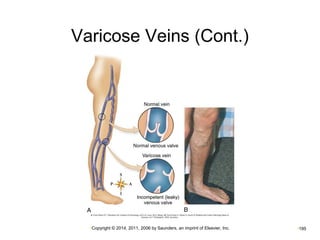
Varicose Veins 
 Irregular, dilated, tortuous areas of superficial 
veins 
 Familial tendency 
 Increased body mass index, parity, and 
weight lifting are risks. 
 In the legs 
 May develop from defect or weakness in vein 
walls or valves 
 Appear as irregular, purplish, bulging structures 
 Treatment 
 Keep legs elevated, support stockings 
 Restricted clothing, crossing legs to be avoided 
•Copyright © 2014, 2011, 2006 by Saunders, an imprint of Elsevier, Inc. •194
Varicose Veins (Cont.) 
•Copyright © 2014, 2011, 2006 by Saunders, an imprint of Elsevier, Inc. •195
Thrombophlebitis and 
Phlebothrombosis 
 Thrombophlebitis 
 Thrombus development in inflamed vein (e.g., IV 
site) 
 Phlebothrombosis 
 Thrombus forms spontaneously without prior 
inflammation; attached loosely 
 Factors for thrombus development 
 Stasis of blood or sluggish blood flow 
 Endothelial injury 
 Increased blood coagulability 
•Copyright © 2014, 2011, 2006 by Saunders, an imprint of Elsevier, Inc. •196
Thrombophlebitis and 
Phlebothrombosis (Cont.) 
 Signs and symptoms 
 Often unnoticed 
 Aching, burning, tenderness in affected legs 
 Systemic signs—fever, malaise, leukocytosis 
 Complication—pulmonary embolism 
 Treatment 
 Preventive measures 
• Exercise, elevating legs 
 Anticoagulant therapy 
 Surgical intervention 
•Copyright © 2014, 2011, 2006 by Saunders, an imprint of Elsevier, Inc. •197
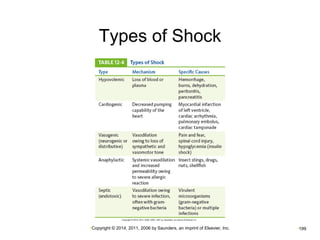
Shock 
 Hypovolemic shock 
 Loss of circulating blood volume 
 Cardiogenic shock 
 Inability of heart to maintain cardiac output to 
circulation 
 Distributive, vasogenic, neurogenic, septic, 
anaphylactic shock 
 Changes in peripheral resistance leading to 
pooling of blood in the periphery 
•Copyright © 2014, 2011, 2006 by Saunders, an imprint of Elsevier, Inc. •198
Types of Shock 
•Copyright © 2014, 2011, 2006 by Saunders, an imprint of Elsevier, Inc. •199
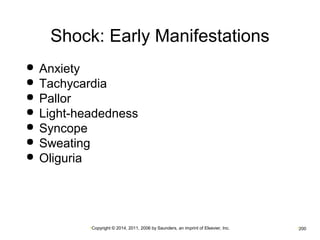
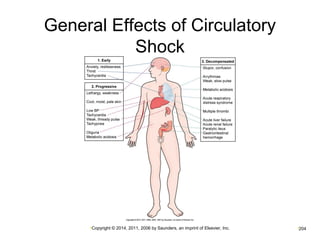
Shock: Early Manifestations 
 Anxiety 
 Tachycardia 
 Pallor 
 Light-headedness 
 Syncope 
 Sweating 
 Oliguria 
•Copyright © 2014, 2011, 2006 by Saunders, an imprint of Elsevier, Inc. •200
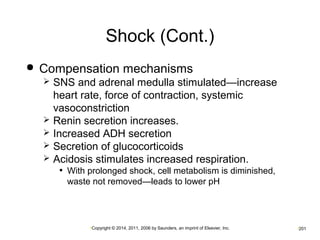
Shock (Cont.) 
 Compensation mechanisms 
 SNS and adrenal medulla stimulated—increase 
heart rate, force of contraction, systemic 
vasoconstriction 
 Renin secretion increases. 
 Increased ADH secretion 
 Secretion of glucocorticoids 
 Acidosis stimulates increased respiration. 
• With prolonged shock, cell metabolism is diminished, 
waste not removed—leads to lower pH 
•Copyright © 2014, 2011, 2006 by Saunders, an imprint of Elsevier, Inc. •201
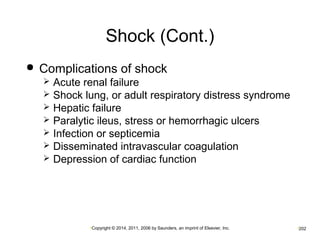
Shock (Cont.) 
 Complications of shock 
 Acute renal failure 
 Shock lung, or adult respiratory distress syndrome 
 Hepatic failure 
 Paralytic ileus, stress or hemorrhagic ulcers 
 Infection or septicemia 
 Disseminated intravascular coagulation 
 Depression of cardiac function 
•Copyright © 2014, 2011, 2006 by Saunders, an imprint of Elsevier, Inc. •202
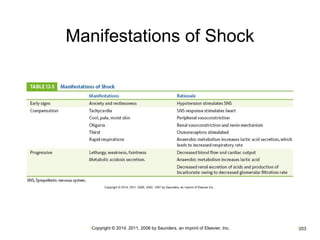
Manifestations of Shock 
•Copyright © 2014, 2011, 2006 by Saunders, an imprint of Elsevier, Inc. •203
General Effects of Circulatory 
Shock 
•Copyright © 2014, 2011, 2006 by Saunders, an imprint of Elsevier, Inc. •204

Ch 10, 11, 12 Pathology

  • 1.
    Chapter 10 Bloodand Circulatory System Disorders
  • 2.
    Review of theCirculatory System  The circulatory system consists of the cardiovascular system and lymphatic system  This chapter will cover the blood vessels, the blood, and associated disorders. •Copyright © 2014, 2011, 2006 by Saunders, an imprint of Elsevier, Inc. •2
  • 3.
    Blood Vessels Arteries—arterioles  Transport blood away from heart  Veins—venules  Return blood back to the heart  Capillaries  Microcirculation within tissues  Systemic circulation  Exchange of gases, nutrients, and wastes in tissues  Pulmonary circulation  Gas exchange in lungs •Copyright © 2014, 2011, 2006 by Saunders, an imprint of Elsevier, Inc. •3
  • 4.
    Blood Vessels (Cont.) •Copyright © 2014, 2011, 2006 by Saunders, an imprint of Elsevier, Inc. •4
  • 5.
    Histology of Arteriesand Veins  Tunica intima—endothelium (simple squamous epithelium)  Tunica media—middle layer, mostly smooth muscle  Tunica adventitia (externa)—connective tissue with fibrocytes, collagen (type I), and elastic fibers •Copyright © 2014, 2011, 2006 by Saunders, an imprint of Elsevier, Inc. •5
  • 6.
    Blood •Copyright ©2014, 2011, 2006 by Saunders, an imprint of Elsevier, Inc. •6
  • 7.
    Composition of Blood •Copyright © 2014, 2011, 2006 by Saunders, an imprint of Elsevier, Inc. •7  Plasma  Plasma proteins  Cellular component  Erythrocytes  Leukocytes  Thrombocytes (platelets)
  • 8.
    Components of Blood and Their Functions •Copyright © 2014, 2011, 2006 by Saunders, an imprint of Elsevier, Inc. •8
  • 9.
    Hematopoiesis •Copyright ©2014, 2011, 2006 by Saunders, an imprint of Elsevier, Inc. •9
  • 10.
    Normal Red BloodCells •Copyright © 2014, 2011, 2006 by Saunders, an imprint of Elsevier, Inc. •10
  • 11.
    Erythrocytes (Red BloodCells)  Biconcave flexible discs  No nucleus in mature state  Contains hemoglobin  Globin portion  Heme group  Life span—»120 days  Erythropoietin produced in the kidney stimulates erythrocyte production. •Copyright © 2014, 2011, 2006 by Saunders, an imprint of Elsevier, Inc. •11
  • 12.
    Normal Blood Cells •Copyright © 2014, 2011, 2006 by Saunders, an imprint of Elsevier, Inc. •12
  • 13.
    Breakdown of Hemoglobin •Copyright © 2014, 2011, 2006 by Saunders, an imprint of Elsevier, Inc. •13
  • 14.
    Blood Clotting—Hemostasis Three steps:  Vasoconstriction or vascular spasm after injury  Platelet clot  Coagulation mechanism  Plasmin will eventually break down the blood clot. •Copyright © 2014, 2011, 2006 by Saunders, an imprint of Elsevier, Inc. •14
  • 15.
    Hemostasis and Anticoagulant Drugs •Copyright © 2014, 2011, 2006 by Saunders, an imprint of Elsevier, Inc. •15
  • 16.
    Blood Typing Bloodtyping is based on antigens in the plasma membrane of the erythrocytes.  ABO system  Based on the presence or absence of specific antigens  Antibodies in the blood plasma  Rh system  Antigen D in plasma membrane: Rh+  Absence of antigen D: Rh- •Copyright © 2014, 2011, 2006 by Saunders, an imprint of Elsevier, Inc. •16
  • 17.
    ABO Blood Groups •Copyright © 2014, 2011, 2006 by Saunders, an imprint of Elsevier, Inc. •17
  • 18.
    Diagnostic Tests Complete blood count (CBC)  Includes total red blood cells (RBCs), white blood cells (WBCs), and platelets  Leukocytosis (increased WBCs) • Associated with inflammation or infection  Leukopenia (decreased WBCs) • Associated with some viral infections, radiation, chemotherapy  Increased eosinophils • Common in allergic responses  Differential count for WBCs •Copyright © 2014, 2011, 2006 by Saunders, an imprint of Elsevier, Inc. •18
  • 19.
    Diagnostic Tests (Cont.)  Morphology  Observed with blood smears  Shows size, shape, uniformity, maturity of cells • Different types of anemia can be distinguished.  Hematocrit  Percent by volume of cellular elements in blood  Hemoglobin  Amount of hemoglobin per unit volume of blood  Mean corpuscular volume (MCV) • Indicates the oxygen-carrying capacity of blood •Copyright © 2014, 2011, 2006 by Saunders, an imprint of Elsevier, Inc. •19
  • 20.
    Diagnostic Tests (Cont.)  Reticulocyte count  Assessment of bone marrow function  Chemical analysis  Determines serum levels of components, such as iron, vitamin B12, folic acid, cholesterol, urea, glucose  Bleeding time  Measures platelet function  Prothrombin time (PT) and partial thromboplastin time (PTT)  Measure function of various factors in coagulation process  International normalized ratio (INR) is a standardized version. •Copyright © 2014, 2011, 2006 by Saunders, an imprint of Elsevier, Inc. •20
  • 21.
    Blood Therapies Whole blood, packed red blood cells, packed platelets  For severe anemia or thrombocytopenia  Plasma or colloid volume-expanding solutions  To maintain blood volume  Artificial blood products  Compatible with all blood types  None of them can perform all the complex functions of normal whole blood. •Copyright © 2014, 2011, 2006 by Saunders, an imprint of Elsevier, Inc. •21
  • 22.
    Blood Therapies (Cont.)  Epoetin alfa  Artificial form of erythropoietin • Before certain surgical procedures • Anemia related to cancer • Chronic renal failure  Bone marrow or stem cell transplantation  Close tissue match necessary • Treatment of some cancers • Severe immunodeficiency • Severe blood cell diseases  Drug treatment  Aids in the clotting process •Copyright © 2014, 2011, 2006 by Saunders, an imprint of Elsevier, Inc. •22
  • 23.
    Blood Dyscrasias •Copyright© 2014, 2011, 2006 by Saunders, an imprint of Elsevier, Inc. •23
  • 24.
    The Anemias Anemia causes a reduction in oxygen transport.  Basic problem is hemoglobin deficit  Oxygen deficit leads to:  Less energy production in all cells • Cell metabolism and reproduction diminished  Compensation mechanisms • Tachycardia and peripheral vasoconstriction  General signs of anemia • Fatigue, pallor (pale face), dyspnea, tachycardia •Copyright © 2014, 2011, 2006 by Saunders, an imprint of Elsevier, Inc. •24
  • 25.
    The Anemias (Cont.)  Oxygen deficit leads to:  Decreased regeneration of epithelial cells • Digestive tract becomes inflamed and ulcerated, leading to stomatitis • Inflamed and cracked lips • Dysphasia • Hair and skin may show degenerative changes.  Severe anemia may lead to angina or congestive heart failure (CHF). •Copyright © 2014, 2011, 2006 by Saunders, an imprint of Elsevier, Inc. •25
  • 26.
    Iron Deficiency Anemia  Insufficient iron impairs hemoglobin synthesis.  Microcytic, hypochromic RBCs • Result of low hemoglobin concentration in cells  Very common  Ranges from mild to severe  Occurs in all age groups, but more common in women of childbearing age  Estimated that one in five women is affected • Proportion increases for pregnant women  Frequently sign of an underlying problem •Copyright © 2014, 2011, 2006 by Saunders, an imprint of Elsevier, Inc. •26
  • 27.
    Iron Deficiency Anemia—Blood Smear •Copyright © 2014, 2011, 2006 by Saunders, an imprint of Elsevier, Inc. •27
  • 28.
    Iron Deficiency Anemia:Causes  Dietary intake of iron below minimum requirement  Chronic blood loss  As from bleeding, ulcer, hemorrhoids, cancer  Impaired duodenal absorption of iron  In many disorders, malabsorption syndromes  Severe liver disease  May affect iron absorption as well as storage •Copyright © 2014, 2011, 2006 by Saunders, an imprint of Elsevier, Inc. •28
  • 29.
    Iron Deficiency Anemia:Signs and Symptoms  Pallor of skin and mucous membranes  Fatigue, lethargy, cold intolerance  Irritability  Degenerative changes  Stomatitis and glossitis  Menstrual irregularities  Delayed healing  Tachycardia, heart palpitations, dyspnea, syncope •Copyright © 2014, 2011, 2006 by Saunders, an imprint of Elsevier, Inc. •29
  • 30.
    Pernicious Anemia: VitaminB12 Deficiency  Basic problem is lack of absorption of vitamin B12 because of lack of intrinsic factor  Intrinsic factor secreted by gastric mucosa  Required for intestinal absorption of vitamin B12  Characterized by very large, immature, nucleated erythrocytes  Carry less hemoglobin  Shorter life span •Copyright © 2014, 2011, 2006 by Saunders, an imprint of Elsevier, Inc. •30
  • 31.
    Pernicious Anemia: VitaminB12 Deficiency (Cont.)  Dietary insufficiency is very rarely a cause.  Genetic factors have been implicated.  More common in light-skinned women of northern European ancestry  Often accompanies chronic gastritis  May also be an outcome of gastric surgery •Copyright © 2014, 2011, 2006 by Saunders, an imprint of Elsevier, Inc. •31
  • 32.
    Development of Pernicious Anemia •Copyright © 2014, 2011, 2006 by Saunders, an imprint of Elsevier, Inc. •32
  • 33.
    Vitamin B12 andNerve Cells  Vitamin B12 is needed for the function and maintenance of neurons.  Significant deficit of the vitamin will cause symptoms in the peripheral nerves.  These may be reversible. •Copyright © 2014, 2011, 2006 by Saunders, an imprint of Elsevier, Inc. •33
  • 34.
    Vitamin B12 Deficiency •Copyright © 2014, 2011, 2006 by Saunders, an imprint of Elsevier, Inc. •34
  • 35.
    Pernicious Anemia: VitaminB12 Deficiency (Cont.)  Manifestations in addition to those typical for anemias  Tongue is typically enlarged, red, sore, and shiny.  Digestive discomfort, often with nausea and diarrhea  Feeling of pins and needles, tingling in limbs  Diagnostic tests  Microscopic examination (erythrocytes)  Bone marrow examination (hyperactive)  Vitamin B12 serum levels below normal  Presence of hypochlorhydria or achlorhydria • Presence of gastric atrophy •Copyright © 2014, 2011, 2006 by Saunders, an imprint of Elsevier, Inc. •35
  • 36.
    Aplastic Anemia Impairment or failure of bone marrow  May be temporary or permanent  Often idiopathic but possible causes include:  Myelotoxins • Radiation, industrial chemicals, drugs •Copyright © 2014, 2011, 2006 by Saunders, an imprint of Elsevier, Inc. •36  Viruses • Particularly hepatitis C  Genetic abnormalities • Myelodysplastic syndrome • Fanconi’s anemia
  • 37.
    Aplastic Anemia (Cont.)  Blood counts indicate pancytopenia.  Anemia, leukopenia, thrombocytopenia  Bone marrow biopsy may be required.  Erythrocytes often appear normal.  Identification of cause and prompt treatment needed for bone marrow recovery  Removal of any bone marrow suppressants  Failure to identify cause and treat effectively is life-threatening! •Copyright © 2014, 2011, 2006 by Saunders, an imprint of Elsevier, Inc. •37
  • 38.
    Hemolytic Anemia Results from excessive destruction of RBCs  Causes  Genetic defects  Immune reactions  Changes in blood chemistry  Infections such as malaria  Toxins in the blood  Antigen-antibody reactions • Incompatible blood transfusion • Erythroblastosis fetalis •Copyright © 2014, 2011, 2006 by Saunders, an imprint of Elsevier, Inc. •38
  • 39.
    Sickle Cell Anemia  Genetic condition  Autosomal  Incomplete dominance  Anemia occurs in homozygous recessive.  Diagnostic testing is available.  More common in individuals of African ancestry • Heterozygous condition is somewhat protective against malaria. • One in ten African Americans is heterozygous for the trait. •Copyright © 2014, 2011, 2006 by Saunders, an imprint of Elsevier, Inc. •39
  • 40.
    Sickle Cell Anemia(Cont.) •Copyright © 2014, 2011, 2006 by Saunders, an imprint of Elsevier, Inc. •40
  • 41.
    Sickle Cell Anemia(Cont.)  Abnormal hemoglobin (HbS)  Sickle cell crisis occurs whenever oxygen levels are lowered.  Altered hemoglobin is unstable and changes shape in hypoxemia.  Sickle-shaped cells are too large to pass through the microcirculation.  Obstruction leads to multiple infarctions and areas of necrosis. •Copyright © 2014, 2011, 2006 by Saunders, an imprint of Elsevier, Inc. •41
  • 42.
    Sickle Cell Anemia(Cont.) •Copyright © 2014, 2011, 2006 by Saunders, an imprint of Elsevier, Inc. •42
  • 43.
    Sickle Cell Anemia(Cont.) •Copyright © 2014, 2011, 2006 by Saunders, an imprint of Elsevier, Inc. •43
  • 44.
    Sickle Cell Anemia(Cont.)  Multiple infarctions affect brain, bones, organs  In addition to basic anemia:  Hyperbilirubinemia, jaundice, gallstones • Caused by high rate of hemolysis  Clinical signs  Do not usually appear until the child is about 12 months old •Copyright © 2014, 2011, 2006 by Saunders, an imprint of Elsevier, Inc. •44
  • 45.
    Sickle Cell Anemia:Signs and Symptoms  Severe pain because of ischemia of tissues and infarction  Pallor, weakness, tachycardia, dyspnea  Hyperbilirubinemia—jaundice  Splenomegaly  Vascular occlusions and infarctions •Copyright © 2014, 2011, 2006 by Saunders, an imprint of Elsevier, Inc. •45  In lungs • Acute chest syndrome  Smaller blood vessels • Hand-foot syndrome  Delay of growth and development  Congestive heart failure
  • 46.
    Sickle Cell Anemia(Cont.)  Diagnostic tests  Blood test • Hemoglobin electrophoresis  Prenatal DNA analysis  Treatment  Hydroxyurea has reduced the frequency of this crisis.  Dietary supplementation with folic acid  Bone marrow transplantation  Immunization in children • Against pneumonia, influenza, meningitis •Copyright © 2014, 2011, 2006 by Saunders, an imprint of Elsevier, Inc. •46
  • 47.
    Comparison of SelectedAnemias •Copyright © 2014, 2011, 2006 by Saunders, an imprint of Elsevier, Inc. •47
  • 48.
    Polycythemia  Primarypolycythemia—polycythemia vera  Increased production of erythrocytes and other cells in the bone marrow  Neoplastic disorder  Serum erythropoietin levels are low.  Secondary polycythemia—erythrocytosis  Increase in RBCs in response to prolonged hypoxia  Increased erythropoietin secretion  Compensation mechanism to provide increased oxygen transport •Copyright © 2014, 2011, 2006 by Saunders, an imprint of Elsevier, Inc. •48
  • 49.
    Polycythemia: Signs and Symptoms  Distended blood vessels, sluggish blood flow  Increased blood pressure  Hypertrophied heart  Hepatomegaly  Splenomegaly  Dyspnea  Headaches  Visual disturbances  Thromboses and infarctions •Copyright © 2014, 2011, 2006 by Saunders, an imprint of Elsevier, Inc. •49
  • 50.
    Polycythemia (Cont.) Diagnostic tests  Increased cell counts  Increased hemoglobin and hematocrit values  Hypercellular bone marrow  Hyperuricemia  Treatment  Identify cause  Drugs or radiation • Suppression of bone marrow activity  Periodic phlebotomy •Copyright © 2014, 2011, 2006 by Saunders, an imprint of Elsevier, Inc. •50
  • 51.
    Indications of Blood-Clotting Disorders  Persistent bleeding from gums  Repeated epistaxis  Petechiae  Pinpoint, flat, red spots on skin and mucous membrane  Frequent purpura and ecchymosis  More than normal bleeding in trauma  Bleeding into joint—hemarthroses  Swollen, red, painful  Hemoptysis •Copyright © 2014, 2011, 2006 by Saunders, an imprint of Elsevier, Inc. •51
  • 52.
    Blood-Clotting Disorders Hematemesis  Coarse brown particles (coffee ground emesis)  Blood in feces  Black or occult  Anemia  Feeling faint and anxious  Low blood pressure  Rapid pulse •Copyright © 2014, 2011, 2006 by Saunders, an imprint of Elsevier, Inc. •52
  • 53.
    Petechiae •Copyright ©2014, 2011, 2006 by Saunders, an imprint of Elsevier, Inc. •53
  • 54.
    Hemophilia A Classic hemophilia  Deficit or abnormality of factor VIII  Most common inherited clotting disorder  X-linked recessive trait  Manifested in men, carried by women  Varying degrees of severity  Prolonged bleeding after minor tissue trauma  Spontaneous bleeding into joints  Possible hematuria or blood in feces •Copyright © 2014, 2011, 2006 by Saunders, an imprint of Elsevier, Inc. •54
  • 55.
    Hemophilia A (Cont.)  Diagnostic tests  Bleeding time and PT normal  PTT, activated PTT (aPTT), coagulation time prolonged  Serum levels of factor VIII are low.  Treatment  Desmopressin (DDAVP)  Replacement therapy for factor VIII •Copyright © 2014, 2011, 2006 by Saunders, an imprint of Elsevier, Inc. •55
  • 56.
    Von Willebrand’s Disease  Most common hereditary clotting disorder  Three major types  Signs and symptoms include:  Skin rashes  Frequent nosebleeds  Easy bruising  Bleeding of gums  Abnormal menstrual bleeding  Treatment based on type and severity •Copyright © 2014, 2011, 2006 by Saunders, an imprint of Elsevier, Inc. •56
  • 57.
    Disseminated Intravascular Coagulation  Involves both excessive bleeding and clotting  Excessive clotting in circulation  Thrombi and infarcts occur.  Clotting factors are reduced to a dangerous level.  Widespread, uncontrollable hemorrhage results.  Very poor prognosis, with high fatality rate  Complication of many primary problems  Obstetrical complications, such as abruptio placentae  Infections  Carcinomas  Major trauma •Copyright © 2014, 2011, 2006 by Saunders, an imprint of Elsevier, Inc. •57
  • 58.
    Disseminated Intravascular Coagulation(Cont.) •Copyright © 2014, 2011, 2006 by Saunders, an imprint of Elsevier, Inc. •58
  • 59.
    Thrombophilia  Groupof inherited or acquired disorders  Risk of abnormal clots in veins or arteries  Blood testing for clotting factor levels and abnormal antibody levels  Causative condition should be treated. •Copyright © 2014, 2011, 2006 by Saunders, an imprint of Elsevier, Inc. •59
  • 60.
    Myelodysplastic Syndromes Diseases that involve inadequate production of cells by the bone marrow  Signs and symptoms include anemia; dependent on type of deficiencies that occur  May be idiopathic or occur after chemotherapy or radiation treatment  Treatment measures depend on deficiency type.  Transfusion replacement  Chelation therapy to reduce iron overload  Bone marrow transplantation •Copyright © 2014, 2011, 2006 by Saunders, an imprint of Elsevier, Inc. •60
  • 61.
    The Leukemias Group of neoplastic disorders involving white blood cells  Uncontrolled WBC production in bone or lymph nodes  Other hemopoietic tissues are reduced.  One or more types of leukocytes are undifferentiated, immature, and nonfunctional.  Large numbers released into general circulation  Infiltrate lymph nodes, spleen, liver, brain, other organs •Copyright © 2014, 2011, 2006 by Saunders, an imprint of Elsevier, Inc. •61
  • 62.
    •Copyright © 2014,2011, 2006 by Saunders, an imprint of Elsevier, Inc. •62
  • 63.
    The Leukemias (Cont.)  Acute leukemias (ALL and AML)  High proportion of immature nonfunctional cells in bone marrow and peripheral circulation  Onset usually abrupt , marked signs of complications • Occurs primarily in children and younger adults  Chronic leukemias (CLL and CML)  Higher proportion of mature cells  Insidious onset  Mild signs and better prognosis • Common in older adults •Copyright © 2014, 2011, 2006 by Saunders, an imprint of Elsevier, Inc. •63
  • 64.
    Acute Lymphocytic Leukemia •Copyright © 2014, 2011, 2006 by Saunders, an imprint of Elsevier, Inc. •64
  • 65.
    Signs and Symptomsof Acute Leukemia  Usual signs at onset  Frequent or uncontrolled infections  Petechiae and purpura  Signs of anemia  Severe and steady bone pain  Weight loss, fatigue, possible fever  Enlarged lymph nodes, spleen, liver  Headache, visual disturbances, drowsiness, vomiting •Copyright © 2014, 2011, 2006 by Saunders, an imprint of Elsevier, Inc. •65
  • 66.
    The Leukemias (Cont.)  Diagnostic tests  Peripheral blood smears • Immature leukocytes and altered numbers of WBCs • Numbers of RBCs and platelets decreased • Bone marrow biopsy for confirmation  Treatment  Chemotherapy  ALL in young children responds well to drugs  Biological therapy (interferon) • May be used to stimulate the immune system •Copyright © 2014, 2011, 2006 by Saunders, an imprint of Elsevier, Inc. •66
  • 67.
    Complications of Leukemia  Opportunistic infections, including pneumonia  Sepsis  Congestive heart failure  Hemorrhage  Liver failure  Renal failure  CNS depression and coma •Copyright © 2014, 2011, 2006 by Saunders, an imprint of Elsevier, Inc. •67
  • 68.
    Multiple Myeloma Neoplastic disease that involves increased production of plasma cells in bone marrow  Unknown cause  Occurs in older adults  Production of other blood cells is impaired  Multiple tumors in bone  Loss of bone  Severe bone pain  Prognosis poor, with short life expectancy •Copyright © 2014, 2011, 2006 by Saunders, an imprint of Elsevier, Inc. •68
  • 69.
    Multiple Myeloma ofthe Skull •Copyright © 2014, 2011, 2006 by Saunders, an imprint of Elsevier, Inc. •69
  • 70.
    Chapter 11 LymphaticSystem Disorders
  • 71.
    Review of theLymphatic System •Copyright © 2014, 2011, 2006 by Saunders, an imprint of Elsevier, Inc. •71
  • 72.
    Structures  Lymphaticvessels  Lymphoid tissue  Lymphatic nodules  Tonsils  Lymph nodes  Spleen  Thymus gland  Red bone marrow •Copyright © 2014, 2011, 2006 by Saunders, an imprint of Elsevier, Inc. •72
  • 73.
    •Copyright © 2014,2011, 2006 by Saunders, an imprint of Elsevier, Inc. •73
  • 74.
    Function  Returnof excess interstitial fluid to the cardiovascular system  Vessels empty into the subclavian veins.  Filter and destroy foreign material  Initiate the immune response  Absorb lipids from the GI tract •Copyright © 2014, 2011, 2006 by Saunders, an imprint of Elsevier, Inc. •74
  • 75.
    Lymphatic Vessels Originate as capillaries in contact with blood capillary bed in tissues  Lymph collected by lymphatic trunks  Lymphatic trunks empty into ducts  Ducts empty into the subclavian veins •Copyright © 2014, 2011, 2006 by Saunders, an imprint of Elsevier, Inc. •75
  • 76.
    •Copyright © 2014,2011, 2006 by Saunders, an imprint of Elsevier, Inc. •76
  • 77.
    Lymph  Clear,watery, isotonic fluid  Circulates in lymphatic vessels  Resembles blood plasma, with a lower protein content  Returned to the cardiovascular system •Copyright © 2014, 2011, 2006 by Saunders, an imprint of Elsevier, Inc. •77
  • 78.
    Lymphatic Disorders •Copyright© 2014, 2011, 2006 by Saunders, an imprint of Elsevier, Inc. •78
  • 79.
    Lymphomas  Malignantneoplasms involving lymphocyte proliferation in lymph nodes  Specific causes not identified  Higher risk in adults who received radiation during childhood  Two main disorders  Hodgkin’s lymphoma  Non-Hodgkin’s lymphoma • Distinguished by multiple node involvement • Nonorganized, with widespread metastases •Copyright © 2014, 2011, 2006 by Saunders, an imprint of Elsevier, Inc. •79
  • 80.
    Hodgkin’s Lymphoma Initially involves a single lymph node  Cancer spreads to adjacent nodes  To organs via lymphatics  T lymphocytes seem to be defective; lymphocyte count decreased  Presence of Reed-Sternberg cells • Giant cells present in lymph node  Four subtypes • Based on cell found at biopsy •Copyright © 2014, 2011, 2006 by Saunders, an imprint of Elsevier, Inc. •80
  • 81.
    Reed-Sternberg Cell •Copyright© 2014, 2011, 2006 by Saunders, an imprint of Elsevier, Inc. •81
  • 82.
    Hodgkin’s Lymphoma (Cont.)  Symptoms  First indicator—usually a painless enlarged lymph node  Later—splenomegaly and enlarged lymph nodes  General signs of cancer • Weight loss, anemia, low-grade fever, night sweats; fatigue may develop.  Treatment  Radiation, chemotherapy, surgery •Copyright © 2014, 2011, 2006 by Saunders, an imprint of Elsevier, Inc. •82
  • 83.
    Hodgkin’s Lymphoma (Cont.) •Copyright © 2014, 2011, 2006 by Saunders, an imprint of Elsevier, Inc. •83
  • 84.
    Hodgkin’s Lymphoma (Cont.)  Staging and prognosis dependent on:  Number of nodes involved  Location of nodes involved •Copyright © 2014, 2011, 2006 by Saunders, an imprint of Elsevier, Inc. •84
  • 85.
    Non-Hodgkin’s Lymphoma Increasing in incidence  Partially caused by HIV infection  Similar to Hodgkin’s lymphoma  Clinical signs and symptoms are similar.  More difficult to treat when tumors are not localized  Initial manifestation—enlarged, painless lymph node •Copyright © 2014, 2011, 2006 by Saunders, an imprint of Elsevier, Inc. •85
  • 86.
    Multiple Myeloma Neoplastic disease that involves increased production of plasma cells in bone marrow  Unknown cause  Occurs in older adults  Production of other blood cells is impaired  Multiple tumors in bone  Loss of bone  Severe bone pain  Prognosis poor, with short life expectancy •Copyright © 2014, 2011, 2006 by Saunders, an imprint of Elsevier, Inc. •86
  • 87.
    Multiple Myeloma ofthe Skull •Copyright © 2014, 2011, 2006 by Saunders, an imprint of Elsevier, Inc. •87
  • 88.
    Signs and Symptomsof Multiple Myeloma  Onset usually insidious  Malignancy well advanced before diagnosis  Pain caused by bone involvement  Anemia and bleeding tendency  Impaired kidney function and eventually failure  Chemotherapy to encourage remission  Median survival, 3 years •Copyright © 2014, 2011, 2006 by Saunders, an imprint of Elsevier, Inc. •88
  • 89.
    Lymphedema  Obstructionof lymphatic vessels  Most common form is congenital  Extremities swell because of lymph accumulation  Treatment:  Diuretics  Bed rest  Massage of affected area  Elevation of affected extremity •Copyright © 2014, 2011, 2006 by Saunders, an imprint of Elsevier, Inc. •89
  • 90.
    Elephantiasis  Lymphedema  Caused by blockage because of parasitic infection  Significant swelling of affected extremity  Extreme swelling of legs, breast, and/or genitalia  Thickening of subcutaneous tissue  Frequent infections  Skin ulcerations  Fever  Treatment—medication regimen to kill parasite •Copyright © 2014, 2011, 2006 by Saunders, an imprint of Elsevier, Inc. •90
  • 91.
    Castleman’s Disease Rare illness  Involves overgrowth of lymphoid tissue  Two types  Unicentric form • Affects a single lymph node  Multicentric form • Affects multiple lymph nodes and tissue—may have severe effects on the immune system  Signs, symptoms, and treatment depend on the type of the disease •Copyright © 2014, 2011, 2006 by Saunders, an imprint of Elsevier, Inc. •91
  • 92.
    Chapter 12 CardiovascularSystem Disorders
  • 93.
    Review of theNormal Cardiovascular System •Copyright © 2014, 2011, 2006 by Saunders, an imprint of Elsevier, Inc. •93
  • 94.
    Path of Erythrocytein the Circulation •Copyright © 2014, 2011, 2006 by Saunders, an imprint of Elsevier, Inc. •94
  • 95.
    Circulatory System The circulatory system is composed of:  Vessels  Fluid  Pump  Blood flows from systemic to pulmonary to systemic circulation •Copyright © 2014, 2011, 2006 by Saunders, an imprint of Elsevier, Inc. •95
  • 96.
    Heart: Anatomy Located in the mediastinum  Located in the pericardial sac  Parietal pericardium  Epicardium (visceral pericardium)  Pericardial cavity  Myocardium  Endocardium  Heart valves  Atrioventricular valves  Semilunar valves •Copyright © 2014, 2011, 2006 by Saunders, an imprint of Elsevier, Inc. •96  Septum
  • 97.
    Heart: Conduction System  Conduction pathway  Sinoatrial (SA) node • Pacemaker • Sinus rhythm  Atrioventricular (AV) node  Located in floor of the right atrium  AV bundle (bundle of His)  Right and left branches  Purkinje fibers  Terminal fibers •Copyright © 2014, 2011, 2006 by Saunders, an imprint of Elsevier, Inc. •97
  • 98.
    Heart: Conduction System(Cont.)  Electrocardiogram (ECG) •Copyright © 2014, 2011, 2006 by Saunders, an imprint of Elsevier, Inc. •98  P wave • Depolarization of atria  QRS wave • Depolarization of ventricles  T wave • Repolarization of ventricles
  • 99.
    Control of theHeart  Cardiac control center in medulla oblongata  Controls rate and force of contraction  Located in the medulla  Baroreceptors  Detect changes in blood pressure  Located in the aorta and internal carotid arteries  Sympathetic stimulation (cardiac accelerator nerve)  Increases heart rate (tachycardia)  Parasympathetic stimulation (cranial nerve [CN] X; vagus nerve)  Decreases heart rate (bradycardia) •Copyright © 2014, 2011, 2006 by Saunders, an imprint of Elsevier, Inc. •99
  • 100.
    Factors that IncreaseHeart Rate  Increased thyroid hormones or epinephrine  Elevated body temperature, infection  Example: Fever  Increased environmental temperature  Especially in high humidity  Exertion or exercise  Smoking  Stress response  Pregnancy  Pain •Copyright © 2014, 2011, 2006 by Saunders, an imprint of Elsevier, Inc. •100
  • 101.
    Coronary Circulation Right and left coronary arteries  Branch of aorta immediately distal to the aortic valve  Part of the systemic circulation  Left coronary artery divides into:  Left anterior descending or interventricular artery  Left circumflex artery •Copyright © 2014, 2011, 2006 by Saunders, an imprint of Elsevier, Inc. •101
  • 102.
    Coronary Circulation (Cont.)  Right coronary artery branches  Right marginal artery  Posterior interventricular artery  Many small branches extend from these arteries to supply the myocardium and endocardium.  Collateral circulation is extremely limited. •Copyright © 2014, 2011, 2006 by Saunders, an imprint of Elsevier, Inc. •102
  • 103.
    Major Coronary Arteries •Copyright © 2014, 2011, 2006 by Saunders, an imprint of Elsevier, Inc. •103
  • 104.
    Cardiac Cycle •Copyright© 2014, 2011, 2006 by Saunders, an imprint of Elsevier, Inc. •104  Diastole  Relaxation of myocardium required for filling chambers  Systole  Contraction of myocardium provides increase in pressure to eject blood  Cycle begins with  Atria relaxed, filling with blood ® AV valves open ® blood flows into ventricles ® atria contract, remaining blood forced into ventricles ® atria relax ® ventricles contract ® AV valves close ® semilunar valves open ® blood into aorta and pulmonary artery ® ventricles relax
  • 105.
    Cardiac Cycle (Cont.) •Copyright © 2014, 2011, 2006 by Saunders, an imprint of Elsevier, Inc. •105
  • 106.
    Heart Sounds “Lubb-dub”  “Lubb”—closure of AV valves  “Dub”—closure of semilunar valves •Copyright © 2014, 2011, 2006 by Saunders, an imprint of Elsevier, Inc. •106  Murmurs  Caused by incompetent valves  Pulse  Indicates heart rate  Pulse deficit  Difference in rate between apical and radial pulses
  • 107.
    ECG Strip ChartRecordings •Copyright © 2014, 2011, 2006 by Saunders, an imprint of Elsevier, Inc. •107
  • 108.
    Cardiac Function Cardiac output (CO)  Blood ejected by a ventricle in 1 minute  CO = SV ´ HR (heart rate)  Stroke volume (SV)  Volume of blood pumped out of ventricle— contraction •Copyright © 2014, 2011, 2006 by Saunders, an imprint of Elsevier, Inc. •108  Preload  Amount of blood delivered to heart by venous return  Afterload  Force required to eject blood from ventricles • Determined by peripheral resistance in arteries
  • 109.
    Cardiac Output •Copyright© 2014, 2011, 2006 by Saunders, an imprint of Elsevier, Inc. •109
  • 110.
    Blood Pressure Systolic pressure  Exerted when blood is ejected from ventricles (high)  Diastolic pressure  Sustained pressure when ventricles relax (lower)  Blood pressure (BP) is altered by cardiac output, blood volume, and peripheral resistance to blood flow. •Copyright © 2014, 2011, 2006 by Saunders, an imprint of Elsevier, Inc. •110
  • 111.
    Blood Pressure (Cont.)  Changes in blood pressure  Sympathetic branch of ANS • Increased output → vasoconstriction and increased BP • Decreased output → vasodilation and decreased BP  BP is directly proportional to blood volume.  Hormones • Antidiuretic hormone (↑ BP); aldosterone (↑ blood volume, ↑ BP); renin-angiotensin-aldosterone (vasoconstriction; ↑ BP) •Copyright © 2014, 2011, 2006 by Saunders, an imprint of Elsevier, Inc. •111
  • 112.
    Blood Pressure (Cont.) •Copyright © 2014, 2011, 2006 by Saunders, an imprint of Elsevier, Inc. •112
  • 113.
    Heart Disorders •Copyright© 2014, 2011, 2006 by Saunders, an imprint of Elsevier, Inc. •113
  • 114.
    Diagnostic Tests for Cardiovascular Function  Electrocardiography  Useful in the initial diagnosis and monitoring of dysrhythmias, myocardial infarction, infection, pericarditis  Auscultation  Determination of valvular abnormalities or abnormal shunts of blood that cause murmurs  Detected by listening through a stethoscope  Echocardiography  Used to record heart valve movements, blood flow, and cardiac output  Exercise stress tests  Used to assess general cardiovascular function •Copyright © 2014, 2011, 2006 by Saunders, an imprint of Elsevier, Inc. •114
  • 115.
    Diagnostic Tests for Cardiovascular Function (Cont.)  Chest x-ray films  Used to show shape and size of the heart • Nuclear imaging • Tomographic studies  Cardiac catheterization  Measures pressure and assesses valve and heart function • Determines central venous pressure and pulmonary capillary wedge pressure  Angiography  Visualization of blood flow in the coronary arteries •Copyright © 2014, 2011, 2006 by Saunders, an imprint of Elsevier, Inc. •115
  • 116.
    Diagnostic Tests for Cardiovascular Function (Cont.)  Doppler studies  Assess blood flow in peripheral vessels  Record sounds of blood flow or obstruction  Blood tests  Assess levels of serum triglycerides, cholesterol, sodium, potassium, calcium, other electrolytes  Arterial blood gas determination  Checks the current oxygen level and acid-base balance •Copyright © 2014, 2011, 2006 by Saunders, an imprint of Elsevier, Inc. •116
  • 117.
    General Treatment Measuresfor Cardiac Disorders  Dietary modifications  To decrease total fat intake  General weight reduction  Reduce salt intake  Regular exercise program  Increases high-density lipoprotein levels  Lowers serum lipid levels  Reduces stress levels  Cessation of smoking  Decreases risk of coronary disease •Copyright © 2014, 2011, 2006 by Saunders, an imprint of Elsevier, Inc. •117
  • 118.
    General Treatment Measuresfor Cardiac Disorders: Drug Therapy  Vasodilators  Reduction of peripheral resistance  Beta blockers  Treatment of hypertension and dysrhythmias  Reduction of angina attacks  Calcium channel blockers  Decrease cardiac contractility  Antihypertensives and vasodilators  Prophylactic against angina •Copyright © 2014, 2011, 2006 by Saunders, an imprint of Elsevier, Inc. •118
  • 119.
    General Treatment Measuresfor Cardiac Disorders: Drug Therapy (Cont.)  Digoxin  Treatment for heart failure  Antidysrhythmic drug for atrial dysrhythmias  Antihypertensive drugs  Used to lower blood pressure  Adrenergic blocking drugs  Act on SNS centrally or on the periphery  Angiotensin-converting enzyme (ACE) inhibitors  Block conversion of angiotensin I to angiotensin II •Copyright © 2014, 2011, 2006 by Saunders, an imprint of Elsevier, Inc. •119
  • 120.
    General Treatment Measuresfor Cardiac Disorders: Drug Therapy (Cont.)  Diuretics  Remove excess sodium and/or water.  Treat high BP and congestive heart failure.  Anticoagulants  Reduce risk of blood clot formation  Cholesterol-lowering drugs  Reduce low-density lipoprotein and cholesterol levels •Copyright © 2014, 2011, 2006 by Saunders, an imprint of Elsevier, Inc. •120
  • 121.
    Selected Cardiovascular Drugs •Copyright © 2014, 2011, 2006 by Saunders, an imprint of Elsevier, Inc. •121
  • 122.
    Coronary Artery Disease(CAD) or Ischemic Heart Disease (IHD) or Acute Coronary Syndrome •Copyright © 2014, 2011, 2006 by Saunders, an imprint of Elsevier, Inc. •122
  • 123.
    Arteriosclerosis and Atherosclerosis  Arteriosclerosis  General term for all types of arterial changes • Degenerative changes in small arteries and arterioles • Loss of elasticity • Lumen gradually narrows and may become obstructed • Cause of increased BP  Atherosclerosis  Presence of atheromas in large arteries • Plaques consisting of lipids, calcium, and possible clots • Related to diet, exercise, and stress •Copyright © 2014, 2011, 2006 by Saunders, an imprint of Elsevier, Inc. •123
  • 124.
    Normal (top) Versus Atherosclerotic Aorta (bottom) •Copyright © 2014, 2011, 2006 by Saunders, an imprint of Elsevier, Inc. •124
  • 125.
    Lipid Transport Lipids are transported in combination with proteins.  Low-density lipoprotein (LDL)  Transports cholesterol from liver to cells  Major factor contributing to atheroma formation  High-density lipoprotein (HDL)  Transports cholesterol away from the peripheral cells to liver—“good” lipoprotein  Catabolism in liver and excretion •Copyright © 2014, 2011, 2006 by Saunders, an imprint of Elsevier, Inc. •125
  • 126.
    Possible Consequences of Atherosclerosis •Copyright © 2014, 2011, 2006 by Saunders, an imprint of Elsevier, Inc. •126
  • 127.
    Development of anAtheroma •Copyright © 2014, 2011, 2006 by Saunders, an imprint of Elsevier, Inc. •127
  • 128.
    Risk Factors forAtherosclerosis  Nonmodifiable  Age  Gender  Genetic or familial factors  Modifiable  Obesity  Sedentary lifestyle  Cigarette smoking  Diabetes mellitus  Poorly controlled hypertension  Combination of oral contraceptives and smoking •Copyright © 2014, 2011, 2006 by Saunders, an imprint of Elsevier, Inc. •128
  • 129.
    Atherosclerosis  Diagnostictests  Serum lipid levels •Copyright © 2014, 2011, 2006 by Saunders, an imprint of Elsevier, Inc. •129  Treatment  Weight loss  Increase exercise.  Lower total serum cholesterol and LDL levels by dietary modification.  Reduce sodium intake.  Control hypertension.  Cessation of smoking  Antilipidemic drugs  Surgical intervention, such as coronary artery bypass grafting
  • 130.
    Coronary Artery BypassGrafting •Copyright © 2014, 2011, 2006 by Saunders, an imprint of Elsevier, Inc. •130
  • 131.
    Angina Pectoris Occurs when there is a deficit of oxygen to meet myocardial needs  Chest pain may occur in different patterns.  Classic or exertional angina  Variant angina • Vasospasm occurs at rest.  Unstable angina • Prolonged pain at rest—may precede myocardial infarction •Copyright © 2014, 2011, 2006 by Saunders, an imprint of Elsevier, Inc. •131
  • 132.
    Angina: Imbalance ofOxygen Supply and Demand •Copyright © 2014, 2011, 2006 by Saunders, an imprint of Elsevier, Inc. •132
  • 133.
    Angina Pectoris (Cont.)  Recurrent, intermittent brief episodes of substernal chest pain  Triggered by physical or emotional stress  Attacks vary in severity and duration but become more frequent and longer as disease progresses.  Relieved by rest and administration of coronary vasodilators  Example: nitroglycerin • Primarily acts by reducing systemic resistance, decreasing the demand for oxygen •Copyright © 2014, 2011, 2006 by Saunders, an imprint of Elsevier, Inc. •133
  • 134.
    Emergency Treatment forAngina  Rest, stop activity  Patient seated in upright position  Administration of nitroglycerin—sublingual  Check pulse and respiration.  Administer oxygen, if necessary.  Patient known to have angina  Second dose of nitroglycerin  Patient without history of angina  Emergency medical aid •Copyright © 2014, 2011, 2006 by Saunders, an imprint of Elsevier, Inc. •134
  • 135.
    Myocardial Infarction Occurs when coronary artery is totally obstructed  Atherosclerosis is most common cause  Thrombus from atheroma may obstruct artery  Vasospasm is cause in a small percentage.  Size and location of the infarct determine the damage. •Copyright © 2014, 2011, 2006 by Saunders, an imprint of Elsevier, Inc. •135
  • 136.
    Warning Signs ofHeart Attack  Feeling of pressure, heaviness, or burning in chest—especially with increased activity  Sudden shortness of breath, weakness, fatigue  Nausea, indigestion  Anxiety and fear  Pain may occur and, if present, is usually  Substernal  Crushing  Radiating •Copyright © 2014, 2011, 2006 by Saunders, an imprint of Elsevier, Inc. •136
  • 137.
    Myocardial Infarction (MI) •Copyright © 2014, 2011, 2006 by Saunders, an imprint of Elsevier, Inc. •137
  • 138.
    Myocardial Infarction (Cont.)  Diagnostic tests  Changes in ECG  Serum enzyme and isoenzyme levels  Serum levels of myosin and cardiac troponin are elevated.  Leukocytosis, elevated CRP and ESR common  Arterial blood gas measurements may be altered in severe cases.  Pulmonary artery pressure measurements helpful •Copyright © 2014, 2011, 2006 by Saunders, an imprint of Elsevier, Inc. •138
  • 139.
    Myocardial Infarction: Complications  Sudden death  Cardiogenic shock  Congestive heart failure  Rupture of necrotic heart tissue/cardiac tamponade  Thromboembolism causing cerebrovascular accident (CVA; with left ventricular MI) •Copyright © 2014, 2011, 2006 by Saunders, an imprint of Elsevier, Inc. •139
  • 140.
    Myocardial Infarction: Treatment  Reduce cardiac demand.  Oxygen therapy  Analgesics  Anticoagulants  Thrombolytic agents may be used.  Tissue plasminogen activator  Medication to treat:  Dysrhythmias, hypertension, congestive heart failure  Cardiac rehabilitation begins immediately. •Copyright © 2014, 2011, 2006 by Saunders, an imprint of Elsevier, Inc. •140
  • 141.
    Cardiac Dysrhythmias (Arrhythmias)  Deviations from normal cardiac rate or rhythm  Caused by electrolyte abnormalities, fever, hypoxia, stress, infection, drug toxicity  Electrocardiography—for monitoring the conduction system • Detects abnormalities  Reduction of the efficiency of the heart’s pumping cycle  Many types of abnormal conduction patterns exist. •Copyright © 2014, 2011, 2006 by Saunders, an imprint of Elsevier, Inc. •141
  • 142.
    Sinus Node Abnormalities •Copyright © 2014, 2011, 2006 by Saunders, an imprint of Elsevier, Inc. •142  SA node  Pacemaker of the heart; rate can be altered.  Bradycardia  Regular but slow heart rate  Tachycardia  Regular rapid heart rate  Sick sinus syndrome  Marked by altering bradycardia and tachycardia • Often requires mechanical pacemaker
  • 143.
    Conduction System inthe Heart •Copyright © 2014, 2011, 2006 by Saunders, an imprint of Elsevier, Inc. •143
  • 144.
    Atrial Conduction Abnormalities  Premature atrial contractions or beats (PACs, PABs)  Extra contraction or ectopic beats • Irritable atrial muscle cells outside conduction pathway  Atrial flutter  Atrial heart rate of 160 to 350 beats/min • AV node delays conduction—ventricular rate slower  Atrial fibrillation  Rate over 350 beats/min • Causes pooling of blood in the atria • Thrombus formation is a risk. •Copyright © 2014, 2011, 2006 by Saunders, an imprint of Elsevier, Inc. •144
  • 145.
    Atrioventricular Node Abnormalities  Heart blocks  Conduction excessively delayed or stopped at AV node or bundle of His  First-degree block  Conduction delay between atrial and ventricular contractions  Second-degree block  Every second to third atrial beat dropped at AV node  Third-degree block  No transmission from atria to ventricles •Copyright © 2014, 2011, 2006 by Saunders, an imprint of Elsevier, Inc. •145
  • 146.
    Ventricular Conduction Abnormalities  Bundle branch block  Interference with conduction in one of the bundle branches  Ventricular tachycardia  Likely to reduce cardiac output as reduced diastole occurs  Ventricular fibrillation  Muscle fibers contract independently and rapidly  Cardiac standstill occurs if not treated immediately!  Premature ventricular contractions (PVCs)  Additional beats from ventricular muscle cell or ectopic pacemaker; may lead to ventricular fibrillation •Copyright © 2014, 2011, 2006 by Saunders, an imprint of Elsevier, Inc. •146
  • 147.
    Cardiac Dysrhythmias •Copyright© 2014, 2011, 2006 by Saunders, an imprint of Elsevier, Inc. •147
  • 148.
    Treatment of Cardiac Dysrhythmias  Cause needs to be determined and treated.  Antidysrhythmic drugs are effective in many cases.  SA nodal problems or total heart block require pacemaker  Defibrillator may be implanted for conversion of ventricular fibrillation. •Copyright © 2014, 2011, 2006 by Saunders, an imprint of Elsevier, Inc. •148
  • 149.
    Cardiac Arrest Cessation of all heart activity  No conduction of impulses  Flat ECG  Many reasons  Excessive vagal nerve stimulation  Potassium imbalance  Cardiogenic shock  Drug toxicity  Insufficient oxygen  Respiratory arrest  Blow to heart •Copyright © 2014, 2011, 2006 by Saunders, an imprint of Elsevier, Inc. •149
  • 150.
    Congestive Heart Failure  Heart is unable to pump out sufficient blood to meet metabolic demands of the body.  Usually a complication of another cardiopulmonary condition  May involve a combination of factors  Various compensation mechanisms maintain cardiac output.  Some of these often aggravate the condition. •Copyright © 2014, 2011, 2006 by Saunders, an imprint of Elsevier, Inc. •150
  • 151.
    Congestive Heart Failure(Cont.)  When heart cannot maintain pumping capability  Cardiac output or stroke volume decreases. • Less blood reaches the various organs. • Decreased cell function • Fatigue and lethargy • Mild acidosis develops.  Backup and congestion develop as coronary demands for oxygen and glucose are not met. • Output from ventricle is less than the inflow of blood. • Congestion in venous circulation draining into the affected side of the heart •Copyright © 2014, 2011, 2006 by Saunders, an imprint of Elsevier, Inc. •151
  • 152.
    Effects of CongestiveHeart Failure  Left-sided congestive heart failure •Copyright © 2014, 2011, 2006 by Saunders, an imprint of Elsevier, Inc. •152
  • 153.
    Effects of CongestiveHeart Failure (Cont.)  Right-sided congestive heart failure •Copyright © 2014, 2011, 2006 by Saunders, an imprint of Elsevier, Inc. •153
  • 154.
    Signs and Symptomsof Congestive Heart Failure  Forward effects (similar with failure on either side)  Decreased blood supply to tissues, general hypoxia  Fatigue and weakness  Dyspnea and shortness of breath  Compensation mechanisms  Tachycardia  Cutaneous and visceral vasoconstriction  Daytime oliguria •Copyright © 2014, 2011, 2006 by Saunders, an imprint of Elsevier, Inc. •154
  • 155.
    Signs and Symptomsof Congestive Heart Failure (Cont.)  Backup effects of left-sided failure  Related to pulmonary congestion  Dyspnea and orthopnea • Develop as fluid accumulates in the lungs •Copyright © 2014, 2011, 2006 by Saunders, an imprint of Elsevier, Inc. •155  Cough • Associated with fluid irritating the respiratory passages  Paroxysmal nocturnal dyspnea • Indicates the presence of acute pulmonary edema • Usually develops during sleep • Excess fluid in lungs frequently leads to infections such as pneumonia.
  • 156.
    Signs and Symptomsof Congestive Heart Failure (Cont.)  Signs of right-sided failure and systemic backup  Dependent edema in feet, legs, or buttocks  Increased pressure in jugular veins leads to distention.  Hepatomegaly and splenomegaly • Digestive disturbances •Copyright © 2014, 2011, 2006 by Saunders, an imprint of Elsevier, Inc. •156  Ascites • Complication when fluid accumulates in peritoneal cavity • Marked abdominal distention  Acute right-sided failure • Flushed face, distended neck veins, headache, visual disturbances
  • 157.
    Congestive Heart Failure(CHF) •Copyright © 2014, 2011, 2006 by Saunders, an imprint of Elsevier, Inc. •157
  • 158.
    Young Children withCHF  Often secondary to congenital heart disease  Feeding difficulties often first sign  Failure to gain weight or meet developmental guidelines  Short sleep periods  Tripod position to play  Cough, rapid grunting respirations, flared nostrils, wheezing  Radiographs show cardiomegaly.  Arterial blood gases used to measure hypoxia •Copyright © 2014, 2011, 2006 by Saunders, an imprint of Elsevier, Inc. •158
  • 159.
    Congenital Heart Defects  Cardiac anomalies  Structural defects in the heart that develop during the first 8 weeks of embryonic life  Congenital heart disease  Valvular defects  Septal defects  Detected by the presence of heart murmurs  If untreated, child may develop heart failure.  May be cyanotic or acyanotic, depending on direction of shunting •Copyright © 2014, 2011, 2006 by Saunders, an imprint of Elsevier, Inc. •159
  • 160.
    Congenital Heart Defects(Cont.)  Signs and symptoms of large defects  Pallor  Tachycardia • Occurs with very rapid sleeping pulse and frequent pulse deficit  Dyspnea on exertion  Squatting position—toddlers and older children • Appears to modify blood flow, more comfortable  Clubbed fingers  Intolerance for exercise and exposure to cold weather  Delayed growth and development •Copyright © 2014, 2011, 2006 by Saunders, an imprint of Elsevier, Inc. •160
  • 161.
    Congenital Heart Defects(Cont.)  Severe defects are often diagnosed at birth.  Others may not be detected for some time.  Examination techniques  Radiography  Diagnostic imaging  Cardiac catheterization  Echocardiography  Electrocardiography  Surgical repair •Copyright © 2014, 2011, 2006 by Saunders, an imprint of Elsevier, Inc. •161
  • 162.
    Ventricular Septal Defect  VSD is the most common congenital heart defect.  Opening in the interventricular septum  May vary in size and location  Untreated VSD  Pressure usually higher in left ventricle.  Shunt from left → right  Acyanotic condition unless respiratory condition increases pressure in right ventricle •Copyright © 2014, 2011, 2006 by Saunders, an imprint of Elsevier, Inc. •162
  • 163.
    Valvular Defects Usually affect aortic and pulmonary valves  May be classified as stenosis or valvular incompetence  Failure of valve to close completely  Blood regurgitates or leaks backward  Mitral valve prolapse  Abnormally enlarged and floppy valve leaflets  Surgical replacement  Mechanical or animal (porcine) tissue •Copyright © 2014, 2011, 2006 by Saunders, an imprint of Elsevier, Inc. •163
  • 164.
    Effects of HeartValve Defects •Copyright © 2014, 2011, 2006 by Saunders, an imprint of Elsevier, Inc. •164
  • 165.
    Tetralogy of Fallot  Most common cyanotic (R → L shunt) congenital heart condition  Cyanosis occurs because shunt bypasses the pulmonary circulation.  Alters pressures in heart and alters blood flow  Includes four abnormalities  Involves heart as well as joints  VSD  Dextroposition of the aorta  Right ventricular hypertrophy •Copyright © 2014, 2011, 2006 by Saunders, an imprint of Elsevier, Inc. •165
  • 166.
    Congenital Heart Defects •Copyright © 2014, 2011, 2006 by Saunders, an imprint of Elsevier, Inc. •166
  • 167.
    Congenital Heart Defects •Copyright © 2014, 2011, 2006 by Saunders, an imprint of Elsevier, Inc. •167
  • 168.
    Inflammation and Infectionin the Heart •Copyright © 2014, 2011, 2006 by Saunders, an imprint of Elsevier, Inc. •168
  • 169.
    Rheumatic Fever andRheumatic Heart Disease  Rheumatic fever  Acute systemic inflammatory condition • May result from an abnormal immune reaction • Can occur a few weeks after an untreated infection (usually group A b-hemolytic Streptococcus)  Involves heart as well as joints  Usually occurs in children ages 5 to 15 years  Long-term effects • Rheumatic heart disease • May be complicated by infective endocarditis and heart failure in older adults •Copyright © 2014, 2011, 2006 by Saunders, an imprint of Elsevier, Inc. •169
  • 170.
    Rheumatic Fever andRheumatic Heart Disease (Cont.)  Acute stage—inflammation of the heart  Pericarditis  Myocarditis  Endocarditis and incompetent heart valves  Other sites of inflammation  Large joints  Erythema marginatum  Nontender subcutaneous nodules  Involuntary jerky movement of the face, arms, legs •Copyright © 2014, 2011, 2006 by Saunders, an imprint of Elsevier, Inc. •170
  • 171.
    Rheumatic Fever andRheumatic Heart Disease (Cont.)  Signs and symptoms  Low-grade fever, leukocytosis, malaise, anorexia, fatigue, tachycardia  Diagnostic tests  Heart function test  Electrocardiography  ASO titer  Treatment  Prophylactic antibacterial agents  Anti-inflammatory agents •Copyright © 2014, 2011, 2006 by Saunders, an imprint of Elsevier, Inc. •171
  • 172.
    Development of RheumaticFever and Rheumatic Heart Disease •Copyright © 2014, 2011, 2006 by Saunders, an imprint of Elsevier, Inc. •172
  • 173.
    Infective Endocarditis Subacute  Streptococcus viridans •Copyright © 2014, 2011, 2006 by Saunders, an imprint of Elsevier, Inc. •173  Acute  Staphylococcus aureus  Basic effects  Same regardless of organism  Factors that predispose to infection  Presence of abnormal valves in heart  Bacteremia  Reduced host defenses
  • 174.
    Infective Endocarditis (Cont.)  Low-grade fever or fatigue  Anorexia, splenomegaly, congestive heart failure in severe cases  Acute endocarditis  Sudden, marked onset—spiking fever, chills, drowsiness  Subacute endocarditis  Insidious onset—increasing fatigue, anorexia, cough, and dyspnea  Blood culture to identify causative agent  Antimicrobial drugs for several weeks, often IV •Copyright © 2014, 2011, 2006 by Saunders, an imprint of Elsevier, Inc. •174
  • 175.
    Pericarditis  Usuallysecondary to another condition  Classified by cause or type of exudate  Acute pericarditis  May involve simple inflammation of the pericardium  May be secondary to: • Open heart surgery, myocardial infarction, rheumatic fever, systemic lupus erythematosus, cancer, renal failure, trauma, viral infection  Effusion may develop. • Large volume of fluid accumulates in pericardial sac • Leads to distended neck veins, faint heart sounds, pulsus paradoxus •Copyright © 2014, 2011, 2006 by Saunders, an imprint of Elsevier, Inc. •175
  • 176.
    Effects of PericardialEffusion •Copyright © 2014, 2011, 2006 by Saunders, an imprint of Elsevier, Inc. •176
  • 177.
    Pericarditis (Cont.) Chronic pericarditis  Results in formation of adhesions between the pericardial membranes  Fibrous tissue often results from tuberculosis or radiation to the mediastinum.  Limiting movement of the heart during diastole and systole → reduced cardiac output  Inflammation or infection may develop from adjacent structures.  Causes fatigue, weakness, abdominal discomfort • Caused by systemic venous congestion •Copyright © 2014, 2011, 2006 by Saunders, an imprint of Elsevier, Inc. •177
  • 178.
    Vascular Disorders •Copyright© 2014, 2011, 2006 by Saunders, an imprint of Elsevier, Inc. •178
  • 179.
    Arterial Diseases—Hypertension High blood pressure  Common  May occur in any age group  More common in individuals of African ancestry  Sometimes classified as systolic or diastolic •Copyright © 2014, 2011, 2006 by Saunders, an imprint of Elsevier, Inc. •179
  • 180.
    Arterial Diseases—Hypertension (Cont.) •Copyright © 2014, 2011, 2006 by Saunders, an imprint of Elsevier, Inc. •180  Primary  Essential hypertension  Blood pressure consistently above 140/90 mm Hg • May be adjusted for age  Increase in arteriolar vasoconstriction  Over long period of time—damage to arterial walls • Blood supply to involved area is reduced. • Ischemia and necrosis of tissues, with loss of function
  • 181.
    Arterial Diseases—Hypertension (Cont.)  Secondary hypertension  Results from renal or endocrine disease, pheochromocytoma (benign tumor of the adrenal medulla)  Underlying problem must be treated to reduce blood pressure.  Malignant or resistant hypertension  Uncontrollable, severe, and rapidly progressive form with many complications  Diastolic pressure is extremely high. •Copyright © 2014, 2011, 2006 by Saunders, an imprint of Elsevier, Inc. •181
  • 182.
    Development of Hypertension •Copyright © 2014, 2011, 2006 by Saunders, an imprint of Elsevier, Inc. •182
  • 183.
    Arterial Diseases—Hypertension (Cont.)  Areas most frequently damaged by hypertension •Copyright © 2014, 2011, 2006 by Saunders, an imprint of Elsevier, Inc. •183  Kidneys  Heart  Brain  Retina  Predisposing factors  Incidence increases with age.  Men affected more frequently and more severely  Incidence in women increases after middle age.  Genetic factors  Sodium intake, excessive alcohol intake, obesity, smoking, prolonged or recurrent stress
  • 184.
    Effects of Uncontrolled Hypertension •Copyright © 2014, 2011, 2006 by Saunders, an imprint of Elsevier, Inc. •184
  • 185.
    Arterial Diseases—Hypertension (Cont.)  Frequently asymptomatic in early stages  Initial signs vague and nonspecific • Fatigue, malaise, sometimes morning occipital headache  Essential hypertension treated in steps  Lifestyle changes  Reduction of sodium intake  Weight reduction  Reduction of stress  Drugs • Diuretics, ACE inhibitors, drug combinations •Copyright © 2014, 2011, 2006 by Saunders, an imprint of Elsevier, Inc. •185
  • 186.
    Peripheral Vascular Disease: Atherosclerosis  Disease in arteries outside the heart  Increased incidence with diabetes  Most common sites  Abdominal aorta  Carotid arteries  Femoral and iliac arteries  Diagnostic tests  Blood flow assessed by Doppler studies and arteriography  Plethysmography measures the size of limbs and blood volume in organs or tissues. •Copyright © 2014, 2011, 2006 by Saunders, an imprint of Elsevier, Inc. •186
  • 187.
    Peripheral Vascular Disease: Atherosclerosis (Cont.)  Signs and symptoms  Increasing fatigue and weakness in the legs  Intermittent claudication (leg pain) • Associated with exercise caused by muscle ischemia  Sensory impairment • Tingling, burning, numbness  Peripheral pulses distal to occlusion become weak.  Appearance of the skin of the feet and legs changes. • Marked pallor or cyanosis • Skin dry and hairless • Toenails thick and hard •Copyright © 2014, 2011, 2006 by Saunders, an imprint of Elsevier, Inc. •187
  • 188.
    Peripheral Vascular Disease: Atherosclerosis (Cont.)  Treatment  Maintain control of blood glucose level.  Reduce body mass index.  Reduce serum cholesterol level.  Platelet inhibitors or anticoagulant medication  Cessation of smoking  Increase activity and exercise  Maintain dependent position for legs—improves arterial perfusion  Peripheral vasodilators  Observe skin for breakdown and treat promptly.  If gangrene develops, amputation is required. •Copyright © 2014, 2011, 2006 by Saunders, an imprint of Elsevier, Inc. •188
  • 189.
    Aortic Aneurysm Localized dilation and weakening of arterial wall  Develops from a defect in the medial layer  Different shapes  Saccular • Bulging wall on the side  Fusiform • Circumferential dilation along a section of artery  Dissecting aneurysm • Develops when there is a tear in the intima of the wall and blood continues to dissect or separate tissues •Copyright © 2014, 2011, 2006 by Saunders, an imprint of Elsevier, Inc. •189
  • 190.
    Types of AorticAneurysms •Copyright © 2014, 2011, 2006 by Saunders, an imprint of Elsevier, Inc. •190
  • 191.
    Aortic Aneurysm (Cont.) •Copyright © 2014, 2011, 2006 by Saunders, an imprint of Elsevier, Inc. •191  Causes  Atherosclerosis  Trauma  Syphilis and other infections  Congenital defects  Signs and symptoms  Bruit may be heard on auscultation.  Pulse may be felt on palpation of abdomen.  Frequently asymptomatic until they become large or rupture • Rupture may lead to moderate bleeding but usually causes severe hemorrhage and death.
  • 192.
    Aortic Aneurysm (Cont.)  Diagnostic tests  Radiography  Ultrasound  CT scanning  MRI  Treatment  Maintain blood pressure at normal level.  Prevent sudden elevations caused by exertion.  Prevent stress, coughing, constipation  Surgical repair •Copyright © 2014, 2011, 2006 by Saunders, an imprint of Elsevier, Inc. •192
  • 193.
    Venous Disorders •Copyright© 2014, 2011, 2006 by Saunders, an imprint of Elsevier, Inc. •193
  • 194.
    Varicose Veins Irregular, dilated, tortuous areas of superficial veins  Familial tendency  Increased body mass index, parity, and weight lifting are risks.  In the legs  May develop from defect or weakness in vein walls or valves  Appear as irregular, purplish, bulging structures  Treatment  Keep legs elevated, support stockings  Restricted clothing, crossing legs to be avoided •Copyright © 2014, 2011, 2006 by Saunders, an imprint of Elsevier, Inc. •194
  • 195.
    Varicose Veins (Cont.) •Copyright © 2014, 2011, 2006 by Saunders, an imprint of Elsevier, Inc. •195
  • 196.
    Thrombophlebitis and Phlebothrombosis  Thrombophlebitis  Thrombus development in inflamed vein (e.g., IV site)  Phlebothrombosis  Thrombus forms spontaneously without prior inflammation; attached loosely  Factors for thrombus development  Stasis of blood or sluggish blood flow  Endothelial injury  Increased blood coagulability •Copyright © 2014, 2011, 2006 by Saunders, an imprint of Elsevier, Inc. •196
  • 197.
    Thrombophlebitis and Phlebothrombosis(Cont.)  Signs and symptoms  Often unnoticed  Aching, burning, tenderness in affected legs  Systemic signs—fever, malaise, leukocytosis  Complication—pulmonary embolism  Treatment  Preventive measures • Exercise, elevating legs  Anticoagulant therapy  Surgical intervention •Copyright © 2014, 2011, 2006 by Saunders, an imprint of Elsevier, Inc. •197
  • 198.
    Shock  Hypovolemicshock  Loss of circulating blood volume  Cardiogenic shock  Inability of heart to maintain cardiac output to circulation  Distributive, vasogenic, neurogenic, septic, anaphylactic shock  Changes in peripheral resistance leading to pooling of blood in the periphery •Copyright © 2014, 2011, 2006 by Saunders, an imprint of Elsevier, Inc. •198
  • 199.
    Types of Shock •Copyright © 2014, 2011, 2006 by Saunders, an imprint of Elsevier, Inc. •199
  • 200.
    Shock: Early Manifestations  Anxiety  Tachycardia  Pallor  Light-headedness  Syncope  Sweating  Oliguria •Copyright © 2014, 2011, 2006 by Saunders, an imprint of Elsevier, Inc. •200
  • 201.
    Shock (Cont.) Compensation mechanisms  SNS and adrenal medulla stimulated—increase heart rate, force of contraction, systemic vasoconstriction  Renin secretion increases.  Increased ADH secretion  Secretion of glucocorticoids  Acidosis stimulates increased respiration. • With prolonged shock, cell metabolism is diminished, waste not removed—leads to lower pH •Copyright © 2014, 2011, 2006 by Saunders, an imprint of Elsevier, Inc. •201
  • 202.
    Shock (Cont.) Complications of shock  Acute renal failure  Shock lung, or adult respiratory distress syndrome  Hepatic failure  Paralytic ileus, stress or hemorrhagic ulcers  Infection or septicemia  Disseminated intravascular coagulation  Depression of cardiac function •Copyright © 2014, 2011, 2006 by Saunders, an imprint of Elsevier, Inc. •202
  • 203.
    Manifestations of Shock •Copyright © 2014, 2011, 2006 by Saunders, an imprint of Elsevier, Inc. •203
  • 204.
    General Effects ofCirculatory Shock •Copyright © 2014, 2011, 2006 by Saunders, an imprint of Elsevier, Inc. •204

Editor's Notes

  • #56 You may wish to discuss the increased incidence of HIV in patients treated with factor replacement from infected blood. The blood supply was obtained from prisoners and not tested adequately.