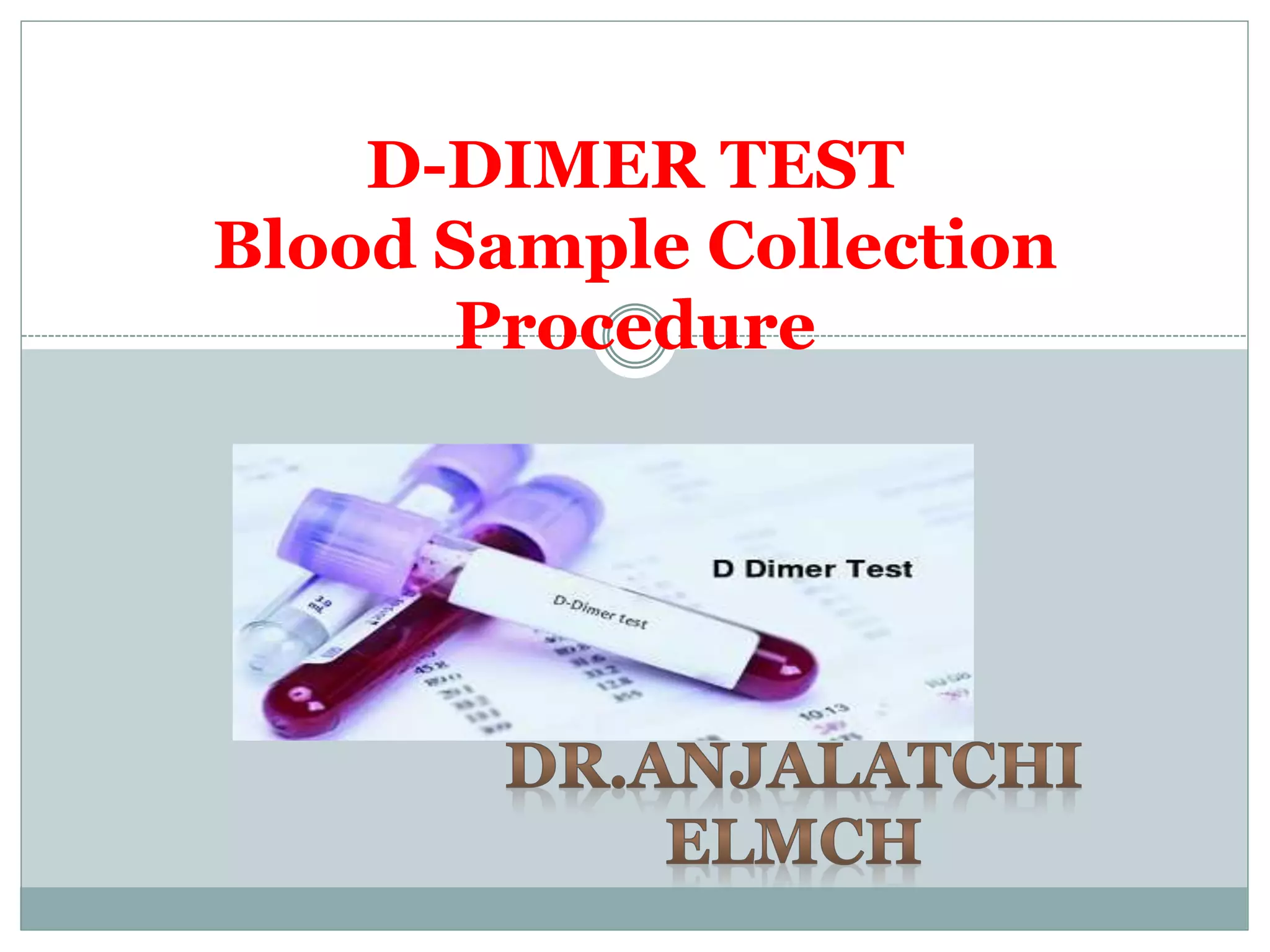
D-DIMER TEST
Blood Sample Collection
Procedure
DEFINITION
 D-dimer (or D dimer) is a fibrin degradation
product (or FDP), a small protein fragment present in
the blood after a blood clot is degraded by fibrinolysis. It
is so named because it contains two D fragments of
the fibrin protein joined by a cross-link.
 D-dimer concentration may be determined by a blood
test to help diagnose thrombosis.[2] Since its introduction
in the 1990s, it has become an important test performed
in people with suspected thrombotic disorders, such
as venous thromboembolism
WHY ITS IMPORTANCE IN COVID -19
 D-dimer levels are used as a predictive biomarker for
the blood disorder, disseminated intravascular
coagulation and in the coagulation disorders
associated with COVID-19 infection.[1][3] A four-fold
increase in the protein is an indicator of poor
prognosis in people hospitalized with COVID-19.
ORIGIN OF D-DIMER
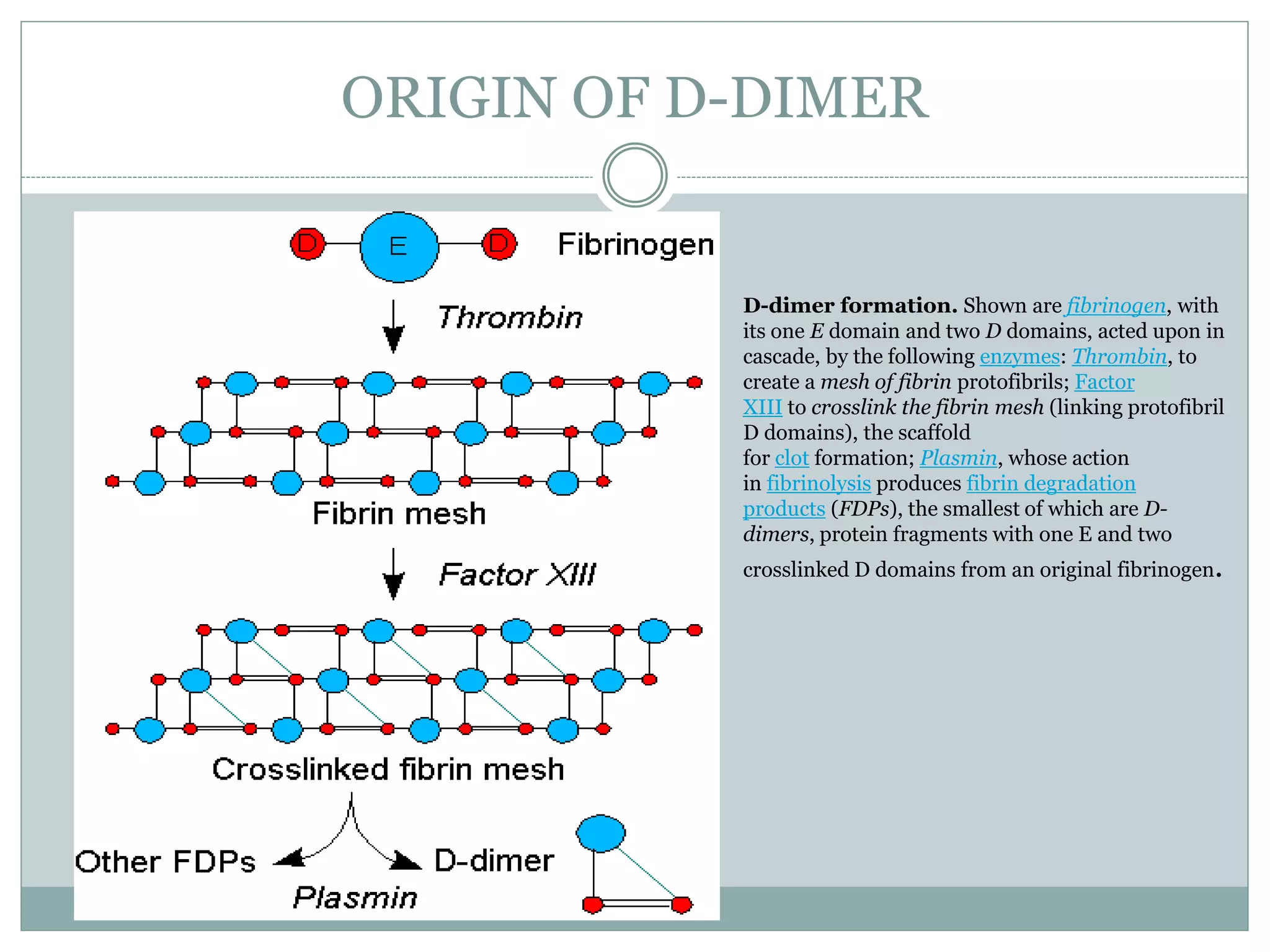
D-dimer formation. Shown are fibrinogen, with
its one E domain and two D domains, acted upon in
cascade, by the following enzymes: Thrombin, to
create a mesh of fibrin protofibrils; Factor
XIII to crosslink the fibrin mesh (linking protofibril
D domains), the scaffold
for clot formation; Plasmin, whose action
in fibrinolysis produces fibrin degradation
products (FDPs), the smallest of which are D-
dimers, protein fragments with one E and two
crosslinked D domains from an original fibrinogen.
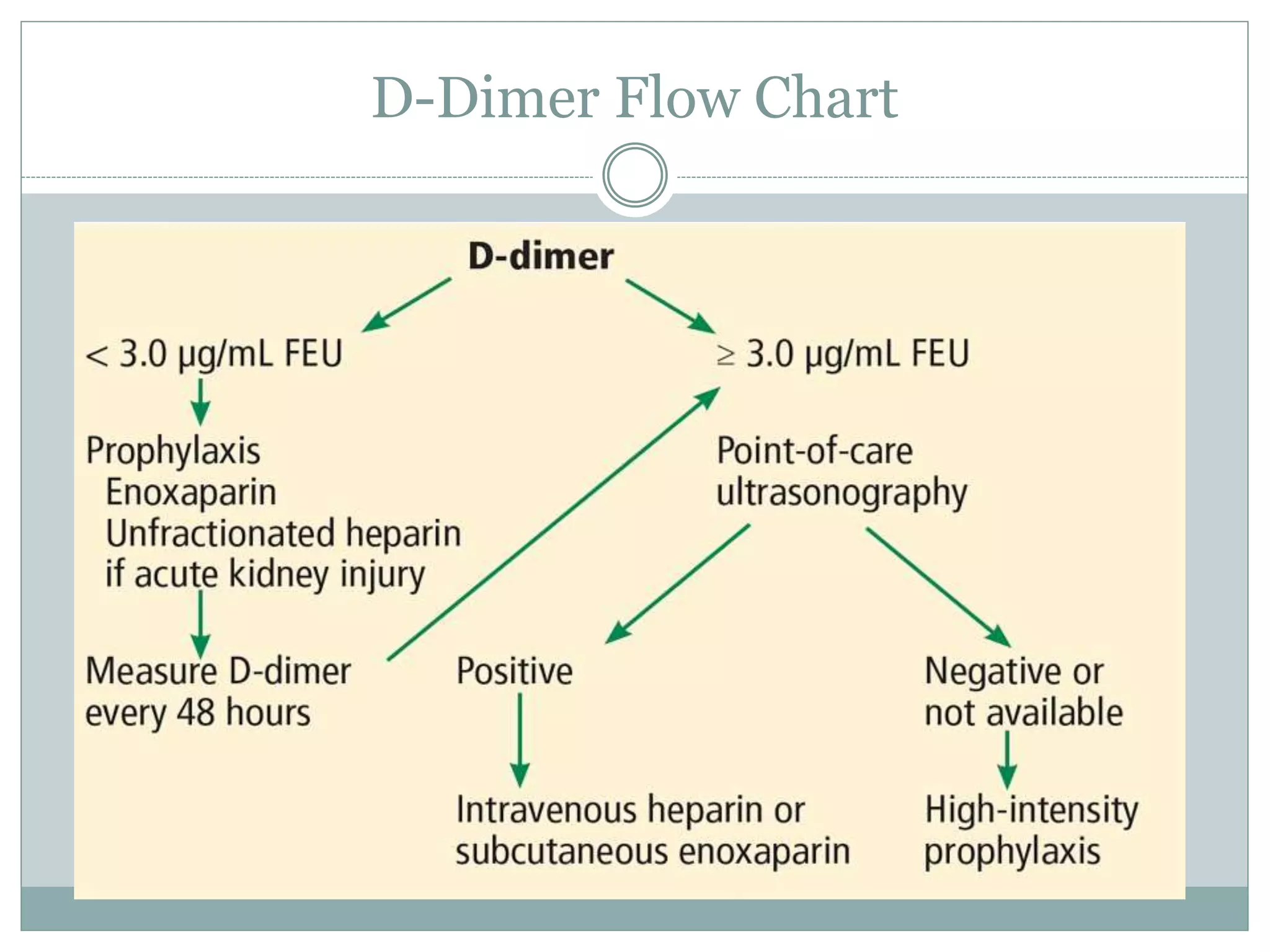
D-Dimer Flow Chart
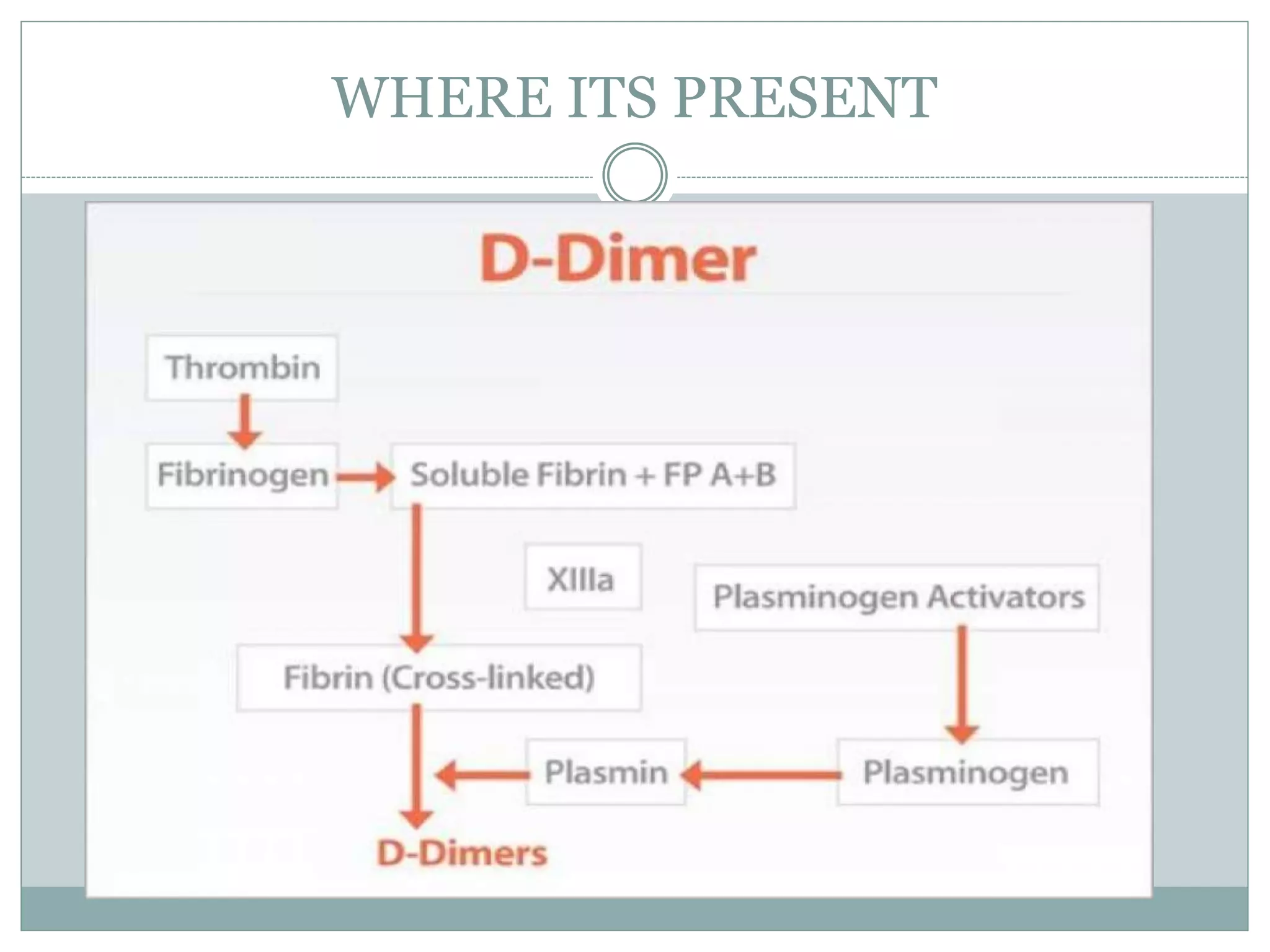
WHERE ITS PRESENT
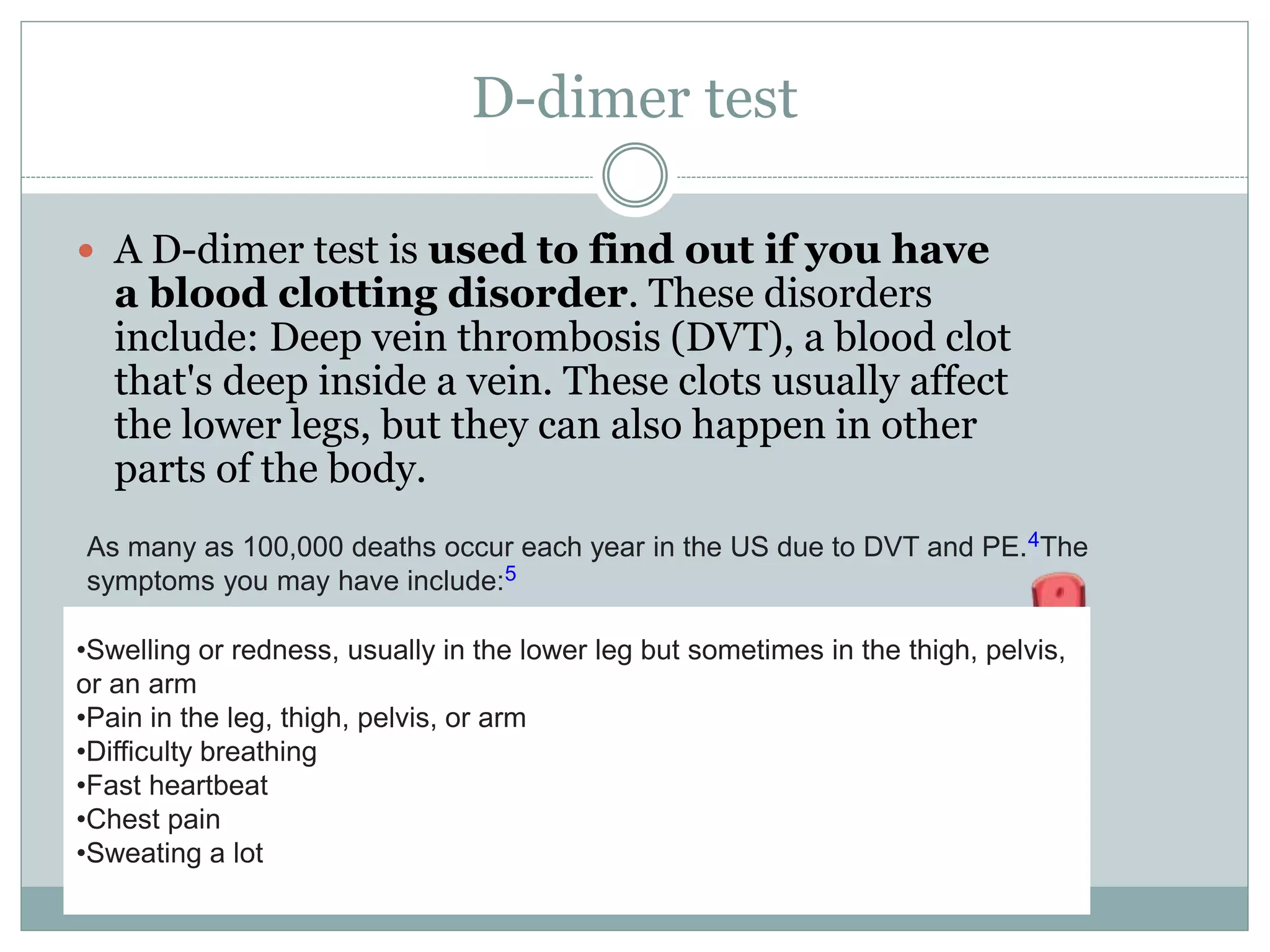
D-dimer test
 A D-dimer test is used to find out if you have
a blood clotting disorder. These disorders
include: Deep vein thrombosis (DVT), a blood clot
that's deep inside a vein. These clots usually affect
the lower legs, but they can also happen in other
parts of the body.
As many as 100,000 deaths occur each year in the US due to DVT and PE.4The
symptoms you may have include:5
•Swelling or redness, usually in the lower leg but sometimes in the thigh, pelvis,
or an arm
•Pain in the leg, thigh, pelvis, or arm
•Difficulty breathing
•Fast heartbeat
•Chest pain
•Sweating a lot
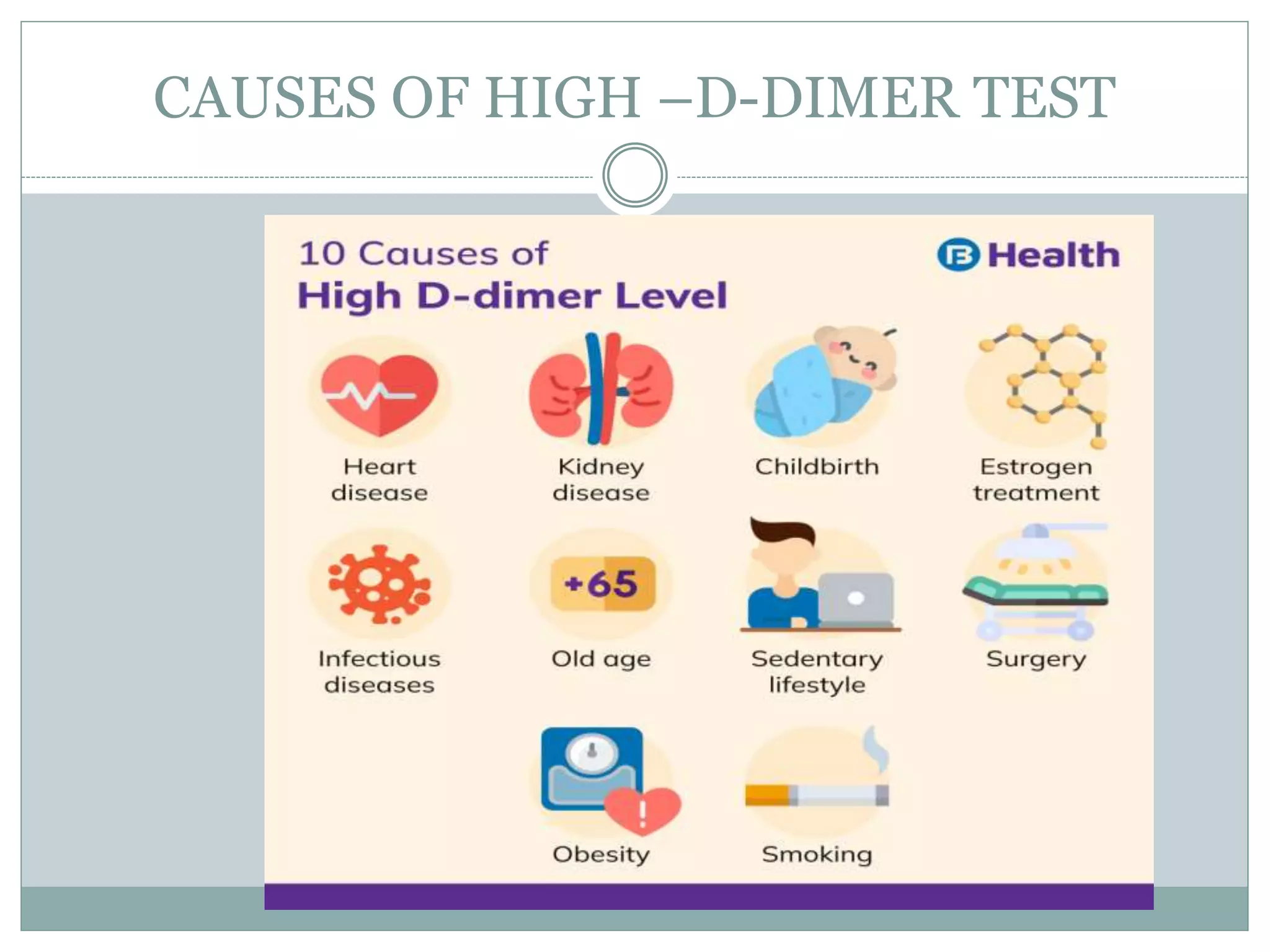
CAUSES OF HIGH –D-DIMER TEST
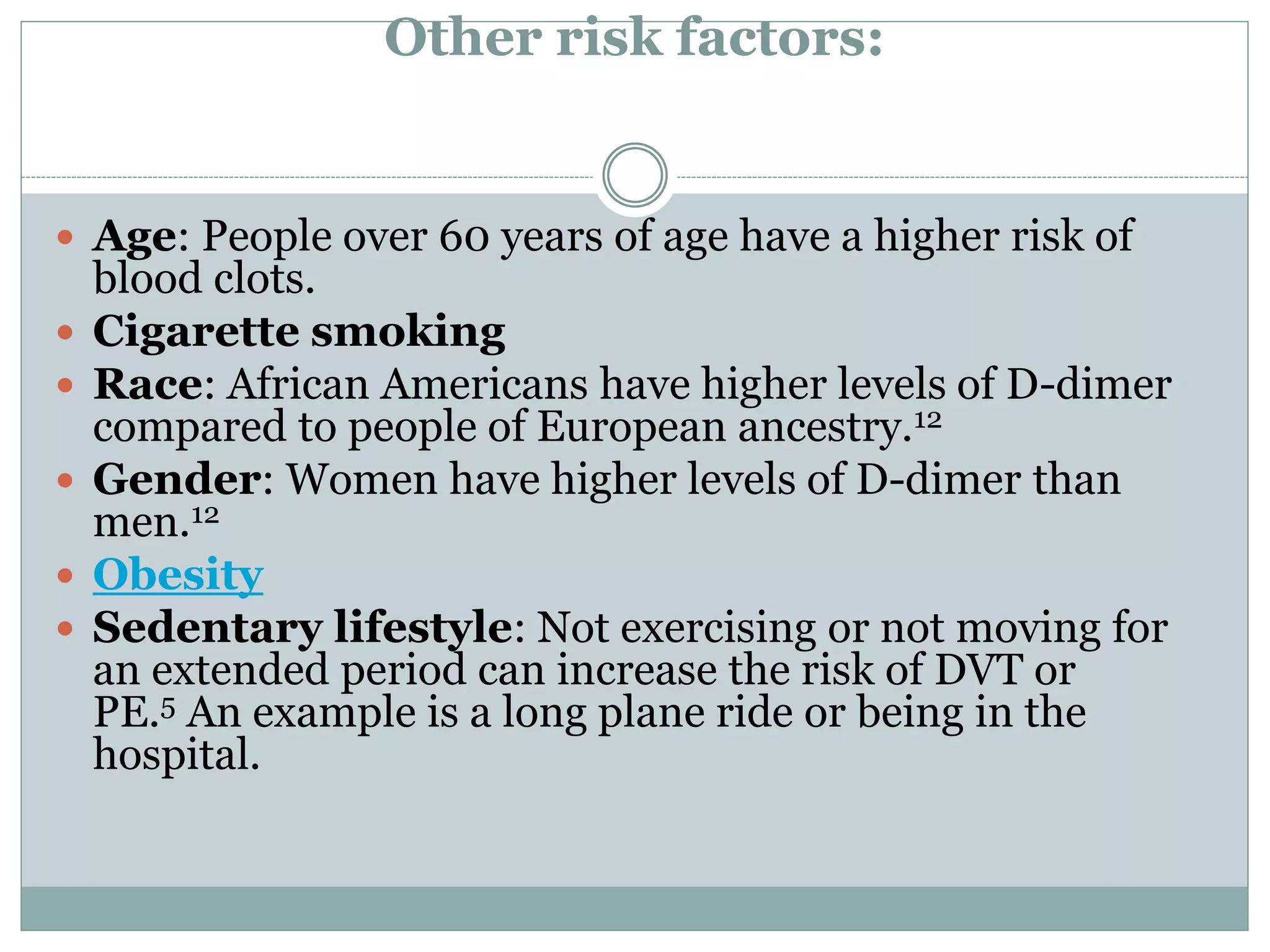
Other risk factors:
 Age: People over 60 years of age have a higher risk of
blood clots.
 Cigarette smoking
 Race: African Americans have higher levels of D-dimer
compared to people of European ancestry.12
 Gender: Women have higher levels of D-dimer than
men.12
 Obesity
 Sedentary lifestyle: Not exercising or not moving for
an extended period can increase the risk of DVT or
PE.5 An example is a long plane ride or being in the
hospital.
Indications
 it used for?
 A D-dimer test is used to find out if you have a blood clotting
disorder. These disorders include:
 Deep vein thrombosis (DVT), a blood clot that's deep inside a
vein. These clots usually affect the lower legs, but they can also
happen in other parts of the body.
 Pulmonary embolism (PE), a blockage in an artery in the lungs.
It usually happens when a blood clot in another part of the body
breaks loose and travels to the lungs. DVT clots are a common cause
of PE.
 Disseminated intravascular coagulation (DIC), a condition
that causes too many blood clots to form. They can form throughout
the body, causing organ damage and other serious complications.
DIC may be caused by traumatic injuries or certain types of
infections or cancer.
 Stroke, a blockage in the blood supply to the brain.
Medical conditions and treatments:
 Heart disease: Patients with unstable angina or who have had a heart
attack have higher levels of D-dimer and a higher risk of future blood
clots.
 Cancer: Some cancers can increase the risk of a blood clot.
 Cancer treatment: Chemotherapy and certain breast cancer drugs can
increase the risk of blood clots.8
 Treatment with estrogen: Birth control pills and hormone
replacement therapy can increase the risk of DVT and PE.9
 Surgery: Patients who have had major surgery, like a hip or knee
replacement, have a higher risk of a blood clot. (Drugs are prescribed to
prevent this.)
 Infectious diseases: COVID-19 and pneumonia can cause
inflammation and trigger blood clots.
 Kidney disease: For reasons that aren't fully understood, kidney
disease increases the risk of DVT and PE.
 Liver cirrhosis: People with severe liver disease have a higher risk of
clots in the large vein of the liver.10
 Pregnancy: D-dimer levels rise two- to four-fold by delivery.11 Women
have an increased risk of DVT or PE for up to three months after
delivery.9
Other Medical Conditions
 Coronary artery disease: People with severe
heart disease have higher levels of D-dimer.
 Stroke: Higher levels of D-dimer are associated
with an increased risk of stroke.
 Disseminated intravascular coagulation
(DIC): This is a rare disease in which blood clots
form in vessels throughout the body. Elevated D-
dimer levels are part of the scoring test for DIC.14
 Hyperfibrinolysis: This blood clotting disorder is
similar to DIC. The d-dimer test also helps doctors
evaluate this disorder.
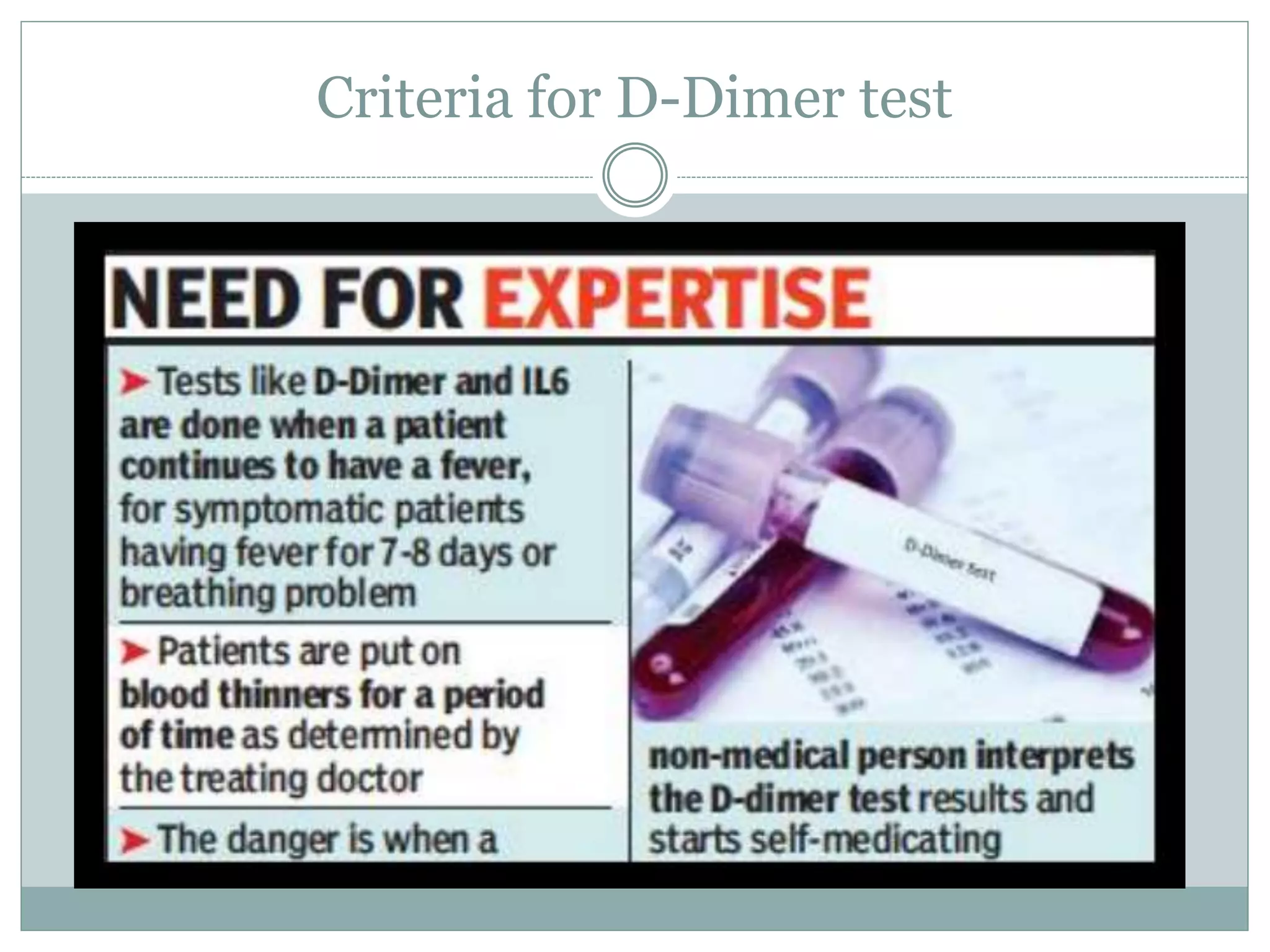
Criteria for D-Dimer test
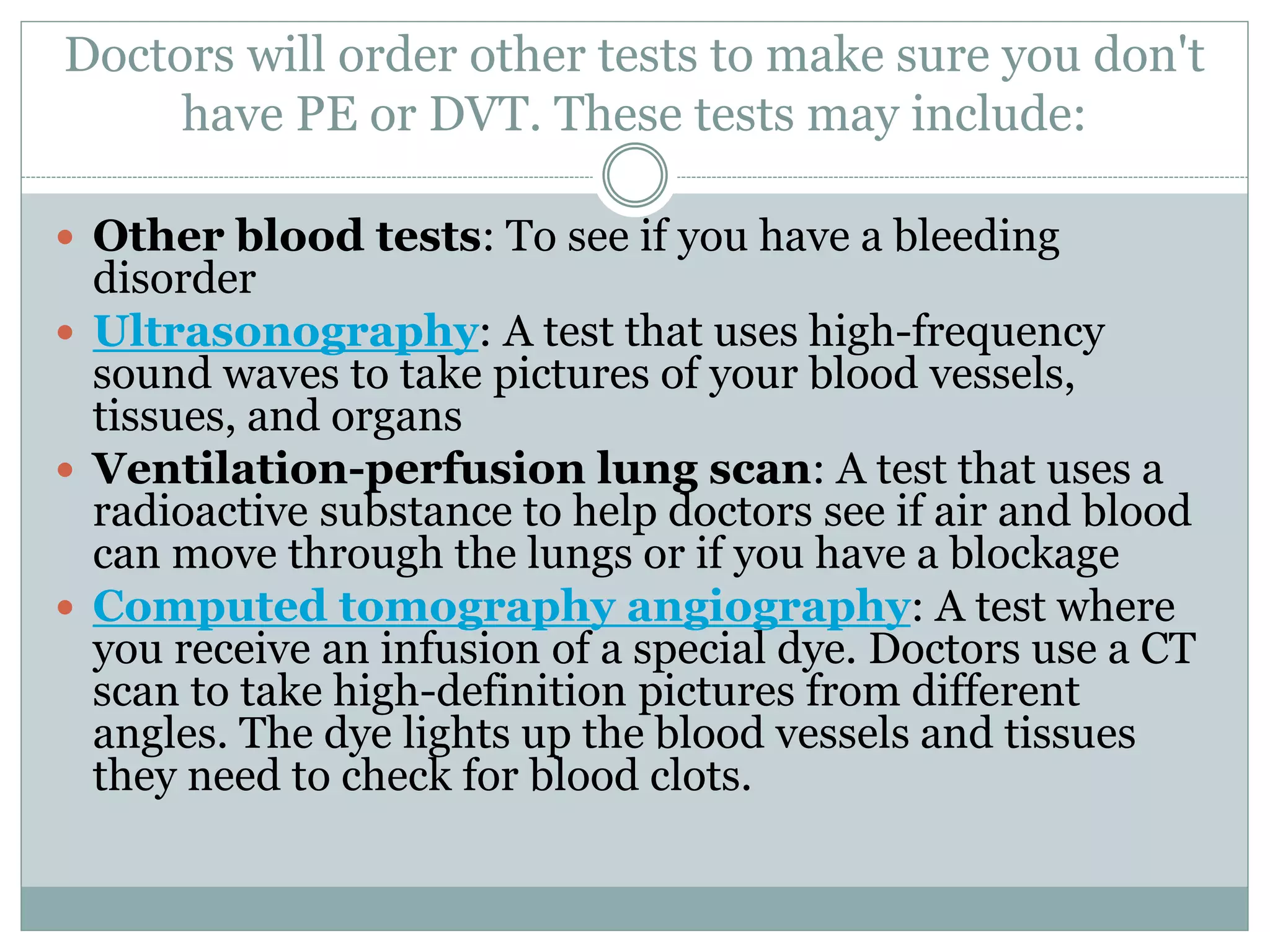
Doctors will order other tests to make sure you don't
have PE or DVT. These tests may include:
 Other blood tests: To see if you have a bleeding
disorder
 Ultrasonography: A test that uses high-frequency
sound waves to take pictures of your blood vessels,
tissues, and organs
 Ventilation-perfusion lung scan: A test that uses a
radioactive substance to help doctors see if air and blood
can move through the lungs or if you have a blockage
 Computed tomography angiography: A test where
you receive an infusion of a special dye. Doctors use a CT
scan to take high-definition pictures from different
angles. The dye lights up the blood vessels and tissues
they need to check for blood clots.
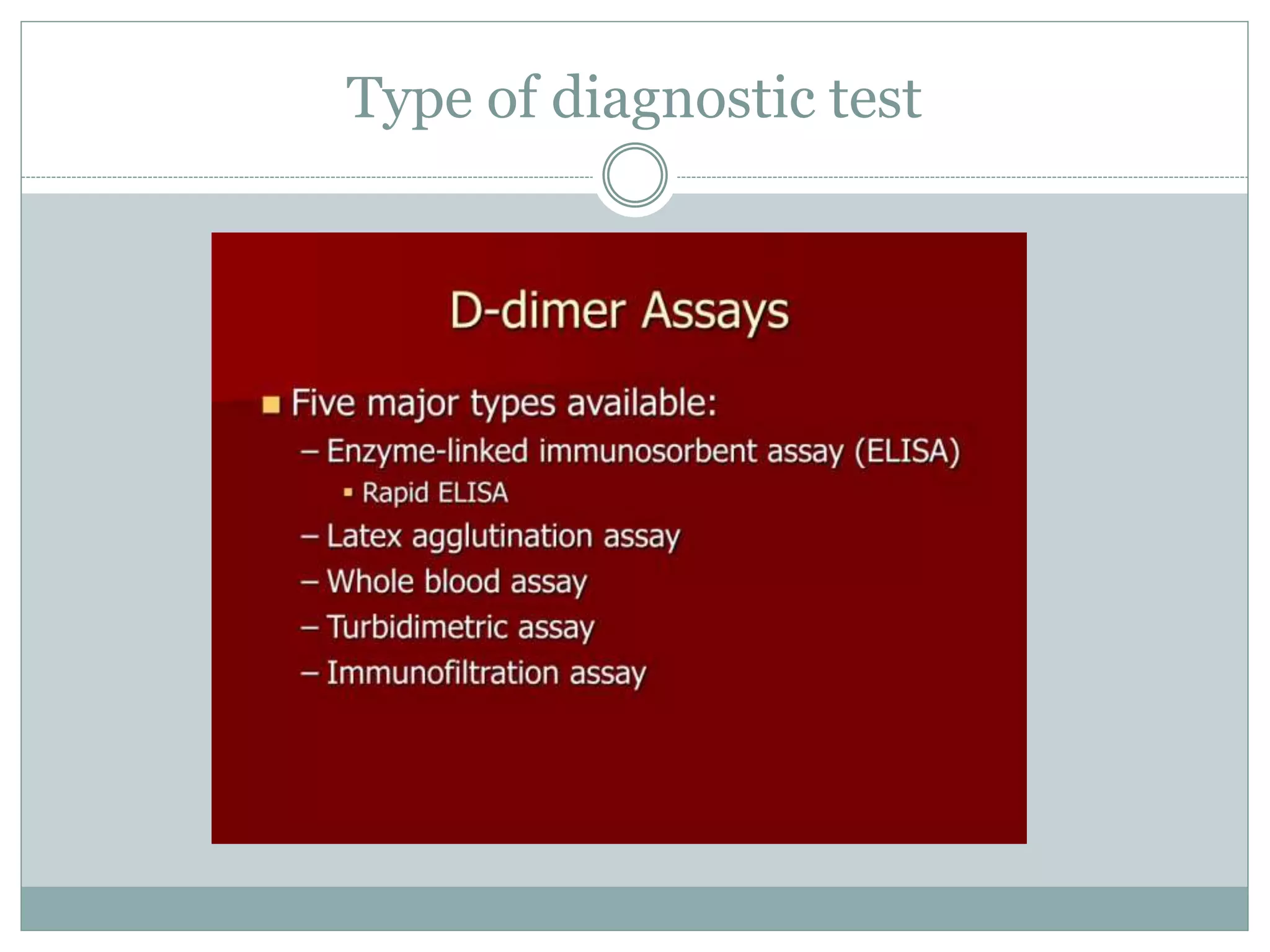
Type of diagnostic test
Why do I need a D-dimer test?
 It may need this test if you have symptoms of a blood
clotting disorder, such as deep vein thrombosis (DVT) or
a pulmonary embolism (PE).
Symptoms of DVT include:
 Leg pain or tenderness
 Leg swelling
 Redness or red streaks on the legs
Symptoms of PE include:
 Trouble breathing
 Cough
 Chest pain
 Rapid heartbeat
during a D-dimer test?
Sample collection procedure
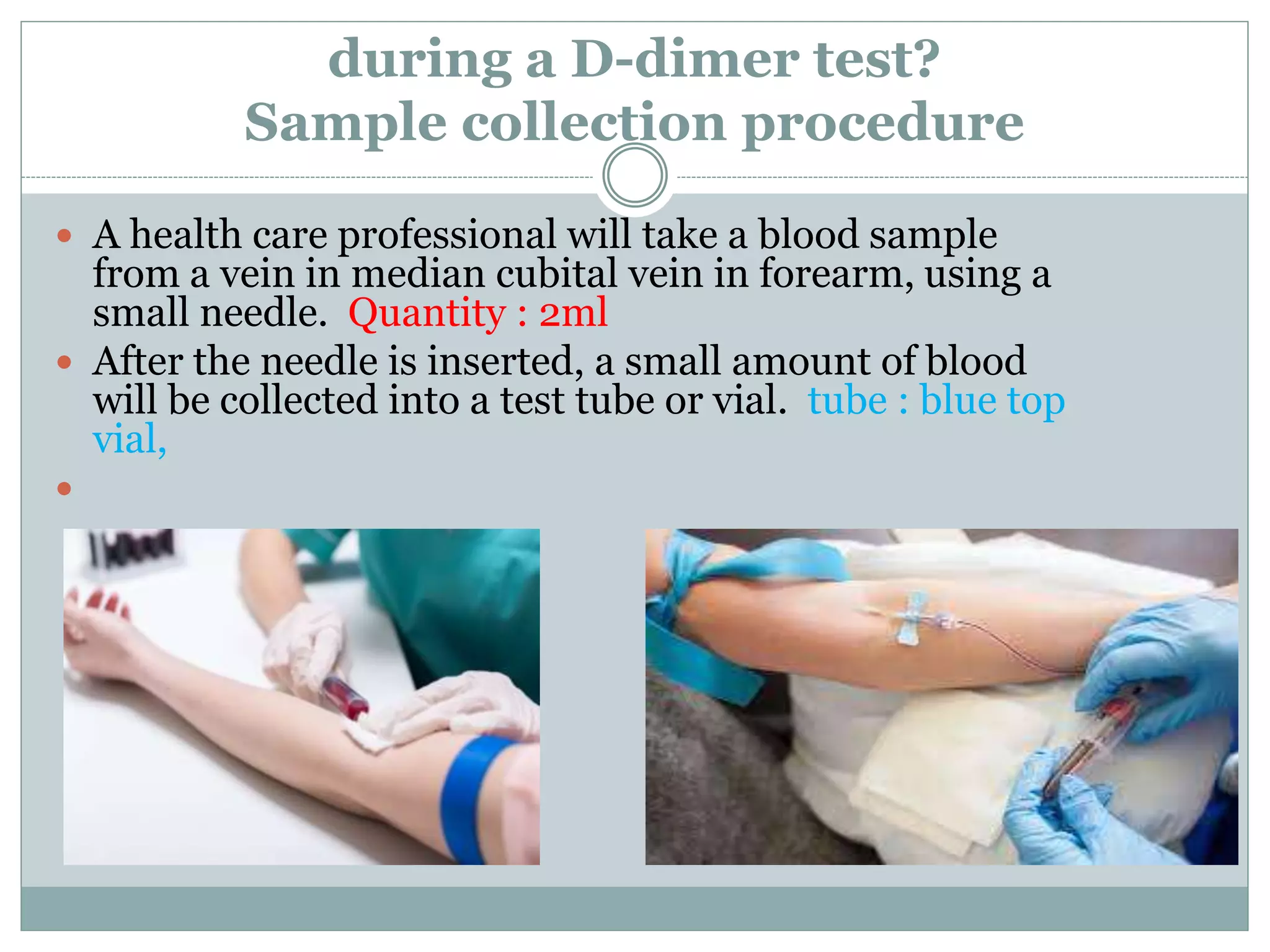
 A health care professional will take a blood sample
from a vein in median cubital vein in forearm, using a
small needle. Quantity : 2ml
 After the needle is inserted, a small amount of blood
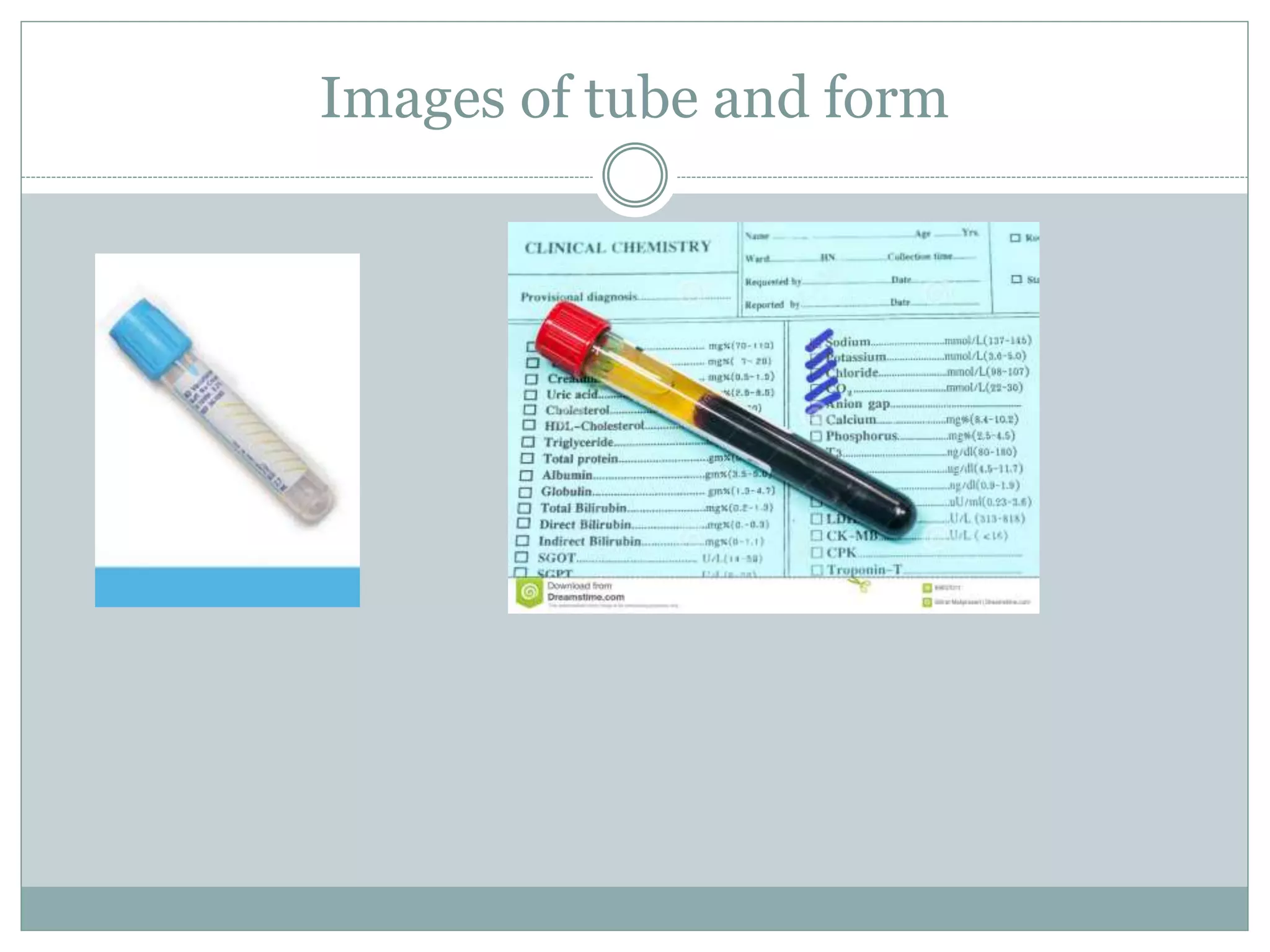
will be collected into a test tube or vial. tube : blue top
vial,

Images of tube and form
What do the results mean?
 If your results show low or normal D-dimer levels in the
blood, it means you probably don't have a clotting disorder.
 If your results show higher than normal levels of D-dimer, it
may mean you have a clotting disorder.
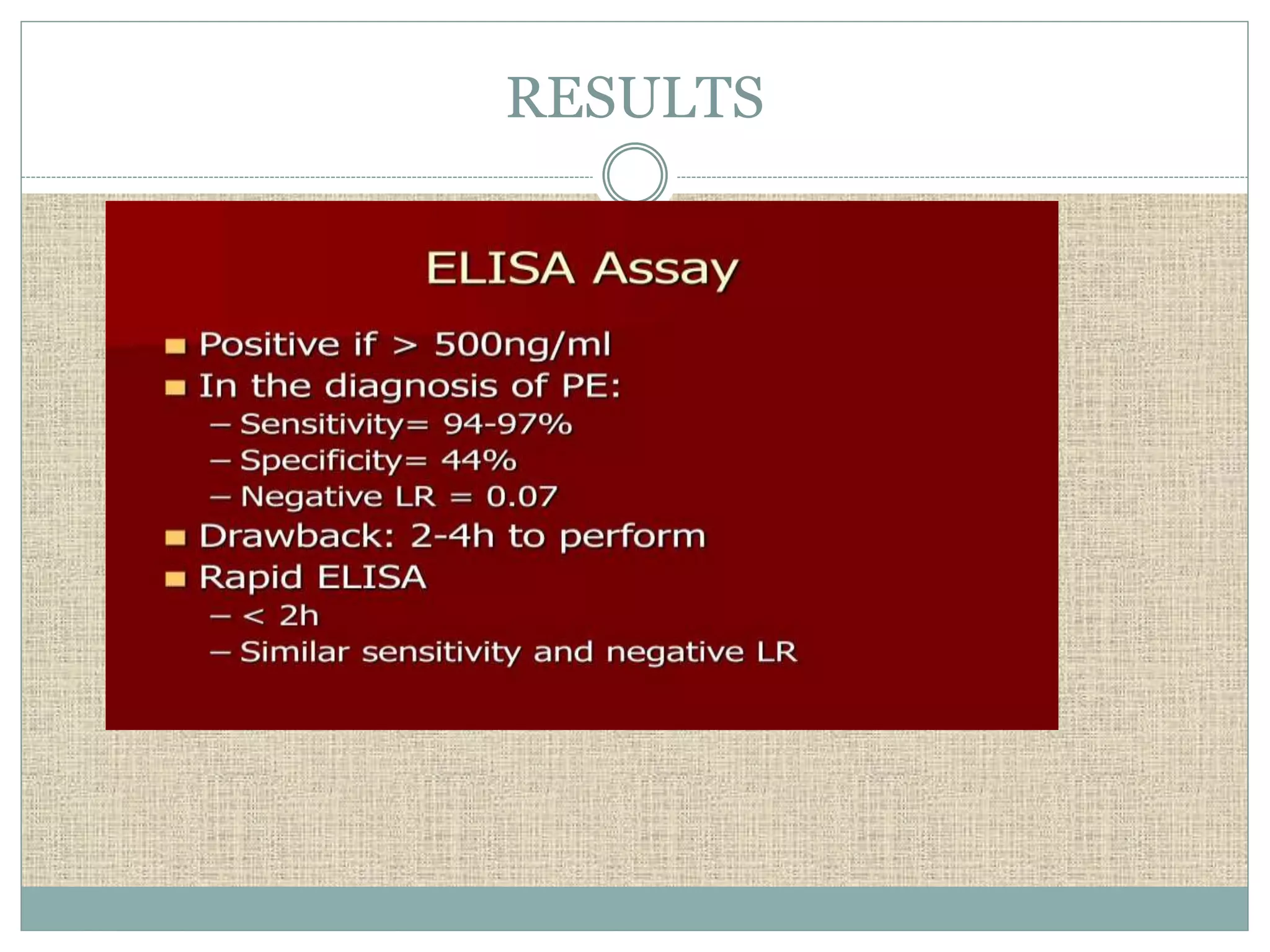
D-dimer Normal Range?
 A D-dimer normal value is anything less than 0.50 (or
<500 ng/mL FEU). A D-dimer value more than the normal
range of D-dimer test is considered as a high D-dimer.
Therefore, a value above 0.50 is considered an abnormal D-
dimer range. However, different labs do the test in their
unique ways. Thus, D dimer normal range may differ.
 normal D-dimer range is 220 to 500 ng/mL.
RESULTS
Precautions
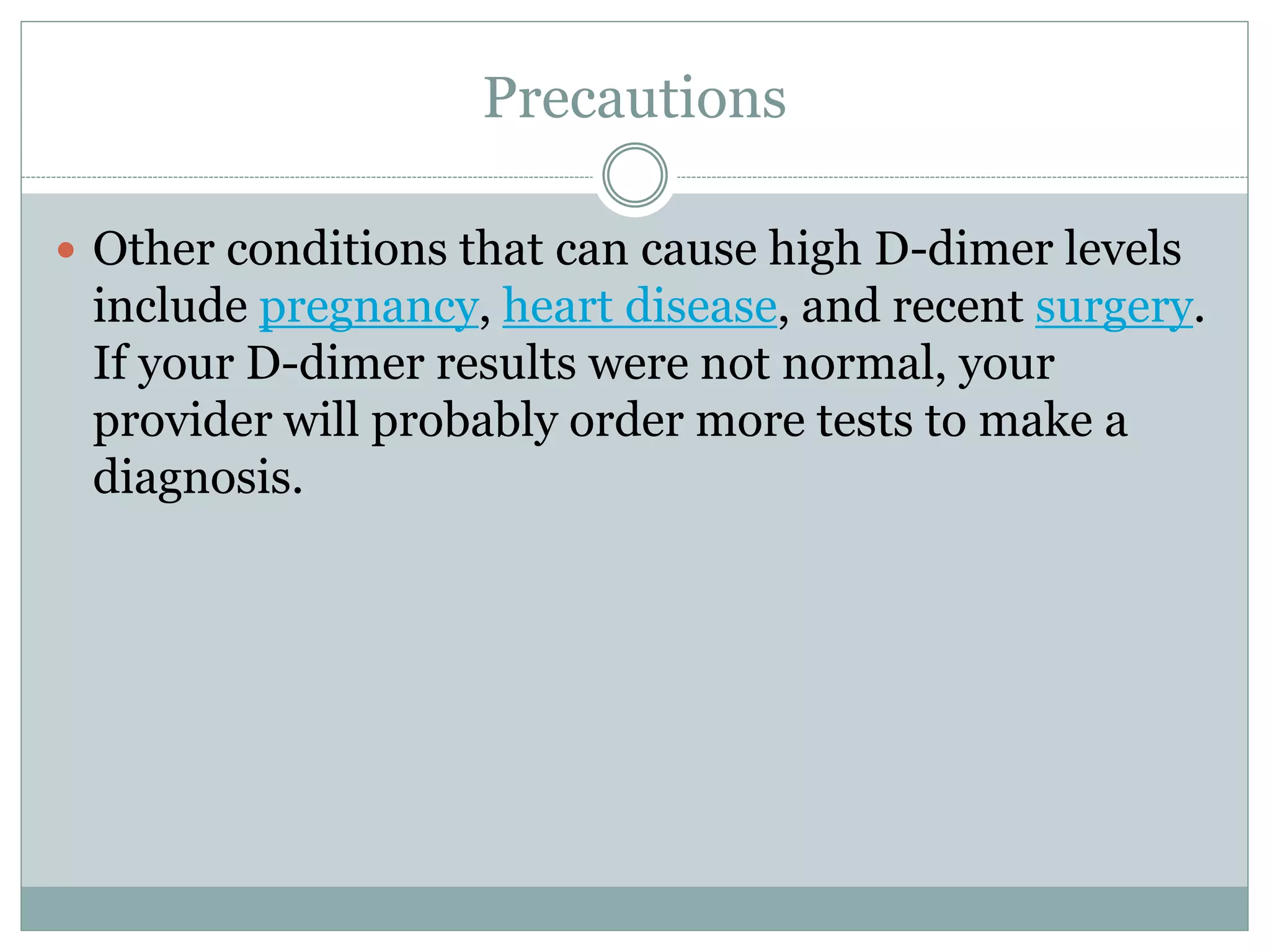
 Other conditions that can cause high D-dimer levels
include pregnancy, heart disease, and recent surgery.
If your D-dimer results were not normal, your
provider will probably order more tests to make a
diagnosis.
about a D-dimer test?
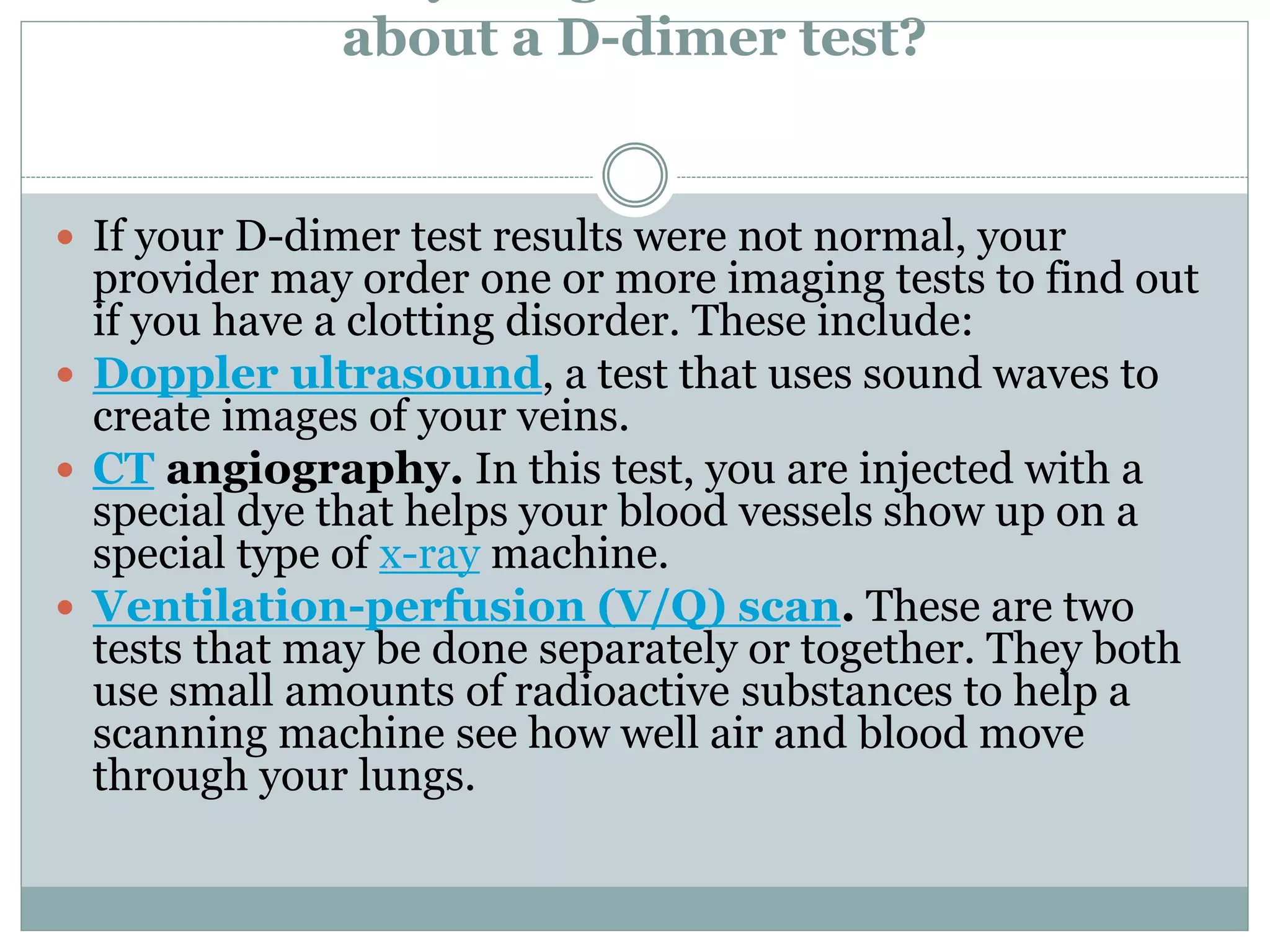
 If your D-dimer test results were not normal, your
provider may order one or more imaging tests to find out
if you have a clotting disorder. These include:
 Doppler ultrasound, a test that uses sound waves to
create images of your veins.
 CT angiography. In this test, you are injected with a
special dye that helps your blood vessels show up on a
special type of x-ray machine.
 Ventilation-perfusion (V/Q) scan. These are two
tests that may be done separately or together. They both
use small amounts of radioactive substances to help a
scanning machine see how well air and blood move
through your lungs.
Summary
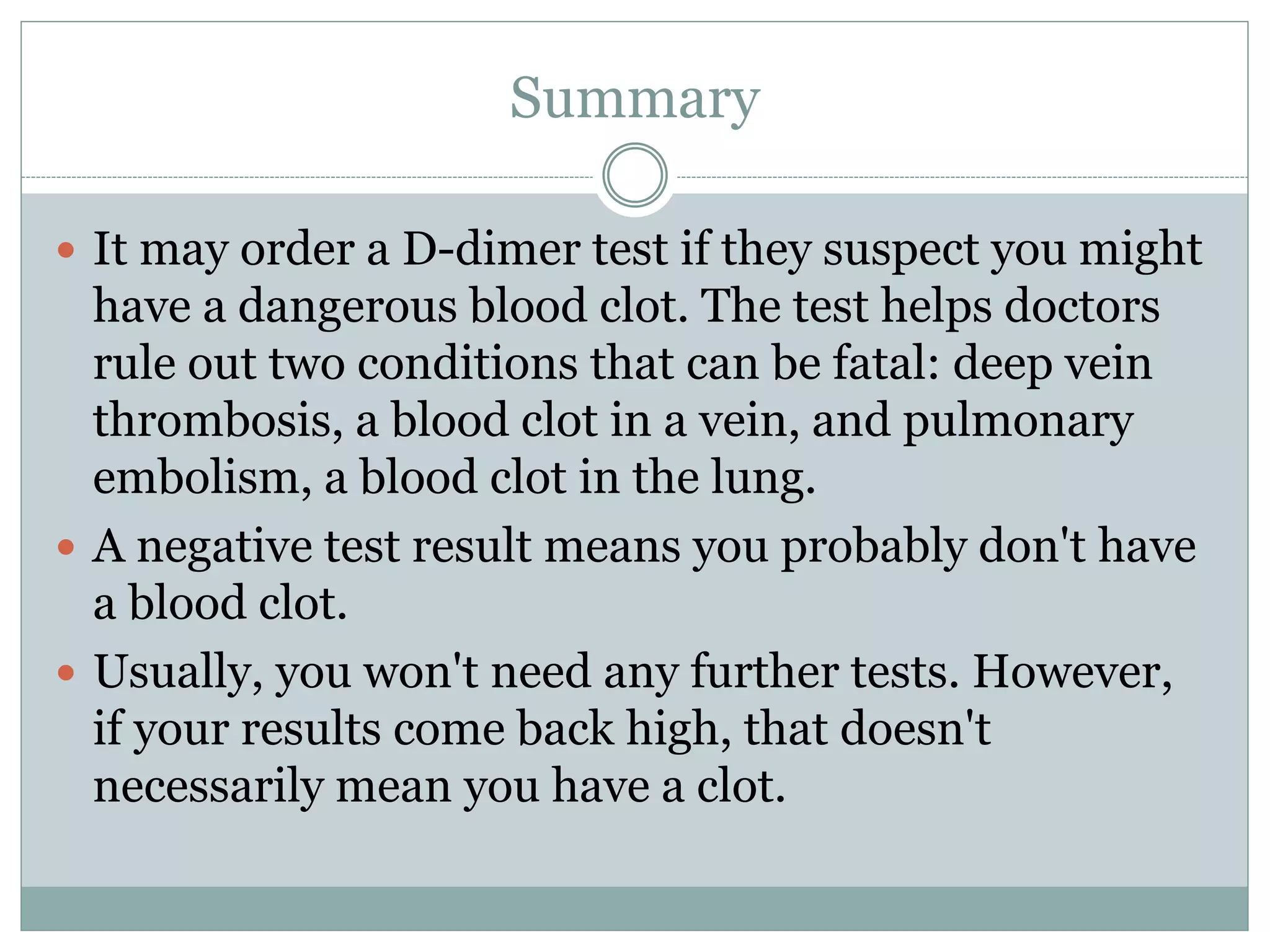
 It may order a D-dimer test if they suspect you might
have a dangerous blood clot. The test helps doctors
rule out two conditions that can be fatal: deep vein
thrombosis, a blood clot in a vein, and pulmonary
embolism, a blood clot in the lung.
 A negative test result means you probably don't have
a blood clot.
 Usually, you won't need any further tests. However,
if your results come back high, that doesn't
necessarily mean you have a clot.
 https://www.ncbi.nlm.nih.gov/books/NBK431064/
 https://labtestsonline.org/tests/d-dimer
 https://www.najms.org/article.asp?issn=1947-
2714;year=2014;volume=6;issue=10;spage=491;epag
e=499;aulast=Pulivarthi
 https://medlineplus.gov/lab-tests/D-dimer-test/
 https://radiopaedia.org/articles/saddle-pulmonary-
embolism
THANK YOU

D dimer test and sample collection procedure

  • 1.
    D-DIMER TEST Blood SampleCollection Procedure
  • 2.
    DEFINITION  D-dimer (orD dimer) is a fibrin degradation product (or FDP), a small protein fragment present in the blood after a blood clot is degraded by fibrinolysis. It is so named because it contains two D fragments of the fibrin protein joined by a cross-link.  D-dimer concentration may be determined by a blood test to help diagnose thrombosis.[2] Since its introduction in the 1990s, it has become an important test performed in people with suspected thrombotic disorders, such as venous thromboembolism
  • 3.
    WHY ITS IMPORTANCEIN COVID -19  D-dimer levels are used as a predictive biomarker for the blood disorder, disseminated intravascular coagulation and in the coagulation disorders associated with COVID-19 infection.[1][3] A four-fold increase in the protein is an indicator of poor prognosis in people hospitalized with COVID-19.
  • 4.
    ORIGIN OF D-DIMER D-dimerformation. Shown are fibrinogen, with its one E domain and two D domains, acted upon in cascade, by the following enzymes: Thrombin, to create a mesh of fibrin protofibrils; Factor XIII to crosslink the fibrin mesh (linking protofibril D domains), the scaffold for clot formation; Plasmin, whose action in fibrinolysis produces fibrin degradation products (FDPs), the smallest of which are D- dimers, protein fragments with one E and two crosslinked D domains from an original fibrinogen.
  • 5.
  • 6.
  • 7.
    D-dimer test  AD-dimer test is used to find out if you have a blood clotting disorder. These disorders include: Deep vein thrombosis (DVT), a blood clot that's deep inside a vein. These clots usually affect the lower legs, but they can also happen in other parts of the body. As many as 100,000 deaths occur each year in the US due to DVT and PE.4The symptoms you may have include:5 •Swelling or redness, usually in the lower leg but sometimes in the thigh, pelvis, or an arm •Pain in the leg, thigh, pelvis, or arm •Difficulty breathing •Fast heartbeat •Chest pain •Sweating a lot
  • 8.
    CAUSES OF HIGH–D-DIMER TEST
  • 9.
    Other risk factors: Age: People over 60 years of age have a higher risk of blood clots.  Cigarette smoking  Race: African Americans have higher levels of D-dimer compared to people of European ancestry.12  Gender: Women have higher levels of D-dimer than men.12  Obesity  Sedentary lifestyle: Not exercising or not moving for an extended period can increase the risk of DVT or PE.5 An example is a long plane ride or being in the hospital.
  • 10.
    Indications  it usedfor?  A D-dimer test is used to find out if you have a blood clotting disorder. These disorders include:  Deep vein thrombosis (DVT), a blood clot that's deep inside a vein. These clots usually affect the lower legs, but they can also happen in other parts of the body.  Pulmonary embolism (PE), a blockage in an artery in the lungs. It usually happens when a blood clot in another part of the body breaks loose and travels to the lungs. DVT clots are a common cause of PE.  Disseminated intravascular coagulation (DIC), a condition that causes too many blood clots to form. They can form throughout the body, causing organ damage and other serious complications. DIC may be caused by traumatic injuries or certain types of infections or cancer.  Stroke, a blockage in the blood supply to the brain.
  • 11.
    Medical conditions andtreatments:  Heart disease: Patients with unstable angina or who have had a heart attack have higher levels of D-dimer and a higher risk of future blood clots.  Cancer: Some cancers can increase the risk of a blood clot.  Cancer treatment: Chemotherapy and certain breast cancer drugs can increase the risk of blood clots.8  Treatment with estrogen: Birth control pills and hormone replacement therapy can increase the risk of DVT and PE.9  Surgery: Patients who have had major surgery, like a hip or knee replacement, have a higher risk of a blood clot. (Drugs are prescribed to prevent this.)  Infectious diseases: COVID-19 and pneumonia can cause inflammation and trigger blood clots.  Kidney disease: For reasons that aren't fully understood, kidney disease increases the risk of DVT and PE.  Liver cirrhosis: People with severe liver disease have a higher risk of clots in the large vein of the liver.10  Pregnancy: D-dimer levels rise two- to four-fold by delivery.11 Women have an increased risk of DVT or PE for up to three months after delivery.9
  • 12.
    Other Medical Conditions Coronary artery disease: People with severe heart disease have higher levels of D-dimer.  Stroke: Higher levels of D-dimer are associated with an increased risk of stroke.  Disseminated intravascular coagulation (DIC): This is a rare disease in which blood clots form in vessels throughout the body. Elevated D- dimer levels are part of the scoring test for DIC.14  Hyperfibrinolysis: This blood clotting disorder is similar to DIC. The d-dimer test also helps doctors evaluate this disorder.
  • 13.
  • 14.
    Doctors will orderother tests to make sure you don't have PE or DVT. These tests may include:  Other blood tests: To see if you have a bleeding disorder  Ultrasonography: A test that uses high-frequency sound waves to take pictures of your blood vessels, tissues, and organs  Ventilation-perfusion lung scan: A test that uses a radioactive substance to help doctors see if air and blood can move through the lungs or if you have a blockage  Computed tomography angiography: A test where you receive an infusion of a special dye. Doctors use a CT scan to take high-definition pictures from different angles. The dye lights up the blood vessels and tissues they need to check for blood clots.
  • 15.
  • 16.
    Why do Ineed a D-dimer test?  It may need this test if you have symptoms of a blood clotting disorder, such as deep vein thrombosis (DVT) or a pulmonary embolism (PE). Symptoms of DVT include:  Leg pain or tenderness  Leg swelling  Redness or red streaks on the legs Symptoms of PE include:  Trouble breathing  Cough  Chest pain  Rapid heartbeat
  • 17.
    during a D-dimertest? Sample collection procedure  A health care professional will take a blood sample from a vein in median cubital vein in forearm, using a small needle. Quantity : 2ml  After the needle is inserted, a small amount of blood will be collected into a test tube or vial. tube : blue top vial, 
  • 18.
  • 19.
    What do theresults mean?  If your results show low or normal D-dimer levels in the blood, it means you probably don't have a clotting disorder.  If your results show higher than normal levels of D-dimer, it may mean you have a clotting disorder. D-dimer Normal Range?  A D-dimer normal value is anything less than 0.50 (or <500 ng/mL FEU). A D-dimer value more than the normal range of D-dimer test is considered as a high D-dimer. Therefore, a value above 0.50 is considered an abnormal D- dimer range. However, different labs do the test in their unique ways. Thus, D dimer normal range may differ.  normal D-dimer range is 220 to 500 ng/mL.
  • 20.
  • 21.
    Precautions  Other conditionsthat can cause high D-dimer levels include pregnancy, heart disease, and recent surgery. If your D-dimer results were not normal, your provider will probably order more tests to make a diagnosis.
  • 22.
    about a D-dimertest?  If your D-dimer test results were not normal, your provider may order one or more imaging tests to find out if you have a clotting disorder. These include:  Doppler ultrasound, a test that uses sound waves to create images of your veins.  CT angiography. In this test, you are injected with a special dye that helps your blood vessels show up on a special type of x-ray machine.  Ventilation-perfusion (V/Q) scan. These are two tests that may be done separately or together. They both use small amounts of radioactive substances to help a scanning machine see how well air and blood move through your lungs.
  • 23.
    Summary  It mayorder a D-dimer test if they suspect you might have a dangerous blood clot. The test helps doctors rule out two conditions that can be fatal: deep vein thrombosis, a blood clot in a vein, and pulmonary embolism, a blood clot in the lung.  A negative test result means you probably don't have a blood clot.  Usually, you won't need any further tests. However, if your results come back high, that doesn't necessarily mean you have a clot.
  • 24.
     https://www.ncbi.nlm.nih.gov/books/NBK431064/  https://labtestsonline.org/tests/d-dimer https://www.najms.org/article.asp?issn=1947- 2714;year=2014;volume=6;issue=10;spage=491;epag e=499;aulast=Pulivarthi  https://medlineplus.gov/lab-tests/D-dimer-test/  https://radiopaedia.org/articles/saddle-pulmonary- embolism
  • 25.