pakistanpharmacareerdoor@gmail.com +92 333 2243031
Sameeta Malik is young, energetic and talented student of Dow
College of Pharmacy, she is engaged in many scientific activities. She
is integral part of team Pakistan Pharma Career Door.
Facilitators
Iffrah Naushad is meritorious student of Dow College of Pharmacy,
she has a distinct personality. She has experience to attend national
scientific events, team Pakistan Pharma Career Door is proud to have
such a highly motivated girl in their team.
Abira Khalid is associated with Dow College of Pharmacy and about
to complete here Pharm-D Studies. She is talented and one of the
genius students of class. Pakistan Pharma Career Door is pleased to
have her as facilitator in their team.
Qaisara Boota is one of the most active student of her batch. All her
teachers and fellows are ready to speak high for her. She is highly
courageous and always ready to take difficult tasks. We are blessed
to have member like Qaisara.
Prepared by: ABIRA KHALID
IFRAH NAUSHAD
QAISARA MUHAMMAD BOOTA
SAMEETA MAALIK
DOW COLLEGE OF PHARMACY-DUHS
FINAL YEAR
• Background Information:
 History of drug approval regulation
• Pre-discovery & discovery stage.
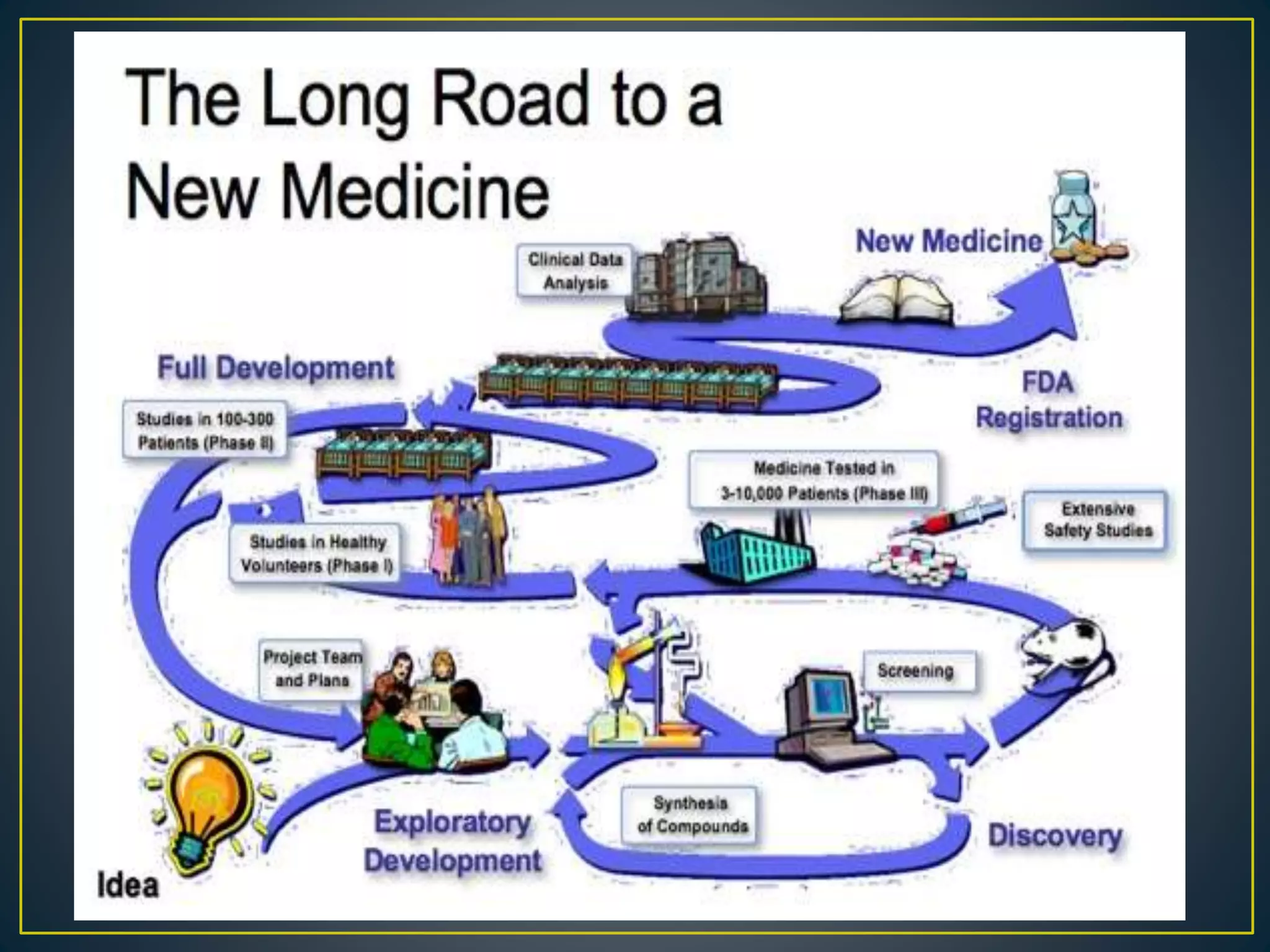
• Drug Development Process.
 Pre-clinical studies.
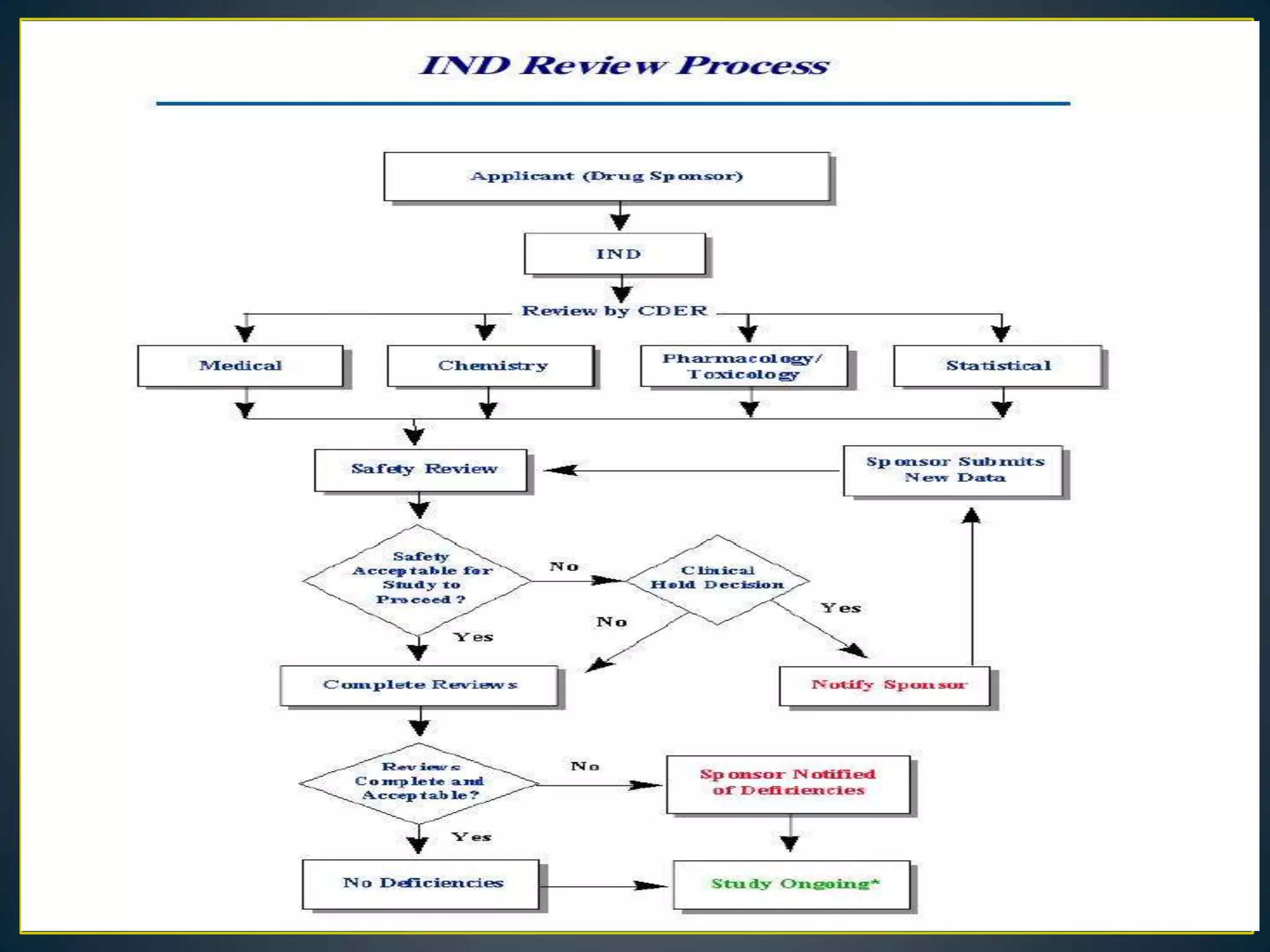
 IND Review process.
 Clinical Studies.
• FDA Review
• NDA
 Submission & Approval of NDA
 CDER
• ANDA
• Drug Approval Processs
• Post Approval Activities.
 Safety Monitoring & Research
• Phase IV-Clinical Studies
 REMS
Federal food,drug & cosmetics act:
• defines what new drugs are
• states that a new drug must be the subject of an
approved new drug application(NDA)
FOOD & DRUG ADMINISTRATION:
• interprets & enforces the laws provided in the act
• Pre-Discovery:
TARGET SELECTION & VALIDATION
 Disease mechanism studies:
Define the unmet medical need....(disease)
 Molecular Studies:
understand the inner workings of human disease at
the molecular level(identify a therapeutic target in that pathway.e.g:gene,key enzyme,receptor,ion
channels)
 Animal Studies:
Demonstrate that target is relevant to disease mechanism using genetics,animal models,lead
compounds,antibodies,RNA etc
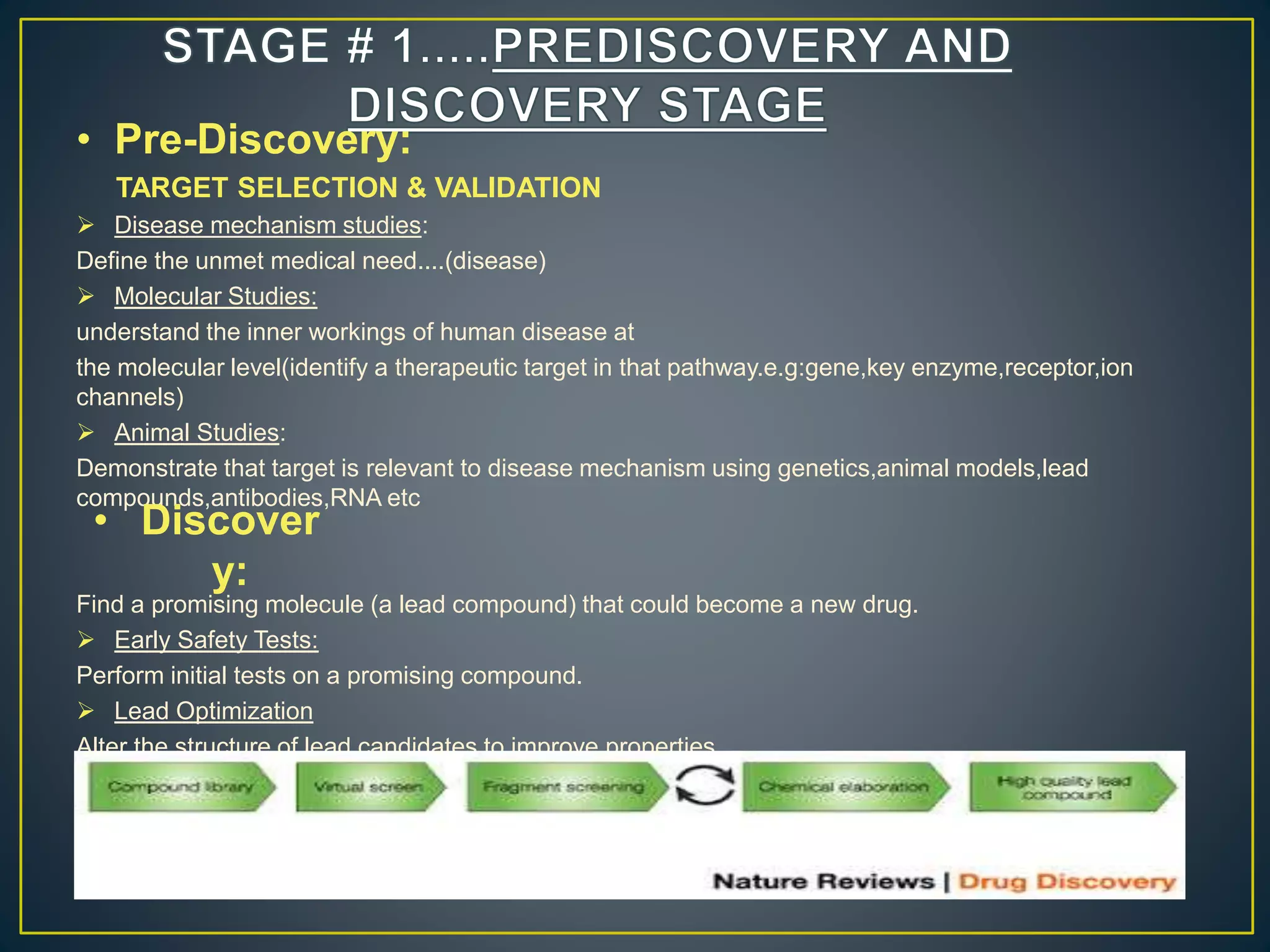
Find a promising molecule (a lead compound) that could become a new drug.
 Early Safety Tests:
Perform initial tests on a promising compound.
 Lead Optimization
Alter the structure of lead candidates to improve properties.
• Discover
y:
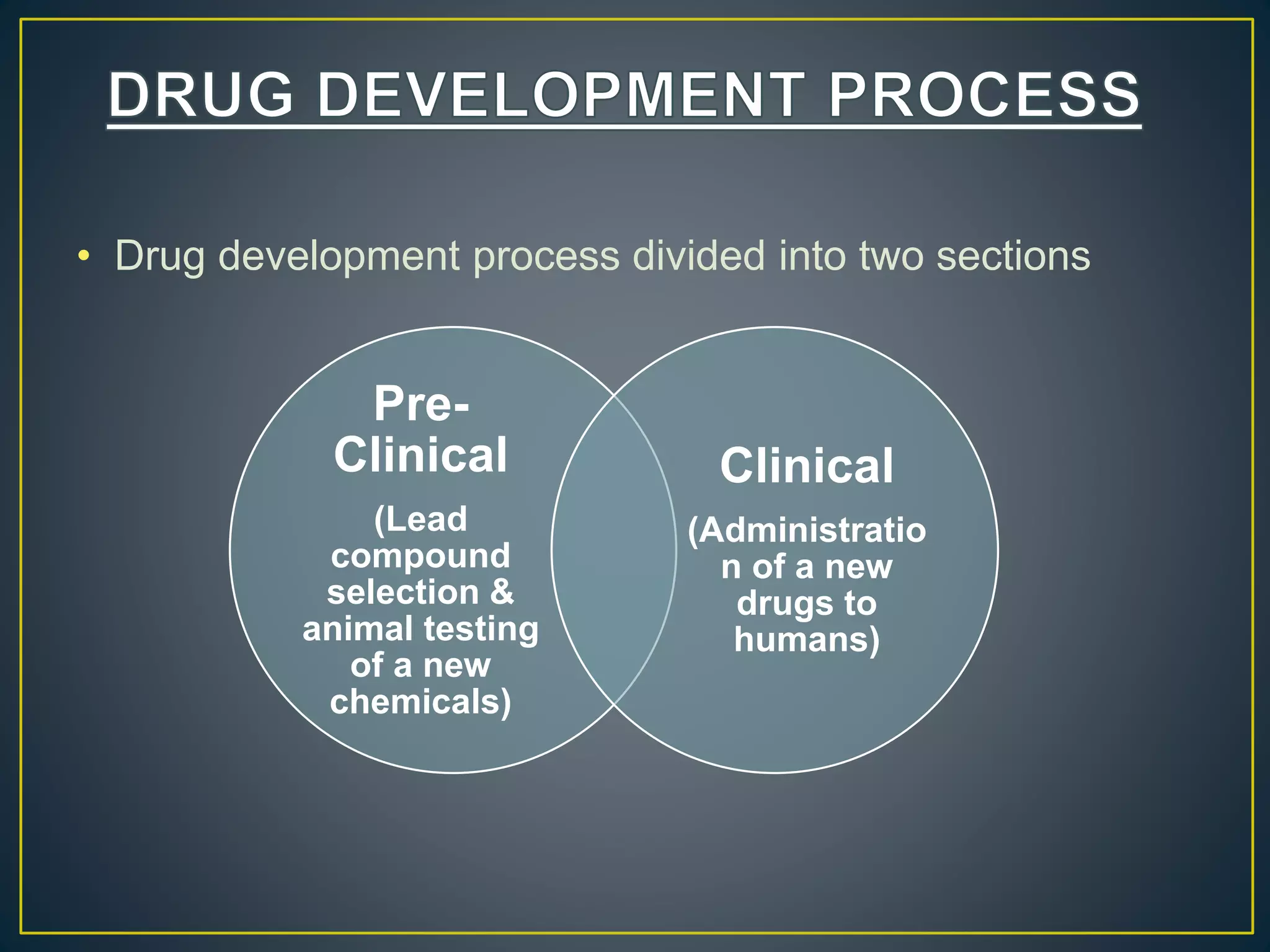
• Drug development process divided into two sections
Pre-
Clinical
(Lead
compound
selection &
animal testing
of a new
chemicals)
Clinical
(Administratio
n of a new
drugs to
humans)
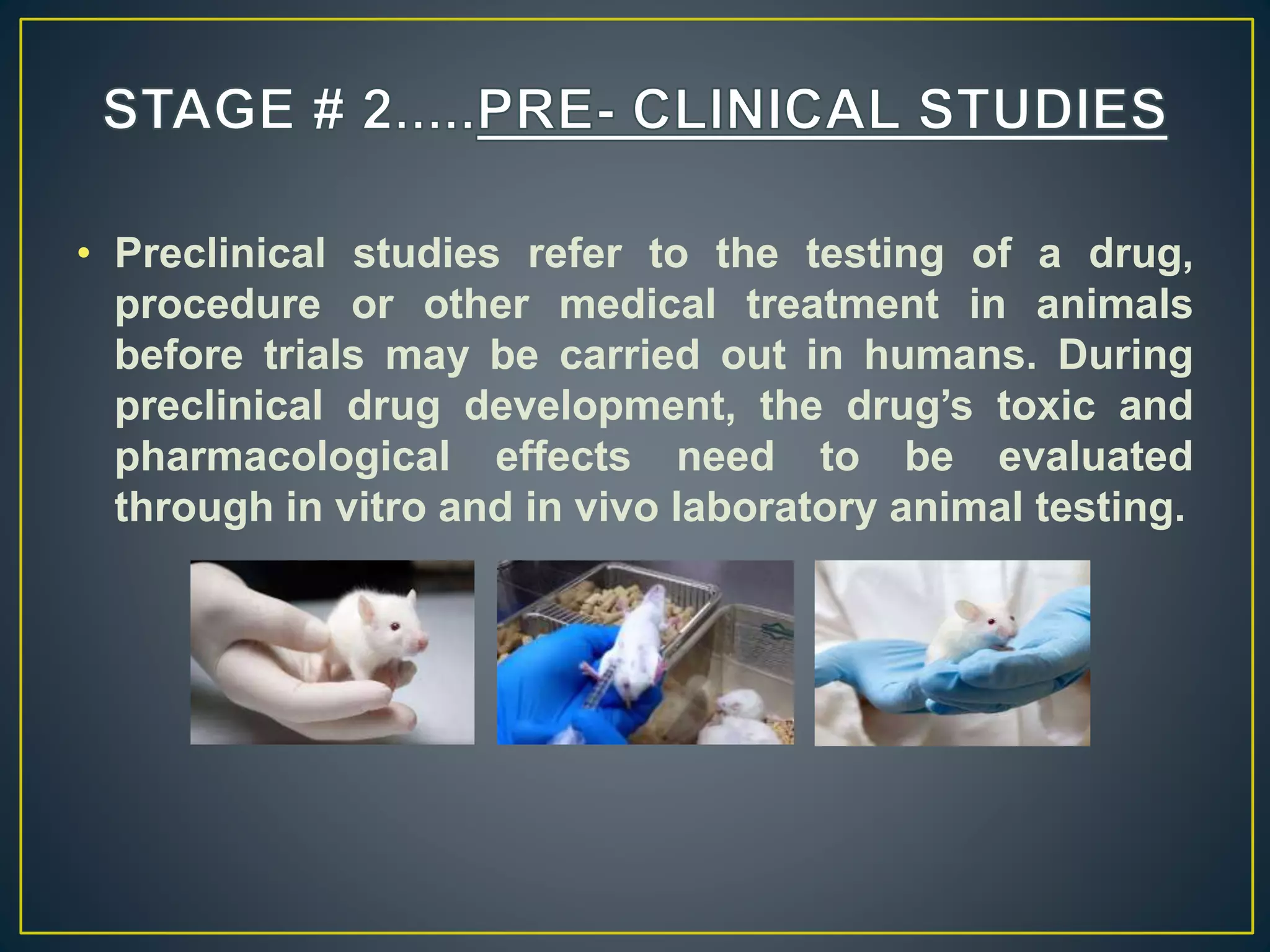
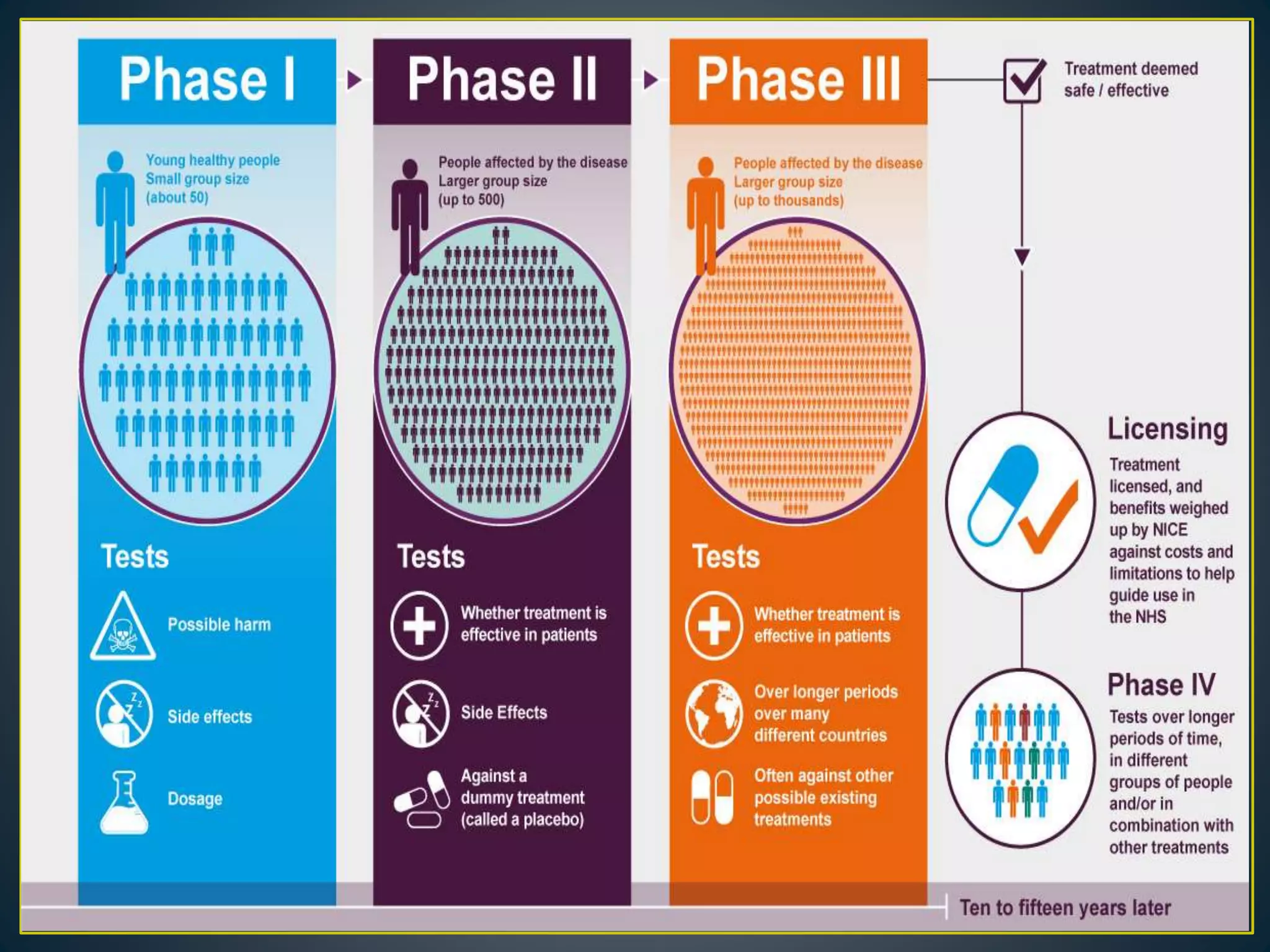
• Preclinical studies refer to the testing of a drug,
procedure or other medical treatment in animals
before trials may be carried out in humans. During
preclinical drug development, the drug’s toxic and
pharmacological effects need to be evaluated
through in vitro and in vivo laboratory animal testing.
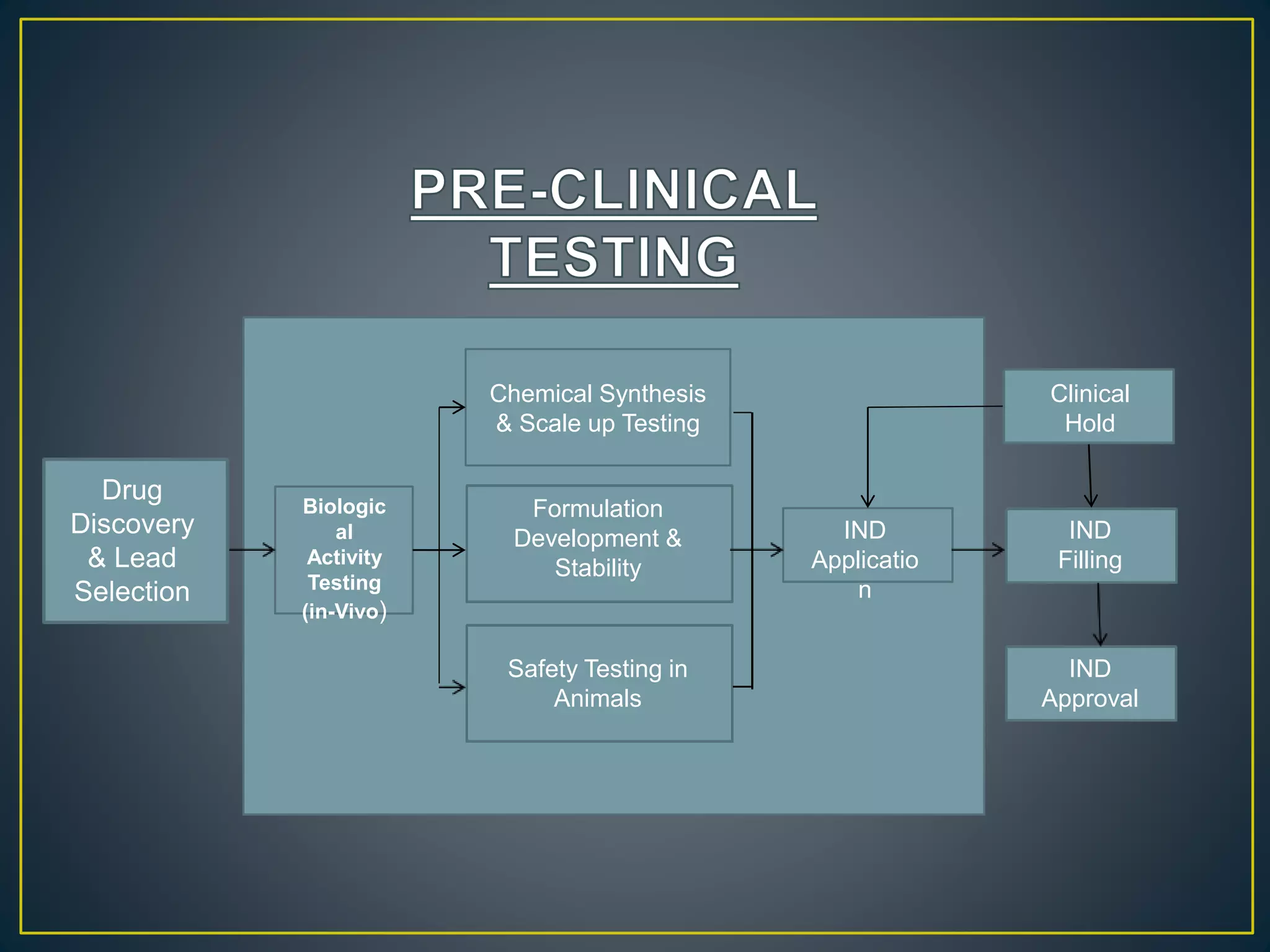
Drug
Discovery
& Lead
Selection
Biologic
al
Activity
Testing
(in-Vivo)
Chemical Synthesis
& Scale up Testing
Formulation
Development &
Stability
Safety Testing in
Animals
IND
Applicatio
n
Clinical
Hold
IND
Filling
IND
Approval
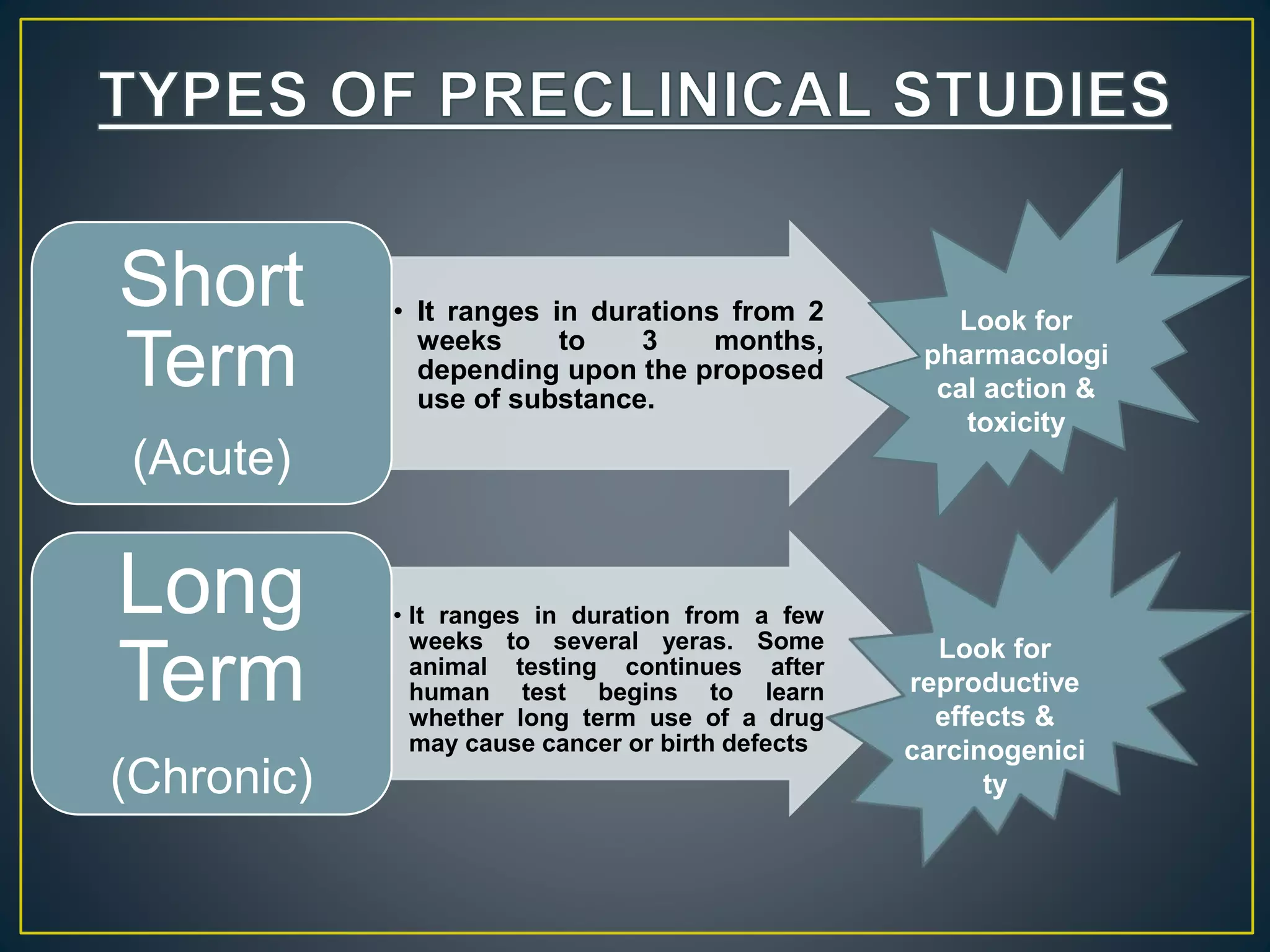
• It ranges in durations from 2
weeks to 3 months,
depending upon the proposed
use of substance.
Short
Term
(Acute)
• It ranges in duration from a few
weeks to several yeras. Some
animal testing continues after
human test begins to learn
whether long term use of a drug
may cause cancer or birth defects
Long
Term
(Chronic)
Look for
pharmacologi
cal action &
toxicity
Look for
reproductive
effects &
carcinogenici
ty
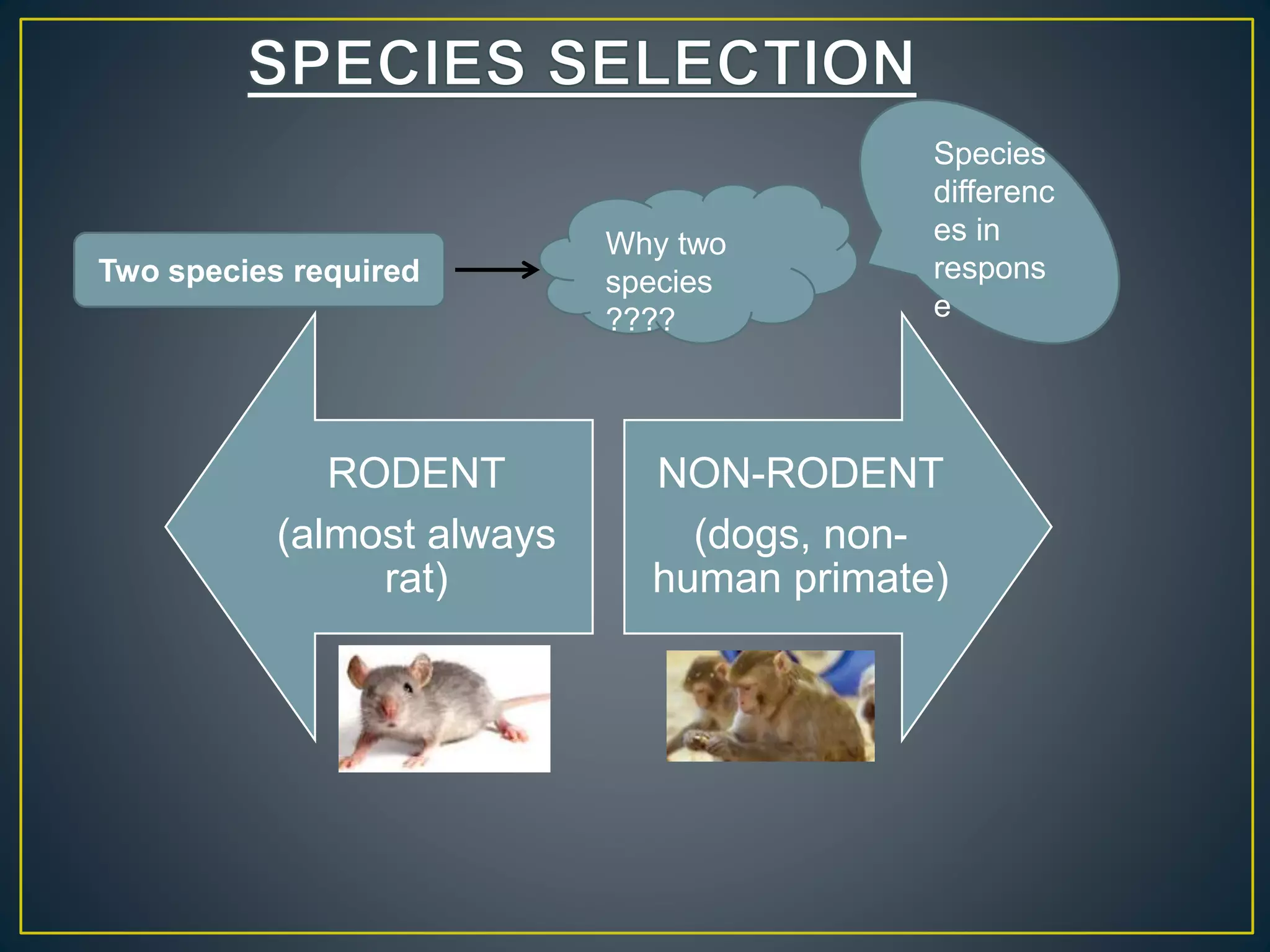
RODENT
(almost always
rat)
NON-RODENT
(dogs, non-
human primate)
Two species required
Why two
species
????
Species
differenc
es in
respons
e
• It may be held prior to submission of an investigational
new drugs (IND) and at the request of the sponsor during
these early stages of product development to disscus
testing plans and data requirements.
• During pre-IND meetings, the sponsor & the FDA should
agree on the acceptable phase of the initial clinical
investigation
• A submission through which drug
sponsor alerts the FDA of its
intentions to conduct clinical trials with
an investigational drugs.
• Application seeking permission to
clinical trials in humans.
• A request for exemption from federal
laws that prohibits unapproved drugs
from being shipped in interstate
commerce.
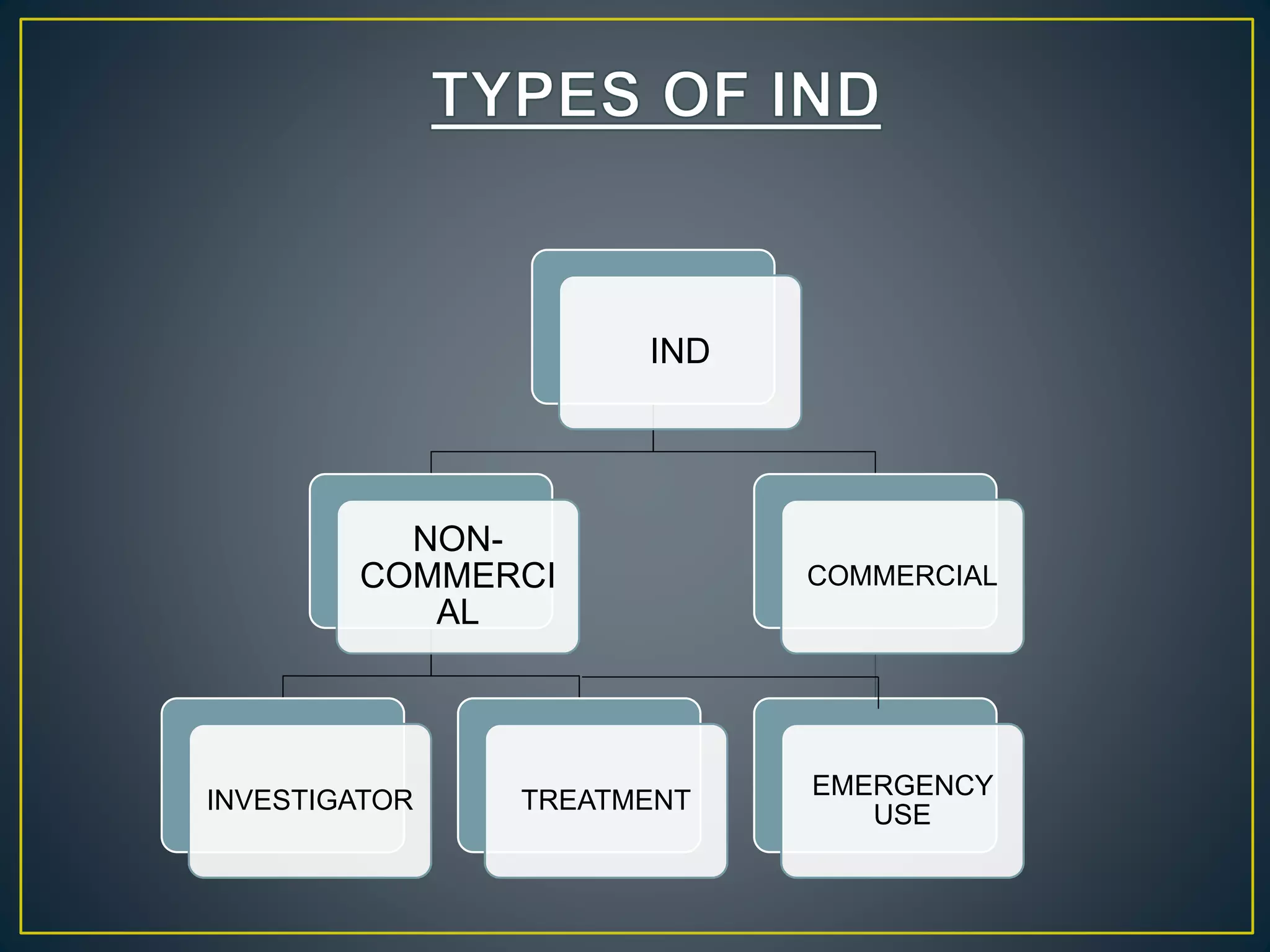
IND
NON-
COMMERCI
AL
INVESTIGATOR TREATMENT
COMMERCIAL
EMERGENCY
USE
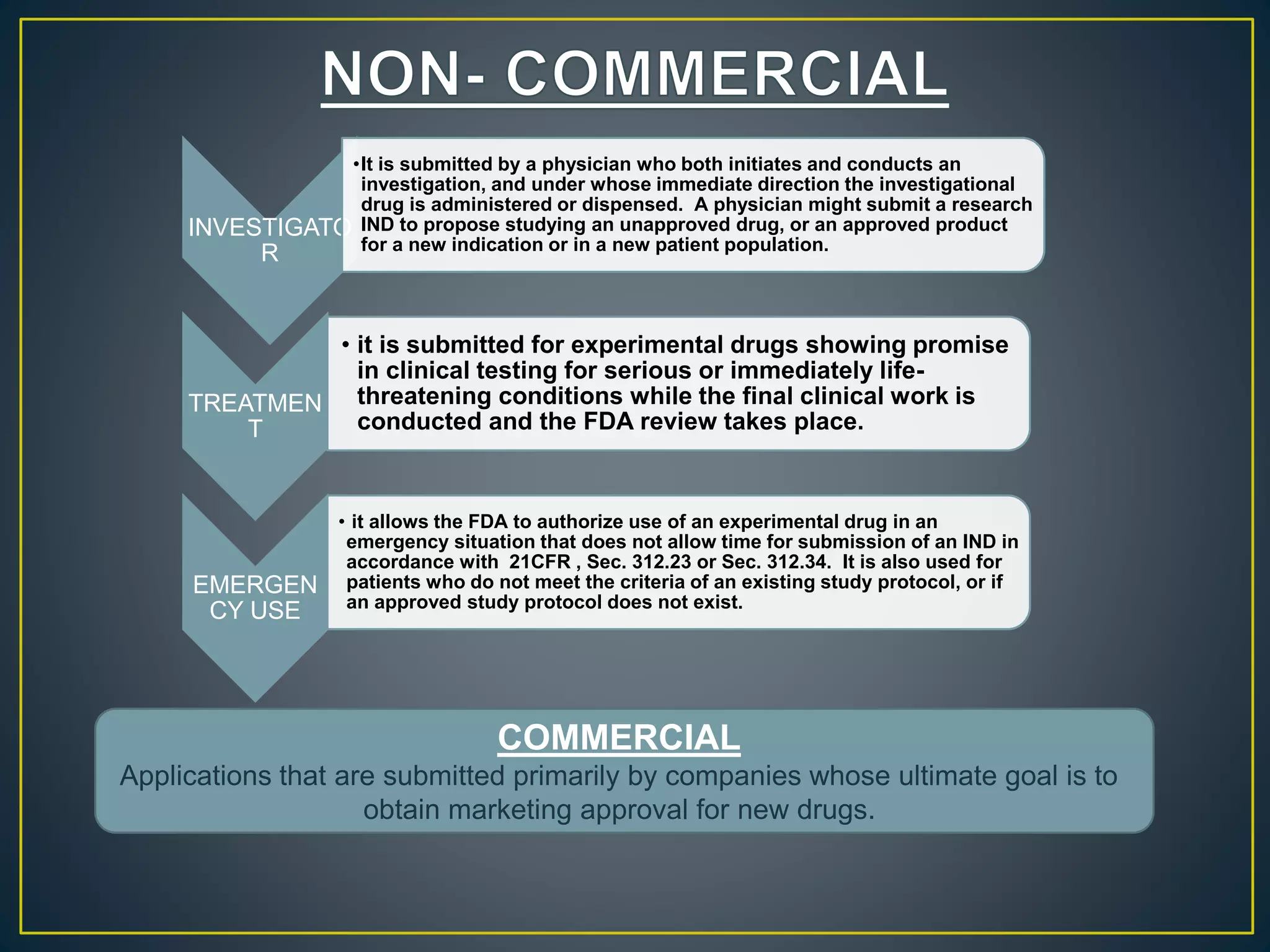
INVESTIGATO
R
•It is submitted by a physician who both initiates and conducts an
investigation, and under whose immediate direction the investigational
drug is administered or dispensed. A physician might submit a research
IND to propose studying an unapproved drug, or an approved product
for a new indication or in a new patient population.
TREATMEN
T
• it is submitted for experimental drugs showing promise
in clinical testing for serious or immediately life-
threatening conditions while the final clinical work is
conducted and the FDA review takes place.
EMERGEN
CY USE
• it allows the FDA to authorize use of an experimental drug in an
emergency situation that does not allow time for submission of an IND in
accordance with 21CFR , Sec. 312.23 or Sec. 312.34. It is also used for
patients who do not meet the criteria of an existing study protocol, or if
an approved study protocol does not exist.
COMMERCIAL
Applications that are submitted primarily by companies whose ultimate goal is to
obtain marketing approval for new drugs.
SSTAGE # 03
NEW DRUG APPROVAL
PROCESS
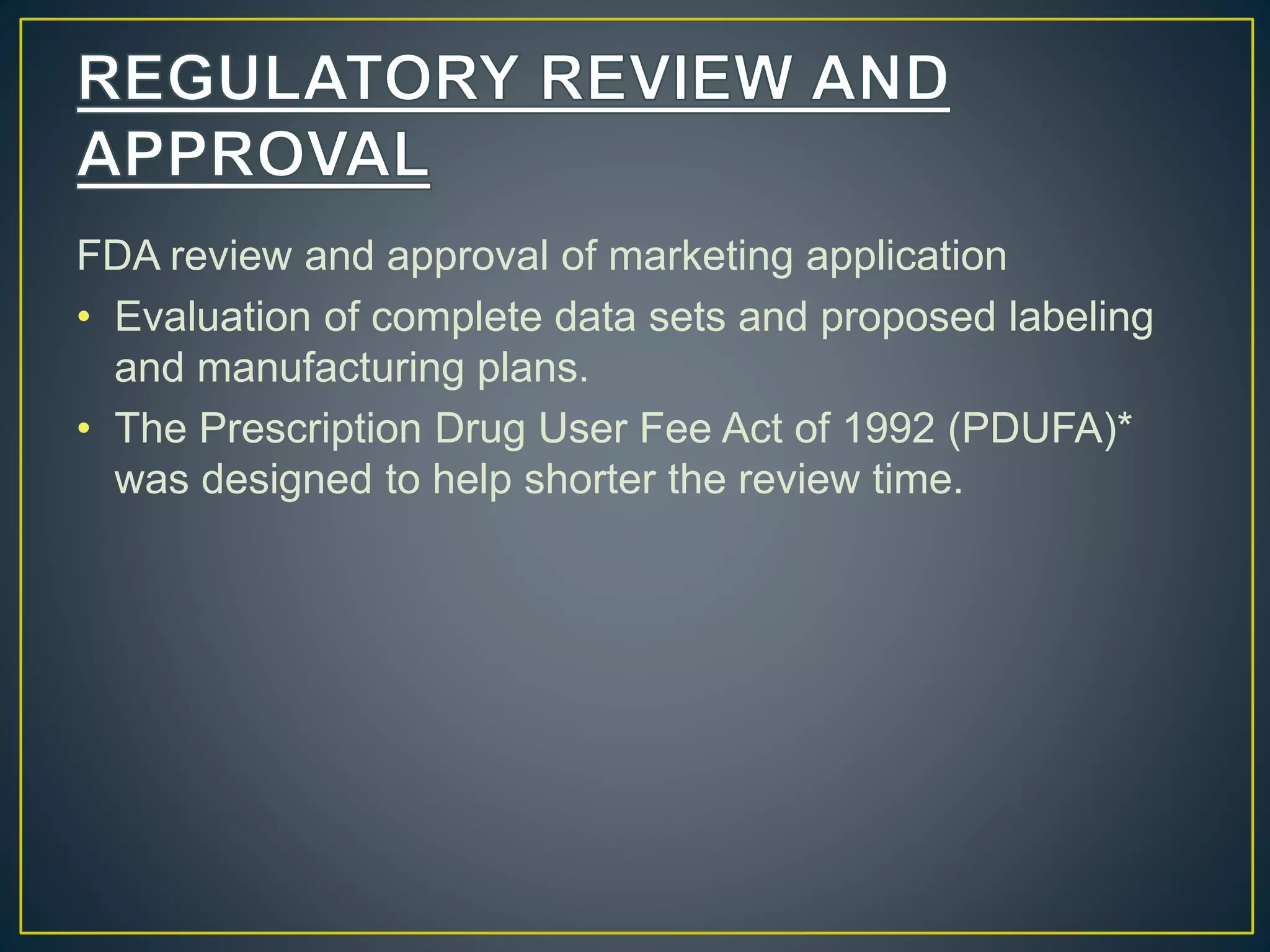
FDA review and approval of marketing application
• Evaluation of complete data sets and proposed labeling
and manufacturing plans.
• The Prescription Drug User Fee Act of 1992 (PDUFA)*
was designed to help shorter the review time.
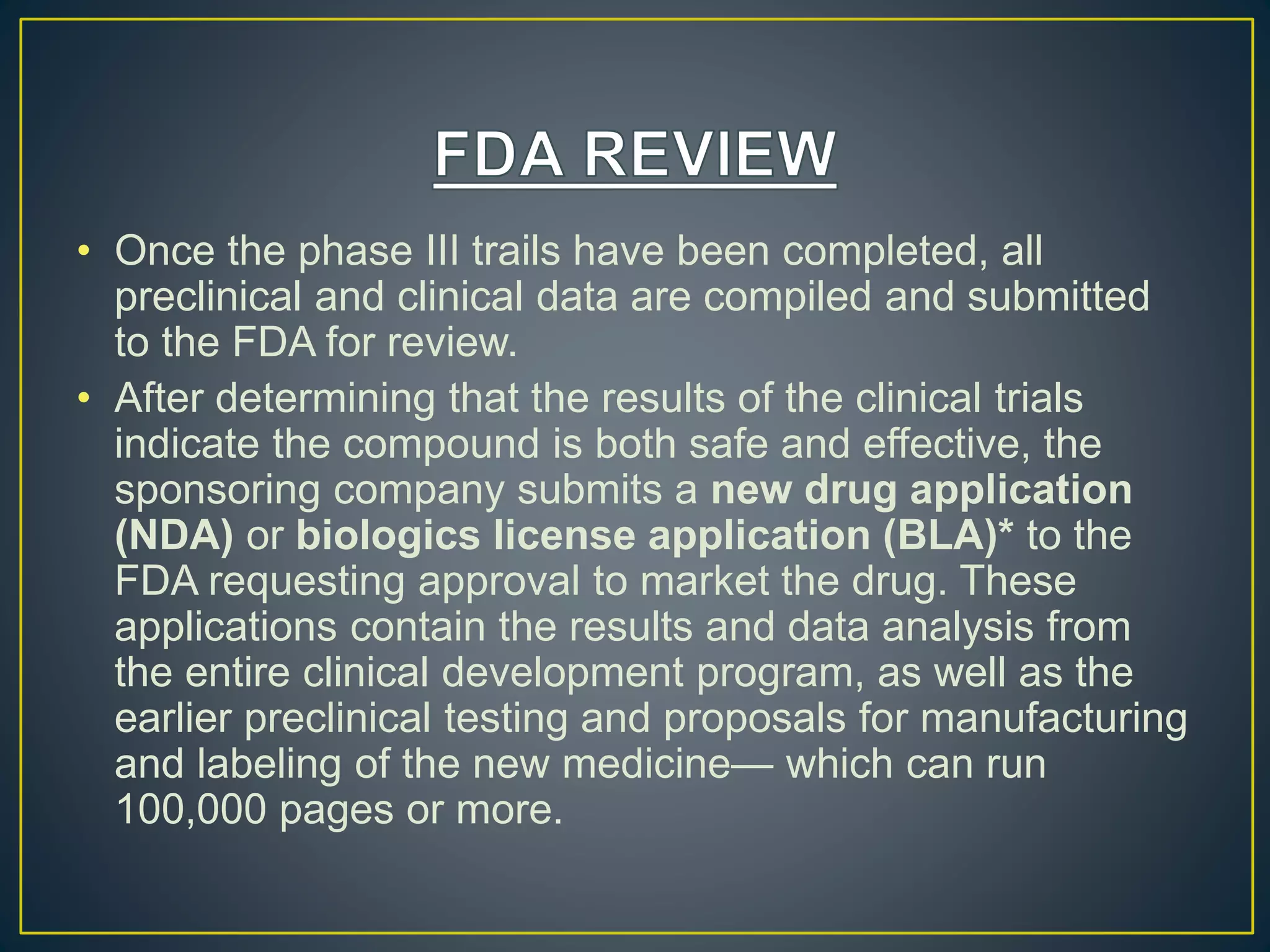
• Once the phase III trails have been completed, all
preclinical and clinical data are compiled and submitted
to the FDA for review.
• After determining that the results of the clinical trials
indicate the compound is both safe and effective, the
sponsoring company submits a new drug application
(NDA) or biologics license application (BLA)* to the
FDA requesting approval to market the drug. These
applications contain the results and data analysis from
the entire clinical development program, as well as the
earlier preclinical testing and proposals for manufacturing
and labeling of the new medicine— which can run
100,000 pages or more.
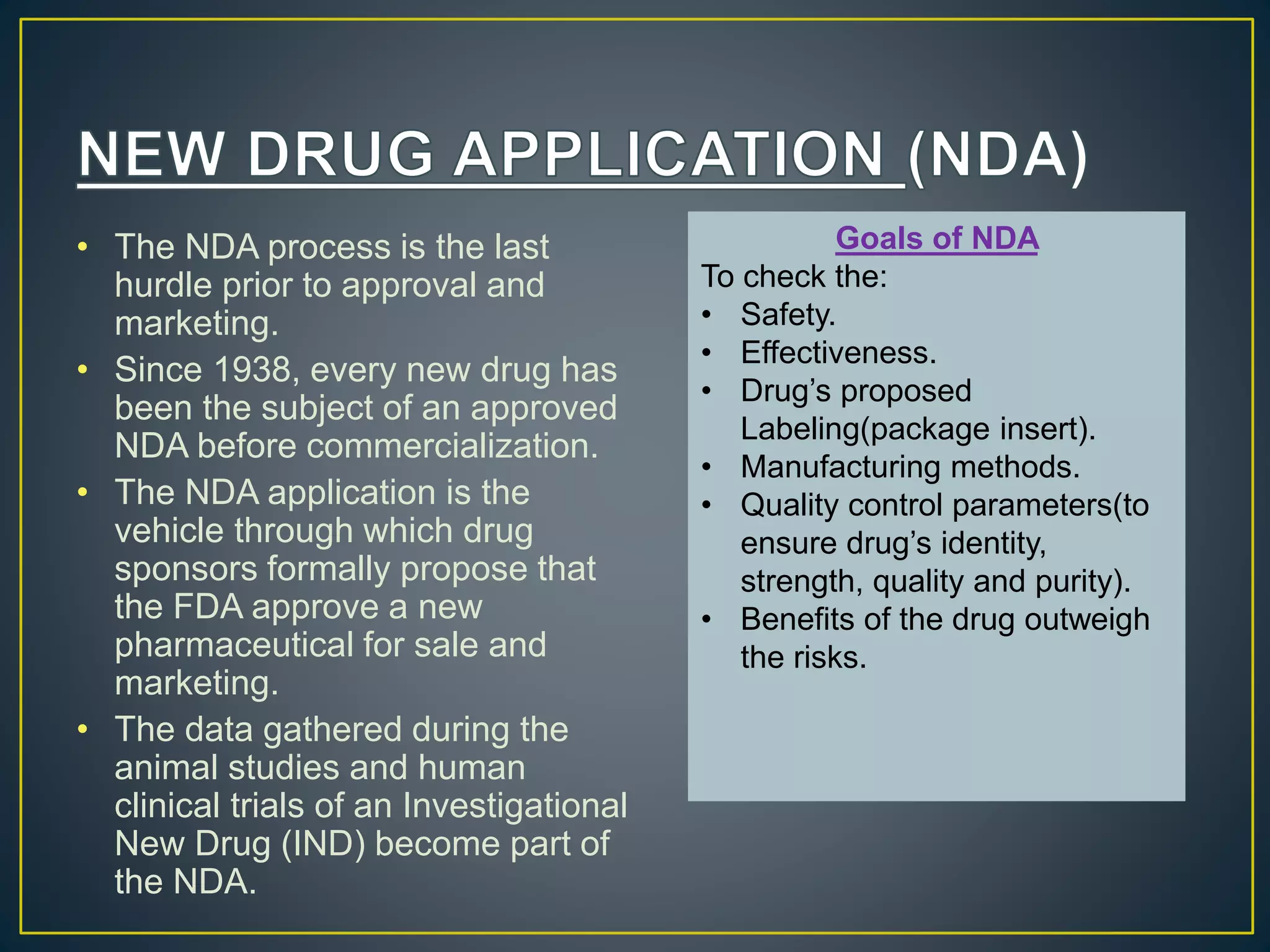
• The NDA process is the last
hurdle prior to approval and
marketing.
• Since 1938, every new drug has
been the subject of an approved
NDA before commercialization.
• The NDA application is the
vehicle through which drug
sponsors formally propose that
the FDA approve a new
pharmaceutical for sale and
marketing.
• The data gathered during the
animal studies and human
clinical trials of an Investigational
New Drug (IND) become part of
the NDA.
Goals of NDA
To check the:
• Safety.
• Effectiveness.
• Drug’s proposed
Labeling(package insert).
• Manufacturing methods.
• Quality control parameters(to
ensure drug’s identity,
strength, quality and purity).
• Benefits of the drug outweigh
the risks.
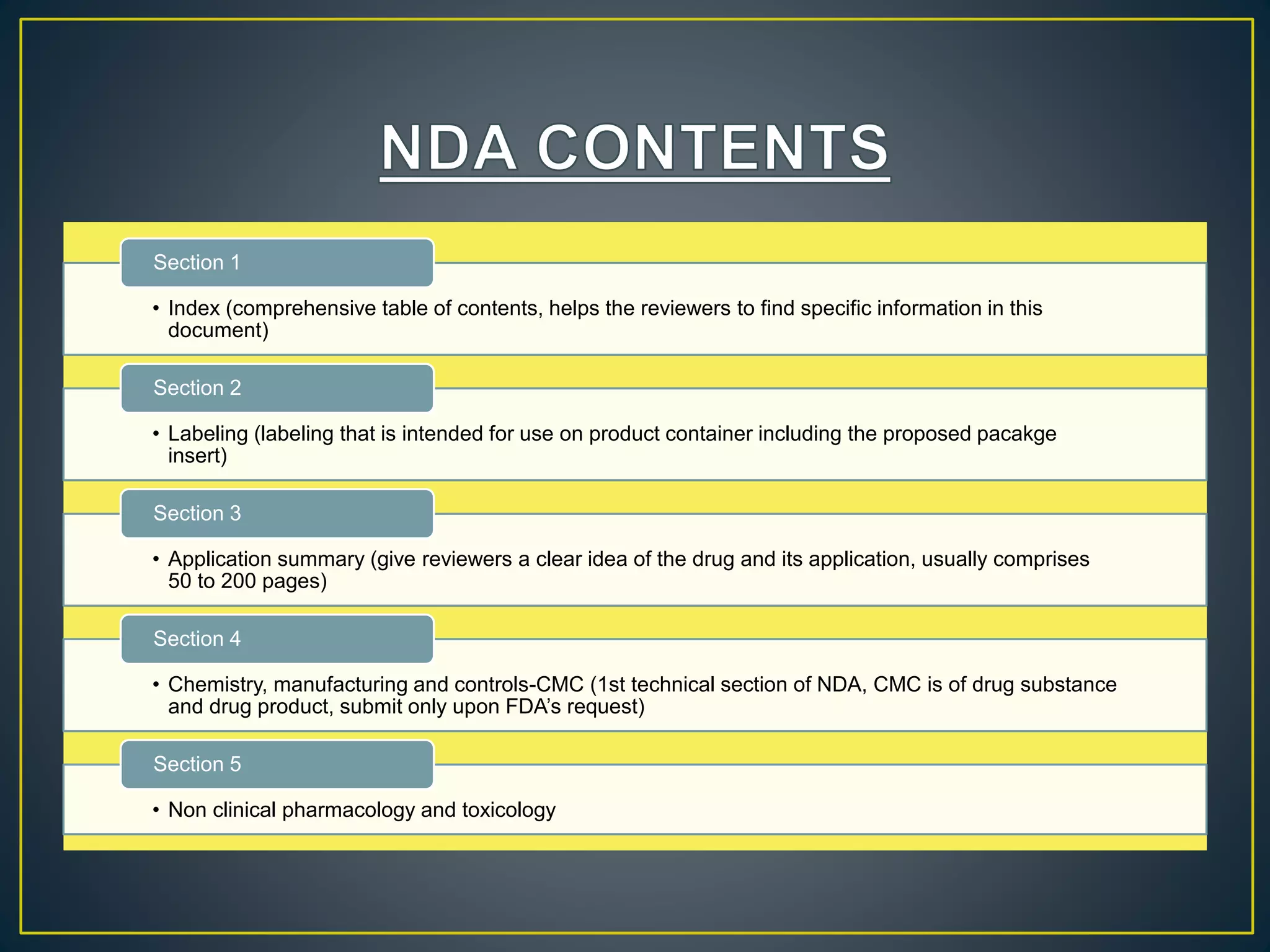
• Index (comprehensive table of contents, helps the reviewers to find specific information in this
document)
Section 1
• Labeling (labeling that is intended for use on product container including the proposed pacakge
insert)
Section 2
• Application summary (give reviewers a clear idea of the drug and its application, usually comprises
50 to 200 pages)
Section 3
• Chemistry, manufacturing and controls-CMC (1st technical section of NDA, CMC is of drug substance
and drug product, submit only upon FDA’s request)
Section 4
• Non clinical pharmacology and toxicology
Section 5
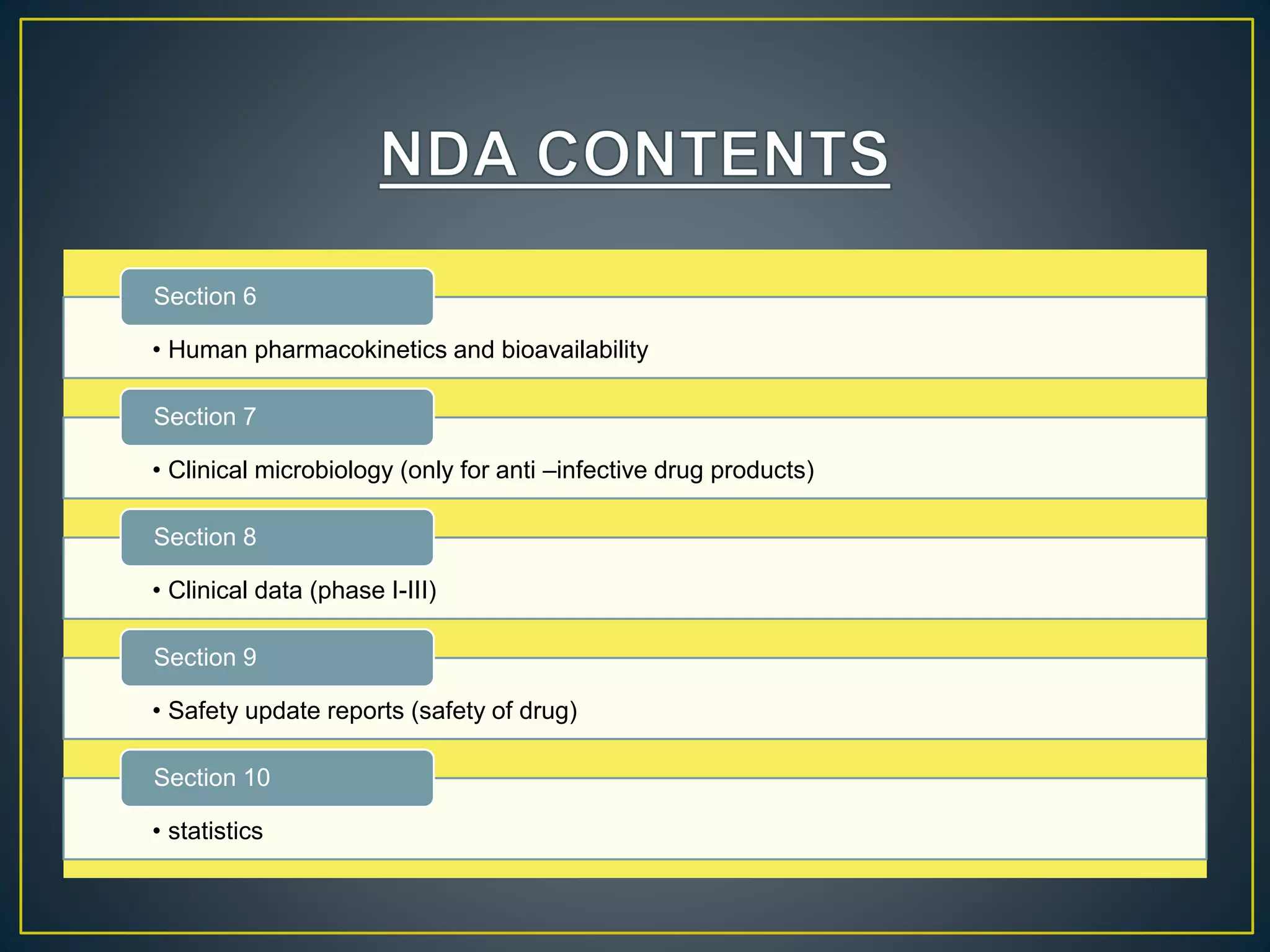
• Human pharmacokinetics and bioavailability
Section 6
• Clinical microbiology (only for anti –infective drug products)
Section 7
• Clinical data (phase I-III)
Section 8
• Safety update reports (safety of drug)
Section 9
• statistics
Section 10
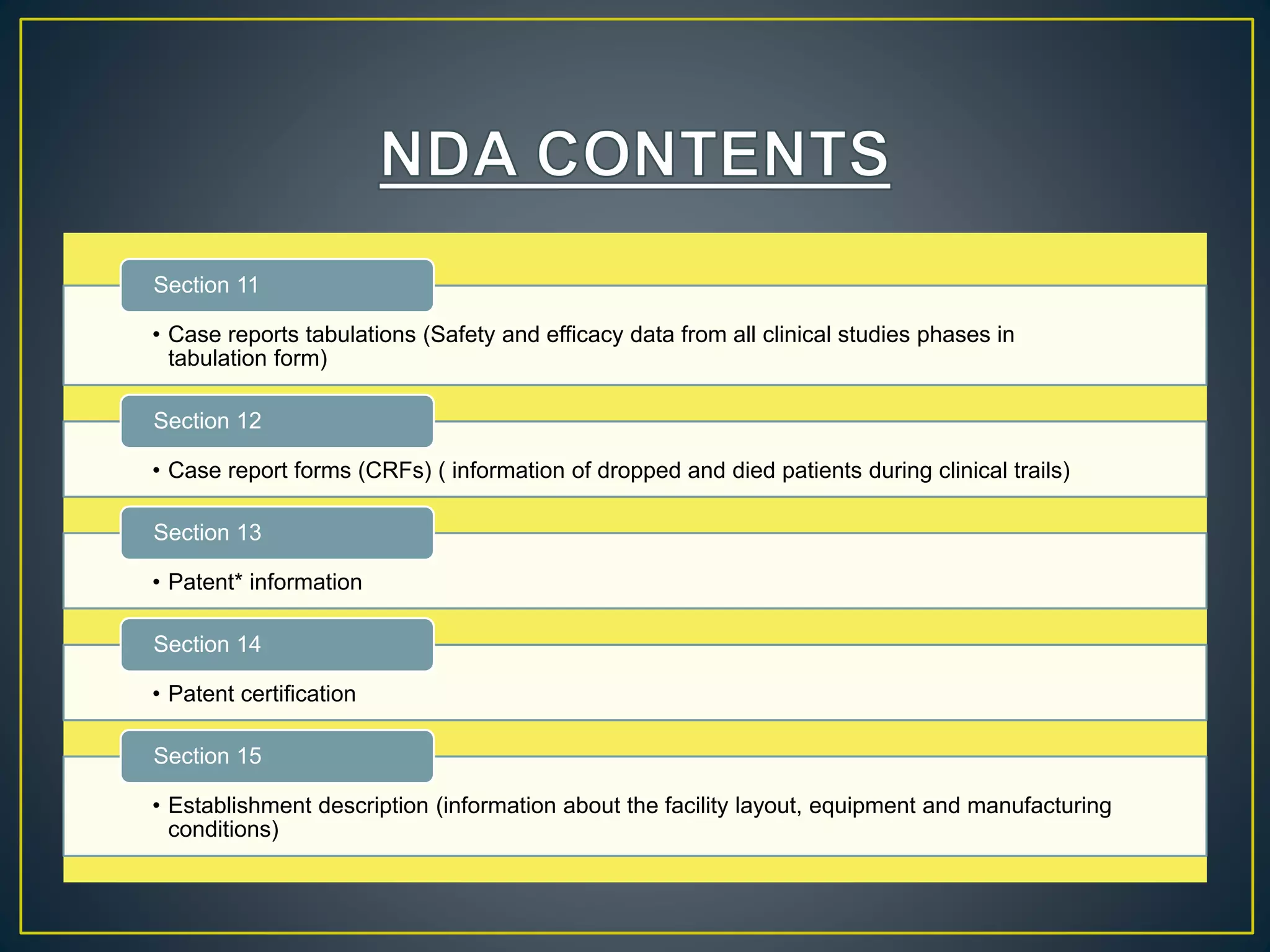
• Case reports tabulations (Safety and efficacy data from all clinical studies phases in
tabulation form)
Section 11
• Case report forms (CRFs) ( information of dropped and died patients during clinical trails)
Section 12
• Patent* information
Section 13
• Patent certification
Section 14
• Establishment description (information about the facility layout, equipment and manufacturing
conditions)
Section 15
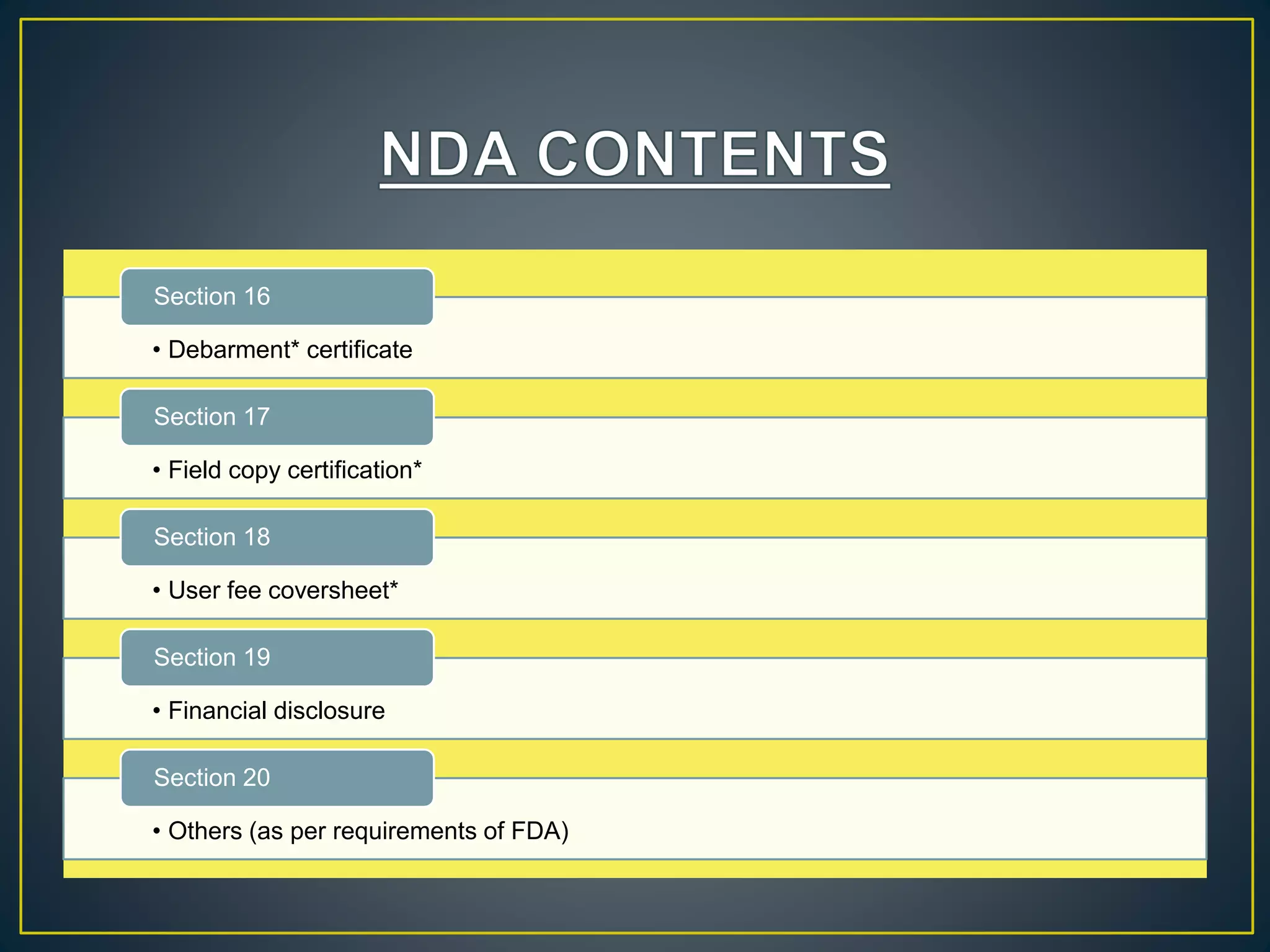
• Debarment* certificate
Section 16
• Field copy certification*
Section 17
• User fee coversheet*
Section 18
• Financial disclosure
Section 19
• Others (as per requirements of FDA)
Section 20
These documents are prepared for FDA review staff and sponsors to
provide guidelines to the processing, content and approval of
applications
 CDER - Centre for Drug Evaluation and Research
CDER
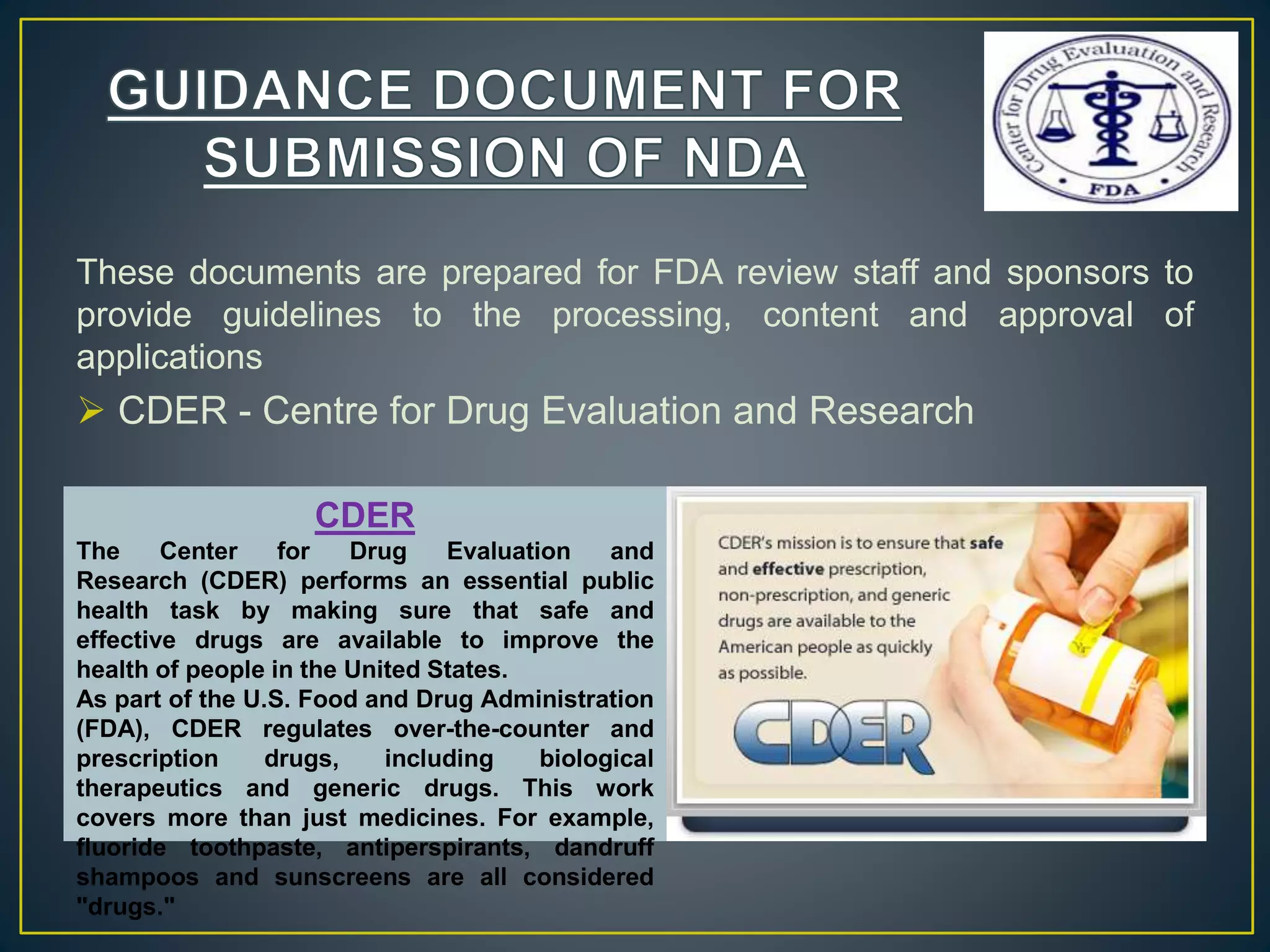
The Center for Drug Evaluation and
Research (CDER) performs an essential public
health task by making sure that safe and
effective drugs are available to improve the
health of people in the United States.
As part of the U.S. Food and Drug Administration
(FDA), CDER regulates over-the-counter and
prescription drugs, including biological
therapeutics and generic drugs. This work
covers more than just medicines. For example,
fluoride toothpaste, antiperspirants, dandruff
shampoos and sunscreens are all considered
"drugs."
 Drug registration and licensing system(DRLS)
 Individual Case Safety system Reporting (ICSR)
 Bioavailability and bioequivalence studies for Orally
administered drug products- General considerations
 Formatting, assembling and submitting new drug and antibiotic
application
 Format and content of Chemistry, Manufacturing and Control
section of an application
 Format and content of Microbiology section of an application
 Format and content of Clinical and Statistical section of an
application
 Container closure system for packing human drugs and
biologics
• The decision to accept the NDA is made within 60 days
of the date of submission.
• Once the NDA is accepted, detailed evaluation continues
and FDA has 180 days from submission to complete the
review.
• Pre-approval inspections are conducted within
45 days of the NDA acceptance.
• If deficiencies are noted during an inspection,a
letter (FDA Form 483)is sent to the sponsor
delineating the problems.once the deficiencies
are resolved, the company must provide written
certification and the FDA will clear the application
within 45 days if corrections are adequate.
• Scientists, physicians and statisticians at the FDA review
the data from all of the studies on the compound and,
after weighing the benefits and risks of the potential
medicine, decide whether to grant approval.
• Occasionally the FDA will ask for additional research
before granting approval or convene an independent
expert advisory panel to consider data presented by the
FDA and the company.
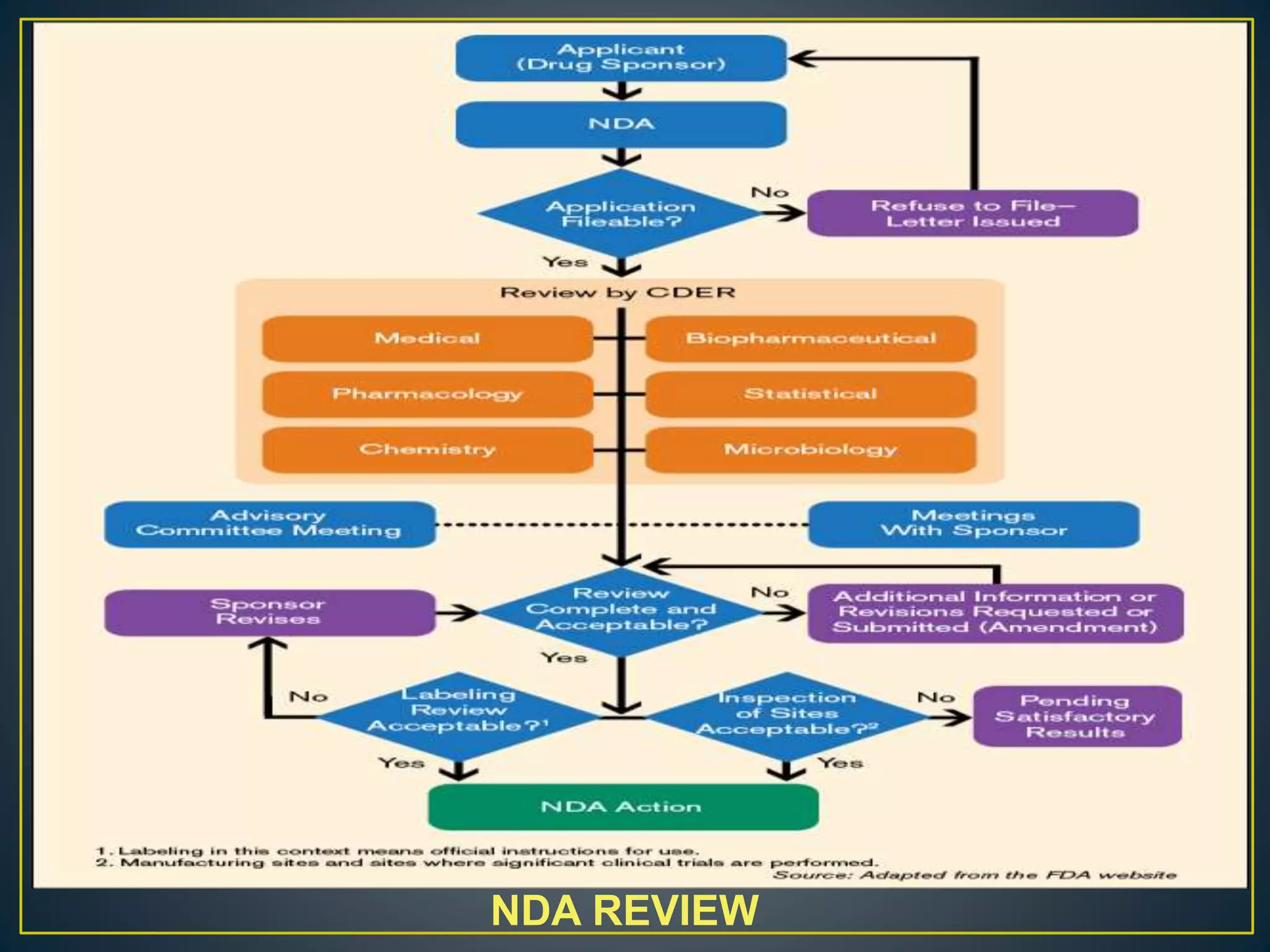
NDA REVIEW
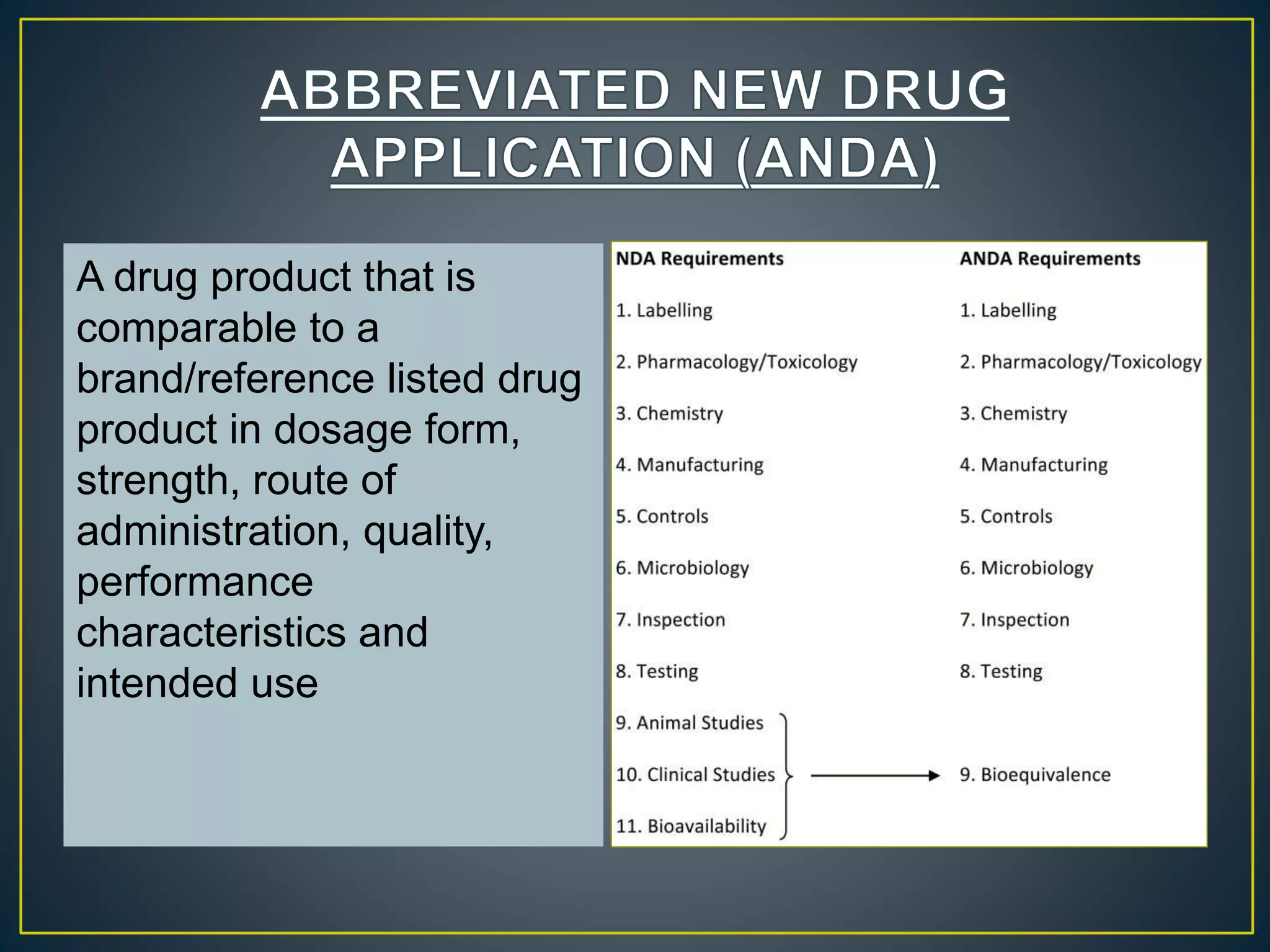
A drug product that is
comparable to a
brand/reference listed drug
product in dosage form,
strength, route of
administration, quality,
performance
characteristics and
intended use
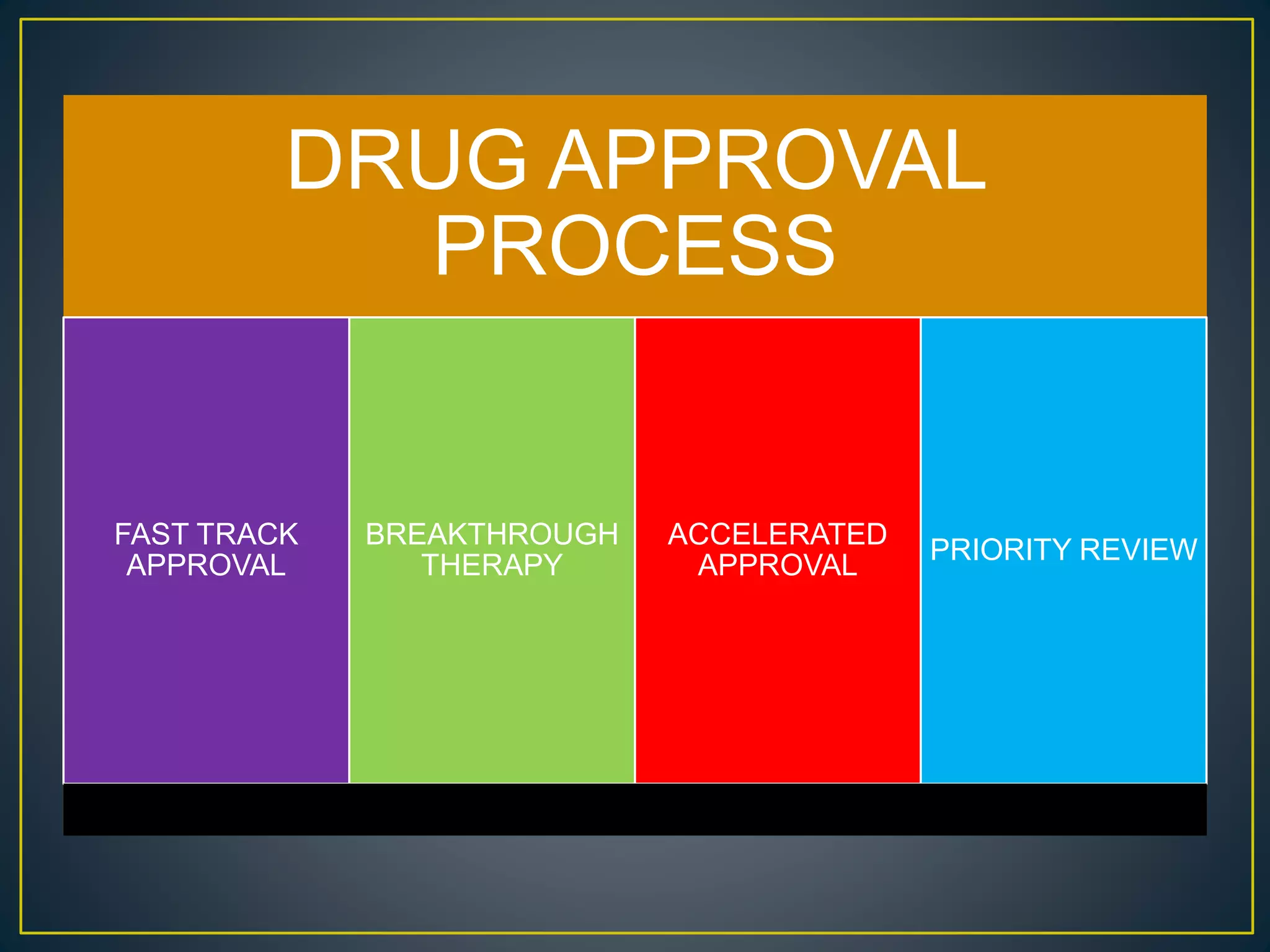
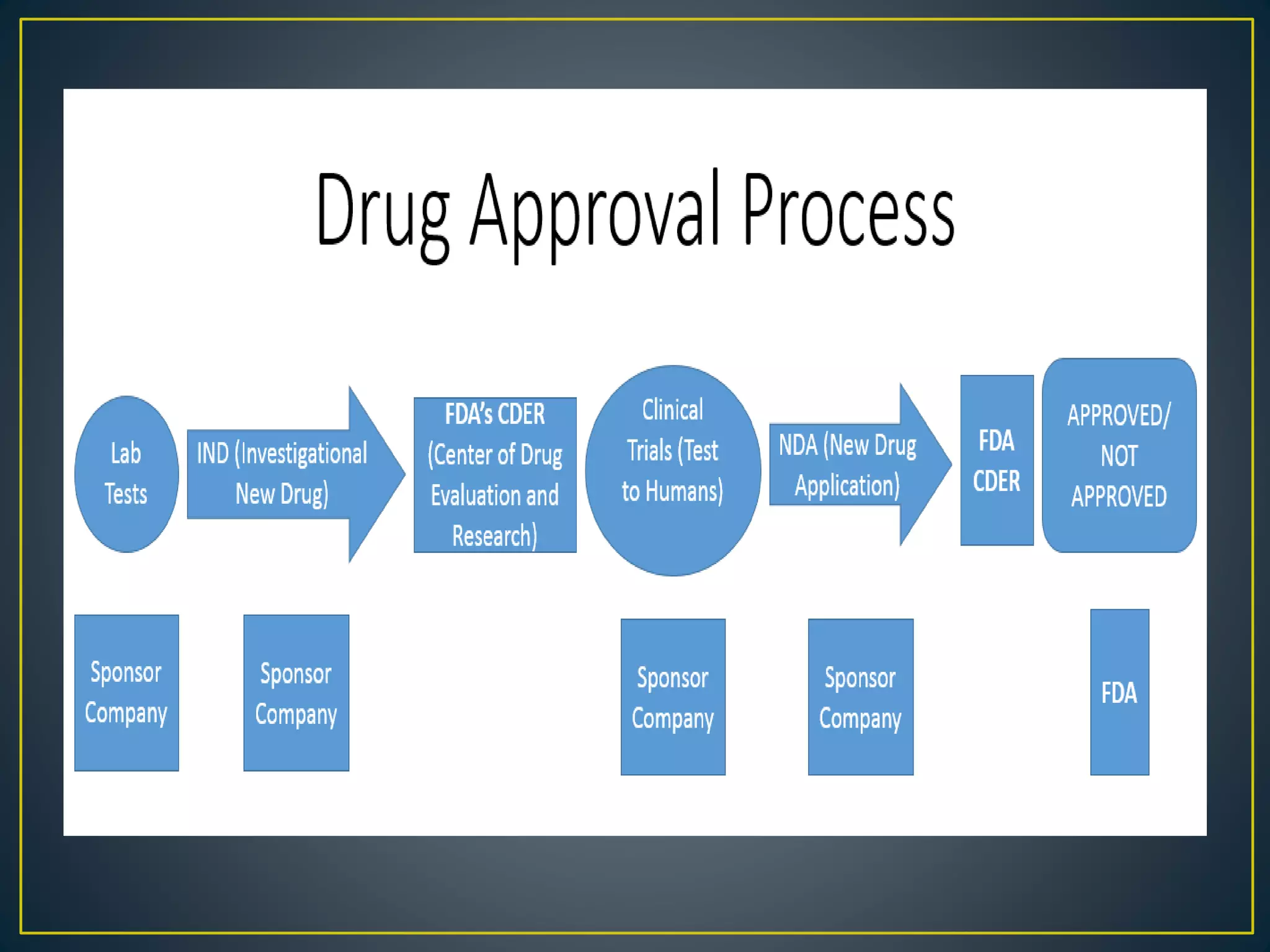
DRUG APPROVAL
PROCESS
FAST TRACK
APPROVAL
BREAKTHROUGH
THERAPY
ACCELERATED
APPROVAL
PRIORITY REVIEW
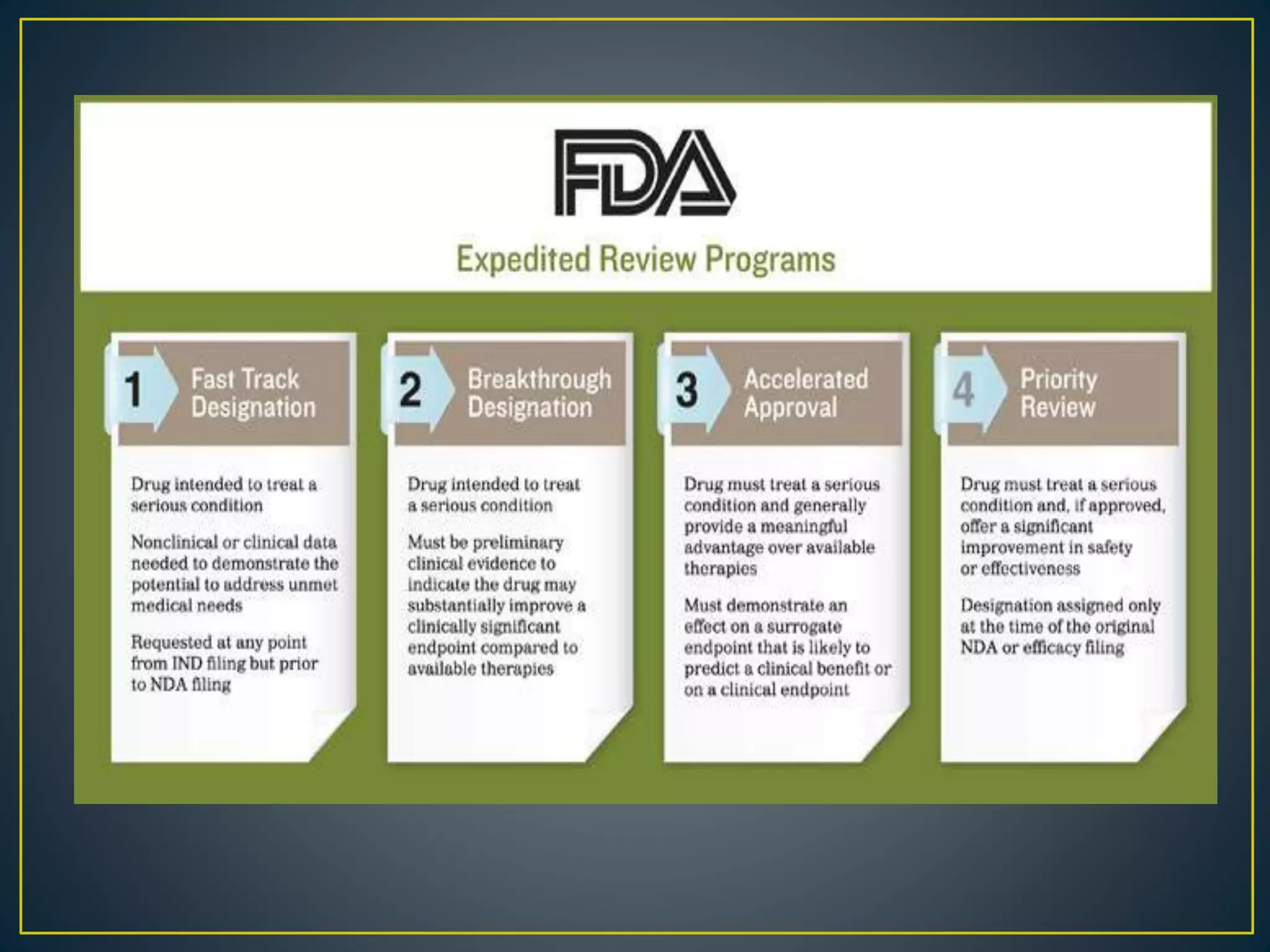
FAST TRACK APPROVAL
Drugs For:
• Serious diseases
• Fill an unmet medical need
• Must be requested by the drug
company .
• FDA- 60 Days-Review- Decision
BREAKTHROUGH THERAPY
It expedites the development and
review of drugs that may
demonstrate substantial
improvement over available therapy.
ACCELERATED APPROVAL
In 1992 FDA instituted the Accelerated
Approval regulation
Based on a Surrogate endpoint, not on
clinical outcome
A surrogate endpoint is a marker- a
laboratory measurement, or physical
sign - that is used in clinical trials as an
indirect or substitute measurement that
represents a clinically meaningful
outcome, such as survival or symptom
improvement .
PRIORITY REVIEW
A Priority Review designation is
given to drugs that offer major
advances in treatment
The goal for completing a Priority
Review is six months
It can given for Drugs use to
Serious/ Non-serious diseases
Standard Review is applied to a
drug that offers a most, only minor
improvement over existing marketed
therapies (Ten months for Approval)
HIGH QUALITY, LARGE SCALE PRODUCTION
OF NEW MEDICINES
• Approved medicines may be used by as many as millions of
people or by only a very narrow patient population.
• Biopharmaceutical companies strive to manufacture high
quality medicines available to patients for many years.
• Manufacturing facilities are constructed to the highest
standards to ensure that safety and quality are built into each
step of the manufacturing and production process.
• Companies must adhere to the FDA’s current good
manufacturing practices (cGMP) regulations, and they also
must constantly update, overhaul, or even rebuild facilities
when new medicines are approved, as each new medicine is
manufactured differently.
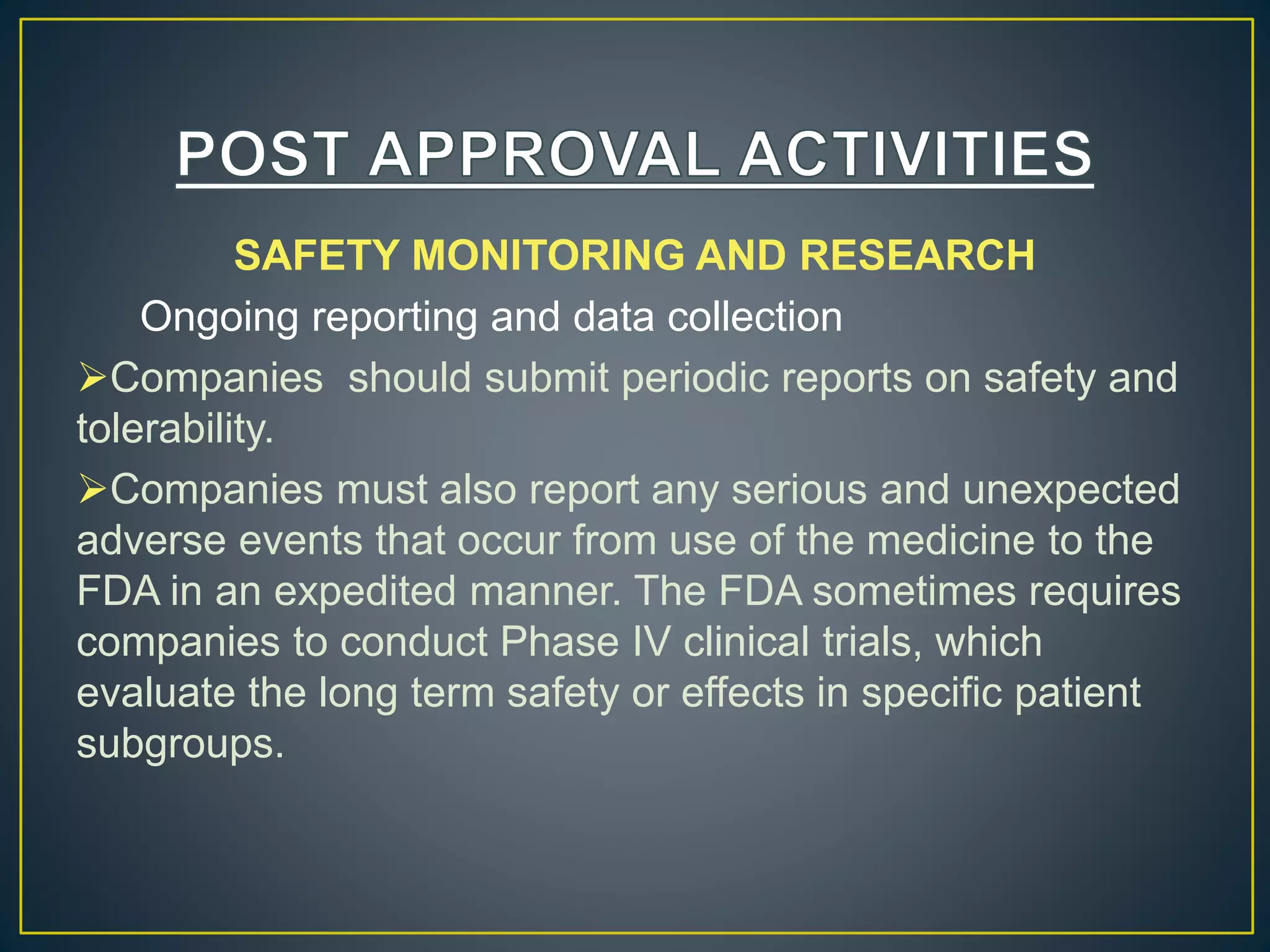
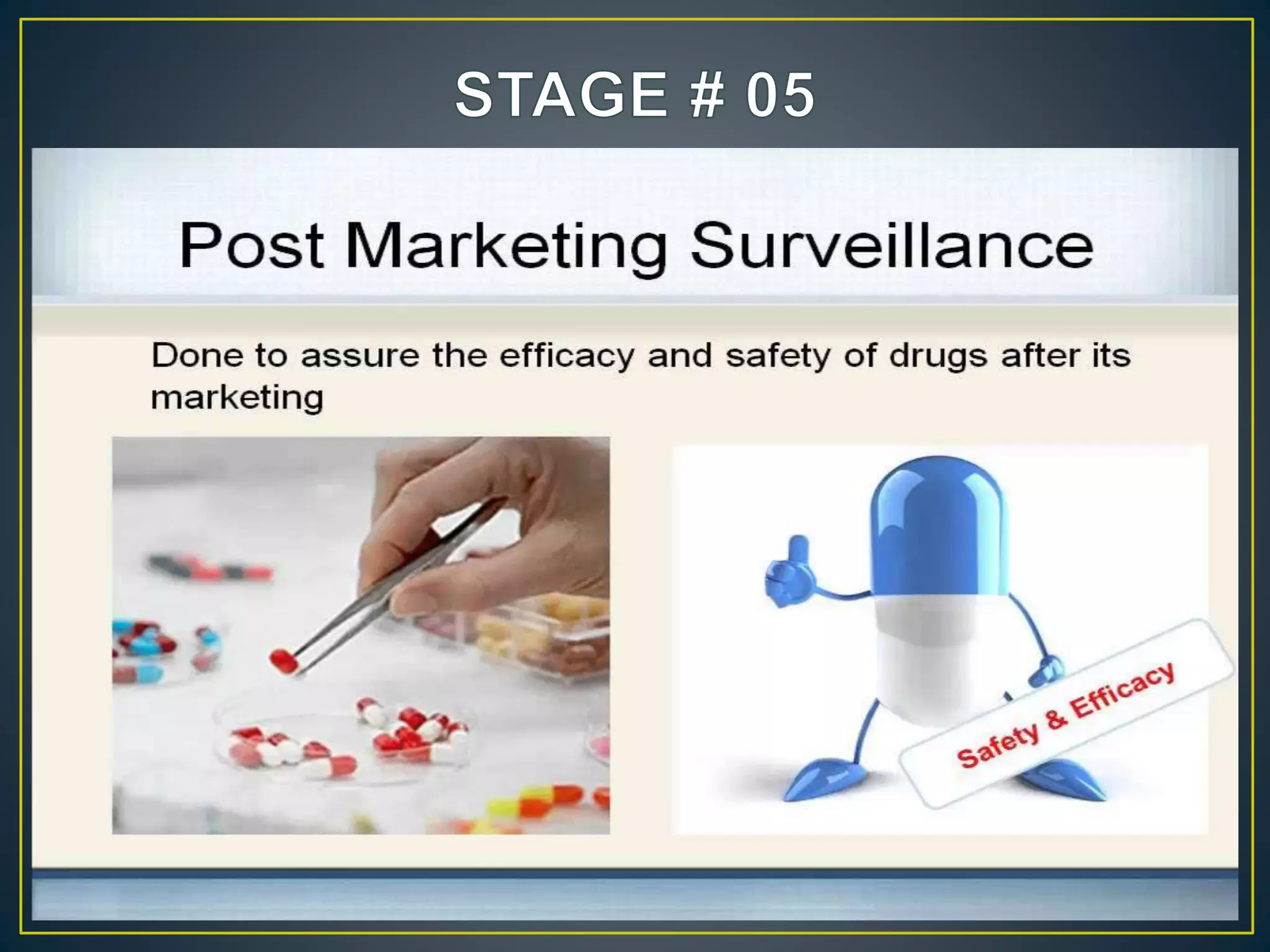
SAFETY MONITORING AND RESEARCH
Ongoing reporting and data collection
Companies should submit periodic reports on safety and
tolerability.
Companies must also report any serious and unexpected
adverse events that occur from use of the medicine to the
FDA in an expedited manner. The FDA sometimes requires
companies to conduct Phase IV clinical trials, which
evaluate the long term safety or effects in specific patient
subgroups.
SSTAGE # 04
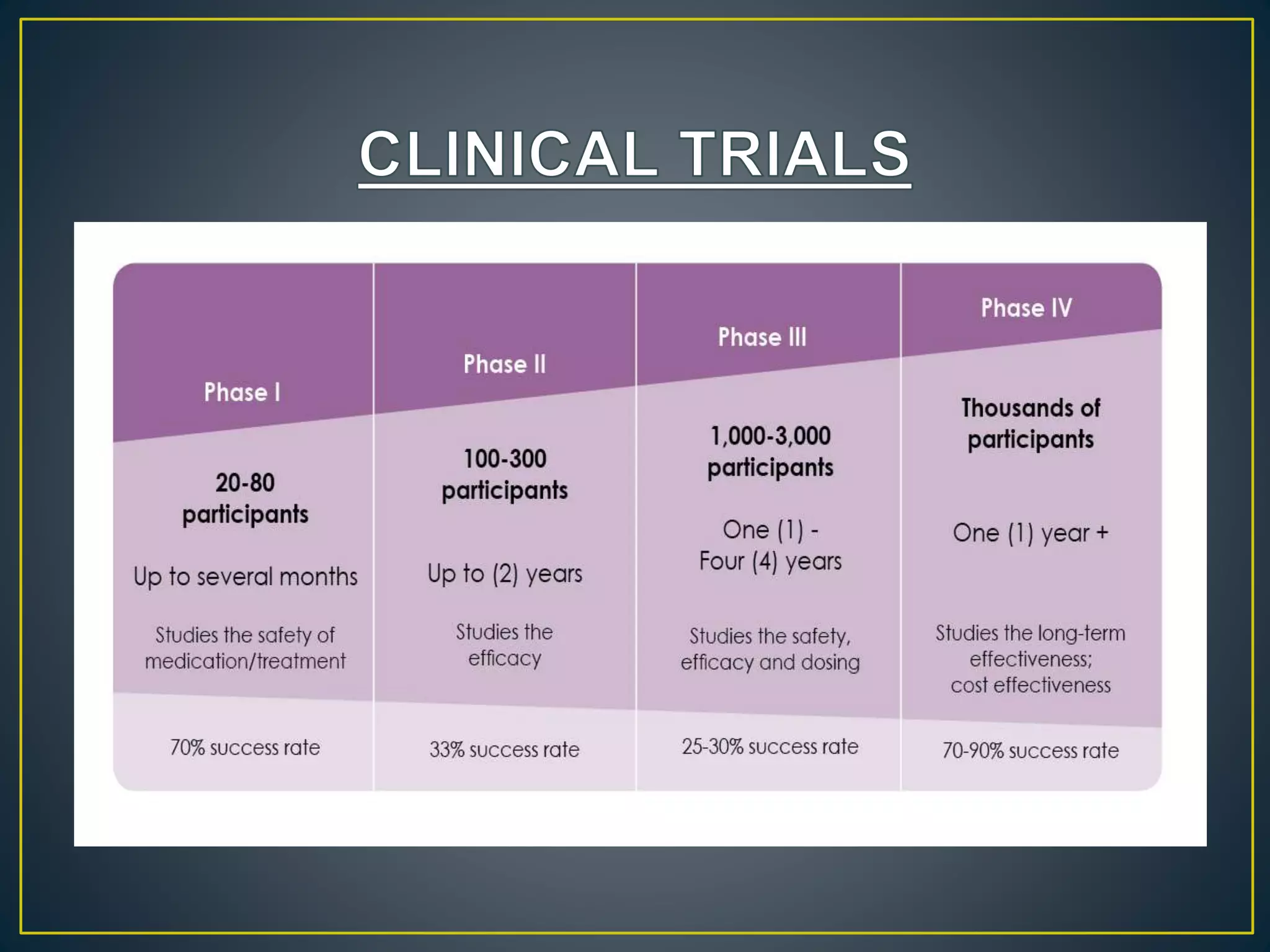
• Phase IV trials are post-approval clinical trials.
• The FDA may mandate phase IV testing in a
specific patient population to further assess
efficacy and side effects.
• Since duration of exposure is often limited during
Phase III testing,Phase IV trials may be required
to assess long-term safety of the drug.
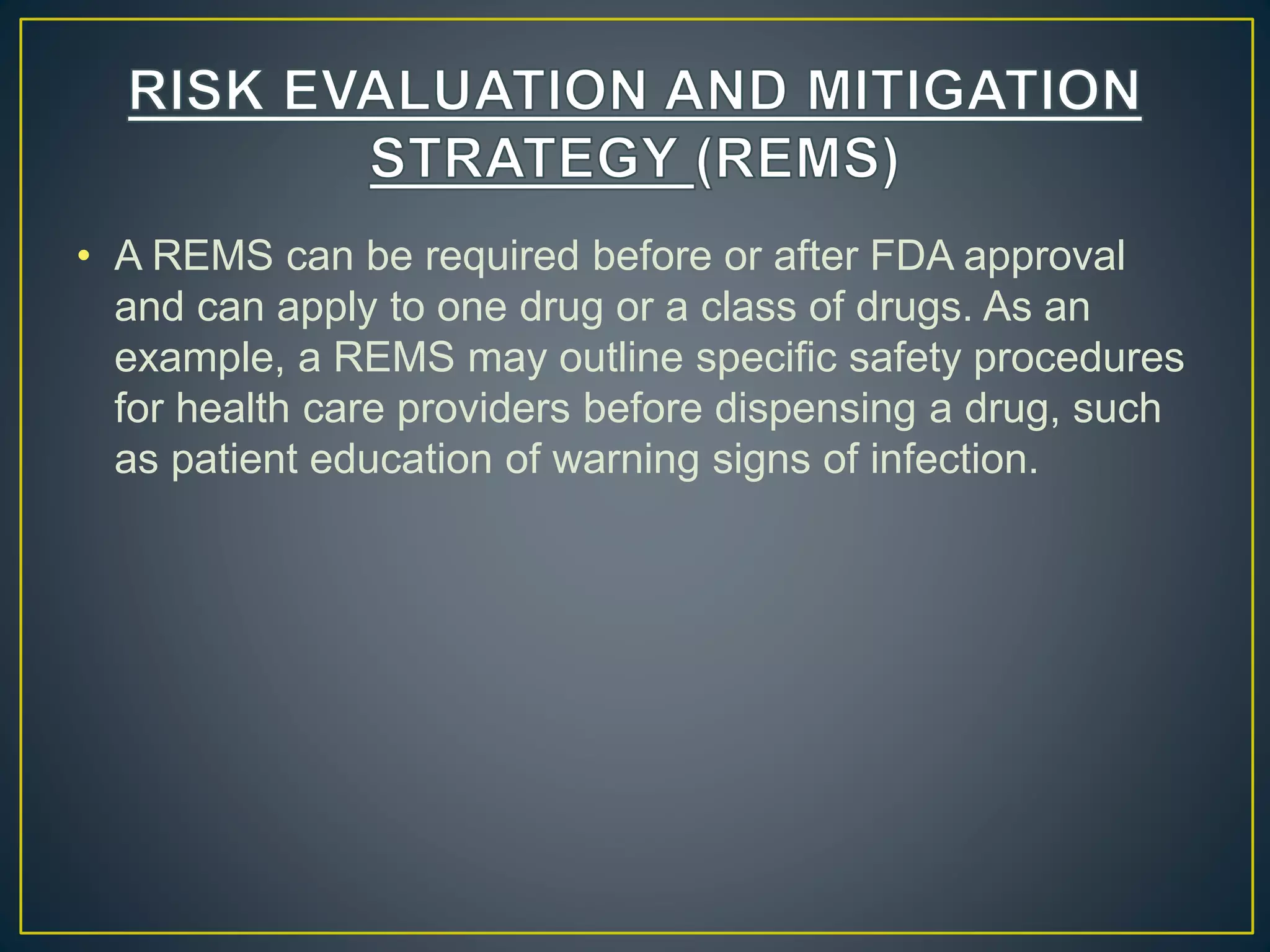
• A REMS can be required before or after FDA approval
and can apply to one drug or a class of drugs. As an
example, a REMS may outline specific safety procedures
for health care providers before dispensing a drug, such
as patient education of warning signs of infection.
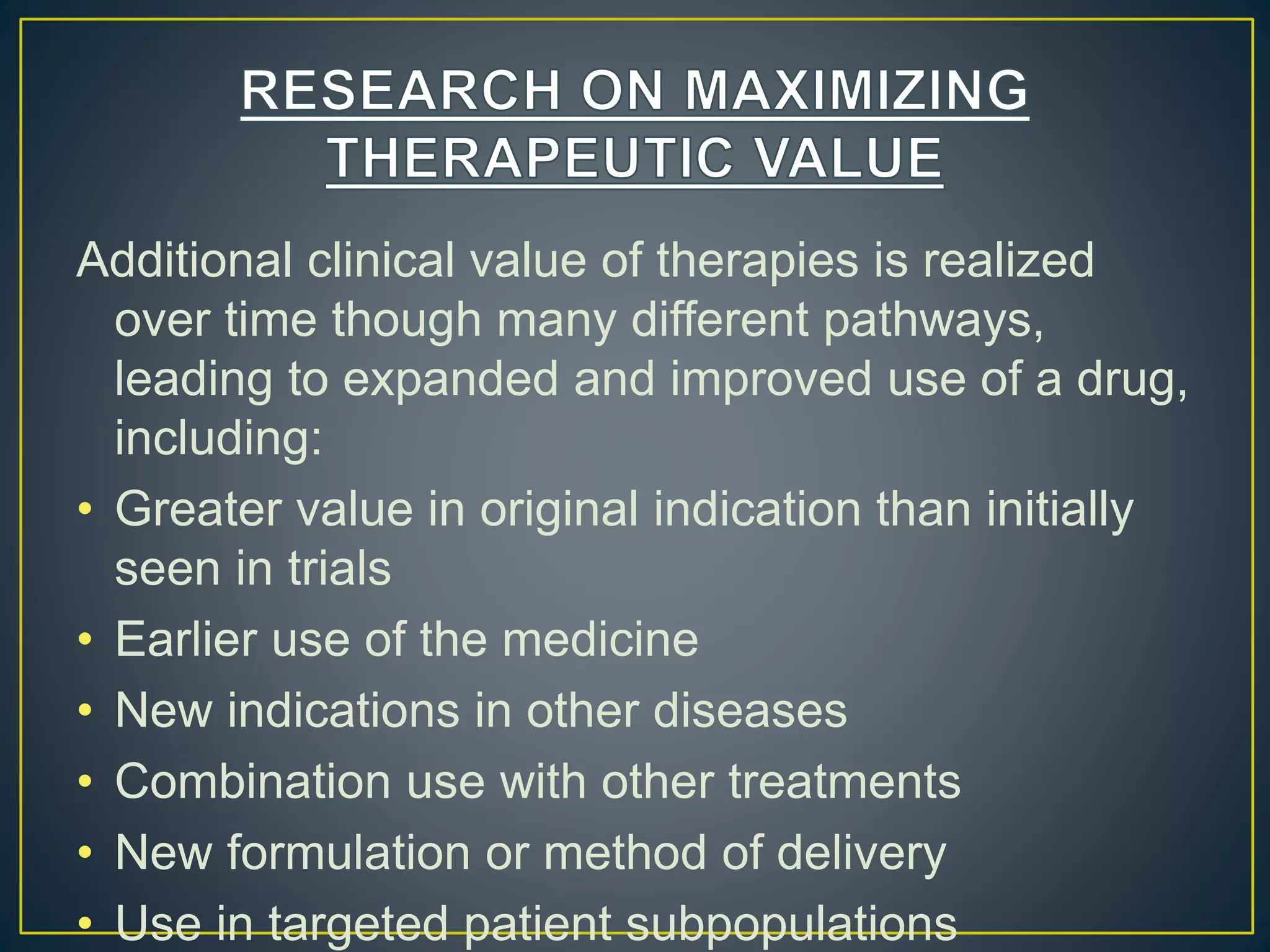
Additional clinical value of therapies is realized
over time though many different pathways,
leading to expanded and improved use of a drug,
including:
• Greater value in original indication than initially
seen in trials
• Earlier use of the medicine
• New indications in other diseases
• Combination use with other treatments
• New formulation or method of delivery
• Use in targeted patient subpopulations
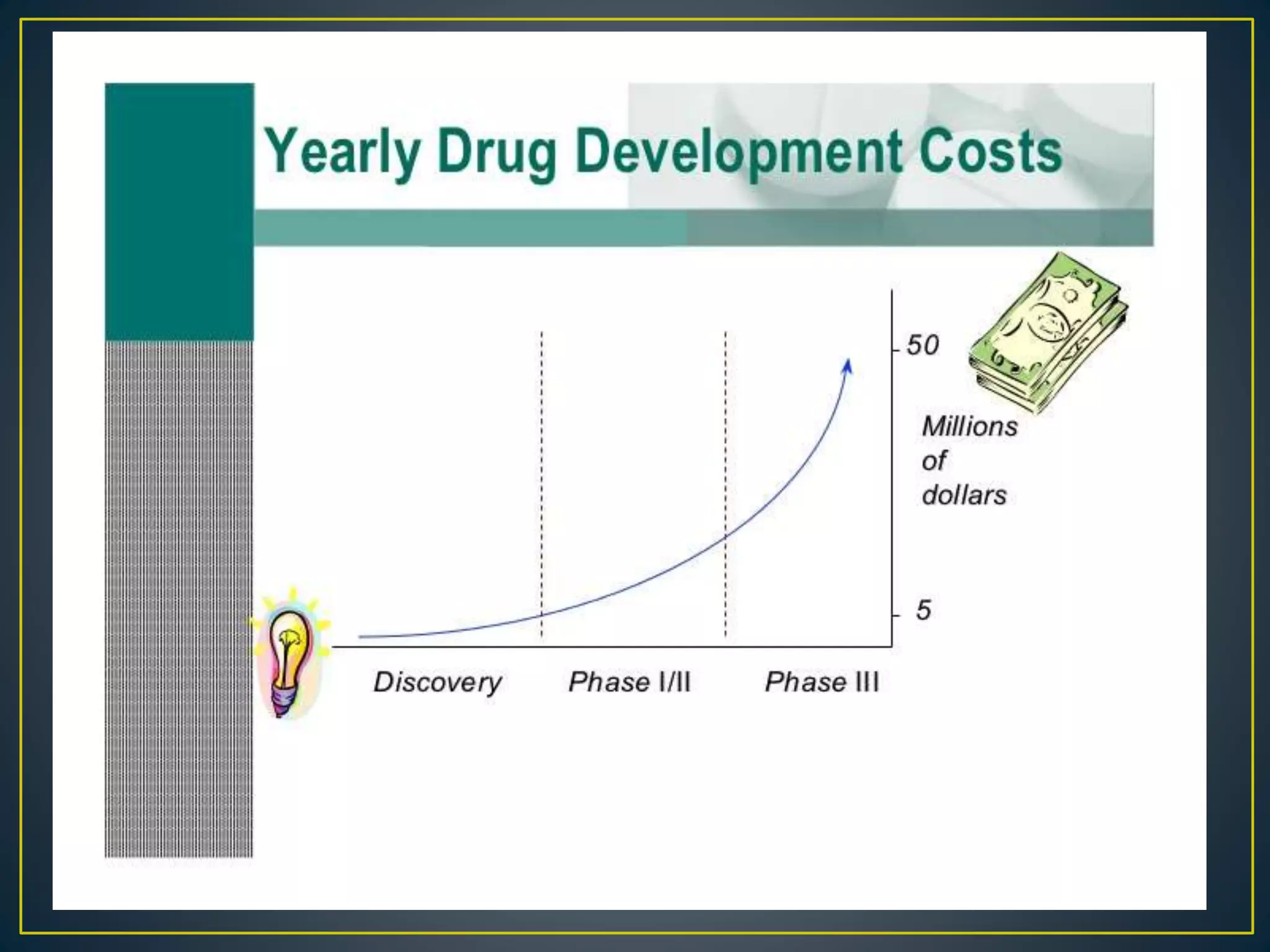
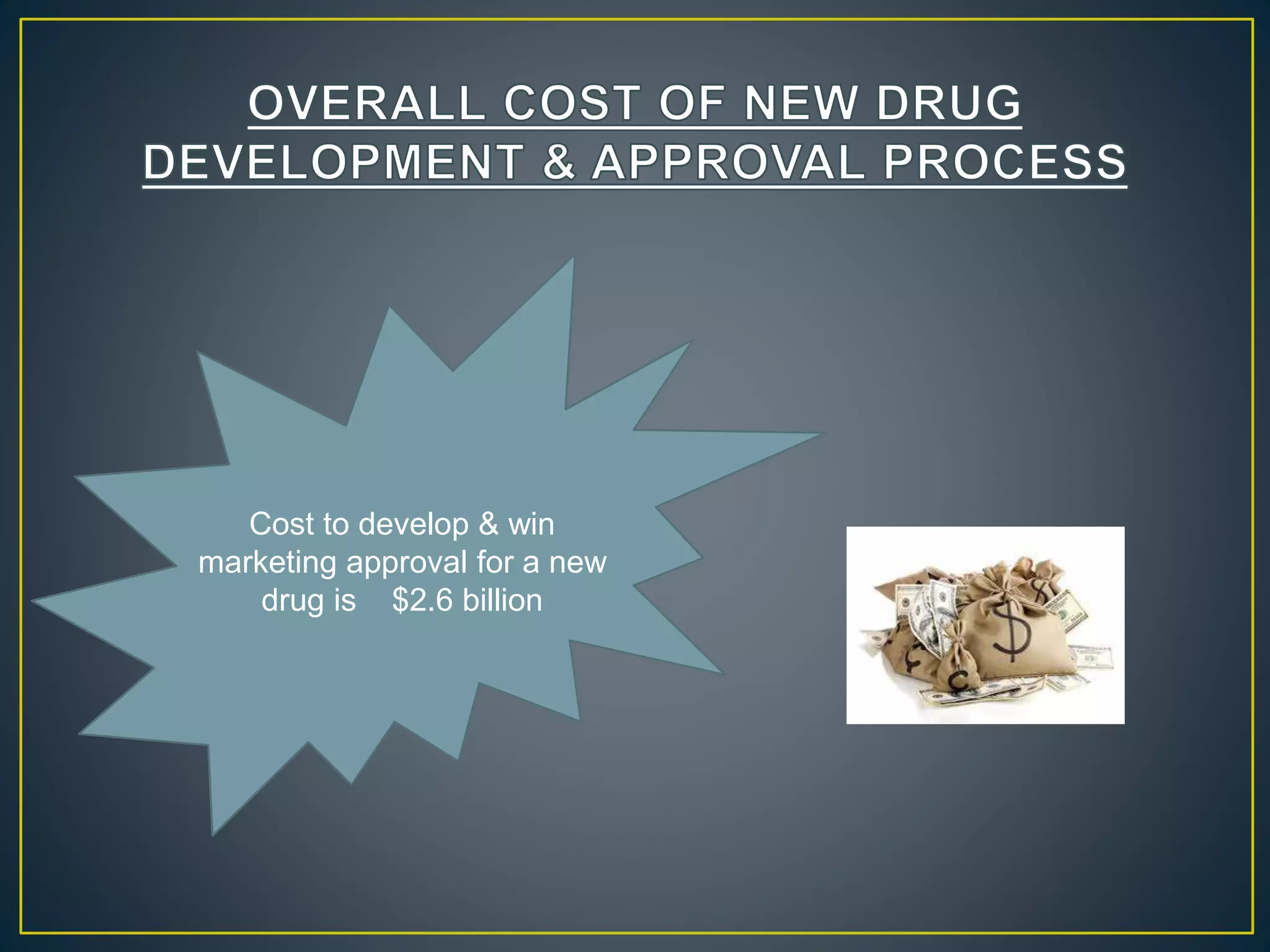
Cost to develop & win
marketing approval for a new
drug is $2.6 billion
• www.fda.gov.com
• www.clinicaltrial.gov
• Remington- The Science And Practice Of Pharmacy- 21st
edition, volume 1, chapter 48.
• The CDER Handbook- FDA.
• www.phrma.org
Lecture # 03 New Drug Approval and Development Process.

Lecture # 03 New Drug Approval and Development Process.

  • 2.
    pakistanpharmacareerdoor@gmail.com +92 3332243031 Sameeta Malik is young, energetic and talented student of Dow College of Pharmacy, she is engaged in many scientific activities. She is integral part of team Pakistan Pharma Career Door. Facilitators Iffrah Naushad is meritorious student of Dow College of Pharmacy, she has a distinct personality. She has experience to attend national scientific events, team Pakistan Pharma Career Door is proud to have such a highly motivated girl in their team. Abira Khalid is associated with Dow College of Pharmacy and about to complete here Pharm-D Studies. She is talented and one of the genius students of class. Pakistan Pharma Career Door is pleased to have her as facilitator in their team. Qaisara Boota is one of the most active student of her batch. All her teachers and fellows are ready to speak high for her. She is highly courageous and always ready to take difficult tasks. We are blessed to have member like Qaisara.
  • 3.
    Prepared by: ABIRAKHALID IFRAH NAUSHAD QAISARA MUHAMMAD BOOTA SAMEETA MAALIK DOW COLLEGE OF PHARMACY-DUHS FINAL YEAR
  • 5.
    • Background Information: History of drug approval regulation • Pre-discovery & discovery stage. • Drug Development Process.  Pre-clinical studies.  IND Review process.  Clinical Studies. • FDA Review • NDA  Submission & Approval of NDA  CDER • ANDA • Drug Approval Processs • Post Approval Activities.  Safety Monitoring & Research • Phase IV-Clinical Studies  REMS
  • 7.
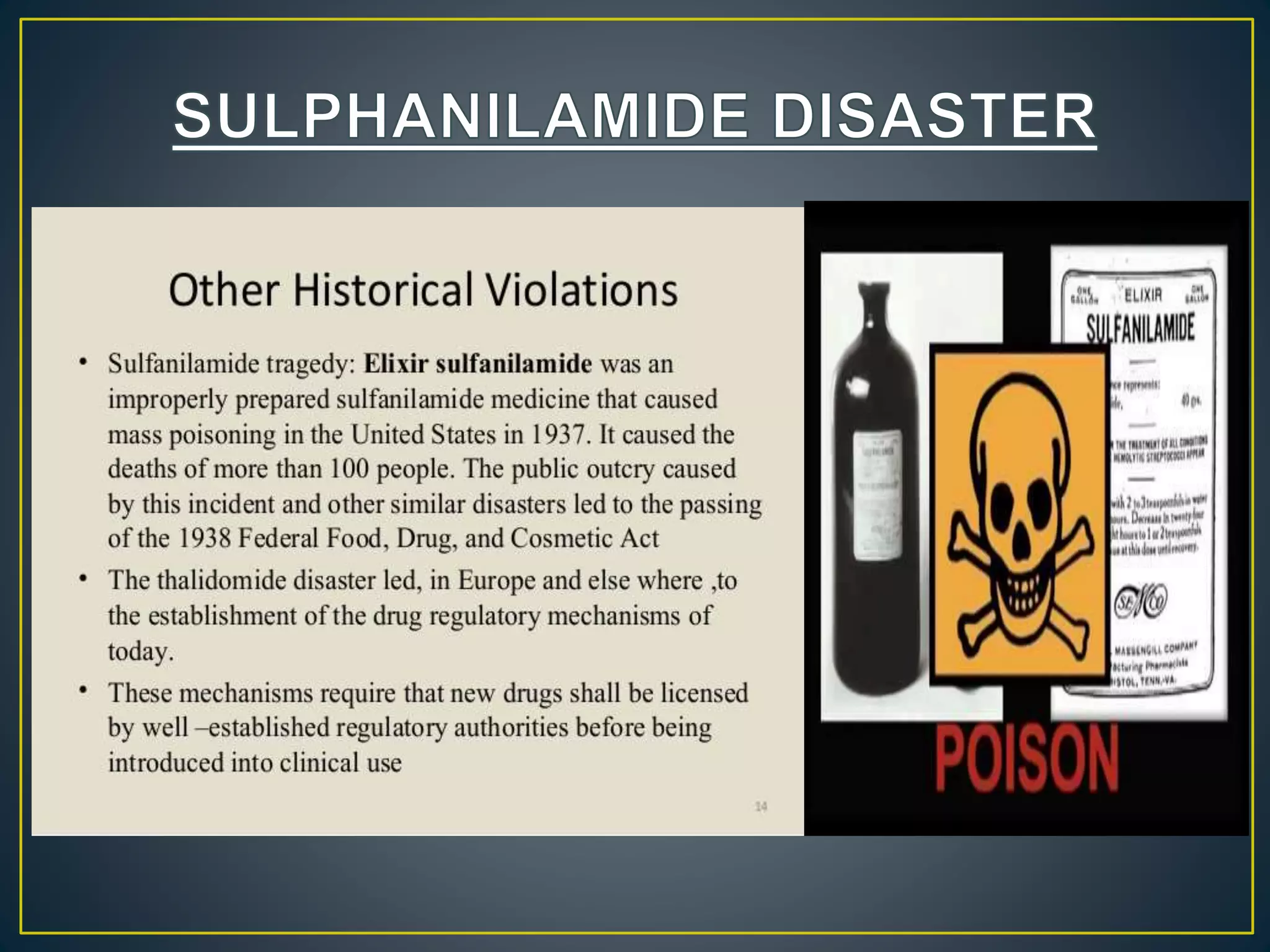
    Federal food,drug &cosmetics act: • defines what new drugs are • states that a new drug must be the subject of an approved new drug application(NDA) FOOD & DRUG ADMINISTRATION: • interprets & enforces the laws provided in the act
  • 10.
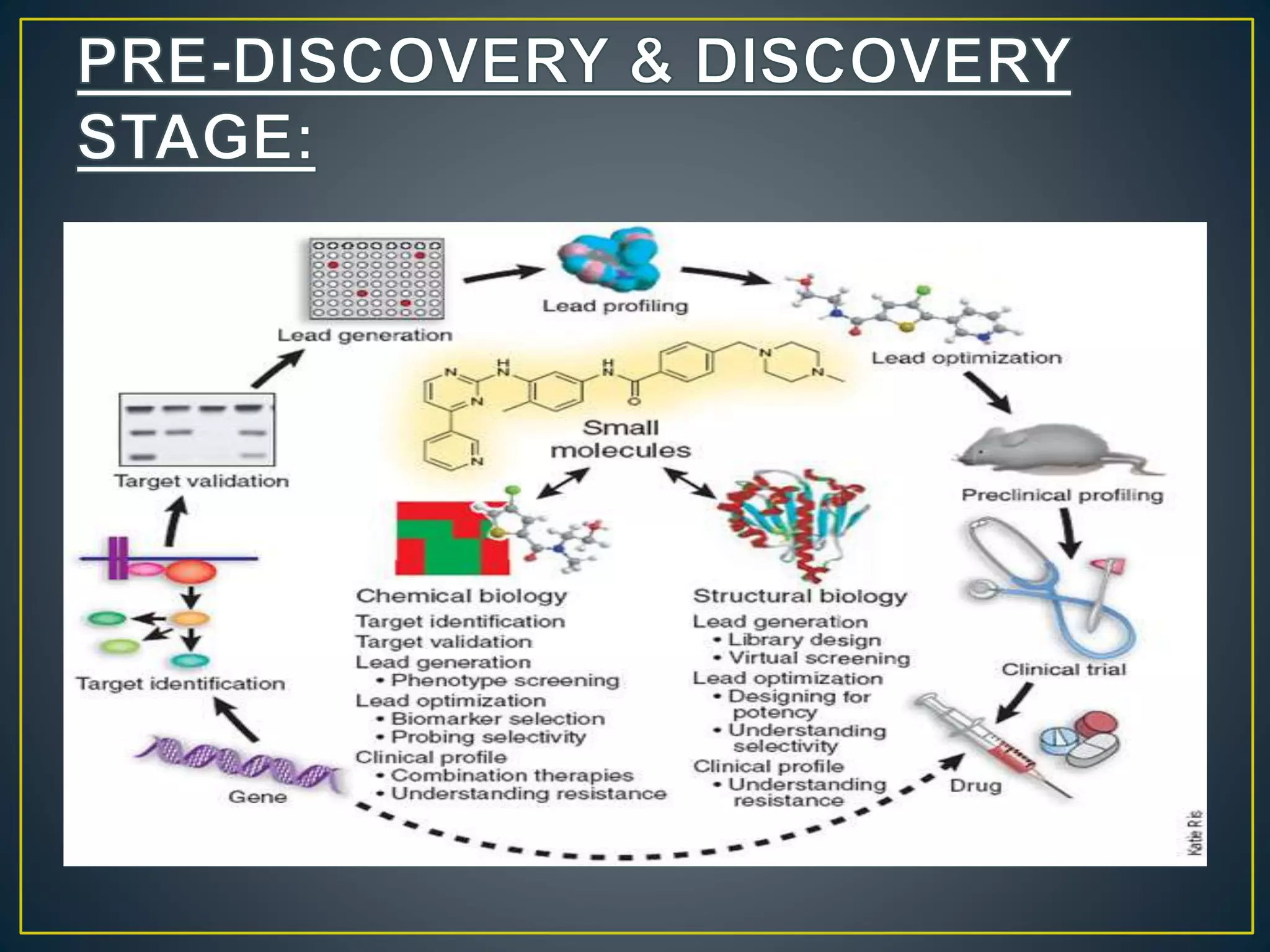
    • Pre-Discovery: TARGET SELECTION& VALIDATION  Disease mechanism studies: Define the unmet medical need....(disease)  Molecular Studies: understand the inner workings of human disease at the molecular level(identify a therapeutic target in that pathway.e.g:gene,key enzyme,receptor,ion channels)  Animal Studies: Demonstrate that target is relevant to disease mechanism using genetics,animal models,lead compounds,antibodies,RNA etc Find a promising molecule (a lead compound) that could become a new drug.  Early Safety Tests: Perform initial tests on a promising compound.  Lead Optimization Alter the structure of lead candidates to improve properties. • Discover y:
  • 11.
    • Drug developmentprocess divided into two sections Pre- Clinical (Lead compound selection & animal testing of a new chemicals) Clinical (Administratio n of a new drugs to humans)
  • 12.
    • Preclinical studiesrefer to the testing of a drug, procedure or other medical treatment in animals before trials may be carried out in humans. During preclinical drug development, the drug’s toxic and pharmacological effects need to be evaluated through in vitro and in vivo laboratory animal testing.
  • 13.
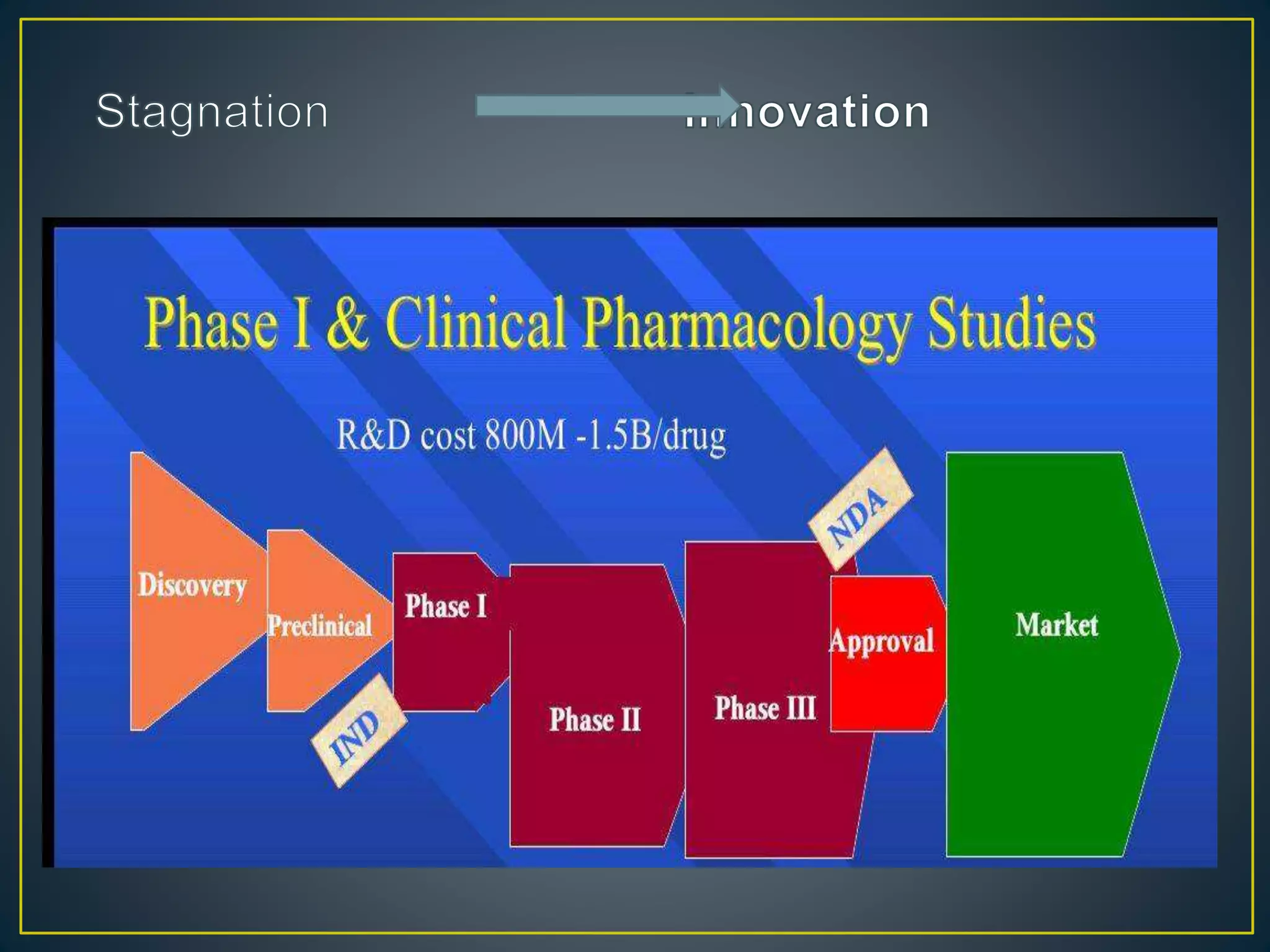
    Drug Discovery & Lead Selection Biologic al Activity Testing (in-Vivo) Chemical Synthesis &Scale up Testing Formulation Development & Stability Safety Testing in Animals IND Applicatio n Clinical Hold IND Filling IND Approval
  • 14.
    • It rangesin durations from 2 weeks to 3 months, depending upon the proposed use of substance. Short Term (Acute) • It ranges in duration from a few weeks to several yeras. Some animal testing continues after human test begins to learn whether long term use of a drug may cause cancer or birth defects Long Term (Chronic) Look for pharmacologi cal action & toxicity Look for reproductive effects & carcinogenici ty
  • 15.
    RODENT (almost always rat) NON-RODENT (dogs, non- humanprimate) Two species required Why two species ???? Species differenc es in respons e
  • 16.
    • It maybe held prior to submission of an investigational new drugs (IND) and at the request of the sponsor during these early stages of product development to disscus testing plans and data requirements. • During pre-IND meetings, the sponsor & the FDA should agree on the acceptable phase of the initial clinical investigation
  • 17.
    • A submissionthrough which drug sponsor alerts the FDA of its intentions to conduct clinical trials with an investigational drugs. • Application seeking permission to clinical trials in humans. • A request for exemption from federal laws that prohibits unapproved drugs from being shipped in interstate commerce.
  • 19.
  • 20.
    INVESTIGATO R •It is submittedby a physician who both initiates and conducts an investigation, and under whose immediate direction the investigational drug is administered or dispensed. A physician might submit a research IND to propose studying an unapproved drug, or an approved product for a new indication or in a new patient population. TREATMEN T • it is submitted for experimental drugs showing promise in clinical testing for serious or immediately life- threatening conditions while the final clinical work is conducted and the FDA review takes place. EMERGEN CY USE • it allows the FDA to authorize use of an experimental drug in an emergency situation that does not allow time for submission of an IND in accordance with 21CFR , Sec. 312.23 or Sec. 312.34. It is also used for patients who do not meet the criteria of an existing study protocol, or if an approved study protocol does not exist. COMMERCIAL Applications that are submitted primarily by companies whose ultimate goal is to obtain marketing approval for new drugs.
  • 21.
  • 25.
  • 26.
    FDA review andapproval of marketing application • Evaluation of complete data sets and proposed labeling and manufacturing plans. • The Prescription Drug User Fee Act of 1992 (PDUFA)* was designed to help shorter the review time.
  • 27.
    • Once thephase III trails have been completed, all preclinical and clinical data are compiled and submitted to the FDA for review. • After determining that the results of the clinical trials indicate the compound is both safe and effective, the sponsoring company submits a new drug application (NDA) or biologics license application (BLA)* to the FDA requesting approval to market the drug. These applications contain the results and data analysis from the entire clinical development program, as well as the earlier preclinical testing and proposals for manufacturing and labeling of the new medicine— which can run 100,000 pages or more.
  • 28.
    • The NDAprocess is the last hurdle prior to approval and marketing. • Since 1938, every new drug has been the subject of an approved NDA before commercialization. • The NDA application is the vehicle through which drug sponsors formally propose that the FDA approve a new pharmaceutical for sale and marketing. • The data gathered during the animal studies and human clinical trials of an Investigational New Drug (IND) become part of the NDA. Goals of NDA To check the: • Safety. • Effectiveness. • Drug’s proposed Labeling(package insert). • Manufacturing methods. • Quality control parameters(to ensure drug’s identity, strength, quality and purity). • Benefits of the drug outweigh the risks.
  • 29.
    • Index (comprehensivetable of contents, helps the reviewers to find specific information in this document) Section 1 • Labeling (labeling that is intended for use on product container including the proposed pacakge insert) Section 2 • Application summary (give reviewers a clear idea of the drug and its application, usually comprises 50 to 200 pages) Section 3 • Chemistry, manufacturing and controls-CMC (1st technical section of NDA, CMC is of drug substance and drug product, submit only upon FDA’s request) Section 4 • Non clinical pharmacology and toxicology Section 5
  • 30.
    • Human pharmacokineticsand bioavailability Section 6 • Clinical microbiology (only for anti –infective drug products) Section 7 • Clinical data (phase I-III) Section 8 • Safety update reports (safety of drug) Section 9 • statistics Section 10
  • 31.
    • Case reportstabulations (Safety and efficacy data from all clinical studies phases in tabulation form) Section 11 • Case report forms (CRFs) ( information of dropped and died patients during clinical trails) Section 12 • Patent* information Section 13 • Patent certification Section 14 • Establishment description (information about the facility layout, equipment and manufacturing conditions) Section 15
  • 32.
    • Debarment* certificate Section16 • Field copy certification* Section 17 • User fee coversheet* Section 18 • Financial disclosure Section 19 • Others (as per requirements of FDA) Section 20
  • 33.
    These documents areprepared for FDA review staff and sponsors to provide guidelines to the processing, content and approval of applications  CDER - Centre for Drug Evaluation and Research CDER The Center for Drug Evaluation and Research (CDER) performs an essential public health task by making sure that safe and effective drugs are available to improve the health of people in the United States. As part of the U.S. Food and Drug Administration (FDA), CDER regulates over-the-counter and prescription drugs, including biological therapeutics and generic drugs. This work covers more than just medicines. For example, fluoride toothpaste, antiperspirants, dandruff shampoos and sunscreens are all considered "drugs."
  • 34.
     Drug registrationand licensing system(DRLS)  Individual Case Safety system Reporting (ICSR)  Bioavailability and bioequivalence studies for Orally administered drug products- General considerations  Formatting, assembling and submitting new drug and antibiotic application  Format and content of Chemistry, Manufacturing and Control section of an application  Format and content of Microbiology section of an application  Format and content of Clinical and Statistical section of an application  Container closure system for packing human drugs and biologics
  • 35.
    • The decisionto accept the NDA is made within 60 days of the date of submission. • Once the NDA is accepted, detailed evaluation continues and FDA has 180 days from submission to complete the review.
  • 36.
    • Pre-approval inspectionsare conducted within 45 days of the NDA acceptance. • If deficiencies are noted during an inspection,a letter (FDA Form 483)is sent to the sponsor delineating the problems.once the deficiencies are resolved, the company must provide written certification and the FDA will clear the application within 45 days if corrections are adequate.
  • 37.
    • Scientists, physiciansand statisticians at the FDA review the data from all of the studies on the compound and, after weighing the benefits and risks of the potential medicine, decide whether to grant approval. • Occasionally the FDA will ask for additional research before granting approval or convene an independent expert advisory panel to consider data presented by the FDA and the company.
  • 38.
  • 39.
    A drug productthat is comparable to a brand/reference listed drug product in dosage form, strength, route of administration, quality, performance characteristics and intended use
  • 40.
  • 41.
    FAST TRACK APPROVAL DrugsFor: • Serious diseases • Fill an unmet medical need • Must be requested by the drug company . • FDA- 60 Days-Review- Decision BREAKTHROUGH THERAPY It expedites the development and review of drugs that may demonstrate substantial improvement over available therapy. ACCELERATED APPROVAL In 1992 FDA instituted the Accelerated Approval regulation Based on a Surrogate endpoint, not on clinical outcome A surrogate endpoint is a marker- a laboratory measurement, or physical sign - that is used in clinical trials as an indirect or substitute measurement that represents a clinically meaningful outcome, such as survival or symptom improvement . PRIORITY REVIEW A Priority Review designation is given to drugs that offer major advances in treatment The goal for completing a Priority Review is six months It can given for Drugs use to Serious/ Non-serious diseases Standard Review is applied to a drug that offers a most, only minor improvement over existing marketed therapies (Ten months for Approval)
  • 43.
    HIGH QUALITY, LARGESCALE PRODUCTION OF NEW MEDICINES • Approved medicines may be used by as many as millions of people or by only a very narrow patient population. • Biopharmaceutical companies strive to manufacture high quality medicines available to patients for many years. • Manufacturing facilities are constructed to the highest standards to ensure that safety and quality are built into each step of the manufacturing and production process. • Companies must adhere to the FDA’s current good manufacturing practices (cGMP) regulations, and they also must constantly update, overhaul, or even rebuild facilities when new medicines are approved, as each new medicine is manufactured differently.
  • 45.
    SAFETY MONITORING ANDRESEARCH Ongoing reporting and data collection Companies should submit periodic reports on safety and tolerability. Companies must also report any serious and unexpected adverse events that occur from use of the medicine to the FDA in an expedited manner. The FDA sometimes requires companies to conduct Phase IV clinical trials, which evaluate the long term safety or effects in specific patient subgroups.
  • 46.
  • 47.
    • Phase IVtrials are post-approval clinical trials. • The FDA may mandate phase IV testing in a specific patient population to further assess efficacy and side effects. • Since duration of exposure is often limited during Phase III testing,Phase IV trials may be required to assess long-term safety of the drug.
  • 49.
    • A REMScan be required before or after FDA approval and can apply to one drug or a class of drugs. As an example, a REMS may outline specific safety procedures for health care providers before dispensing a drug, such as patient education of warning signs of infection.
  • 50.
    Additional clinical valueof therapies is realized over time though many different pathways, leading to expanded and improved use of a drug, including: • Greater value in original indication than initially seen in trials • Earlier use of the medicine • New indications in other diseases • Combination use with other treatments • New formulation or method of delivery • Use in targeted patient subpopulations
  • 52.
    Cost to develop& win marketing approval for a new drug is $2.6 billion
  • 53.
    • www.fda.gov.com • www.clinicaltrial.gov •Remington- The Science And Practice Of Pharmacy- 21st edition, volume 1, chapter 48. • The CDER Handbook- FDA. • www.phrma.org

Editor's Notes

  • #27 *PDUFA: this act allowed the agency to collect user fees from pharmnaceutical companies s financial suuport to enhance the review process. The 1992 act specifies that the FDA reviews a standard drug application within 12 months and priorty appluication with in 6 months.
  • #28 *BLA: The Biologics License Application (BLA) is a request for permission to introduce, or deliver for introduction, a biologic product into interstate commerce (21 CFR 601.2).
  • #32 *Patent: A government authority or license conferring a right or title for a set period, especially the sole right to exclude others from making, using, or selling an invention.
  • #33 *DEBARMENT: companies can be debarred from contracts due to allegations of fraud, mismanagement, and similar improprieties. *FIELD COPY: The applicant shall submit a field copy of the abbreviated application that contains the technical section. *USER FEE COVERSHEET: A form designed to provide the minimum necessary information to determine whether a fee is required for review of an application, to determine the amount of the fee required, and to help FDA track payments.