Unit 2
Classification Of Mental Disorders
DSM-5
Visanth V S
Asso. Professor
College of Nursing, MVASMC, Basti
Diagnostic And Statistical Manual Of Mental
Disorders (DSM)
 This system was developed by the American
Psychiatric Association (APA).
 The first edition (DSM – 1) was published in 1952 as
an alternative to ICD – 6 which had been widely
criticized.
 Although designed for use in the United States, it is
used in other countries, especially for research
purposes.
History of DSM
Year Edition
1945-1952 4 diagnoses
1952 DSM
1968 DSM-II
1980 DSM-III
1987 DSM-III-R
1994 DSM-IV
2000 DSM-IV-R
2013 DSM-5
Purpose of the DSM-5
Aimed at promoting clear communication in
 Clinical
 Educational
 Research
 Administrative contexts
Assists in standardizing mental health diagnosis
across professionals globally
Multi Axial System in DSM
Axis Class
Axis I It consists of clinical disorders and other conditions
that may be a focus of clinical attention.
Axis II Personality disorders and / or mental retardation.
Axis III General Medical Conditions
Axis IV Psychosocial and environmental problems
Axis V It is a global assessment of functioning scale. a
numerical score that measured how much a person's
psychological symptoms impacted their daily life
It was first introduced in the DSM-III, but was removed in the DSM-5
Disorders of DSM -5
 Main Sections:
1. Neurodevelopmental Disorders
2. Schizophrenia Spectrum and Other Psychotic
Disorders
3. Bipolar and Related Disorders
4. Depressive Disorders
5. Anxiety Disorders
6. Obsessive-Compulsive and Related Disorders
7. Trauma- and Stressor-Related Disorders
8. Dissociative Disorders
9. Somatic Symptom and Related Disorders
10.Feeding and Eating Disorders
11. Elimination Disorders
12. Sleep-Wake Disorders
13. Sexual Dysfunctions
14. Gender Dysphoria
15. Disruptive, Impulse-Control, and Conduct
Disorders
16. Substance-Related and Addictive Disorders
17. Neurocognitive Disorders
18. Personality Disorders
19. Paraphilic Disorders
20. Other Mental Disorders
21. Medication-Induced Movement Disorders
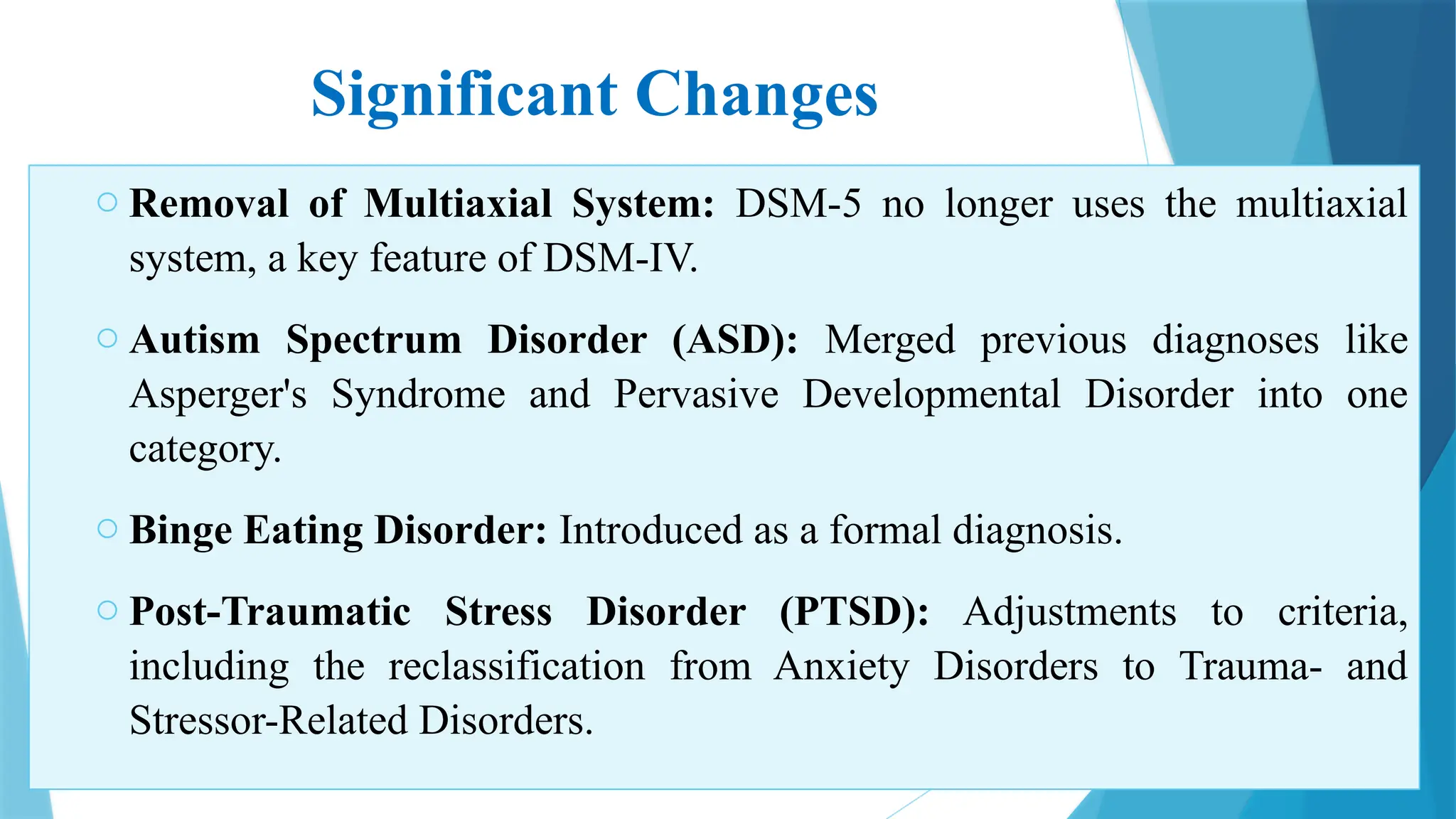
Significant Changes
o Removal of Multiaxial System: DSM-5 no longer uses the multiaxial
system, a key feature of DSM-IV.
o Autism Spectrum Disorder (ASD): Merged previous diagnoses like
Asperger's Syndrome and Pervasive Developmental Disorder into one
category.
o Binge Eating Disorder: Introduced as a formal diagnosis.
o Post-Traumatic Stress Disorder (PTSD): Adjustments to criteria,
including the reclassification from Anxiety Disorders to Trauma- and
Stressor-Related Disorders.
Thank You

DSM-V Classification-Mental Health Nursing.pptx

  • 1.
    Unit 2 Classification OfMental Disorders DSM-5 Visanth V S Asso. Professor College of Nursing, MVASMC, Basti
  • 2.
    Diagnostic And StatisticalManual Of Mental Disorders (DSM)  This system was developed by the American Psychiatric Association (APA).  The first edition (DSM – 1) was published in 1952 as an alternative to ICD – 6 which had been widely criticized.  Although designed for use in the United States, it is used in other countries, especially for research purposes.
  • 3.
    History of DSM YearEdition 1945-1952 4 diagnoses 1952 DSM 1968 DSM-II 1980 DSM-III 1987 DSM-III-R 1994 DSM-IV 2000 DSM-IV-R 2013 DSM-5
  • 4.
    Purpose of theDSM-5 Aimed at promoting clear communication in  Clinical  Educational  Research  Administrative contexts Assists in standardizing mental health diagnosis across professionals globally
  • 5.
    Multi Axial Systemin DSM Axis Class Axis I It consists of clinical disorders and other conditions that may be a focus of clinical attention. Axis II Personality disorders and / or mental retardation. Axis III General Medical Conditions Axis IV Psychosocial and environmental problems Axis V It is a global assessment of functioning scale. a numerical score that measured how much a person's psychological symptoms impacted their daily life It was first introduced in the DSM-III, but was removed in the DSM-5
  • 6.
    Disorders of DSM-5  Main Sections: 1. Neurodevelopmental Disorders 2. Schizophrenia Spectrum and Other Psychotic Disorders 3. Bipolar and Related Disorders 4. Depressive Disorders 5. Anxiety Disorders 6. Obsessive-Compulsive and Related Disorders 7. Trauma- and Stressor-Related Disorders 8. Dissociative Disorders 9. Somatic Symptom and Related Disorders 10.Feeding and Eating Disorders 11. Elimination Disorders 12. Sleep-Wake Disorders 13. Sexual Dysfunctions 14. Gender Dysphoria 15. Disruptive, Impulse-Control, and Conduct Disorders 16. Substance-Related and Addictive Disorders 17. Neurocognitive Disorders 18. Personality Disorders 19. Paraphilic Disorders 20. Other Mental Disorders 21. Medication-Induced Movement Disorders
  • 7.
    Significant Changes o Removalof Multiaxial System: DSM-5 no longer uses the multiaxial system, a key feature of DSM-IV. o Autism Spectrum Disorder (ASD): Merged previous diagnoses like Asperger's Syndrome and Pervasive Developmental Disorder into one category. o Binge Eating Disorder: Introduced as a formal diagnosis. o Post-Traumatic Stress Disorder (PTSD): Adjustments to criteria, including the reclassification from Anxiety Disorders to Trauma- and Stressor-Related Disorders.
  • 8.