COAST Processes & Problems Autumn 2008
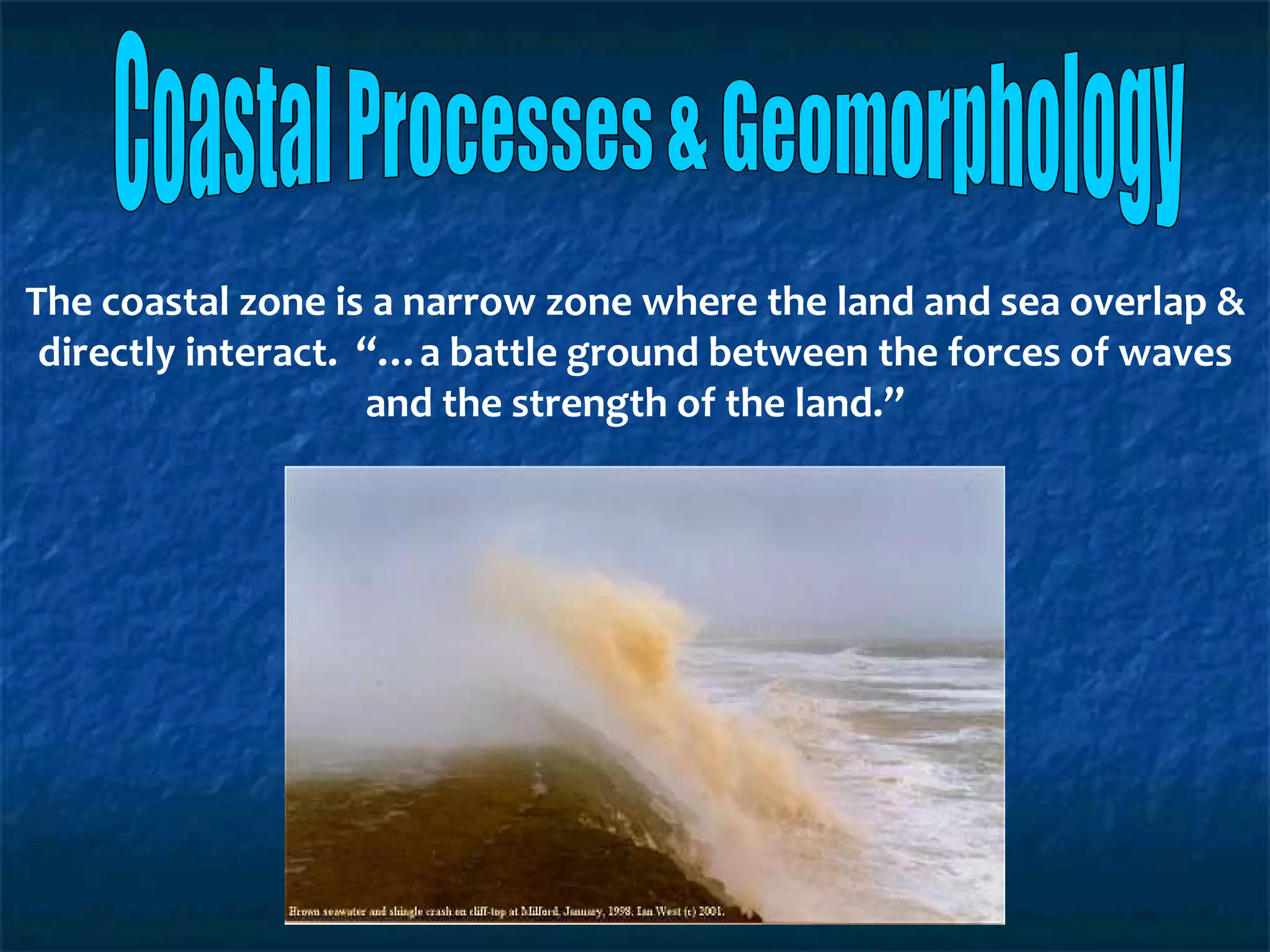
Coastal Processes & Geomorphology The coastal zone is a narrow zone where the land and sea overlap & directly interact.  “…a battle ground between the forces of waves and the strength of the land.”
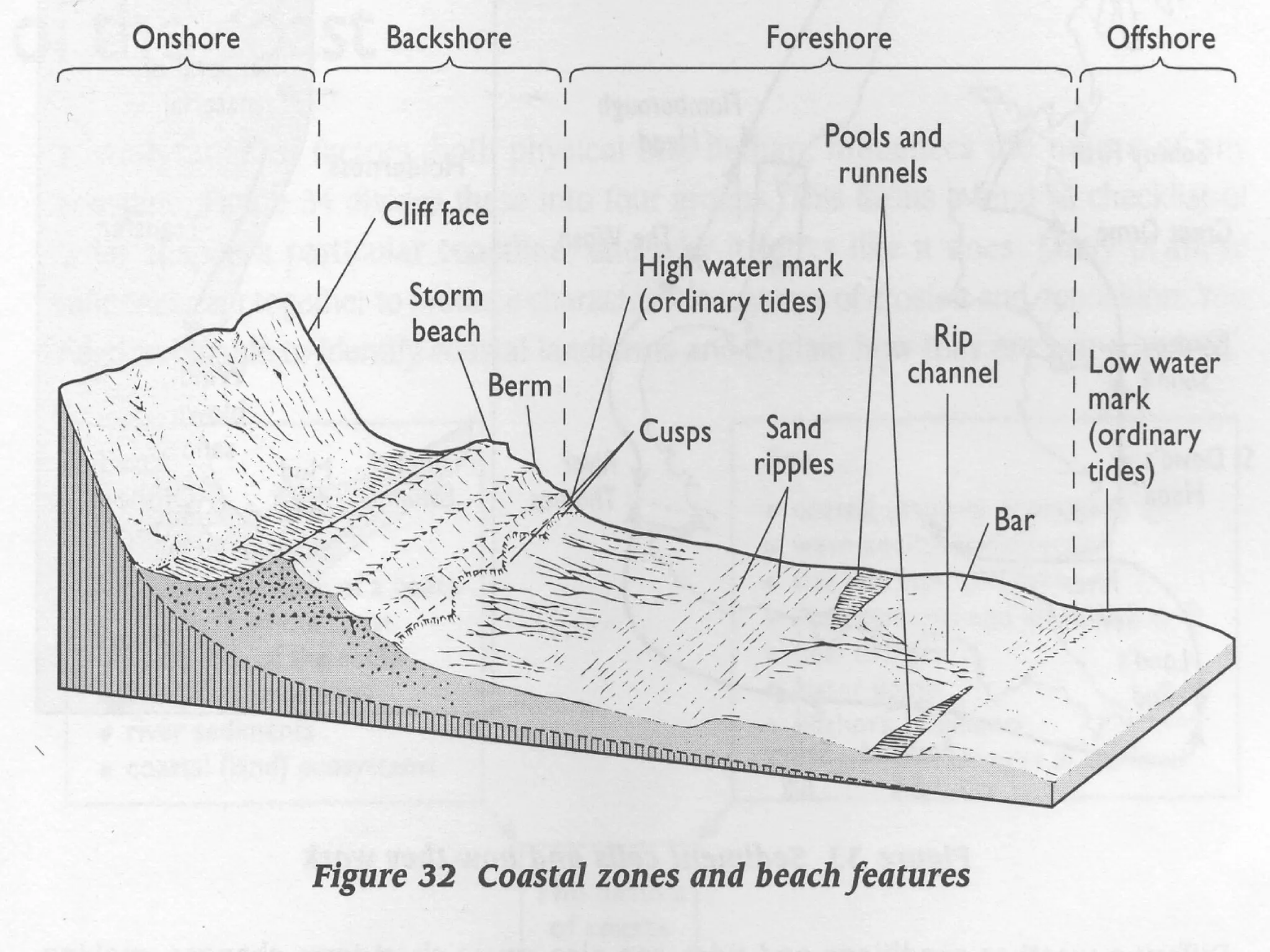
Some key terms COAST Onshore, offshore… FETCH WAVE Constructive Destructive Swash Backwash
Why are coasts so important?
Why are coasts so important? Interface between land and sea Hazardous area due to erosion and flooding Long term/short term changes Human activity affect ecosystems/habitat eg coral reef Half the worlds population live within 60km of the coast, 2/3 of major cities Competition for resources Provides economic activity- tourism, farming etc Management needed to be sustainable
Coasts are an open system
Coasts are an open system Inputs? Energy & Sediment – Waves, winds, tides, currents. Processes? E, T, D Outputs? Deposited material onshore, landforms
Coasts are an open system Fluvial systems -estuaries and deltas (discharge and sediment) Sub-aerial systems –onshore (run-off, weathering and mass movement) Coastal systems –inshore (beaches and ecosystems) Marine systems –offshore (waves, tides and sediments)
 
Beaches occupy the  littoral  zone between the highest and lowest spring tides Movement of sediment along the shore creates a number of distinct “sediment/littoral cells.”
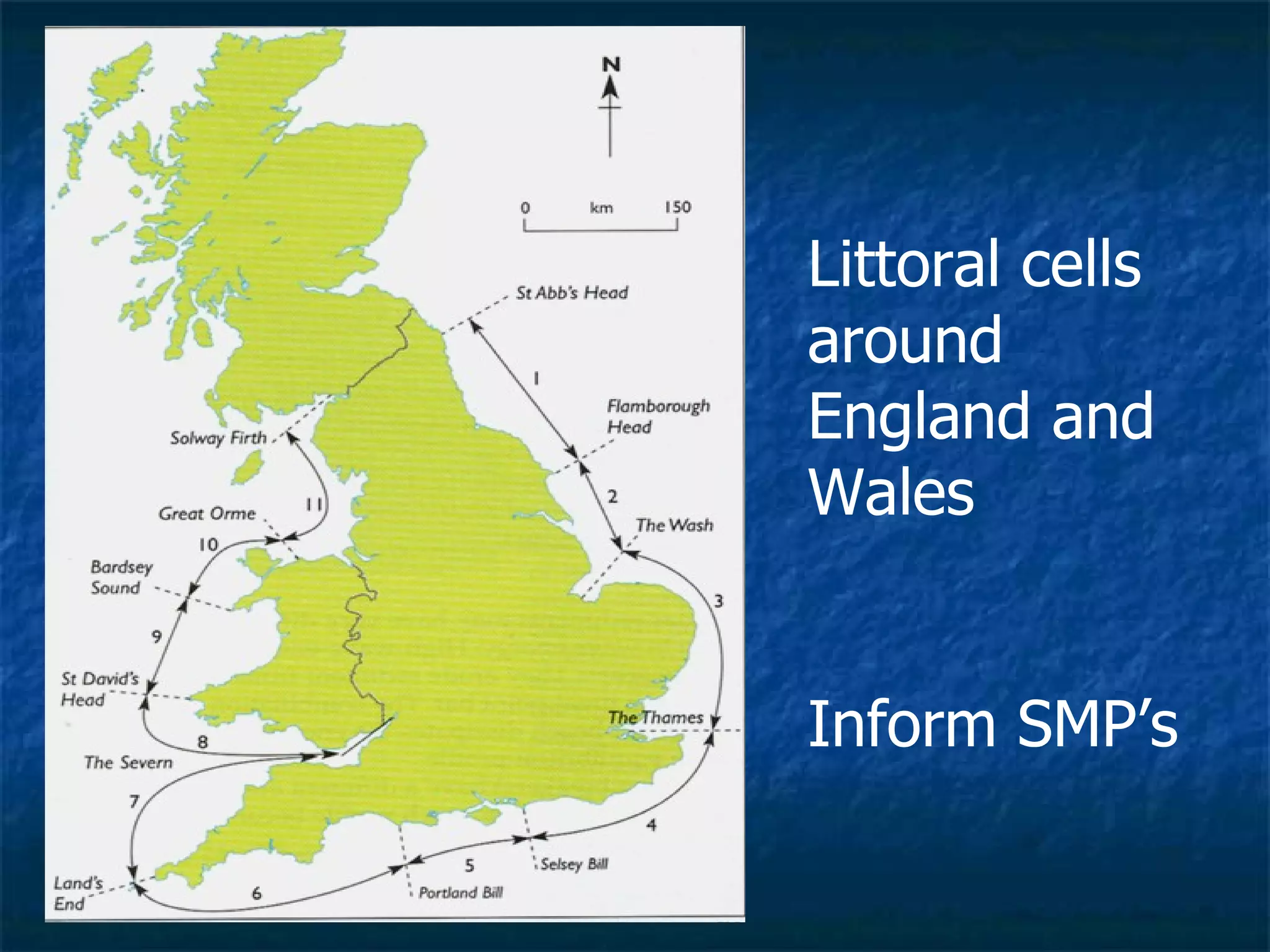
So: What’s a Sediment Cell? “… movement of sand and shingle in the nearshore zone by longshore drift has been found to occur in discrete, functionally separate sediment cells. There are 11 such cells around England and Wales. They are defined as a length of coastline and its associated nearshore area within which the movement of coarse sediment (sand and shingle) is largely self contained.”
Littoral cells around England and Wales Inform SMP’s
 
Deltas Deltas are a delicate balance of aggrading (up) and subsiding (down) processes Up: deposition of sediment, accumulation of organic material Down: compaction of seds, tectonic subsidence (wt of seds), erosion
Deltas Why is there no Columbia River Delta?
Why no C.R. Delta? because it is a smaller river than the Mississippi thus it does not generate the amount of sediment that would be needed.
Why no C.R. Delta? because of the many dams that have been built which control the sediment flow along with the river, so no large amounts of sediments are being deposited where the river enters the ocean.
Why no C.R. Delta? ...in the case of the Columbia river, the ocean waves and powerful currents quickly redistribute the material that is being deposited so it allows for no sediment to build up and form a delta rather it redistributes it.
Deltas Deltas are a delicate balance of aggrading (up) and subsiding (down) processes Up: deposition of sediment, accumulation of organic material Down: compaction of seds, tectonic subsidence (wt of seds), erosion Effective ‘down’: sea level rise
Which way is the longshore current?
Factors affecting Coastal environments Land ( terrestrial ) Sea ( marine ) Weather and climate ( atmospheric ) Human activities
Factors affecting Coastal environments Land
Factors affecting Coastal environments Land   shape of coastline,  relief of land,  presence or lack of beach,  Geology: structure of the coast & resistance of the rocks,  sub-aerial processes (weathering),  river sediments,  coastal (land) ecosystems
Factors affecting Coastal environments Sea
Factors affecting Coastal environments Sea Coastal (marine) ecosystems Wave energy and direction Size and type of waves Local currents and longshore drift Tidal changes Water depth Offshore sediments Longer-term changes in sea level
Factors affecting Coastal environments Weather and climate Human activities
Factors affecting Coastal environments Weather and climate Wind strength and direction Rainfall and temperature Storms Climate change (global warming) ? Human activities Intervention into natural systems – Defence – Industry… Agriculture, developments, tourism, gravel extraction, recreation Use of land for development
Processes of change Draw a diagram of a coastline/cliff with all the processes you can think of that will change it.
 
Lesson 1&2 Noting Activities: Why is the coastline an example of an open system? List some inputs & outputs to the system Homework: Due in next Tuesday: “ DESCRIBE & EXPLAIN why the coast is such a difficult environment to attempt to manage.”

All about coasts

  • 1.
    COAST Processes &Problems Autumn 2008
  • 2.
    Coastal Processes &Geomorphology The coastal zone is a narrow zone where the land and sea overlap & directly interact. “…a battle ground between the forces of waves and the strength of the land.”
  • 3.
    Some key termsCOAST Onshore, offshore… FETCH WAVE Constructive Destructive Swash Backwash
  • 4.
    Why are coastsso important?
  • 5.
    Why are coastsso important? Interface between land and sea Hazardous area due to erosion and flooding Long term/short term changes Human activity affect ecosystems/habitat eg coral reef Half the worlds population live within 60km of the coast, 2/3 of major cities Competition for resources Provides economic activity- tourism, farming etc Management needed to be sustainable
  • 6.
    Coasts are anopen system
  • 7.
    Coasts are anopen system Inputs? Energy & Sediment – Waves, winds, tides, currents. Processes? E, T, D Outputs? Deposited material onshore, landforms
  • 8.
    Coasts are anopen system Fluvial systems -estuaries and deltas (discharge and sediment) Sub-aerial systems –onshore (run-off, weathering and mass movement) Coastal systems –inshore (beaches and ecosystems) Marine systems –offshore (waves, tides and sediments)
  • 9.
  • 10.
    Beaches occupy the littoral zone between the highest and lowest spring tides Movement of sediment along the shore creates a number of distinct “sediment/littoral cells.”
  • 11.
    So: What’s aSediment Cell? “… movement of sand and shingle in the nearshore zone by longshore drift has been found to occur in discrete, functionally separate sediment cells. There are 11 such cells around England and Wales. They are defined as a length of coastline and its associated nearshore area within which the movement of coarse sediment (sand and shingle) is largely self contained.”
  • 12.
    Littoral cells aroundEngland and Wales Inform SMP’s
  • 13.
  • 14.
    Deltas Deltas area delicate balance of aggrading (up) and subsiding (down) processes Up: deposition of sediment, accumulation of organic material Down: compaction of seds, tectonic subsidence (wt of seds), erosion
  • 15.
    Deltas Why isthere no Columbia River Delta?
  • 16.
    Why no C.R.Delta? because it is a smaller river than the Mississippi thus it does not generate the amount of sediment that would be needed.
  • 17.
    Why no C.R.Delta? because of the many dams that have been built which control the sediment flow along with the river, so no large amounts of sediments are being deposited where the river enters the ocean.
  • 18.
    Why no C.R.Delta? ...in the case of the Columbia river, the ocean waves and powerful currents quickly redistribute the material that is being deposited so it allows for no sediment to build up and form a delta rather it redistributes it.
  • 19.
    Deltas Deltas area delicate balance of aggrading (up) and subsiding (down) processes Up: deposition of sediment, accumulation of organic material Down: compaction of seds, tectonic subsidence (wt of seds), erosion Effective ‘down’: sea level rise
  • 20.
    Which way isthe longshore current?
  • 21.
    Factors affecting Coastalenvironments Land ( terrestrial ) Sea ( marine ) Weather and climate ( atmospheric ) Human activities
  • 22.
    Factors affecting Coastalenvironments Land
  • 23.
    Factors affecting Coastalenvironments Land shape of coastline, relief of land, presence or lack of beach, Geology: structure of the coast & resistance of the rocks, sub-aerial processes (weathering), river sediments, coastal (land) ecosystems
  • 24.
    Factors affecting Coastalenvironments Sea
  • 25.
    Factors affecting Coastalenvironments Sea Coastal (marine) ecosystems Wave energy and direction Size and type of waves Local currents and longshore drift Tidal changes Water depth Offshore sediments Longer-term changes in sea level
  • 26.
    Factors affecting Coastalenvironments Weather and climate Human activities
  • 27.
    Factors affecting Coastalenvironments Weather and climate Wind strength and direction Rainfall and temperature Storms Climate change (global warming) ? Human activities Intervention into natural systems – Defence – Industry… Agriculture, developments, tourism, gravel extraction, recreation Use of land for development
  • 28.
    Processes of changeDraw a diagram of a coastline/cliff with all the processes you can think of that will change it.
  • 29.
  • 30.
    Lesson 1&2 NotingActivities: Why is the coastline an example of an open system? List some inputs & outputs to the system Homework: Due in next Tuesday: “ DESCRIBE & EXPLAIN why the coast is such a difficult environment to attempt to manage.”