Aligning Teacher 
Evaluations, School Goals, 
and Student Growth into a 
School-wide Model 
Jason Siko, Grand Valley State University 
Tina Chambers, Brandon Middle School
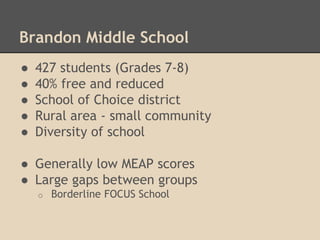
Brandon Middle School 
● 427 students (Grades 7-8) 
● 40% free and reduced 
● School of Choice district 
● Rural area - small community 
● Diversity of school 
● Generally low MEAP scores 
● Large gaps between groups 
o Borderline FOCUS School
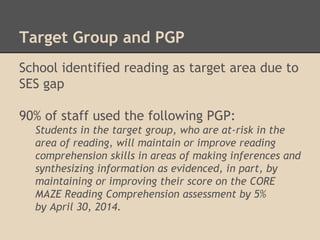
Target Group and PGP 
School identified reading as target area due to 
SES gap 
90% of staff used the following PGP: 
Students in the target group, who are at-risk in the 
area of reading, will maintain or improve reading 
comprehension skills in areas of making inferences and 
synthesizing information as evidenced, in part, by 
maintaining or improving their score on the CORE 
MAZE Reading Comprehension assessment by 5% 
by April 30, 2014.
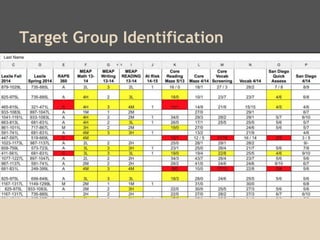
Target Group Identification
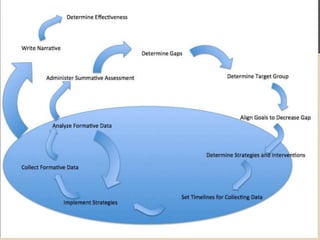
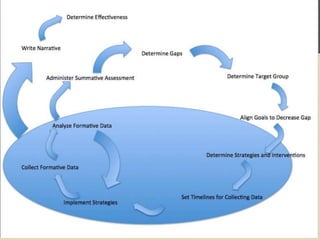
Determine Strategies & Interventions 
Hi-Class/Mi-Class 
Thinking Routines (CoT) 
Interventions were basis for Teacher 
Evaluation process 
● Danielson Model 
● Domain 3 (Analyzing Teaching & Learning 
Through Multiple Lenses)
Set timelines for data collection 
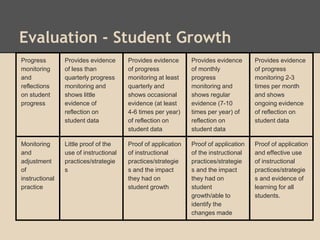
“Effective” rating - Provides evidence of 
monthly progress monitoring and show regular 
evidence (7-10 times per year) of reflection on 
student data. 
In reality: 5-7X 
● Process didn’t start in September 
● Polar vortex 
● Evaluation meetings in May (last month to 
collect data was in April)
Data analysis 
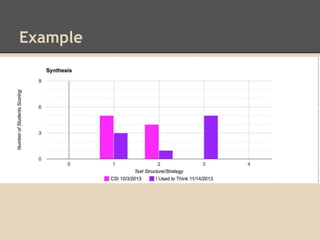
Option of collecting data manually 
PD on collecting and analyzing data using 
Google Drive (Spreadsheet, Forms)
Example
Evaluation - Student Growth 
Progress 
monitoring 
and 
reflections 
on student 
progress 
Provides evidence 
of less than 
quarterly progress 
monitoring and 
shows little 
evidence of 
reflection on 
student data 
Provides evidence 
of progress 
monitoring at least 
quarterly and 
shows occasional 
evidence (at least 
4-6 times per year) 
of reflection on 
student data 
Provides evidence 
of monthly 
progress 
monitoring and 
shows regular 
evidence (7-10 
times per year) of 
reflection on 
student data 
Provides evidence 
of progress 
monitoring 2-3 
times per month 
and shows 
ongoing evidence 
of reflection on 
student data 
Monitoring 
and 
adjustment 
of 
instructional 
practice 
Little proof of the 
use of instructional 
practices/strategie 
s 
Proof of application 
of instructional 
practices/strategie 
s and the impact 
they had on 
student growth 
Proof of application 
of the instructional 
practices/strategie 
s and the impact 
they had on 
student 
growth/able to 
identify the 
changes made 
Proof of application 
and effective use 
of instructional 
practices/strategie 
s and evidence of 
learning for all 
students.
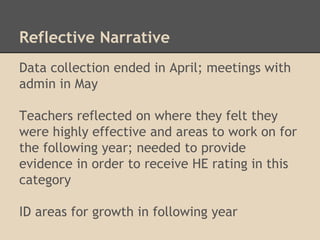
Reflective Narrative 
Data collection ended in April; meetings with 
admin in May 
Teachers reflected on where they felt they 
were highly effective and areas to work on for 
the following year; needed to provide 
evidence in order to receive HE rating in this 
category 
ID areas for growth in following year
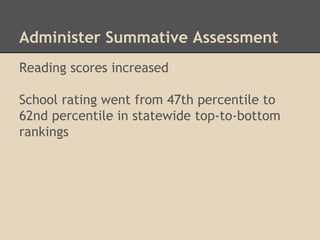
Administer Summative Assessment 
Reading scores increased 
School rating went from 47th percentile to 
62nd percentile in statewide top-to-bottom 
rankings
Lessons Learned 
● Focus on one goal 
● Technology can be a friend OR foe 
o lack of data warehouse, PD, etc. 
● Expect frustration 
● Emphasize process over scores for eval 
● Wide range of abilities in understanding and 
using (particularly with technology, data 
analysis, developing activities) 
● Try to limit staff comparisons 
● Consider a third-party (~mentor/support)
Changes for this year 
● Focus on SPECIFIC strategies (that work for 
their situation) 
● More frequent use of strategies as 
formative assessment 
● Shift toward using technology to 
store/analyze data (Google or Excel) 
● More staff collaboration (How do I…?) 
● Staff started earlier 
● More staff developing own goals 
● Testing change
Questions?
Exit Slip 
3-2-1 
● Three things you learned in this 
presentation 
● Two things you wish to incorporate at your 
school 
● One question you would like us to answer 
Please include name and email address
Thanks for coming 
Jason Siko 
Assistant Professor of Educational Technology 
Grand Valley State University 
sikojp@gmail.com 
@jasonsiko 
jasonsiko.com 
Tina Chambers 
Principal, Brandon Middle School 
tchambers@brandon.k12.mi.us

Aligning Goals and Evaluations MEMSPA2014

  • 1.
    Aligning Teacher Evaluations,School Goals, and Student Growth into a School-wide Model Jason Siko, Grand Valley State University Tina Chambers, Brandon Middle School
  • 2.
    Brandon Middle School ● 427 students (Grades 7-8) ● 40% free and reduced ● School of Choice district ● Rural area - small community ● Diversity of school ● Generally low MEAP scores ● Large gaps between groups o Borderline FOCUS School
  • 4.
    Target Group andPGP School identified reading as target area due to SES gap 90% of staff used the following PGP: Students in the target group, who are at-risk in the area of reading, will maintain or improve reading comprehension skills in areas of making inferences and synthesizing information as evidenced, in part, by maintaining or improving their score on the CORE MAZE Reading Comprehension assessment by 5% by April 30, 2014.
  • 5.
  • 6.
    Determine Strategies &Interventions Hi-Class/Mi-Class Thinking Routines (CoT) Interventions were basis for Teacher Evaluation process ● Danielson Model ● Domain 3 (Analyzing Teaching & Learning Through Multiple Lenses)
  • 7.
    Set timelines fordata collection “Effective” rating - Provides evidence of monthly progress monitoring and show regular evidence (7-10 times per year) of reflection on student data. In reality: 5-7X ● Process didn’t start in September ● Polar vortex ● Evaluation meetings in May (last month to collect data was in April)
  • 9.
    Data analysis Optionof collecting data manually PD on collecting and analyzing data using Google Drive (Spreadsheet, Forms)
  • 10.
  • 11.
    Evaluation - StudentGrowth Progress monitoring and reflections on student progress Provides evidence of less than quarterly progress monitoring and shows little evidence of reflection on student data Provides evidence of progress monitoring at least quarterly and shows occasional evidence (at least 4-6 times per year) of reflection on student data Provides evidence of monthly progress monitoring and shows regular evidence (7-10 times per year) of reflection on student data Provides evidence of progress monitoring 2-3 times per month and shows ongoing evidence of reflection on student data Monitoring and adjustment of instructional practice Little proof of the use of instructional practices/strategie s Proof of application of instructional practices/strategie s and the impact they had on student growth Proof of application of the instructional practices/strategie s and the impact they had on student growth/able to identify the changes made Proof of application and effective use of instructional practices/strategie s and evidence of learning for all students.
  • 12.
    Reflective Narrative Datacollection ended in April; meetings with admin in May Teachers reflected on where they felt they were highly effective and areas to work on for the following year; needed to provide evidence in order to receive HE rating in this category ID areas for growth in following year
  • 13.
    Administer Summative Assessment Reading scores increased School rating went from 47th percentile to 62nd percentile in statewide top-to-bottom rankings
  • 14.
    Lessons Learned ●Focus on one goal ● Technology can be a friend OR foe o lack of data warehouse, PD, etc. ● Expect frustration ● Emphasize process over scores for eval ● Wide range of abilities in understanding and using (particularly with technology, data analysis, developing activities) ● Try to limit staff comparisons ● Consider a third-party (~mentor/support)
  • 15.
    Changes for thisyear ● Focus on SPECIFIC strategies (that work for their situation) ● More frequent use of strategies as formative assessment ● Shift toward using technology to store/analyze data (Google or Excel) ● More staff collaboration (How do I…?) ● Staff started earlier ● More staff developing own goals ● Testing change
  • 17.
  • 18.
    Exit Slip 3-2-1 ● Three things you learned in this presentation ● Two things you wish to incorporate at your school ● One question you would like us to answer Please include name and email address
  • 19.
    Thanks for coming Jason Siko Assistant Professor of Educational Technology Grand Valley State University sikojp@gmail.com @jasonsiko jasonsiko.com Tina Chambers Principal, Brandon Middle School tchambers@brandon.k12.mi.us