Elements of GreatnessVision	Belief	Desire	CouragePerseverance	Execution	Passion
WELCOME BACKA Good Old Ice BreakerEveryone Sells
A Year In ReviewAYP-Target Goal for Reading 71.6Subgroup Reading @ Grade Level in 2010-11 All 75.8 (71.9)Hispanic 60.8 –Meet with Safe Harbor (50)White 77.1 (73.9)EDS 67.3 (did not meet) (63.9)EC 50-Meet w/ SH (32.1)
A Year In ReviewSubgroup Math @ Grade Level in 2010-11 – Target 88.6All 88.6 (talk about close!) (87.6)Hispanic 82.4-meet w/SH (73.8)White 88.8 (89.5)EDS 83.2 –Did not meet (82.9)EC 76.6 –meet w/SH (57.1)
Looking at the bigger pictureTalk with your neighbor and discuss our AYP resultsPositivesGrowth concernsWhat should we focus on?What would make a difference?
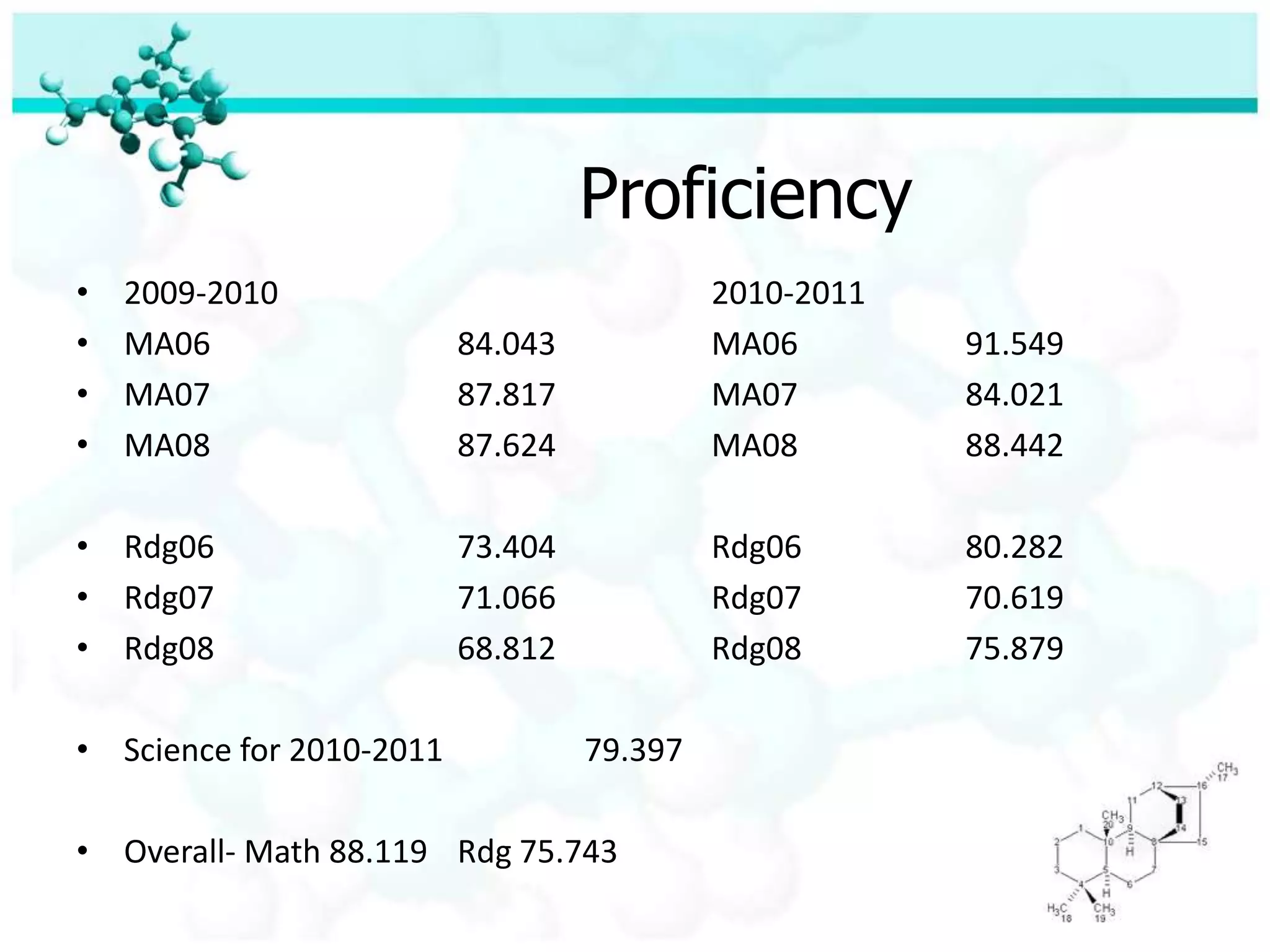
Proficiency2009-2010				2010-2011MA06 		84.043		MA06		91.549MA07 		87.817		MA07		84.021MA08		87.624		MA08		88.442Rdg06		73.404		Rdg06		80.282Rdg07		71.066		Rdg07		70.619Rdg08		68.812		Rdg08		75.879Science for 2010-2011 		79.397Overall- Math 88.119	Rdg 75.743
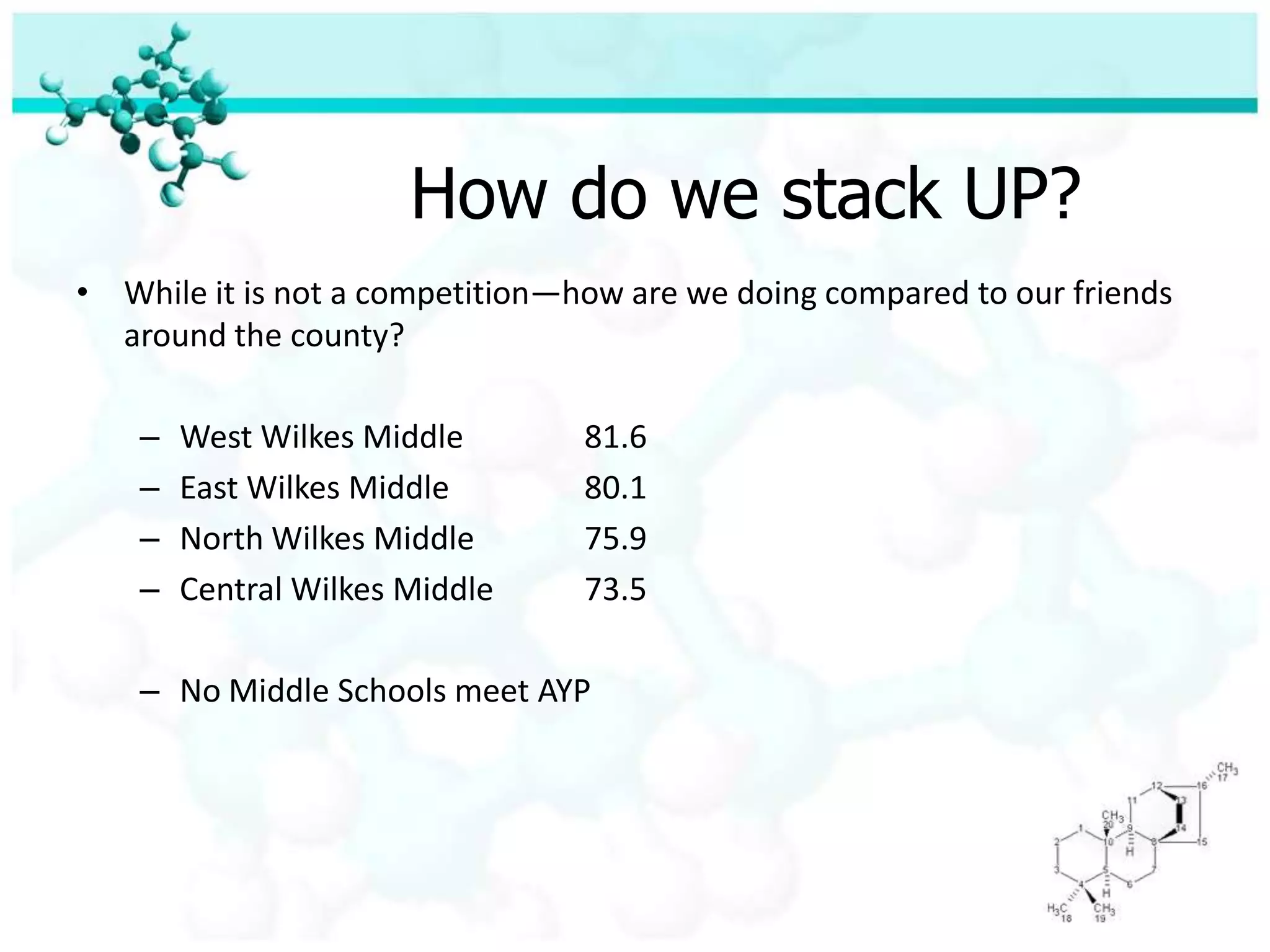
How do we stack UP?While it is not a competition—how are we doing compared to our friends around the county?West Wilkes Middle	81.6East Wilkes Middle		80.1North Wilkes Middle	75.9Central Wilkes Middle	73.5No Middle Schools meet AYP
How do we stack up?We still have LOTS of work to do!PLCCommon AssessmentsDATA DRIVEN
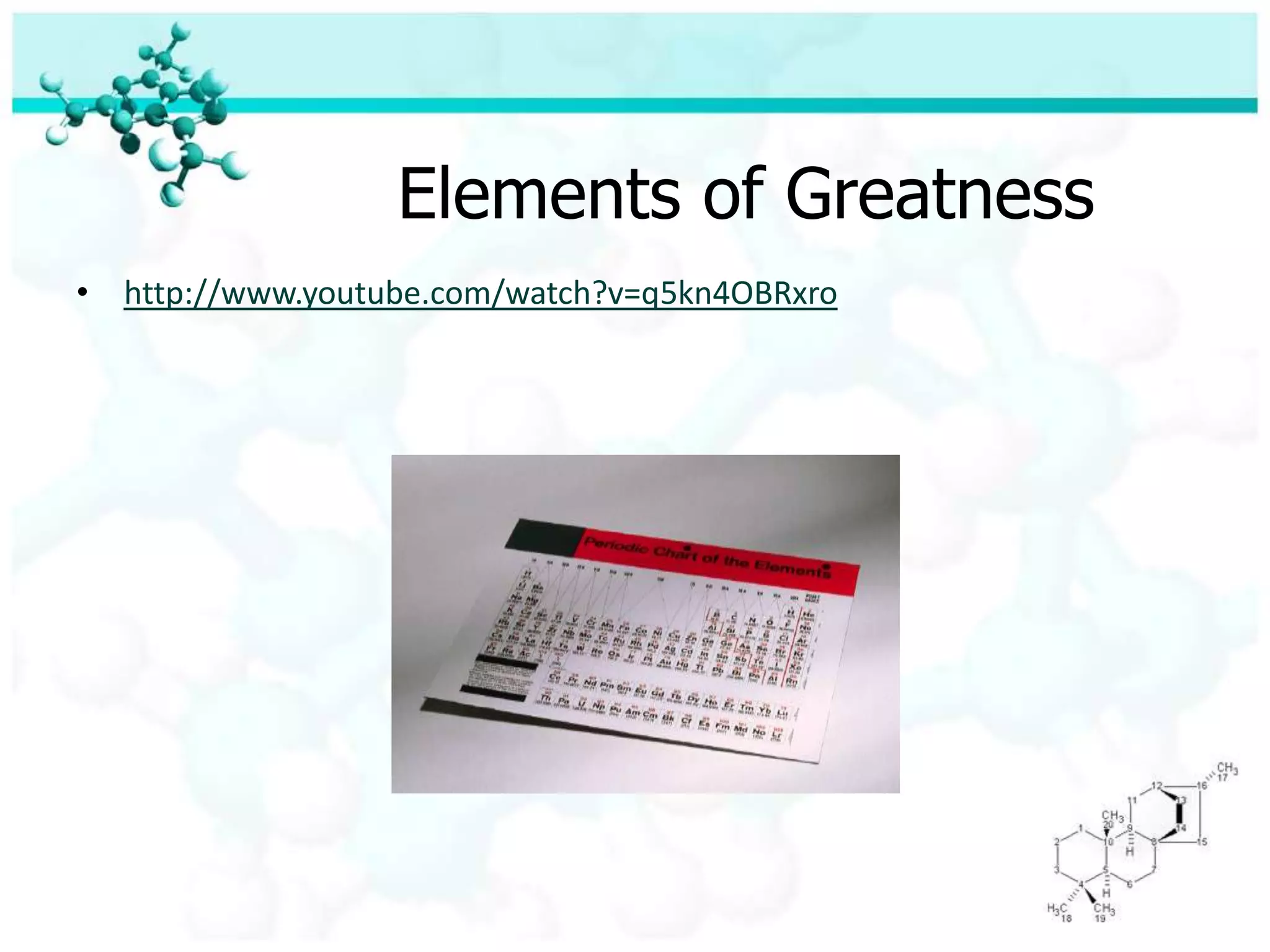
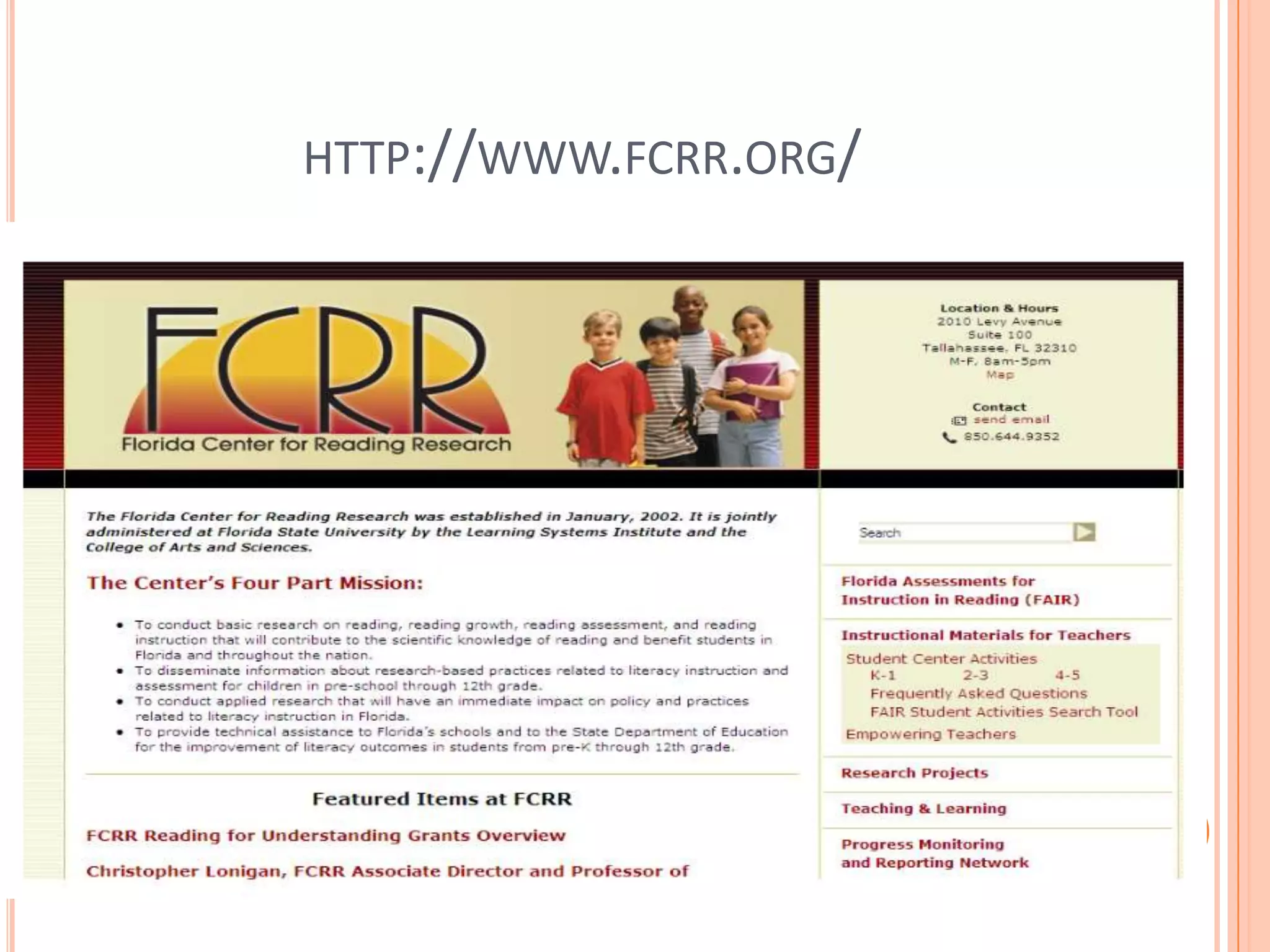
Elements of Greatnesshttp://www.youtube.com/watch?v=q5kn4OBRxro
Elements of GreatnessVisionPassionBeliefDesireCouragePerseveranceExecutionWith your group discuss how your element contributes to our schools success.Create a symbol that represents your element and it’s contribution to our success.  Place the name of the element in the upper left corner and write the name in the upper right corner.How does each element together create the element of greatness?What do you bring to the table?
Puzzled Thumbs
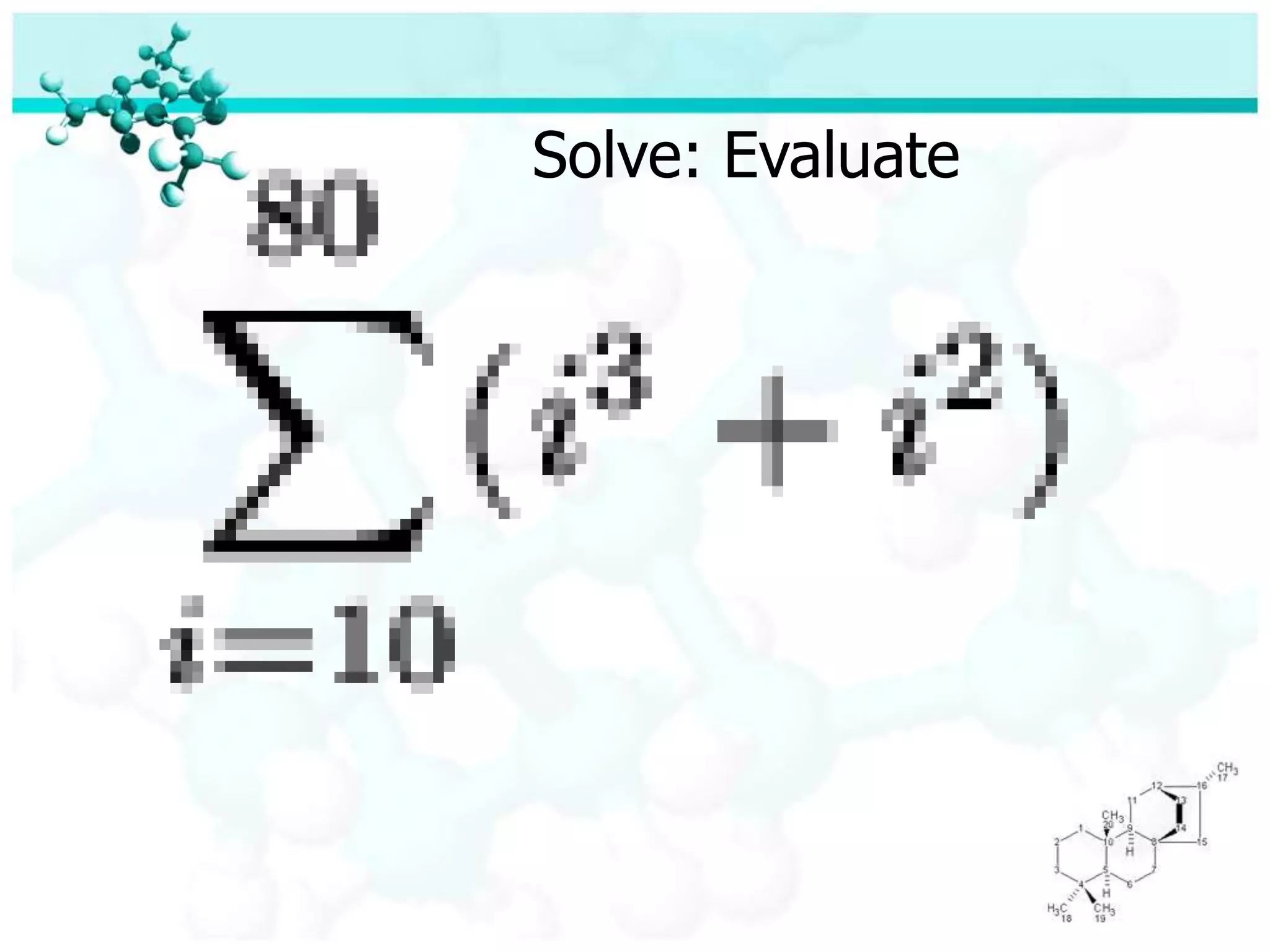
Solve: Evaluate
Answer	10,669,170
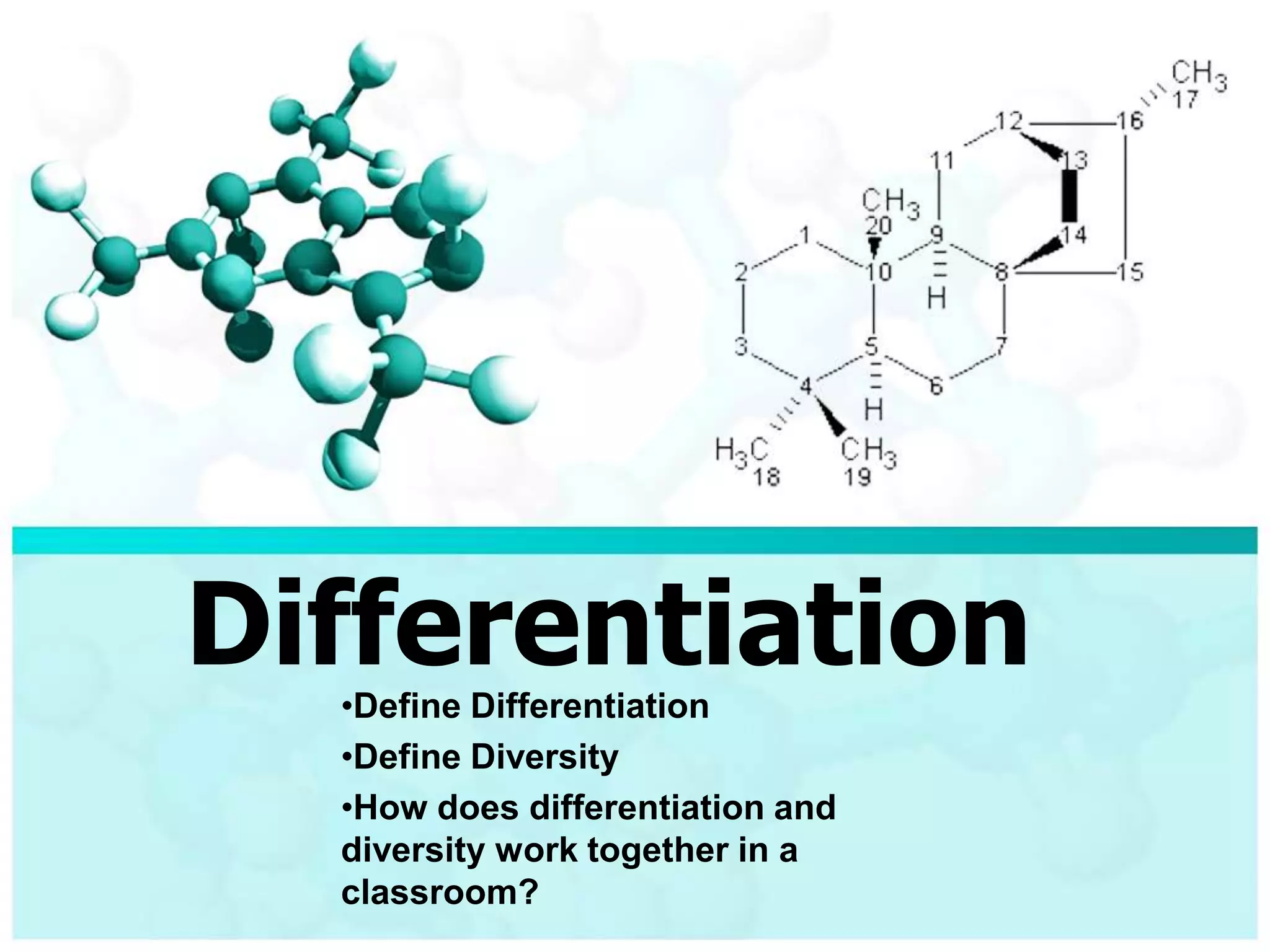
Differentiation Define Differentiation
Define Diversity
How does differentiation and diversity work together in a classroom?Far away there in the sunshine are my highest aspirations. I may not reach them, but I can look up and see their beauty, believe in them and try to follow where the lead.Louisa May Alcott
Understanding DifferentiationKey Elements:ContentProcessProductAffectReadinessInterestShare how you are going to use these elements in your classroom.                       pp. 14-16
Learning ProfileLearning style- Do a profileIntelligence preferenceGenderCulture-pp. 17-18
   Four Interdependent elements		Learning environmentCurriculum AssessmentInstructionShare with your table-pp.19-24
Framework for Developing a Differentiated classroom-Who are your learners? (Are you all alike or are there important differences?)-Given the differences you see, how should you teach them?-If your classroom is going to work for all of your students, what will it be like?(How will it need to function? What roles will each play?)-How can you learn more about the students starting points, interests. And best ways of learning?-If you have a differentiated classroom, can it be fair? (What will “fair” mean in the room?)-What will success in this class mean? (How will you know if you’re succeeding?(How will the students know?)					pp. 45-46
How will differentiation look in your Classroom?Learning EnvironmentRoutinesMaintenance I Can’t differentiate……………………..
When the school bell rings on day one and all our students are in their seats, we will hold the future of this nation and this world in our hands. Whatever we do will have lasting implications, not only on the lives of those student, but also on the lives of all those who they come in contact with. So then, the question that we should ask ourselves should not be, “How can I make this work?” The question must be, “How can I afford not to make this work?”-Wendy Kopp, One Day, All Children
Responsiveness to Instruction RtIWilkes County SchoolsMiddle Schools2011-2012
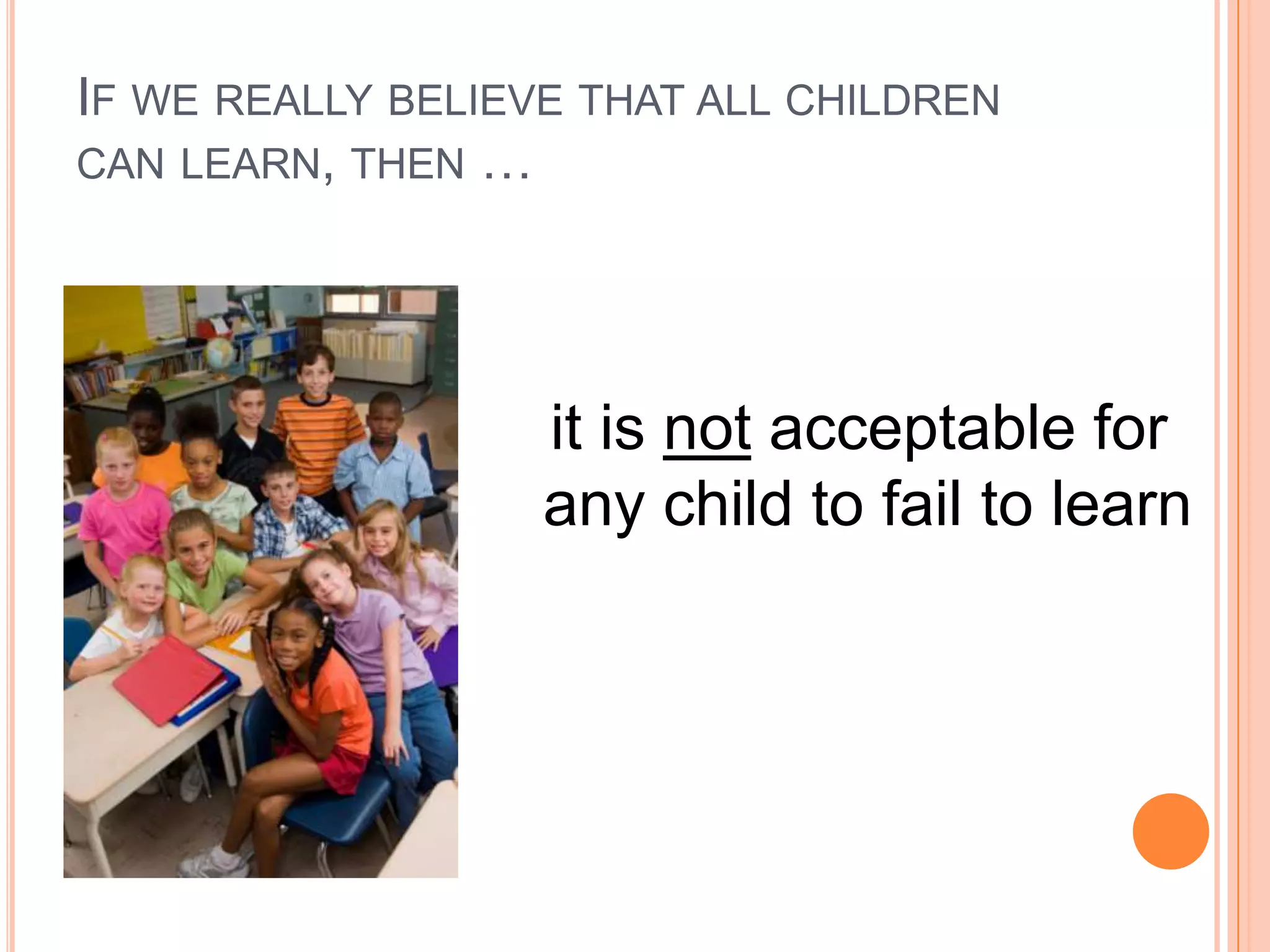
If we really believe that all children can learn, then …     it is not acceptable for      any child to fail to learn
FOCUS…focus on addressing the needs of ALL students having    difficulty, not just those with labels…focus on ALL educators being responsible for ALL students…focus on the solution rather than the problem…focus on an instruction/intervention rather than on what is wrong with the student
NC DPI Definition of RtI The practice of providing high quality instructionmatched to student need, monitoring progress frequently to make decisions about changes in instruction or goals and applying child response data to important educational decisions. Response to Intervention Policy Considerations and Implementation,National Association of State Directors of Special Education, Inc.
What is RtI?Framework that focuses on:Appropriate, targeted instructionResearched-based teaching strategies Early interventionAccurate assessment with valid, reliable dataFrequent progress monitoringInformed instructional decisions
Why RtI?Alignment of student’s needs with specific instructional strategies that are research-based Recognition of needs that allow for early interveningEnrichment and extension of curriculumReinforcement of skills and concepts
How is This Different?Creates a shift in focus proactive rather than reactiveeliminates “Wait to Fail”Early intervening to prevent failureMore efficient use of resourcesSupports family partnerships
What are some advantages of RtI?One advantage of RTI in the diagnosis of educational disabilities is that it allows schools to intervene early to meet the needs of struggling learners. Another advantage is that RTI maps those specific instructional strategies found to benefit a particular student. This information can be very helpful to both teachers and parents.
How Do We Do This?Educate all students:
 Build upon prior knowledge and experience
Address a wide range of skill levels
Instruct utilizing various forms of data
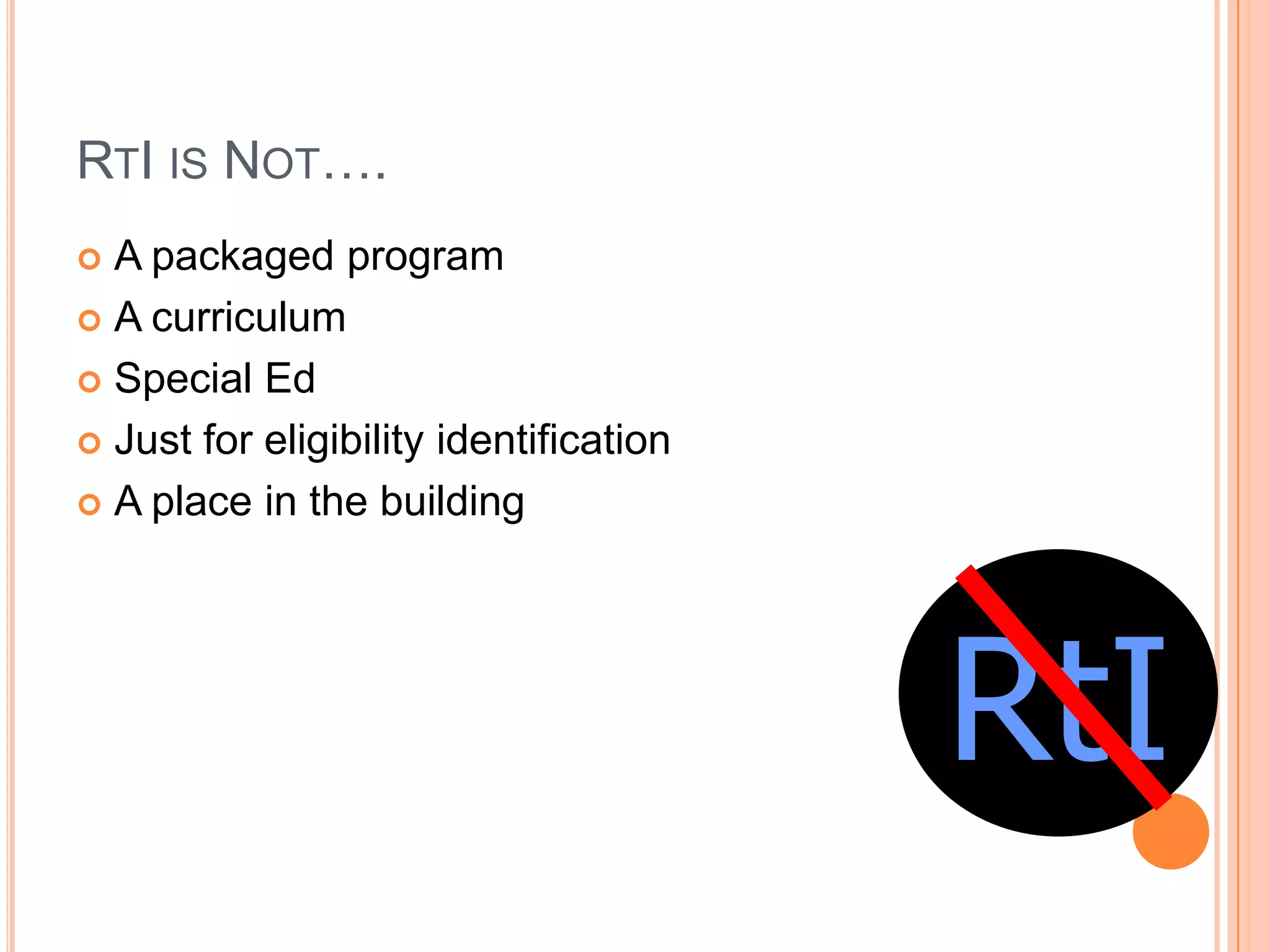
Provide instruction at the appropriate instructional level matched to student needsRtI is Not….	A packaged programA curriculumSpecial EdJust for eligibility identificationA place in the buildingRtI
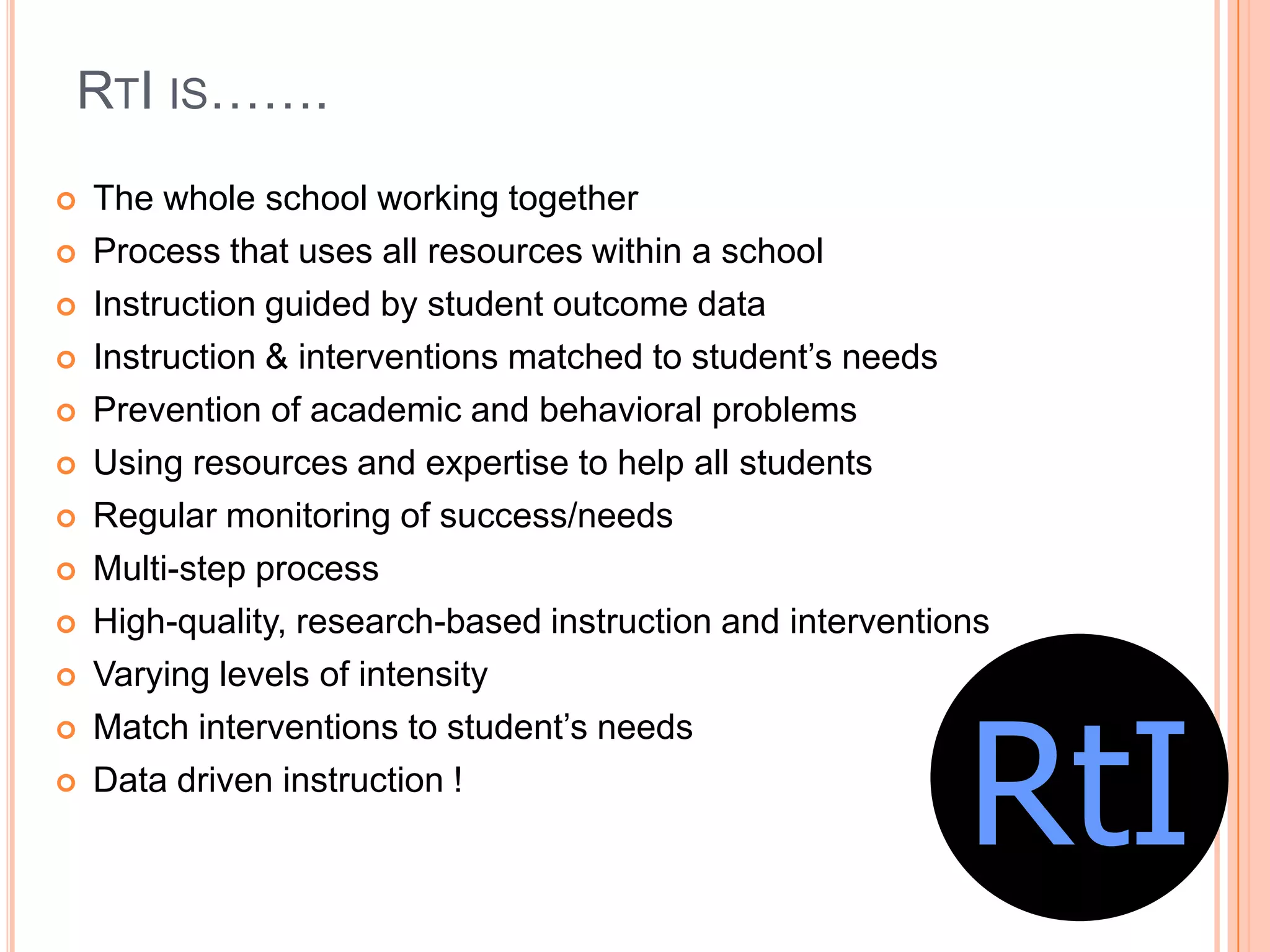
RtI is…….The whole school working togetherProcess that uses all resources within a schoolInstruction guided by student outcome dataInstruction & interventions matched to student’s needsPrevention of academic and behavioral problemsUsing resources and expertise to help all studentsRegular monitoring of success/needsMulti-step processHigh-quality, research-based instruction and interventionsVarying levels of intensityMatch interventions to student’s needsData driven instruction ! RtI
RtI: Connection to Student AchievementIdentify performance level and pinpoint specific areas Assess core curriculumDevelop/Implement appropriate instructional plansProgress Monitoring through Frequent AssessmentData-based decision making for instruction and goals
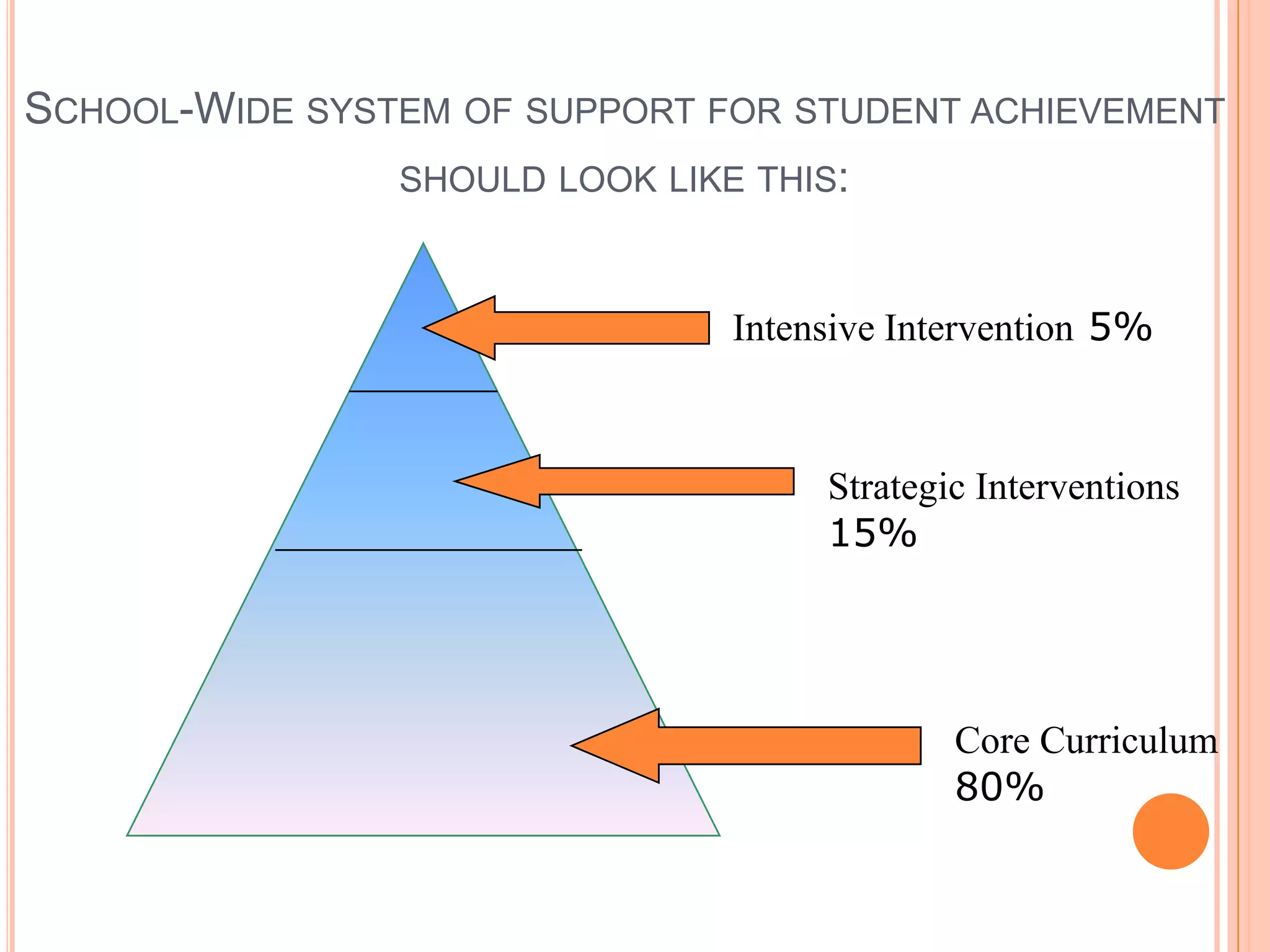
School-Wide system of support for student achievement should look like this:Intensive Intervention 5%Strategic Interventions 15%Core Curriculum 80%
Wilkes County Schools and Responsiveness to Instruction Two National  models of RtIProblem-solvingStandard ProtocolResponse to Intervention”Born out of Reauthorization of Special Ed Law (IDEA 2004)North Carolina’s RtI ModelProblem-Solving Model (PSM)Four tiersAssessment  Includes Curriculum Based Measurement (CBM) and Formative Assessment (FA)35
North Carolina RtI Problem Solving ModelIdentifyWhat the student knowsWhat they should knowAreas to target for instruction Develop an intervention planSet individualized student goalsImplement the planMonitor student progress Evaluate, review, and revise the plan
What is a Problem-Solving Model ?Systematic analysis Functional assessmentDataInstructional planPlan implementationMonitoring37
Problem-Solving Model (PSM)Core Curriculum assessmentMeet the needs of diverse learners within school districtsIdentify and implement best educational strategies for all learners38
So ………You’ve assessed your core….Identified gaps….Strengthened your curriculum and instruction…Differentiated instruction for all learners………..AND students are still struggling………39What’s next ?
What’s The Difference ?40Modification- change in expectations of what a student is expected to knowfewer number of multiple choice items on a testmodified spelling listfewer number of math problems
What’s the Difference?41Accommodation – a change that is intended to help the student fully access the general education curriculum without changing the instructional content.large print books preferential seatingsign language interpreters
What’s the Difference?42Intervention – academic or behavioral strategies used to teach a new skill, build fluency in a skill, or encourage the application of existing skills to a new environmentrepeated readingpaired readingbehavior report cardWilson Reading, Read Well, Reading Mastery, etc.
Problem-Solving Model (PSM)43Change in mind-set is necessary for all
Student problems are defined
Questions drive assessments
Engage in instruction that addresses learning
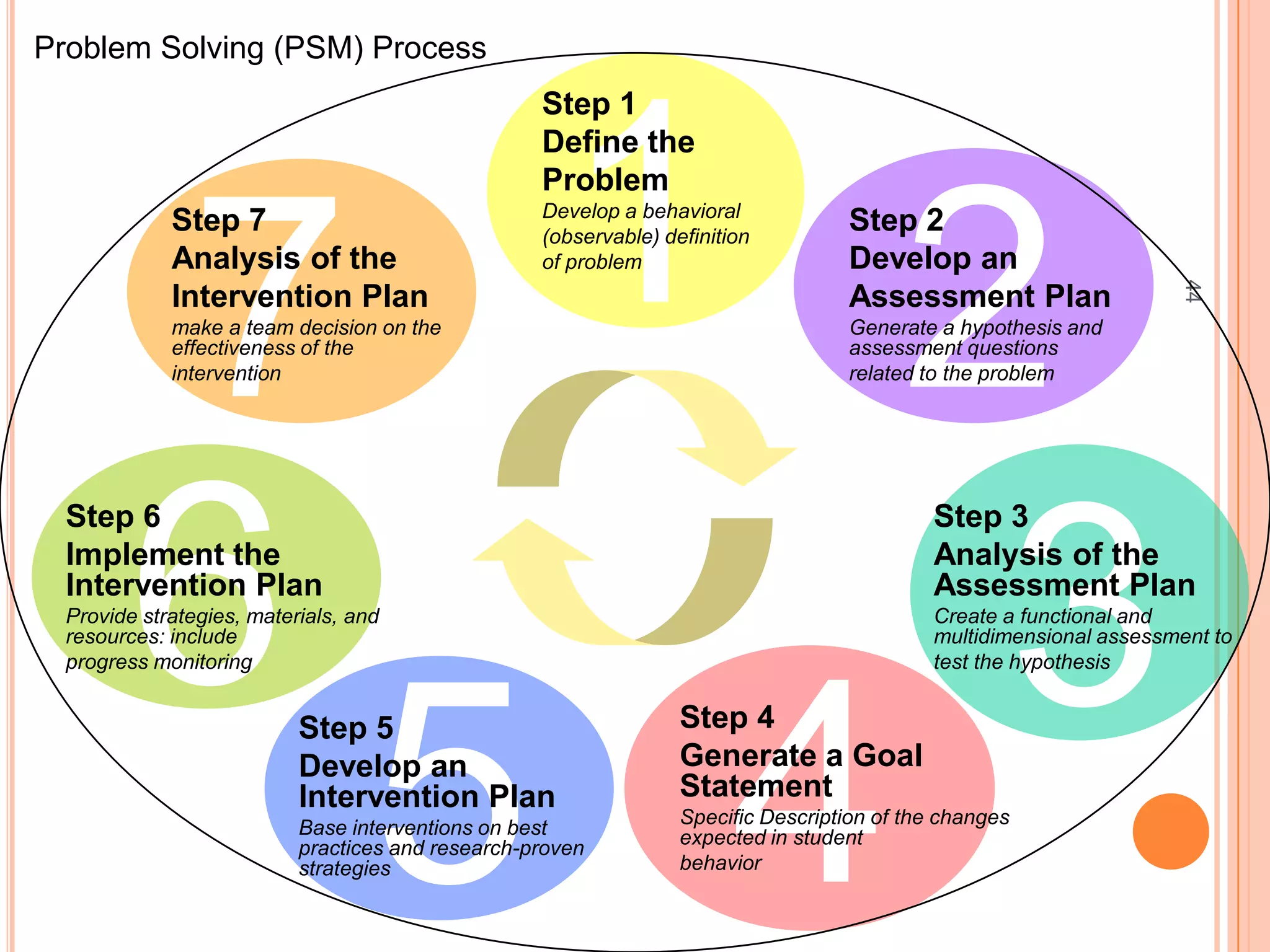
Intervention is derived from analysis of baseline dataProblem Solving (PSM) Process1Step 1Define the ProblemDevelop a behavioral (observable) definition of problem2447Step 7Analysis of theIntervention Planmake a team decision on the effectiveness of the interventionStep 2Develop an Assessment PlanGenerate a hypothesis and assessment questions related to the problem63Step 3Analysis of the Assessment PlanCreate a functional and multidimensional assessment to test the hypothesisStep 6 Implement the Intervention PlanProvide strategies, materials, and resources: include progress monitoring54Step 4Generate a Goal StatementSpecific Description of the changes expected in student behaviorStep 5Develop an Intervention PlanBase interventions on best practices and research-proven strategies
45
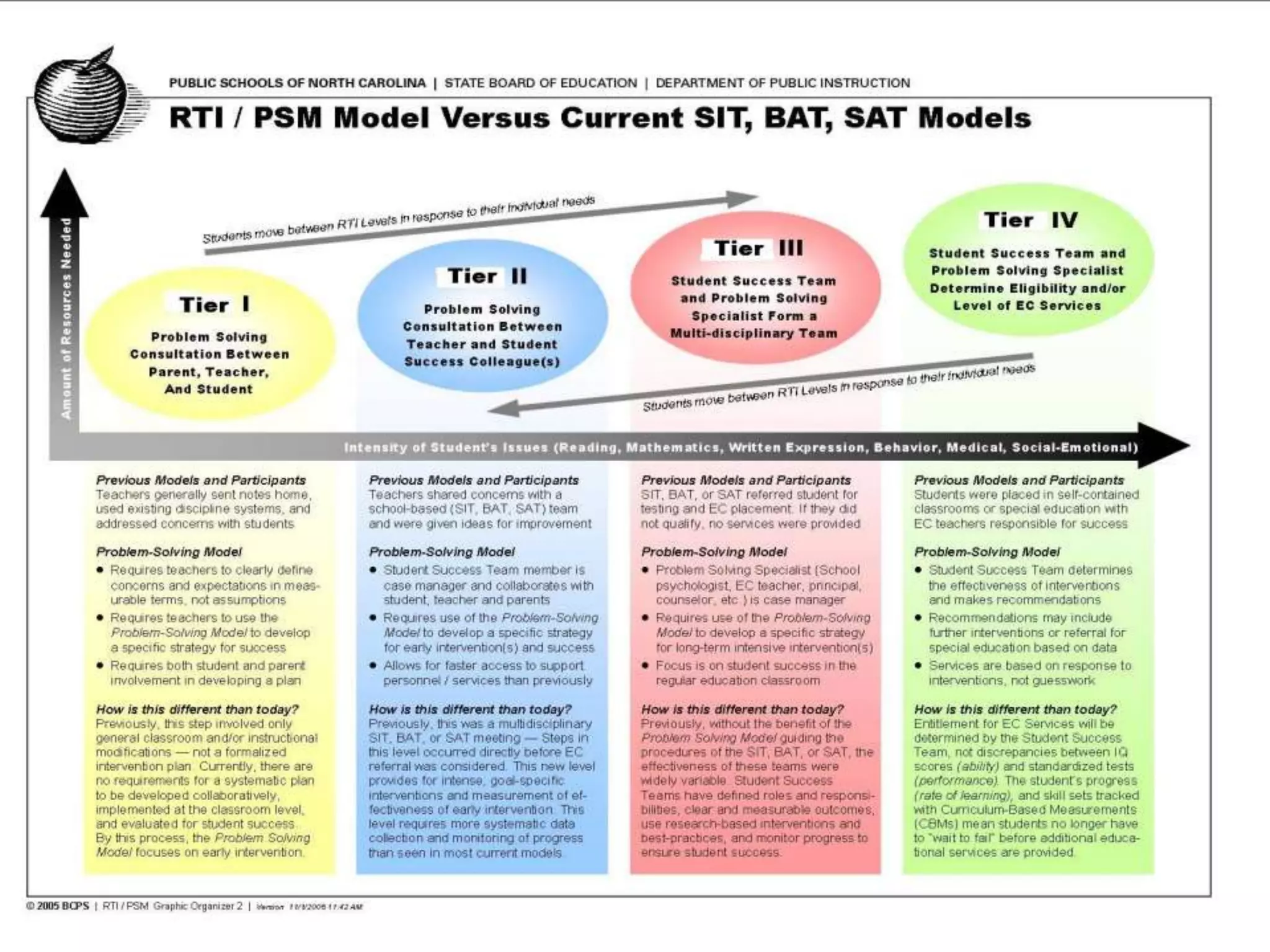
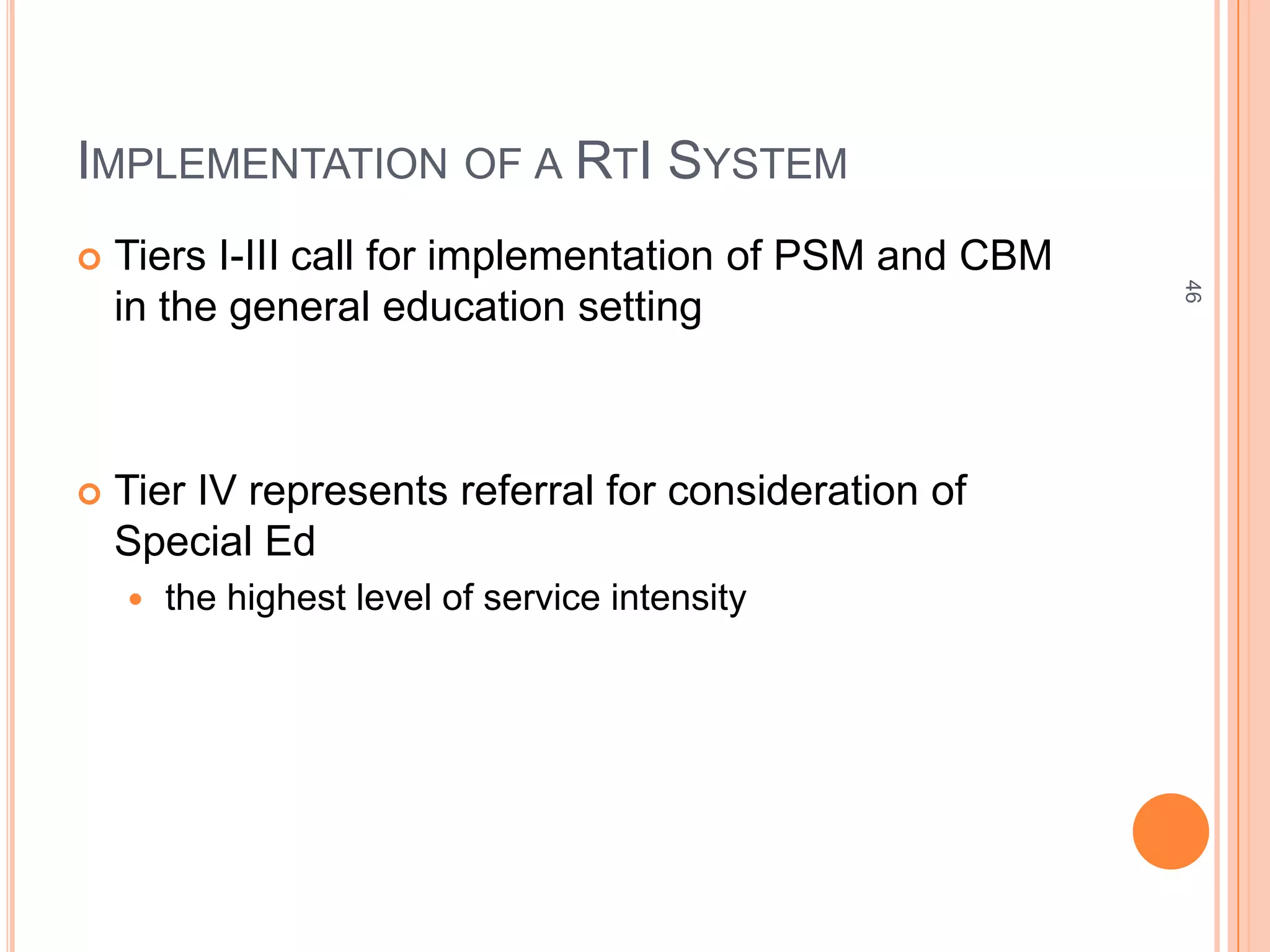
Implementation of a RtI System46Tiers I-III call for implementation of PSM and CBM in the general education settingTier IV represents referral for consideration of Special Edthe highest level of service intensity
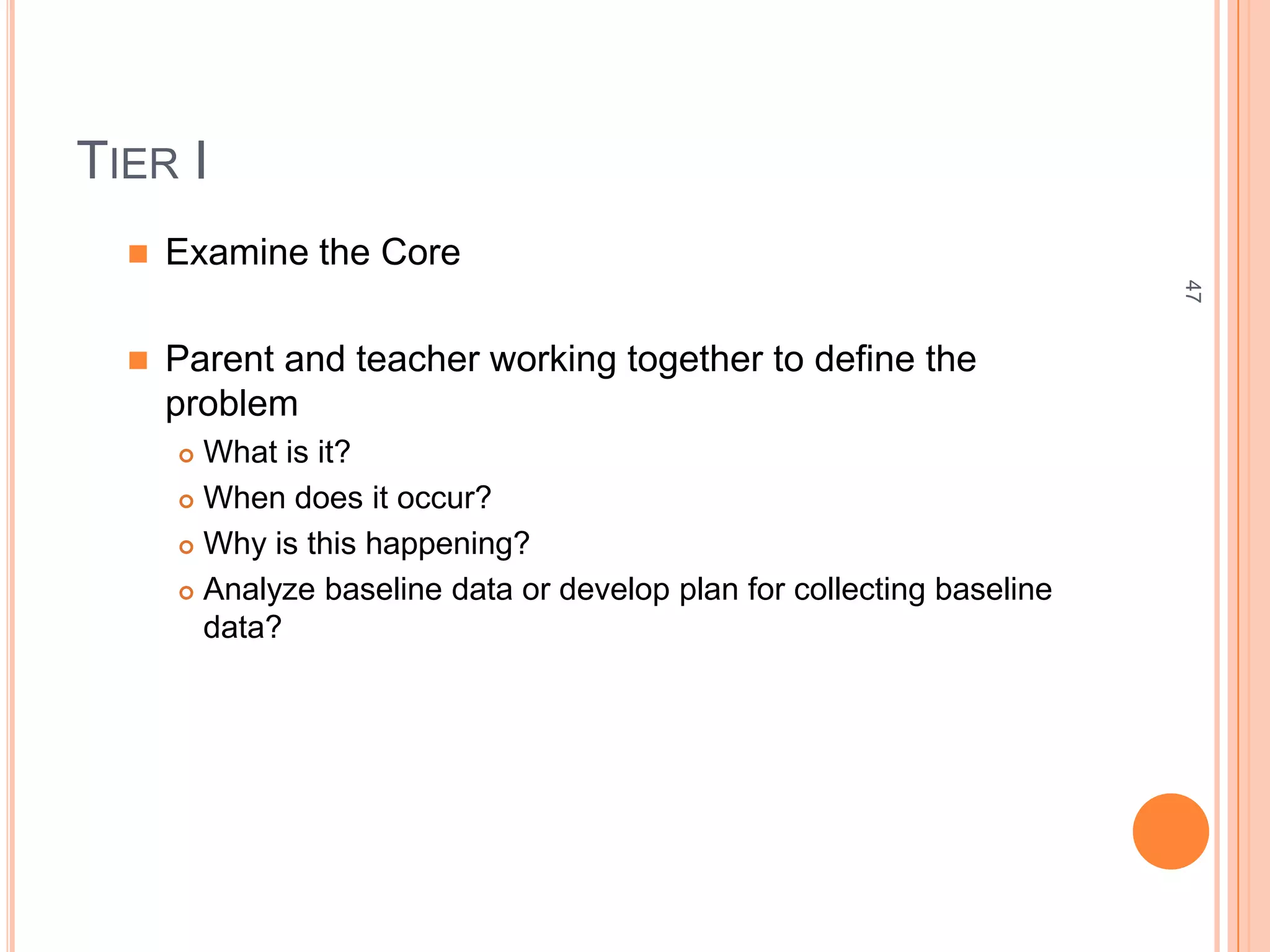
Tier I47Examine the Core
Parent and teacher working together to define the problemWhat is it?When does it occur?Why is this happening?Analyze baseline data or develop plan for collecting baseline data?
Tier II48Repeat steps of cyclical problem-solving model Additional school personnel are involved as neededParentTeacherTeaching peer, Counselor, school psychologist, reading teacher, administrator, social worker, nurse, etc.
Tier III49Steps of cyclical problem-solving model repeat
More formal and systematic
School based problem solving team (SST)
Problem-solving model forms are completed
 Collect :
Baseline, goal setting, and progress monitoring data
Data is provided as evidence for need of interventionTier IV50Review all available data and	Continue interventions at Tier III                         ORRefer for consideration of special educationIf referral is made:
Define the problem
Use progress monitoring data as baseline on IEPIEP (intervention) is developed based on data
What are research-based/research validated  interventions?Interventions backed by scientific research (e.g., research articles in peer-reviewed professional journals) demonstrating that the intervention is effective in addressing the student’s underlying reason(s) for academic failureInterventions backed by “rigorous evidence”Interventions with a proven track record.What Works Clearinghouse
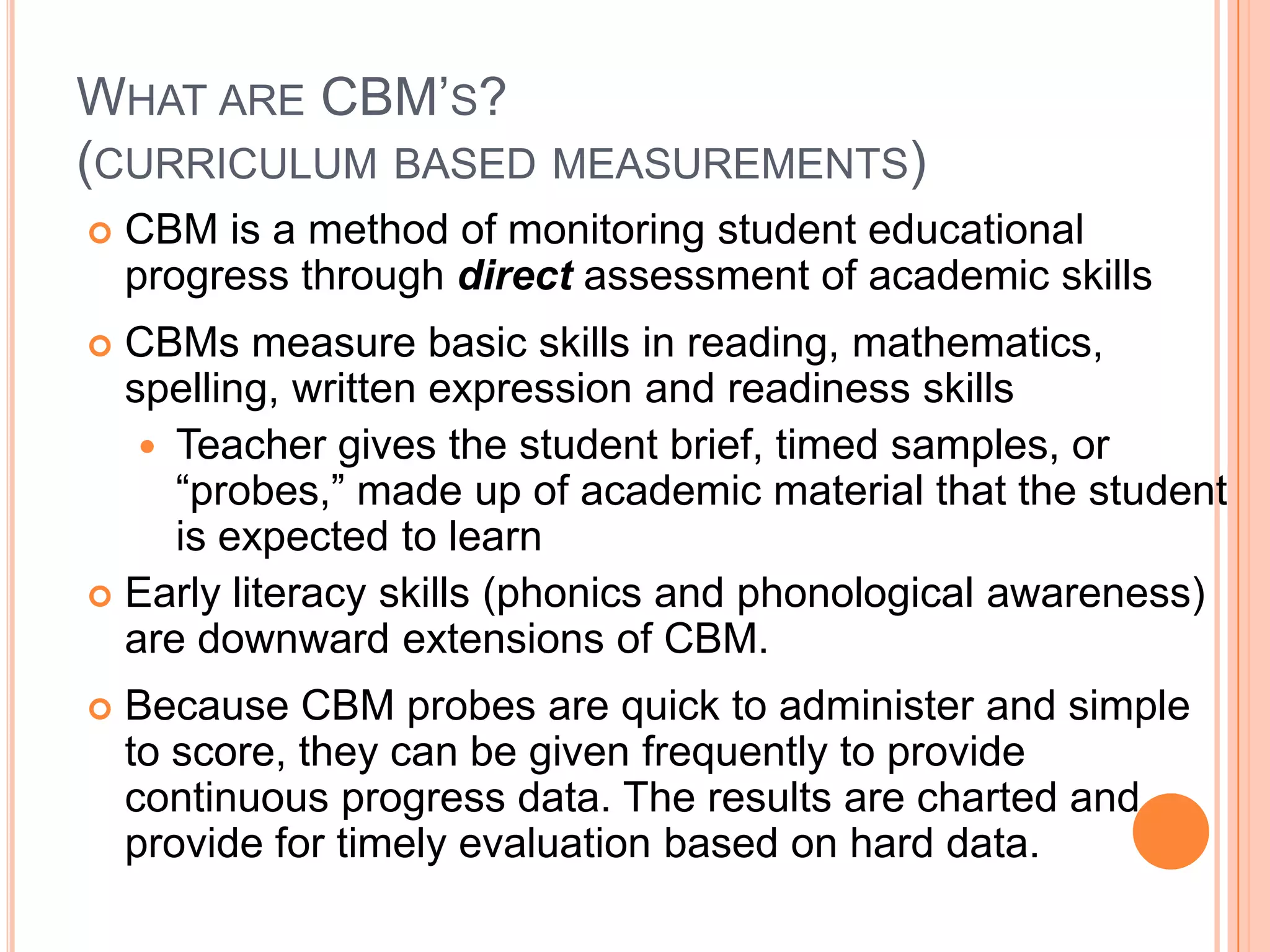
What are CBM’s? (curriculum based measurements)CBM is a method of monitoring student educational progress through direct assessment of academic skillsCBMs measure basic skills in reading, mathematics, spelling, written expression and readiness skillsTeacher gives the student brief, timed samples, or “probes,” made up of academic material that the student is expected to learnEarly literacy skills (phonics and phonological awareness) are downward extensions of CBM.Because CBM probes are quick to administer and simple to score, they can be given frequently to provide continuous progress data. The results are charted and provide for timely evaluation based on hard data.

Elements of greatness 2010 2011

  • 1.
  • 2.
    WELCOME BACKA GoodOld Ice BreakerEveryone Sells
  • 3.
    A Year InReviewAYP-Target Goal for Reading 71.6Subgroup Reading @ Grade Level in 2010-11 All 75.8 (71.9)Hispanic 60.8 –Meet with Safe Harbor (50)White 77.1 (73.9)EDS 67.3 (did not meet) (63.9)EC 50-Meet w/ SH (32.1)
  • 4.
    A Year InReviewSubgroup Math @ Grade Level in 2010-11 – Target 88.6All 88.6 (talk about close!) (87.6)Hispanic 82.4-meet w/SH (73.8)White 88.8 (89.5)EDS 83.2 –Did not meet (82.9)EC 76.6 –meet w/SH (57.1)
  • 5.
    Looking at thebigger pictureTalk with your neighbor and discuss our AYP resultsPositivesGrowth concernsWhat should we focus on?What would make a difference?
  • 6.
  • 7.
    How do westack UP?While it is not a competition—how are we doing compared to our friends around the county?West Wilkes Middle 81.6East Wilkes Middle 80.1North Wilkes Middle 75.9Central Wilkes Middle 73.5No Middle Schools meet AYP
  • 8.
    How do westack up?We still have LOTS of work to do!PLCCommon AssessmentsDATA DRIVEN
  • 9.
  • 10.
    Elements of GreatnessVisionPassionBeliefDesireCouragePerseveranceExecutionWithyour group discuss how your element contributes to our schools success.Create a symbol that represents your element and it’s contribution to our success. Place the name of the element in the upper left corner and write the name in the upper right corner.How does each element together create the element of greatness?What do you bring to the table?
  • 11.
  • 12.
  • 13.
  • 14.
  • 15.
  • 16.
    How does differentiationand diversity work together in a classroom?Far away there in the sunshine are my highest aspirations. I may not reach them, but I can look up and see their beauty, believe in them and try to follow where the lead.Louisa May Alcott
  • 17.
    Understanding DifferentiationKey Elements:ContentProcessProductAffectReadinessInterestSharehow you are going to use these elements in your classroom. pp. 14-16
  • 18.
    Learning ProfileLearning style-Do a profileIntelligence preferenceGenderCulture-pp. 17-18
  • 19.
    Four Interdependent elements Learning environmentCurriculum AssessmentInstructionShare with your table-pp.19-24
  • 20.
    Framework for Developinga Differentiated classroom-Who are your learners? (Are you all alike or are there important differences?)-Given the differences you see, how should you teach them?-If your classroom is going to work for all of your students, what will it be like?(How will it need to function? What roles will each play?)-How can you learn more about the students starting points, interests. And best ways of learning?-If you have a differentiated classroom, can it be fair? (What will “fair” mean in the room?)-What will success in this class mean? (How will you know if you’re succeeding?(How will the students know?) pp. 45-46
  • 21.
    How will differentiationlook in your Classroom?Learning EnvironmentRoutinesMaintenance I Can’t differentiate……………………..
  • 22.
    When the schoolbell rings on day one and all our students are in their seats, we will hold the future of this nation and this world in our hands. Whatever we do will have lasting implications, not only on the lives of those student, but also on the lives of all those who they come in contact with. So then, the question that we should ask ourselves should not be, “How can I make this work?” The question must be, “How can I afford not to make this work?”-Wendy Kopp, One Day, All Children
  • 23.
    Responsiveness to InstructionRtIWilkes County SchoolsMiddle Schools2011-2012
  • 24.
    If we reallybelieve that all children can learn, then … it is not acceptable for any child to fail to learn
  • 25.
    FOCUS…focus on addressingthe needs of ALL students having difficulty, not just those with labels…focus on ALL educators being responsible for ALL students…focus on the solution rather than the problem…focus on an instruction/intervention rather than on what is wrong with the student
  • 26.
    NC DPI Definitionof RtI The practice of providing high quality instructionmatched to student need, monitoring progress frequently to make decisions about changes in instruction or goals and applying child response data to important educational decisions. Response to Intervention Policy Considerations and Implementation,National Association of State Directors of Special Education, Inc.
  • 27.
    What is RtI?Frameworkthat focuses on:Appropriate, targeted instructionResearched-based teaching strategies Early interventionAccurate assessment with valid, reliable dataFrequent progress monitoringInformed instructional decisions
  • 28.
    Why RtI?Alignment ofstudent’s needs with specific instructional strategies that are research-based Recognition of needs that allow for early interveningEnrichment and extension of curriculumReinforcement of skills and concepts
  • 29.
    How is ThisDifferent?Creates a shift in focus proactive rather than reactiveeliminates “Wait to Fail”Early intervening to prevent failureMore efficient use of resourcesSupports family partnerships
  • 30.
    What are someadvantages of RtI?One advantage of RTI in the diagnosis of educational disabilities is that it allows schools to intervene early to meet the needs of struggling learners. Another advantage is that RTI maps those specific instructional strategies found to benefit a particular student. This information can be very helpful to both teachers and parents.
  • 31.
    How Do WeDo This?Educate all students:
  • 32.
    Build uponprior knowledge and experience
  • 33.
    Address a widerange of skill levels
  • 34.
  • 35.
    Provide instruction atthe appropriate instructional level matched to student needsRtI is Not…. A packaged programA curriculumSpecial EdJust for eligibility identificationA place in the buildingRtI
  • 36.
    RtI is…….The wholeschool working togetherProcess that uses all resources within a schoolInstruction guided by student outcome dataInstruction & interventions matched to student’s needsPrevention of academic and behavioral problemsUsing resources and expertise to help all studentsRegular monitoring of success/needsMulti-step processHigh-quality, research-based instruction and interventionsVarying levels of intensityMatch interventions to student’s needsData driven instruction ! RtI
  • 37.
    RtI: Connection toStudent AchievementIdentify performance level and pinpoint specific areas Assess core curriculumDevelop/Implement appropriate instructional plansProgress Monitoring through Frequent AssessmentData-based decision making for instruction and goals
  • 38.
    School-Wide system ofsupport for student achievement should look like this:Intensive Intervention 5%Strategic Interventions 15%Core Curriculum 80%
  • 39.
    Wilkes County Schoolsand Responsiveness to Instruction Two National models of RtIProblem-solvingStandard ProtocolResponse to Intervention”Born out of Reauthorization of Special Ed Law (IDEA 2004)North Carolina’s RtI ModelProblem-Solving Model (PSM)Four tiersAssessment Includes Curriculum Based Measurement (CBM) and Formative Assessment (FA)35
  • 40.
    North Carolina RtIProblem Solving ModelIdentifyWhat the student knowsWhat they should knowAreas to target for instruction Develop an intervention planSet individualized student goalsImplement the planMonitor student progress Evaluate, review, and revise the plan
  • 41.
    What is aProblem-Solving Model ?Systematic analysis Functional assessmentDataInstructional planPlan implementationMonitoring37
  • 42.
    Problem-Solving Model (PSM)CoreCurriculum assessmentMeet the needs of diverse learners within school districtsIdentify and implement best educational strategies for all learners38
  • 43.
    So ………You’ve assessedyour core….Identified gaps….Strengthened your curriculum and instruction…Differentiated instruction for all learners………..AND students are still struggling………39What’s next ?
  • 44.
    What’s The Difference?40Modification- change in expectations of what a student is expected to knowfewer number of multiple choice items on a testmodified spelling listfewer number of math problems
  • 45.
    What’s the Difference?41Accommodation– a change that is intended to help the student fully access the general education curriculum without changing the instructional content.large print books preferential seatingsign language interpreters
  • 46.
    What’s the Difference?42Intervention– academic or behavioral strategies used to teach a new skill, build fluency in a skill, or encourage the application of existing skills to a new environmentrepeated readingpaired readingbehavior report cardWilson Reading, Read Well, Reading Mastery, etc.
  • 47.
    Problem-Solving Model (PSM)43Changein mind-set is necessary for all
  • 48.
  • 49.
  • 50.
    Engage in instructionthat addresses learning
  • 51.
    Intervention is derivedfrom analysis of baseline dataProblem Solving (PSM) Process1Step 1Define the ProblemDevelop a behavioral (observable) definition of problem2447Step 7Analysis of theIntervention Planmake a team decision on the effectiveness of the interventionStep 2Develop an Assessment PlanGenerate a hypothesis and assessment questions related to the problem63Step 3Analysis of the Assessment PlanCreate a functional and multidimensional assessment to test the hypothesisStep 6 Implement the Intervention PlanProvide strategies, materials, and resources: include progress monitoring54Step 4Generate a Goal StatementSpecific Description of the changes expected in student behaviorStep 5Develop an Intervention PlanBase interventions on best practices and research-proven strategies
  • 52.
  • 53.
    Implementation of aRtI System46Tiers I-III call for implementation of PSM and CBM in the general education settingTier IV represents referral for consideration of Special Edthe highest level of service intensity
  • 54.
  • 55.
    Parent and teacherworking together to define the problemWhat is it?When does it occur?Why is this happening?Analyze baseline data or develop plan for collecting baseline data?
  • 56.
    Tier II48Repeat stepsof cyclical problem-solving model Additional school personnel are involved as neededParentTeacherTeaching peer, Counselor, school psychologist, reading teacher, administrator, social worker, nurse, etc.
  • 57.
    Tier III49Steps ofcyclical problem-solving model repeat
  • 58.
    More formal andsystematic
  • 59.
    School based problemsolving team (SST)
  • 60.
  • 61.
  • 62.
    Baseline, goal setting,and progress monitoring data
  • 63.
    Data is providedas evidence for need of interventionTier IV50Review all available data and Continue interventions at Tier III ORRefer for consideration of special educationIf referral is made:
  • 64.
  • 65.
    Use progress monitoringdata as baseline on IEPIEP (intervention) is developed based on data
  • 66.
    What are research-based/researchvalidated interventions?Interventions backed by scientific research (e.g., research articles in peer-reviewed professional journals) demonstrating that the intervention is effective in addressing the student’s underlying reason(s) for academic failureInterventions backed by “rigorous evidence”Interventions with a proven track record.What Works Clearinghouse
  • 67.
    What are CBM’s?(curriculum based measurements)CBM is a method of monitoring student educational progress through direct assessment of academic skillsCBMs measure basic skills in reading, mathematics, spelling, written expression and readiness skillsTeacher gives the student brief, timed samples, or “probes,” made up of academic material that the student is expected to learnEarly literacy skills (phonics and phonological awareness) are downward extensions of CBM.Because CBM probes are quick to administer and simple to score, they can be given frequently to provide continuous progress data. The results are charted and provide for timely evaluation based on hard data.
  • 68.
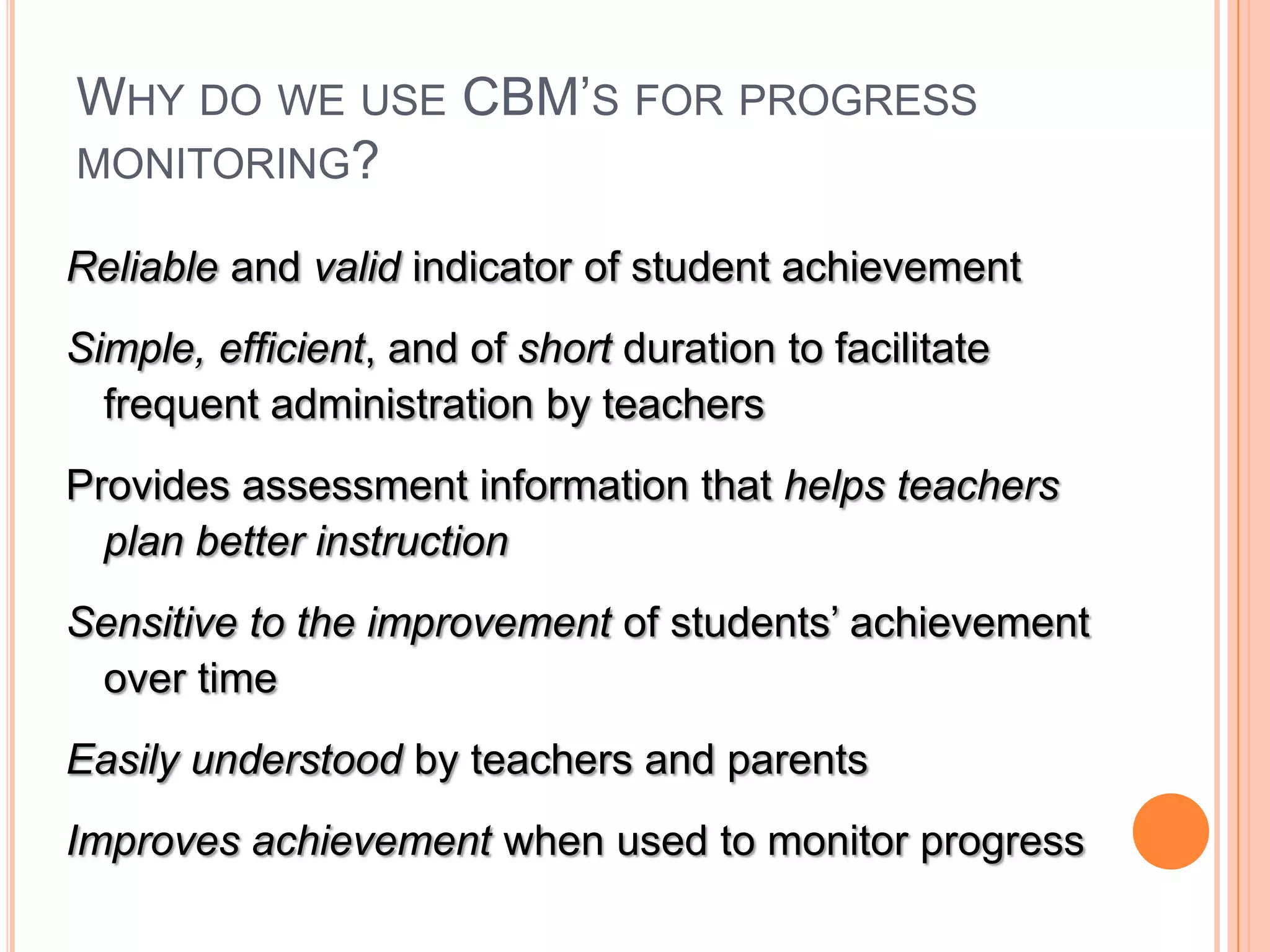
    Why do weuse CBM’s for progress monitoring?Reliable and valid indicator of student achievementSimple, efficient, and of short duration to facilitate frequent administration by teachersProvides assessment information that helps teachers plan better instructionSensitive to the improvement of students’ achievement over timeEasily understood by teachers and parentsImproves achievement when used to monitor progress
  • 69.
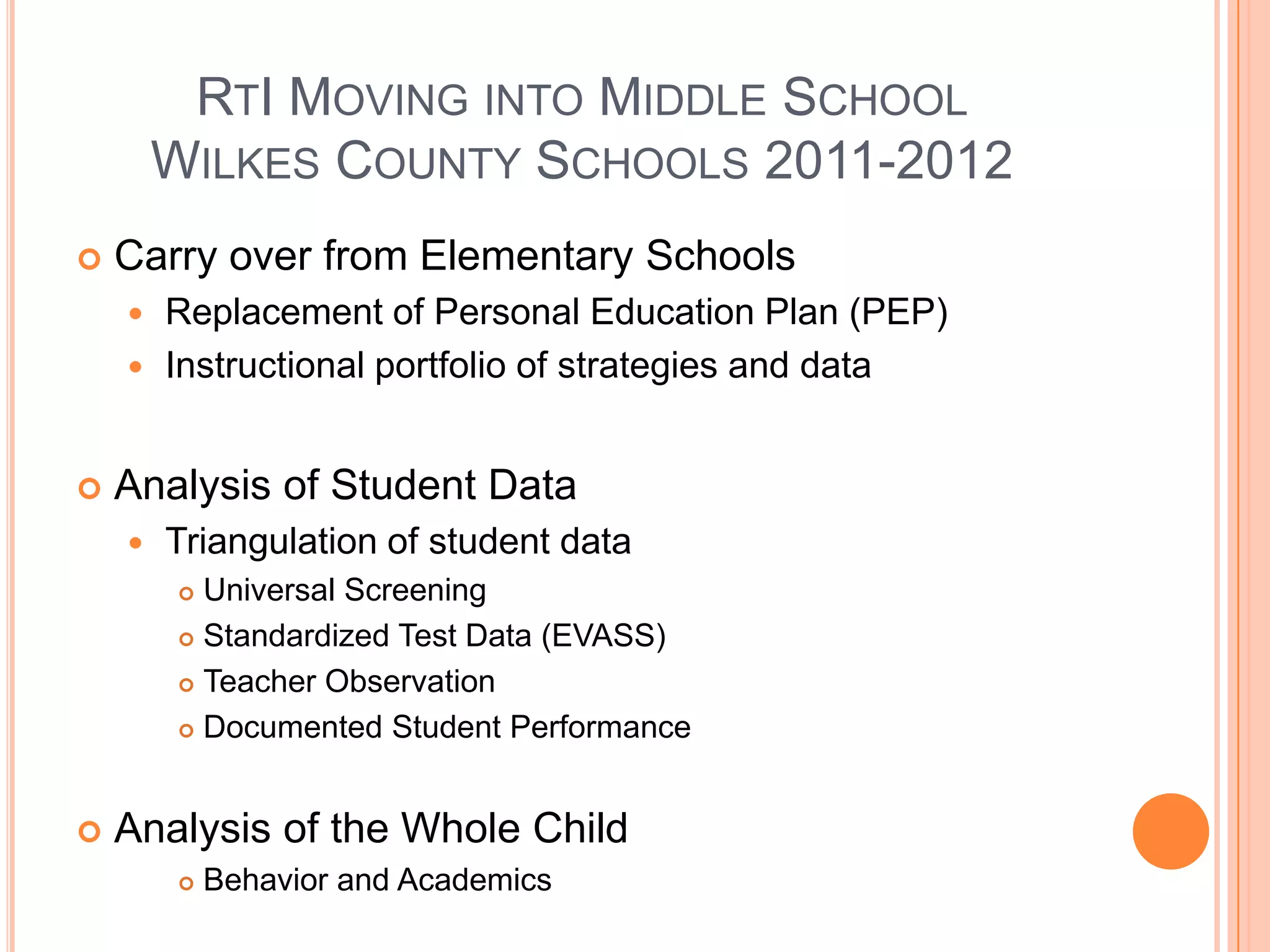
    RtI Moving intoMiddle SchoolWilkes County Schools 2011-2012Carry over from Elementary SchoolsReplacement of Personal Education Plan (PEP)Instructional portfolio of strategies and dataAnalysis of Student Data Triangulation of student dataUniversal ScreeningStandardized Test Data (EVASS)Teacher ObservationDocumented Student PerformanceAnalysis of the Whole ChildBehavior and Academics
  • 70.
  • 71.
  • 72.
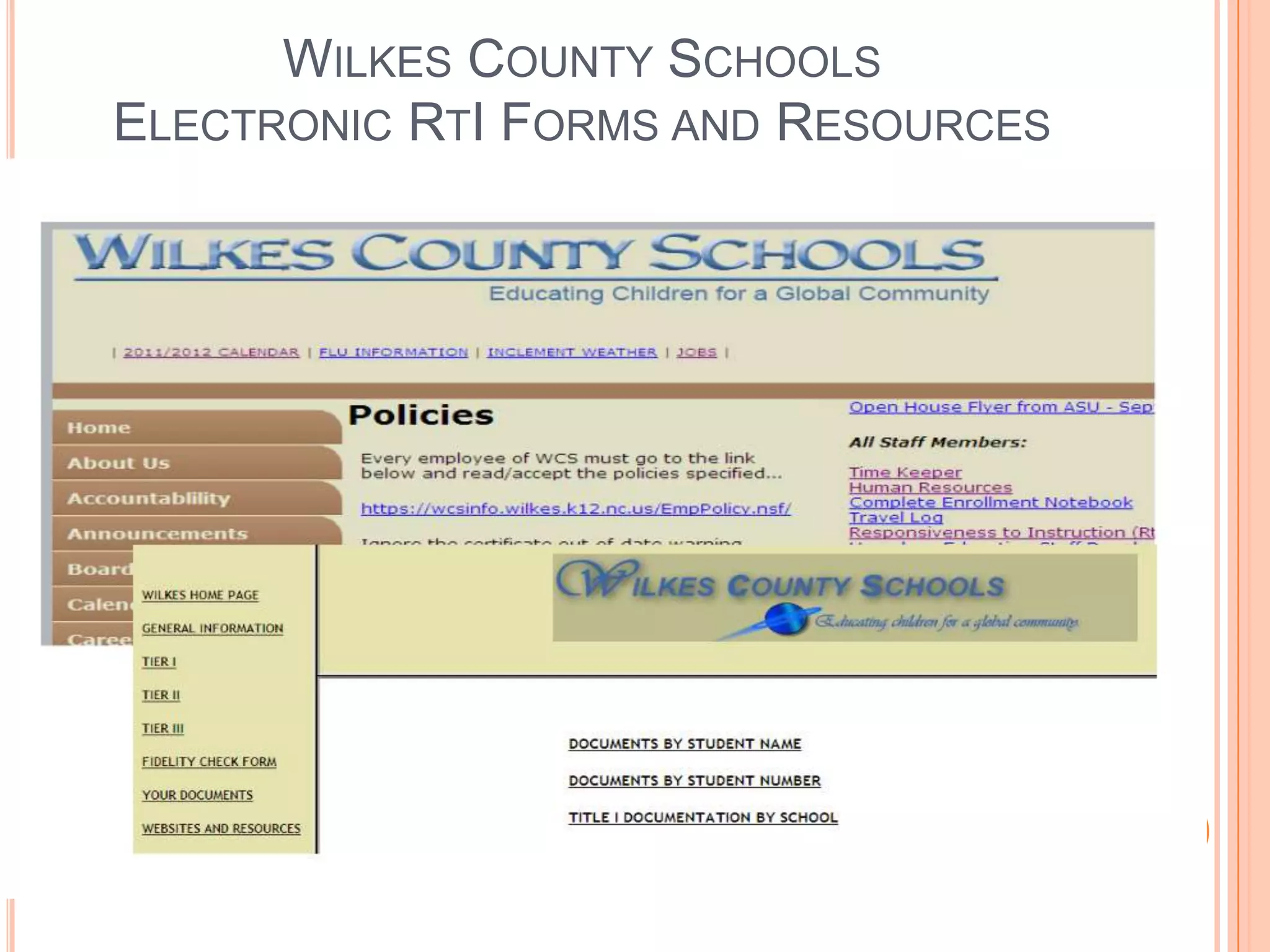
    Wilkes County SchoolsElectronic RtI Forms and Resources
  • 73.
    Questions Concerns Comments Dan Biesak Wilkes County RtI Coordinatorbiesakd@wilkes.k12.nc.us 336-651-7116
  • 74.
  • 75.
  • 76.
  • 77.
    COUNT THEM ONLYONCE! DO NOT GO BACK AND REREAD!FINISHED FILES ARE THE RESULT OF YEARS OF SCIENTIFIC STUDY COMBINED WITH THE EXPERIENCE OF YEARS.
  • 78.
    Angie RobinsonandShelly MitchellLivingin a Web 2.0 WorldSmart Sync
  • 79.
    I Can/I WillStatementsCarol FloraCarla York
  • 80.
    Lit BlockThis isNOT DEARUtilize QAR in ALL classesShelly’s wikiNew Books30 MinutesShould incorporate graphic organizersShould utilize reading comprehension strategies daily- refer to Strategies that Work; Content Matters; I Read it But Don’t Get It- Reading Handbook-handout on ThursdayQuestion Stems- look for Red handbookWRITING IN ALL SUBJECTS AREAS A MUST!
  • 81.
    Knight TimeFocused Interventionfor Level 1, 2, and borderline 3’sWill utilize AIMSweb to determine deficits and assist with placement into programsPossible Programming depending on funds:SRA- Corrective ReadingJourneys ReadingTransMathAcademic ElectiveShould correlate to SCOS objectivesLast 9 weeksEnd projectEnhance Learning
  • 82.
    ELEMENTS of GREATNESSPerceptualLensWhat’s Important

Editor's Notes

  • #38 Problem-solving is a process that includes systematic analysis of a student’s behavior or academic difficulty in the context of a functional assessment plan. Data gathered through the functional assessment plan are then used to develop an instructional plan / strategy specific to the problem. The implementation of this plan / strategy is then monitored and data are evaluated to determine effectiveness.
  • #46 Take a few minutes to review this form and talk with your team.
  • #48 Parent and teacher together brainstorm ideas for interventionsDiscuss what interventions look likeLook at differentiated instructionCreate a Parent/Teacher LogDevelop progress monitoring planSet time table for reconvening to evaluate interventions Implement intervention planEvaluateUse progress monitoringDetermine effectiveness of interventionProblem-solving model forms are completed to document the process.
  • #49 Problem-solving model forms are completed to document the process.
  • #50 Cycle repeats, but in a more formal and systematic way. May include the school-based problem solving team. Team may consist of referring teacher, parent, administrator, psychologist, EC staff member, counselor, regular education representative, anyone else neededForms are completed to document each step of the process. Data are collected and charted to provide visual representation of skill acquisition. Problem-solving model forms are completed to document the process.
  • #51 Team identifies areas to be addressed as concerns and determines that intensity of interventions require more than can be addressed in the regular classroom.Problem-solving model forms are completed to document the process.