Blended Learning from 
the Perspective of 
Parents and Students 
Jason Siko 
Assistant Professor of 
Educational Technology 
Grand Valley State 
University 
Michael Barbour 
Director of Doctoral Studies 
Assistant Professor of 
Educational Leadership 
Sacred Heart University
Student Perceptions 
Generally speaking, students have a 
positive perception of blended instruction 
(Chandra & Fisher, 2009; Geçer, 2013; 
Pratt & Trewern, 2011) 
While they enjoyed the experience, did 
desire more face-to-face communication
Parent Perceptions 
Little research done on perceptions of parents 
Different role than with college-age online 
students 
They are not the instructor, facilitator, or 
technical support for the course; however, they 
often play all of these roles at some point 
Parental support is important to the success of 
virtual student (Black,2009), but they 
themselves might be uncomfortable/unfamiliar 
with the learning environment
Research Questions 
1. What are the perceptions of 
students in a blended learning 
class? 
2. What are the perceptions of 
parents whose students are in a 
blended learning class?
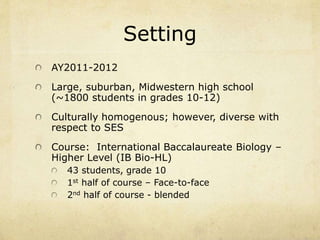
Setting 
AY2011-2012 
Large, suburban, Midwestern high school 
(~1800 students in grades 10-12) 
Culturally homogenous; however, diverse with 
respect to SES 
Course: International Baccalaureate Biology – 
Higher Level (IB Bio-HL) 
43 students, grade 10 
1st half of course – Face-to-face 
2nd half of course - blended
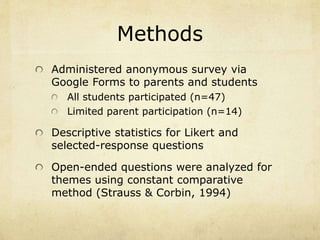
Methods 
Administered anonymous survey via 
Google Forms to parents and students 
All students participated (n=47) 
Limited parent participation (n=14) 
Descriptive statistics for Likert and 
selected-response questions 
Open-ended questions were analyzed for 
themes using constant comparative 
method (Strauss & Corbin, 1994)
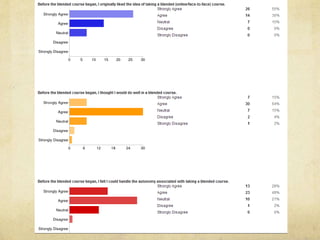
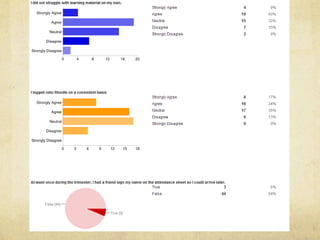
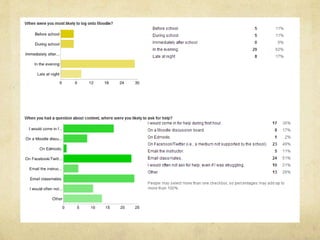
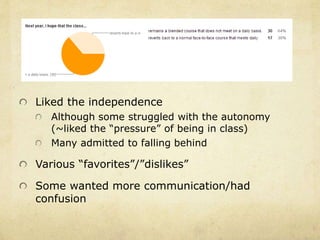
Liked the independence 
Although some struggled with the autonomy 
(~liked the “pressure” of being in class) 
Many admitted to falling behind 
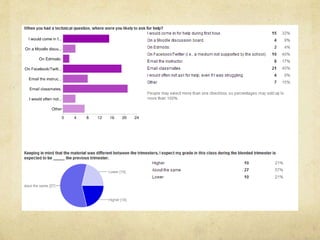
Various “favorites”/”dislikes” 
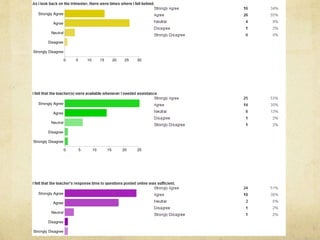
Some wanted more communication/had 
confusion
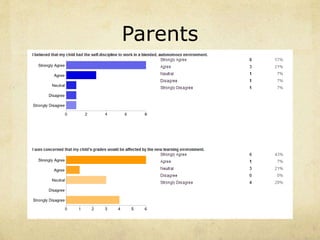
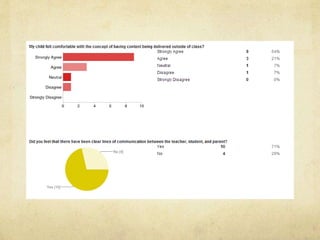
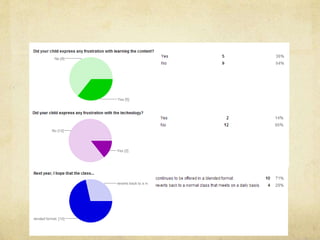
Parents
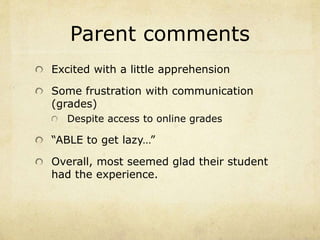
Parent comments 
Excited with a little apprehension 
Some frustration with communication 
(grades) 
Despite access to online grades 
“ABLE to get lazy…” 
Overall, most seemed glad their student 
had the experience.
Implications 
Emphasize communication in teacher 
preparation for blended instruction to both 
parents and students 
Look for ways to mitigate organization and 
self-regulation issues
Questions?
Thanks for coming! 
Jason P. Siko 
Assistant Professor of 
Educational 
Technology 
Grand Valley State 
University 
Grand Rapids, MI 
sikojp@gmail.com 
sikoj@gvsu.edu 
http://jasonsiko.com 
@jasonsiko 
Michael K. Barbour 
Director of Doctoral Studies, Isabelle 
Farrington College of Education 
Assistant Professor, Educational 
Leadership 
Sacred Heart University 
Fairfield, CT 
mkbarbour@gmail.com 
http://michaelbarbour.com 
http://virtualschooling.wordpress.com 
@mkbshu

SITE2014-Blended Learning from the Perspective of Parents and Students

  • 1.
    Blended Learning from the Perspective of Parents and Students Jason Siko Assistant Professor of Educational Technology Grand Valley State University Michael Barbour Director of Doctoral Studies Assistant Professor of Educational Leadership Sacred Heart University
  • 2.
    Student Perceptions Generallyspeaking, students have a positive perception of blended instruction (Chandra & Fisher, 2009; Geçer, 2013; Pratt & Trewern, 2011) While they enjoyed the experience, did desire more face-to-face communication
  • 3.
    Parent Perceptions Littleresearch done on perceptions of parents Different role than with college-age online students They are not the instructor, facilitator, or technical support for the course; however, they often play all of these roles at some point Parental support is important to the success of virtual student (Black,2009), but they themselves might be uncomfortable/unfamiliar with the learning environment
  • 4.
    Research Questions 1.What are the perceptions of students in a blended learning class? 2. What are the perceptions of parents whose students are in a blended learning class?
  • 5.
    Setting AY2011-2012 Large,suburban, Midwestern high school (~1800 students in grades 10-12) Culturally homogenous; however, diverse with respect to SES Course: International Baccalaureate Biology – Higher Level (IB Bio-HL) 43 students, grade 10 1st half of course – Face-to-face 2nd half of course - blended
  • 6.
    Methods Administered anonymoussurvey via Google Forms to parents and students All students participated (n=47) Limited parent participation (n=14) Descriptive statistics for Likert and selected-response questions Open-ended questions were analyzed for themes using constant comparative method (Strauss & Corbin, 1994)
  • 12.
    Liked the independence Although some struggled with the autonomy (~liked the “pressure” of being in class) Many admitted to falling behind Various “favorites”/”dislikes” Some wanted more communication/had confusion
  • 13.
  • 16.
    Parent comments Excitedwith a little apprehension Some frustration with communication (grades) Despite access to online grades “ABLE to get lazy…” Overall, most seemed glad their student had the experience.
  • 17.
    Implications Emphasize communicationin teacher preparation for blended instruction to both parents and students Look for ways to mitigate organization and self-regulation issues
  • 18.
  • 19.
    Thanks for coming! Jason P. Siko Assistant Professor of Educational Technology Grand Valley State University Grand Rapids, MI sikojp@gmail.com sikoj@gvsu.edu http://jasonsiko.com @jasonsiko Michael K. Barbour Director of Doctoral Studies, Isabelle Farrington College of Education Assistant Professor, Educational Leadership Sacred Heart University Fairfield, CT mkbarbour@gmail.com http://michaelbarbour.com http://virtualschooling.wordpress.com @mkbshu