Alcohol Dependence Syndrome
             Niharika Thakkar

             Child Guidance Centre and
             Department of Behavioural
             Sciences and Mental Health,
             Sahyadri Hospitals ltd, Pune
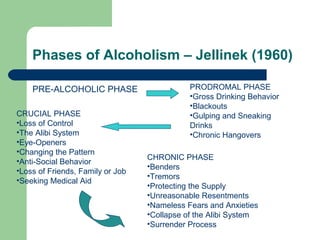
Phases of Alcoholism – Jellinek (1960)

    PRE-ALCOHOLIC PHASE                      PRODROMAL PHASE
                                             •Gross Drinking Behavior
                                             •Blackouts
CRUCIAL PHASE                                •Gulping and Sneaking
•Loss of Control                             Drinks
•The Alibi System                            •Chronic Hangovers
•Eye-Openers
•Changing the Pattern
•Anti-Social Behavior             CHRONIC PHASE
                                  •Benders
•Loss of Friends, Family or Job
                                  •Tremors
•Seeking Medical Aid
                                  •Protecting the Supply
                                  •Unreasonable Resentments
                                  •Nameless Fears and Anxieties
                                  •Collapse of the Alibi System
                                  •Surrender Process
Types of Alcoholism – Jellinek (1960)

 Alpha alcoholism
 Beta alcoholism
 Gamma alcoholism
 Delta alcoholism
 Epsilon alcoholism-

Dipsomaniac
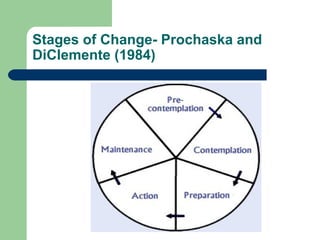
Stages of Change- Prochaska and
DiClemente (1984)
Stages of Change- Prochaska and
DiClemente (1984)

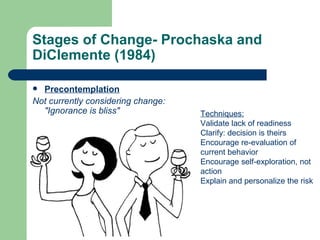
 Precontemplation
Not currently considering change:
  "Ignorance is bliss"              Techniques:
                                    Validate lack of readiness
                                    Clarify: decision is theirs
                                    Encourage re-evaluation of
                                    current behavior
                                    Encourage self-exploration, not
                                    action
                                    Explain and personalize the risk
Stages of Change- Prochaska and
DiClemente (1984)

Contemplation
Ambivalent about change:" Sitting on the fence"
Not considering change within the next month
  [Miller and Rollnick (1991)]

Techniques
 Validate lack of readiness
 Clarify: decision is theirs
 Encourage evaluation of pros and cons of
  behavior change
 Identify and promote new, positive outcome
  expectations
Stages of Change-
Prochaska and
DiClemente (1984)

Preparation
Some experience with change and are
  trying to change: "Testing the waters"
Planning to act within 1month
Techniques:
 Identify and assist in problem solving
 Help patient identify social support
 Verify that patient has underlying
  skills for behavior change
 Encourage small initial steps
Stages of Change- Prochaska and
DiClemente (1984)

Action
Practicing new behavior for 3-6 months
Techniques:
 Focus on restructuring cues and social
  support
 Bolster self-efficacy for dealing with
  obstacles
 Combat feelings of loss and reiterate
  long-term benefits
Stages of Change- Prochaska and
DiClemente (1984)

Maintenance
Continued commitment to sustaining new
  behavior
Post-6 months to 5 years
Techniques:
 Plan for follow-up support
 Reinforce internal rewards
 Discuss coping with relapse
Stages of Change- Prochaska and
DiClemente (1984)

Relapse
Resumption of old behaviors:
  "Fall from grace"
Techniques:
 Evaluate trigger for relapse
 Reassess motivation and
  barriers
 Plan stronger coping
  strategies
Motivational
Interviewing

 Denial
 Individual is encouraged to reach own
  decision about change
 Therapists’ role    facilitate the change
Aim     Cognitive Dissonance
Goal Self actualization
Behaviour Interventions
   Cue Exposure: Compulsion
    will be reduced if the urge is
    restricted
   Aversive Condition :
    Chemical or shock
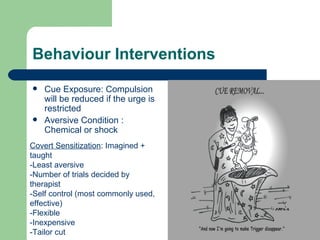
Covert Sensitization: Imagined +
taught
-Least aversive
-Number of trials decided by
therapist
-Self control (most commonly used,
effective)
-Flexible
-Inexpensive
-Tailor cut
Behaviour Interventions

Cautions:
- Urge has to be targeted
- Prevent “inappropriate
  generalization”
- Side effect: anger, resentment,
  aggression
- Lack of co operation
Behaviour Interventions
Procedure:
 Close eyes
 Imagine : Target response to be weakened
 Imagine an aversive stimulus
 Clarity of image
 Indicate degree of aversiveness
 Practice till clarity of image reported
 20 scenes- 10 described by therapist, 10 imagined out of
  description
 Taped: listen to tape twice a day
 In-vivo practice
 Combine with cover reinforcement: Imagine a pleasant scene
Behaviour Therapy in Substance Use

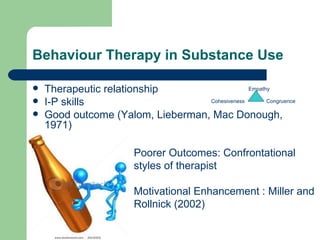
   Therapeutic relationship                    Empathy

   I-P skills                     Cohesiveness       Congruence

   Good outcome (Yalom, Lieberman, Mac Donough,
    1971)

                         Poorer Outcomes: Confrontational
                         styles of therapist

                         Motivational Enhancement : Miller and
                         Rollnick (2002)
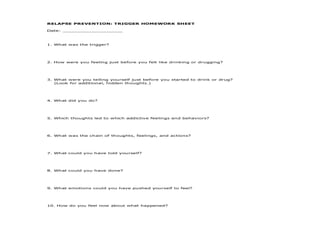
Relapse Prevention

 Marlatt &Gordon (1985)
-Social Learning
-Behavioural rehearsal
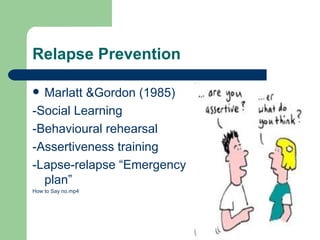
-Assertiveness training
-Lapse-relapse “Emergency
  plan”
How to Say no.mp4
Psychosocial

   Alcoholics Anonymous group (12 step
    approach)
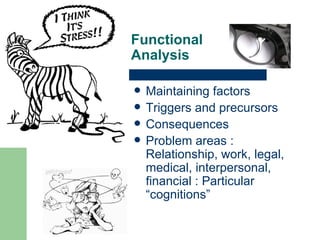
Functional
Analysis

   Maintaining factors
   Triggers and precursors
   Consequences
   Problem areas :
    Relationship, work, legal,
    medical, interpersonal,
    financial : Particular
    “cognitions”
Implementing goals of treatment

   Generic treatment plan : Denial- Educate-
    Facilitate into program like AA
   Goal: Total abstinence
   Sobeil & Sobeil (1976): ‘Controvercial’ Model
   Goal: Moderated drinking
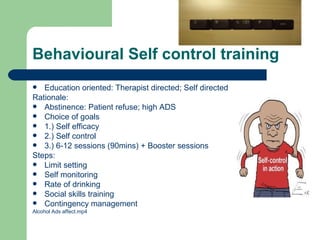
Behavioural Self control training
  Education oriented: Therapist directed; Self directed
Rationale:
 Abstinence: Patient refuse; high ADS
 Choice of goals
 1.) Self efficacy
 2.) Self control
 3.) 6-12 sessions (90mins) + Booster sessions
Steps:
 Limit setting
 Self monitoring
 Rate of drinking
 Social skills training
 Contingency management
Alcohol Ads affect.mp4
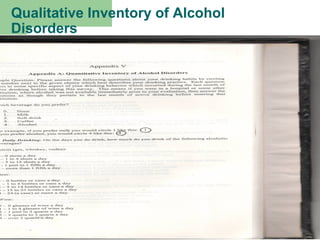
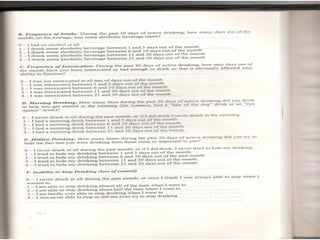
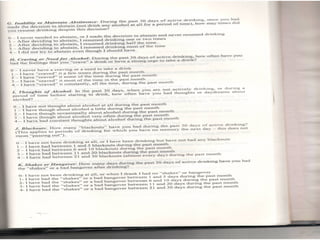
Qualitative Inventory of Alcohol
Disorders
Chalo, Bye

Alcohol dependence syndrome (pdf)

  • 1.
    Alcohol Dependence Syndrome Niharika Thakkar Child Guidance Centre and Department of Behavioural Sciences and Mental Health, Sahyadri Hospitals ltd, Pune
  • 2.
    Phases of Alcoholism– Jellinek (1960) PRE-ALCOHOLIC PHASE PRODROMAL PHASE •Gross Drinking Behavior •Blackouts CRUCIAL PHASE •Gulping and Sneaking •Loss of Control Drinks •The Alibi System •Chronic Hangovers •Eye-Openers •Changing the Pattern •Anti-Social Behavior CHRONIC PHASE •Benders •Loss of Friends, Family or Job •Tremors •Seeking Medical Aid •Protecting the Supply •Unreasonable Resentments •Nameless Fears and Anxieties •Collapse of the Alibi System •Surrender Process
  • 3.
    Types of Alcoholism– Jellinek (1960)  Alpha alcoholism  Beta alcoholism  Gamma alcoholism  Delta alcoholism  Epsilon alcoholism- Dipsomaniac
  • 4.
    Stages of Change-Prochaska and DiClemente (1984)
  • 5.
    Stages of Change-Prochaska and DiClemente (1984)  Precontemplation Not currently considering change: "Ignorance is bliss" Techniques: Validate lack of readiness Clarify: decision is theirs Encourage re-evaluation of current behavior Encourage self-exploration, not action Explain and personalize the risk
  • 6.
    Stages of Change-Prochaska and DiClemente (1984) Contemplation Ambivalent about change:" Sitting on the fence" Not considering change within the next month [Miller and Rollnick (1991)] Techniques  Validate lack of readiness  Clarify: decision is theirs  Encourage evaluation of pros and cons of behavior change  Identify and promote new, positive outcome expectations
  • 7.
    Stages of Change- Prochaskaand DiClemente (1984) Preparation Some experience with change and are trying to change: "Testing the waters" Planning to act within 1month Techniques:  Identify and assist in problem solving  Help patient identify social support  Verify that patient has underlying skills for behavior change  Encourage small initial steps
  • 8.
    Stages of Change-Prochaska and DiClemente (1984) Action Practicing new behavior for 3-6 months Techniques:  Focus on restructuring cues and social support  Bolster self-efficacy for dealing with obstacles  Combat feelings of loss and reiterate long-term benefits
  • 9.
    Stages of Change-Prochaska and DiClemente (1984) Maintenance Continued commitment to sustaining new behavior Post-6 months to 5 years Techniques:  Plan for follow-up support  Reinforce internal rewards  Discuss coping with relapse
  • 10.
    Stages of Change-Prochaska and DiClemente (1984) Relapse Resumption of old behaviors: "Fall from grace" Techniques:  Evaluate trigger for relapse  Reassess motivation and barriers  Plan stronger coping strategies
  • 11.
    Motivational Interviewing  Denial  Individualis encouraged to reach own decision about change  Therapists’ role facilitate the change Aim Cognitive Dissonance Goal Self actualization
  • 12.
    Behaviour Interventions  Cue Exposure: Compulsion will be reduced if the urge is restricted  Aversive Condition : Chemical or shock Covert Sensitization: Imagined + taught -Least aversive -Number of trials decided by therapist -Self control (most commonly used, effective) -Flexible -Inexpensive -Tailor cut
  • 13.
    Behaviour Interventions Cautions: - Urgehas to be targeted - Prevent “inappropriate generalization” - Side effect: anger, resentment, aggression - Lack of co operation
  • 14.
    Behaviour Interventions Procedure:  Closeeyes  Imagine : Target response to be weakened  Imagine an aversive stimulus  Clarity of image  Indicate degree of aversiveness  Practice till clarity of image reported  20 scenes- 10 described by therapist, 10 imagined out of description  Taped: listen to tape twice a day  In-vivo practice  Combine with cover reinforcement: Imagine a pleasant scene
  • 15.
    Behaviour Therapy inSubstance Use  Therapeutic relationship Empathy  I-P skills Cohesiveness Congruence  Good outcome (Yalom, Lieberman, Mac Donough, 1971) Poorer Outcomes: Confrontational styles of therapist Motivational Enhancement : Miller and Rollnick (2002)
  • 16.
    Relapse Prevention  Marlatt&Gordon (1985) -Social Learning -Behavioural rehearsal -Assertiveness training -Lapse-relapse “Emergency plan” How to Say no.mp4
  • 18.
    Psychosocial  Alcoholics Anonymous group (12 step approach)
  • 19.
    Functional Analysis  Maintaining factors  Triggers and precursors  Consequences  Problem areas : Relationship, work, legal, medical, interpersonal, financial : Particular “cognitions”
  • 20.
    Implementing goals oftreatment  Generic treatment plan : Denial- Educate- Facilitate into program like AA  Goal: Total abstinence  Sobeil & Sobeil (1976): ‘Controvercial’ Model  Goal: Moderated drinking
  • 21.
    Behavioural Self controltraining  Education oriented: Therapist directed; Self directed Rationale:  Abstinence: Patient refuse; high ADS  Choice of goals  1.) Self efficacy  2.) Self control  3.) 6-12 sessions (90mins) + Booster sessions Steps:  Limit setting  Self monitoring  Rate of drinking  Social skills training  Contingency management Alcohol Ads affect.mp4
  • 22.
    Qualitative Inventory ofAlcohol Disorders
  • 29.