Relapse Prevention10 HoursInstructor: Dr. Dawn-Elise SnipesExecutive Director, AllCEUs.com
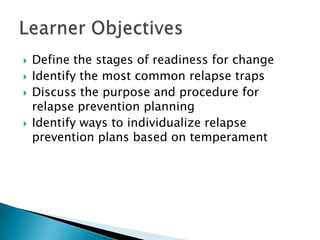
Define the stages of readiness for change Identify the most common relapse traps Discuss the purpose and procedure for relapse prevention planning Identify ways to individualize relapse prevention plans based on temperament Learner Objectives
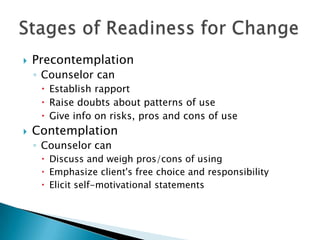
PrecontemplationCounselor can Establish rapport Raise doubts about patterns of use Give info on risks, pros and cons of use ContemplationCounselor can Discuss and weigh pros/cons of using Emphasize client's free choice and responsibility Elicit self-motivational statements Stages of Readiness for Change
PreparationCounselor can Clarify goals and strategies Offer menu of options Negotiate contract or plan ActionCounselor can Negotiate action plan Acknowledge difficulties and support attempts Identify risky situations and coping strategies Help client find new reinforcersSupport perseverance ("Sticking to the plan")
MaintenanceCounselor can Support and affirm changes Rehearse new coping strategies Review goals Remind the client about new toolsAction plan Awareness of risky situations Coping strategies for each situation Participation in 12-Step programs Pursuit of hobbies and cultural activities
Stages of RelapseEmotionalAnxiety Intolerance Anger Defensiveness Mood swings Isolation Mental Thinking about people, places, and things you used withGlamorizing your past use Lying Hanging out with old using friends PhysicalIntense cravingsUse
H.A.L.T.Physical, psychological, social hungerAnger and irritabilityLonliness and an inability to be by yourselfTired due to lack of sleep, irritability, or just being “over it.”Relapse Pitfalls
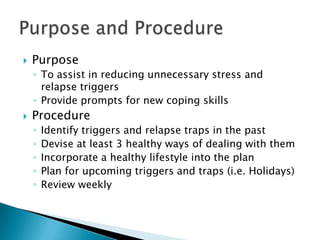
PurposeTo assist in reducing unnecessary stress and relapse triggersProvide prompts for new coping skillsProcedureIdentify triggers and relapse traps in the pastDevise at least 3 healthy ways of dealing with themIncorporate a healthy lifestyle into the planPlan for upcoming triggers and traps (i.e. Holidays)Review weeklyPurpose and Procedure
Principles of Relapse Prevention
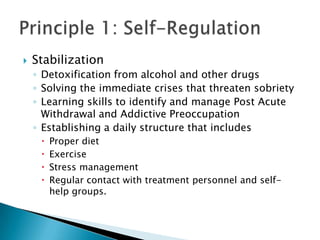
StabilizationDetoxification from alcohol and other drugs Solving the immediate crises that threaten sobriety Learning skills to identify and manage Post Acute Withdrawal and Addictive Preoccupation Establishing a daily structure that includes Proper dietExerciseStress managementRegular contact with treatment personnel and self-help groups. Principle 1: Self-Regulation
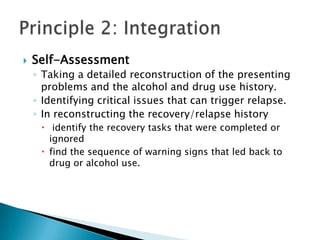
Self-AssessmentTaking a detailed reconstruction of the presenting problems and the alcohol and drug use history. Identifying critical issues that can trigger relapse. In reconstructing the recovery/relapse history identify the recovery tasks that were completed or ignoredfind the sequence of warning signs that led back to drug or alcohol use. Principle 2: Integration
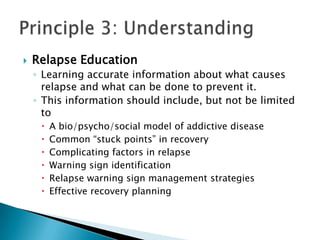
Relapse EducationLearning accurate information about what causes relapse and what can be done to prevent it. This information should include, but not be limited toA bio/psycho/social model of addictive disease Common “stuck points” in recovery Complicating factors in relapse Warning sign identification Relapse warning sign management strategies Effective recovery planningPrinciple 3: Understanding
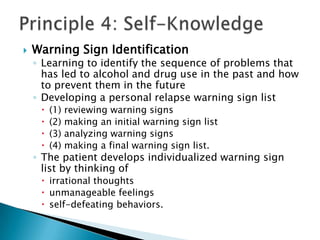
Principle 4: Self-KnowledgeWarning Sign Identification Learning to identify the sequence of problems that has led to alcohol and drug use in the past and how to prevent them in the futureDeveloping a personal relapse warning sign list(1) reviewing warning signs(2) making an initial warning sign list(3) analyzing warning signs (4) making a final warning sign list. The patient develops individualized warning sign list by thinking of irrational thoughtsunmanageable feelingsself-defeating behaviors.
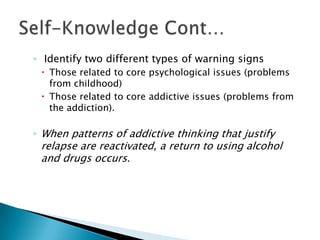
 Identify two different types of warning signsThose related to core psychological issues (problems from childhood)Those related to core addictive issues (problems from the addiction). When patterns of addictive thinking that justify relapse are reactivated, a return to using alcohol and drugs occurs.Self-Knowledge Cont…
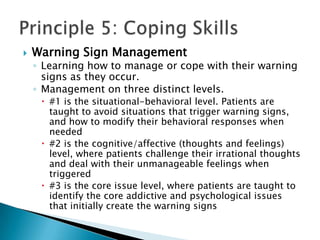
Warning Sign ManagementLearning how to manage or cope with their warning signs as they occur. Management on three distinct levels. #1 is the situational-behavioral level. Patients are taught to avoid situations that trigger warning signs, and how to modify their behavioral responses when needed#2 is the cognitive/affective (thoughts and feelings) level, where patients challenge their irrational thoughts and deal with their unmanageable feelings when triggered#3 is the core issue level, where patients are taught to identify the core addictive and psychological issues that initially create the warning signsPrinciple 5: Coping Skills
Recovery PlanningDevelopment of a schedule of recovery activities that will help patients recognize and manage warning signs as they develop Reviewing each warning sign on the final warning sign list and ensuring that there is a scheduled recovery activity for each. Principle 6: Change
Inventory TrainingCompleting daily inventories to monitor compliance with the recovery program and check for the emergence of relapse warning signs. A morning inventory is used to plan the dayAn evening inventory reviews progress and problems that occurred during that day. A typical morning inventory asks the patient to identify three primary goals for that day, create a to-do list, then schedule time for completion of each taskThe evening review inventory, the patient should review the to-do list to determine whether he or she completed the required activities and if he or she experienced relapse warning signs. Principle 7: Awareness
Involvement of OthersIndividuals cannot recover alone. Family members, 12-step program sponsors, counselors, and peers are just a few of the many recovery resources available. The more psychologically and emotionally healthy the significant others are, the more likely they are to be helpful. The more directly the significant others are involved in the relapse prevention planning process, the more likely they are to become engaged in supporting positive efforts and intervening when necessaryPrinciple 8: Significant Others
Relapse Prevention Plan Updating Updated on a monthly basis for the first 3 months, quarterly for the remainder of the first year, twice a year for the next 2 years, annually thereafter Nearly two thirds of all relapses occur during the first 6 months of recovery. Less than one quarter of the variables that actually cause relapse can be predicted during the initial treatment phase. A relapse prevention plan update session involves the following: A review of the original assessment, warning sign list, management strategies, and recovery plan. An update of the assessment with progress or problems since the previous update. Incorporation of new warning signs and management strategies for  themElimination of activities that are no longer needed. Principle 9: Maintenance
Gradual movement from a more intensive level of care helps prevent people’s new coping skills from being overwhelmed.Residential care often protects people from the daily stresses of bills, traffic and dysfunctional others.Intensive outpatient provides a place to receive support, hope and encouragement on a daily basisOutpatient is appropriate once the patient has a reliable, healthy support network outside of therapyTheory and Purpose of Step-Down
Look at the past to identify reasons for past usePlan for future stressorsAssist patient in developing sober social support systemRelapse Prevention Summary

Relapse prevention (2)

  • 1.
    Relapse Prevention10 HoursInstructor:Dr. Dawn-Elise SnipesExecutive Director, AllCEUs.com
  • 2.
    Define the stagesof readiness for change Identify the most common relapse traps Discuss the purpose and procedure for relapse prevention planning Identify ways to individualize relapse prevention plans based on temperament Learner Objectives
  • 3.
    PrecontemplationCounselor can Establishrapport Raise doubts about patterns of use Give info on risks, pros and cons of use ContemplationCounselor can Discuss and weigh pros/cons of using Emphasize client's free choice and responsibility Elicit self-motivational statements Stages of Readiness for Change
  • 4.
    PreparationCounselor can Clarifygoals and strategies Offer menu of options Negotiate contract or plan ActionCounselor can Negotiate action plan Acknowledge difficulties and support attempts Identify risky situations and coping strategies Help client find new reinforcersSupport perseverance ("Sticking to the plan")
  • 5.
    MaintenanceCounselor can Supportand affirm changes Rehearse new coping strategies Review goals Remind the client about new toolsAction plan Awareness of risky situations Coping strategies for each situation Participation in 12-Step programs Pursuit of hobbies and cultural activities
  • 6.
    Stages of RelapseEmotionalAnxietyIntolerance Anger Defensiveness Mood swings Isolation Mental Thinking about people, places, and things you used withGlamorizing your past use Lying Hanging out with old using friends PhysicalIntense cravingsUse
  • 7.
    H.A.L.T.Physical, psychological, socialhungerAnger and irritabilityLonliness and an inability to be by yourselfTired due to lack of sleep, irritability, or just being “over it.”Relapse Pitfalls
  • 8.
    PurposeTo assist inreducing unnecessary stress and relapse triggersProvide prompts for new coping skillsProcedureIdentify triggers and relapse traps in the pastDevise at least 3 healthy ways of dealing with themIncorporate a healthy lifestyle into the planPlan for upcoming triggers and traps (i.e. Holidays)Review weeklyPurpose and Procedure
  • 9.
  • 10.
    StabilizationDetoxification from alcoholand other drugs Solving the immediate crises that threaten sobriety Learning skills to identify and manage Post Acute Withdrawal and Addictive Preoccupation Establishing a daily structure that includes Proper dietExerciseStress managementRegular contact with treatment personnel and self-help groups. Principle 1: Self-Regulation
  • 11.
    Self-AssessmentTaking a detailedreconstruction of the presenting problems and the alcohol and drug use history. Identifying critical issues that can trigger relapse. In reconstructing the recovery/relapse history identify the recovery tasks that were completed or ignoredfind the sequence of warning signs that led back to drug or alcohol use. Principle 2: Integration
  • 12.
    Relapse EducationLearning accurateinformation about what causes relapse and what can be done to prevent it. This information should include, but not be limited toA bio/psycho/social model of addictive disease Common “stuck points” in recovery Complicating factors in relapse Warning sign identification Relapse warning sign management strategies Effective recovery planningPrinciple 3: Understanding
  • 13.
    Principle 4: Self-KnowledgeWarningSign Identification Learning to identify the sequence of problems that has led to alcohol and drug use in the past and how to prevent them in the futureDeveloping a personal relapse warning sign list(1) reviewing warning signs(2) making an initial warning sign list(3) analyzing warning signs (4) making a final warning sign list. The patient develops individualized warning sign list by thinking of irrational thoughtsunmanageable feelingsself-defeating behaviors.
  • 14.
    Identify twodifferent types of warning signsThose related to core psychological issues (problems from childhood)Those related to core addictive issues (problems from the addiction). When patterns of addictive thinking that justify relapse are reactivated, a return to using alcohol and drugs occurs.Self-Knowledge Cont…
  • 15.
    Warning Sign ManagementLearninghow to manage or cope with their warning signs as they occur. Management on three distinct levels. #1 is the situational-behavioral level. Patients are taught to avoid situations that trigger warning signs, and how to modify their behavioral responses when needed#2 is the cognitive/affective (thoughts and feelings) level, where patients challenge their irrational thoughts and deal with their unmanageable feelings when triggered#3 is the core issue level, where patients are taught to identify the core addictive and psychological issues that initially create the warning signsPrinciple 5: Coping Skills
  • 16.
    Recovery PlanningDevelopment ofa schedule of recovery activities that will help patients recognize and manage warning signs as they develop Reviewing each warning sign on the final warning sign list and ensuring that there is a scheduled recovery activity for each. Principle 6: Change
  • 17.
    Inventory TrainingCompleting dailyinventories to monitor compliance with the recovery program and check for the emergence of relapse warning signs. A morning inventory is used to plan the dayAn evening inventory reviews progress and problems that occurred during that day. A typical morning inventory asks the patient to identify three primary goals for that day, create a to-do list, then schedule time for completion of each taskThe evening review inventory, the patient should review the to-do list to determine whether he or she completed the required activities and if he or she experienced relapse warning signs. Principle 7: Awareness
  • 18.
    Involvement of OthersIndividualscannot recover alone. Family members, 12-step program sponsors, counselors, and peers are just a few of the many recovery resources available. The more psychologically and emotionally healthy the significant others are, the more likely they are to be helpful. The more directly the significant others are involved in the relapse prevention planning process, the more likely they are to become engaged in supporting positive efforts and intervening when necessaryPrinciple 8: Significant Others
  • 19.
    Relapse Prevention PlanUpdating Updated on a monthly basis for the first 3 months, quarterly for the remainder of the first year, twice a year for the next 2 years, annually thereafter Nearly two thirds of all relapses occur during the first 6 months of recovery. Less than one quarter of the variables that actually cause relapse can be predicted during the initial treatment phase. A relapse prevention plan update session involves the following: A review of the original assessment, warning sign list, management strategies, and recovery plan. An update of the assessment with progress or problems since the previous update. Incorporation of new warning signs and management strategies for themElimination of activities that are no longer needed. Principle 9: Maintenance
  • 20.
    Gradual movement froma more intensive level of care helps prevent people’s new coping skills from being overwhelmed.Residential care often protects people from the daily stresses of bills, traffic and dysfunctional others.Intensive outpatient provides a place to receive support, hope and encouragement on a daily basisOutpatient is appropriate once the patient has a reliable, healthy support network outside of therapyTheory and Purpose of Step-Down
  • 21.
    Look at thepast to identify reasons for past usePlan for future stressorsAssist patient in developing sober social support systemRelapse Prevention Summary