Frank Kyewski
   EDU 653
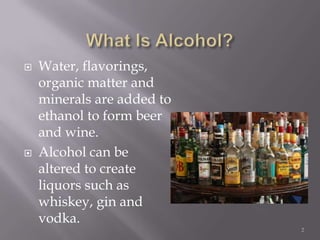
   Water, flavorings,
    organic matter and
    minerals are added to
    ethanol to form beer
    and wine.
   Alcohol can be
    altered to create
    liquors such as
    whiskey, gin and
    vodka.
                            2
 When alcohol is first consumed, it
  may give the drinker a certain
  energy or “buzz”
 However alcohol is actually a
  depressant that causes the CNS to
  slow down.
 It’s only a matter of time until the
  person becomes drunk……
                                         3
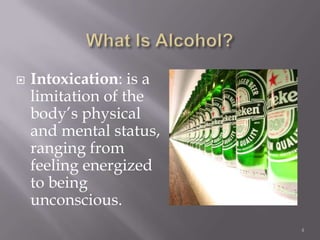
   Intoxication: is a
    limitation of the
    body’s physical
    and mental status,
    ranging from
    feeling energized
    to being
    unconscious.
                         4
BRAIN
 Alcohol can reach the brain in a
  short amount of time and the
  brain’s ability to control the
  body is greatly affected. Fine
  motor skills, speech, and vision
  may be affected.
                                     5
HEART
 Alcohol causes the heart rate to
  increase and the blood vessels to
  expand. Due to the expanded
  blood vessels, blood is circulated
  closer to the outer most layer of
  skin, allowing the body’s heat to
  escape easier.
                                       6
LIVER
 The liver is the organ that processes
  the alcohol in the body and turns it
  back into water and carbon dioxide.
 When more alcohol is consumed
  faster than the liver can handle, the
  alcohol continues to circulate the
  blood stream causing intoxication.

                                          7
Respiratory System
 The lungs release carbon
  dioxide from the body while a
  person is breathing.
 The water passes out of the
  body in the form of urine,
  perspiration, and breath
  vapor.
                                  8
STOMACH
 Some of the alcohol consumed by a
  person will pass through the lining
  of their stomach to reach the
  bloodstream.
 Ingesting too much alcohol in a
  short amount of time my cause the
  stomach to reject the poison and
  vomiting may occur.
                                        9
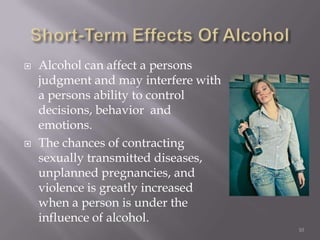
   Alcohol can affect a persons
    judgment and may interfere with
    a persons ability to control
    decisions, behavior and
    emotions.
   The chances of contracting
    sexually transmitted diseases,
    unplanned pregnancies, and
    violence is greatly increased
    when a person is under the
    influence of alcohol.
                                      10
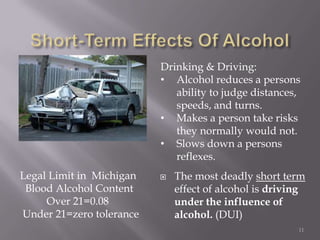
Drinking & Driving:
                          • Alcohol reduces a persons
                             ability to judge distances,
                             speeds, and turns.
                          • Makes a person take risks
                             they normally would not.
                          • Slows down a persons
                             reflexes.
Legal Limit in Michigan      The most deadly short term
 Blood Alcohol Content        effect of alcohol is driving
     Over 21=0.08             under the influence of
Under 21=zero tolerance       alcohol. (DUI)
                                                        11
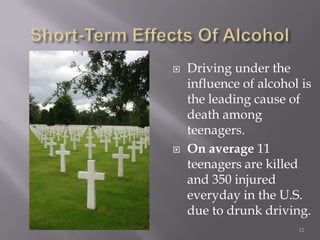
   Driving under the
    influence of alcohol is
    the leading cause of
    death among
    teenagers.
   On average 11
    teenagers are killed
    and 350 injured
    everyday in the U.S.
    due to drunk driving.
                        12
 Long-term excessive use of alcohol
  can lead to severe brain damage.
 Moderate drinking can result in the
  loss of brain cells.
 Loss of brain cells can cause
  impairment of intellectual abilities
  like memory and problem solving.
                                         13
   If you choose to continue to use alcohol
    while you are pregnant with a baby, many
    different problem can arise. Whatever a
    mother consumes the baby also consumes.
    If a mother is drunk, there is a good
    chance here unborn baby is also.

   Fetal Alcohol Syndrome results from
    prolonged use of alcohol while pregnant.
    It can lead to many birth defects such as
    low birth weight, deformation,
    developmental difficulties, mental
    impairments, even death.

                                                14
   Alcohol also interferes with the livers ability to
    function properly.
   The liver is unable to break down fats creating a
    fatty build up within the liver that prohibits it
    from functioning properly.
   Longtime heavy use of alcohol can cause a
    condition call Cirrhosis. This is a condition in
    which liver tissue is destroyed and then
    replaced with scarred tissue.


                                                    15
   NIDA - http://www.drugabuse.gov/drugs-
    abuse/alcohol

   NIAAA - http://www.niaaa.nih.gov/alcohol-
    health/alcohols-effects-body

   Kidshealth.org -
    http://kidshealth.org/teen/drug_alcohol/alcohol
    /alcohol.html

   Glencoe Health and Wellness, 2005, Meeks and
    Heit
   Klearchos Kapoutsis on fotopedia
    http://www.fotopedia.com/items/flickr-3600947113
   Felix.triller on fotopedia
    http://www.fotopedia.com/items/flickr-2228066149
   Hilary Boles on Flikr
    http://www.flickr.com/photos/hillaryraindeer/41916
    39560/
   Michael Gil on Flikr
    http://www.flickr.com/photos/msvg/5291828902/
   Casper Moler on fotopedia
    http://www.fotopedia.com/items/flickr-2676493157

Alcohol ppt

  • 1.
  • 2.
    Water, flavorings, organic matter and minerals are added to ethanol to form beer and wine.  Alcohol can be altered to create liquors such as whiskey, gin and vodka. 2
  • 3.
     When alcoholis first consumed, it may give the drinker a certain energy or “buzz”  However alcohol is actually a depressant that causes the CNS to slow down.  It’s only a matter of time until the person becomes drunk…… 3
  • 4.
    Intoxication: is a limitation of the body’s physical and mental status, ranging from feeling energized to being unconscious. 4
  • 5.
    BRAIN  Alcohol canreach the brain in a short amount of time and the brain’s ability to control the body is greatly affected. Fine motor skills, speech, and vision may be affected. 5
  • 6.
    HEART  Alcohol causesthe heart rate to increase and the blood vessels to expand. Due to the expanded blood vessels, blood is circulated closer to the outer most layer of skin, allowing the body’s heat to escape easier. 6
  • 7.
    LIVER  The liveris the organ that processes the alcohol in the body and turns it back into water and carbon dioxide.  When more alcohol is consumed faster than the liver can handle, the alcohol continues to circulate the blood stream causing intoxication. 7
  • 8.
    Respiratory System  Thelungs release carbon dioxide from the body while a person is breathing.  The water passes out of the body in the form of urine, perspiration, and breath vapor. 8
  • 9.
    STOMACH  Some ofthe alcohol consumed by a person will pass through the lining of their stomach to reach the bloodstream.  Ingesting too much alcohol in a short amount of time my cause the stomach to reject the poison and vomiting may occur. 9
  • 10.
    Alcohol can affect a persons judgment and may interfere with a persons ability to control decisions, behavior and emotions.  The chances of contracting sexually transmitted diseases, unplanned pregnancies, and violence is greatly increased when a person is under the influence of alcohol. 10
  • 11.
    Drinking & Driving: • Alcohol reduces a persons ability to judge distances, speeds, and turns. • Makes a person take risks they normally would not. • Slows down a persons reflexes. Legal Limit in Michigan  The most deadly short term Blood Alcohol Content effect of alcohol is driving Over 21=0.08 under the influence of Under 21=zero tolerance alcohol. (DUI) 11
  • 12.
    Driving under the influence of alcohol is the leading cause of death among teenagers.  On average 11 teenagers are killed and 350 injured everyday in the U.S. due to drunk driving. 12
  • 13.
     Long-term excessiveuse of alcohol can lead to severe brain damage.  Moderate drinking can result in the loss of brain cells.  Loss of brain cells can cause impairment of intellectual abilities like memory and problem solving. 13
  • 14.
    If you choose to continue to use alcohol while you are pregnant with a baby, many different problem can arise. Whatever a mother consumes the baby also consumes. If a mother is drunk, there is a good chance here unborn baby is also.  Fetal Alcohol Syndrome results from prolonged use of alcohol while pregnant. It can lead to many birth defects such as low birth weight, deformation, developmental difficulties, mental impairments, even death. 14
  • 15.
    Alcohol also interferes with the livers ability to function properly.  The liver is unable to break down fats creating a fatty build up within the liver that prohibits it from functioning properly.  Longtime heavy use of alcohol can cause a condition call Cirrhosis. This is a condition in which liver tissue is destroyed and then replaced with scarred tissue. 15
  • 16.
    NIDA - http://www.drugabuse.gov/drugs- abuse/alcohol  NIAAA - http://www.niaaa.nih.gov/alcohol- health/alcohols-effects-body  Kidshealth.org - http://kidshealth.org/teen/drug_alcohol/alcohol /alcohol.html  Glencoe Health and Wellness, 2005, Meeks and Heit
  • 17.
    Klearchos Kapoutsis on fotopedia http://www.fotopedia.com/items/flickr-3600947113  Felix.triller on fotopedia http://www.fotopedia.com/items/flickr-2228066149  Hilary Boles on Flikr http://www.flickr.com/photos/hillaryraindeer/41916 39560/  Michael Gil on Flikr http://www.flickr.com/photos/msvg/5291828902/  Casper Moler on fotopedia http://www.fotopedia.com/items/flickr-2676493157