Africa Map
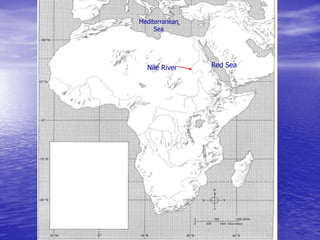
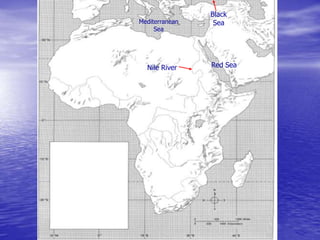
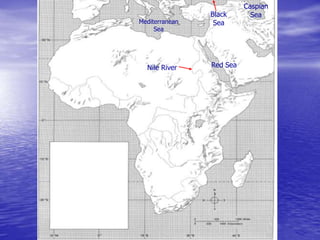
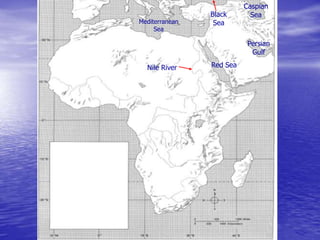
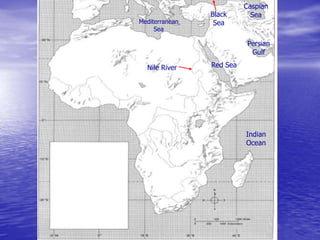
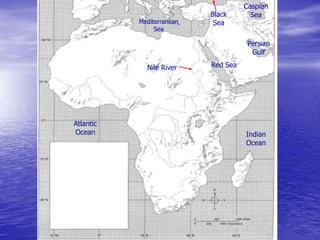
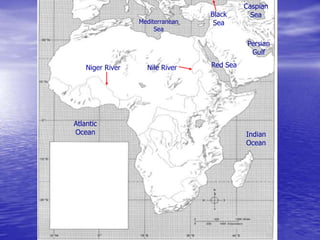
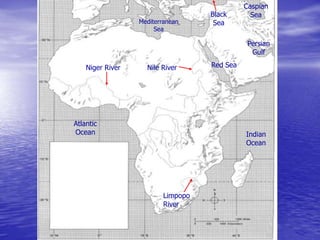
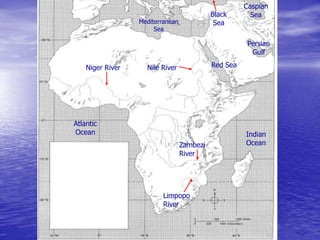
Bodies of Water
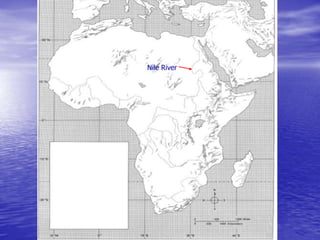
Nile River
Nile River
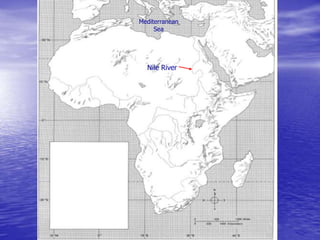
Mediterranean
Sea
Nile River
Mediterranean
Sea
Red Sea
Nile River
Mediterranean
Sea
Red Sea
Black
Sea
Nile River
Mediterranean
Sea
Red Sea
Black
Sea
Caspian
Sea
Nile River
Mediterranean
Sea
Red Sea
Black
Sea
Caspian
Sea
Persian
Gulf
Nile River
Mediterranean
Sea
Red Sea
Black
Sea
Caspian
Sea
Persian
Gulf
Indian
Ocean
Nile River
Mediterranean
Sea
Red Sea
Black
Sea
Caspian
Sea
Persian
Gulf
Indian
Ocean
Atlantic
Ocean
Nile River
Mediterranean
Sea
Red Sea
Black
Sea
Caspian
Sea
Persian
Gulf
Indian
Ocean
Atlantic
Ocean
Niger River
Nile River
Mediterranean
Sea
Red Sea
Black
Sea
Caspian
Sea
Persian
Gulf
Indian
Ocean
Atlantic
Ocean
Niger River
Limpopo
River
Nile River
Mediterranean
Sea
Red Sea
Black
Sea
Caspian
Sea
Persian
Gulf
Indian
Ocean
Atlantic
Ocean
Niger River
Limpopo
River
Zambezi
River
Main Cities
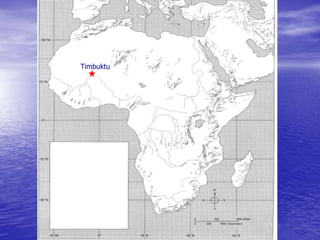
Timbuktu
Landforms
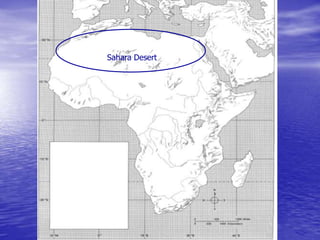
Sahara Desert
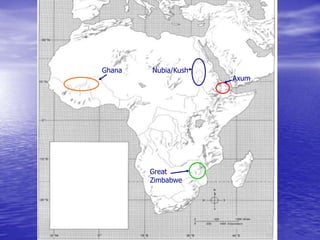
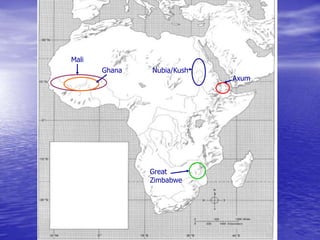
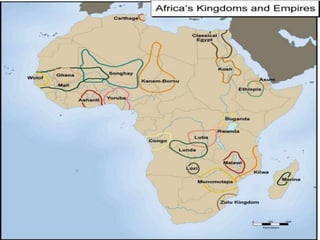
Sub-Sahara Kingdoms
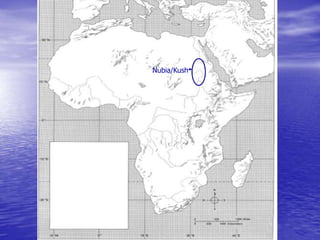
Nubia/Kush
Nubia/Kush
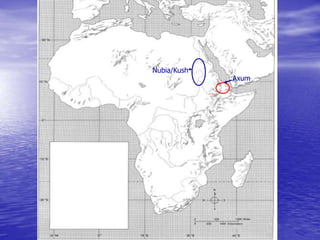
Axum
Nubia/Kush
Axum
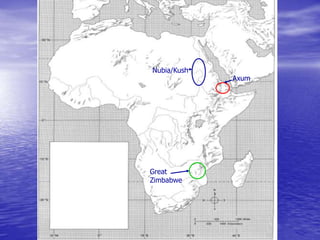
Great
Zimbabwe
Nubia/Kush
Axum
Great
Zimbabwe
Ghana
Nubia/Kush
Axum
Great
Zimbabwe
Mali
Ghana
Nubia/Kush
Axum
Great
Zimbabwe
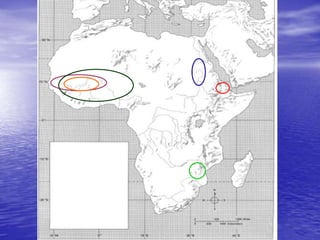
Mali
Ghana
Songhai
Kingdoms of Sub-Saharan
Africa
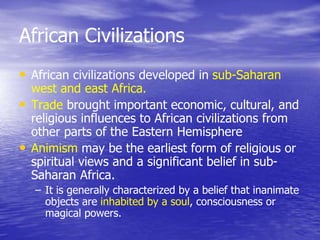
African Civilizations
• African civilizations developed in sub-Saharan
west and east Africa.
• Trade brought important economic, cultural, and
religious influences to African civilizations from
other parts of the Eastern Hemisphere
• Animism may be the earliest form of religious or
spiritual views and a significant belief in sub-
Saharan Africa.
– It is generally characterized by a belief that inanimate
objects are inhabited by a soul, consciousness or
magical powers.
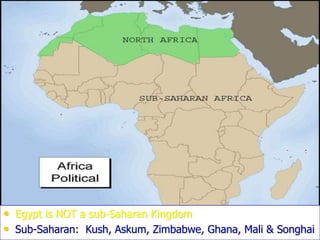
• Egypt is NOT a sub-Saharan Kingdom
• Sub-Saharan: Kush, Askum, Zimbabwe, Ghana, Mali & Songhai
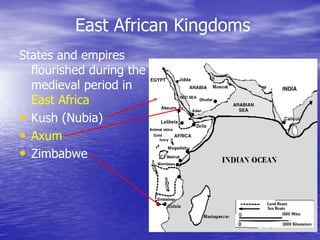
East African Kingdoms
States and empires
flourished during the
medieval period in
East Africa
• Kush (Nubia)
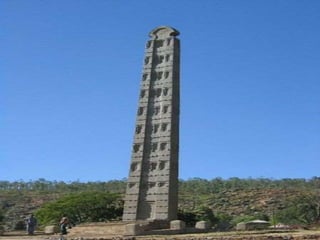
• Axum
• Zimbabwe
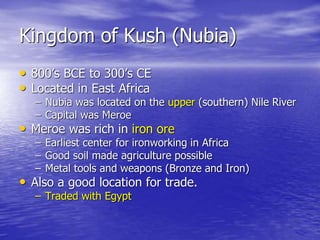
Kingdom of Kush (Nubia)
• 800’s BCE to 300’s CE
• Located in East Africa
– Nubia was located on the upper (southern) Nile River
– Capital was Meroe
• Meroe was rich in iron ore
– Earliest center for ironworking in Africa
– Good soil made agriculture possible
– Metal tools and weapons (Bronze and Iron)
• Also a good location for trade.
– Traded with Egypt
Kush (Nubia)
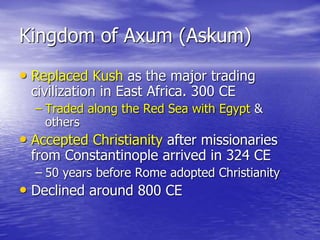
Kingdom of Axum (Askum)
• Replaced Kush as the major trading
civilization in East Africa. 300 CE
– Traded along the Red Sea with Egypt &
others
• Accepted Christianity after missionaries
from Constantinople arrived in 324 CE
– 50 years before Rome adopted Christianity
• Declined around 800 CE
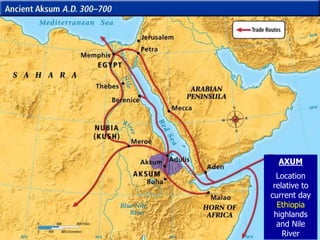
AXUM
Location
relative to
current day
Ethiopia
highlands
and Nile
River
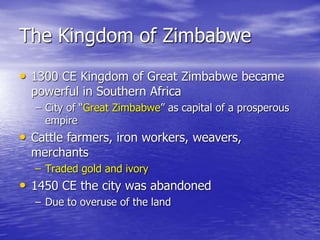
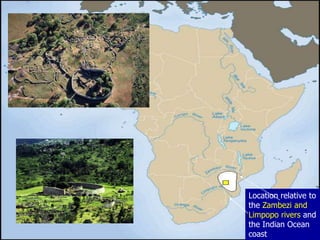
The Kingdom of Zimbabwe
• 1300 CE Kingdom of Great Zimbabwe became
powerful in Southern Africa
– City of “Great Zimbabwe” as capital of a prosperous
empire
• Cattle farmers, iron workers, weavers,
merchants
– Traded gold and ivory
• 1450 CE the city was abandoned
– Due to overuse of the land
Location relative to
the Zambezi and
Limpopo rivers and
the Indian Ocean
coast
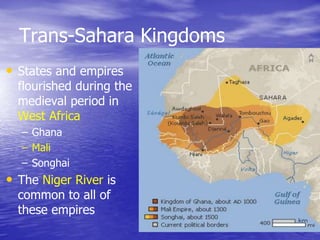
Trans-Sahara Kingdoms
• States and empires
flourished during the
medieval period in
West Africa
– Ghana
– Mali
– Songhai
• The Niger River is
common to all of
these empires
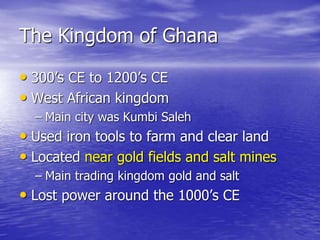
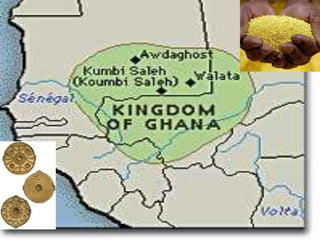
The Kingdom of Ghana
• 300’s CE to 1200’s CE
• West African kingdom
– Main city was Kumbi Saleh
• Used iron tools to farm and clear land
• Located near gold fields and salt mines
– Main trading kingdom gold and salt
• Lost power around the 1000’s CE
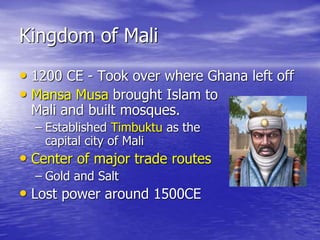
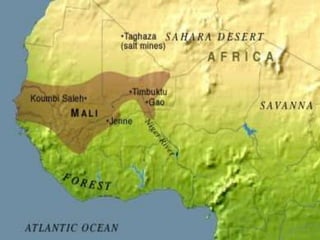
Kingdom of Mali
• 1200 CE - Took over where Ghana left off
• Mansa Musa brought Islam to
Mali and built mosques.
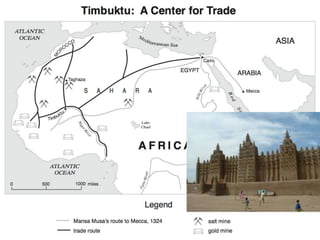
– Established Timbuktu as the
capital city of Mali
• Center of major trade routes
– Gold and Salt
• Lost power around 1500CE
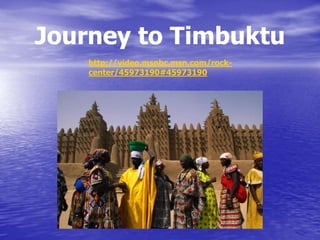
http://video.msnbc.msn.com/rock-
center/45973190#45973190
Journey to Timbuktu
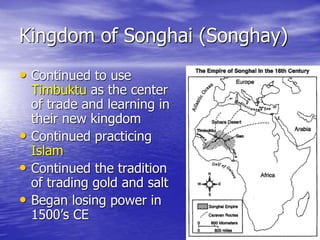
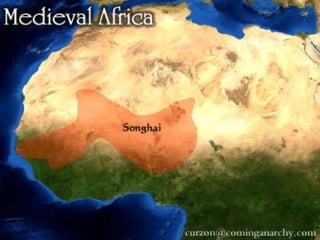
Kingdom of Songhai (Songhay)
• Continued to use
Timbuktu as the center
of trade and learning in
their new kingdom
• Continued practicing
Islam
• Continued the tradition
of trading gold and salt
• Began losing power in
1500’s CE
African Kingdoms

African Kingdoms