Downloaded 165 times
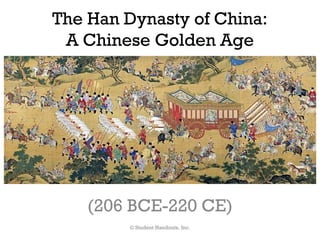

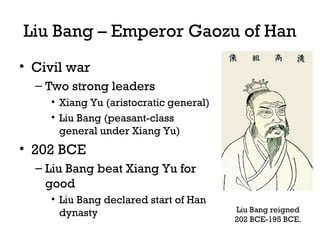



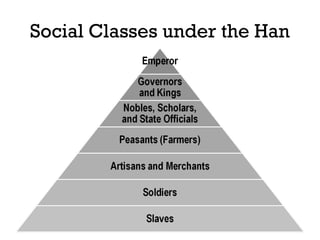

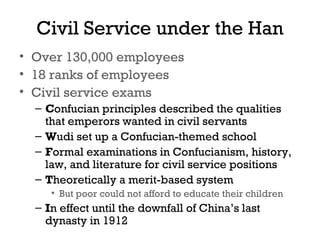


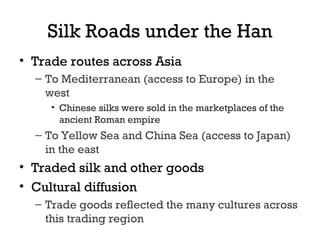
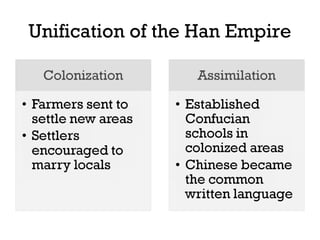


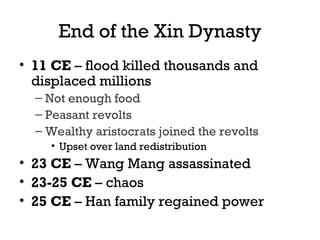


The Han Dynasty ruled China from 206 BCE to 220 CE, divided into the Western Han and Eastern Han periods. It followed the Qin Dynasty and was a time of Chinese cultural and economic prosperity. The dynasty was founded by peasant-turned-general Liu Bang and established a centralized bureaucratic government with the capital at Chang'an. Emperor Wudi expanded the empire through military campaigns. The Han developed advanced technology, agriculture, trade, and a merit-based civil service system based on Confucian philosophy. However, inheritance laws concentrated wealth and the government overtaxed peasants, causing social inequality until the dynasty's eventual collapse.


