Advanced Trauma Life
Support
Presented by -
Dr. Sheetal Kapse
Moderator -
Dr. Rajasekhar G.
Contents
1. Introduction
2. Initial Assessment and Management
3. Airway and Ventilatory Management
4. Shock
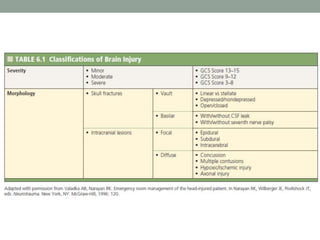
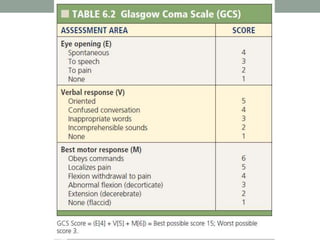
5. Head Trauma
6. Spine and Spinal Cord Trauma
7. Thoracic Trauma
8. Abdominal and Pelvic Trauma
9. Musculoskeletal Trauma
10. Thermal Injuries
11. Paediatric Trauma
12. Geriatric Trauma
13. Transfer to Definitive Care
14. Conclusion
15. References
Introduction
• The treatment of seriously injured
patients requires the rapid
assessment of injuries and institution
of life-preserving therapy.
• Because timing is crucial, a
systematic approach that can be
rapidly and accurately applied is
essential. This approach is termed
the “initial assessment” and includes
the following elements:
I. Preparation
II. Triage
III. Primary survey (ABCDEs)
IV. Resuscitation
V. Adjuncts to primary survey and
resuscitation
VI. Consideration of the need for
patient transfer
VII. Secondary survey (head-to-toe
evaluation and patient history)
VIII. Adjuncts to the secondary survey
IX. Continued postresuscitation
monitoring and re-evaluation
X. Definitive care
Initial Assessment and Management
A. Preparation
B. Triage
C. Primary Survey
D. Resuscitation
E. Adjuncts to Primary Survey and Resuscitation
F. Consider Need for Patient Transfer
G. Secondary Survey
H. Adjuncts to the Secondary Survey
I. Reevaluation
J. Definitive Care
K. Disaster Records and Legal Considerations
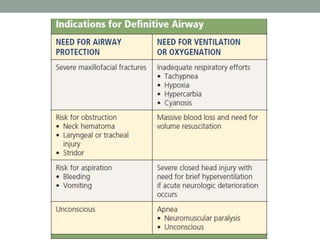
Airway and Ventilatory Management
Failure to recognize the need for an airway intervention
Inability to establish an airway
Inability to recognize the need for an alternative airway plan in the setting of
repeated failed intubation attempts
Failure to recognize an incorrectly placed airway
Displacement of a previously established airway
Failure to recognize the need for ventilation
Aspiration of gastric contents
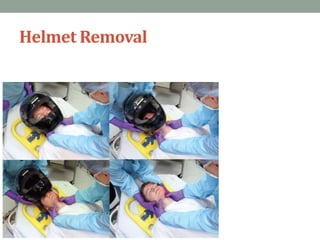
Helmet Removal
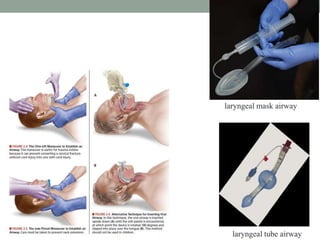
laryngeal mask airway
laryngeal tube airway
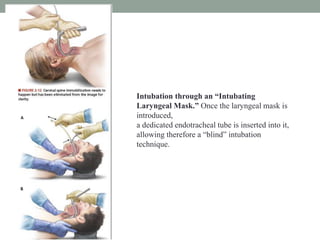
Intubation through an “Intubating
Laryngeal Mask.” Once the laryngeal mask is
introduced,
a dedicated endotracheal tube is inserted into it,
allowing therefore a “blind” intubation
technique.
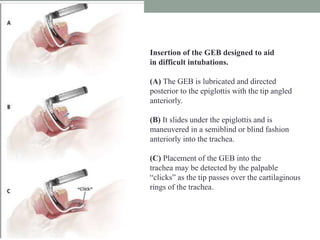
Insertion of the GEB designed to aid
in difficult intubations.
(A) The GEB is lubricated and directed
posterior to the epiglottis with the tip angled
anteriorly.
(B) It slides under the epiglottis and is
maneuvered in a semiblind or blind fashion
anteriorly into the trachea.
(C) Placement of the GEB into the
trachea may be detected by the palpable
“clicks” as the tip passes over the cartilaginous
rings of the trachea.
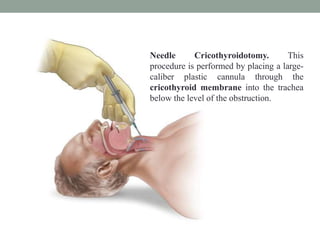
Needle Cricothyroidotomy. This
procedure is performed by placing a large-
caliber plastic cannula through the
cricothyroid membrane into the trachea
below the level of the obstruction.
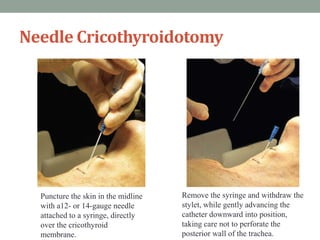
Needle Cricothyroidotomy
Puncture the skin in the midline
with a12- or 14-gauge needle
attached to a syringe, directly
over the cricothyroid
membrane.
Remove the syringe and withdraw the
stylet, while gently advancing the
catheter downward into position,
taking care not to perforate the
posterior wall of the trachea.
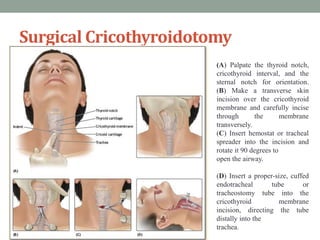
Surgical Cricothyroidotomy
(A) Palpate the thyroid notch,
cricothyroid interval, and the
sternal notch for orientation.
(B) Make a transverse skin
incision over the cricothyroid
membrane and carefully incise
through the membrane
transversely.
(C) Insert hemostat or tracheal
spreader into the incision and
rotate it 90 degrees to
open the airway.
(D) Insert a proper-size, cuffed
endotracheal tube or
tracheostomy tube into the
cricothyroid membrane
incision, directing the tube
distally into the
trachea.
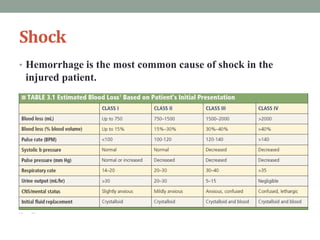
Shock
• Hemorrhage is the most common cause of shock in the
injured patient.
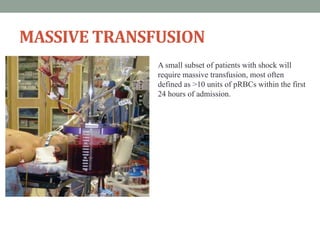
MASSIVE TRANSFUSION
A small subset of patients with shock will
require massive transfusion, most often
defined as >10 units of pRBCs within the first
24 hours of admission.
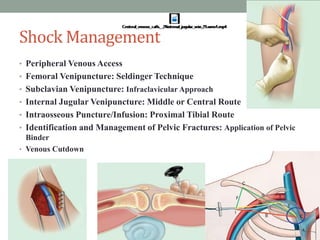
Shock Management
• Peripheral Venous Access
• Femoral Venipuncture: Seldinger Technique
• Subclavian Venipuncture: Infraclavicular Approach
• Internal Jugular Venipuncture: Middle or Central Route
• Intraosseous Puncture/Infusion: Proximal Tibial Route
• Identification and Management of Pelvic Fractures: Application of Pelvic
Binder
• Venous Cutdown
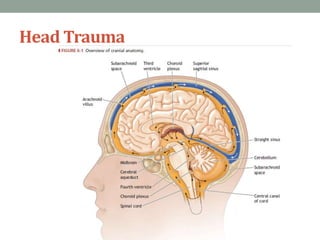
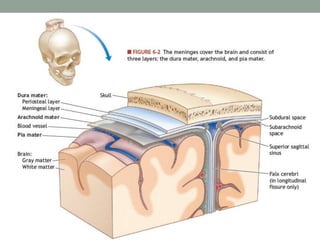
Head Trauma
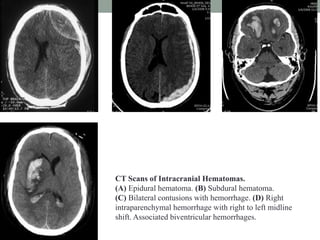
CT Scans of Intracranial Hematomas.
(A) Epidural hematoma. (B) Subdural hematoma.
(C) Bilateral contusions with hemorrhage. (D) Right
intraparenchymal hemorrhage with right to left midline
shift. Associated biventricular hemorrhages.
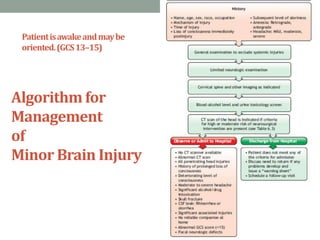
Patientisawakeandmaybe
oriented.(GCS13–15)
Algorithm for
Management
of
Minor Brain Injury
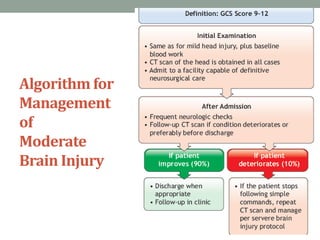
Algorithm for
Management
of
Moderate
Brain Injury
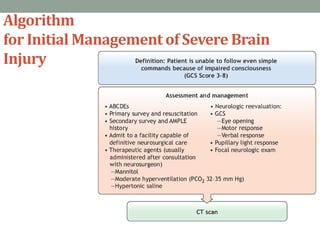
Algorithm
for Initial Management of Severe Brain
Injury
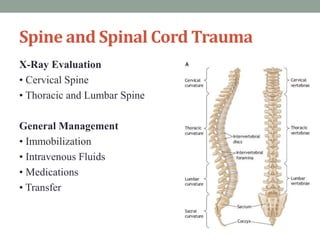
Spine and Spinal Cord Trauma
X-Ray Evaluation
• Cervical Spine
• Thoracic and Lumbar Spine
General Management
• Immobilization
• Intravenous Fluids
• Medications
• Transfer
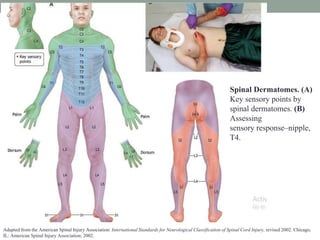
Spinal Dermatomes. (A)
Key sensory points by
spinal dermatomes. (B)
Assessing
sensory response–nipple,
T4.
Adapted from the American Spinal Injury Association: International Standards for Neurological Classification of Spinal Cord Injury, revised 2002. Chicago,
IL: American Spinal Injury Association; 2002.
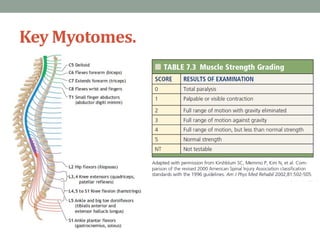
Key Myotomes.
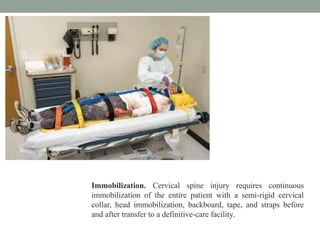
Immobilization. Cervical spine injury requires continuous
immobilization of the entire patient with a semi-rigid cervical
collar, head immobilization, backboard, tape, and straps before
and after transfer to a definitive-care facility.
Secondary Survey History
• A Allergies
• M Medications
• P Past illnesses
• L Last meal
• E Events related to injury
1.Blunt
2.Penetrating
3.Burns
4.Hazardous Environment
Secondary Survey Head
• Scalp
• Eyes
• Nose
• Mouth
• Bite occlusion
PITFALLS
• Hyphema
• Optic nerve injury
• Lens dislocation
• Head injury
• Posterior scalp laceration
Secondary Survey Maxillofacial
• Midline facial fractures
• Bite occlusion
• Bleeding
• Fracture repair can wait
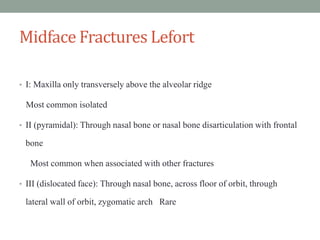
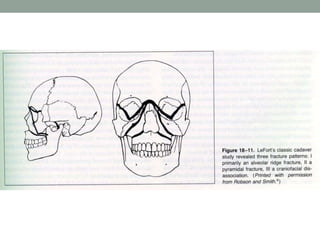
Midface Fractures Lefort
• I: Maxilla only transversely above the alveolar ridge
Most common isolated
• II (pyramidal): Through nasal bone or nasal bone disarticulation with frontal
bone
Most common when associated with other fractures
• III (dislocated face): Through nasal bone, across floor of orbit, through
lateral wall of orbit, zygomatic arch Rare
Secondary Survey Maxillofacial
PITFALLS
• Pending airway obstruction
• Changes in airway status
• Cervical spine injury
• Exsanguinating midface fracture
• Lacrimal duct lacerations
• Facial nerve injuries
Thoracic Trauma
1 Identify and initiate treatment of
the following injuries
during the primary survey:
• Airway obstruction
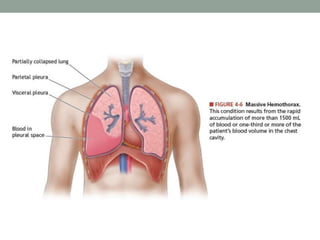
• Tension pneumothorax
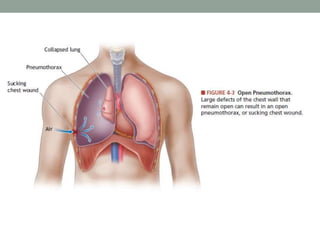
• Open pneumothorax
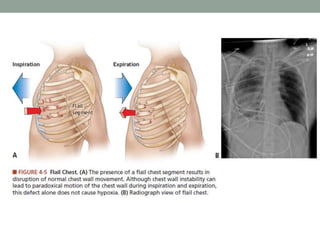
• Flail chest and pulmonary contusion
• Massive hemothorax
• Cardiac tamponade
2 Identify and initiate treatment of
the following potentially
life-threatening injuries during the
secondary
survey:
• Simple pneumothorax
• Hemothorax
• Pulmonary contusion
• Tracheobronchial tree injury
• Blunt cardiac injury
• Traumatic aovrtic disruption
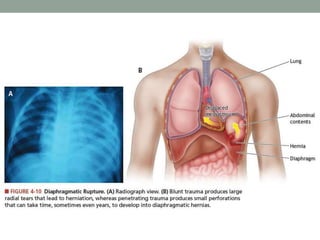
• Traumatic diaphragmatic injury
• Blunt esophageal rupture
3 Describe the
significance and
treatment of the
following
injuries:
• Subcutaneous
emphysema
• Thoracic crush injuries
• Sternal, rib, and
clavicular fractures
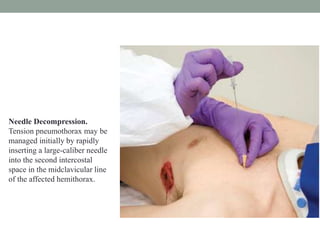
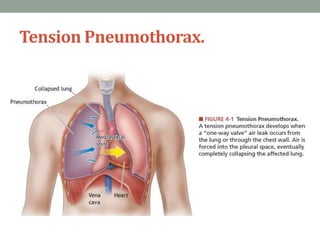
Tension Pneumothorax.
Needle Decompression.
Tension pneumothorax may be
managed initially by rapidly
inserting a large-caliber needle
into the second intercostal
space in the midclavicular line
of the affected hemithorax.
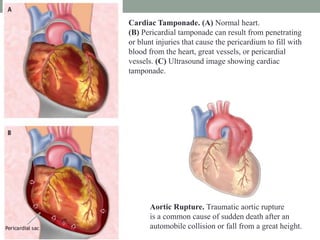
Cardiac Tamponade. (A) Normal heart.
(B) Pericardial tamponade can result from penetrating
or blunt injuries that cause the pericardium to fill with
blood from the heart, great vessels, or pericardial
vessels. (C) Ultrasound image showing cardiac
tamponade.
Aortic Rupture. Traumatic aortic rupture
is a common cause of sudden death after an
automobile collision or fall from a great height.
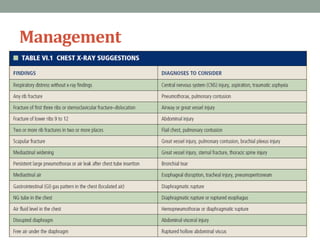
Management
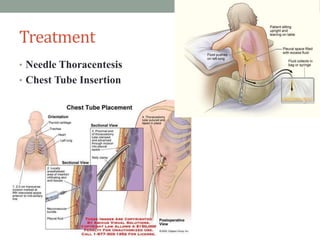
Treatment
• Needle Thoracentesis
• Chest Tube Insertion
Abdominal and Pelvic Trauma
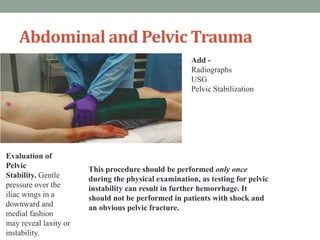
This procedure should be performed only once
during the physical examination, as testing for pelvic
instability can result in further hemorrhage. It
should not be performed in patients with shock and
an obvious pelvic fracture.
Evaluation of
Pelvic
Stability. Gentle
pressure over the
iliac wings in a
downward and
medial fashion
may reveal laxity or
instability.
Add -
Radiographs
USG
Pelvic Stabilization
Musculoskeletal Trauma
THE FOLLOWING PROCEDURES ARE INCLUDED –
1. Physical Examination
2. Principles of Extremity Immobilization
3. Realigning a Deformed Extremity
4. Application of a Traction Splint
5. Compartment Syndrome: Assessment and Management
6. Identification of Arterial Injury
Thermal
Injuries
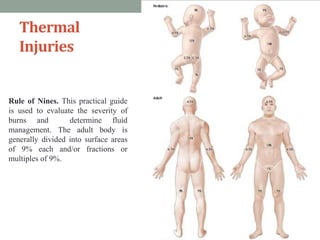
Rule of Nines. This practical guide
is used to evaluate the severity of
burns and determine fluid
management. The adult body is
generally divided into surface areas
of 9% each and/or fractions or
multiples of 9%.
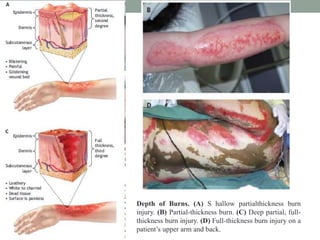
Depth of Burns. (A) S hallow partialthickness burn
injury. (B) Partial-thickness burn. (C) Deep partial, full-
thickness burn injury. (D) Full-thickness burn injury on a
patient’s upper arm and back.
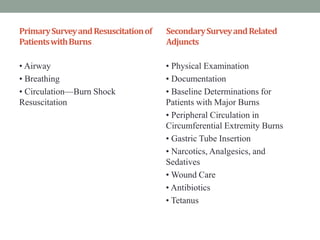
PrimarySurveyandResuscitationof
PatientswithBurns
• Airway
• Breathing
• Circulation—Burn Shock
Resuscitation
• Physical Examination
• Documentation
• Baseline Determinations for
Patients with Major Burns
• Peripheral Circulation in
Circumferential Extremity Burns
• Gastric Tube Insertion
• Narcotics, Analgesics, and
Sedatives
• Wound Care
• Antibiotics
• Tetanus
SecondarySurveyandRelated
Adjuncts
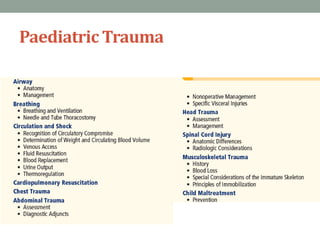
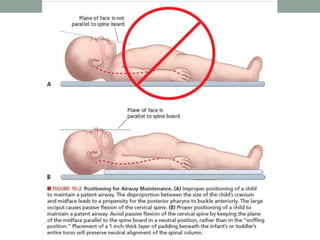
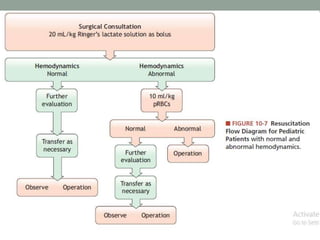
Paediatric Trauma
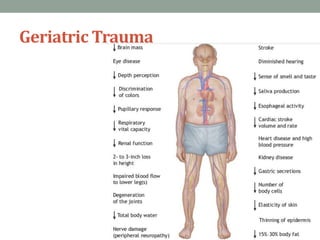
Geriatric Trauma
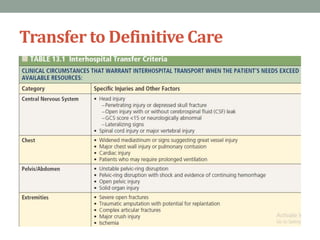
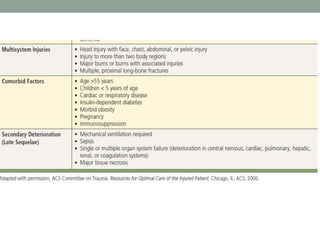
Transfer to Definitive Care
TREATMENT PRIOR TO TRANSFER
1. Airway
a. Insert an airway or endotracheal tube, if needed.
b. Provide suction.
c. Insert a gastric tube to reduce the risk of aspiration.
2. Breathing
a. Determine rate and administer supplementary oxygen.
b. Provide mechanical ventilation when needed.
c. Insert a chest tube if needed.
3. Circulation
a. Control external bleeding.
b. Establish two large-caliber intravenous lines
and begin crystalloid solution infusion.
c. Restore blood volume losses with crystalloid fluids or blood and
continue replacement during transfer.
d. Insert an indwelling catheter to monitor urinary output.
e. Monitor the patient’s cardiac rhythm and rate.
4. Central nervous system
a. Assist respiration in unconscious patients.
b. Administer mannitol, if needed.
c. Immobilize any head, neck, thoracic, and lumbar
spine injuries.
5. Diagnostic studies (When indicated; obtaining these
studies should not delay transfer.)
a. Obtain x-rays of chest, pelvis, and extremities.
b. Sophisticated diagnostic studies, such as CT and aortography,
are usually not indicated.
c. Order hemoglobin or hematocrit, type and crossmatch, and
arterial blood gas determinations for all patients; also order
pregnancy tests for females of childbearing age.
d. Determine cardiac rhythm and hemoglobin saturation
(electrocardiograph [ECG] and pulse oximetry).
6. Wounds (Performing these procedures should not delay
transfer.)
a. Clean and dress wounds after controlling external
hemorrhage.
b. Administer tetanus prophylaxis.
c. Administer antibiotics, when indicated.
7. Fractures
a. Apply appropriate splinting and traction.
TREATMENT DURING TRANSPORT
• Monitoring vital signs and pulse oximetry
• Continued support of cardiorespiratory system
• Continued blood-volume replacement
• Use of appropriate medications as ordered by a doctor or as
allowed by written protocol
• Maintenance of communication with a doctor or institution
during transfer
• Maintenance of accurate records during transfer
Conclusion
Initial management of trauma patients requires a team approach in which each member
is allocated a specific task, the overall aim being to identify and treat life-threatening
conditions collectively. The ABC approach provides the doctor with one acceptable
method for safe immediate management in which life-threatening injuries are identified
and treated in the order in which they would otherwise kill the patient. Once the patient
has been stabilized, a full assessment is carried out, during which an AMPLE history is
taken and the patient is examined from top to toe, front to back, and side to side.
Throughout this process, the emphasis is on continuous assessment and reevaluation, so
that the response to any therapy can be monitored.
References

advanced trauma life support

  • 1.
    Advanced Trauma Life Support Presentedby - Dr. Sheetal Kapse Moderator - Dr. Rajasekhar G.
  • 2.
    Contents 1. Introduction 2. InitialAssessment and Management 3. Airway and Ventilatory Management 4. Shock 5. Head Trauma 6. Spine and Spinal Cord Trauma 7. Thoracic Trauma 8. Abdominal and Pelvic Trauma 9. Musculoskeletal Trauma 10. Thermal Injuries 11. Paediatric Trauma 12. Geriatric Trauma 13. Transfer to Definitive Care 14. Conclusion 15. References
  • 3.
    Introduction • The treatmentof seriously injured patients requires the rapid assessment of injuries and institution of life-preserving therapy. • Because timing is crucial, a systematic approach that can be rapidly and accurately applied is essential. This approach is termed the “initial assessment” and includes the following elements: I. Preparation II. Triage III. Primary survey (ABCDEs) IV. Resuscitation V. Adjuncts to primary survey and resuscitation VI. Consideration of the need for patient transfer VII. Secondary survey (head-to-toe evaluation and patient history) VIII. Adjuncts to the secondary survey IX. Continued postresuscitation monitoring and re-evaluation X. Definitive care
  • 4.
    Initial Assessment andManagement A. Preparation B. Triage C. Primary Survey D. Resuscitation E. Adjuncts to Primary Survey and Resuscitation F. Consider Need for Patient Transfer G. Secondary Survey H. Adjuncts to the Secondary Survey I. Reevaluation J. Definitive Care K. Disaster Records and Legal Considerations
  • 5.
    Airway and VentilatoryManagement Failure to recognize the need for an airway intervention Inability to establish an airway Inability to recognize the need for an alternative airway plan in the setting of repeated failed intubation attempts Failure to recognize an incorrectly placed airway Displacement of a previously established airway Failure to recognize the need for ventilation Aspiration of gastric contents
  • 6.
  • 8.
  • 10.
    Intubation through an“Intubating Laryngeal Mask.” Once the laryngeal mask is introduced, a dedicated endotracheal tube is inserted into it, allowing therefore a “blind” intubation technique.
  • 11.
    Insertion of theGEB designed to aid in difficult intubations. (A) The GEB is lubricated and directed posterior to the epiglottis with the tip angled anteriorly. (B) It slides under the epiglottis and is maneuvered in a semiblind or blind fashion anteriorly into the trachea. (C) Placement of the GEB into the trachea may be detected by the palpable “clicks” as the tip passes over the cartilaginous rings of the trachea.
  • 12.
    Needle Cricothyroidotomy. This procedureis performed by placing a large- caliber plastic cannula through the cricothyroid membrane into the trachea below the level of the obstruction.
  • 13.
    Needle Cricothyroidotomy Puncture theskin in the midline with a12- or 14-gauge needle attached to a syringe, directly over the cricothyroid membrane. Remove the syringe and withdraw the stylet, while gently advancing the catheter downward into position, taking care not to perforate the posterior wall of the trachea.
  • 14.
    Surgical Cricothyroidotomy (A) Palpatethe thyroid notch, cricothyroid interval, and the sternal notch for orientation. (B) Make a transverse skin incision over the cricothyroid membrane and carefully incise through the membrane transversely. (C) Insert hemostat or tracheal spreader into the incision and rotate it 90 degrees to open the airway. (D) Insert a proper-size, cuffed endotracheal tube or tracheostomy tube into the cricothyroid membrane incision, directing the tube distally into the trachea.
  • 16.
    Shock • Hemorrhage isthe most common cause of shock in the injured patient.
  • 17.
    MASSIVE TRANSFUSION A smallsubset of patients with shock will require massive transfusion, most often defined as >10 units of pRBCs within the first 24 hours of admission.
  • 18.
    Shock Management • PeripheralVenous Access • Femoral Venipuncture: Seldinger Technique • Subclavian Venipuncture: Infraclavicular Approach • Internal Jugular Venipuncture: Middle or Central Route • Intraosseous Puncture/Infusion: Proximal Tibial Route • Identification and Management of Pelvic Fractures: Application of Pelvic Binder • Venous Cutdown
  • 19.
  • 23.
    CT Scans ofIntracranial Hematomas. (A) Epidural hematoma. (B) Subdural hematoma. (C) Bilateral contusions with hemorrhage. (D) Right intraparenchymal hemorrhage with right to left midline shift. Associated biventricular hemorrhages.
  • 24.
  • 25.
  • 26.
    Algorithm for Initial Managementof Severe Brain Injury
  • 27.
    Spine and SpinalCord Trauma X-Ray Evaluation • Cervical Spine • Thoracic and Lumbar Spine General Management • Immobilization • Intravenous Fluids • Medications • Transfer
  • 29.
    Spinal Dermatomes. (A) Keysensory points by spinal dermatomes. (B) Assessing sensory response–nipple, T4. Adapted from the American Spinal Injury Association: International Standards for Neurological Classification of Spinal Cord Injury, revised 2002. Chicago, IL: American Spinal Injury Association; 2002.
  • 30.
  • 31.
    Immobilization. Cervical spineinjury requires continuous immobilization of the entire patient with a semi-rigid cervical collar, head immobilization, backboard, tape, and straps before and after transfer to a definitive-care facility.
  • 32.
    Secondary Survey History •A Allergies • M Medications • P Past illnesses • L Last meal • E Events related to injury 1.Blunt 2.Penetrating 3.Burns 4.Hazardous Environment
  • 33.
    Secondary Survey Head •Scalp • Eyes • Nose • Mouth • Bite occlusion PITFALLS • Hyphema • Optic nerve injury • Lens dislocation • Head injury • Posterior scalp laceration
  • 34.
    Secondary Survey Maxillofacial •Midline facial fractures • Bite occlusion • Bleeding • Fracture repair can wait
  • 35.
    Midface Fractures Lefort •I: Maxilla only transversely above the alveolar ridge Most common isolated • II (pyramidal): Through nasal bone or nasal bone disarticulation with frontal bone Most common when associated with other fractures • III (dislocated face): Through nasal bone, across floor of orbit, through lateral wall of orbit, zygomatic arch Rare
  • 37.
    Secondary Survey Maxillofacial PITFALLS •Pending airway obstruction • Changes in airway status • Cervical spine injury • Exsanguinating midface fracture • Lacrimal duct lacerations • Facial nerve injuries
  • 38.
    Thoracic Trauma 1 Identifyand initiate treatment of the following injuries during the primary survey: • Airway obstruction • Tension pneumothorax • Open pneumothorax • Flail chest and pulmonary contusion • Massive hemothorax • Cardiac tamponade 2 Identify and initiate treatment of the following potentially life-threatening injuries during the secondary survey: • Simple pneumothorax • Hemothorax • Pulmonary contusion • Tracheobronchial tree injury • Blunt cardiac injury • Traumatic aovrtic disruption • Traumatic diaphragmatic injury • Blunt esophageal rupture 3 Describe the significance and treatment of the following injuries: • Subcutaneous emphysema • Thoracic crush injuries • Sternal, rib, and clavicular fractures
  • 39.
  • 40.
    Needle Decompression. Tension pneumothoraxmay be managed initially by rapidly inserting a large-caliber needle into the second intercostal space in the midclavicular line of the affected hemithorax.
  • 44.
    Cardiac Tamponade. (A)Normal heart. (B) Pericardial tamponade can result from penetrating or blunt injuries that cause the pericardium to fill with blood from the heart, great vessels, or pericardial vessels. (C) Ultrasound image showing cardiac tamponade. Aortic Rupture. Traumatic aortic rupture is a common cause of sudden death after an automobile collision or fall from a great height.
  • 46.
  • 47.
  • 48.
    Abdominal and PelvicTrauma This procedure should be performed only once during the physical examination, as testing for pelvic instability can result in further hemorrhage. It should not be performed in patients with shock and an obvious pelvic fracture. Evaluation of Pelvic Stability. Gentle pressure over the iliac wings in a downward and medial fashion may reveal laxity or instability. Add - Radiographs USG Pelvic Stabilization
  • 49.
    Musculoskeletal Trauma THE FOLLOWINGPROCEDURES ARE INCLUDED – 1. Physical Examination 2. Principles of Extremity Immobilization 3. Realigning a Deformed Extremity 4. Application of a Traction Splint 5. Compartment Syndrome: Assessment and Management 6. Identification of Arterial Injury
  • 50.
    Thermal Injuries Rule of Nines.This practical guide is used to evaluate the severity of burns and determine fluid management. The adult body is generally divided into surface areas of 9% each and/or fractions or multiples of 9%.
  • 51.
    Depth of Burns.(A) S hallow partialthickness burn injury. (B) Partial-thickness burn. (C) Deep partial, full- thickness burn injury. (D) Full-thickness burn injury on a patient’s upper arm and back.
  • 52.
    PrimarySurveyandResuscitationof PatientswithBurns • Airway • Breathing •Circulation—Burn Shock Resuscitation • Physical Examination • Documentation • Baseline Determinations for Patients with Major Burns • Peripheral Circulation in Circumferential Extremity Burns • Gastric Tube Insertion • Narcotics, Analgesics, and Sedatives • Wound Care • Antibiotics • Tetanus SecondarySurveyandRelated Adjuncts
  • 53.
  • 56.
  • 57.
  • 59.
    TREATMENT PRIOR TOTRANSFER 1. Airway a. Insert an airway or endotracheal tube, if needed. b. Provide suction. c. Insert a gastric tube to reduce the risk of aspiration. 2. Breathing a. Determine rate and administer supplementary oxygen. b. Provide mechanical ventilation when needed. c. Insert a chest tube if needed. 3. Circulation a. Control external bleeding. b. Establish two large-caliber intravenous lines and begin crystalloid solution infusion. c. Restore blood volume losses with crystalloid fluids or blood and continue replacement during transfer. d. Insert an indwelling catheter to monitor urinary output. e. Monitor the patient’s cardiac rhythm and rate. 4. Central nervous system a. Assist respiration in unconscious patients. b. Administer mannitol, if needed. c. Immobilize any head, neck, thoracic, and lumbar spine injuries. 5. Diagnostic studies (When indicated; obtaining these studies should not delay transfer.) a. Obtain x-rays of chest, pelvis, and extremities. b. Sophisticated diagnostic studies, such as CT and aortography, are usually not indicated. c. Order hemoglobin or hematocrit, type and crossmatch, and arterial blood gas determinations for all patients; also order pregnancy tests for females of childbearing age. d. Determine cardiac rhythm and hemoglobin saturation (electrocardiograph [ECG] and pulse oximetry). 6. Wounds (Performing these procedures should not delay transfer.) a. Clean and dress wounds after controlling external hemorrhage. b. Administer tetanus prophylaxis. c. Administer antibiotics, when indicated. 7. Fractures a. Apply appropriate splinting and traction.
  • 60.
    TREATMENT DURING TRANSPORT •Monitoring vital signs and pulse oximetry • Continued support of cardiorespiratory system • Continued blood-volume replacement • Use of appropriate medications as ordered by a doctor or as allowed by written protocol • Maintenance of communication with a doctor or institution during transfer • Maintenance of accurate records during transfer
  • 61.
    Conclusion Initial management oftrauma patients requires a team approach in which each member is allocated a specific task, the overall aim being to identify and treat life-threatening conditions collectively. The ABC approach provides the doctor with one acceptable method for safe immediate management in which life-threatening injuries are identified and treated in the order in which they would otherwise kill the patient. Once the patient has been stabilized, a full assessment is carried out, during which an AMPLE history is taken and the patient is examined from top to toe, front to back, and side to side. Throughout this process, the emphasis is on continuous assessment and reevaluation, so that the response to any therapy can be monitored.
  • 62.