Management of Traumatic Injuries
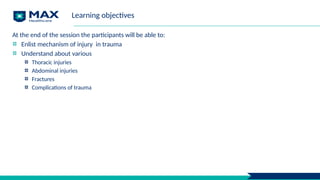
Learning objectives
At the end of the session the participants will be able to:
Enlist mechanism of injury in trauma
Understand about various
Thoracic injuries
Abdominal injuries
Fractures
Complications of trauma
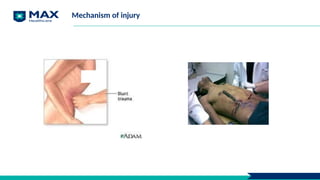
Mechanism of injury
Blunt:
Common in
Motor vehicle crash
Contact sports
Assault with blunt objects
Fall from height.
Severity depends on the amount of kinetic
energy dissipated to the body and underlying
structures.
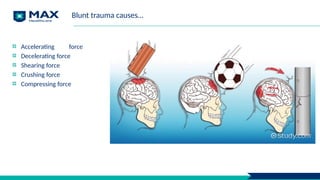
Blunt trauma causes…
Accelerating force
Decelerating force
Shearing force
Crushing force
Compressing force
Cont.
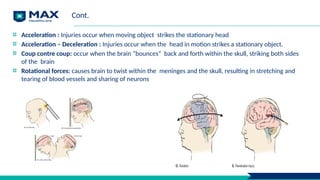
Acceleration : Injuries occur when moving object strikes the stationary head
Acceleration – Deceleration : Injuries occur when the head in motion strikes a stationary object.
Coup contre coup: occur when the brain “bounces” back and forth within the skull, striking both sides
of the brain
Rotational forces: causes brain to twist within the meninges and the skull, resulting in stretching and
tearing of blood vessels and sharing of neurons
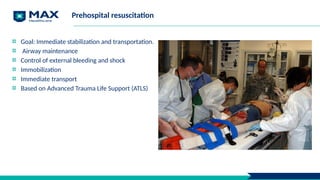
Prehospital resuscitation
Goal: Immediate stabilization and transportation.
Airway maintenance
Control of external bleeding and shock
Immobilization
Immediate transport
Based on Advanced Trauma Life Support (ATLS)
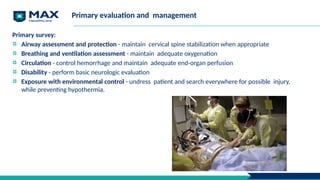
Primary evaluation and management
Primary survey:
Airway assessment and protection - maintain cervical spine stabilization when appropriate
Breathing and ventilation assessment - maintain adequate oxygenation
Circulation - control hemorrhage and maintain adequate end-organ perfusion
Disability - perform basic neurologic evaluation
Exposure with environmental control - undress patient and search everywhere for possible injury,
while preventing hypothermia.
Points to remembered during primary survey
Airway obstruction is a major cause of death immediately following trauma
Intubate When in doubt, it is generally best to intubate early, particularly in patients with hemodynamic
instability, or those with significant injuries to the face or neck, which may lead to swelling and
distortion of the airway
Secure airway after intubation
Unconscious patients with small pneumothoraces that are not visible or missed on the initial chest
radiograph
It is important to reauscultate the lungs of trauma patients who develop hemodynamic instability after
being intubated.
Be alert for subtle signs of hemorrhagic shock, particularly in the elderly and young, healthy adults who
may not present with obvious manifestations.
Brain injuries are common in patients who have sustained severe blunt trauma
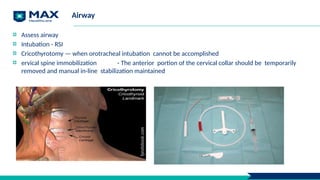
Airway
Assess airway
Intubation - RSI
Cricothyrotomy — when orotracheal intubation cannot be accomplished
ervical spine immobilization - The anterior portion of the cervical collar should be temporarily
removed and manual in-line stabilization maintained
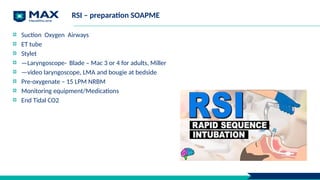
RSI – preparation SOAPME
Suction Oxygen Airways
ET tube
Stylet
—Laryngoscope- Blade – Mac 3 or 4 for adults, Miller
—video laryngoscope, LMA and bougie at bedside
Pre-oxygenate – 15 LPM NRBM
Monitoring equipment/Medications
End Tidal CO2
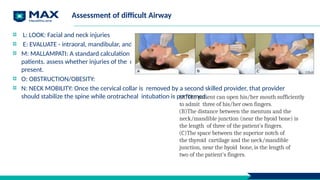
Assessment of difficult Airway
L: LOOK: Facial and neck injuries
E: EVALUATE - intraoral, mandibular, and hyoid-to- thyroid notch distances.
M: MALLAMPATI: A standard calculation of the Mallampati score cannot be performed in many trauma
patients. assess whether injuries of the oropharynx or pooled blood, vomitus, or secretions are
present.
O: OBSTRUCTION/OBESITY:
N: NECK MOBILITY: Once the cervical collar is removed by a second skilled provider, that provider
should stabilize the spine while orotracheal intubation is performed.
(A)The patient can open his/her mouth sufficiently
to admit three of his/her own fingers.
(B)The distance between the mentum and the
neck/mandible junction (near the hyoid bone) is
the length of three of the patient's fingers.
(C)The space between the superior notch of
the thyroid cartilage and the neck/mandible
junction, near the hyoid bone, is the length of
two of the patient's fingers.
Recognition of the difficult airway
Grade I: Fully visible tonsils,
Uvula, soft palate Grade II:
Visible hard and soft palate,
upper portion of tonsil and
uvula
Grade III: Visible Soft and
hard palate and base of the
uvula.
Grade IV: Only hard palate
visible
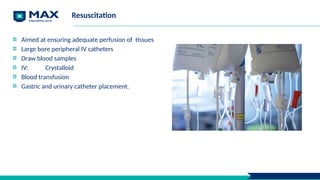
Resuscitation
Aimed at ensuring adequate perfusion of tissues
Large bore peripheral IV catheters
Draw blood samples
IV: Crystalloid
Blood transfusion
Gastric and urinary catheter placement.
Secondary survey:
Begins after resuscitation is well established and vital signs are normalized
History
Head to toe examination
Completion of special procedures – ECG, X-rays, USG
Monitor vitals
Definitive Care/ operative phase: Depending on type of injury Critical care phase:
Ongoing physical assessment
Monitoring patients response for treatment
Maintain oxygenation
Prevention of complications
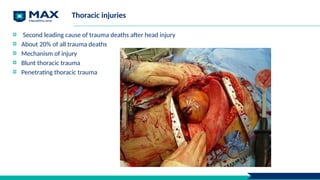
Thoracic injuries
Second leading cause of trauma deaths after head injury
About 20% of all trauma deaths
Mechanism of injury
Blunt thoracic trauma
Penetrating thoracic trauma
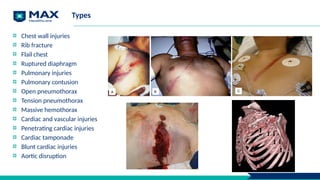
Types
Chest wall injuries
Rib fracture
Flail chest
Ruptured diaphragm
Pulmonary injuries
Pulmonary contusion
Open pneumothorax
Tension pneumothorax
Massive hemothorax
Cardiac and vascular injuries
Penetrating cardiac injuries
Cardiac tamponade
Blunt cardiac injuries
Aortic disruption
18
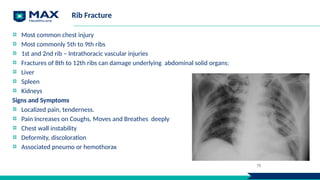
Rib Fracture
Most common chest injury
Most commonly 5th to 9th ribs
1st and 2nd rib – Intrathoracic vascular injuries
Fractures of 8th to 12th ribs can damage underlying abdominal solid organs:
Liver
Spleen
Kidneys
Signs and Symptoms
Localized pain, tenderness.
Pain Increases on Coughs, Moves and Breathes deeply
Chest wall instability
Deformity, discoloration
Associated pneumo or hemothorax
19
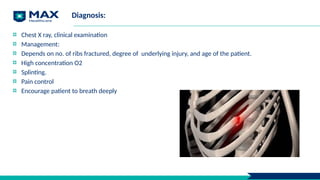
Diagnosis:
Chest X ray, clinical examination
Management:
Depends on no. of ribs fractured, degree of underlying injury, and age of the patient.
High concentration O2
Splinting.
Pain control
Encourage patient to breath deeply
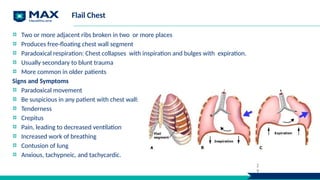
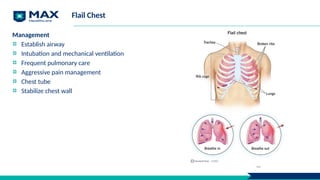
Flail Chest
Two or more adjacent ribs broken in two or more places
Produces free-floating chest wall segment
Paradoxical respiration: Chest collapses with inspiration and bulges with expiration.
Usually secondary to blunt trauma
More common in older patients
Signs and Symptoms
Paradoxical movement
Be suspicious in any patient with chest wall:
Tenderness
Crepitus
Pain, leading to decreased ventilation
Increased work of breathing
Contusion of lung
Anxious, tachypneic, and tachycardic.
2
9
Flail Chest
Management
Establish airway
Intubation and mechanical ventilation
Frequent pulmonary care
Aggressive pain management
Chest tube
Stabilize chest wall
22
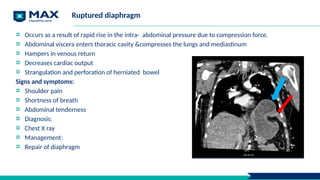
Ruptured diaphragm
Occurs as a result of rapid rise in the intra- abdominal pressure due to compression force.
Abdominal viscera enters thoracic cavity &compresses the lungs and mediastinum
Hampers in venous return
Decreases cardiac output
Strangulation and perforation of herniated bowel
Signs and symptoms:
Shoulder pain
Shortness of breath
Abdominal tenderness
Diagnosis:
Chest X ray
Management:
Repair of diaphragm
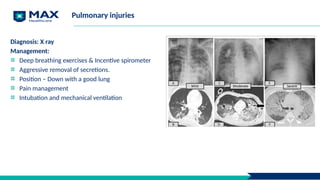
Pulmonary injuries
Pulmonary contusions:
May occur unilateral / bilateral
Manifested as hemorrhage and then edema
Inflammation affects alveolar capillary units.
Leads to decrease compliance
Increased pulmonary vascular resistance
Decreased blood flow.
Ventilation perfusion imbalances.
Symptoms may develop after 24 to 48 hours
Ecchymosis of chest wall
Crackles in contused lung
Cough with blood- tinged sputum
Poor lung function -Systemic arterial hypoxemia
Pulmonary injuries
Diagnosis: X ray
Management:
Deep breathing exercises & Incentive spirometer
Aggressive removal of secretions.
Position – Down with a good lung
Pain management
Intubation and mechanical ventilation
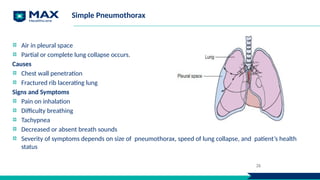
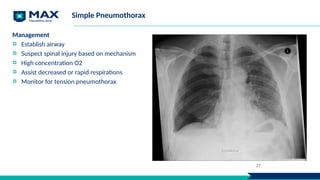
Simple Pneumothorax
Air in pleural space
Partial or complete lung collapse occurs.
Causes
Chest wall penetration
Fractured rib lacerating lung
Signs and Symptoms
Pain on inhalation
Difficulty breathing
Tachypnea
Decreased or absent breath sounds
Severity of symptoms depends on size of pneumothorax, speed of lung collapse, and patient’s health
status
26
Simple Pneumothorax
Management
Establish airway
Suspect spinal injury based on mechanism
High concentration O2
Assist decreased or rapid respirations
Monitor for tension pneumothorax
27
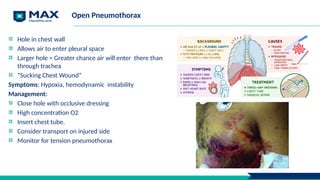
Open Pneumothorax
Hole in chest wall
Allows air to enter pleural space
Larger hole = Greater chance air will enter there than
through trachea
“Sucking Chest Wound”
Symptoms: Hypoxia, hemodynamic instability
Management:
Close hole with occlusive dressing
High concentration O2
Insert chest tube.
Consider transport on injured side
Monitor for tension pneumothorax
28
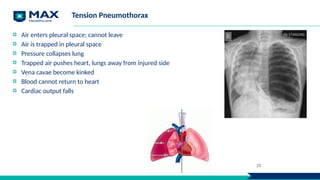
Tension Pneumothorax
Air enters pleural space; cannot leave
Air is trapped in pleural space
Pressure collapses lung
Trapped air pushes heart, lungs away from injured side
Vena cavae become kinked
Blood cannot return to heart
Cardiac output falls
29
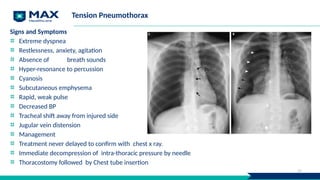
Tension Pneumothorax
Signs and Symptoms
Extreme dyspnea
Restlessness, anxiety, agitation
Absence of breath sounds
Hyper-resonance to percussion
Cyanosis
Subcutaneous emphysema
Rapid, weak pulse
Decreased BP
Tracheal shift away from injured side
Jugular vein distension
Management
Treatment never delayed to confirm with chest x ray.
Immediate decompression of intra-thoracic pressure by needle
Thoracostomy followed by Chest tube insertion
30
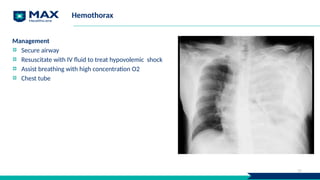
Hemothorax
Blood in pleura space
Most common result of major chest wall trauma
Present in 70 to 80% of penetrating, major non-penetrating chest trauma
Signs and Symptoms
Decreased breath sounds
Dull to percussion on affected side
Rapid, weak pulse
Cool, clammy skin
Restlessness, anxiety
Thirst
Hypotension
Collapsed neck veins
Respiratory distress
Shock precedes ventilatory failure
31
Hemothorax
Management
Secure airway
Resuscitate with IV fluid to treat hypovolemic shock
Assist breathing with high concentration O2
Chest tube
32
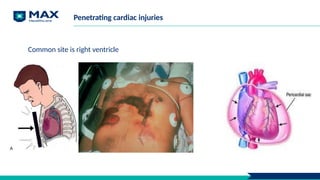
Common site is right ventricle
Penetrating cardiac injuries
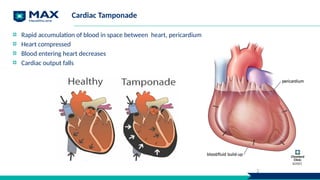
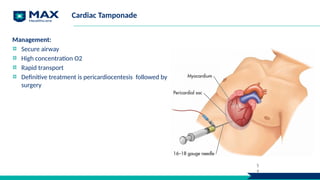
Cardiac Tamponade
Rapid accumulation of blood in space between heart, pericardium
Heart compressed
Blood entering heart decreases
Cardiac output falls
5
2
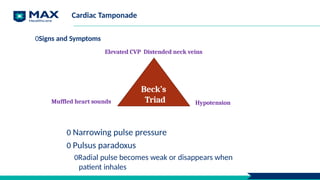
Cardiac Tamponade
0 Narrowing pulse pressure
0 Pulsus paradoxus
0Radial pulse becomes weak or disappears when
patient inhales
Hypotension
Beck’s
Triad
0Signs and Symptoms
Elevated CVP Distended neck veins
Muffled heart sounds
Cardiac Tamponade
Management:
Secure airway
High concentration O2
Rapid transport
Definitive treatment is pericardiocentesis followed by
surgery
5
4
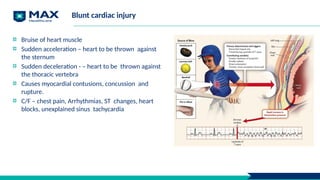
Blunt cardiac injury
Bruise of heart muscle
Sudden acceleration – heart to be thrown against
the sternum
Sudden deceleration - – heart to be thrown against
the thoracic vertebra
Causes myocardial contusions, concussion and
rupture.
C/F – chest pain, Arrhythmias, ST changes, heart
blocks, unexplained sinus tachycardia
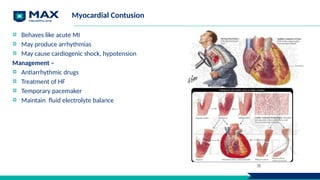
Myocardial Contusion
Behaves like acute MI
May produce arrhythmias
May cause cardiogenic shock, hypotension
Management –
Antiarrhythmic drugs
Treatment of HF
Temporary pacemaker
Maintain fluid electrolyte balance
38
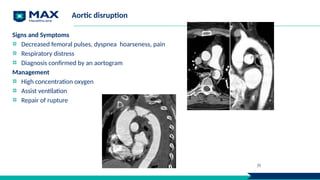
Aortic disruption
Signs and Symptoms
Decreased femoral pulses, dyspnea hoarseness, pain
Respiratory distress
Diagnosis confirmed by an aortogram
Management
High concentration oxygen
Assist ventilation
Repair of rupture
39
Blunt chest trauma in adults ED management algorithm
Nursing management
Ineffective tissue perfusion – Oxygen administration, blood transfusion,
Pain – Analgesics, bed rest
Risk for infection – Care of fixators, dressing
Risk for injury – Neurovascular assessment,
Complications of trauma
Hyper metabolism : Due to metabolic response to injury.
Infection
Sepsis
Pulmonary
Respiratory failure
Fat embolism syndrome
Pain
Renal complications:
Renal failure
Myoglobinuria
Vascular complications
Compartment syndrome
DVT
Missed injuries
MODS
Role of ICU Nurses In
Management of other Emergency
Conditions (Drug Overdose &
Poisoning)
Learning Objective
At the end of the session learner will be able to:
To illustrate clinical manifestation & how to manage & facilitate nursing care to the patient with drug overdose.
To have concise knowledge of the general line of treatment to be followed if a case of poisoning.
Drug Overdose
A drug overdose occurs when a person consumes an excessive amount of a drug, whether it is prescribed, over-
the-counter or illicit drugs.
It can be accidental or intentional and can occur from taking too much of a drug at once or over a prolonged
period.
Overdoses can affect different systems in the body, such as the respiratory system, central nervous system, and
cardiovascular system.
Depending on the type and amount of drug consumed, the symptoms of an overdose can vary widely.
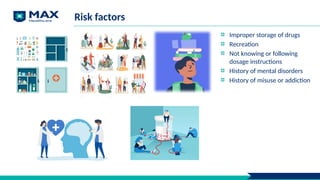
Risk factors
Improper storage of drugs
Recreation
Not knowing or following
dosage instructions
History of mental disorders
History of misuse or addiction
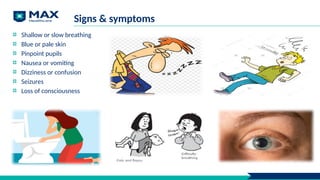
Signs & symptoms
Shallow or slow breathing
Blue or pale skin
Pinpoint pupils
Nausea or vomiting
Dizziness or confusion
Seizures
Loss of consciousness
Cont..
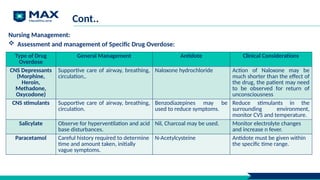
Nursing Management:
 Assessment and management of Specific Drug Overdose:
Type of Drug
Overdose
General Management Antidote Clinical Considerations
CNS Depressants
(Morphine,
Heroin,
Methadone,
Oxycodone)
Supportive care of airway, breathing,
circulation,.
Naloxone hydrochloride Action of Naloxone may be
much shorter than the effect of
the drug, the patient may need
to be observed for return of
unconsciousness
CNS stimulants Supportive care of airway, breathing,
circulation.
Benzodiazepines may be
used to reduce symptoms.
Reduce stimulants in the
surrounding environment,
monitor CVS and temperature.
Salicylate Observe for hyperventilation and acid
base disturbances.
Nil, Charcoal may be used. Monitor electrolyte changes
and increase n fever.
Paracetamol Careful history required to determine
time and amount taken, initially
vague symptoms.
N-Acetylcysteine Antidote must be given within
the specific time range.
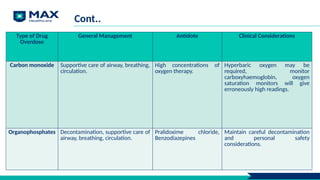
Cont..
Type of Drug
Overdose
General Management Antidote Clinical Considerations
Carbon monoxide Supportive care of airway, breathing,
circulation.
High concentrations of
oxygen therapy.
Hyperbaric oxygen may be
required, monitor
carboxyhaemoglobin, oxygen
saturation monitors will give
erroneously high readings.
Organophosphates Decontamination, supportive care of
airway, breathing, circulation.
Pralidoxime chloride,
Benzodiazepines
Maintain careful decontamination
and personal safety
considerations.
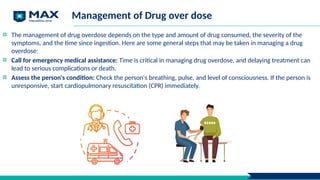
Management of Drug over dose
The management of drug overdose depends on the type and amount of drug consumed, the severity of the
symptoms, and the time since ingestion. Here are some general steps that may be taken in managing a drug
overdose:
Call for emergency medical assistance: Time is critical in managing drug overdose, and delaying treatment can
lead to serious complications or death.
Assess the person's condition: Check the person's breathing, pulse, and level of consciousness. If the person is
unresponsive, start cardiopulmonary resuscitation (CPR) immediately.
Management of Drug over dose
Provide first aid: If the person is conscious and breathing, try to keep them calm and comfortable. Remove any
drugs or drug paraphernalia from the person's surroundings. If the person is vomiting, turn them on their side to
prevent choking.
Obtain proper history: The type of drug consumed, the amount, and the time of ingestion. This information can
help to determine the appropriate treatment.
Administer medication: Depending on the drug consumed, appropriate.
Provide supportive care: Such as monitoring vital signs, providing oxygen therapy, or giving intravenous fluids.
Intensive care management of drug overdose
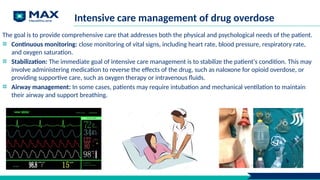
The goal is to provide comprehensive care that addresses both the physical and psychological needs of the patient.
Continuous monitoring: close monitoring of vital signs, including heart rate, blood pressure, respiratory rate,
and oxygen saturation.
Stabilization: The immediate goal of intensive care management is to stabilize the patient's condition. This may
involve administering medication to reverse the effects of the drug, such as naloxone for opioid overdose, or
providing supportive care, such as oxygen therapy or intravenous fluids.
Airway management: In some cases, patients may require intubation and mechanical ventilation to maintain
their airway and support breathing.
Intensive care management of drug overdose
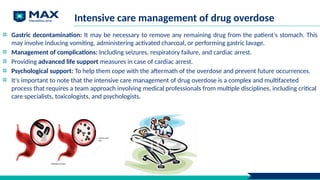
Gastric decontamination: It may be necessary to remove any remaining drug from the patient's stomach. This
may involve inducing vomiting, administering activated charcoal, or performing gastric lavage.
Management of complications: Including seizures, respiratory failure, and cardiac arrest.
Providing advanced life support measures in case of cardiac arrest.
Psychological support: To help them cope with the aftermath of the overdose and prevent future occurrences.
It's important to note that the intensive care management of drug overdose is a complex and multifaceted
process that requires a team approach involving medical professionals from multiple disciplines, including critical
care specialists, toxicologists, and psychologists.
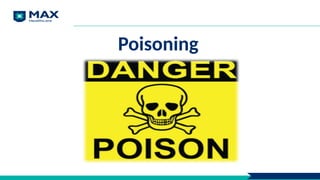
Poisoning
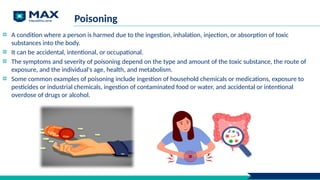
Poisoning
A condition where a person is harmed due to the ingestion, inhalation, injection, or absorption of toxic
substances into the body.
It can be accidental, intentional, or occupational.
The symptoms and severity of poisoning depend on the type and amount of the toxic substance, the route of
exposure, and the individual's age, health, and metabolism.
Some common examples of poisoning include ingestion of household chemicals or medications, exposure to
pesticides or industrial chemicals, ingestion of contaminated food or water, and accidental or intentional
overdose of drugs or alcohol.
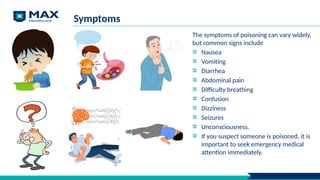
Symptoms
The symptoms of poisoning can vary widely,
but common signs include
Nausea
Vomiting
Diarrhea
Abdominal pain
Difficulty breathing
Confusion
Dizziness
Seizures
Unconsciousness.
If you suspect someone is poisoned, it is
important to seek emergency medical
attention immediately.
Management of Poisoning
The management of poisoning in the ICU (Intensive Care Unit) involves several steps:
Stabilization: The first step is to stabilize the patient's vital signs, such as blood pressure, heart rate, and oxygen
saturation. This may involve administering fluids, oxygen, or medications to treat symptoms such as seizures,
agitation, or respiratory distress.
Identification: The next step is to identify the toxic substance responsible for the poisoning, if possible. This may
involve obtaining a history of the patient's exposure, performing laboratory tests or imaging studies, or
consulting with a toxicologist.
Elimination: Once the toxic substance has been identified, steps can be taken to eliminate it from the patient's
body. This may involve administering antidotes, performing dialysis or other forms of extracorporeal therapy, or
supporting the patient's natural detoxification processes.
Cont.
Supportive Care: The patient may require supportive care such as mechanical ventilation, continuous
renal replacement therapy, or monitoring of electrolyte imbalances.
Prevention of Complications: Patients with poisoning are at risk of developing complications such as
pneumonia, sepsis, or organ failure. Therefore, it is important to closely monitor the patient's condition
and address any complications that arise.
Rehabilitation: Once the patient has recovered from the acute phase of poisoning, rehabilitation may
be required to help them regain strength and function.
The management of poisoning in the ICU requires a multidisciplinary approach, involving toxicologists, critical care physicians,
nurses, and other healthcare professionals. Close monitoring and prompt intervention can help improve outcomes for patients
with poisoning.
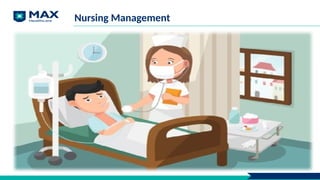
Nursing Management
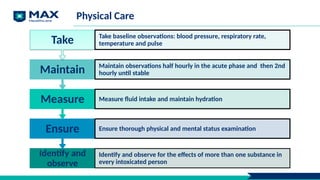
Physical Care
Identify and
observe
Identify and observe for the effects of more than one substance in
every intoxicated person
Ensure Ensure thorough physical and mental status examination
Measure Measure fluid intake and maintain hydration
Maintain Maintain observations half hourly in the acute phase and then 2nd
hourly until stable
Take Take baseline observations: blood pressure, respiratory rate,
temperature and pulse
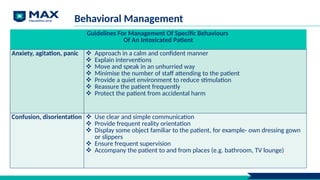
Behavioral Management
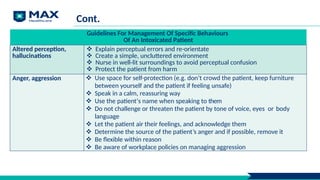
Guidelines For Management Of Specific Behaviours
Of An Intoxicated Patient
Anxiety, agitation, panic  Approach in a calm and confident manner
 Explain interventions
 Move and speak in an unhurried way
 Minimise the number of staff attending to the patient
 Provide a quiet environment to reduce stimulation
 Reassure the patient frequently
 Protect the patient from accidental harm
Confusion, disorientation  Use clear and simple communication
 Provide frequent reality orientation
 Display some object familiar to the patient, for example- own dressing gown
or slippers
 Ensure frequent supervision
 Accompany the patient to and from places (e.g. bathroom, TV lounge)
Cont.
Guidelines For Management Of Specific Behaviours
Of An Intoxicated Patient
Altered perception,
hallucinations
 Explain perceptual errors and re-orientate
 Create a simple, uncluttered environment
 Nurse in well-lit surroundings to avoid perceptual confusion
 Protect the patient from harm
Anger, aggression  Use space for self-protection (e.g. don’t crowd the patient, keep furniture
between yourself and the patient if feeling unsafe)
 Speak in a calm, reassuring way
 Use the patient’s name when speaking to them
 Do not challenge or threaten the patient by tone of voice, eyes or body
language
 Let the patient air their feelings, and acknowledge them
 Determine the source of the patient’s anger and if possible, remove it
 Be flexible within reason
 Be aware of workplace policies on managing aggression
Management of Sepsis- Basic Sepsis Life Support
Basic Sepsis Life Support (BSLS)
Our Vision: Improve the lives of our sepsis patients, families, and educate skilled healthcare
professionals, and conduct training that expands clinical knowledge
Our Goal : Early detection and treatment of sepsis and septic shock to reduce sepsis mortality
Learning objectives
• To recognize patients that require sepsis screening – high risk groups,
deterioration due to infection & those with signs of sepsis
• To define sepsis & septic shock and document same
• To know when & how to use the Adult Sepsis pathway to aid recognition and
treatment
• To implement with 1 hour sepsis bundle
• To Identify when to escalate care
Step1 :Sepsis Recognition
Step 2: Focused examination and Assessment
Step 3: One hour Bundle
Step 4 : Monitoring goals of sepsis
Step 5: Infection control practises, source control and
ID consult
Step 6: Disposition
Six steps of sepsis management
Sepsis: Defining = Identifying
= life-threatening organ dysfunction
➡ caused by a dysregulated host response
➡to infection
= a life-threatening condition
➡ when the body’s response to an infection
➡injures its own tissues and organs
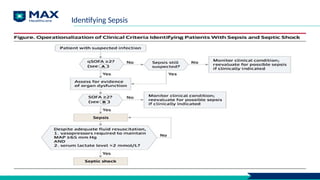
Identifying Sepsis
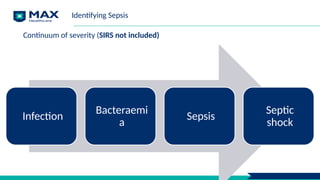
Continuum of severity (SIRS not included)
Identifying Sepsis
Infection
Bacteraemi
a
Sepsis
Septic
shock
Identifying Sepsis
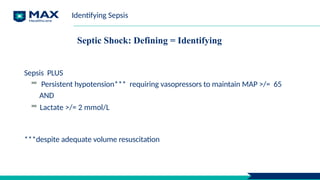
Septic Shock: Defining = Identifying
Sepsis PLUS
➡ Persistent hypotension*** requiring vasopressors to maintain MAP >/= 65
AND
➡ Lactate >/= 2 mmol/L
***despite adequate volume resuscitation
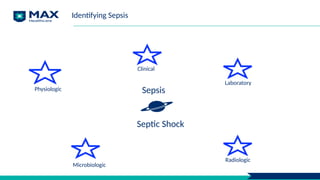
Sepsis
Septic Shock
Clinical
Laboratory
Radiologic
Physiologic
Microbiologic
Identifying Sepsis
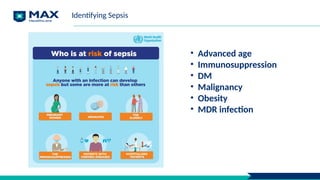
• Advanced age
• Immunosuppression
• DM
• Malignancy
• Obesity
• MDR infection
Identifying Sepsis
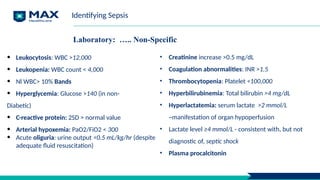
Laboratory: ….. Non-Specific
• Leukocytosis: WBC >12,000
• Leukopenia: WBC count < 4,000
• Nl WBC> 10% Bands
• Hyperglycemia: Glucose >140 (in non-
Diabetic)
• C-reactive protein: 2SD > normal value
• Arterial hypoxemia: PaO2/FiO2 < 300
• Acute oliguria: urine output <0.5 mL/kg/hr (despite
adequate fluid resuscitation)
• Creatinine increase >0.5 mg/dL
• Coagulation abnormalities: INR >1.5
• Thrombocytopenia: Platelet <100,000
• Hyperbilirubinemia: Total bilirubin >4 mg/dL
• Hyperlactatemia: serum lactate >2 mmol/L
~manifestation of organ hypoperfusion
• Lactate level ≥4 mmol/L - consistent with, but not
diagnostic of, septic shock
• Plasma procalcitonin
Identifying Sepsis
Radiologic:
Only useful in Diagnosing INFECTION
Identifying Sepsis
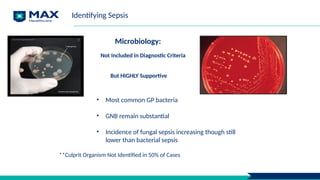
Microbiology:
Not Included in Diagnostic Criteria
But HIGHLY Supportive
**Culprit Organism Not Identified in 50% of Cases
• Most common GP bacteria
• GNB remain substantial
• Incidence of fungal sepsis increasing though still
lower than bacterial sepsis
Identifying Sepsis
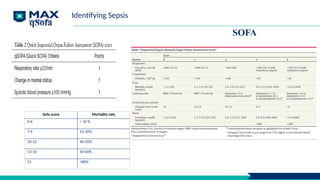
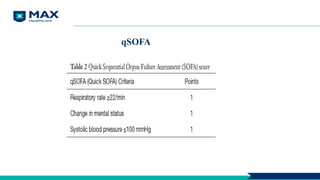
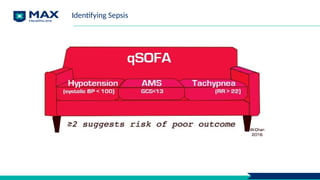
qSofa
SOFA
Sofa score Mortality rate
0-6 < 10 %
7-9 15-20%
10-12 40-50%
13-14 50-60%
15 >80%
Identifying Sepsis
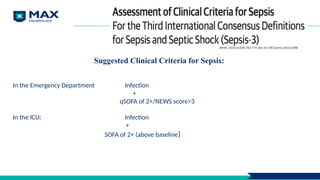
JAMA. 2016;315(8):762-774. doi:10.1001/jama.2016.0288
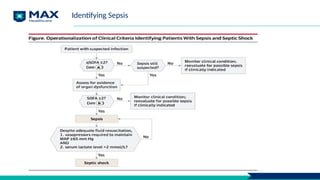
Suggested Clinical Criteria for Sepsis:
In the Emergency Department Infection
+
qSOFA of 2+/NEWS score>3
In the ICU: Infection
+
SOFA of 2+ (above baseline)
Identifying Sepsis
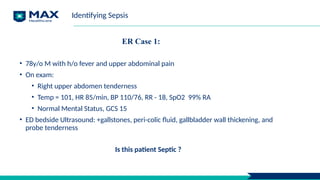
ER Case 1:
• 78y/o M with h/o fever and upper abdominal pain
• On exam:
• Right upper abdomen tenderness
• Temp = 101, HR 85/min, BP 110/76, RR - 18, SpO2 99% RA
• Normal Mental Status, GCS 15
• ED bedside Ultrasound: +gallstones, peri-colic fluid, gallbladder wall thickening, and
probe tenderness
Is this patient Septic ?
Identifying Sepsis
qSOFA
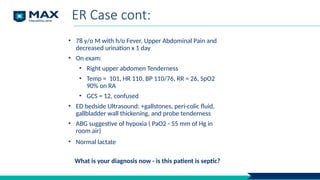
ER Case cont:
• 78 y/o M with h/o Fever, Upper Abdominal Pain and
decreased urination x 1 day
• On exam:
• Right upper abdomen Tenderness
• Temp = 101, HR 110, BP 110/76, RR = 26, SpO2
90% on RA
• GCS = 12, confused
• ED bedside Ultrasound: +gallstones, peri-colic fluid,
gallbladder wall thickening, and probe tenderness
• ABG suggestive of hypoxia ( PaO2 - 55 mm of Hg in
room air)
• Normal lactate
What is your diagnosis now - is this patient is septic?
Identifying Sepsis
Identifying Sepsis
Quiz
Which is the most important marker in assessing renal function in sepsis/septic shock?
Urine output
Creatinine
Urea
Biomarkers
Sepsis BUNDLES OF CARE
CONCEPT OF BUNDLE
IMPORTANCE OF BUNDLE
CURRENT BUNDLE STATEMENT
IMPLEMENTATION OF BUNDLES
LIMITATIONS OF BUNDLES
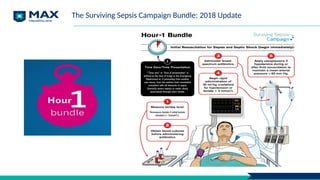
The Surviving Sepsis Campaign Bundle: 2018 Update
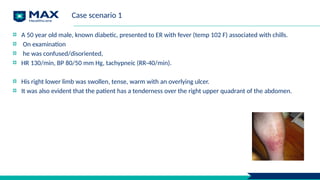
Case scenario 1
A 50 year old male, known diabetic, presented to ER with fever (temp 102 F) associated with chills.
On examination
he was confused/disoriented,
HR 130/min, BP 80/50 mm Hg, tachypneic (RR-40/min).
His right lower limb was swollen, tense, warm with an overlying ulcer.
It was also evident that the patient has a tenderness over the right upper quadrant of the abdomen.
Why investigate?
To identify causative agent
To evaluate organ dysfunction
To identify source of infection
To aid prognosis and selection of appropriate level of care
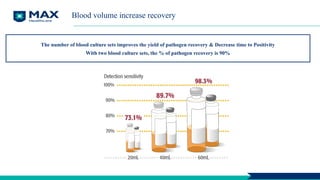
Blood volume increase recovery
The number of blood culture sets improves the yield of pathogen recovery & Decrease time to Positivity
With two blood culture sets, the % of pathogen recovery is 90%
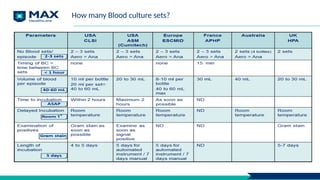
How many Blood culture sets?
• Procalcitonin
• C-Reactive protein
Biomarker
• Blood culture
• Respiratory, Urine, CSF, Pus (Source
identification)
Microbiology
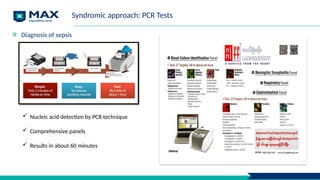
Syndromic approach: PCR Tests
Diagnosis of sepsis
 Nucleic acid detection by PCR technique
 Comprehensive panels
 Results in about 60 minutes
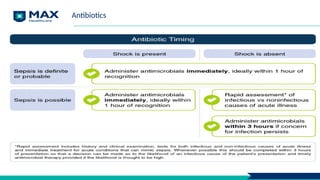
Antibiotics
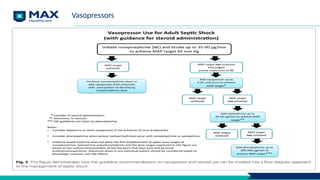
Vasopressors
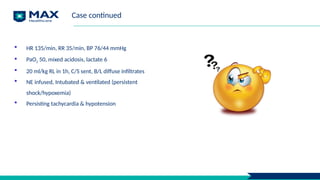
Case continued
 HR 135/min, RR 35/min, BP 76/44 mmHg
 PaO2 50, mixed acidosis, lactate 6
 20 ml/kg RL in 1h, C/S sent, B/L diffuse infiltrates
 NE infused, Intubated & ventilated (persistent
shock/hypoxemia)
 Persisting tachycardia & hypotension
What will be the best step
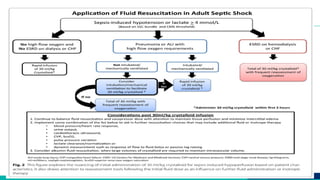
Another bolus of 15-20 ml/kg fluid
NE/add vasopressin
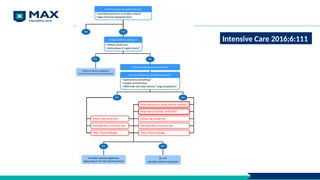
CVP Guided therapy
Dynamic parameters guided therapy
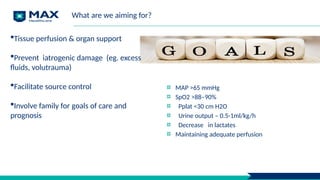
Tissue perfusion & organ support
Prevent iatrogenic damage (eg. excess
fluids, volutrauma)
Facilitate source control
Involve family for goals of care and
prognosis
What are we aiming for?
MAP >65 mmHg
SpO2 >88–90%
Pplat <30 cm H2O
Urine output – 0.5-1ml/kg/h
Decrease in lactates
Maintaining adequate perfusion
Intensive Care 2016;6:111
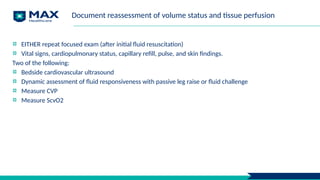
Document reassessment of volume status and tissue perfusion
EITHER repeat focused exam (after initial fluid resuscitation)
Vital signs, cardiopulmonary status, capillary refill, pulse, and skin findings.
Two of the following:
Bedside cardiovascular ultrasound
Dynamic assessment of fluid responsiveness with passive leg raise or fluid challenge
Measure CVP
Measure ScvO2
Monitoring infection control
Contact precautions /Negative and Positive Isolation
Repeat culture only for fungal growth to decide on therapy duration
For Staph aureus, r/o vegetations, prosthesis
Drain empyema/ascitic fluid in SBP, remove lines/tubes, debride wounds
Reassessment during monitoring
An important marker of global organ perfusion: Lactate
After resuscitation, monitor all organ systems
Fluid therapy guided both by fluid responsiveness & tolerance
Assess & control infection
Thank you!

1. Traumatic injuries.pptxdwddddkldkldkl

  • 1.
  • 3.
    Learning objectives At theend of the session the participants will be able to: Enlist mechanism of injury in trauma Understand about various Thoracic injuries Abdominal injuries Fractures Complications of trauma
  • 4.
  • 5.
    Blunt: Common in Motor vehiclecrash Contact sports Assault with blunt objects Fall from height. Severity depends on the amount of kinetic energy dissipated to the body and underlying structures.
  • 6.
    Blunt trauma causes… Acceleratingforce Decelerating force Shearing force Crushing force Compressing force
  • 7.
    Cont. Acceleration : Injuriesoccur when moving object strikes the stationary head Acceleration – Deceleration : Injuries occur when the head in motion strikes a stationary object. Coup contre coup: occur when the brain “bounces” back and forth within the skull, striking both sides of the brain Rotational forces: causes brain to twist within the meninges and the skull, resulting in stretching and tearing of blood vessels and sharing of neurons
  • 8.
    Prehospital resuscitation Goal: Immediatestabilization and transportation. Airway maintenance Control of external bleeding and shock Immobilization Immediate transport Based on Advanced Trauma Life Support (ATLS)
  • 9.
    Primary evaluation andmanagement Primary survey: Airway assessment and protection - maintain cervical spine stabilization when appropriate Breathing and ventilation assessment - maintain adequate oxygenation Circulation - control hemorrhage and maintain adequate end-organ perfusion Disability - perform basic neurologic evaluation Exposure with environmental control - undress patient and search everywhere for possible injury, while preventing hypothermia.
  • 10.
    Points to rememberedduring primary survey Airway obstruction is a major cause of death immediately following trauma Intubate When in doubt, it is generally best to intubate early, particularly in patients with hemodynamic instability, or those with significant injuries to the face or neck, which may lead to swelling and distortion of the airway Secure airway after intubation Unconscious patients with small pneumothoraces that are not visible or missed on the initial chest radiograph It is important to reauscultate the lungs of trauma patients who develop hemodynamic instability after being intubated. Be alert for subtle signs of hemorrhagic shock, particularly in the elderly and young, healthy adults who may not present with obvious manifestations. Brain injuries are common in patients who have sustained severe blunt trauma
  • 11.
    Airway Assess airway Intubation -RSI Cricothyrotomy — when orotracheal intubation cannot be accomplished ervical spine immobilization - The anterior portion of the cervical collar should be temporarily removed and manual in-line stabilization maintained
  • 12.
    RSI – preparationSOAPME Suction Oxygen Airways ET tube Stylet —Laryngoscope- Blade – Mac 3 or 4 for adults, Miller —video laryngoscope, LMA and bougie at bedside Pre-oxygenate – 15 LPM NRBM Monitoring equipment/Medications End Tidal CO2
  • 13.
    Assessment of difficultAirway L: LOOK: Facial and neck injuries E: EVALUATE - intraoral, mandibular, and hyoid-to- thyroid notch distances. M: MALLAMPATI: A standard calculation of the Mallampati score cannot be performed in many trauma patients. assess whether injuries of the oropharynx or pooled blood, vomitus, or secretions are present. O: OBSTRUCTION/OBESITY: N: NECK MOBILITY: Once the cervical collar is removed by a second skilled provider, that provider should stabilize the spine while orotracheal intubation is performed. (A)The patient can open his/her mouth sufficiently to admit three of his/her own fingers. (B)The distance between the mentum and the neck/mandible junction (near the hyoid bone) is the length of three of the patient's fingers. (C)The space between the superior notch of the thyroid cartilage and the neck/mandible junction, near the hyoid bone, is the length of two of the patient's fingers.
  • 14.
    Recognition of thedifficult airway Grade I: Fully visible tonsils, Uvula, soft palate Grade II: Visible hard and soft palate, upper portion of tonsil and uvula Grade III: Visible Soft and hard palate and base of the uvula. Grade IV: Only hard palate visible
  • 15.
    Resuscitation Aimed at ensuringadequate perfusion of tissues Large bore peripheral IV catheters Draw blood samples IV: Crystalloid Blood transfusion Gastric and urinary catheter placement.
  • 16.
    Secondary survey: Begins afterresuscitation is well established and vital signs are normalized History Head to toe examination Completion of special procedures – ECG, X-rays, USG Monitor vitals Definitive Care/ operative phase: Depending on type of injury Critical care phase: Ongoing physical assessment Monitoring patients response for treatment Maintain oxygenation Prevention of complications
  • 17.
    Thoracic injuries Second leadingcause of trauma deaths after head injury About 20% of all trauma deaths Mechanism of injury Blunt thoracic trauma Penetrating thoracic trauma
  • 18.
    Types Chest wall injuries Ribfracture Flail chest Ruptured diaphragm Pulmonary injuries Pulmonary contusion Open pneumothorax Tension pneumothorax Massive hemothorax Cardiac and vascular injuries Penetrating cardiac injuries Cardiac tamponade Blunt cardiac injuries Aortic disruption 18
  • 19.
    Rib Fracture Most commonchest injury Most commonly 5th to 9th ribs 1st and 2nd rib – Intrathoracic vascular injuries Fractures of 8th to 12th ribs can damage underlying abdominal solid organs: Liver Spleen Kidneys Signs and Symptoms Localized pain, tenderness. Pain Increases on Coughs, Moves and Breathes deeply Chest wall instability Deformity, discoloration Associated pneumo or hemothorax 19
  • 20.
    Diagnosis: Chest X ray,clinical examination Management: Depends on no. of ribs fractured, degree of underlying injury, and age of the patient. High concentration O2 Splinting. Pain control Encourage patient to breath deeply
  • 21.
    Flail Chest Two ormore adjacent ribs broken in two or more places Produces free-floating chest wall segment Paradoxical respiration: Chest collapses with inspiration and bulges with expiration. Usually secondary to blunt trauma More common in older patients Signs and Symptoms Paradoxical movement Be suspicious in any patient with chest wall: Tenderness Crepitus Pain, leading to decreased ventilation Increased work of breathing Contusion of lung Anxious, tachypneic, and tachycardic. 2 9
  • 22.
    Flail Chest Management Establish airway Intubationand mechanical ventilation Frequent pulmonary care Aggressive pain management Chest tube Stabilize chest wall 22
  • 23.
    Ruptured diaphragm Occurs asa result of rapid rise in the intra- abdominal pressure due to compression force. Abdominal viscera enters thoracic cavity &compresses the lungs and mediastinum Hampers in venous return Decreases cardiac output Strangulation and perforation of herniated bowel Signs and symptoms: Shoulder pain Shortness of breath Abdominal tenderness Diagnosis: Chest X ray Management: Repair of diaphragm
  • 24.
    Pulmonary injuries Pulmonary contusions: Mayoccur unilateral / bilateral Manifested as hemorrhage and then edema Inflammation affects alveolar capillary units. Leads to decrease compliance Increased pulmonary vascular resistance Decreased blood flow. Ventilation perfusion imbalances. Symptoms may develop after 24 to 48 hours Ecchymosis of chest wall Crackles in contused lung Cough with blood- tinged sputum Poor lung function -Systemic arterial hypoxemia
  • 25.
    Pulmonary injuries Diagnosis: Xray Management: Deep breathing exercises & Incentive spirometer Aggressive removal of secretions. Position – Down with a good lung Pain management Intubation and mechanical ventilation
  • 26.
    Simple Pneumothorax Air inpleural space Partial or complete lung collapse occurs. Causes Chest wall penetration Fractured rib lacerating lung Signs and Symptoms Pain on inhalation Difficulty breathing Tachypnea Decreased or absent breath sounds Severity of symptoms depends on size of pneumothorax, speed of lung collapse, and patient’s health status 26
  • 27.
    Simple Pneumothorax Management Establish airway Suspectspinal injury based on mechanism High concentration O2 Assist decreased or rapid respirations Monitor for tension pneumothorax 27
  • 28.
    Open Pneumothorax Hole inchest wall Allows air to enter pleural space Larger hole = Greater chance air will enter there than through trachea “Sucking Chest Wound” Symptoms: Hypoxia, hemodynamic instability Management: Close hole with occlusive dressing High concentration O2 Insert chest tube. Consider transport on injured side Monitor for tension pneumothorax 28
  • 29.
    Tension Pneumothorax Air enterspleural space; cannot leave Air is trapped in pleural space Pressure collapses lung Trapped air pushes heart, lungs away from injured side Vena cavae become kinked Blood cannot return to heart Cardiac output falls 29
  • 30.
    Tension Pneumothorax Signs andSymptoms Extreme dyspnea Restlessness, anxiety, agitation Absence of breath sounds Hyper-resonance to percussion Cyanosis Subcutaneous emphysema Rapid, weak pulse Decreased BP Tracheal shift away from injured side Jugular vein distension Management Treatment never delayed to confirm with chest x ray. Immediate decompression of intra-thoracic pressure by needle Thoracostomy followed by Chest tube insertion 30
  • 31.
    Hemothorax Blood in pleuraspace Most common result of major chest wall trauma Present in 70 to 80% of penetrating, major non-penetrating chest trauma Signs and Symptoms Decreased breath sounds Dull to percussion on affected side Rapid, weak pulse Cool, clammy skin Restlessness, anxiety Thirst Hypotension Collapsed neck veins Respiratory distress Shock precedes ventilatory failure 31
  • 32.
    Hemothorax Management Secure airway Resuscitate withIV fluid to treat hypovolemic shock Assist breathing with high concentration O2 Chest tube 32
  • 33.
    Common site isright ventricle Penetrating cardiac injuries
  • 34.
    Cardiac Tamponade Rapid accumulationof blood in space between heart, pericardium Heart compressed Blood entering heart decreases Cardiac output falls 5 2
  • 35.
    Cardiac Tamponade 0 Narrowingpulse pressure 0 Pulsus paradoxus 0Radial pulse becomes weak or disappears when patient inhales Hypotension Beck’s Triad 0Signs and Symptoms Elevated CVP Distended neck veins Muffled heart sounds
  • 36.
    Cardiac Tamponade Management: Secure airway Highconcentration O2 Rapid transport Definitive treatment is pericardiocentesis followed by surgery 5 4
  • 37.
    Blunt cardiac injury Bruiseof heart muscle Sudden acceleration – heart to be thrown against the sternum Sudden deceleration - – heart to be thrown against the thoracic vertebra Causes myocardial contusions, concussion and rupture. C/F – chest pain, Arrhythmias, ST changes, heart blocks, unexplained sinus tachycardia
  • 38.
    Myocardial Contusion Behaves likeacute MI May produce arrhythmias May cause cardiogenic shock, hypotension Management – Antiarrhythmic drugs Treatment of HF Temporary pacemaker Maintain fluid electrolyte balance 38
  • 39.
    Aortic disruption Signs andSymptoms Decreased femoral pulses, dyspnea hoarseness, pain Respiratory distress Diagnosis confirmed by an aortogram Management High concentration oxygen Assist ventilation Repair of rupture 39
  • 40.
    Blunt chest traumain adults ED management algorithm
  • 41.
    Nursing management Ineffective tissueperfusion – Oxygen administration, blood transfusion, Pain – Analgesics, bed rest Risk for infection – Care of fixators, dressing Risk for injury – Neurovascular assessment,
  • 42.
    Complications of trauma Hypermetabolism : Due to metabolic response to injury. Infection Sepsis Pulmonary Respiratory failure Fat embolism syndrome Pain Renal complications: Renal failure Myoglobinuria Vascular complications Compartment syndrome DVT Missed injuries MODS
  • 43.
    Role of ICUNurses In Management of other Emergency Conditions (Drug Overdose & Poisoning)
  • 44.
    Learning Objective At theend of the session learner will be able to: To illustrate clinical manifestation & how to manage & facilitate nursing care to the patient with drug overdose. To have concise knowledge of the general line of treatment to be followed if a case of poisoning.
  • 45.
    Drug Overdose A drugoverdose occurs when a person consumes an excessive amount of a drug, whether it is prescribed, over- the-counter or illicit drugs. It can be accidental or intentional and can occur from taking too much of a drug at once or over a prolonged period. Overdoses can affect different systems in the body, such as the respiratory system, central nervous system, and cardiovascular system. Depending on the type and amount of drug consumed, the symptoms of an overdose can vary widely.
  • 46.
    Risk factors Improper storageof drugs Recreation Not knowing or following dosage instructions History of mental disorders History of misuse or addiction
  • 47.
    Signs & symptoms Shallowor slow breathing Blue or pale skin Pinpoint pupils Nausea or vomiting Dizziness or confusion Seizures Loss of consciousness
  • 48.
    Cont.. Nursing Management:  Assessmentand management of Specific Drug Overdose: Type of Drug Overdose General Management Antidote Clinical Considerations CNS Depressants (Morphine, Heroin, Methadone, Oxycodone) Supportive care of airway, breathing, circulation,. Naloxone hydrochloride Action of Naloxone may be much shorter than the effect of the drug, the patient may need to be observed for return of unconsciousness CNS stimulants Supportive care of airway, breathing, circulation. Benzodiazepines may be used to reduce symptoms. Reduce stimulants in the surrounding environment, monitor CVS and temperature. Salicylate Observe for hyperventilation and acid base disturbances. Nil, Charcoal may be used. Monitor electrolyte changes and increase n fever. Paracetamol Careful history required to determine time and amount taken, initially vague symptoms. N-Acetylcysteine Antidote must be given within the specific time range.
  • 49.
    Cont.. Type of Drug Overdose GeneralManagement Antidote Clinical Considerations Carbon monoxide Supportive care of airway, breathing, circulation. High concentrations of oxygen therapy. Hyperbaric oxygen may be required, monitor carboxyhaemoglobin, oxygen saturation monitors will give erroneously high readings. Organophosphates Decontamination, supportive care of airway, breathing, circulation. Pralidoxime chloride, Benzodiazepines Maintain careful decontamination and personal safety considerations.
  • 50.
    Management of Drugover dose The management of drug overdose depends on the type and amount of drug consumed, the severity of the symptoms, and the time since ingestion. Here are some general steps that may be taken in managing a drug overdose: Call for emergency medical assistance: Time is critical in managing drug overdose, and delaying treatment can lead to serious complications or death. Assess the person's condition: Check the person's breathing, pulse, and level of consciousness. If the person is unresponsive, start cardiopulmonary resuscitation (CPR) immediately.
  • 51.
    Management of Drugover dose Provide first aid: If the person is conscious and breathing, try to keep them calm and comfortable. Remove any drugs or drug paraphernalia from the person's surroundings. If the person is vomiting, turn them on their side to prevent choking. Obtain proper history: The type of drug consumed, the amount, and the time of ingestion. This information can help to determine the appropriate treatment. Administer medication: Depending on the drug consumed, appropriate. Provide supportive care: Such as monitoring vital signs, providing oxygen therapy, or giving intravenous fluids.
  • 52.
    Intensive care managementof drug overdose The goal is to provide comprehensive care that addresses both the physical and psychological needs of the patient. Continuous monitoring: close monitoring of vital signs, including heart rate, blood pressure, respiratory rate, and oxygen saturation. Stabilization: The immediate goal of intensive care management is to stabilize the patient's condition. This may involve administering medication to reverse the effects of the drug, such as naloxone for opioid overdose, or providing supportive care, such as oxygen therapy or intravenous fluids. Airway management: In some cases, patients may require intubation and mechanical ventilation to maintain their airway and support breathing.
  • 53.
    Intensive care managementof drug overdose Gastric decontamination: It may be necessary to remove any remaining drug from the patient's stomach. This may involve inducing vomiting, administering activated charcoal, or performing gastric lavage. Management of complications: Including seizures, respiratory failure, and cardiac arrest. Providing advanced life support measures in case of cardiac arrest. Psychological support: To help them cope with the aftermath of the overdose and prevent future occurrences. It's important to note that the intensive care management of drug overdose is a complex and multifaceted process that requires a team approach involving medical professionals from multiple disciplines, including critical care specialists, toxicologists, and psychologists.
  • 54.
  • 55.
    Poisoning A condition wherea person is harmed due to the ingestion, inhalation, injection, or absorption of toxic substances into the body. It can be accidental, intentional, or occupational. The symptoms and severity of poisoning depend on the type and amount of the toxic substance, the route of exposure, and the individual's age, health, and metabolism. Some common examples of poisoning include ingestion of household chemicals or medications, exposure to pesticides or industrial chemicals, ingestion of contaminated food or water, and accidental or intentional overdose of drugs or alcohol.
  • 56.
    Symptoms The symptoms ofpoisoning can vary widely, but common signs include Nausea Vomiting Diarrhea Abdominal pain Difficulty breathing Confusion Dizziness Seizures Unconsciousness. If you suspect someone is poisoned, it is important to seek emergency medical attention immediately.
  • 57.
    Management of Poisoning Themanagement of poisoning in the ICU (Intensive Care Unit) involves several steps: Stabilization: The first step is to stabilize the patient's vital signs, such as blood pressure, heart rate, and oxygen saturation. This may involve administering fluids, oxygen, or medications to treat symptoms such as seizures, agitation, or respiratory distress. Identification: The next step is to identify the toxic substance responsible for the poisoning, if possible. This may involve obtaining a history of the patient's exposure, performing laboratory tests or imaging studies, or consulting with a toxicologist. Elimination: Once the toxic substance has been identified, steps can be taken to eliminate it from the patient's body. This may involve administering antidotes, performing dialysis or other forms of extracorporeal therapy, or supporting the patient's natural detoxification processes.
  • 58.
    Cont. Supportive Care: Thepatient may require supportive care such as mechanical ventilation, continuous renal replacement therapy, or monitoring of electrolyte imbalances. Prevention of Complications: Patients with poisoning are at risk of developing complications such as pneumonia, sepsis, or organ failure. Therefore, it is important to closely monitor the patient's condition and address any complications that arise. Rehabilitation: Once the patient has recovered from the acute phase of poisoning, rehabilitation may be required to help them regain strength and function. The management of poisoning in the ICU requires a multidisciplinary approach, involving toxicologists, critical care physicians, nurses, and other healthcare professionals. Close monitoring and prompt intervention can help improve outcomes for patients with poisoning.
  • 59.
  • 60.
    Physical Care Identify and observe Identifyand observe for the effects of more than one substance in every intoxicated person Ensure Ensure thorough physical and mental status examination Measure Measure fluid intake and maintain hydration Maintain Maintain observations half hourly in the acute phase and then 2nd hourly until stable Take Take baseline observations: blood pressure, respiratory rate, temperature and pulse
  • 61.
    Behavioral Management Guidelines ForManagement Of Specific Behaviours Of An Intoxicated Patient Anxiety, agitation, panic  Approach in a calm and confident manner  Explain interventions  Move and speak in an unhurried way  Minimise the number of staff attending to the patient  Provide a quiet environment to reduce stimulation  Reassure the patient frequently  Protect the patient from accidental harm Confusion, disorientation  Use clear and simple communication  Provide frequent reality orientation  Display some object familiar to the patient, for example- own dressing gown or slippers  Ensure frequent supervision  Accompany the patient to and from places (e.g. bathroom, TV lounge)
  • 62.
    Cont. Guidelines For ManagementOf Specific Behaviours Of An Intoxicated Patient Altered perception, hallucinations  Explain perceptual errors and re-orientate  Create a simple, uncluttered environment  Nurse in well-lit surroundings to avoid perceptual confusion  Protect the patient from harm Anger, aggression  Use space for self-protection (e.g. don’t crowd the patient, keep furniture between yourself and the patient if feeling unsafe)  Speak in a calm, reassuring way  Use the patient’s name when speaking to them  Do not challenge or threaten the patient by tone of voice, eyes or body language  Let the patient air their feelings, and acknowledge them  Determine the source of the patient’s anger and if possible, remove it  Be flexible within reason  Be aware of workplace policies on managing aggression
  • 63.
    Management of Sepsis-Basic Sepsis Life Support
  • 64.
    Basic Sepsis LifeSupport (BSLS) Our Vision: Improve the lives of our sepsis patients, families, and educate skilled healthcare professionals, and conduct training that expands clinical knowledge Our Goal : Early detection and treatment of sepsis and septic shock to reduce sepsis mortality
  • 65.
    Learning objectives • Torecognize patients that require sepsis screening – high risk groups, deterioration due to infection & those with signs of sepsis • To define sepsis & septic shock and document same • To know when & how to use the Adult Sepsis pathway to aid recognition and treatment • To implement with 1 hour sepsis bundle • To Identify when to escalate care
  • 66.
    Step1 :Sepsis Recognition Step2: Focused examination and Assessment Step 3: One hour Bundle Step 4 : Monitoring goals of sepsis Step 5: Infection control practises, source control and ID consult Step 6: Disposition Six steps of sepsis management
  • 67.
    Sepsis: Defining =Identifying = life-threatening organ dysfunction ➡ caused by a dysregulated host response ➡to infection = a life-threatening condition ➡ when the body’s response to an infection ➡injures its own tissues and organs Identifying Sepsis
  • 68.
    Continuum of severity(SIRS not included) Identifying Sepsis Infection Bacteraemi a Sepsis Septic shock
  • 69.
    Identifying Sepsis Septic Shock:Defining = Identifying Sepsis PLUS ➡ Persistent hypotension*** requiring vasopressors to maintain MAP >/= 65 AND ➡ Lactate >/= 2 mmol/L ***despite adequate volume resuscitation
  • 70.
  • 71.
    • Advanced age •Immunosuppression • DM • Malignancy • Obesity • MDR infection Identifying Sepsis
  • 72.
    Laboratory: ….. Non-Specific •Leukocytosis: WBC >12,000 • Leukopenia: WBC count < 4,000 • Nl WBC> 10% Bands • Hyperglycemia: Glucose >140 (in non- Diabetic) • C-reactive protein: 2SD > normal value • Arterial hypoxemia: PaO2/FiO2 < 300 • Acute oliguria: urine output <0.5 mL/kg/hr (despite adequate fluid resuscitation) • Creatinine increase >0.5 mg/dL • Coagulation abnormalities: INR >1.5 • Thrombocytopenia: Platelet <100,000 • Hyperbilirubinemia: Total bilirubin >4 mg/dL • Hyperlactatemia: serum lactate >2 mmol/L ~manifestation of organ hypoperfusion • Lactate level ≥4 mmol/L - consistent with, but not diagnostic of, septic shock • Plasma procalcitonin Identifying Sepsis
  • 73.
    Radiologic: Only useful inDiagnosing INFECTION Identifying Sepsis
  • 74.
    Microbiology: Not Included inDiagnostic Criteria But HIGHLY Supportive **Culprit Organism Not Identified in 50% of Cases • Most common GP bacteria • GNB remain substantial • Incidence of fungal sepsis increasing though still lower than bacterial sepsis Identifying Sepsis
  • 75.
    qSofa SOFA Sofa score Mortalityrate 0-6 < 10 % 7-9 15-20% 10-12 40-50% 13-14 50-60% 15 >80% Identifying Sepsis
  • 76.
    JAMA. 2016;315(8):762-774. doi:10.1001/jama.2016.0288 SuggestedClinical Criteria for Sepsis: In the Emergency Department Infection + qSOFA of 2+/NEWS score>3 In the ICU: Infection + SOFA of 2+ (above baseline)
  • 77.
  • 78.
    ER Case 1: •78y/o M with h/o fever and upper abdominal pain • On exam: • Right upper abdomen tenderness • Temp = 101, HR 85/min, BP 110/76, RR - 18, SpO2 99% RA • Normal Mental Status, GCS 15 • ED bedside Ultrasound: +gallstones, peri-colic fluid, gallbladder wall thickening, and probe tenderness Is this patient Septic ? Identifying Sepsis
  • 79.
  • 80.
    ER Case cont: •78 y/o M with h/o Fever, Upper Abdominal Pain and decreased urination x 1 day • On exam: • Right upper abdomen Tenderness • Temp = 101, HR 110, BP 110/76, RR = 26, SpO2 90% on RA • GCS = 12, confused • ED bedside Ultrasound: +gallstones, peri-colic fluid, gallbladder wall thickening, and probe tenderness • ABG suggestive of hypoxia ( PaO2 - 55 mm of Hg in room air) • Normal lactate What is your diagnosis now - is this patient is septic?
  • 81.
  • 82.
  • 83.
    Quiz Which is themost important marker in assessing renal function in sepsis/septic shock? Urine output Creatinine Urea Biomarkers
  • 84.
    Sepsis BUNDLES OFCARE CONCEPT OF BUNDLE IMPORTANCE OF BUNDLE CURRENT BUNDLE STATEMENT IMPLEMENTATION OF BUNDLES LIMITATIONS OF BUNDLES
  • 85.
    The Surviving SepsisCampaign Bundle: 2018 Update
  • 86.
    Case scenario 1 A50 year old male, known diabetic, presented to ER with fever (temp 102 F) associated with chills. On examination he was confused/disoriented, HR 130/min, BP 80/50 mm Hg, tachypneic (RR-40/min). His right lower limb was swollen, tense, warm with an overlying ulcer. It was also evident that the patient has a tenderness over the right upper quadrant of the abdomen.
  • 88.
    Why investigate? To identifycausative agent To evaluate organ dysfunction To identify source of infection To aid prognosis and selection of appropriate level of care
  • 89.
    Blood volume increaserecovery The number of blood culture sets improves the yield of pathogen recovery & Decrease time to Positivity With two blood culture sets, the % of pathogen recovery is 90%
  • 90.
    How many Bloodculture sets?
  • 91.
    • Procalcitonin • C-Reactiveprotein Biomarker • Blood culture • Respiratory, Urine, CSF, Pus (Source identification) Microbiology
  • 92.
    Syndromic approach: PCRTests Diagnosis of sepsis  Nucleic acid detection by PCR technique  Comprehensive panels  Results in about 60 minutes
  • 93.
  • 94.
  • 95.
    Case continued  HR135/min, RR 35/min, BP 76/44 mmHg  PaO2 50, mixed acidosis, lactate 6  20 ml/kg RL in 1h, C/S sent, B/L diffuse infiltrates  NE infused, Intubated & ventilated (persistent shock/hypoxemia)  Persisting tachycardia & hypotension
  • 96.
    What will bethe best step Another bolus of 15-20 ml/kg fluid NE/add vasopressin CVP Guided therapy Dynamic parameters guided therapy
  • 97.
    Tissue perfusion &organ support Prevent iatrogenic damage (eg. excess fluids, volutrauma) Facilitate source control Involve family for goals of care and prognosis What are we aiming for? MAP >65 mmHg SpO2 >88–90% Pplat <30 cm H2O Urine output – 0.5-1ml/kg/h Decrease in lactates Maintaining adequate perfusion
  • 98.
  • 99.
    Document reassessment ofvolume status and tissue perfusion EITHER repeat focused exam (after initial fluid resuscitation) Vital signs, cardiopulmonary status, capillary refill, pulse, and skin findings. Two of the following: Bedside cardiovascular ultrasound Dynamic assessment of fluid responsiveness with passive leg raise or fluid challenge Measure CVP Measure ScvO2
  • 100.
    Monitoring infection control Contactprecautions /Negative and Positive Isolation Repeat culture only for fungal growth to decide on therapy duration For Staph aureus, r/o vegetations, prosthesis Drain empyema/ascitic fluid in SBP, remove lines/tubes, debride wounds
  • 101.
    Reassessment during monitoring Animportant marker of global organ perfusion: Lactate After resuscitation, monitor all organ systems Fluid therapy guided both by fluid responsiveness & tolerance Assess & control infection

  • 102.