Discharge the prisoner: set free,
release, let go, clear
Discharge from employment: dismiss,
remove
Discharge pus fumes: ooze, excrete,
dispense, relax
Discharge a duty: carry out
Discharge or dismissal from
the hospital means the
departure of the patient from
the hospital. It can be the
formal discharge of the patient
by the attending doctor, when
the patientโ€™s treatment is over.
To be certain that the patient has the
information of his condition, follow-up
visits and the teaching of the needs.
To provide for a safe, efficient return of
all the patientโ€™s clothing, valuables and
to check that all hospital equipments
and clothing stay in the hospital.
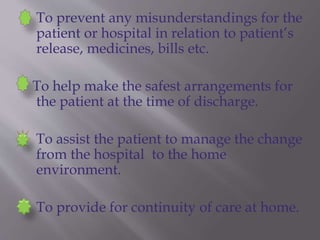
๏‚จ To prevent any misunderstandings for the
patient or hospital in relation to patientโ€™s
release, medicines, bills etc.
To help make the safest arrangements for
the patient at the time of discharge.
To assist the patient to manage the change
from the hospital to the home
environment.
๏‚จ To provide for continuity of care at home.
SIGNIFICANCE
OF DISCHARGE
PLANNING
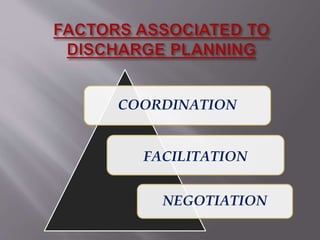
COORDINATION
FACILITATION
NEGOTIATION
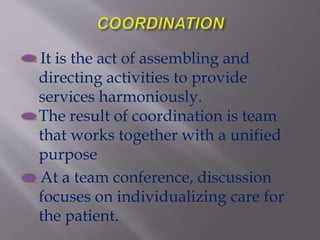
It is the act of assembling and
directing activities to provide
services harmoniously.
The result of coordination is team
that works together with a unified
purpose
At a team conference, discussion
focuses on individualizing care for
the patient.
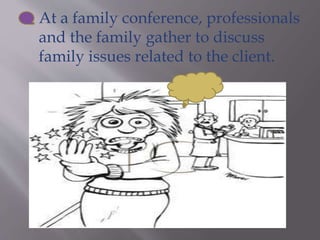
๏‚จ At a family conference, professionals
and the family gather to discuss
family issues related to the client.
๏‚จ It is making something easier and
smoother, eliminating problems and
barrier.
To facilitate the clientโ€™s transition, the
discharge planner must anticipate
needs and plan ahead.
It is begins at admission and
continues through the clientโ€™s stay.
A family conference helps to
determine the most comprehensive
service delivery.
It is the process by which the client,
nurse, and family determine goals.
It does not need to be formal, but it
must involve client and family to help
articulate feelings about how realistic
certain care of plan are.
LEVELS
OF
DISCHARGE PLANNING
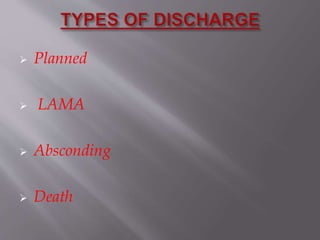
๏ƒ˜ Planned
๏ƒ˜ LAMA
๏ƒ˜ Absconding
๏ƒ˜ Death
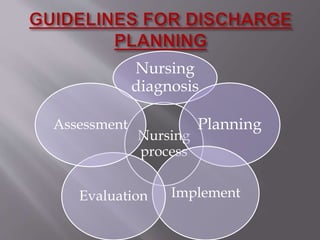
Nursing
process
Nursing
diagnosis
Planning
ImplementEvaluation
Assessment
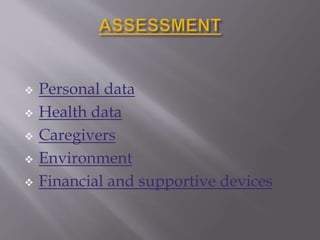
๏ถ Personal data
๏ถ Health data
๏ถ Caregivers
๏ถ Environment
๏ถ Financial and supportive devices
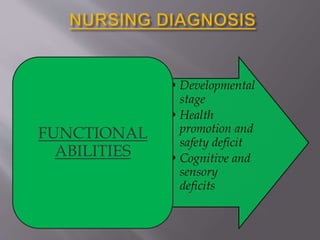
โ€ข Developmental
stage
โ€ข Health
promotion and
safety deficit
โ€ข Cognitive and
sensory
deficits
FUNCTIONAL
ABILITIES
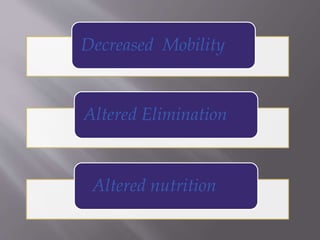
Decreased Mobility
Altered Elimination
Altered nutrition
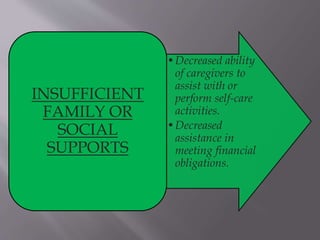
โ€ขDecreased ability
of caregivers to
assist with or
perform self-care
activities.
โ€ขDecreased
assistance in
meeting financial
obligations.
INSUFFICIENT
FAMILY OR
SOCIAL
SUPPORTS
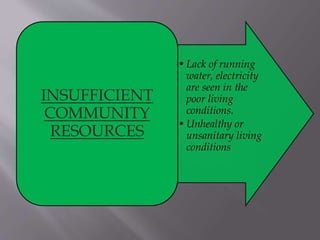
โ€ขLack of running
water, electricity
are seen in the
poor living
conditions.
โ€ขUnhealthy or
unsanitary living
conditions
INSUFFICIENT
COMMUNITY
RESOURCES
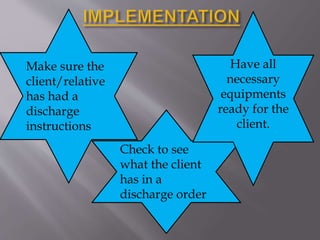
Check to see
what the client
has in a
discharge order
Make sure the
client/relative
has had a
discharge
instructions
Have all
necessary
equipments
ready for the
client.
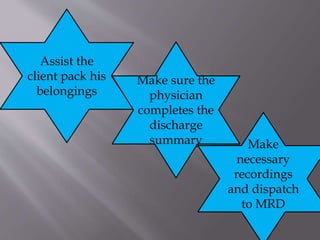
Assist the
client pack his
belongings
Make sure the
physician
completes the
discharge
summary Make
necessary
recordings
and dispatch
to MRD
๏‚จ
Nurseโ€™s record
Admission and discharge book
Treatment book
Report book
Room is
cleaned
and aired.
Open
windows and
doors
All articles
used should
be cleaned
Remove
hazards like
worn electric
cords
Make sure
fire alarms
are in
working
order.
Rearrange and
keep all articles
ready for the
next patient.
Discard
unwanted
things
Used linen is
sent to the
laundry
Fumigation
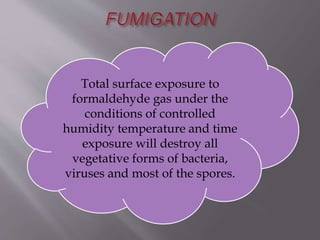
Total surface exposure to
formaldehyde gas under the
conditions of controlled
humidity temperature and time
exposure will destroy all
vegetative forms of bacteria,
viruses and most of the spores.
The best results
can be obtained with high
concentration of gas, humidity
above 60 and temperature of
not less than 18 degree
centigrade. The exposure time
varies from 1 to 16 hours. The
agents commonly used for the
fumigation are formalin tablets,
ethylene oxide liquids etc.
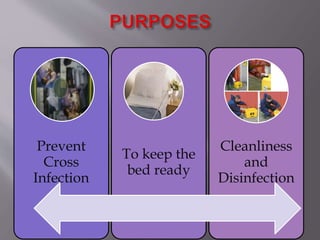
Prevent
Cross
Infection
To keep the
bed ready
Cleanliness
and
Disinfection
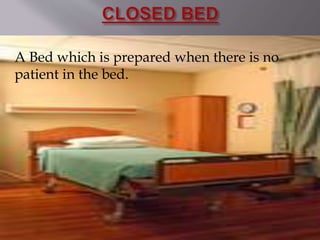
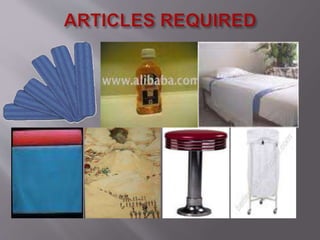
A Bed which is prepared when there is no
patient in the bed.
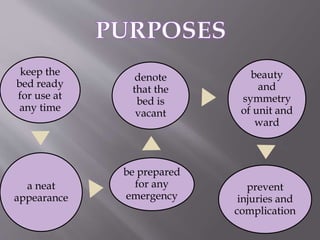
keep the
bed ready
for use at
any time
a neat
appearance
be prepared
for any
emergency
denote
that the
bed is
vacant
beauty
and
symmetry
of unit and
ward
prevent
injuries and
complication
Discharge ppt
Discharge ppt

Discharge ppt

  • 2.
    Discharge the prisoner:set free, release, let go, clear Discharge from employment: dismiss, remove Discharge pus fumes: ooze, excrete, dispense, relax Discharge a duty: carry out
  • 3.
    Discharge or dismissalfrom the hospital means the departure of the patient from the hospital. It can be the formal discharge of the patient by the attending doctor, when the patientโ€™s treatment is over.
  • 4.
    To be certainthat the patient has the information of his condition, follow-up visits and the teaching of the needs. To provide for a safe, efficient return of all the patientโ€™s clothing, valuables and to check that all hospital equipments and clothing stay in the hospital.
  • 5.
    ๏‚จ To preventany misunderstandings for the patient or hospital in relation to patientโ€™s release, medicines, bills etc. To help make the safest arrangements for the patient at the time of discharge. To assist the patient to manage the change from the hospital to the home environment. ๏‚จ To provide for continuity of care at home.
  • 6.
  • 7.
  • 8.
    It is theact of assembling and directing activities to provide services harmoniously. The result of coordination is team that works together with a unified purpose At a team conference, discussion focuses on individualizing care for the patient.
  • 9.
    ๏‚จ At afamily conference, professionals and the family gather to discuss family issues related to the client.
  • 10.
    ๏‚จ It ismaking something easier and smoother, eliminating problems and barrier. To facilitate the clientโ€™s transition, the discharge planner must anticipate needs and plan ahead.
  • 11.
    It is beginsat admission and continues through the clientโ€™s stay. A family conference helps to determine the most comprehensive service delivery.
  • 12.
    It is theprocess by which the client, nurse, and family determine goals. It does not need to be formal, but it must involve client and family to help articulate feelings about how realistic certain care of plan are.
  • 13.
  • 14.
    ๏ƒ˜ Planned ๏ƒ˜ LAMA ๏ƒ˜Absconding ๏ƒ˜ Death
  • 15.
  • 16.
    ๏ถ Personal data ๏ถHealth data ๏ถ Caregivers ๏ถ Environment ๏ถ Financial and supportive devices
  • 17.
    โ€ข Developmental stage โ€ข Health promotionand safety deficit โ€ข Cognitive and sensory deficits FUNCTIONAL ABILITIES
  • 18.
  • 19.
    โ€ขDecreased ability of caregiversto assist with or perform self-care activities. โ€ขDecreased assistance in meeting financial obligations. INSUFFICIENT FAMILY OR SOCIAL SUPPORTS
  • 20.
    โ€ขLack of running water,electricity are seen in the poor living conditions. โ€ขUnhealthy or unsanitary living conditions INSUFFICIENT COMMUNITY RESOURCES
  • 22.
    Check to see whatthe client has in a discharge order Make sure the client/relative has had a discharge instructions Have all necessary equipments ready for the client.
  • 23.
    Assist the client packhis belongings Make sure the physician completes the discharge summary Make necessary recordings and dispatch to MRD
  • 25.
    ๏‚จ Nurseโ€™s record Admission anddischarge book Treatment book Report book
  • 27.
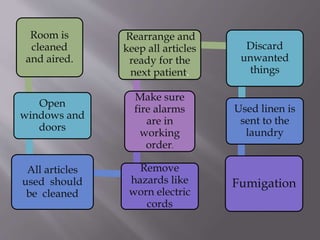
    Room is cleaned and aired. Open windowsand doors All articles used should be cleaned Remove hazards like worn electric cords Make sure fire alarms are in working order. Rearrange and keep all articles ready for the next patient. Discard unwanted things Used linen is sent to the laundry Fumigation
  • 28.
    Total surface exposureto formaldehyde gas under the conditions of controlled humidity temperature and time exposure will destroy all vegetative forms of bacteria, viruses and most of the spores.
  • 29.
    The best results canbe obtained with high concentration of gas, humidity above 60 and temperature of not less than 18 degree centigrade. The exposure time varies from 1 to 16 hours. The agents commonly used for the fumigation are formalin tablets, ethylene oxide liquids etc.
  • 31.
    Prevent Cross Infection To keep the bedready Cleanliness and Disinfection
  • 32.
    A Bed whichis prepared when there is no patient in the bed.
  • 33.
    keep the bed ready foruse at any time a neat appearance be prepared for any emergency denote that the bed is vacant beauty and symmetry of unit and ward prevent injuries and complication